

What do you think?

And Side by Side They Wander
An intergalactic art heist by a ragtag group of underqualified misfits. What could go wrong?
For three hundred years, humanity’s greatest works of art have been on loan at the Greenwood Museum. It was finally time for them to come home...but the alien curators were disinclined to return them.
Force was out of the question. Earth’s government was They were not going to press the issue. So, all we had was guile and hubris to fuel our little intergalactic art heist.
My old friend Tarquin was our leader, but not the captain. That was Tchik-tchik, though whether Tchik-tchik was our insectoid pilot’s name or species is still unclear to me. Misora, with her extremely illegal biotech mods, was our muscle.
Jack was there to hack the security systems of the biggest museum in the galaxy. He was a sensynth, a sentient synthetic being, and the most powerful machine intelligence on Earth uncorrupted by alien technology.
My name is Fennel Tycho. I’d like to tell you I was there because of my expertise in Art History. Truth is, I was there because without me, Jack would not have agreed to go. He was notorious for being difficult to work with—but it was a mistake to think I could make things any easier.
A meditation on the nature of love, life, and the "culture of the copy," And Side by Side They Wander asks the In a future where there are clones, androids, and a sentient mycelium that creates fungal simulacra, who is real and what is fake?
At the Publisher's request, this title is being sold without Digital Rights Management Software (DRM) applied.
For three hundred years, humanity’s greatest works of art have been on loan at the Greenwood Museum. It was finally time for them to come home...but the alien curators were disinclined to return them.
Force was out of the question. Earth’s government was They were not going to press the issue. So, all we had was guile and hubris to fuel our little intergalactic art heist.
My old friend Tarquin was our leader, but not the captain. That was Tchik-tchik, though whether Tchik-tchik was our insectoid pilot’s name or species is still unclear to me. Misora, with her extremely illegal biotech mods, was our muscle.
Jack was there to hack the security systems of the biggest museum in the galaxy. He was a sensynth, a sentient synthetic being, and the most powerful machine intelligence on Earth uncorrupted by alien technology.
My name is Fennel Tycho. I’d like to tell you I was there because of my expertise in Art History. Truth is, I was there because without me, Jack would not have agreed to go. He was notorious for being difficult to work with—but it was a mistake to think I could make things any easier.
A meditation on the nature of love, life, and the "culture of the copy," And Side by Side They Wander asks the In a future where there are clones, androids, and a sentient mycelium that creates fungal simulacra, who is real and what is fake?
At the Publisher's request, this title is being sold without Digital Rights Management Software (DRM) applied.
112 pages, Kindle Edition
First published May 19, 2026
Ratings & Reviews
Friends & Following
Create a free account to discover what your friends think of this book!
Community Reviews
Displaying 1 - 30 of 146 reviews
June 7, 2026
I picked up AND SIDE BY SIDE THEY WANDER thinking it was going to be a "sporror" novel, but it was actually satirically absurdist sci-fi in the vein of John Scalzi. In the future, Earth is in the shit, victim to multiple health and climate crises. A race of art-loving aliens called the Celerians approach with a quid pro quo of a bargain: in exchange for universal vaccines and some technological and ecological advancements that will push environmental and medical protections forwards centuries' of years, they want the very best of our art for their intergalactic museum. After all, the way things are going, they argue, we'll probably destroy it all anyway within a couple years, give or take, and if we implement their patches and get our shit in check, we can have the art back later.
Earth agrees and for a while, things are great. But then, when the climate is stabilized and we're no longer about to die of overheating or plague, humans send communication that they would like their art back and are told no, the Celerians aren't done with it. When pressed, they trot out the old, "We created you and now we could destroy you" excuse, shutting down the conversation and making humankind wonder if they'd been had.
Hence the heist. The heroine, Fennel, is part of a team involving a bio engineered shape-shifter, a cyborg (also her ex lover), and a sarcastic insectoid alien. Their goal is to infiltrate the Celerian Earth branch and steal back the art-- or die trying. As the story progresses, we also get background on each of the various main characters, and also some rather chilling details on what the state of Earth is right now, post-rise of the alt right with a few nuke drops for good measure that resulted in a proliferation of *checks notes* quasi-sentient fungus.
This was a very bizarre story. I liked it, but it has one of those non-endings that personally frustrate me as a reader because I WANT CLOSURE!!!!!! *stomps feet* That said, I appreciated the dry humor and the attention paid to world-building. I also read the afterword, which I recommend you do, as it provides some of the context and inspiration for this short story. Tanzer talks about how she was inspired by the British museum's repeated refusals to repatriate their questionably obtained art, most notably the Elgin marbles, which they had taken from Greece. They defied a UNESCO recommendation to return them and offered, at one point, to replace them with laser cut replicas (similar to how the Celerians offered Earth perfect replicas of the art they "borrowed").
Ultimately, this story serves both as a grim warning and a tongue in cheek criticism of appropriation from colonizing powers who believe that wealth and development entitle them to the art and culture from the regions that they have actively oppressed.
3 stars
Earth agrees and for a while, things are great. But then, when the climate is stabilized and we're no longer about to die of overheating or plague, humans send communication that they would like their art back and are told no, the Celerians aren't done with it. When pressed, they trot out the old, "We created you and now we could destroy you" excuse, shutting down the conversation and making humankind wonder if they'd been had.
Hence the heist. The heroine, Fennel, is part of a team involving a bio engineered shape-shifter, a cyborg (also her ex lover), and a sarcastic insectoid alien. Their goal is to infiltrate the Celerian Earth branch and steal back the art-- or die trying. As the story progresses, we also get background on each of the various main characters, and also some rather chilling details on what the state of Earth is right now, post-rise of the alt right with a few nuke drops for good measure that resulted in a proliferation of *checks notes* quasi-sentient fungus.
This was a very bizarre story. I liked it, but it has one of those non-endings that personally frustrate me as a reader because I WANT CLOSURE!!!!!! *stomps feet* That said, I appreciated the dry humor and the attention paid to world-building. I also read the afterword, which I recommend you do, as it provides some of the context and inspiration for this short story. Tanzer talks about how she was inspired by the British museum's repeated refusals to repatriate their questionably obtained art, most notably the Elgin marbles, which they had taken from Greece. They defied a UNESCO recommendation to return them and offered, at one point, to replace them with laser cut replicas (similar to how the Celerians offered Earth perfect replicas of the art they "borrowed").
Ultimately, this story serves both as a grim warning and a tongue in cheek criticism of appropriation from colonizing powers who believe that wealth and development entitle them to the art and culture from the regions that they have actively oppressed.
3 stars

June 21, 2026
Becky Chambers meets Jeff Vandermeer, if they both thought Oscar Isaac’s character in Ex Machina had some good qualities, maybe… if they both thought Elon Musk was fuckable, let’s say……..
Imagine a world…. where your humble tech trillionaire causes a mass death event like nothing the world has ever seen…. And then goes on to create many clones of himself and also a cyborg version of himself and centuries later they all still have basically unlimited power over the entire earth….. and they’re the underdogs here, actually. What if those humble Elon Musk clones were just standing up for humanity against the colonizing aliens, you know what I mean?
Okay, look, I felt bad about my first review, I was like “maybe I DNFed too early, let me give it another chance.” And fwiw there was a twist ending which did shed some new light on the choices Tanzer had made up until that point! If I hadn’t finished this I never would have known that!
Unfortunately the twist ending’s main takeaway is that BOTH of the colonizer-oppressors are actually the victims here? I mean…. What?! The Elon Musk clones/cyborg are the victims AND the colonizing British Museum-inspired aliens are the victims, AND our protagonist (the Kellyanne Conway of the scenario, apparently, and isn’t that a name you wish you’d never had to see again) is the victim—but a less sympathetic victim than the Elon Musk cyborg, somehow?
How did I end up rooting for the art-hating bug aliens who want to destroy the universe? At least they can fucking plan a competent heist, you know what I mean!
I don’t know, art world people need to touch grass or something. I don’t even want to get into it because it’s so far beyond what this book is even capable of considering but I’m just going to say, comparing a living breathing sentient being—clone or cyborg or mycelium-infused or whatever—to an NFT and going “but are they real, can they love me back?” like it’s the same question for both is unhinged. Being like “me in love with this Elon Musk cyborg that I’m objectifying (!?) is just like Eurydice and Orpheus, I’m reaching for him and dooming us both”………………….. aghh!
Again, I’m team art-hating bug aliens here. Best of luck to them out there.
——————
DNF on p. 20. The voice is already incredibly dated, a knockoff version (ironically, given what the book is about!) of Becky Chambers-esque “hopepunk”; the amount of info dumping is frankly Mean Girls-cafeteria-scene level; none of the (minimal) character interactions so far feel in any way rooted in actual characterization; and the writing is a weird mishmash of clunkingly formal and direct-to-camera casual.
It’s Tanzer’s bad luck that I picked this up while I’m halfway through CJ Cherryh’s Cyteen, which is also about clones and duplication and identity and uniqueness…. but in a way that makes And Side By Side They Wander feel like an elementary school class project by comparison.
I just truly cannot believe this got published… what was Tor thinking? It feels like something that needs to be ripped apart at the seams before it can move forward.
I realize I’ve only read ~20% of this novella. Maybe it somehow justifies itself later on. But……..
I don’t know, am I an asshole if I say I read the Acknowledgements and I feel like I already understand Walter Benjamin better than this author even though I’ve never actually read anything by him? “What makes an original work of art uniquely impactful compared to its copy?” Hm, maybe it’s the viewer’s awareness of the history of the specific physical object? Next question.
But seriously, to turn from Cyteen (do not tell me ANY spoilers, I’m halfway through, I will hunt you down and murder you if you tell me spoilers) to this…. Ouch. Ouch. Is SF regressing?
Imagine a world…. where your humble tech trillionaire causes a mass death event like nothing the world has ever seen…. And then goes on to create many clones of himself and also a cyborg version of himself and centuries later they all still have basically unlimited power over the entire earth….. and they’re the underdogs here, actually. What if those humble Elon Musk clones were just standing up for humanity against the colonizing aliens, you know what I mean?
Okay, look, I felt bad about my first review, I was like “maybe I DNFed too early, let me give it another chance.” And fwiw there was a twist ending which did shed some new light on the choices Tanzer had made up until that point! If I hadn’t finished this I never would have known that!
Unfortunately the twist ending’s main takeaway is that BOTH of the colonizer-oppressors are actually the victims here? I mean…. What?! The Elon Musk clones/cyborg are the victims AND the colonizing British Museum-inspired aliens are the victims, AND our protagonist (the Kellyanne Conway of the scenario, apparently, and isn’t that a name you wish you’d never had to see again) is the victim—but a less sympathetic victim than the Elon Musk cyborg, somehow?
How did I end up rooting for the art-hating bug aliens who want to destroy the universe? At least they can fucking plan a competent heist, you know what I mean!
I don’t know, art world people need to touch grass or something. I don’t even want to get into it because it’s so far beyond what this book is even capable of considering but I’m just going to say, comparing a living breathing sentient being—clone or cyborg or mycelium-infused or whatever—to an NFT and going “but are they real, can they love me back?” like it’s the same question for both is unhinged. Being like “me in love with this Elon Musk cyborg that I’m objectifying (!?) is just like Eurydice and Orpheus, I’m reaching for him and dooming us both”………………….. aghh!
Again, I’m team art-hating bug aliens here. Best of luck to them out there.
——————
DNF on p. 20. The voice is already incredibly dated, a knockoff version (ironically, given what the book is about!) of Becky Chambers-esque “hopepunk”; the amount of info dumping is frankly Mean Girls-cafeteria-scene level; none of the (minimal) character interactions so far feel in any way rooted in actual characterization; and the writing is a weird mishmash of clunkingly formal and direct-to-camera casual.
It’s Tanzer’s bad luck that I picked this up while I’m halfway through CJ Cherryh’s Cyteen, which is also about clones and duplication and identity and uniqueness…. but in a way that makes And Side By Side They Wander feel like an elementary school class project by comparison.
I just truly cannot believe this got published… what was Tor thinking? It feels like something that needs to be ripped apart at the seams before it can move forward.
I realize I’ve only read ~20% of this novella. Maybe it somehow justifies itself later on. But……..
I don’t know, am I an asshole if I say I read the Acknowledgements and I feel like I already understand Walter Benjamin better than this author even though I’ve never actually read anything by him? “What makes an original work of art uniquely impactful compared to its copy?” Hm, maybe it’s the viewer’s awareness of the history of the specific physical object? Next question.
But seriously, to turn from Cyteen (do not tell me ANY spoilers, I’m halfway through, I will hunt you down and murder you if you tell me spoilers) to this…. Ouch. Ouch. Is SF regressing?
This entire review has been hidden because of spoilers.

Read
June 29, 20263.0 Stars
This was an easy, fun heist story. As a novella, it was a very short which different give a lot of time for worldbuilding or character development. It was an easy story but fairly surface level.
In terms of tone, this one was more light hearted and silly than serious which doesn't lend itself to becoming a personal favourite but I still had a pretty fun time reading this one.
Disclaimer I received a copy of this book from the publisher.
This was an easy, fun heist story. As a novella, it was a very short which different give a lot of time for worldbuilding or character development. It was an easy story but fairly surface level.
In terms of tone, this one was more light hearted and silly than serious which doesn't lend itself to becoming a personal favourite but I still had a pretty fun time reading this one.
Disclaimer I received a copy of this book from the publisher.

May 25, 2026
"Space museum art heist" makes it sound like a sci-fi Ocean's Eleven or something, but this is way more 90s Trek than anything (complimentary). While the logline may make it seem like they're trying to sell you something the book is not, Tanzer is simply incapable of being less than captivating in her storytelling. Far from a mere novella-length form of the viral "what if Indiana Jones stole BACK treasures??" post that makes the social media rounds every few months, ASBSTW is a thought-provoking reflection on the act of artistic creation and its cousin, mechanical reproduction.
From the point of view of Fennel Tycho, a human art student who is selected for the mission because of her connection to android Jack Kirby (!), ASBSTW is a story both intimate and epic, as the dissolution of Fennel and Jack's relationship gets as much page time as the story of how Earth surrendered all its cultural treasures to the Celerians.
A quick read well worth sitting with!
From the point of view of Fennel Tycho, a human art student who is selected for the mission because of her connection to android Jack Kirby (!), ASBSTW is a story both intimate and epic, as the dissolution of Fennel and Jack's relationship gets as much page time as the story of how Earth surrendered all its cultural treasures to the Celerians.
A quick read well worth sitting with!

May 20, 2026
People have been told this lie that good writing is distant.
It's meticulously plotted out. It's consistent. It's level.
If you read enough criticism you think good writing (and good film) is about analysis. As a critic, please listen to me, when I tell you that it's not.
Good writing (and good criticism) isn't analysis. It is action.
People think 'self-awareness' that puts myth and fantasy and science fiction and 'cheesy' ideas on a pedestal is an armour that allows them to explore those ideas without being embarrassed. So they have been taught to keep this kind of writing at arm's distance. And while that can be safe, it is also predictable and formulaic. It doesn't hold up to scrutiny and time, because it has nothing to say. Because it won't dare to say it.
The best writers dare to be cheesy. They dare to be open. To be seen. And they miss more than they hit.
And when they miss? It can be brutal. Especially if they're great writers. The worst writing you will ever experience is done by great writers. Mediocre writers are mostly just lazy. It takes a great writer to make a complete catastrophe.
But when the best writers hit? Oooh. You feel it. In your teeth. In your toes. In all your magic buttons. It unzips you.
I've been reading Molly Tanzer for over a decade.
And this is a hit.
Some of her work I love, some I enjoy, some of her work has frustrated me, but through all her work, I've always seen potential. Which is why I keep recommending her to my readers.
Her plot design (especially in her short fiction and in this novella) is very well done. She creates memorable characters with distinct voices. On top of that she has a great approach to both mythos and modern topics.
And she weaves all of that into stories in a way that's personal. Relatable. In this book she transitions between philosophy, art theory, the discussion of artificial intelligence, vulgar comedy, intimate grief, political analysis, cultural criticism and terraforming fungi bombs all within the context of an intergalactic art heist.
But what makes this work, is that she grounds it in character.
We see these concepts through the perspective of love unrequited, of the anxiety of our personal expectations. Our desire for attention. Our desire to be noticed. Which is the desire to create (and see) art.
It is the desire to see others.
That line connects all the different subject matter in the story, from questions of love, to ideas of consciousness and the value of art and how we often fail to understand others or see them through our bias.
It connects through the main character, through her infatuations and love and the art she discusses and the mythos that speaks to her and the adventure she's found herself in.
And that's the risky part.
That's the part that reminds me of the best writers. Where it's not just 'can I tell an interesting story about a space heist'? But can I make this a personal story? Can I risk being vulnerable?
It's easy to be detached. It's easy to cover up. It's easy to put on a show to please others.
It's more difficult to be human. This is the problem facing so much discussion of the arts these days. Creation, style, subject matter? All of that is just window dressing.
What's so beautiful and valuable about art, is finally, finally, being seen.
Great work. 10/10
It's meticulously plotted out. It's consistent. It's level.
If you read enough criticism you think good writing (and good film) is about analysis. As a critic, please listen to me, when I tell you that it's not.
Good writing (and good criticism) isn't analysis. It is action.
People think 'self-awareness' that puts myth and fantasy and science fiction and 'cheesy' ideas on a pedestal is an armour that allows them to explore those ideas without being embarrassed. So they have been taught to keep this kind of writing at arm's distance. And while that can be safe, it is also predictable and formulaic. It doesn't hold up to scrutiny and time, because it has nothing to say. Because it won't dare to say it.
The best writers dare to be cheesy. They dare to be open. To be seen. And they miss more than they hit.
And when they miss? It can be brutal. Especially if they're great writers. The worst writing you will ever experience is done by great writers. Mediocre writers are mostly just lazy. It takes a great writer to make a complete catastrophe.
But when the best writers hit? Oooh. You feel it. In your teeth. In your toes. In all your magic buttons. It unzips you.
I've been reading Molly Tanzer for over a decade.
And this is a hit.
Some of her work I love, some I enjoy, some of her work has frustrated me, but through all her work, I've always seen potential. Which is why I keep recommending her to my readers.
Her plot design (especially in her short fiction and in this novella) is very well done. She creates memorable characters with distinct voices. On top of that she has a great approach to both mythos and modern topics.
And she weaves all of that into stories in a way that's personal. Relatable. In this book she transitions between philosophy, art theory, the discussion of artificial intelligence, vulgar comedy, intimate grief, political analysis, cultural criticism and terraforming fungi bombs all within the context of an intergalactic art heist.
But what makes this work, is that she grounds it in character.
We see these concepts through the perspective of love unrequited, of the anxiety of our personal expectations. Our desire for attention. Our desire to be noticed. Which is the desire to create (and see) art.
It is the desire to see others.
That line connects all the different subject matter in the story, from questions of love, to ideas of consciousness and the value of art and how we often fail to understand others or see them through our bias.
It connects through the main character, through her infatuations and love and the art she discusses and the mythos that speaks to her and the adventure she's found herself in.
And that's the risky part.
That's the part that reminds me of the best writers. Where it's not just 'can I tell an interesting story about a space heist'? But can I make this a personal story? Can I risk being vulnerable?
It's easy to be detached. It's easy to cover up. It's easy to put on a show to please others.
It's more difficult to be human. This is the problem facing so much discussion of the arts these days. Creation, style, subject matter? All of that is just window dressing.
What's so beautiful and valuable about art, is finally, finally, being seen.
Great work. 10/10

May 21, 2026
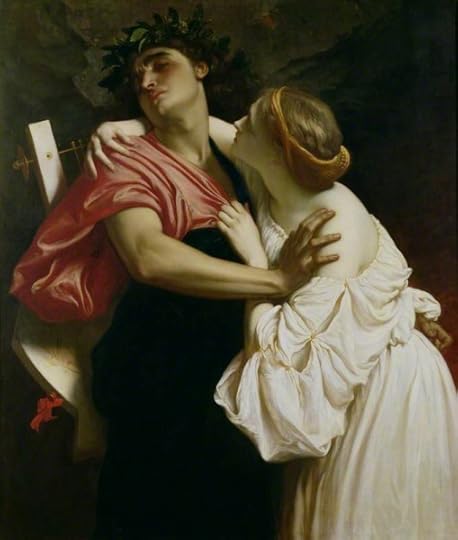
Orpheus and Eurydice, 1864 by Frederic Leighton
A picture by Leighton
Robert Browning
"But give them me, the mouth, the eyes, the brow!
Let them once more absorb me! One look now
Will lap me round for ever, not to pass
Out of its light, though darkness lie beyond:
Hold me but safe again within the bond
Of one immortal look! All woe that was,
Forgotten, and all terror that may be,
Defied, no past is mine, no future: look at me!"
Molly Tanzer's "And Side by Side They Wander" is currently free to listen to on Audible -if you are a member!
Led by Tarquin a clone and captained by the alien Tchik-tchik, with Misora as muscle (who can unfold six versions in one body) and Jack (who's a sensynth, a sentient synthetic being who's image is of the same man as Tarquin is) to hack the biggest museum in the galaxy.
Art historian Fennel Tycho was mostly there keep Jack on the team that's out to steal back the art aliens took in a Earth's government approved exchange for alien technology to fix Earth's problems because Earth was to get the art back when they meet the aliens "standards" of living.
I rather liked the use of Greek myth where Orpheus' getting Eurydice back is similar to the heist in fate (Eurydice going to the woods /the ship going to Greenwood Museum) and Jack and Fennel's relationship (a gender reversal for Orpheus and Eurydice) and the mixing of science fiction, certainly Orpheus and Eurydice were a great art history choice to mix with themes of art copies.
It reminds me somewhat of the BBC podcast Forest 404 in the theme of saving or deleting art and what that is.
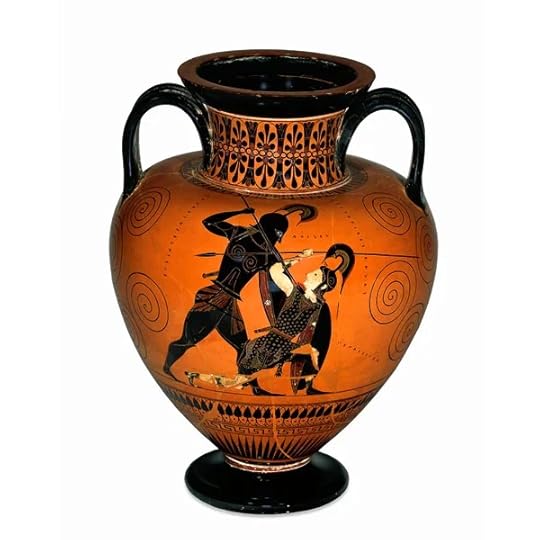
Shout out to the art like Achilles defeating Penthesilea, the Amazon Queen amphora (wine-jar) signed by Exekias.
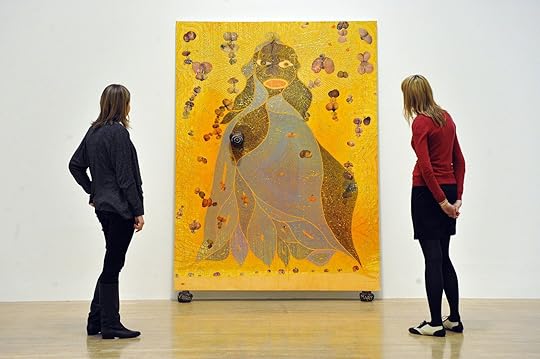
And one I didn't know of Chris Ofili's The Holy Virgin Mary (1996).
May 25, 2026
2.5 stars rounding down. This…did NOT land for me unfortunately. While it has elements I love, like first contact, aliens, motley space crew, nothing felt fully baked. The premise is that a long time ago an alien species came to Earth and saved it in exchange for all of Earth’s precious art, and now Fennel has been recruited to help with an off-world museum heist to get some items back. The museum was super cool and this should have been the setting of the whole book, IMO the first 70 of the 100 pages should have been scratched. The most substantial character attribute of the MC is her pining for someone who does not love her back, and this reaches the very last page too — I just don’t want to read that and also why? I wonder if part of this story was Tanzer’s “grief book” and that’s why? Everyone else, even the mycelium, were part of a means to an end. Speaking of the mycelium, I think that’s whole section could have been its own novella, the set up here and the possible explanations was also/could have been really cool. It’s an example of a something in the story that took too much page time away from other aspects that contributed to everything not feeling baked. There is some commentary of colonialism, but I didn’t find it meaningful. I just think Tanzer tried to do too much in 100 pages and wasn’t able to execute any element well.
This entire review has been hidden because of spoilers.
May 23, 2026
The early word on Molly Tanzer's new novella, And Side by Side They Wander, seemed to promise an Oceans 11 style space opera art heist kind of story. That's not really what you get. Instead, trust the back cover copy when it suggest that here you'll find "a meditation on the nature of love, life, and the "culture of the copy".
Space aliens have taken some of our most famous works of art, in exchange for both the technology they promise will save humanity (it does), and a bunch of copies of the Mona Lisa and some other stuff. It's a loan, they say. When you're ready, you can have it back. Then we ask for it back and they say no. Almost everyone, we find out (tiny spoiler), goes "cool", doesn't care much and gets on with things. But for a bunch of rich clones and some other folk, including some guy who got caught up with the mushroom stuff on the cover, that's not ok. The original thing is what's special (even if, in the early stages of the story, they can't quite say why.
Space aliens have taken some of our most famous works of art, in exchange for both the technology they promise will save humanity (it does), and a bunch of copies of the Mona Lisa and some other stuff. It's a loan, they say. When you're ready, you can have it back. Then we ask for it back and they say no. Almost everyone, we find out (tiny spoiler), goes "cool", doesn't care much and gets on with things. But for a bunch of rich clones and some other folk, including some guy who got caught up with the mushroom stuff on the cover, that's not ok. The original thing is what's special (even if, in the early stages of the story, they can't quite say why.
June 7, 2026
Go in expecting a campy intergalactic art heist and you might feel a little blindsided. The ragtag misfits and alien museums and humanity's stolen art are all here, but Tanzer slows everything down and delivers something far more thoughtful about love, humanity, and what art actually means to us.
The world is remarkably dense for a novella. Bioengineered fungi gone invasive, clones, androids, questions about what is human and what isn't. I'm genuinely shocked how much is packed into so few pages. Fascinating and unique and unlike most things I've read.
That said, it has a lot of deeper points that it doesn't quite have room to fully drive home. This is ultimately a love story to a specific painting and I think it does that incredibly well. But the ending arrives abruptly and things peter out a little rather than landing with the weight the ideas deserved. I liked what it was doing throughout. I just wanted it to stick the landing a little harder.
Still such an incredible and unexpected little book.
Thank you to the publisher for sending me this beautiful little gem! This review is voluntary and all opinions are my own.
The world is remarkably dense for a novella. Bioengineered fungi gone invasive, clones, androids, questions about what is human and what isn't. I'm genuinely shocked how much is packed into so few pages. Fascinating and unique and unlike most things I've read.
That said, it has a lot of deeper points that it doesn't quite have room to fully drive home. This is ultimately a love story to a specific painting and I think it does that incredibly well. But the ending arrives abruptly and things peter out a little rather than landing with the weight the ideas deserved. I liked what it was doing throughout. I just wanted it to stick the landing a little harder.
Still such an incredible and unexpected little book.
Thank you to the publisher for sending me this beautiful little gem! This review is voluntary and all opinions are my own.

July 23, 2026
Normally I looooove a polemic, but if your story is going to function as one, it should probably have some human sentiment or development somewhere on which to hang its ideas. This should have been big and inspiring, or heisty and fun, or at least interesting and thought-provoking… and instead it was a half-baked idea that equates Banksy and Van Gogh, and that made me wonder if Tor was too poor to invest in an extra 20 pages of actual character development.

June 6, 2026
This was a short read but it was absolutely packed to the brim, both with story and overall commentary on human nature. I especially enjoyed those thoughts, it added so much context and character motivation to the art heist at the center of the story. The sci-fi universe it’s set in is very well developed in an incredibly impressive way considering it’s a novella length. This was a short read, but a fantastic one.

April 11, 2026
Although brief in length, this is not a “light” read. It is a thoughtful examination of humanity through the perspective of an art history expert. The central narrative of an intergalactic art heist is interwoven with detailed descriptions and analyses of significant works throughout human history. This book is less character-driven and instead focuses on a reflective commentary on society and human nature. While the storyline was engaging, the focus on art analysis occasionally disrupted the narrative momentum for me. Overall, I found it to be an enjoyable and intellectually stimulating read. It presents ideas that feel very relevant in the current cultural climate and left me with much to consider.
May 23, 2026
3.25/5
“We have always stolen. Land, objects, people, culture, ideas. Human history is the history of theft. We loot, we raid, we imitate, we appropriate and misappropriate.”
“We have always stolen. Land, objects, people, culture, ideas. Human history is the history of theft. We loot, we raid, we imitate, we appropriate and misappropriate.”

November 25, 2025
While it isn't reclaiming artifacts from the British museum, which someone should do since it seems lax security, going to reclaim humanity's stuff from aliens is pretty good too. "And Side by Side They Wander" by Molly Tanzer examines what is real in a world of easy reproductions, clones, and synthetic copies. Jumping way ahead, but out 19 May 2026 from Tor Publishing Group.
Humanity was boned. Climate disasters, war, you name it. Least until some benevolent aliens rolled up and could solve all of our problems, they just wanted to hold onto large portions of our art, just in case. But totally will give it back when we fix our issues. But wouldn't you know it, they aren't done looking at it yet. Enjoy the replicas and technology. Except humanity is still a bit...punchy. Enter a crew who really has no business doing this job.
Reasons to read:
-Went places I was not expecting
-I'm sorry, please elaborate on that sentence right now
-Sudden escalation
-More proof that we should all get quarterly strikes we can give supervisors
-Sentient Mycelium, not sure if sapient would apply
Cons:
-That sentence gets no further investigation, the curse of novellas.
Humanity was boned. Climate disasters, war, you name it. Least until some benevolent aliens rolled up and could solve all of our problems, they just wanted to hold onto large portions of our art, just in case. But totally will give it back when we fix our issues. But wouldn't you know it, they aren't done looking at it yet. Enjoy the replicas and technology. Except humanity is still a bit...punchy. Enter a crew who really has no business doing this job.
Reasons to read:
-Went places I was not expecting
-I'm sorry, please elaborate on that sentence right now
-Sudden escalation
-More proof that we should all get quarterly strikes we can give supervisors
-Sentient Mycelium, not sure if sapient would apply
Cons:
-That sentence gets no further investigation, the curse of novellas.

March 12, 2026
I was so here for the premise of this novella (who doesn’t love an intergalactic heist?) but the execution fell flat for me. It was much more interior and quiet than I anticipated based on the description and it fell into a lot of info dumping, particularly in the first half.
I think it raised interesting points/questions about the nature of art and humanity and it definitely holds a mirror up to our current issues, as all good speculative fiction does. But it just didn’t ever quite click for me as a whole, unfortunately.
Thanks to netgalley and tordotcom for the arc! 🚀
I think it raised interesting points/questions about the nature of art and humanity and it definitely holds a mirror up to our current issues, as all good speculative fiction does. But it just didn’t ever quite click for me as a whole, unfortunately.
Thanks to netgalley and tordotcom for the arc! 🚀
August 26, 2026
3.75⭐️
Art Heist in Space x future dystopia x Sentient Beings x what is colonization debates
This had all the pieces of something I would enjoy. I love a heist: assembling the gang, debating how the heist will go, the inevitable setbacks… this was just way too short at 96 pages, which feels like a short story rather than a novella… to accomplish all that AND dig into the frankly very interesting discussion to be had of what is real vs forgery in terms of art AND a person, the way earth was basically colonized by an alien species and how they came to terms with that, if they even did, etc.
Saying that - the amount of world building and introducing the crew who are all different species was well done, however I wanted more. They were so interesting.Some parts of this future world construction was a little too on the nose: ‘… the United States no longer had fifty stars on its flag. The area calling itself the New Confederacy, ruled by a Large Language Model trained on speeches made by former president Donald Trump was not a recognized country.’ Incredible eye roll from me.
This was incredibly interesting and even 50 more pages would’ve earned a higher rating as things and ideas couldn’t fully take hold and the ending felt really abrupt.
‘They came in peace, they said, and with an offer:
If we trusted them with the stewardship of Earth’s art, they would provide us with the solutions to our multifarious but solvable problems.’
‘The Tchik-tchik are not insects, which to my mind makes the similarities worse.’
‘Misora was our “muscle,” as Tarquin put it, as if we were in an old heist movie. She was an ori-Jin, a set of sextuplets folded into a single body using extremely illegal biotech, and an 8th Dan in Goju-Ryu karate.
‘Jack was a sensynth, a sentient synthetic being who could interface with computer systems with a supercomputer’s speed and a human’s intuition.’
‘I realize I’ve begun in the middle of things. It’s difficult to know where to start. I can’t actually assume anything about who will find this recording, if anyone ever does. You might be a fellow human who already knows how we pawned or past for a shot at a future; you may be Celerian, smiling at my naïveté. Or you might be some unknown-ti-me race of starters, millennia from now, when all the remains of me, is this tale to be decipher. There won’t be any bones.’
‘I was just grateful our rooms had beds, even if they were clearly repurposed shelves. Tchik-tchik clung to the wall when they slept.’
‘It was a good speech. I almost believed him.’
‘The endless cycle of the academic year felt depressing rather than comfortable; those painted mouths had nothing more to say to me.’
‘I thought it was sexy. Like a god in a Reuben painting, he looked sensual, embodied, fleshy, even if he went made of flesh. This voluptuousness had always drawn me to him, as did his affinity for casual nudity.
“I assume you came here for a reason.”
‘Was it so bad, what the Celerians did?
Wait-no. That’s the wrong question.
Was it so different from what we humans have been doing to one another since we were human.’
‘Now I’ve changed. I disagree with my past self. Art can be a mirror through which we are shown ourselves – and who among us can claim to never have desired that which does not serve us? We are, at times, the agents of our own undoing, and in ways that likely see obvious, even downright silly, to onlookers.’
“… But I mean… there are six of me folded inside me. I have to slit and come back together, I’m never sure which one I am. I mean, how would I know if I was different? I think I was the same, wouldn’t I?”
‘I’d grown up devoid of reverence. My only experience of the transcendent has ever been through art.’
‘All those species… I know our history. What horrors had befallen them?”
“We didn’t know,” I said quickly. “I know that doesn’t matter.”
Art Heist in Space x future dystopia x Sentient Beings x what is colonization debates
This had all the pieces of something I would enjoy. I love a heist: assembling the gang, debating how the heist will go, the inevitable setbacks… this was just way too short at 96 pages, which feels like a short story rather than a novella… to accomplish all that AND dig into the frankly very interesting discussion to be had of what is real vs forgery in terms of art AND a person, the way earth was basically colonized by an alien species and how they came to terms with that, if they even did, etc.
Saying that - the amount of world building and introducing the crew who are all different species was well done, however I wanted more. They were so interesting.Some parts of this future world construction was a little too on the nose: ‘… the United States no longer had fifty stars on its flag. The area calling itself the New Confederacy, ruled by a Large Language Model trained on speeches made by former president Donald Trump was not a recognized country.’ Incredible eye roll from me.
This was incredibly interesting and even 50 more pages would’ve earned a higher rating as things and ideas couldn’t fully take hold and the ending felt really abrupt.
‘They came in peace, they said, and with an offer:
If we trusted them with the stewardship of Earth’s art, they would provide us with the solutions to our multifarious but solvable problems.’
‘The Tchik-tchik are not insects, which to my mind makes the similarities worse.’
‘Misora was our “muscle,” as Tarquin put it, as if we were in an old heist movie. She was an ori-Jin, a set of sextuplets folded into a single body using extremely illegal biotech, and an 8th Dan in Goju-Ryu karate.
‘Jack was a sensynth, a sentient synthetic being who could interface with computer systems with a supercomputer’s speed and a human’s intuition.’
‘I realize I’ve begun in the middle of things. It’s difficult to know where to start. I can’t actually assume anything about who will find this recording, if anyone ever does. You might be a fellow human who already knows how we pawned or past for a shot at a future; you may be Celerian, smiling at my naïveté. Or you might be some unknown-ti-me race of starters, millennia from now, when all the remains of me, is this tale to be decipher. There won’t be any bones.’
‘I was just grateful our rooms had beds, even if they were clearly repurposed shelves. Tchik-tchik clung to the wall when they slept.’
‘It was a good speech. I almost believed him.’
‘The endless cycle of the academic year felt depressing rather than comfortable; those painted mouths had nothing more to say to me.’
‘I thought it was sexy. Like a god in a Reuben painting, he looked sensual, embodied, fleshy, even if he went made of flesh. This voluptuousness had always drawn me to him, as did his affinity for casual nudity.
“I assume you came here for a reason.”
‘Was it so bad, what the Celerians did?
Wait-no. That’s the wrong question.
Was it so different from what we humans have been doing to one another since we were human.’
‘Now I’ve changed. I disagree with my past self. Art can be a mirror through which we are shown ourselves – and who among us can claim to never have desired that which does not serve us? We are, at times, the agents of our own undoing, and in ways that likely see obvious, even downright silly, to onlookers.’
“… But I mean… there are six of me folded inside me. I have to slit and come back together, I’m never sure which one I am. I mean, how would I know if I was different? I think I was the same, wouldn’t I?”
‘I’d grown up devoid of reverence. My only experience of the transcendent has ever been through art.’
‘All those species… I know our history. What horrors had befallen them?”
“We didn’t know,” I said quickly. “I know that doesn’t matter.”
May 19, 2026
This was quite the pleasant read and I was able to get through it in one sitting. I found that I was quickly drawn in to the tale and invested in the outcome of the story. A small group of rather unlikely allies plans and executes a heist to reclaim famous artworks that had been safe-guarded by an alien race, but then not returned. This speaks to problems in our very own system. The message of the story was quite clear in that regard, as well as in humans’ treatment of the planet over time. The themes explored fit well with current events and political climate now and over the course of recent history.
I was quite pleased with the overall world building and character development, despite the short length of the story. I found the inclusion of a romantic relationship with a sentient synthetic being quite interesting. I found myself caring about the fate of each of the characters and would have enjoyed this as an even longer read. Also, I did not see that ending coming!
I will be keeping an eye out for more of Molly Tanzer and possibly even check out her backlist.
I would recommend this novella to people that enjoy science fiction and are looking for a short, thought-provoking read.
Many thanks to Tor Publishing Group/Tordotcom and NetGalley for a digital review copy of the book. The opinions expressed are given freely and are honest and my own.
I was quite pleased with the overall world building and character development, despite the short length of the story. I found the inclusion of a romantic relationship with a sentient synthetic being quite interesting. I found myself caring about the fate of each of the characters and would have enjoyed this as an even longer read. Also, I did not see that ending coming!
I will be keeping an eye out for more of Molly Tanzer and possibly even check out her backlist.
I would recommend this novella to people that enjoy science fiction and are looking for a short, thought-provoking read.
Many thanks to Tor Publishing Group/Tordotcom and NetGalley for a digital review copy of the book. The opinions expressed are given freely and are honest and my own.

February 2, 2026
And Side by Side They Wander by Molly Tanzer is a beautifully written novella that left me thoroughly impressed and wishing for more. Despite its short length, the story delivers an impressive amount of character development and world-building. It's one of those rare reads where you feel instantly dropped into a fully formed universe, rich with texture and nuance, yet you’re only getting a tantalizing glimpse of what could be explored in greater depth.
Tanzer has a gift for creating emotionally resonant characters in a very short span of time. The relationships and internal struggles feel fully realized, and there’s a surprising emotional weight to the narrative that builds naturally from the first page. I found myself invested almost immediately, and the emotional payoff by the end hit harder than I expected for a novella of this size.
The world Tanzer hints at is so fascinating: strange, atmospheric, and filled with potential. I couldn’t help but imagine how incredible it would be to see this setting and these characters fleshed out over the course of a full-length novel. There's a lot of promise in the mythology and the underlying themes that could easily sustain a much longer story without losing momentum.
Even though the book left me wanting more, that’s a testament to how well it’s crafted. It’s a short, impactful read that lingers in your mind long after you finish. Tanzer strikes a great balance between style and substance, and I’ll definitely be seeking out more of her work after this.
Tanzer has a gift for creating emotionally resonant characters in a very short span of time. The relationships and internal struggles feel fully realized, and there’s a surprising emotional weight to the narrative that builds naturally from the first page. I found myself invested almost immediately, and the emotional payoff by the end hit harder than I expected for a novella of this size.
The world Tanzer hints at is so fascinating: strange, atmospheric, and filled with potential. I couldn’t help but imagine how incredible it would be to see this setting and these characters fleshed out over the course of a full-length novel. There's a lot of promise in the mythology and the underlying themes that could easily sustain a much longer story without losing momentum.
Even though the book left me wanting more, that’s a testament to how well it’s crafted. It’s a short, impactful read that lingers in your mind long after you finish. Tanzer strikes a great balance between style and substance, and I’ll definitely be seeking out more of her work after this.

July 14, 2026
This is, I'm sad to say, not the heist novella you are looking for.
This is a very worthwhile read, and I do encourage everyone to read it, there are many important points being made. But the framing just... was not for me.
I appreciated the societal commentary in this. It lends itself to so much deeper analysis about aspects of our culture as a planet--how we see and value art, how we let trillionaires manipulate our lives, how we're willing to better ourselves but only with a hefty intergalactic nudge.
The heist itself had the trappings of an epic one and the museum sounded like an amazing place to explore. The variety of artworks name dropped throughout lead to some fun research rabbit holes, searching for things I'd never heard of before. Case in point, The Dinner Party--I agree with Fennel, why did the Celerians overlook that to copy!? I also enjoyed the Euridice & Orpheus theme and how the title ends up tying into that gorgeously.
What I was blindsided by was that this essentially was a love story... and a presumably not-queer one at that--with all the socio-political and artistic and intergalactic commentary filtered through that lens throughout. Did that result in a unique ending? Absolutely.
But did we ultimately get sweeping plans and museum exploration and bare-knuckle escapes? No, very little, and none at all :/
This is a very worthwhile read, and I do encourage everyone to read it, there are many important points being made. But the framing just... was not for me.
I appreciated the societal commentary in this. It lends itself to so much deeper analysis about aspects of our culture as a planet--how we see and value art, how we let trillionaires manipulate our lives, how we're willing to better ourselves but only with a hefty intergalactic nudge.
The heist itself had the trappings of an epic one and the museum sounded like an amazing place to explore. The variety of artworks name dropped throughout lead to some fun research rabbit holes, searching for things I'd never heard of before. Case in point, The Dinner Party--I agree with Fennel, why did the Celerians overlook that to copy!? I also enjoyed the Euridice & Orpheus theme and how the title ends up tying into that gorgeously.
What I was blindsided by was that this essentially was a love story... and a presumably not-queer one at that--with all the socio-political and artistic and intergalactic commentary filtered through that lens throughout. Did that result in a unique ending? Absolutely.
But did we ultimately get sweeping plans and museum exploration and bare-knuckle escapes? No, very little, and none at all :/

May 28, 2026
I read this book in the waiting room at the hospital yesterday and it ignited a great, bright spark in my Humanities Instructor brain - so much so that I want to assign it to my Honors Intro to Humanities class this fall. Dare I hope to entice Molly Tanzer into an online classroom visit?
If you love art and philosophical questions about what makes art Art, this book is for you. I love the conversations about why the authentic, original piece of art is something so much more than a copy ever could be (something I've tried to impress upon my students for a decade). But it's not just about art, though. Many of the characters themselves are not necessarily "the original," but does that diminish their authentic identities? It provokes questions that can be applied to AI as well, making it highly relevant. ❤️❤️
If you love art and philosophical questions about what makes art Art, this book is for you. I love the conversations about why the authentic, original piece of art is something so much more than a copy ever could be (something I've tried to impress upon my students for a decade). But it's not just about art, though. Many of the characters themselves are not necessarily "the original," but does that diminish their authentic identities? It provokes questions that can be applied to AI as well, making it highly relevant. ❤️❤️

June 14, 2026
3.5, rounded up
I liked the conversation about art and imitation that was going on, but it took a while for the storytelling to catch up with the concept.
The acknowledgements mentioned that this was a novelette that got expanded at a workshop, and unfortunately I could kind of tell. The first 2/3 and the last third didn't feel like they blended together as well as they could have.
Still, I wound up having a pretty good time with this by the end, and I'd be open to checking out some of her longer form fiction.
I liked the conversation about art and imitation that was going on, but it took a while for the storytelling to catch up with the concept.
The acknowledgements mentioned that this was a novelette that got expanded at a workshop, and unfortunately I could kind of tell. The first 2/3 and the last third didn't feel like they blended together as well as they could have.
Still, I wound up having a pretty good time with this by the end, and I'd be open to checking out some of her longer form fiction.
July 6, 2026
I left this read feeling incredibly lukewarm. The novella format does the concept no justice; instead of a tight, fast-paced narrative, it feels like a meandering short story stretched thin.
Furthermore, the marketing is completely misleading. It’s advertised as an intergalactic sci-fi heist, but the actual plot plays out more like an awkward literary fiction recap of unrequited love toward a pretentious sentient AI.
2/5 ⭐ Too short, flimsy world-building, and fundamentally misadvertised.
Furthermore, the marketing is completely misleading. It’s advertised as an intergalactic sci-fi heist, but the actual plot plays out more like an awkward literary fiction recap of unrequited love toward a pretentious sentient AI.
2/5 ⭐ Too short, flimsy world-building, and fundamentally misadvertised.

Did Not Finish
April 5, 2026DNFd at 16%. I adore Molly Tanzer. Her novel A Pretty Mouth is still one that I think about, all these years later. But I just could not get into this one at all. The characters and world building are thrown at us way too fast and I wasn't able to settle in at all, rereading paragraphs to try to recall what I just read as the book continued full speed ahead without me.
February 24, 2026
Still percolating on a review, but maybe I'm just not smart enough for this author. The language really took me out of the story and it took me entirely too long to read this less than 100 page novella.

May 21, 2026
A nice quick read. I think it could've benefitted by being a bit longer, giving some more space to explore the themes and also get to know the team before things go sideways. But overall enjoyable.
July 7, 2026
was i supposed to feel bad for the trillionaire?
January 30, 2026
Ahhh, the ironies of imperial museum practices being applied to Earth as a planet by an alien species. Delicious, heist causing ironies. We have a short tale of an attempt to retrieve Earth's artistic treasures via heist, and the fun and unexpected ways it goes wrong. The crew is great, the aliens are smarmy pretentious bastards, and the ending is delightfully absurd. Also fun side tangents about museum ethics and who gets to be considered people and what the markers are, which always leads down some fascinating roads with alien species. This comes out in May; highly recommended pre order when it does.

August 24, 2026
Concept was so good like a sci-fi version of that British museum heist I read
BUT it was too short to get into anything and idek wasn’t a fan
BUT it was too short to get into anything and idek wasn’t a fan

Review of advance copy received from Netgalley
I have to say that I'm very impressed by this story's depth, especially considering its length. There are multiple fleshed out characters, all with clear desires, flaws, and backstories of note. In the foreground is an intergalactic art heist by a ragtag group consisting of a human, an augmented human, a clone, a synthetic android, and an alien. In the background is Earth's first contact with alien life forms, the subsequent integration with their advanced technology, and its cost to human culture. In between is more than a bit of philosophical musing on the nature of what is real and what is meaningful — in terms of both tangible items and intangible concepts.
The ending was poignant and thought provoking, and explained the narrative structure of the story. I'm also mad I didn't see it coming after an earlier bit of foreshadowing — .
As I am often railing about how inaccurate and generally terrible book blurbs are — and again, I know these aren't written by the author, so I don't fault them for this — I want to take a moment to highlight two bits from this book's blurb, as the blurb is both accurate and does a great job at setting expectations.
The ending was poignant and thought provoking, and explained the narrative structure of the story. I'm also mad I didn't see it coming after an earlier bit of foreshadowing — .
As I am often railing about how inaccurate and generally terrible book blurbs are — and again, I know these aren't written by the author, so I don't fault them for this — I want to take a moment to highlight two bits from this book's blurb, as the blurb is both accurate and does a great job at setting expectations.
An intergalactic art heist by a ragtag group of underqualified misfits. What could go wrong?
A meditation on the nature of love, life, and the "culture of the copy," And Side by Side They Wander asks the In a future where there are clones, androids, and a sentient mycelium that creates fungal simulacra, who is real and what is fake?Full disclosure: I received a copy of this book from NetGalley in exchange for a review.

Review of advance copy received from Edelweiss+
There are PLENTY of science fiction stories that begin in the aftermath of humanity having reached the brink of self-destruction. Sometimes we fail the test, leading to a post-apocalyptic dystopia where our descendants curse our self-centeredness. I’ve read and reviewed LOTS of those stories.
Sometimes we succeed in spite of ourselves. Both Star Trek and the In Death series, two ‘verses I never thought I’d be grouping together, have a World War III or equivalent in their backstory. Both cases where humanity stepped over the line of self-destruction but managed to claw themselves back from complete annihilation before it was too late.
But in Star Trek, along with many other stories including this one, humanity manages to either save themselves or reach for the stars via alien intervention. (The movie Star Trek: First Contact sets up that future. I still hear “Magic Carpet Ride” whenever I think of this one. I digress AND I’ve possibly given you an earworm.)
And Side by Side They Wander takes place three centuries after that alien intervention on this future version of Earth. The Celerians gave Earth everything they needed to clean up their pollution-filled environment, roll back climate change, feed, clothe and house their people, and just plain move on from multiple near-extinction level catastrophes to booming post-scarcity economy.
It all sounds too good to be true – but Earth’s remaining governments were WAY too desperate not to take the deal. After all, by the time that particular flock of chickens would come home to roost – if they ever do – those politicians would be long dead and it would be their successors’ successors’ problem.
The cost of all that generosity was simple. The Celerians celebrated artistic creativity – and Earth’s history was a veritable treasure-trove of art. The cost of saving the planet was to let the Celerians take all of Earth’s greatest artistic treasures back to their home planet for safekeeping – and the treasures absolutely did need safekeeping.
The Celerians promised to let Earth have their treasures back when THE CELERIANS decided that Earth had not merely survived but had made the strides necessary to be careful and responsible stewards of their own planet and their own artistic legacy.
Did you notice the catch there? The humans who made the deal clearly didn’t – or were too desperate to care. Probably both. The Celerians get to decide when Earth is ready on their schedule and their timeline by THEIR criteria. We all know how that’s going to go, don’t we?
Earth thinks they’re ready after three hundred years. They certainly are by their own definition. But the Celerians never intended to return Earth’s artistic treasures and Earth hasn’t yet developed the faster than light travel they’d need to come to the Celerian homeworld to argue their point.
Which is where this story comes in, a story which, on the one hand, manages to prove that the Celerians are right, that humanity is not yet “civilized” enough to get their stuff back, and on the other, that the enemy of my enemy is not always my friend, and on the tentacle hiding behind my back, that some gifts do come at just too high a price for everyone involved.
Escape Rating B-: That’s a lot of intro for a rather short book. I’d apologize but I believe that this novella is using all of that SFnal trope-y backstory to make itself short. Meaning that it kind of expects that the reader knows at least bits of what sorts of SF came before it so IT doesn’t have to get into the weeds of all of that.
So if you’ve ever seen Star Trek: First Contact, or read any post-apocalyptic stories however they turned out, or heard of the famous Twilight Zone episode “To Serve Man” where the rescuing aliens’ equivalent of the Prime Directive turns out to be a cookbook, the history that leads to this story will have some familiar notes to it.
For this reader, the clearer antecedents besides the above were Down in the Sea with Angels by Khan Wong, Full Speed to a Crash Landing by Beth Revis and At Stars’ End by Anna Hackett. While the story actually within these pages had a lot of both Volatile Memory by Seth Haddon and especially To Be Taught If Fortunate by Becky Chambers. This one starts out seeming to be like To Be Taught but ends up more like Volatile Memory – with one hell of a twist.
On the surface, this is a heist story. The Celerians aren’t going to give up Earth’s treasures, so this ragtag crew is going to steal them back. What makes the reader follow along is the way that the individuals on the crew – and their relationships with each other – both embody and reveal the way that the world has developed in the centuries since the Celerians’ intervention – and the ways that it hasn’t.
After all, humans are STILL gonna human, and the warts and all of human behavior are writ very large across this small story. As it drills down through the relationships, it also takes on two rather big topics. One is the nature of art and creativity, and what the differences are, if they exist, between an original work and its perfect copy, and whether and how much that matters.
The second, much more intimate topic, is the difference between love and obsession. What is love if it’s not requited? What will we do for love? And what happens when the lover realizes that the object of their affection is incapable of returning it because love wasn’t programmed in?
In the end, there was a LOT going on in this novella, but I’m not sure it stuck the explosive dismount. The philosophical meditations on art and artists and originality were interesting, and I’m left wondering if the book was intended as a vehicle for those meditations. The romantic elements aren’t romance at all – and I don’t think they were intended to be. I think they were intended to poke at the nature of romantic obsession with unattainable people and how toxic and self-erasing and defeating it can be.
I wanted this to be about the heist, and it’s really not. The heist is more of a frame for everything else, up to and including the self-centered, self-absorbed, destructive capabilities of humans to break the toys they can’t keep for themselves.
In the end, I liked this more for what it reminded me of than I did for what IT actually was. Your reading mileage may vary.
Originally published at Reading Reality
Sometimes we succeed in spite of ourselves. Both Star Trek and the In Death series, two ‘verses I never thought I’d be grouping together, have a World War III or equivalent in their backstory. Both cases where humanity stepped over the line of self-destruction but managed to claw themselves back from complete annihilation before it was too late.
But in Star Trek, along with many other stories including this one, humanity manages to either save themselves or reach for the stars via alien intervention. (The movie Star Trek: First Contact sets up that future. I still hear “Magic Carpet Ride” whenever I think of this one. I digress AND I’ve possibly given you an earworm.)
And Side by Side They Wander takes place three centuries after that alien intervention on this future version of Earth. The Celerians gave Earth everything they needed to clean up their pollution-filled environment, roll back climate change, feed, clothe and house their people, and just plain move on from multiple near-extinction level catastrophes to booming post-scarcity economy.
It all sounds too good to be true – but Earth’s remaining governments were WAY too desperate not to take the deal. After all, by the time that particular flock of chickens would come home to roost – if they ever do – those politicians would be long dead and it would be their successors’ successors’ problem.
The cost of all that generosity was simple. The Celerians celebrated artistic creativity – and Earth’s history was a veritable treasure-trove of art. The cost of saving the planet was to let the Celerians take all of Earth’s greatest artistic treasures back to their home planet for safekeeping – and the treasures absolutely did need safekeeping.
The Celerians promised to let Earth have their treasures back when THE CELERIANS decided that Earth had not merely survived but had made the strides necessary to be careful and responsible stewards of their own planet and their own artistic legacy.
Did you notice the catch there? The humans who made the deal clearly didn’t – or were too desperate to care. Probably both. The Celerians get to decide when Earth is ready on their schedule and their timeline by THEIR criteria. We all know how that’s going to go, don’t we?
Earth thinks they’re ready after three hundred years. They certainly are by their own definition. But the Celerians never intended to return Earth’s artistic treasures and Earth hasn’t yet developed the faster than light travel they’d need to come to the Celerian homeworld to argue their point.
Which is where this story comes in, a story which, on the one hand, manages to prove that the Celerians are right, that humanity is not yet “civilized” enough to get their stuff back, and on the other, that the enemy of my enemy is not always my friend, and on the tentacle hiding behind my back, that some gifts do come at just too high a price for everyone involved.
Escape Rating B-: That’s a lot of intro for a rather short book. I’d apologize but I believe that this novella is using all of that SFnal trope-y backstory to make itself short. Meaning that it kind of expects that the reader knows at least bits of what sorts of SF came before it so IT doesn’t have to get into the weeds of all of that.
So if you’ve ever seen Star Trek: First Contact, or read any post-apocalyptic stories however they turned out, or heard of the famous Twilight Zone episode “To Serve Man” where the rescuing aliens’ equivalent of the Prime Directive turns out to be a cookbook, the history that leads to this story will have some familiar notes to it.
For this reader, the clearer antecedents besides the above were Down in the Sea with Angels by Khan Wong, Full Speed to a Crash Landing by Beth Revis and At Stars’ End by Anna Hackett. While the story actually within these pages had a lot of both Volatile Memory by Seth Haddon and especially To Be Taught If Fortunate by Becky Chambers. This one starts out seeming to be like To Be Taught but ends up more like Volatile Memory – with one hell of a twist.
On the surface, this is a heist story. The Celerians aren’t going to give up Earth’s treasures, so this ragtag crew is going to steal them back. What makes the reader follow along is the way that the individuals on the crew – and their relationships with each other – both embody and reveal the way that the world has developed in the centuries since the Celerians’ intervention – and the ways that it hasn’t.
After all, humans are STILL gonna human, and the warts and all of human behavior are writ very large across this small story. As it drills down through the relationships, it also takes on two rather big topics. One is the nature of art and creativity, and what the differences are, if they exist, between an original work and its perfect copy, and whether and how much that matters.
The second, much more intimate topic, is the difference between love and obsession. What is love if it’s not requited? What will we do for love? And what happens when the lover realizes that the object of their affection is incapable of returning it because love wasn’t programmed in?
In the end, there was a LOT going on in this novella, but I’m not sure it stuck the explosive dismount. The philosophical meditations on art and artists and originality were interesting, and I’m left wondering if the book was intended as a vehicle for those meditations. The romantic elements aren’t romance at all – and I don’t think they were intended to be. I think they were intended to poke at the nature of romantic obsession with unattainable people and how toxic and self-erasing and defeating it can be.
I wanted this to be about the heist, and it’s really not. The heist is more of a frame for everything else, up to and including the self-centered, self-absorbed, destructive capabilities of humans to break the toys they can’t keep for themselves.
In the end, I liked this more for what it reminded me of than I did for what IT actually was. Your reading mileage may vary.
Originally published at Reading Reality
Displaying 1 - 30 of 146 reviews