

What do you think?

Stephen Fry's Great Mythology #4
Odysséen
Efter krigen længes Odysseus efter at vende hjem, men først må han på sin havfærd stå imod storme, guder og monstre og ikke mindst sig selv. Han opgiver aldrig håbet om at finde hjem til kærligheden og til sit Ithaka.
ODYSSÉEN er en tidløs fortælling for alle aldre. Stephen Fry er nået til vejs ende i sin genfortælling af de græske myter. Fry har en bemærkelsesværdig evne til at indfange den græske mytologis vidunderlige og dramatiske historier og gøre dem nærværende for den moderne læser.
ODYSSÉEN er en tidløs fortælling for alle aldre. Stephen Fry er nået til vejs ende i sin genfortælling af de græske myter. Fry har en bemærkelsesværdig evne til at indfange den græske mytologis vidunderlige og dramatiske historier og gøre dem nærværende for den moderne læser.
313 pages, Hardcover
First published September 26, 2024
About the author
Stephen Fry
358 books12.8k followersStephen John Fry is an English comedian, writer, actor, humourist, novelist, poet, columnist, filmmaker, television personality and technophile. As one half of the Fry and Laurie double act with his comedy partner, Hugh Laurie, he has appeared in A Bit of Fry and Laurie and Jeeves and Wooster. He is also famous for his roles in Blackadder and Wilde, and as the host of QI. In addition to writing for stage, screen, television and radio he has contributed columns and articles for numerous newspapers and magazines, and has also written four successful novels and a series of memoirs.
See also Mrs. Stephen Fry as a pseudonym of the author.
See also Mrs. Stephen Fry as a pseudonym of the author.
Ratings & Reviews
Friends & Following
Create a free account to discover what your friends think of this book!
Community Reviews
Displaying 1 - 30 of 3,619 reviews

March 29, 2026
Someone should have explained a few decades ago to preteen Nataliya, bored to half-unconsciousness by the endless pages of Greek iambic pentameter, that there actually is a reason why these stories survived through the millennia. That all I needed to enjoy this millennia-old soap opera of divine proportions was for someone to make it feel like it was alive and contemporary, the same way it probably felt to those Greeks of millennia ago.
Those ancient Greeks must have been a really odd and peculiar bunch to create such a crazily messed-up pantheon of gods and heroes fueled by vanity, pettiness and rage with an occasional addition of bestiality, torture and murder, and some really, really, REALLY horrifying family dynamics. And what Stephen Fry does well in his retelling of the Odyssey, just as in his other Greek myths retellings, is make the crazy drama feel much more current and understandable without taking away the sheer disaster that it was.
It’s witty and sharp and depends on a lot of context and common sense explanations and recaps of endless previous events that Fry tirelessly provides us with — since unlike those ancient Greeks he has no delusions about contemporary humans being able to keep all of those names in events and strange godly parentages straight without a lot of help.
4 stars.
(Now, if only Stephen Fry could gift us a Greek myth retelling in which enraged Zeus thunderbolts those idiots on the beach who insist on inflicting their questionable music tastes onto everyone within two-mile radius I would be eternally grateful.)
“Thus the mature women acquire fresh young sons of Odysseus to replace the original, and therefore, I suppose, they might be considered a winner.”
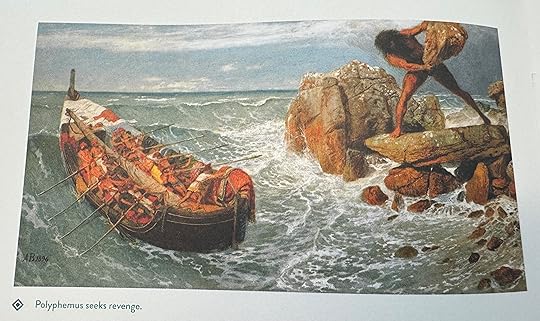
Those ancient Greeks must have been a really odd and peculiar bunch to create such a crazily messed-up pantheon of gods and heroes fueled by vanity, pettiness and rage with an occasional addition of bestiality, torture and murder, and some really, really, REALLY horrifying family dynamics. And what Stephen Fry does well in his retelling of the Odyssey, just as in his other Greek myths retellings, is make the crazy drama feel much more current and understandable without taking away the sheer disaster that it was.
“Trying to present the Odyssey as the story of a faithful, loving husband yearning for his beloved wife is all very well, but given his propensity to father children by women beginning with “C” alone — Circe, Calypso, and now Callidice (which perhaps ironically means “good judgment”) — we have to appraise Odysseus against standards of marital fidelity and monogamy rather different from our own.”
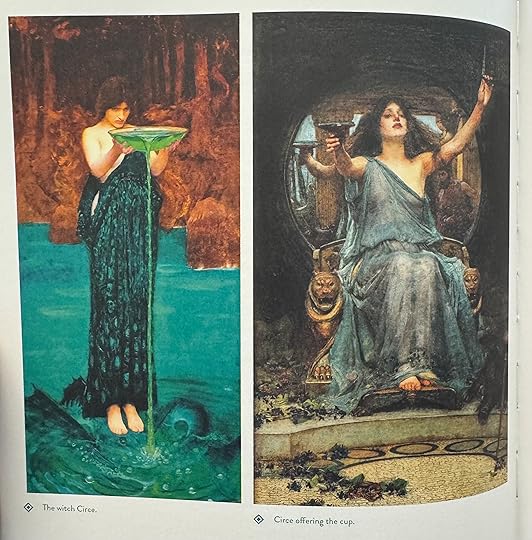
It’s witty and sharp and depends on a lot of context and common sense explanations and recaps of endless previous events that Fry tirelessly provides us with — since unlike those ancient Greeks he has no delusions about contemporary humans being able to keep all of those names in events and strange godly parentages straight without a lot of help.
4 stars.
(Now, if only Stephen Fry could gift us a Greek myth retelling in which enraged Zeus thunderbolts those idiots on the beach who insist on inflicting their questionable music tastes onto everyone within two-mile radius I would be eternally grateful.)
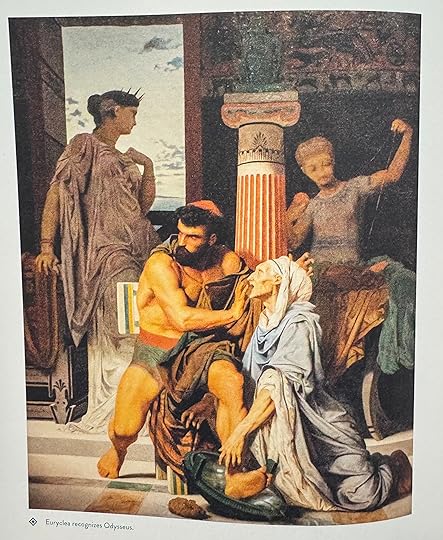

November 29, 2024
I have throughly enjoyed Stephen Fry's Greek Retellings, especially Mythos and Heroes. Whilst Troy was still enjoyable, it was of course the story I am most familiar with of the lot. Odyssey continues in completely the same vein. The intent is to educate people on the story of the Odyssey through the brilliant, sharp, witty mind of Stephen Fry, not to provide a subversive Greek Retelling.
“Was it possible that mortals were beginning to infect the gods with the perverse self-indulgence of inner feelings?”
In light of that, I highly recommend Odyssey, as well as the previous three instalments, to anyone that is not incredibly familiar with these mythological tales. If you do not know the intricate details before diving into this, I believe almost everyone will have a great time as they are carried through the pages by the genius that is Stephen Fry. An addition to the list of the books I would recommend listening to more than physically reading, as Fry narrates the story himself, adding comedic timing to his magnetic writing.
4/5 STARS
“Was it possible that mortals were beginning to infect the gods with the perverse self-indulgence of inner feelings?”
In light of that, I highly recommend Odyssey, as well as the previous three instalments, to anyone that is not incredibly familiar with these mythological tales. If you do not know the intricate details before diving into this, I believe almost everyone will have a great time as they are carried through the pages by the genius that is Stephen Fry. An addition to the list of the books I would recommend listening to more than physically reading, as Fry narrates the story himself, adding comedic timing to his magnetic writing.
4/5 STARS

November 15, 2024
Superb. Loved the Monty Python reference in the appendix ;-)

March 5, 2025
Stephen Fry performed the audiobook and it is wonderful! Odysseus is a “great warrior hero: Odysseus of Ithaca…the schemer, the hero, the winner of the Trojan War”.
I’ve read a number of variations on The Odyssey over the last couple years and I loved the point of view taken from the woman’s point of view (see Penelope and Clytemnestra ).
This version again takes the traditional perspective of Odysseus, but in the epilogue Fry does admit:
Fry weaves in useful context, and wonderful tidbits of language throughout (for instance, the origin of the word “pylon”, and “planet”.)
This was charming and elegant, told by a master storyteller. I’m eager to read the rest of this series.
I’ve read a number of variations on The Odyssey over the last couple years and I loved the point of view taken from the woman’s point of view (see Penelope and Clytemnestra ).
This version again takes the traditional perspective of Odysseus, but in the epilogue Fry does admit:
Trying to present the Odyssey as the story of a faithful loving husband yearning for his beloved wife is all very well. But given his propensity to father children by women beginning with “C” alone…we have to appraise Odysseus against standards of marital fidelity and monogamy rather different from our own.
Fry weaves in useful context, and wonderful tidbits of language throughout (for instance, the origin of the word “pylon”, and “planet”.)
This was charming and elegant, told by a master storyteller. I’m eager to read the rest of this series.

September 19, 2026
I need to begin by stressing that this is a retelling and retellings often take liberties with or stress different perspectives from the original I’m sure if you haven’t read the original or are less invested in that original, it might warrant a high rating. For me, however, Fry’s Odyssey does not jibe well with my ‘Odyssey’. Fry presents Odysseus as the good guy and faithful loving husband which he achieves by leaving out any episodes from the original that goes against that view. In the original. there are things that present a much harsher ‘hero’, and I do like the more complex Odysseus and the trauma he experiences in his homecoming.
I also didn’t like the way Fry dealt with the Gods by reducing them to something like a family sitting around in the kitchen with the father asking how they could possibly want yet another storm. It’s a take, I know, and I should accept it, but it just feels flippant, in my humble opinion. I might have gone on to consider how Fry portrays woman or how I get the feeling that it is storytelling from above with the author trying to dumb the story down for his audience and play it for laughs, but maybe that’s going too far. Don’t mind me or my rant. Read and enjoy.
I also didn’t like the way Fry dealt with the Gods by reducing them to something like a family sitting around in the kitchen with the father asking how they could possibly want yet another storm. It’s a take, I know, and I should accept it, but it just feels flippant, in my humble opinion. I might have gone on to consider how Fry portrays woman or how I get the feeling that it is storytelling from above with the author trying to dumb the story down for his audience and play it for laughs, but maybe that’s going too far. Don’t mind me or my rant. Read and enjoy.

October 18, 2024
The story of the world's most delayed husband is the subject of the final part of Stephen Fry's superlative interpretation of Greek myths. I wasn't too keen on Troy but that's probably because the story is a bit dull - good looking guy "kidnaps" good looking girl then other men go to war for 10 years to get her back - dull no?
However The Odyssey is the story of Odysseus/Ulysses who, having brilliantly won the Trojan War for the Greeks, decides to absolve himself of all decision-making responsibilities and rely on his thoroughly unreliable men to get him home. You'd imagine after the first time they'd steered him wrong that he'd stop listening to them, but Odysseus is such an idiot that he continues to make the same mistake. Consequently, despite being warned several times, he ends up (after various deadly adventures) stuck on an island with the sorceress Calypso for 7 years.
The wonderful thing about the delectabke
Mr Fry is that he injects humour into these stories, he makes them interesting and relevant and I could frankly listen to his dulcet tones every night. I'm saddened that this is the last one.
Of course I've read other Greek retellings and if you want alternative views of the Trojan War I'd highly recommend Natalie Haynes "A Thousand Ships" and for a brilliant look at things from Odysseus' wife, Penelope's, point of view I'd recommend Claire North's interpretation of The Penelopiad (Ithaca, House of Odysseus and Last Song of Penelope).
But Stephen Fry's Greek myths have all been wonderful - Mythos is still my favourite but Heroes and Troy is excellent too. Odyssey is the perfect finish.
However The Odyssey is the story of Odysseus/Ulysses who, having brilliantly won the Trojan War for the Greeks, decides to absolve himself of all decision-making responsibilities and rely on his thoroughly unreliable men to get him home. You'd imagine after the first time they'd steered him wrong that he'd stop listening to them, but Odysseus is such an idiot that he continues to make the same mistake. Consequently, despite being warned several times, he ends up (after various deadly adventures) stuck on an island with the sorceress Calypso for 7 years.
The wonderful thing about the delectabke
Mr Fry is that he injects humour into these stories, he makes them interesting and relevant and I could frankly listen to his dulcet tones every night. I'm saddened that this is the last one.
Of course I've read other Greek retellings and if you want alternative views of the Trojan War I'd highly recommend Natalie Haynes "A Thousand Ships" and for a brilliant look at things from Odysseus' wife, Penelope's, point of view I'd recommend Claire North's interpretation of The Penelopiad (Ithaca, House of Odysseus and Last Song of Penelope).
But Stephen Fry's Greek myths have all been wonderful - Mythos is still my favourite but Heroes and Troy is excellent too. Odyssey is the perfect finish.
July 18, 2026
Three Journeys Through The Odyssey
Emily Wilson challenged me. Gareth Hinds helped me see the story. Stephen Fry helped me understand why it has endured.
⭐⭐⭐ The Odyssey, translated by Emily Wilson
⭐⭐⭐⭐ The Odyssey: A Graphic Novel by Gareth Hinds
⭐⭐⭐⭐⭐ Odyssey by Stephen Fry
Over the past several months, I have experienced The Odyssey in three very different forms: Emily Wilson’s acclaimed translation, Gareth Hinds’s graphic novel adaptation, and Stephen Fry’s lively retelling.
Each offered something valuable. Together, however, they gave me a much fuller appreciation of Homer’s ancient epic than any one version could have provided on its own.
Emily Wilson: Three Stars
Emily Wilson’s translation was my first encounter with The Odyssey. I admired its modern language, clarity, and poetic discipline. Wilson makes Homer feel direct and immediate, while refusing to soften the more troubling elements of the story. Slavery, violence, hierarchy, cruelty, and the treatment of women remain visible throughout.
Yet my response was more intellectual than emotional.
I respected the achievement without fully connecting with the story. At times, I found myself wondering why The Odyssey had carried such an enormous reputation for nearly three thousand years. Wilson’s translation was readable, but the ancient world behind the poem still felt distant to me.
Looking back, I believe I encountered Wilson before I had enough cultural and historical context to fully appreciate what she had accomplished.
Wilson challenged me, but she did not yet make me love the journey.
Gareth Hinds: Four Stars
Gareth Hinds’s beautifully illustrated graphic novel gave me a completely different way into the story.
What it lacks in depth, it more than makes up for in pace, clarity, beauty, and accessibility. Hinds brings the Cyclops, Circe, the Sirens, the gods, the ships, and Odysseus’s long struggle home vividly to life.
The illustrations helped me better understand the structure of the epic. The characters and locations became easier to follow, and the story’s momentum finally emerged.
This is an excellent introduction for younger readers, reluctant readers, or anyone who feels intimidated by the traditional text. It does not replace Homer, but it opens the door.
As a teacher, I especially appreciate what Hinds accomplishes. I look forward to sharing this book with my students next school year and using it to begin conversations about pride, perseverance, loyalty, temptation, hospitality, identity, and the meaning of home.
Hinds helped me see The Odyssey as the gripping adventure story it has always been.
Stephen Fry: Five Stars
Stephen Fry’s Odyssey was the version that finally brought everything together for me.
Fry’s retelling is lighter and more fluid than Wilson’s translation, but it is not shallow. His warmth, humor, and storytelling voice keep the journey moving, while his notes provide the historical and cultural context I had been missing.
I read the Kindle edition while listening to Fry’s narration, and that combination was especially effective. I could follow the names and places on the page while Fry’s voice carried the rhythm, wit, and personality of the story.
His notes were one of the great strengths of the book.
They helped explain Homer’s world without making the experience feel like a lecture. Fry illuminated ancient ideas about hospitality, honor, reputation, loyalty, storytelling, the gods, and the responsibilities of hosts and guests. He also connected the epic to later history, literature, language, and the broader world of antiquity.
Fry did more than retell the adventures. He helped me understand why those adventures mattered.
Ironically, reading Fry also made me appreciate Wilson more. Had I read Fry first, I believe I would have entered Wilson’s translation with a much stronger understanding of the world behind the poem.
Fry gave me the map. Wilson offered the more difficult terrain.
Three Different Doorways Into Homer
Together, these three books demonstrate that accessibility can take many forms.
Emily Wilson brings readers closer to Homer’s poetry and moral complexity.
Gareth Hinds makes the story visible, fast-moving, and approachable.
Stephen Fry provides the context, humor, and insight that make the ancient world feel alive.
Wilson helped me confront The Odyssey.
Hinds helped me see it.
Fry helped me understand—and finally love—it.
Sometimes a classic does not open itself to us through a single reading. Sometimes we need more than one guide.
I am glad I approached The Odyssey this way. Rather than reading three competing versions, I found three companions who each helped me travel a little farther along the road home.
https://substack.com/@lposse1
Emily Wilson challenged me. Gareth Hinds helped me see the story. Stephen Fry helped me understand why it has endured.
⭐⭐⭐ The Odyssey, translated by Emily Wilson
⭐⭐⭐⭐ The Odyssey: A Graphic Novel by Gareth Hinds
⭐⭐⭐⭐⭐ Odyssey by Stephen Fry
Over the past several months, I have experienced The Odyssey in three very different forms: Emily Wilson’s acclaimed translation, Gareth Hinds’s graphic novel adaptation, and Stephen Fry’s lively retelling.
Each offered something valuable. Together, however, they gave me a much fuller appreciation of Homer’s ancient epic than any one version could have provided on its own.
Emily Wilson: Three Stars
Emily Wilson’s translation was my first encounter with The Odyssey. I admired its modern language, clarity, and poetic discipline. Wilson makes Homer feel direct and immediate, while refusing to soften the more troubling elements of the story. Slavery, violence, hierarchy, cruelty, and the treatment of women remain visible throughout.
Yet my response was more intellectual than emotional.
I respected the achievement without fully connecting with the story. At times, I found myself wondering why The Odyssey had carried such an enormous reputation for nearly three thousand years. Wilson’s translation was readable, but the ancient world behind the poem still felt distant to me.
Looking back, I believe I encountered Wilson before I had enough cultural and historical context to fully appreciate what she had accomplished.
Wilson challenged me, but she did not yet make me love the journey.
Gareth Hinds: Four Stars
Gareth Hinds’s beautifully illustrated graphic novel gave me a completely different way into the story.
What it lacks in depth, it more than makes up for in pace, clarity, beauty, and accessibility. Hinds brings the Cyclops, Circe, the Sirens, the gods, the ships, and Odysseus’s long struggle home vividly to life.
The illustrations helped me better understand the structure of the epic. The characters and locations became easier to follow, and the story’s momentum finally emerged.
This is an excellent introduction for younger readers, reluctant readers, or anyone who feels intimidated by the traditional text. It does not replace Homer, but it opens the door.
As a teacher, I especially appreciate what Hinds accomplishes. I look forward to sharing this book with my students next school year and using it to begin conversations about pride, perseverance, loyalty, temptation, hospitality, identity, and the meaning of home.
Hinds helped me see The Odyssey as the gripping adventure story it has always been.
Stephen Fry: Five Stars
Stephen Fry’s Odyssey was the version that finally brought everything together for me.
Fry’s retelling is lighter and more fluid than Wilson’s translation, but it is not shallow. His warmth, humor, and storytelling voice keep the journey moving, while his notes provide the historical and cultural context I had been missing.
I read the Kindle edition while listening to Fry’s narration, and that combination was especially effective. I could follow the names and places on the page while Fry’s voice carried the rhythm, wit, and personality of the story.
His notes were one of the great strengths of the book.
They helped explain Homer’s world without making the experience feel like a lecture. Fry illuminated ancient ideas about hospitality, honor, reputation, loyalty, storytelling, the gods, and the responsibilities of hosts and guests. He also connected the epic to later history, literature, language, and the broader world of antiquity.
Fry did more than retell the adventures. He helped me understand why those adventures mattered.
Ironically, reading Fry also made me appreciate Wilson more. Had I read Fry first, I believe I would have entered Wilson’s translation with a much stronger understanding of the world behind the poem.
Fry gave me the map. Wilson offered the more difficult terrain.
Three Different Doorways Into Homer
Together, these three books demonstrate that accessibility can take many forms.
Emily Wilson brings readers closer to Homer’s poetry and moral complexity.
Gareth Hinds makes the story visible, fast-moving, and approachable.
Stephen Fry provides the context, humor, and insight that make the ancient world feel alive.
Wilson helped me confront The Odyssey.
Hinds helped me see it.
Fry helped me understand—and finally love—it.
Sometimes a classic does not open itself to us through a single reading. Sometimes we need more than one guide.
I am glad I approached The Odyssey this way. Rather than reading three competing versions, I found three companions who each helped me travel a little farther along the road home.
https://substack.com/@lposse1

September 28, 2024
The 4th and (hopefully not) last of Fry's books retelling Greek mythology has us follow Odysseus on his way home after the Trojan War. Talk about a road trip with road blocks. *lol*

Odysseus has made some divine enemies by coming up with the tactic that brought about Troy's fall, but also through some other in-/actions. Thus, when he and his small fleet sail home, they are stormtossed from island to island and meet cyclopses, sirens, witches, gods and other creatures and people while Odysseus' wife, Penelope, is left home to raise their son alone and, ultimately, fight off a host of impertinent suitors.
To think how much more quickly he could have been home if Poseidon attended all meetings as required and if Odysseus' men had heeded commands (after all the battles fought together, one could have expected better of them)!

Anyway, the story is very well known, but the way Fry tells it is fresh and new, though always faithful to the original and respectful in tone in a way that absolutely befits the original.
Fry's version is also speckled with references to the previous 3 books and the stories retold in those.
And he's once again giving the same kind of cultural references we're used to by now.
So much from history, linguistics and even biology makes more sense if one knows the relation between it all and Fry has a wonderful way of bringing it all together in a holistic way.
A wonderful breakdown of this massive tale that jumps from here to there and even from the "present day" to flashbacks and then the future.
Honestly, I had not known the correct order (from the original) since all the versions I encountered to far seem to have streamlined the plot - which is the wrong thing to do since it makes the reader miss some important connections (not to mention that the original way the story was told is more thrilling and has sorts of cliffhangers and a better flow within the story).
Stephen Fry guiding us through all the disasters, betrayals, ensanarements, intrigues and quests and in the order they are said to have occurred, was comforting and brilliant.
I have both the wonderfully shiny (and signed) hardcover

but I also listened to the audiobook because the author narrated it himself and his voice is like a drug (without any negative side-effects) to me.
Gorgeous voyage through history and mythology, rich with details and told in a magnificent way. Read it! I know you'll love it!
P.S.: My only regret is that I didn't take my time reading this book and posting many funny gifs in the status updates. *lol* It lends itself perfectly to that. Oh well, I can always do that when re-reading this book (which might be soon indeed because it's so good)!
Odysseus has made some divine enemies by coming up with the tactic that brought about Troy's fall, but also through some other in-/actions. Thus, when he and his small fleet sail home, they are stormtossed from island to island and meet cyclopses, sirens, witches, gods and other creatures and people while Odysseus' wife, Penelope, is left home to raise their son alone and, ultimately, fight off a host of impertinent suitors.
To think how much more quickly he could have been home if Poseidon attended all meetings as required and if Odysseus' men had heeded commands (after all the battles fought together, one could have expected better of them)!
Anyway, the story is very well known, but the way Fry tells it is fresh and new, though always faithful to the original and respectful in tone in a way that absolutely befits the original.
Fry's version is also speckled with references to the previous 3 books and the stories retold in those.
And he's once again giving the same kind of cultural references we're used to by now.
So much from history, linguistics and even biology makes more sense if one knows the relation between it all and Fry has a wonderful way of bringing it all together in a holistic way.
A wonderful breakdown of this massive tale that jumps from here to there and even from the "present day" to flashbacks and then the future.
Honestly, I had not known the correct order (from the original) since all the versions I encountered to far seem to have streamlined the plot - which is the wrong thing to do since it makes the reader miss some important connections (not to mention that the original way the story was told is more thrilling and has sorts of cliffhangers and a better flow within the story).
Stephen Fry guiding us through all the disasters, betrayals, ensanarements, intrigues and quests and in the order they are said to have occurred, was comforting and brilliant.
I have both the wonderfully shiny (and signed) hardcover
but I also listened to the audiobook because the author narrated it himself and his voice is like a drug (without any negative side-effects) to me.
Gorgeous voyage through history and mythology, rich with details and told in a magnificent way. Read it! I know you'll love it!
P.S.: My only regret is that I didn't take my time reading this book and posting many funny gifs in the status updates. *lol* It lends itself perfectly to that. Oh well, I can always do that when re-reading this book (which might be soon indeed because it's so good)!

February 6, 2025
Very entertaining re-telling of Homer's Odyssey in an arty presentation. Thank the Gods for the useful appendix (Greek names aren't my strength).

December 19, 2025
This is the last entry of Stephen Fry’s Greek mythology series. Love it. Love it. It is very readable & quite the page turner. I love how the author comprised the book with short sections that’s made up of even shorter chapters. The author’s version of the Odyssey was definitely a lot more fun to read than the original version I had to read for my high school English class… Definitely a strong recommend.

November 17, 2024
۳.۵/۵
«وقتی آهنگِ ایتاک داری، راه
گو که دور باش و دراز،
سرشار از تجربه سرشارِ ماجرا.»
نوشتن این یادداشت آسان نبود. شاید به همین دلیل، تا توانستم آن را به تأخیر انداختم. نوشتنش به معنای خداحافظی بود؛ با صدای مخملی استیون فرای که این سالها در گوشم از اساطیر یونان میگفت. قصههایی که سالها پیش مرا مسحور این جهان شگفتانگیز کردند. خداحافظی با بازگشت دوبارهام به این صدا، وقتی که یادم آورد چرا اسطورهها و خواندن و نوشتن دربارهشان را دوست دارم. خداحافظی با چهار کتابی که داستانشان از گایا و اورانوس آغاز شد و با اودیسه و پنلوپه به پایان رسید. تجربهی خواندن و شنیدن این کتابها، آنهم با صدای نویسنده، از خوشبختیهای بزرگ زندگیام بود.
اما کتاب چهارم، کتاب آخر، قصهی اودیسه
کنستانتین کاوافی شعری دارد به نام ایتاک (که ترجمهی بیژن الهی از آن را ابتدای یادداشت آوردم) و این کتاب نیز با همان شعر آغاز میشود. شعری که بهخوبی ارزش ایتاک برای اودیسه را نشان میدهد. ایتاک، همان مقصد نهایی است؛ بهشت و غایتی که هر کدام از ما در ذهنمان میسازیم، زمینی که در آن آرام خواهیم گرفت، یک بار و برای همیشه. در این سفر نباید تعجیل کرد، نباید از قدم بازایستاد، نباید ترسید و نباید امید را از دست داد. باید چشم دوخت به چراغ سبزی که از آن سوی آبها و دریاها به ما چشمک میزند.
و من مشتاقانه میخواستم که از این سفر بخوانم. این کتاب و در واقع اودیسهای که هومر آن را تألیف کرده بیش از آنکه صرفاً گزارشی از سفر بازگشت اودسئوس به خانهاش ایتاک باشد، گزارشی پراکنده از اتفاقات پس از جنگ تروا است. پراکندگی این روایت هرچند ناشی از منبع اصلی است، اما امید داشتم با شیطنت، طنازی و البته قصهگویی منحصربهفردی که از استیون فرای سراغ دارم معجزهای در داستان رخ دهد و قصهی بازگشت این قهرمان را کمی برایم جذابتر کند. گلهای نیست، او وفادار بوده به متن اصلی و همین میتواند اتفاقاً ارزش کارش باشد اما با پیشفرضهایی که من از کتاب و از فرای داشتم، کمی فاصله داشت.
اما بیش از آن، ایتاک و پنلوپهای که در آن به انتظار بازگشت اودیسه زندگی میکند در چند ماه گذشته و شاید در چند سال پیشرو به درونمایهی قصهی زندگی خودم تبدیل شدهاند. از این روست که شاید نه این کتاب اما قطعا این «قصه» برایم مهم و تاثیرگذار است. برای همین این چند ماه شعر کاوافی را مدام زیر لب زمزمه میکنم و به خاطر دارم که باید همیشه فکر ایتاک باشم. چراکه مقصد نهاییست، مکان وصال است، نوید به ثمر رسیدن عشق؛ همان عشقی که روزهایم را به امیدش سپری میکنم.
قصهی اودیسه را هرچند آنطور که میخواستم نبود خواندم به این امید که نترسم از لِسْترینگُنها، از تکچشمها و از نپتون خشمناک، آن خدای دریاها و بادها. به امید بادهای موافق، بادبانهای استوار، و سفری که یکسره مرا به ایتاکا و عشق برساند.
«همیشه فکر ایتاک باش: هرگز از یاد مبر
که آخرین مقصد توست.
اما نشِتاب در سفر.»
پینوشت: در این متن ایتاک را به عنوان مقصد نهایی در نظر گرفتهام و پنلوپه و اودیسه را «با اغماض» عاشق و معشوق. در رابطه با این ارتباط حرفهای بیشتری دارم که در این یادداشت نمیگنجد، اما برای درست درآمدن استعارهای که در ذهنم به آن چنگ میزنم، حداقل برای مدتی مجبور هستم این دو را عاشق و معشوق در نظر بگیرم. اما آنچه همیشه برای مسلم است، دلبهخواه بودن ایتاک است.
«وقتی آهنگِ ایتاک داری، راه
گو که دور باش و دراز،
سرشار از تجربه سرشارِ ماجرا.»
نوشتن این یادداشت آسان نبود. شاید به همین دلیل، تا توانستم آن را به تأخیر انداختم. نوشتنش به معنای خداحافظی بود؛ با صدای مخملی استیون فرای که این سالها در گوشم از اساطیر یونان میگفت. قصههایی که سالها پیش مرا مسحور این جهان شگفتانگیز کردند. خداحافظی با بازگشت دوبارهام به این صدا، وقتی که یادم آورد چرا اسطورهها و خواندن و نوشتن دربارهشان را دوست دارم. خداحافظی با چهار کتابی که داستانشان از گایا و اورانوس آغاز شد و با اودیسه و پنلوپه به پایان رسید. تجربهی خواندن و شنیدن این کتابها، آنهم با صدای نویسنده، از خوشبختیهای بزرگ زندگیام بود.
اما کتاب چهارم، کتاب آخر، قصهی اودیسه
کنستانتین کاوافی شعری دارد به نام ایتاک (که ترجمهی بیژن الهی از آن را ابتدای یادداشت آوردم) و این کتاب نیز با همان شعر آغاز میشود. شعری که بهخوبی ارزش ایتاک برای اودیسه را نشان میدهد. ایتاک، همان مقصد نهایی است؛ بهشت و غایتی که هر کدام از ما در ذهنمان میسازیم، زمینی که در آن آرام خواهیم گرفت، یک بار و برای همیشه. در این سفر نباید تعجیل کرد، نباید از قدم بازایستاد، نباید ترسید و نباید امید را از دست داد. باید چشم دوخت به چراغ سبزی که از آن سوی آبها و دریاها به ما چشمک میزند.
و من مشتاقانه میخواستم که از این سفر بخوانم. این کتاب و در واقع اودیسهای که هومر آن را تألیف کرده بیش از آنکه صرفاً گزارشی از سفر بازگشت اودسئوس به خانهاش ایتاک باشد، گزارشی پراکنده از اتفاقات پس از جنگ تروا است. پراکندگی این روایت هرچند ناشی از منبع اصلی است، اما امید داشتم با شیطنت، طنازی و البته قصهگویی منحصربهفردی که از استیون فرای سراغ دارم معجزهای در داستان رخ دهد و قصهی بازگشت این قهرمان را کمی برایم جذابتر کند. گلهای نیست، او وفادار بوده به متن اصلی و همین میتواند اتفاقاً ارزش کارش باشد اما با پیشفرضهایی که من از کتاب و از فرای داشتم، کمی فاصله داشت.
اما بیش از آن، ایتاک و پنلوپهای که در آن به انتظار بازگشت اودیسه زندگی میکند در چند ماه گذشته و شاید در چند سال پیشرو به درونمایهی قصهی زندگی خودم تبدیل شدهاند. از این روست که شاید نه این کتاب اما قطعا این «قصه» برایم مهم و تاثیرگذار است. برای همین این چند ماه شعر کاوافی را مدام زیر لب زمزمه میکنم و به خاطر دارم که باید همیشه فکر ایتاک باشم. چراکه مقصد نهاییست، مکان وصال است، نوید به ثمر رسیدن عشق؛ همان عشقی که روزهایم را به امیدش سپری میکنم.
قصهی اودیسه را هرچند آنطور که میخواستم نبود خواندم به این امید که نترسم از لِسْترینگُنها، از تکچشمها و از نپتون خشمناک، آن خدای دریاها و بادها. به امید بادهای موافق، بادبانهای استوار، و سفری که یکسره مرا به ایتاکا و عشق برساند.
«همیشه فکر ایتاک باش: هرگز از یاد مبر
که آخرین مقصد توست.
اما نشِتاب در سفر.»
پینوشت: در این متن ایتاک را به عنوان مقصد نهایی در نظر گرفتهام و پنلوپه و اودیسه را «با اغماض» عاشق و معشوق. در رابطه با این ارتباط حرفهای بیشتری دارم که در این یادداشت نمیگنجد، اما برای درست درآمدن استعارهای که در ذهنم به آن چنگ میزنم، حداقل برای مدتی مجبور هستم این دو را عاشق و معشوق در نظر بگیرم. اما آنچه همیشه برای مسلم است، دلبهخواه بودن ایتاک است.

February 13, 2026
Чудовий ретелінг Гомерової Одіссеї з масою цікавих приміток. Фрай вміє писати захопливо.
Можливо, ця книга не настільки фанова, як Міфи чи Герої. Правда, це може бути проблема в перекладі, адже перші 3 книги читав англійською.
Ps: перед переглядом фільму Нолана це однозначний мастрід
Можливо, ця книга не настільки фанова, як Міфи чи Герої. Правда, це може бути проблема в перекладі, адже перші 3 книги читав англійською.
Ps: перед переглядом фільму Нолана це однозначний мастрід

November 27, 2024
Good retelling of Homer's Odyssey by the author

October 3, 2024
این مجموعه تمام شد
واقعا یکی از بهترین مجموعههایی بود که از اساطیر یونان خوندم.
واقعا یکی از بهترین مجموعههایی بود که از اساطیر یونان خوندم.

August 21, 2026
Listened. Stephen Fry wrote it. Stephen Fry read it.
Perfection on both accounts.
Perhaps now I will go see the film.
Perfection on both accounts.
Perhaps now I will go see the film.

Read
July 19, 2026Very accesible retelling. Great on audio. Delighted by how much was vaguely familiar to me from just like, existing in the world.
Penelope though girl you should have STOOd tF UP.
Penelope though girl you should have STOOd tF UP.

September 29, 2024
Rating: 5/5 stars
In this fourth installment, Fry tackles one of the most enduring and beloved tales of classical literature: Homer's Odyssey. True to form, Fry delivers a retelling that is both faithful to the original and refreshingly modern, making the ancient epic accessible and utterly captivating for contemporary readers.
Fry's prose is, as always, a delight. His wit, charm, and erudition shine through every page, bringing the world of Odysseus to vivid life. The author's passion for the material is evident throughout, infusing the narrative with an infectious enthusiasm.
While the book is a joy from start to finish, its only fault might be that it leaves the reader wanting more. As the latest entry in Fry's Greek mythology series, ´Odyssey’ continues a journey that many fans hope will not end here. The depth and breadth of Fry's knowledge, combined with his storytelling prowess, could easily have sustained a work twice as long without losing its appeal.
Pros:
- Masterful retelling of a classic epic
- Fry's witty, engaging prose
- Insightful commentary and contextualisation
- Brings ancient characters to life for modern readers
- Balances humor and gravitas expertly
Cons:
- Leaves readers wanting more (which is hardly a complaint)
Stephen Fry's ´Odyssey’ earns a well-deserved 5 out of 5 stars, standing not only as a superb retelling of Homer's epic but also as a stellar addition to Fry's Greek mythology quartet. In the end, "Odyssey" leaves us with a sense of anticipation - grateful for the journey we've been on with Fry as our guide.
In this fourth installment, Fry tackles one of the most enduring and beloved tales of classical literature: Homer's Odyssey. True to form, Fry delivers a retelling that is both faithful to the original and refreshingly modern, making the ancient epic accessible and utterly captivating for contemporary readers.
Fry's prose is, as always, a delight. His wit, charm, and erudition shine through every page, bringing the world of Odysseus to vivid life. The author's passion for the material is evident throughout, infusing the narrative with an infectious enthusiasm.
While the book is a joy from start to finish, its only fault might be that it leaves the reader wanting more. As the latest entry in Fry's Greek mythology series, ´Odyssey’ continues a journey that many fans hope will not end here. The depth and breadth of Fry's knowledge, combined with his storytelling prowess, could easily have sustained a work twice as long without losing its appeal.
Pros:
- Masterful retelling of a classic epic
- Fry's witty, engaging prose
- Insightful commentary and contextualisation
- Brings ancient characters to life for modern readers
- Balances humor and gravitas expertly
Cons:
- Leaves readers wanting more (which is hardly a complaint)
Stephen Fry's ´Odyssey’ earns a well-deserved 5 out of 5 stars, standing not only as a superb retelling of Homer's epic but also as a stellar addition to Fry's Greek mythology quartet. In the end, "Odyssey" leaves us with a sense of anticipation - grateful for the journey we've been on with Fry as our guide.

October 1, 2026
overall rating: 4.25 ★
genre/tropes: greek mythology
epic (the musical) truly convinced me of odysseus' unwavering loyalty to his wife. so it's quite shocking to read he ends up siring children with, not one, not two, but THREE women whose names start with the letter C.
+0.25 points for the achilles cameo (my beloved) and the sarcasm.
i should've read the first books before jumping into this one.
─────
pre-read: when does a man become a monster?
genre/tropes: greek mythology
epic (the musical) truly convinced me of odysseus' unwavering loyalty to his wife. so it's quite shocking to read he ends up siring children with, not one, not two, but THREE women whose names start with the letter C.
+0.25 points for the achilles cameo (my beloved) and the sarcasm.
i should've read the first books before jumping into this one.
─────
pre-read: when does a man become a monster?

February 7, 2025
Stephen Fry's Greek Retellings is an impressive feat of entertainment while being educationally rich.
There has evidently been an influx of Greek retellings through alternate perspectives after the hugely beloved Madeline Miller novels Circe and The Song of Achilles. Of course it would be silly to suggest there were none prior, in terms of fiction Helen by Margaret George, Lavinia by Ursula K. Le Guin, and others were critically acclaimed (just didn’t capture the market akin to Madeline Miller). This is not even mentioning the many retellings during the ancient days.
Stephen Fry’s retelling of these great myths isn’t here to provide a drastically different perspective, it’s not even a fictional retelling creating a modern twist, inventing things that weren’t in the original sources. This is pretty much a nonfictional book, retelling these narratives as accurately as possible with Fry’s modern language, wit, and so forth. The best equivalent would be Mythology by Edith Hamilton. However, Edith is better versed in terms of teaching, as the sources are there (better reference material), retellings are short and concise (which I say to its detriment), and Edith caps it off with her intelligence and insight.
Diving into Homer can be very overwhelming because there are so many references to tales outside of the Iliad and the Odyssey. Furthermore, it could be difficult to introduce people to the myths with Hesiod or Ovid’s writings. Stephen Fry is the solution. It isn’t perfect, but it’s damn excellent in what it intends to achieve. You can’t help but be enraptured by it all. Fry’s bouncing between so many different sources so smoothly, providing extra context through footnotes and so forth. I was somewhat hesitant reading this one because a friend of mine didn’t like it nearly as much as the others, but thankfully that wasn’t the case for me.
That said, this felt less impressive than Troy because of the abundance of sources there in comparison to this book. Here we got Odyssey, Agamemnon (plays by many playwrights of that time), and Aeneid, and maybe others (Telegony is touched upon) I haven’t noticed or simply forgot. In terms of the story, it retells well; it’s the Odyssey and various plays of Agamemnon, so yes, it’s wonderful to read. Fry’s conversational style, I think, was the best suited for Mythos because of the nature of the material, but I still enjoyed it how it was deployed here. I really enjoyed the last two chapters with Fry’s overall musings about certain topics and the series existence and caps off this great series wonderfully.
If I had to highlight a weakness, the conversational writing style can go against the tale Fry is exploring. Character voice can merge and feel less distinct (and less bite) because sometimes it’s too modern to its fault. However, this is a very minor grand scheme of things in comparison to its strengths. If you have an emotional anchor to the myths, you feel for characters, you understand the broad plot and the message it evokes, and yeah, a very minor “problem” in terms of the tales as a whole.
In conclusion, Fry’s retelling of Greek myths ends up as a success. It’s a fantastic primer to Greek mythology and everything it entails without sacrificing detail, which is one of the shortcomings of Edith Hamilton's work. When I read Troy many years ago, I read the Iliad soon afterwards, and it was such a wonderful experience, the same will be done again. I’m excited to get into the original tale of Homer after pausing it for so long (for no fault of its quality). I’m glad our generation has these books, as it’s so easy to recommend where to start with Greek myths that are accurate to the originals.
7.5/10
There has evidently been an influx of Greek retellings through alternate perspectives after the hugely beloved Madeline Miller novels Circe and The Song of Achilles. Of course it would be silly to suggest there were none prior, in terms of fiction Helen by Margaret George, Lavinia by Ursula K. Le Guin, and others were critically acclaimed (just didn’t capture the market akin to Madeline Miller). This is not even mentioning the many retellings during the ancient days.
Stephen Fry’s retelling of these great myths isn’t here to provide a drastically different perspective, it’s not even a fictional retelling creating a modern twist, inventing things that weren’t in the original sources. This is pretty much a nonfictional book, retelling these narratives as accurately as possible with Fry’s modern language, wit, and so forth. The best equivalent would be Mythology by Edith Hamilton. However, Edith is better versed in terms of teaching, as the sources are there (better reference material), retellings are short and concise (which I say to its detriment), and Edith caps it off with her intelligence and insight.
Diving into Homer can be very overwhelming because there are so many references to tales outside of the Iliad and the Odyssey. Furthermore, it could be difficult to introduce people to the myths with Hesiod or Ovid’s writings. Stephen Fry is the solution. It isn’t perfect, but it’s damn excellent in what it intends to achieve. You can’t help but be enraptured by it all. Fry’s bouncing between so many different sources so smoothly, providing extra context through footnotes and so forth. I was somewhat hesitant reading this one because a friend of mine didn’t like it nearly as much as the others, but thankfully that wasn’t the case for me.
That said, this felt less impressive than Troy because of the abundance of sources there in comparison to this book. Here we got Odyssey, Agamemnon (plays by many playwrights of that time), and Aeneid, and maybe others (Telegony is touched upon) I haven’t noticed or simply forgot. In terms of the story, it retells well; it’s the Odyssey and various plays of Agamemnon, so yes, it’s wonderful to read. Fry’s conversational style, I think, was the best suited for Mythos because of the nature of the material, but I still enjoyed it how it was deployed here. I really enjoyed the last two chapters with Fry’s overall musings about certain topics and the series existence and caps off this great series wonderfully.
If I had to highlight a weakness, the conversational writing style can go against the tale Fry is exploring. Character voice can merge and feel less distinct (and less bite) because sometimes it’s too modern to its fault. However, this is a very minor grand scheme of things in comparison to its strengths. If you have an emotional anchor to the myths, you feel for characters, you understand the broad plot and the message it evokes, and yeah, a very minor “problem” in terms of the tales as a whole.
In conclusion, Fry’s retelling of Greek myths ends up as a success. It’s a fantastic primer to Greek mythology and everything it entails without sacrificing detail, which is one of the shortcomings of Edith Hamilton's work. When I read Troy many years ago, I read the Iliad soon afterwards, and it was such a wonderful experience, the same will be done again. I’m excited to get into the original tale of Homer after pausing it for so long (for no fault of its quality). I’m glad our generation has these books, as it’s so easy to recommend where to start with Greek myths that are accurate to the originals.
7.5/10
July 15, 2026
A Value-Added Odyssey Story
A review of the Chronicle Books audiobook (September 25, 2024) narrated by the author and released simultaneously with the hardcover/eBook.
As with Stephen Fry's Troy (2020), I was impressed by how much additional background, context and detail Fry put into his retelling of The Odyssey. With the audiobook, this was further enhanced by Fry's skills as a narrator in all voices with the occasional sly aside in his own inimitable style. The conclusion also had Fry editorializing on the modern day views of gods and likening the human creation of AI to Prometheus giving fire to humans over the objections of Zeus.
The enhanced elements included a recounting of The Oresteia: Agamemnon, The Libation Bearers, The Eumenides where we learn the fates of Agamemnon and his family after the Trojan War. The one redaction that I noticed was that the executions of the 12 unfaithful maids of Penelope (Book 22 in Homer) was not mentioned. Probably that part of the story sounded too cold-blooded and brutal for modern day sensibilities.
In both cases, I borrowed the hardcover editions from the library in order to transcribe some quotes to use for periodic status updates as is my usual practice.
Trivia and Links
Because I also had the hardcover edition to refer to, I had the benefit of the added illustrations, many of which were from classic painters and sculptors depicting the events of The Odyssey and the characters and gods involved. The other bonus to a print edition is that Fry provides a detailed Cast of Characters which you can refer back to when you start to wonder "Who was that again?" Both of those are not available in the audiobook edition.
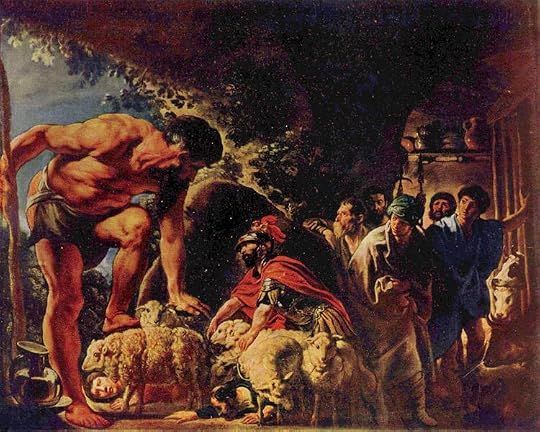
Odysseus in the Cave of Polyphemus (c. 1635) a painting by Jacob Jordaens. Image sourced from Wikiart.
I haven't seen it yet, but I've been reading a lot of advance criticism of Christopher Nolan's film The Odyssey (2026) which attacks its modern day dialogue and inauthentic armour. I was curious to look up what Bronze Age armour would have looked like and found a modern day metal artisan who creates replicas.
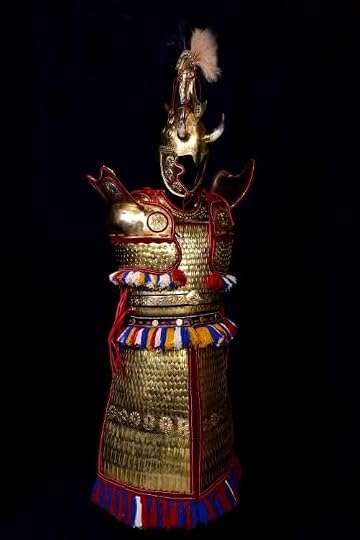
A proposed authentic bronze age Greek armour as would have only been worn by Kings or Top Commanders. Regular soldiers would have had little or no armour. Image sourced from the Twitter/X account of Dimitris Katsikis aka HellenicArmors.
You can probably see why Nolan went with Classical Age Greek armour as his model, as the above would have seemed too unfamiliar to most modern audiences who picture Ancient Greek clothing and armour as depicted in most previous art works, films and adaptations.
A review of the Chronicle Books audiobook (September 25, 2024) narrated by the author and released simultaneously with the hardcover/eBook.
"Good," said Odysseus. "That's all I wanted to know. You two take your animals to the kitchens, and I'll find myself a place in the hall. Something tells me this is going to be an evening none of us will ever forget."
As with Stephen Fry's Troy (2020), I was impressed by how much additional background, context and detail Fry put into his retelling of The Odyssey. With the audiobook, this was further enhanced by Fry's skills as a narrator in all voices with the occasional sly aside in his own inimitable style. The conclusion also had Fry editorializing on the modern day views of gods and likening the human creation of AI to Prometheus giving fire to humans over the objections of Zeus.
The enhanced elements included a recounting of The Oresteia: Agamemnon, The Libation Bearers, The Eumenides where we learn the fates of Agamemnon and his family after the Trojan War. The one redaction that I noticed was that the executions of the 12 unfaithful maids of Penelope (Book 22 in Homer) was not mentioned. Probably that part of the story sounded too cold-blooded and brutal for modern day sensibilities.
In both cases, I borrowed the hardcover editions from the library in order to transcribe some quotes to use for periodic status updates as is my usual practice.
Trivia and Links
Because I also had the hardcover edition to refer to, I had the benefit of the added illustrations, many of which were from classic painters and sculptors depicting the events of The Odyssey and the characters and gods involved. The other bonus to a print edition is that Fry provides a detailed Cast of Characters which you can refer back to when you start to wonder "Who was that again?" Both of those are not available in the audiobook edition.
Odysseus in the Cave of Polyphemus (c. 1635) a painting by Jacob Jordaens. Image sourced from Wikiart.
I haven't seen it yet, but I've been reading a lot of advance criticism of Christopher Nolan's film The Odyssey (2026) which attacks its modern day dialogue and inauthentic armour. I was curious to look up what Bronze Age armour would have looked like and found a modern day metal artisan who creates replicas.
A proposed authentic bronze age Greek armour as would have only been worn by Kings or Top Commanders. Regular soldiers would have had little or no armour. Image sourced from the Twitter/X account of Dimitris Katsikis aka HellenicArmors.
You can probably see why Nolan went with Classical Age Greek armour as his model, as the above would have seemed too unfamiliar to most modern audiences who picture Ancient Greek clothing and armour as depicted in most previous art works, films and adaptations.

July 26, 2026
Another winner from Stephen Fry. I've read all 4 books in this series and love them all.
Just saw the movie and it was awesome. Some of the choices they made were interesting - the heavy focus on guilt and "Zeus's Law" for instance. A different Director would have emphasized different themes. But that's part of the fun.
Just saw the movie and it was awesome. Some of the choices they made were interesting - the heavy focus on guilt and "Zeus's Law" for instance. A different Director would have emphasized different themes. But that's part of the fun.

September 10, 2026
The tale of Odyssey does not need to be reviewed, but an audiobook narrated by Stephen Fry is always a treat, so combining a classic with Fry's voice results in a 5 star review.

June 29, 2026
Когато тръгнеш нявга за Итака…: https://knigolandia.info/odiseya/
"Когато тръгнеш нявга за Итака,
моли се пътят ти да е далечен,
изпълнен с перипетии и знания."
Из „Итака“ на Константинос Кавафис, превод: Стефан Гечев
Когато бях дете, имахме две детски издания на „Илиада“ и „Одисея“ (намерих снимка на второто), които четях и препрочитах безспир, бяха се превърнали в настолни книги за мен и събудиха както интерес към гръцката митология, така и към приключенските книги изобщо. Защото „Одисея“ е безспорно най-знаковата приключенска история (не и най-старата, там можем да дадем първенството на шумереца Гилгамеш, макар че не бих се обзаложил за това), а в забавния, разчупен, но все пак уважителен към оригинала преразказ на Стивън Фрай (след „Митове“, „Герои“ и „Троя“) няма как да не е завладяващо четиво. Като цяло имах желание да прочета и да пиша за книгата преди да е започнала драмата около екранизацията на Кристофър Нолан, но нейсе.
Издателство "Еднорог"
https://knigolandia.info/odiseya/
"Когато тръгнеш нявга за Итака,
моли се пътят ти да е далечен,
изпълнен с перипетии и знания."
Из „Итака“ на Константинос Кавафис, превод: Стефан Гечев
Когато бях дете, имахме две детски издания на „Илиада“ и „Одисея“ (намерих снимка на второто), които четях и препрочитах безспир, бяха се превърнали в настолни книги за мен и събудиха както интерес към гръцката митология, така и към приключенските книги изобщо. Защото „Одисея“ е безспорно най-знаковата приключенска история (не и най-старата, там можем да дадем първенството на шумереца Гилгамеш, макар че не бих се обзаложил за това), а в забавния, разчупен, но все пак уважителен към оригинала преразказ на Стивън Фрай (след „Митове“, „Герои“ и „Троя“) няма как да не е завладяващо четиво. Като цяло имах желание да прочета и да пиша за книгата преди да е започнала драмата около екранизацията на Кристофър Нолан, но нейсе.
Издателство "Еднорог"
https://knigolandia.info/odiseya/

January 17, 2026
Oh this was fun! I’m very glad I read this on the heels of reading Emily Wilson’s very excellent translation of The Odyssey so everything was fresh in my mind. I enjoyed Fry’s humour and I think he might have helped shed a light on some things for me, or at least given some questionable things some perspective. An example of things that made me go hmmm…why did he keep his identity secret when finally reaching home but of course it had been 20 years and look how things turned out for Agamemnon (though he could have been the inspiration for a verse in He Had it Coming in the musical, Chicago) so I really enjoyed this and I’m looking forward to reading his other books after I’ve read the Iliad. Though I know the stories (for the most part. I surprised to learn that in one version Iphigenia was saved!) I still get caught up and enthralled when reading them and that’s pretty remarkable because despite how old the stories are and the difference in cultures there is something still very relatable and relevant for us. As people we haven’t really seemed to have come so far and I think that just adds to the draw of reading these old myths.

May 7, 2026
Huge

February 8, 2022
As a child, I was positively obsessed with the Odyssey, so I know the story very well… but to my delight, the fourth and final book in Stephen Fry’s series of Greek Myths was captivating and fresh, because it wasn’t the straight retelling of the titular Homeric source I had been expecting. Fry picks up right where he left off: The Trojan War has been won, the city sacked, Helen retrieved, and the surviving Greeks are now preparing to sail home to their respective kingdoms… and it’s perfectly fair to say that some will have a much easier time of it than others. By masterfully weaving in parts of Aeschylus’ Oresteia and other tragedies, Fry ties up the stories of all the returning Achaean heroes, thus taking as many detours in his narrative as Odysseus does on his twenty-year long struggle to return home to Ithaca.
My favorite tangent was Agamemnon’s homecoming and the cycle of bloody retribution that follows—we don’t properly get to Odysseus until somewhere around the halfway mark. To my shame, this is how I learned that modern retellings tend to streamline the Odyssey; the original is actually one of literature’s first fragmented narratives, starting in medias res and making ample use of flashbacks. Fry staying true to the original structure worked for me because I know the story so well and his enthusiasm carried me right along, but I could see how readers unfamiliar with these myths may feel storm-tossed by the non-linearity and many tangents.
I have always preferred the Odyssey over the Iliad because it’s the more timeless and relatable tale: It’s about the longing for home, perseverance, redemption… and sweet, sweet revenge. However, even Fry can’t twist the source enough to paint Odysseus as a loyal, loving husband: While his wife is staving off impertinent suitors who are trying to usurp his throne, he is fathering children all over the Mediterranean. So, to make the story at least a little less morally ambiguous, he ends up conveniently omitting the hanging of Penelope’s handmaids.
The prose is designed to make the tale more accessible to modern audiences too, and is injected with humor. Fry’s passion for the material shines through in every charming, vivid sentence, as well as the occasional flashes of poetry… and, as usual, there’s a lot of footnotes-action. Many refer back to relevant stories from the previous books or clarify pronunciations, but the best are always the one where he digresses and goes into linguistics, idioms, or offers up various theories. I loved the afterword, which dips its toes into Virgil’s Aeneid while nicely tying up the narrative arc of this Greek Myths series: From titans, gods, demigods, heroes, and mortals in whose affairs the gods frequently and freely meddled, by the end of this fourth volume, Fry has successfully guided us to the cusp of an era in which mankind had to find its own way.
—————
My reviews of Stephen Fry's Greek Myths series:
01: Mythos · ★★★★
02: Heroes · ★★★
03: Troy · ★★★★
04: Odyssey · ★★★★
My favorite tangent was Agamemnon’s homecoming and the cycle of bloody retribution that follows—we don’t properly get to Odysseus until somewhere around the halfway mark. To my shame, this is how I learned that modern retellings tend to streamline the Odyssey; the original is actually one of literature’s first fragmented narratives, starting in medias res and making ample use of flashbacks. Fry staying true to the original structure worked for me because I know the story so well and his enthusiasm carried me right along, but I could see how readers unfamiliar with these myths may feel storm-tossed by the non-linearity and many tangents.
I have always preferred the Odyssey over the Iliad because it’s the more timeless and relatable tale: It’s about the longing for home, perseverance, redemption… and sweet, sweet revenge. However, even Fry can’t twist the source enough to paint Odysseus as a loyal, loving husband: While his wife is staving off impertinent suitors who are trying to usurp his throne, he is fathering children all over the Mediterranean. So, to make the story at least a little less morally ambiguous, he ends up conveniently omitting the hanging of Penelope’s handmaids.
The prose is designed to make the tale more accessible to modern audiences too, and is injected with humor. Fry’s passion for the material shines through in every charming, vivid sentence, as well as the occasional flashes of poetry… and, as usual, there’s a lot of footnotes-action. Many refer back to relevant stories from the previous books or clarify pronunciations, but the best are always the one where he digresses and goes into linguistics, idioms, or offers up various theories. I loved the afterword, which dips its toes into Virgil’s Aeneid while nicely tying up the narrative arc of this Greek Myths series: From titans, gods, demigods, heroes, and mortals in whose affairs the gods frequently and freely meddled, by the end of this fourth volume, Fry has successfully guided us to the cusp of an era in which mankind had to find its own way.
“Humankind moved on from the gods, the gods no longer appeared before us or demanded sacrifice of us, no longer mated with us, commanded us, cursed us or cast us up to the heavens as constellations. Except they are still here. Whenever we find our reason wrangling with our instinct, Apollo and Dionysus are contending within us. We contain them all: The cheek and cheerfulness of Hermes, the wisdom of Athena, the rage if Ares, the homeliness of Hestia, the craft of Hephaestus, the pride and propriety of Hera, the majesty of Zeus and the capricious inconsistency, beauty, savagery, insight, glory and madness of the whole blessed pantheon.”
—————
My reviews of Stephen Fry's Greek Myths series:
01: Mythos · ★★★★
02: Heroes · ★★★
03: Troy · ★★★★
04: Odyssey · ★★★★

September 27, 2024
As Stephen Fry reiterated Odyssey, I have no right to judge the book by its story. Often the story is boring, dragged and a bit complicated with names that, don't contribute much to Odysseus's adventures. At the same time, my dude has lived a colorful and interesting life and every time he managed to jump out of a messy situation, one could see his growth as the manipulative and wily (PS he hates that term) King that he was known as.
I have rated this 5 because for Stephen Fry's style of writing, trademark humor and simplification of an otherwise complicated story, without missing out on any important events.
I have rated this 5 because for Stephen Fry's style of writing, trademark humor and simplification of an otherwise complicated story, without missing out on any important events.

Read
August 21, 2026Stephen Fry és aquell col·lega que saps que té molta gràcia explicant tant anècdotes pròpies com d'altri. Per això li perdono que s'hagi passat mig llibre parlant de les tres històries que hi ha a l'Orestea (que per cert, també té una nova traducció magnífica de fa poc més d'un any) i després hagi posat la directa amb l'Odissea. És, juntament amb l'Oye Sherman, de les persones més gracioses fent notes a peu de pàgina. I els dos textos finals, magnífics i interessants.

October 16, 2024
Well done Stephen Fry in a great accessible series on Greek mythology. I’ve followed since the first book came out and I do feel a sense of accomplishment to have finished it! Overall, the series has been really enjoyable but I can’t help but to feel it ended with the least enjoyable one. Now that isn’t to say the book is bad because it isn’t. I just really enjoyed the first two. Absolutely loved Troy so to be this one fell a bit flat.
I listened to the audiobook for this one and as always Stephen is incredible at bringing the story to life. He truly is one of the best voice actors I’ve ever heard when it comes to audio book. I found the book really easy to follow which is great because the Odyssey and other retelling of it can sometimes feel very confusing or overwhelming. There were moments I really enjoyed like his time with the Cyclops and Circe. These parts kept me hooked and wanting more.
Unfortunately, there were a few other parts that I found a little boring. The pacing of this books struggled at times and it did feel at point like it was being dragged out or extended to ensure the book reached a certain length. I was also a little confused when he went on a little rant at the end about AI but fair play if that’s his point of view.
Overall, I do really recommend this series and if you’ve read the others in the series already you should definitely finish it! However, if I am completely honest, I felt this one just didn’t have the magic of the first three and definitely didn’t capture me the same way Troy did.
I listened to the audiobook for this one and as always Stephen is incredible at bringing the story to life. He truly is one of the best voice actors I’ve ever heard when it comes to audio book. I found the book really easy to follow which is great because the Odyssey and other retelling of it can sometimes feel very confusing or overwhelming. There were moments I really enjoyed like his time with the Cyclops and Circe. These parts kept me hooked and wanting more.
Unfortunately, there were a few other parts that I found a little boring. The pacing of this books struggled at times and it did feel at point like it was being dragged out or extended to ensure the book reached a certain length. I was also a little confused when he went on a little rant at the end about AI but fair play if that’s his point of view.
Overall, I do really recommend this series and if you’ve read the others in the series already you should definitely finish it! However, if I am completely honest, I felt this one just didn’t have the magic of the first three and definitely didn’t capture me the same way Troy did.

September 4, 2026
Povestea lui Ulise e preferata mea din întreaga mitologie greacă, mi se pare ca surprinde perfect jocul zeilor cu pionii lor- muritorii.
Displaying 1 - 30 of 3,619 reviews