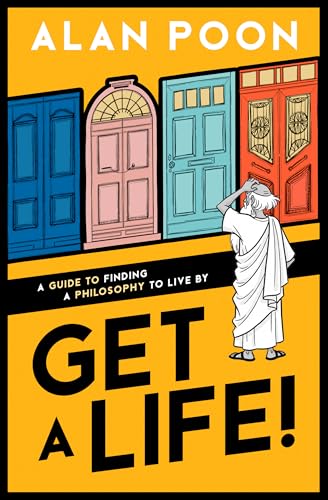
AN IRREVERENT GUIDE TO THE GOOD LIFE Learn Philosophy. Sound Smart. Live Well.
Are you searching for meaning in a world that feels hollow? You’re not alone. As modern life casts off the traditional anchors of the past, many of us are left adrift. Take an introductory tour through the wisdom of the ages to rediscover what has been lost. Explore transformative ideas from eight of humanity’s greatest philosophies—from Buddhist calm to Existentialist courage, Epicurean delight to Confucian duty, and everything in between.
Uncover alternatives to the script contemporary society has given us. Why is life worth living? What things are worth fighting for? How do we be good and do good? Wisdom comes in many shapes and sizes.
This book mercilessly cuts through the mumbo jumbo of academia with clarity and wit to distill complicated ideas into plain English, focusing on practical insights to live a life of purpose, fulfillment, and happiness. Whether you’re a seeker, skeptic, or simply feeling stuck, Get a Life! offers a roadmap to finding a philosophy of life that’s right for you.
LEARN THE FUNDAMENTALS
Buddhism and the benefits of meditationConfucianism and the importance of ritualsDaoism and how to go with the flowAristotelianism and the virtue of the Golden MeanStoicism and strategies to build resilienceEpicureanism and the fine art of seeking pleasureExistentialism and controlling your own destinySecular Humanism and being good without God
Alan Poon was born in Hong Kong and grew up in Vancouver. As a child, he read a complete encyclopedia set for fun (it's like Wikipedia, but printed). He had a reputation as a teenage rebel, writing his own answers on multiple-choice tests and fearlessly opening the door to debate Jehovah's Witnesses. Armed with an engineering degree, he works as a mailman and has no credentials to talk about philosophy. That hasn't stop him from trying.
I thank NetGalley and BookGoSocial for providing me with an ARC copy of this book, which I freely chose to review. This is a book by an author I hadn’t come across before, and who openly acknowledges he is not an expert in Philosophy. And that might work to our benefit, because although this is not a book that will enlighten anybody who has studied Philosophy in depth, the way it approaches the subject is likely to suit people who have only read superficially about it or have a limited knowledge of the ideas of some famous philosophers and little else. The book is written in an easy-to-read way, although that doesn’t mean the ideas or concepts the author discusses are simple. But he manages to find up-to-date examples, many from popular culture, and that makes it seem less threatening and obscure. And he states that this is not an attempt at writing a self-help book either, so those who are not interested in that genre,or have had their fill of it already, need not worry. From the beginning he warns the readers that he will not include the big religions in his book, and even when he discusses some philosophies that are closely related to religious belief (like Buddhism) he does it from a secular point of view, talking more about the way they deal with moral and ethical matters, and not getting into otherworldly or faith related themes. He briefly summarises several philosophical schools: Under the category “The Ancient East,” he writes about Buddhism, Confucianism, and Daoism. Under “The Ancient West,” he talks about Aristotelianism, Stoicism, and Epicureanism. Under “The Modern Age, “he includes Existentialism and Secular Humanism. He also includes an introduction and a conclusion “the concluding pep talk”) and a sort of quiz at the end that might help those readers who aren’t sure which one of those philosophies would suit them best to choose one of them. A word of warning, though. I only had access to an ARC copy in e-book format, and the quiz was impossible to follow due to formatting issues. I am not sure if that will be the case in the final copy; otherwise, people interested in trying the quiz might do better getting hold of a paperback copy. Ah, and there is also a bibliography at the end, including books and articles consulted in the writing of this text. I enjoyed this book because the author has a talent for summarising the most important aspect of all these philosophical currents; he has a great sense of humour and some of his subtitles are bound to stick in our memories and make us smile as we remember the different philosophies; he shows great sympathy and understanding for human nature and includes everybody, no matter what their interests or lifestyles; and he does not expect a rigid adhesion to one single philosophy or set of ideas. Whatever helps us lead a good life, whichever definition of a good life we choose, is perfect for him, be it a full immersion in one of these philosophies, or a pick-and-mix approach to some of their concepts and principles. I felt particularly inspired by the parts about Buddhism (which I had read a bit about), Stoicism, and Existentialism, but I enjoyed the whole book and revisited some concepts I hadn’t thought about in many years. And I have understood better some that, when I studied them, I was probably too young to fully appreciate. Here I include a quote as an example of what the author attempts to achieve: Philosophies of life attempt possible answers to impossible questions. They are stories within which we find a role and a reason to live. All we can do is choose a story that’s right for us, one that inspires, motivates, and comforts us through the highest of highs and lowest of lows. Call it a “truth” if you must —a subjective, personal truth, and one that lets us sleep at night. A book to consult, revisit, guide us, and inspire us to dig deeper and keep learning and living.
Alan Poon’s Get a Life! manages to make ancient philosophy feel alive, relatable, and almost conversational. It’s not written for academics or philosophers, but for ordinary people who feel that something’s missing in the way we live, work, and relate to others. It's for people looking for a compass, not a lecture.
The book is cleverly structured as a journey through the great schools of thought: from the meditative calm of Buddhism to the practicality of Confucianism, the spontaneity of Daoism, the moral balance of Aristotle, the emotional discipline of the Stoics, and finally, the existential freedom of modern thinkers like Sartre and the compassion of secular humanism. Each section doesn’t just summarize a philosophy; it translates it into daily life: friendships, emotions, work, generosity, meaning, and self-discipline.
What makes Poon’s approach so refreshing is his humor and empathy. He never preaches; he jokes, nudges, and shares wisdom like a friend over coffee. The chapter titles themselves, “All Work and No Plato Makes Jack a Dull Boy” or “Deal with the Feels”, set the tone for a book that’s philosophical but never pretentious.
Throughout, Poon brings Aristotle’s Golden Mean to life — the idea that virtue isn’t about rigid rules, but about finding balance through reason and self-awareness. He applies this to modern challenges: workaholism, digital burnout, shallow friendships, and the illusion of constant happiness. His advice is subtle but profound: real wisdom lies in practice, in learning to recalibrate when we drift too far to one side.
Another strength of the book is how it invites self-reflection without judgment. Poon recognizes that most of us weren’t raised in perfectly balanced households or spiritual traditions — and that’s okay. What matters is learning to notice our extremes, to steer toward virtue little by little, and to “course correct and carry on,” as he writes.
Visually and structurally, the book is light and digestible — perfect for dipping in and out of chapters. Yet the ideas linger, encouraging you to look at your habits and relationships with more clarity and gentleness.
Ultimately, Get a Life! isn’t about choosing a single philosophy; it’s about discovering what kind of life you want to live, and which wisdom traditions can guide you there. It’s a book for the curious mind and the restless heart: a toolkit for anyone trying to live more deliberately in a noisy, distracted world.
Make no mistake about it, Alan Poon’s guide to finding a philosophy to live by is not a light read, even though it is written in a modern accessible style that treats the reader like a curious friend to whom he is willing to impart advice. He recognises that in every one of us there is a quest for meaning, and while the certainty of religion is no longer a given, he believes that finding answers is now more important than ever. And so, he briefly sets out the basic philosophies that man has created over time , from the ancient philosophies of the East such as Taoism and Buddhism; the Ancient West such as Aristotelianism and Epicureanism; and finally the Humanist and Existentialist philosophies of more recent times. He uses modern analogies when introducing new philosophies , for example, Stoicism is initially illustrated by the Startrek character Spock, and he discusses the Disney film Mulan when explaining the philosophy of Confucianism. Every human being, he tells us, is free to choose the path that suits them best, although he warns us to limit our choice of life philosophies to one or two , to see if we feel comfortable , rather than go overboard. This is an interesting book, that needs to be digested slowly. I admire the author’s knowledge and erudition, as well as his approachable style, and find it stimulating and helpful to learn more about different philosophies. However, I remain slightly sceptical that any human being can deliberately choose their path in life, completely untrammelled by past influences and experiences, although Alan Poon’s book will doubtless help in that important quest for meaning.
Alan Poon has accomplished something rare: making ancient wisdom accessible without dumbing it down. "Get a Life!" serves as an intelligent bridge between academic philosophy and everyday living, and Poon's background as a thoughtful generalist rather than a credentialed philosopher works entirely in his favor. His approach strips away unnecessary jargon while preserving the substance of each tradition he explores.
What distinguishes this book is Poon's historical depth combined with his practical sensibility. He doesn't just explain what Stoicism or Confucianism teaches, he situates each philosophy in its cultural context and then translates those insights into contemporary terms. The chapters move fluidly between ancient China, classical Greece, and modern existentialist thought, demonstrating genuine command of diverse intellectual traditions.
Poon's writing maintains clarity without condescension. He uses humor and pop culture references strategically, never letting them overwhelm the serious philosophical content. The result is a book that respects both the material and the reader's intelligence. His evenhandedness stands out particularly. Rather than advocating for a single approach, he presents eight distinct philosophies with equal care, allowing readers to discover which frameworks resonate with their own values and circumstances.
For anyone seeking philosophical grounding in an increasingly fragmented world, this book offers genuine substance packaged in refreshingly readable prose.
This fascinating book is an introduction to philosophy. To be more specific it is a very brief introduction to 8 different schools of philosophical thought. When I say very brief I mean it. The book basically gives the bullet points of each system’s basic beliefs and the beliefs of the people that would practice each school of thought, with the understanding that the comparison can help the reader to pick a philosophy to live by and also the understanding that if a person wants to know more about any particular school of thought they can do so themselves after they know the basics.
Overall I would have to say this really enjoyed reading this. There were several schools of thought in here I was unfamiliar with and reading about them was interesting. I fully admit to not knowing much about each school of philosophy so I can’t say how well each was summarized. I think each school as written in a way that was very easy to understand, especially for the basic beginner like myself. I find myself very curious about multiple of the philosophical schools I read about in here and will be looking up more books about them in the future.
There is a little Buzzfeed style quiz at the end of this to help the reader see where their thoughts already lie in relation to everything discussed in the book and I really like that addition. It can help a reader see what they might want to read into further.
Overall I really liked this and I highly recommend it.
Get a Life is such a clever title, and honestly, it delivers. This little gem gives you a sweeping overview of eight philosophies—ancient East (Buddhism, Confucianism, Daoism), ancient West (Aristotelianism, Stoicism, Epicureanism), and modern age (existentialism, secular humanism). Basically, it’s a world tour of “how to live your best life” through the eyes of history’s greatest thinkers.
Alan’s writing style is humorous and light, which makes the big concepts go down easy. You never feel like you’re slogging through a dry textbook; instead, it’s like a witty friend explaining the gist of each philosophy over coffee. He occasionally points out the quirks of a system (and sometimes its founders), but never in a way that turns you off—it feels more like an invitation to explore and decide for yourself.
Personally, I loved the sections on Buddhism, Aristotelianism, and Stoicism. They gave me new ways of looking at balance, virtue, and resilience that actually feel applicable to everyday life. The whole book is quick and enjoyable, and it definitely whets your appetite to dive deeper. If you’ve ever been curious about philosophy but didn’t know where to start, Get a Life makes it fun, approachable, and a surprisingly practical guide for figuring out what resonates with you.
Special Thanks to BooksGoSocial and NetGalley for the gifted copy 🫶🏼
I don’t usually read books about philosophy, but Get a Life! caught my eye because it looked different from the usual dry, hard-to-read stuff. I’m glad I gave it a shot. This book is actually a great starter for anyone who’s curious about philosophy but doesn’t want to wade through a bunch of complicated jargon.
Alan Poon takes eight big philosophies—like Buddhism, Stoicism, Existentialism, Daoism, Humanism, and a few others—and breaks them down in a way that’s easy to follow. He mixes in real-life examples and even pop culture references, which makes the ideas feel more relatable and less like something you’d only hear about in a college lecture. It’s not super long or overly detailed, but that’s kind of the point—it’s a primer.
What I liked most is the tone. It’s quirky, friendly, and straight to the point. It feels like a friend explaining this stuff over coffee rather than a professor talking at you. It gave me a better idea of what these different philosophies are about and which ones I might want to learn more about.
If you’re already deep into philosophy, this book might feel a little basic. But if you’re new to it and want an easy, approachable way in, this is a solid place to start. It’s clear, it’s fun, and it makes big ideas feel a lot less intimidating.
An Excellent Philosophical/Practical Guide to Life
Get a Life: A Guide to Finding a Philosophy to Live By (by Alan Poon) presents a smorgasbord of philosophies, both Eastern and Western, for the reader to choose from. And it’s hardly the stodgy philosophical treatise that one might imagine. The point is not to judge the metaphysics of these philosophical systems (or their beliefs about the fundamental nature of reality) but rather their practical stratagems and techniques for dealing with the ups and downs of life. The book is well written and teeming with intelligence and wit. Openminded seekers will find it a delight to read. The less openminded or less self-reflective maybe not so much, though its competent presentations may well open some minds. Even Stoicism and Epicureanism, despite their modern-day bad raps, are shown to have remarkably beneficial ways of looking at things. Readers will likely find themselves wanting to incorporate something from each of these philosophies in their lives.
Poon starts his guide with a wonderfully optimistic viewpoint, stating that it is the best time in history to be alive. He acknowledges that finding a “personal philosophy” is not likely to be on our list of things that we believe will improve our life, but he explains that it should be. In finding a personal philosophy, Poon believes that what is important in life will become apparent, and this isn’t material abundance or pleasurable experiences.
He also takes a hard look at political ideology, economics, and social systems. With a philosophical approach, he examines why people turn to motivational books and life coaches in their search for happiness. Poon hasn’t written one of those books, nor does he claim to be a coach. What he provides is an examination of various philosophies from Confucianism to Daoism and more including Epicureanism. The book also provides a quiz to helping one find their personal philosophy. I warn that using the chart in a Kindle version is not ideal. So, grab the hardcover and you might just find a new way of life.
There have been so many different ideas over the last few thousand years about what makes life meaningful and how to be happy. When I picked up this book, I didn’t realize quite how many different trains of thought there are, or how different from each other they are. There seems to be more and more young people in our world struggling to find purpose in their life. If that’s you, this book is an awesome starting point. Framed as a book designed to help you find a path to a meaningful life, this book is very well written and engaging. It covers Buddhism, Confucianism, Daoism, Aristotelianism, Stoicism, Epicureanism, Existentialism, and Secular Humanism. The book gives an easy to understand and follow summary of all of these different philosophies, putting you in a perfect position to start figuring out what is right for you. I also like the 36 philosophy statements at the end to help you figure out which philosophy resonates most with you right now.
Get A life is an especially relevant book for our modern world, with so many of us struggling to find a philosophy (or two) to live by that really resonates. The problem is, there are so many different ideologies and sorting through them all can feel like just another hurdle to navigate. This book presents eight of the major philosophies, giving a balanced and thoughtful analysis without getting too complicated.
The philosophies range from the ancient to the more modern and are presented in an accessible, easy to read style. The tone is thoughtful but also light hearted and humorous at times, feeling like philosophy does not always need to be heavy and serious. It is a great reference for those who have previously shied away from philosophy, believing it might be beyond their understanding.
Overall this is an interesting and possibly life changing read for anyone genuinely searching for deeper meaning.
Get a Life! A Guide to Finding a Philosophy to Live By is a witty starter kit for everyday philosophy. Alan Poon distills complex traditions into plain, accessible language with playful pop culture references. I especially appreciated the quick self-assessment at the end, which helps readers reflect on which philosophy might suit them best. It is a helpful touch for anyone new to exploring these ideas.
For me, this paired nicely with How to Live a Good Life (Massimo Pigliucci, ed.), which I read last summer in my doctoral program. That one felt like sitting in a room with many teachers, comprehensive and informative, while Get a Life! offers a lighter, more approachable entry point.
Recommended for readers curious about philosophy but wary of heavy academic texts.
Thank you NetGalley and BooksGoSocial for the ARC!
I thought that family first was just the truth. I thought we all needed to follow but it turns out it is a philosophy. This book helped me to see and understand many philosophies for what they are, philosophy. It was wonderful to see so many philosophies spelled out and see how they construct what is the “right” way to live. It helped to provide freedom in understanding there is no right way but a way that we get to choose to live. The book helped provide me freedom in how I live this human life.
The author writes the book from a no nonsense perspective and with each type of philosophy takes that point of view. He tells you what you should and shouldn't do from each philosophy. There were stories and examples that made it easier to relate to as well.
Overall a great read that has led me to see others philosophies as that rather than the way things are supposed to be.
An overview type of book covering the basic philosophical models. The book details many aspects of Buddhism, Confucianism, Daoism, Aristotelianism, Stoicism, Epicureanism, Existentialism, and Secular Humanism. Your basic Ism's on display here.
And it covers many interesting twists and commentaries on these so stated that book is a fun read and will give especially those with little or no inkling of philosophy a great introductory to the fascinating topic. Then you can pick one that appeals to you and have at it getting more in depth materiel so that you too will eventually have a life you can hang your philosophical hat on.
Alan Poon’s book Get a Life! implements humor into the process of picking a way to live via one of life’s major philosophies and concepts. Some are well known (Buddhism, Confucianism, Daoism, humanism, and existentialism); others less so (Aristotelianism and epicureanism). The book is billed as stripping down the complicated aspects of these philosophies, but don’t let that fool you. The text in the relatively short read is dense with in-depth, I would say complex insights. Readers will finish it with much to think about.
Leading off with a good Socrates quote about the worth of examining a life, “The Introductory Spiel” section aptly conveys what many already know about our modern world but perhaps don’t often think about: We have it really good in a lot of ways, and it’s an exciting time to be living, but what’s with all the isolation and lack of close friends these days? You get the idea. What follows is a lot of insights from Poon that I’m not qualified to break down but enjoyed reading.
The author reveals at the end that he’s a mailman with an engineering degree with no bona fide credentials to discuss philosophy, but that’s being modest. He’s a smart guy and this is an entertaining read. I hope his next book delves into religious philosophies.
Alan Poon’s Get a Life! A Guide to Finding a Philosophy to Live By is a delight: elegantly and fluently written, easy but at the same time thought-provoking to read, and satisfying to finish.
After an entertaining introduction which makes clear that this book is no heavy, conceptually impregnable tome, the author reviews eight significant strands of Eastern (Buddhism, Confucianism and Taoism) and Western (Aristotelianism, Stoicism, Epicureanism, Existentialism and Secular Humanism) philosophical thought. He prefaces each section with a clear historical background and metaphysical / ethical analysis before suggesting how different strands of the ideology could be adapted for and/or followed in modern life.
Alan Poon wears his evident learning lightly and writes with deft humour and helpful analogies. The only very minor flaw for this reader is that there were occasional typos and slightly infelicitous turns of phrase which I briefly tripped on; as the book is otherwise so excellent, it perhaps warrants a further line edit.
Highly recommended for readers interested in the historical context of philosophical schools of thought and their relevance and application today.