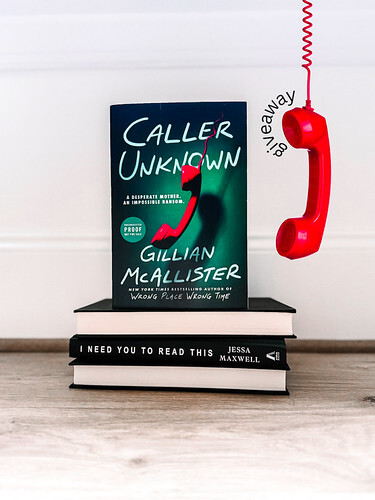
Let it be known that Gillian McAllister's brilliant Wrong Place Wrong Time and Famous Last Words changed me on some fundamental level.
I was expecting that same emotional gut punch from Caller Unknown, but what I got was sheer chaos, unrelatable characters, and a plot driven by panic and poor decisions.
The author is British, but this book is set in Texas. I'm American, and Texas might as well be Timbuktu. Texas is its own kingdom. Unless Big Bend is in your blood, you cannot bring the vastness of the desert to life. It will always read like a superficial sketch of an imaginary place.
Simone, the mother, and Lucy, the daughter, traipse through the Chihuahuan Desert with a few bottles of water, wearing shorts and old trainers. At one point, Simone boils down water for salt and makes fish and potatoes. The women hide, bathe in a creek, brush their hair with forks.
So many mundane details, yet there's no sense of the brutal landscape, dehydration, heatstroke, hazardous wildlife (scorpions, rattlesnakes), or hypothermia when the temps drop precipitously at night.
Mother and daughter are running from the authorities. Why? Because 18-year-old Lucy was kidnapped, but instead of going to the police as per her husband's logical suggestion, Simone ran off to Mexico, served as a drug mule, and killed a man, all of which sounds like the beginning of a bad Western.
(American gun laws are lax but not that lax. No way could a non-US citizen just waltz in and purchase a weapon. Tourists are barred from buying or possessing firearms while visiting the United States.)
These unhinged actions are painted as the right things to do. But NO. No no no. When you're in trouble in a foreign country, you call your home embassy. That's what you do because you are not an international spy or a Legionary or Jesus. You are a 40-something-year-old British woman who has no fucking clue, none at all.
You'd think all this running around, evading the police, hiding in Airbnbs, would prove exciting, but you'd be wrong. The pacing is slower than a slug in molasses, filled with random details about Simone's cooking (she's an amazing chef!), Lucy's acting (she's an amazing actress!), the family restaurant (amazing food!), and English weather (not so amazing but better than Texas).
To add insult to injury, Simone is an extraordinarily unlikable character, a martyr with a savior complex who is attached to her daughter, a spoiled, arrogant little shit, to the point of dysfunction. I'm a woman around Simone's age with a 19-year-old daughter and couldn't relate to Simone's toxic, obsessive love at all. She needed therapy, not a camping trip.
There are few secondary characters to break up the monotony of mother/daughter interactions. The husband serves as mere foil to Simone's madness. Moody, the hero lawyer, talks like this: "They could see a kidnap, too, but they're usually so keen for a quick getaway." An English barrister might say that, but a 50-year-old Texan lawyer? Ma'am, that's not how they do things in Texas.
I never felt engaged enough with the characters to root for them, but by part III, I was somewhat invested in the plot and hoping the ending would deliver. More fool me.
Following an out-of-left-field, what-is-happening twist, everything was wrapped up too quickly and easily. You can't walk off the street to confess at a murder trial. That's not how the American legal system works. That's not how sociopaths operate. That's not how any of it works.
It pains me to write this review, especially since the publisher was kind enough to provide me with an ARC. Regardless, I always call a spade a spade, so here we are.