What do you think?
Rate this book


55 pages, Kindle Edition
Published August 23, 2025
The AI art tools I use have completely changed how I handle illustrations. What used to take months can now be done in a few days. But it’s not automatic. Every image begins with a prompt, which must be carefully crafted. I guide the look and feel, check for consistency, and decide what belongs in each scene based on the text. AI generates the art, but I’m the one sorting through it and choosing what fits. It’s still work, and sometimes frustrating work, but the time saved is unbelievable.
Back when we were producing new games at EnsenaSoft, where I continue as CEO, I managed a full-time art team. At one point, we had seven in-house artists. I know what it means to build a visual pipeline, to review drafts, give feedback, and make sure everything stays consistent across a project. That experience helps me see just how much AI has changed the process. It absolutely can replace an artist, at least in the kinds of projects I work on now. That is not a claim, it is my lived reality. Where I once needed a full team, I can now handle the visual work myself. It is not about clicking a button and calling it done. I still have to guide the vision, write thoughtful prompts, and sort through the results to find what works. But I am no longer waiting on sketches or managing revisions. I am directing the creative process from start to finish, faster and more independently than ever before.
The picture books I create often need at least 25 full-color illustrations. For a human artist, especially one working in a detailed or stylized way, that could take four to six months. With AI, I can generate hundreds of image options in just a day or two. I sometimes go through at least five or six versions before finding one that feels right for a single page. But when I do, I get something beautiful that brings the story to life. It’s not about clicking a button and moving on. It’s about curating, refining, and guiding a process that still takes vision and care.
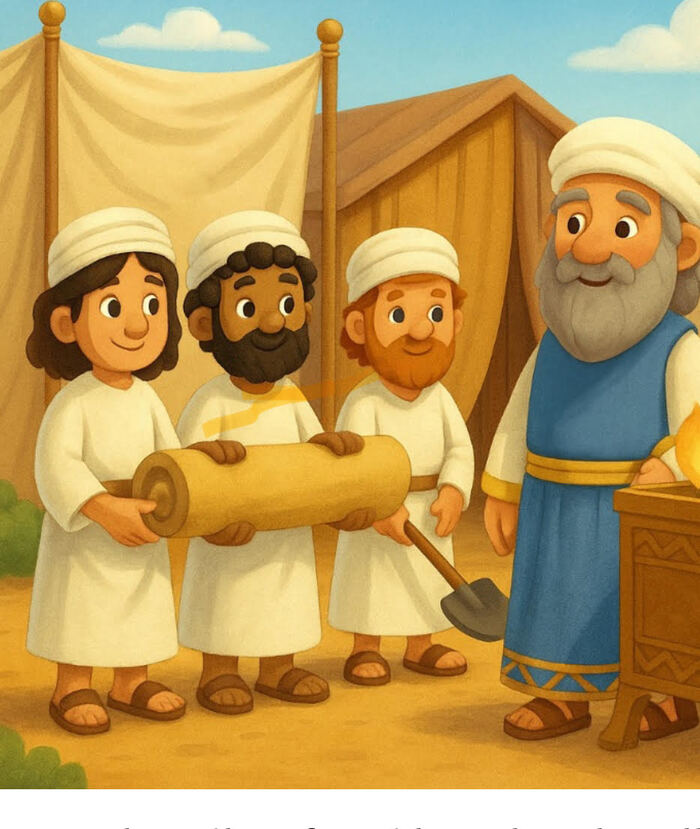
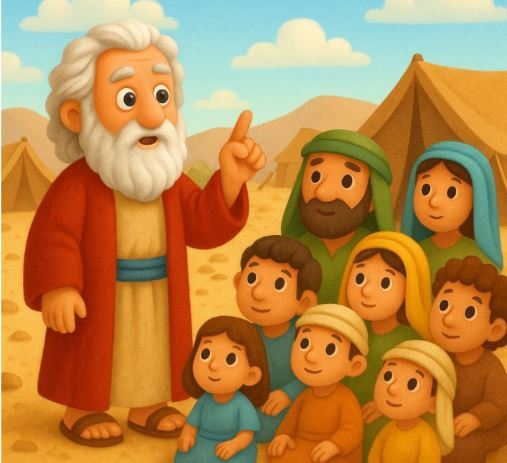
I have not been shy to admit that artificial intelligence was what first opened the door for me as a writer.Excuse me a moment.
Samuel DenHartog: I've got 163 books, but with wearing that month-wise, that's, I should have ended March with 160. So I'm three books ahead of my target.Is that what you call "not being shy" about it? This interview was done AFTER the first public admission of AI use, so what harm would there have been? Were you, perhaps, concerned that the interviewer would react poorly? Might the failure to disclose AI use at this perfect point indicate that you were, in fact, shy about it?
Diego: My, how many so far?
SH: 163.
D: Where do you find the time?
[PREGNANT PAUSE DURING WHICH THE OBVIOUS AND HONEST ANSWER OF, "I USE AI" COULD EASILY HAVE BEEN UTTERED]
Samuel DenHartog: I don't know. During the day.
AI can help tell a story, but it doesn’t decide which story to tell. It offers prompts, outlines, and sometimes snippets of dialogue, but I’m the one who chooses what feels true.This is true. You have to type the prompt for what kind of book you want AI to generate. So what? "It offers prompts," so you barely even have to do that. This is stating, "AI can offer choices, then I pick which one of those to proceed with." This is no different from reading a Choose Your Own Adventure book. If I choose to explore the haunted cabin, or go down a different path in the woods, does that mean I wrote that book? Besides, your books include way more than "snippets of dialogue" from AI.
Some people worry that using AI takes away from the art of writing. I don’t see it that way. For me, it’s like using any other tool, a good pen, a helpful thesaurus, or a strong word processor.Consider any writer before the launch of ChatGPT. If they wrote using a pen, if you took away that pen, they could still write using a word processor. If they wrote using a word processor, they could still write using a pen. If you took away their thesaurus, they could still write, just with less variation in word choice. If you took away their hands, they could dictate into a recording device.
I wouldn’t want to write without AI. It’s become part of how I think and how I get the words to move.This is troubling. You are losing the ability to think without AI.
I can still create stories that fall flat. AI doesn’t change that. If a piece lacks structure or feels off, it’s because of my decisions, not the tool.At least you're accepting responsibility for the final products which, I have to tell you, aren't very good. I'd hate to see the stuff that doesn't make it to publication. When I slam an AI book, it's not just because it's AI, it's because the resulting product is demonstrably awful. By publishing an AI book, that's all on you.
Children’s books are a different kind of challenge, and AI has opened up new possibilities. The AI art tools I use have completely changed how I handle illustrations. What used to take months can now be done in a few days.You have never taken months for anything in any of your books. I suppose this could be taken to mean "what people did before AI" but as written that's not the expressed meaning. That's one problem with using AI, and the evidence shows that your vaunted contribution, "adjusting and refining," is lacking. Besides, if a person took months to produce an image the same quality as any of the images from any of your books ... that would be a problem. The AI-generated images you publish are horrific from any artistic measure. When paired with text such as in one of your books meant for children, they absolutely fail at sensibly illustrating the thing.
But it’s not automatic. Every image begins with a prompt, which must be carefully crafted. I guide the look and feel, check for consistency, and decide what belongs in each scene based on the text. AI generates the art, but I’m the one sorting through it and choosing what fits.Gee, an AI image requires a prompt? AI doesn't prompt itself? Who knew? Anyway, again you are accepting responsibility for the end result. I can only hope that if you weren't easily impressed by generative AI output, you could identify how poor those results are.
Back when we were producing new games at EnsenaSoft, where I continue as CEO, I managed a full-time art team. At one point, we had seven in-house artists.Ho. Lee. Crap. Have any of those artists seen what you've replaced them with? My god, I wish I could find one of them and have them comment on what you've put into your AI books. I can't believe you worked with actual artists and think that the AI product you put out now is in any way comparable.
The picture books I create often need at least 25 full-color illustrations. For a human artist, especially one working in a detailed or stylized way, that could take four to six months. With AI, I can generate hundreds of image options in just a day or two. I sometimes go through at least five or six versions before finding one that feels right for a single page. But when I do, I get something beautiful that brings the story to life.I encourage anyone reading this to take advantage of a free download of one of DenHartog's picture books. There are usually several available on a free promotion on Amazon every Sunday to Thursday. Decide for yourself if these are beautiful, if they indeed bring the story to life. Every one I've seen has been a horror show, and believe me I've read many, many of his books. If you don't see any problems with the illustrations, we can sit down and go through them together.
In a very real sense, I’m still working with an artist.NO.
I’ve managed big teams before. At one point, I was responsible for fifty people.Please tell me you didn't lay off anyone to pursue your AI book project. Please tell me you had already wound down your software company before you had any thought to spend your time on this instead.
These days, I work with a very different kind of team, just AI and me. AI never takes a vacation. It doesn’t get tired. It doesn’t need meetings or approval cycles. It’s not perfect, but it helps me stay in a creative flow without the weight of constant oversight. I’m still the one guiding the vision. I still make the decisions. I just get to do it with a kind of quiet focus that suits the life I want now.Yes, yes. AI is so great, and you're very special when you use it. That's fine, but did you have to inflict it on the rest of us? Couldn't you just make AI books and keep them to yourself? Why did you have to publish them? Why do you constantly promote them and seek validation from others that yes, you are doing something good, and your books are good?
Writing stories and making books has become the work I want to do every day. There’s nothing else I’d rather be doing.Really? Nothing? Not learning to sail a boat and spending time on the Pacific? Not spending time with family? Not building homes for the needy? Not learning to play an instrument? Not learning to write?
AI helped make it possible.I don't think AI "helped" do that. It is the entire and only thing.
It’s allowed me to go farther than I could have on my own,Not true, you didn't even try. You could create books at least as good as the ones you have AI make now. It would take longer than one day, but you could do it.
not just because it writes for me, but because it gives me the freedom to focus on what really matters. The story still needs meaning. The message still needs thought. And the voice that carries it all has to be my own.I've read your books and plenty of other AI-generated books. The voice is not your own. They all sound exactly the same. It's the voice of generative AI. It's a lousy voice.