

What do you think?
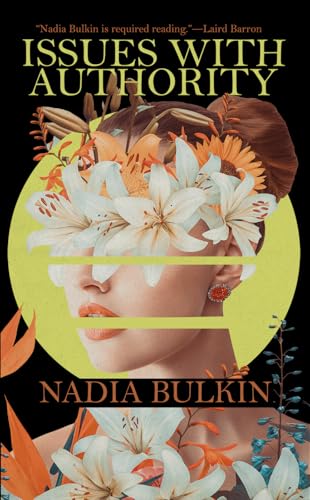
Issues With Authority
Shirley Jackson Award-Nominated author Nadia Bulkin's sophomore collection
ISSUES WITH AUTHORITY
drenches the reader in a sensory overload of power, belief, and horrifying transformation.
Included within these pages:
Cop Car: In which a psychic government "fixer" discovers her true psychopathic calling
Your Next Best American Girl: In which a beauty pageant contestant succumbs to a paranoia as a mysterious skin disease begins eating holes in her body
Red Skies in the Morning: In which paracontagions infect unsuspecting viewers of certain cursed media, a phenomenon the government is frantically trying to control
Included within these pages:
Cop Car: In which a psychic government "fixer" discovers her true psychopathic calling
Your Next Best American Girl: In which a beauty pageant contestant succumbs to a paranoia as a mysterious skin disease begins eating holes in her body
Red Skies in the Morning: In which paracontagions infect unsuspecting viewers of certain cursed media, a phenomenon the government is frantically trying to control
222 pages, Kindle Edition
First published September 16, 2025
Ratings & Reviews
Friends & Following
Create a free account to discover what your friends think of this book!
Community Reviews
Displaying 1 - 30 of 51 reviews

October 26, 2025
Three novellas that are very different in theme, but all have Bulkin's off-kilter weirdness tied to social commentary. I thought the final one, "Red Skies in the Morning" was the strongest. The story looks at the differing responses to an epidemic of possession by (apparently) angry spirits through the story of two sisters, which is a perfect mechanism through which to reveal the world of the epidemic and people's varying responses to it.


August 21, 2025
Featuring a trilogy of stories, "Issues With Authority" is an entertaining collection that's perfect for readers who are looking to get a horror fix without having to read anything too gruesome.
The first story, "Cop Car," features Carly, a girl who is, in a way, rescued by the government from the cult she was born into. Unfortunately the only reason the government was interested in her is due to the fact that she's a psychic and they want to use her to their advantage. This was my least favorite of the three stories, mainly because the plot didn't really grab my attention. I think I would've enjoyed it a lot more if all (or at least part of) the story was written from Carly's POV so we got to see her inner thoughts as she grew up learning to hone her psychic powers.
Luckily for me I thought things really picked up with the second story, "Your Next Best American Girl," which is about a young beauty pageant contestant who dreams of being crowned as the next Miss Americana. This story features a little bit of body horror as our protagonist becomes afflicted with a mysterious and progressively worsening skin condition. With just enough creep factor to be a little unsettling, I got the feeling that this one was intended to be a little bit of a warning message for the more beauty obsessed crowd — but that could just be me projecting a bit!
Now the final story, "Red Skies in the Morning," was my absolute favorite of the three and it had me locked in from the very beginning. This one borrows a bit from The Ring in that there are cursed videos that kill the people who watch them after seven days — unless someone else comes and takes over the curse for them. But in "Red Skies" the concept is ramped up to a proper pandemic with multiple videos floating around and the government trying to figure out how to get control of the problem. I found this one to be the perfect mix of mystery and horror, and the pacing was perfectly on point. Personally I think this one would make for a great screen adaptation as well!
If you're a fan of horror short stories, then I highly recommend you pick up a copy of this collection for yourself!
(I received an advance review copy of this book for free, and I am leaving this review voluntarily. All opinions are my own.)
The first story, "Cop Car," features Carly, a girl who is, in a way, rescued by the government from the cult she was born into. Unfortunately the only reason the government was interested in her is due to the fact that she's a psychic and they want to use her to their advantage. This was my least favorite of the three stories, mainly because the plot didn't really grab my attention. I think I would've enjoyed it a lot more if all (or at least part of) the story was written from Carly's POV so we got to see her inner thoughts as she grew up learning to hone her psychic powers.
Luckily for me I thought things really picked up with the second story, "Your Next Best American Girl," which is about a young beauty pageant contestant who dreams of being crowned as the next Miss Americana. This story features a little bit of body horror as our protagonist becomes afflicted with a mysterious and progressively worsening skin condition. With just enough creep factor to be a little unsettling, I got the feeling that this one was intended to be a little bit of a warning message for the more beauty obsessed crowd — but that could just be me projecting a bit!
Now the final story, "Red Skies in the Morning," was my absolute favorite of the three and it had me locked in from the very beginning. This one borrows a bit from The Ring in that there are cursed videos that kill the people who watch them after seven days — unless someone else comes and takes over the curse for them. But in "Red Skies" the concept is ramped up to a proper pandemic with multiple videos floating around and the government trying to figure out how to get control of the problem. I found this one to be the perfect mix of mystery and horror, and the pacing was perfectly on point. Personally I think this one would make for a great screen adaptation as well!
If you're a fan of horror short stories, then I highly recommend you pick up a copy of this collection for yourself!
(I received an advance review copy of this book for free, and I am leaving this review voluntarily. All opinions are my own.)

September 16, 2025
This was a good collection of 3 horror short stories. They all had a strange, horrific element that I found fascinating. I wanted to keep reading, both to figure out what was going on with the story, and to see what would happen next.

July 25, 2025
This was a great collection of horror stories, each one was so well done and enjoyed the way each was told in this theme of the book. I really enjoyed "Your Next Best American Girl", it was something that I didn't know I needed until I read this. Nadia Bulkin wrote this so well and left me wanting to read the next writing in this.
I received an advance review copy for free, and I am leaving this review voluntarily.
I received an advance review copy for free, and I am leaving this review voluntarily.

October 23, 2025
Read review on: https://thereadingarmchair.blogspot.c...
While I was browsing BookSirens the other day, I came across Issues with Authority. I won't lie - the stunning cover made me stop scrolling and see what this book is all about. It turns out that it's a horror short story collection, perfect for the season. So, I didn't need any more reasons to read it!
Issues with Authority contains three short stories. Even though, they aren't connected in any way, the stories feature some similar themes that tie with the collection's title. Our protagonists defy authority and societal norms. When it comes to their horror, none of the stories will keep up at night. However, there were some disturbing elements, especially in the last two stories.
Before getting deeper into each individual story, I have to say that Issues with Authority was a surprisingly good read. This is a new author to me, so I didn't know what to expect. Being on the verge of a reading slump, I was worried that I might make the situation worse. But, I truly believe that this book helped with my slump as I wanted to keep on reading to see where each story was heading. I really enjoyed Nadia Bulkin's writing, and I will keep an eye on whatever she comes up with next.
Cop Car
The first story, Cop Car, follows Carly that has grown up in a cult. However, Carly possesses some special powers that makes her invaluable to the agents that save her from said cult. In essence, Carly can break into other people's minds and make them do whatever she wants them to. What the agents haven't account for though, is that Carly has little to no sense of morality.
The story had a light, and almost fun, tone, which made it super easy to read. However, I didn't find its plot that engaging. What kept me interested in it was to uncover who the narrator was. Becasue Cop Car wasn't following Carly's POV, but we were told of her adventures from a paranormal entity (that I won't spoil for you). Once I learned what the deal with the narrator was, I was ready to move on to the next story.
Don't get me wrong - it was still a good story, just not an exceptional one.
Your Next Best Americal Girl
Fortunately, the second story did it for me! Your Next Best Americal Girl follows Veronica, who obsesses over being the next Miss Americana. Even since she was little, she had been joining beauty pageants, devoting herself to the beauty standards that could grant her wish. One morning right before a prelimenary competition, she notices two red bumps on her arms. It was a crisis, but one she thinks she can manage. The only issue is that not only the bumps keep appearing on other spots, but they also have some other effects (which again I won't spoil for you).
Now, this was a great story. It had some body horror elements, but nothing too extreme. It is a short story that could fit with so many horror books that take a closer look at the beauty standards, and how much are you willing to sacrifice to obtain them. But Your Next Best Americal Girl also posed another interesting question: how much would you be willing to sacrifice to be the next trend-setter, to make yourself stand out when the beauty standards have created such a unified image?
What stopped me from rating this book with a perfect score was its ending. However, the journey until there was 100% worth it.
Red Scies in the Morning
The third, and final story, was a standout for me. Red Scies in the Morning brough a perfect blend of horror and mystery that made me eager to keep on reading. In this story, society faces a paracontagion crisis. In essence, people catch these by watching a video or a cursed photo, and they will die in seven days, unless someone else exposes themself to that paracontagion vessel. There is no denying that this setup made me think of The Ring. In this universe though, the governments have set pathing agancing, where people can go when they catch a paracontagion to find someone take it over from them.
This, on its own, is an amazing setup, which I could definitely read in a full-length novel. One day, Selene comes back from work and finds that her sister, Hannah, is missing, which is unlike her. So, she sets out to try and find her, hoping that the worst hasn't happened. The journey uncovers different groups and beliefs on paracontagions, things that hit too close to home with the Covid-19 pandemic. But apart from these conversations, Red Scies in the Morning had so much heart. I loved the relationship between the sisters, and I loved how Selene processes grief (both for what happened in the past, and what she fears might happen next). And that ending was just so bittersweet, so devastating.
Overall, Issues with Authority was an amazing read, and I can't recommend it enough. It had a mix of different horror elements, political and philosophical conversations, and compelling characters. I'm really glad I picked it up, and I'm looking forward to reading more from Nadia Bulkin.
*Disclaimer: I have received a free copy of this book via BookSirens. Thank you to the publisher and writer.
While I was browsing BookSirens the other day, I came across Issues with Authority. I won't lie - the stunning cover made me stop scrolling and see what this book is all about. It turns out that it's a horror short story collection, perfect for the season. So, I didn't need any more reasons to read it!
Issues with Authority contains three short stories. Even though, they aren't connected in any way, the stories feature some similar themes that tie with the collection's title. Our protagonists defy authority and societal norms. When it comes to their horror, none of the stories will keep up at night. However, there were some disturbing elements, especially in the last two stories.
Before getting deeper into each individual story, I have to say that Issues with Authority was a surprisingly good read. This is a new author to me, so I didn't know what to expect. Being on the verge of a reading slump, I was worried that I might make the situation worse. But, I truly believe that this book helped with my slump as I wanted to keep on reading to see where each story was heading. I really enjoyed Nadia Bulkin's writing, and I will keep an eye on whatever she comes up with next.
Cop Car
The first story, Cop Car, follows Carly that has grown up in a cult. However, Carly possesses some special powers that makes her invaluable to the agents that save her from said cult. In essence, Carly can break into other people's minds and make them do whatever she wants them to. What the agents haven't account for though, is that Carly has little to no sense of morality.
The story had a light, and almost fun, tone, which made it super easy to read. However, I didn't find its plot that engaging. What kept me interested in it was to uncover who the narrator was. Becasue Cop Car wasn't following Carly's POV, but we were told of her adventures from a paranormal entity (that I won't spoil for you). Once I learned what the deal with the narrator was, I was ready to move on to the next story.
Don't get me wrong - it was still a good story, just not an exceptional one.
Your Next Best Americal Girl
Fortunately, the second story did it for me! Your Next Best Americal Girl follows Veronica, who obsesses over being the next Miss Americana. Even since she was little, she had been joining beauty pageants, devoting herself to the beauty standards that could grant her wish. One morning right before a prelimenary competition, she notices two red bumps on her arms. It was a crisis, but one she thinks she can manage. The only issue is that not only the bumps keep appearing on other spots, but they also have some other effects (which again I won't spoil for you).
Now, this was a great story. It had some body horror elements, but nothing too extreme. It is a short story that could fit with so many horror books that take a closer look at the beauty standards, and how much are you willing to sacrifice to obtain them. But Your Next Best Americal Girl also posed another interesting question: how much would you be willing to sacrifice to be the next trend-setter, to make yourself stand out when the beauty standards have created such a unified image?
What stopped me from rating this book with a perfect score was its ending. However, the journey until there was 100% worth it.
Red Scies in the Morning
The third, and final story, was a standout for me. Red Scies in the Morning brough a perfect blend of horror and mystery that made me eager to keep on reading. In this story, society faces a paracontagion crisis. In essence, people catch these by watching a video or a cursed photo, and they will die in seven days, unless someone else exposes themself to that paracontagion vessel. There is no denying that this setup made me think of The Ring. In this universe though, the governments have set pathing agancing, where people can go when they catch a paracontagion to find someone take it over from them.
This, on its own, is an amazing setup, which I could definitely read in a full-length novel. One day, Selene comes back from work and finds that her sister, Hannah, is missing, which is unlike her. So, she sets out to try and find her, hoping that the worst hasn't happened. The journey uncovers different groups and beliefs on paracontagions, things that hit too close to home with the Covid-19 pandemic. But apart from these conversations, Red Scies in the Morning had so much heart. I loved the relationship between the sisters, and I loved how Selene processes grief (both for what happened in the past, and what she fears might happen next). And that ending was just so bittersweet, so devastating.
Overall, Issues with Authority was an amazing read, and I can't recommend it enough. It had a mix of different horror elements, political and philosophical conversations, and compelling characters. I'm really glad I picked it up, and I'm looking forward to reading more from Nadia Bulkin.
*Disclaimer: I have received a free copy of this book via BookSirens. Thank you to the publisher and writer.
September 5, 2026
Colección que reúne tres novelas cortas con un tema común: el poder y cómo nos relacionamos con él.
Después de haber disfrutado enormemente una antología de ficción breve de la misma autora, 'Ella dijo Destruye', publicada también por La biblioteca de Carfax, admito que empecé a leer estas novelas con muchas ganas.
Al poco y aunque mi lectura avanzaba a buen ritmo y con interés, me di cuenta que me faltaba algo que no acababa de dilucidar. Más tarde, finalizado el libro, cai en la cuenta de lo que era: las ideas desquiciadas y el contexto oriental o, cuanto menos, exótico, que se hallaba presente en 'Ella dijo Destruye'.
No me malinterpretéis, Bulkin nos regala algunas ideas bastante locas en este volumen, pero oriente da paso a un occidente más familiar y acaso no tan sugerente.
Sin embargo, sus personajes protagonistas, invariablemente femeninos, son tan atractivos como siempre, y la crítica social permanece firme y certera.
De las tres historias, 'Cielos rojos al amanecer' me parece la mejor con diferencia, mientras que 'Carly' me pasó sin pena ni gloria. Entre medias, la mala baba que exuda 'La mejor chica americana' me divirtió y me hizo sufrir (en el buen sentido) a partes iguales.
Después de haber disfrutado enormemente una antología de ficción breve de la misma autora, 'Ella dijo Destruye', publicada también por La biblioteca de Carfax, admito que empecé a leer estas novelas con muchas ganas.
Al poco y aunque mi lectura avanzaba a buen ritmo y con interés, me di cuenta que me faltaba algo que no acababa de dilucidar. Más tarde, finalizado el libro, cai en la cuenta de lo que era: las ideas desquiciadas y el contexto oriental o, cuanto menos, exótico, que se hallaba presente en 'Ella dijo Destruye'.
No me malinterpretéis, Bulkin nos regala algunas ideas bastante locas en este volumen, pero oriente da paso a un occidente más familiar y acaso no tan sugerente.
Sin embargo, sus personajes protagonistas, invariablemente femeninos, son tan atractivos como siempre, y la crítica social permanece firme y certera.
De las tres historias, 'Cielos rojos al amanecer' me parece la mejor con diferencia, mientras que 'Carly' me pasó sin pena ni gloria. Entre medias, la mala baba que exuda 'La mejor chica americana' me divirtió y me hizo sufrir (en el buen sentido) a partes iguales.

July 23, 2026
Leider konnten mich die drei Novellen in Issues With Authority nicht komplett überzeugen und das aus unterschiedlichen Gründen.
Cop Car hat sowohl einen interessanten Anfang als auch ein starkes Ende, aber der komplette Mittelteil fühlt sich für mich extrem banal und in die Länge gezogen an.
Your Next Best American Girl ist auf jeden Fall eine gute Geschichte, aber ich merke immer mehr, dass wenn die Geschichte zu abgedreht wird, ich irgendwann das Interesse verliere.
Red Skies in the Morning hat in meinen Augen das größte Potenzial, aber hier fehlt es am Ende für meinen Geschmack am Worldbuilding. Die Ideen sind da, aber man findet keinen richtigen Rahmen um sie geschickt zu verpacken und ich bin eben keine Leserin die Dinge einfach leicht ohne ausreichende Erklärung hinnehmen kann.
Ich weiß, dass all meine Kritik auf reinen Vorlieben und Abneigungen liegt und deswegen sollte man sich vielleicht lieber daran orientieren, dass Nadia Bulkin gerade für diese Sammlung den Shirley Jackson Award gewonnen hat und der Großteil der Leserinnen und Leser dieses Buch extrem positiv bewertet.
Cop Car hat sowohl einen interessanten Anfang als auch ein starkes Ende, aber der komplette Mittelteil fühlt sich für mich extrem banal und in die Länge gezogen an.
Your Next Best American Girl ist auf jeden Fall eine gute Geschichte, aber ich merke immer mehr, dass wenn die Geschichte zu abgedreht wird, ich irgendwann das Interesse verliere.
Red Skies in the Morning hat in meinen Augen das größte Potenzial, aber hier fehlt es am Ende für meinen Geschmack am Worldbuilding. Die Ideen sind da, aber man findet keinen richtigen Rahmen um sie geschickt zu verpacken und ich bin eben keine Leserin die Dinge einfach leicht ohne ausreichende Erklärung hinnehmen kann.
Ich weiß, dass all meine Kritik auf reinen Vorlieben und Abneigungen liegt und deswegen sollte man sich vielleicht lieber daran orientieren, dass Nadia Bulkin gerade für diese Sammlung den Shirley Jackson Award gewonnen hat und der Großteil der Leserinnen und Leser dieses Buch extrem positiv bewertet.

August 1, 2026
Llevaba años esperando lo nuevo de Nadia Bulkin, y no me ha defraudado. La autora tiene un talento innato para sumergirte en lo más terrible del alma humana. Con poco crea muchísimo y te fuerza a enfrentarte a situaciones e imágenes que te petrifican. De verdad, pocas autoras actuales me provocan esa sensación de desasosiego como Nadia Bulkin.

Read
May 24, 2026"Cielos rojos al amanecer" me parece una historia magnífica, de 5 estrellas.
Las otras dos historias están bien pero la última es la que más me convence.
Las otras dos historias están bien pero la última es la que más me convence.

September 26, 2025
4⭐
Trigger Warnings
cults, child abuse, grooming, violence, murder, gore, body horror, possession, demonology, government exploitation, political manipulation, bullying, toxic mother and daughter dynamics, medical gaslighting, disordered body image, serial killer, psychological trauma, grief
The Vibe
Ambitious, unnerving, and smart. These stories pick at power from every angle: religious, political, social, and personal. Expect cult dread, glossy pageant rot, and near future contagion panic, each told with sharp teeth and a steady stare.
What I Enjoyed
I loved that each story takes a different slice of power and turns it inside out.
“Cop Car” follows Carly from a burned cult compound to federal custody to something far darker. The slow reveal of the narrator made my stomach drop, and the way the story asks who is using whom kept me on edge. Government, religion, and the supernatural all jockey for control, and Carly becomes both weapon and victim.
“The Next Best American Girl” is pageant glitter with rot underneath. Veronica’s body turns into a spectacle, and the internet adores her for it. If you have fear of holes, don't read this one! It's grotesque and sad and spot on about beauty culture and the machinery that profits from it.
“Red Skies in the Morning” lands like a punch. The paracontagion concept feels believable and cruel (especially in a post-covid world), and the bond between sisters gives the horror a human core. The ending is tender and devastating in the same breath.
What Didn’t Work for Me
Now and then the political threads ran a little hot for my taste, especially when the scope widened and the intimacy thinned. I was most hooked when the stories stayed close to the characters and let the world burn in the background.
Read This If You Like
cult fiction that refuses easy answers
body horror with social commentary
near future dread built on media and policy
character driven horror that asks who holds the power and why
Final Thoughts
Issues with Authority is sharp, unsettling, and alive with ideas. “Cop Car” is a chilling study of faith and manipulation, “The Next Best American Girl” skewers beauty myths with a grotesque grin, and “Red Skies in the Morning” breaks your heart while it builds a world you can almost touch. It's a tight collection that questions who gets to steer the story and what it costs to take the wheel.
ARC Disclosure
I received an advance review copy of this book through BookSirens. Thank you to Nadia Bulkin and Ghoulish Bookstore for the opportunity to read it early. These thoughts are my honest opinion.
Trigger Warnings
cults, child abuse, grooming, violence, murder, gore, body horror, possession, demonology, government exploitation, political manipulation, bullying, toxic mother and daughter dynamics, medical gaslighting, disordered body image, serial killer, psychological trauma, grief
The Vibe
Ambitious, unnerving, and smart. These stories pick at power from every angle: religious, political, social, and personal. Expect cult dread, glossy pageant rot, and near future contagion panic, each told with sharp teeth and a steady stare.
What I Enjoyed
I loved that each story takes a different slice of power and turns it inside out.
“Cop Car” follows Carly from a burned cult compound to federal custody to something far darker. The slow reveal of the narrator made my stomach drop, and the way the story asks who is using whom kept me on edge. Government, religion, and the supernatural all jockey for control, and Carly becomes both weapon and victim.
“The Next Best American Girl” is pageant glitter with rot underneath. Veronica’s body turns into a spectacle, and the internet adores her for it. If you have fear of holes, don't read this one! It's grotesque and sad and spot on about beauty culture and the machinery that profits from it.
“Red Skies in the Morning” lands like a punch. The paracontagion concept feels believable and cruel (especially in a post-covid world), and the bond between sisters gives the horror a human core. The ending is tender and devastating in the same breath.
What Didn’t Work for Me
Now and then the political threads ran a little hot for my taste, especially when the scope widened and the intimacy thinned. I was most hooked when the stories stayed close to the characters and let the world burn in the background.
Read This If You Like
cult fiction that refuses easy answers
body horror with social commentary
near future dread built on media and policy
character driven horror that asks who holds the power and why
Final Thoughts
Issues with Authority is sharp, unsettling, and alive with ideas. “Cop Car” is a chilling study of faith and manipulation, “The Next Best American Girl” skewers beauty myths with a grotesque grin, and “Red Skies in the Morning” breaks your heart while it builds a world you can almost touch. It's a tight collection that questions who gets to steer the story and what it costs to take the wheel.
ARC Disclosure
I received an advance review copy of this book through BookSirens. Thank you to Nadia Bulkin and Ghoulish Bookstore for the opportunity to read it early. These thoughts are my honest opinion.
September 20, 2026
Quizás tengo un problema con las novelas cortas, lo desconozco, pero no he podido conectar con las tres historias ni sus personajes en ningún momento, me han parecido historias genéricas y no entiendo tanta reseña buenísima ni mucho menos que esto se categorice como terror. No lo recomiendo.

July 26, 2026
Because nothing says ‘career opportunity’ like discovering your inner psychopath.
2.75
2.75
August 25, 2025
I was hooked from the first moment I opened the novel. Was in the need of an easy read for going to the gym, and this book seemed perfect for it. Was I mistaken on it being just a quick and simple read. I was entranced from the first pages, completely invested in the first story being told, and found myself staying far later than planned on because I was so invested I could not put the book down and get up. So much horror is captured within these pages, and each story is truly well written, creative and entertaining horror.
A young girl's psychopath tendencies festering through her psychic abilities and the enabling of those who wish to use her, that Cronenberg style of horror and discomfort getting its fingers into the world of pageants were all things are meant to be perfect and beautiful, and the good old chain of curses being passed about (the concept I was most excited to read) and dear God what a curse it is, greatly recommend this variety of reads to fans of horror.
I received an advance review copy for free, and I am leaving this review voluntarily.
A young girl's psychopath tendencies festering through her psychic abilities and the enabling of those who wish to use her, that Cronenberg style of horror and discomfort getting its fingers into the world of pageants were all things are meant to be perfect and beautiful, and the good old chain of curses being passed about (the concept I was most excited to read) and dear God what a curse it is, greatly recommend this variety of reads to fans of horror.
I received an advance review copy for free, and I am leaving this review voluntarily.

June 13, 2026
La reseña completa en https://inthenevernever.blogspot.com/...
«Hay cosas peores que la muerte, agente Denton.
—¿Cómo qué?
—Como la pérdida».
En 2020, una de mis mejores lecturas fue Ella dijo destruye, de Nadia Bulkin. Su colección de relatos me pareció tan original como dura e inquietante. La autora, que creció en Indonesia y ahora vive en Nebraska, se convirtió desde entonces en una de esas escritoras a las que quería seguir leyendo. Por eso me alegró muchísimo saber que La Biblioteca de Carfax nos traería una nueva obra de la autora, así que hoy quiero recomendarles: Problemas con la autoridad, un libro que reúne tres novelas cortas sorprendentes que les dejarán una combinación de mal cuerpo y fascinación.
«Hay cosas peores que la muerte, agente Denton.
—¿Cómo qué?
—Como la pérdida».
En 2020, una de mis mejores lecturas fue Ella dijo destruye, de Nadia Bulkin. Su colección de relatos me pareció tan original como dura e inquietante. La autora, que creció en Indonesia y ahora vive en Nebraska, se convirtió desde entonces en una de esas escritoras a las que quería seguir leyendo. Por eso me alegró muchísimo saber que La Biblioteca de Carfax nos traería una nueva obra de la autora, así que hoy quiero recomendarles: Problemas con la autoridad, un libro que reúne tres novelas cortas sorprendentes que les dejarán una combinación de mal cuerpo y fascinación.
September 15, 2025
BWAF Score: 9/10
Nadia Bulkin writes political horror like a surgeon who also keeps a flamethrower in her coat. Issues With Authority is a compact, razor-edged trio about power: who wields it, who kneels to it, and how it colonizes the body. Published by Ghoulish Books, it contains three long stories, each one a different flavor of dread.
Bulkin’s earlier collection She Said Destroy put her on the map for smart, worldly nightmares. This new book doubles down on that reputation, turning cults, bureaucrats, and beauty queens into a single, pulsing thesis about control. The table of contents sets the triptych: “Cop Car,” “Your Next Best American Girl,” and “Red Skies in the Morning.”
Cop Car. Carly Parrish grows up in a mountain cult, discovers she can reach into people’s heads, and gets harvested by a hush-hush government shop that files her under R&D like a fancy grenade. She infiltrates another doomsday church, tests the tensile strength of obedience, and learns the ugly truth about what her talent is actually for. The story’s voice pivots into a chilling first-person “I” that is not human. It is as if the book removes its skin and talks back.
Your Next Best American Girl. Beauty-pageant competitors discover a trend that makes my stomach crawl in the best way. Instead of contouring, girls begin carving and burning “blight” holes into their bodies. Veronica, a driven contestant with a strict old-school coach, must decide how much of herself she is willing to feed to the algorithm. It’s satire with teeth, and blood.
Red Skies in the Morning. Two sisters revisit a seaside childhood while a particular red-lit presence stalks the younger one. The day becomes a ritual of lobster rolls, Tekken fights, and the kind of gallows intimacy siblings wield when doom is on the hour. The horror is inevitable, which is exactly why it hurts.
Bulkin’s favorite subject is authority in all its uniforms: the state, the cult, the market, the gaze. “Cop Car” maps the pipeline from neglected child to weaponized asset; it’s about how institutions love a special girl as long as she’s useful and quiet. Carly’s handlers praise her like a pet while filing off anything that looks like conscience. The story’s numbered sections and courtroom-clean prose make the moral rot pop like a bruise.
“American Girl” performs body horror as social contagion. The blight isn’t just wounds. It’s the cultural hunger that tells girls to become interesting by becoming perforated. Bulkin captures the pageant world without sneer or pity, which makes the mania scarier. Commitment is the point. The knife is only the tool.
“Red Skies” nails grief’s weird logistics. The sisters’ errands are tenderness masquerading as errands. The red-light entity reads like an outsourced fate machine, a symbol for systems that kill while insisting nobody is responsible. The title’s maritime warning is right there, but the storm is policy, ritual, habit.
Stylistically, Bulkin balances reportorial clarity with acidic asides. She is generous with concrete detail and stingy with exposition. When the book wants to get mythic, it lets a different narrator speak, and your skin says oh no before your brain catches up. The mix of institutional memos, cult prayer circles, and mall-grade Americana makes the whole thing feel frighteningly plausible. It reads like archives you should not have opened.
The collection argues that authority reproduces itself by training desire. Carly longs to know her place on the food chain and the government kindly offers a badge. Pageant girls crave visibility and the market offers a hole where a boundary used to be. The sisters want an answer and the world gives them a process. No villain gets a mustache to twirl. The scariest part is how often the victims sign the clipboard.
Bulkin is ruthless about complicity without turning puritan. She understands why people fall in line. The cherry cordial reward in “Cop Car,” the hot-knife backstage, the pier nostalgia in “Red Skies” are all pleasures with a price tag. Even the book’s structure feels like an experiment in consent. You keep agreeing to turn pages while knowing you will pay.
Strengths.
Originality is off the charts. A psychic black-ops novella that swerves into demonic metaphysics, a pageant-horror trend piece that feels like real ethnography, a sister-death procedural that weaponizes errands. The prose snaps. The worldbuilding is precise, from government “research and development” euphemisms to the slap of Tekken joystick clicks to the specific brand of backstage panic that smells like hair spray and hot plastic.
Character work is cold and effective. Carly is a classic Bulkin protagonist: hyper-competent, emotionally alien, terrifyingly honest about what power is for. Veronica and her coach Lucrece read as a brilliant odd-couple, tradition and ambition arguing in the mirror. Selene and Hannah are heartbreak that walks and talks.
Is it scary? Yes. Not jump-scare scary. Erosion scary. The kind that makes you check your phone for new holes in your life. “American Girl” has the most immediate squirm factor, while “Cop Car” is the one that will wake you up later with the quiet thought that someone else is piloting. “Red Skies” hurts the most.
Critiques.
The demon narration in “Cop Car” occasionally lingers long enough to feel like victory laps. I loved the voice, but some readers may feel the air thicken. The moral distance is the point, yet it can chill curiosity if you want messier human counterweights. Pacing across the three pieces is otherwise brisk and mean.
- Originality. High. Cults and black ops are familiar, but the execution is fresh and mean. The pageant conceit is a bull’s-eye. The red-light killer is elegantly simple.
- Atmosphere. Suffocating without fog machines.
- Prose quality. Tight, sly, and quotable.
- Thematic boldness. Political and bodily. Zero cowardice.
TL;DR: Three long stories about power and obedience. A cult-raised psychic becomes a government weapon, pageant girls chase a viral beauty blight, and sisters spend one last day under red light. Brutal ideas, clean prose, and a nasty aftertaste. Smart horror that stares back.
Recommended for: Siblings who bond by eating lobster rolls, playing Tekken, and refusing to talk about the red thing in the room.
Not recommended for: Anyone squeamish about holes, knives, or governments behaving exactly as designed.
Nadia Bulkin writes political horror like a surgeon who also keeps a flamethrower in her coat. Issues With Authority is a compact, razor-edged trio about power: who wields it, who kneels to it, and how it colonizes the body. Published by Ghoulish Books, it contains three long stories, each one a different flavor of dread.
Bulkin’s earlier collection She Said Destroy put her on the map for smart, worldly nightmares. This new book doubles down on that reputation, turning cults, bureaucrats, and beauty queens into a single, pulsing thesis about control. The table of contents sets the triptych: “Cop Car,” “Your Next Best American Girl,” and “Red Skies in the Morning.”
Cop Car. Carly Parrish grows up in a mountain cult, discovers she can reach into people’s heads, and gets harvested by a hush-hush government shop that files her under R&D like a fancy grenade. She infiltrates another doomsday church, tests the tensile strength of obedience, and learns the ugly truth about what her talent is actually for. The story’s voice pivots into a chilling first-person “I” that is not human. It is as if the book removes its skin and talks back.
Your Next Best American Girl. Beauty-pageant competitors discover a trend that makes my stomach crawl in the best way. Instead of contouring, girls begin carving and burning “blight” holes into their bodies. Veronica, a driven contestant with a strict old-school coach, must decide how much of herself she is willing to feed to the algorithm. It’s satire with teeth, and blood.
Red Skies in the Morning. Two sisters revisit a seaside childhood while a particular red-lit presence stalks the younger one. The day becomes a ritual of lobster rolls, Tekken fights, and the kind of gallows intimacy siblings wield when doom is on the hour. The horror is inevitable, which is exactly why it hurts.
Bulkin’s favorite subject is authority in all its uniforms: the state, the cult, the market, the gaze. “Cop Car” maps the pipeline from neglected child to weaponized asset; it’s about how institutions love a special girl as long as she’s useful and quiet. Carly’s handlers praise her like a pet while filing off anything that looks like conscience. The story’s numbered sections and courtroom-clean prose make the moral rot pop like a bruise.
“American Girl” performs body horror as social contagion. The blight isn’t just wounds. It’s the cultural hunger that tells girls to become interesting by becoming perforated. Bulkin captures the pageant world without sneer or pity, which makes the mania scarier. Commitment is the point. The knife is only the tool.
“Red Skies” nails grief’s weird logistics. The sisters’ errands are tenderness masquerading as errands. The red-light entity reads like an outsourced fate machine, a symbol for systems that kill while insisting nobody is responsible. The title’s maritime warning is right there, but the storm is policy, ritual, habit.
Stylistically, Bulkin balances reportorial clarity with acidic asides. She is generous with concrete detail and stingy with exposition. When the book wants to get mythic, it lets a different narrator speak, and your skin says oh no before your brain catches up. The mix of institutional memos, cult prayer circles, and mall-grade Americana makes the whole thing feel frighteningly plausible. It reads like archives you should not have opened.
The collection argues that authority reproduces itself by training desire. Carly longs to know her place on the food chain and the government kindly offers a badge. Pageant girls crave visibility and the market offers a hole where a boundary used to be. The sisters want an answer and the world gives them a process. No villain gets a mustache to twirl. The scariest part is how often the victims sign the clipboard.
Bulkin is ruthless about complicity without turning puritan. She understands why people fall in line. The cherry cordial reward in “Cop Car,” the hot-knife backstage, the pier nostalgia in “Red Skies” are all pleasures with a price tag. Even the book’s structure feels like an experiment in consent. You keep agreeing to turn pages while knowing you will pay.
Strengths.
Originality is off the charts. A psychic black-ops novella that swerves into demonic metaphysics, a pageant-horror trend piece that feels like real ethnography, a sister-death procedural that weaponizes errands. The prose snaps. The worldbuilding is precise, from government “research and development” euphemisms to the slap of Tekken joystick clicks to the specific brand of backstage panic that smells like hair spray and hot plastic.
Character work is cold and effective. Carly is a classic Bulkin protagonist: hyper-competent, emotionally alien, terrifyingly honest about what power is for. Veronica and her coach Lucrece read as a brilliant odd-couple, tradition and ambition arguing in the mirror. Selene and Hannah are heartbreak that walks and talks.
Is it scary? Yes. Not jump-scare scary. Erosion scary. The kind that makes you check your phone for new holes in your life. “American Girl” has the most immediate squirm factor, while “Cop Car” is the one that will wake you up later with the quiet thought that someone else is piloting. “Red Skies” hurts the most.
Critiques.
The demon narration in “Cop Car” occasionally lingers long enough to feel like victory laps. I loved the voice, but some readers may feel the air thicken. The moral distance is the point, yet it can chill curiosity if you want messier human counterweights. Pacing across the three pieces is otherwise brisk and mean.
- Originality. High. Cults and black ops are familiar, but the execution is fresh and mean. The pageant conceit is a bull’s-eye. The red-light killer is elegantly simple.
- Atmosphere. Suffocating without fog machines.
- Prose quality. Tight, sly, and quotable.
- Thematic boldness. Political and bodily. Zero cowardice.
TL;DR: Three long stories about power and obedience. A cult-raised psychic becomes a government weapon, pageant girls chase a viral beauty blight, and sisters spend one last day under red light. Brutal ideas, clean prose, and a nasty aftertaste. Smart horror that stares back.
Recommended for: Siblings who bond by eating lobster rolls, playing Tekken, and refusing to talk about the red thing in the room.
Not recommended for: Anyone squeamish about holes, knives, or governments behaving exactly as designed.

September 15, 2025
"Issues with Authority" contains three tales of varying length (one long story, one shorter, and a novelette, in that order), with some strikingly original concepts providing interesting premises for stories skillfully executed. The first story covers psychics, cults, child psychopathy, paranormal government agencies, and, rather abruptly, demonic possession. The second, evidently an allegorical take on women's authority over their own bodies, turns to body horror and beauty pageants, and is quite insightful on the pressure the women feel to win. It reminded me of The Substance. The third, by far the best in the collection, takes the premise of The Ring for a spin, transforming it into a global problem that needs to be urgently contained. The writing in all three stories is detailed, perhaps even too much so, since the author insists taking the longest way available to make a point about the collection's theme, namely authority. However, especially in the second story this proved exhausting for me, whereas in the third tale it felt a bit forced. It works fine for the first story, which I enjoyed till the sudden turn to demonic possession. Strangely, I wanted more details on the necessity of this turn, which were not provided. Similarly, I felt that the stories lacked balance, overall: sometimes there's too much explanation, other times not enough; sometimes you're given access to the internal world of the main character, other times not, for some unknown mysterious reason; and sometimes you're encouraged to cate for the characters, other times you're brutally discouraged from doing so. A sense of uncertainty and unreliability dominated most of the narrative, while at the same time the author kept choosing her words carefully and confidently; this conflict was a bit jarring. But I loved the premises and the boldness of the author to take them on!
I received an advance review copy for free, and I am leaving this review voluntarily.
I received an advance review copy for free, and I am leaving this review voluntarily.

September 15, 2025
I received an advance review copy for free, and I am leaving this full and honest review voluntarily as part of the agreement for reading it.
Thanks Booksirens
---
Issues with Authority from Nadia Bulkin presents interesting concepts speaking to and analyzing topics in Authority like the title suggests. Is it asking questions about Authority? Does it present problems one has with Authority? Or is it talking about the inherent problems that figures and structures of Authority can present? For example, "Cop Car" (the first short story of three) talks about leadership, government, power balance (and imbalance) and more. I'd even argue it talks a bit about what can happen when figures of authority fail the people that are meant to trust in it.
That said, despite my love of the concepts presented in the three pieces within Issues with Authority, I found it hard to enjoy the stories fully. Often times it felt like the "Why" was over explained in one, while another the choices in prose didn't seem to present or reflect the first person observational narrator's actual feelings and wasn't well structured enough to figure out if our narrator was reliable, or not in how much they admired their main character. There were other moments I felt like the story just went on for too long and could have performed better with a tighter narrative. Also there was just a bit to much suspension of disbelief (Especially in I had to do, and while a little can be alright in horror too much can start making it feel too unreal.
This work, did make me (a first time reader for this author) curious to see Bulkin's past work. There's enough there to see something interesting and pick up some of the pieces being put down, but the execution lacked for me.
Thanks Booksirens
---
Issues with Authority from Nadia Bulkin presents interesting concepts speaking to and analyzing topics in Authority like the title suggests. Is it asking questions about Authority? Does it present problems one has with Authority? Or is it talking about the inherent problems that figures and structures of Authority can present? For example, "Cop Car" (the first short story of three) talks about leadership, government, power balance (and imbalance) and more. I'd even argue it talks a bit about what can happen when figures of authority fail the people that are meant to trust in it.
That said, despite my love of the concepts presented in the three pieces within Issues with Authority, I found it hard to enjoy the stories fully. Often times it felt like the "Why" was over explained in one, while another the choices in prose didn't seem to present or reflect the first person observational narrator's actual feelings and wasn't well structured enough to figure out if our narrator was reliable, or not in how much they admired their main character. There were other moments I felt like the story just went on for too long and could have performed better with a tighter narrative. Also there was just a bit to much suspension of disbelief (Especially in I had to do, and while a little can be alright in horror too much can start making it feel too unreal.
This work, did make me (a first time reader for this author) curious to see Bulkin's past work. There's enough there to see something interesting and pick up some of the pieces being put down, but the execution lacked for me.
September 16, 2025
I have been struggling for nigh on a week to put into words my thoughts on this particular collection.
Each of the stories in this collection (of which there are only three) have a distinct voice and setting utterly unique unto them. I have been struggling to put together anything vaguely constructive to say, or even praise that I could offer (because I really did like this) and I just haven't figured out the words; they elude me, as I'm drawn back into the stories themselves and find myself enamored.
Normally I would want to offer something more conclusive, but all I can really say is this: I can't stop thinking about it. I've been thinking about it for days. I lie awake at night thinking about this book.
Nadia Bulkin's voice is strong, and these stories are delightful, though the last story in this collection, Red Skies In The Morning, is my absolute favorite here, and I had to read this collection twice because I simply adored it. I highly recommend this if you like your stories to have some spooky gore, and if you like reading about women who are as multi-faceted and rendered with love and delightful imperfections.
I received an advance review copy for free, and I am leaving this review voluntarily!
Each of the stories in this collection (of which there are only three) have a distinct voice and setting utterly unique unto them. I have been struggling to put together anything vaguely constructive to say, or even praise that I could offer (because I really did like this) and I just haven't figured out the words; they elude me, as I'm drawn back into the stories themselves and find myself enamored.
Normally I would want to offer something more conclusive, but all I can really say is this: I can't stop thinking about it. I've been thinking about it for days. I lie awake at night thinking about this book.
Nadia Bulkin's voice is strong, and these stories are delightful, though the last story in this collection, Red Skies In The Morning, is my absolute favorite here, and I had to read this collection twice because I simply adored it. I highly recommend this if you like your stories to have some spooky gore, and if you like reading about women who are as multi-faceted and rendered with love and delightful imperfections.
I received an advance review copy for free, and I am leaving this review voluntarily!
October 4, 2025
I received an advance review copy from BookSirens for free, and I am leaving this review voluntarily.
The way the first story started off made me almost DNF the book but I’m so glad I persevered. I just don’t like stories where a succession of events is listed. I prefer to be in the moment with the character, in the scene, in their head.
And the other two stories were like that. And they were absolutely delicious. By delicious I mean odd and creepy and absolutely not palatable which is how I like my horror.
Going back to the first story - it definitely made me fall in love with it in the end. It had just the right unhinged woman character.
The second story made me reminisce about The Substance and that movie is a masterpiece. So is the second story.
The third story clearly makes you feel nostalgic about the cult classic The Ring but has a really cool spin. I almost gave the book five stars but decided to remove a star because something was missing in the last story. The way one character just accepted someone’s fate without trying to fight it further made me lose interest.
All in all this is a truly interesting book and I need to read more of the author’s works.
The way the first story started off made me almost DNF the book but I’m so glad I persevered. I just don’t like stories where a succession of events is listed. I prefer to be in the moment with the character, in the scene, in their head.
And the other two stories were like that. And they were absolutely delicious. By delicious I mean odd and creepy and absolutely not palatable which is how I like my horror.
Going back to the first story - it definitely made me fall in love with it in the end. It had just the right unhinged woman character.
The second story made me reminisce about The Substance and that movie is a masterpiece. So is the second story.
The third story clearly makes you feel nostalgic about the cult classic The Ring but has a really cool spin. I almost gave the book five stars but decided to remove a star because something was missing in the last story. The way one character just accepted someone’s fate without trying to fight it further made me lose interest.
All in all this is a truly interesting book and I need to read more of the author’s works.

September 4, 2025
What a trip!
Each story was unique but dealt with themes of morality, self worth and the worth of other’s lives.
The first story was daily straight forward and at first didn’t really grip me. The concept of psychic abilities and how they can be used are always a fun topic to explore. I think this was the weaker of the three stories, but it was still good.
The second story, featuring a young woman in the pageant circuit dealing with a rather unique health concern. This one really gave me the ick and if you have a fear of holes, maybe avoid this one. I loved the direction this one went in.
The third story, a paracontageon that is passed along in a similar style as death in The Ring series. This one was wild and had me hooked! I loved the concept of the weird dystopian world they lived in and how this whole ordeal was managed by the government. My emotions were up and down while reading this. This one was my favourite.
Overall, a great collection of stories!
I received a free copy of this via Book Sirens and my review is left voluntarily
Each story was unique but dealt with themes of morality, self worth and the worth of other’s lives.
The first story was daily straight forward and at first didn’t really grip me. The concept of psychic abilities and how they can be used are always a fun topic to explore. I think this was the weaker of the three stories, but it was still good.
The second story, featuring a young woman in the pageant circuit dealing with a rather unique health concern. This one really gave me the ick and if you have a fear of holes, maybe avoid this one. I loved the direction this one went in.
The third story, a paracontageon that is passed along in a similar style as death in The Ring series. This one was wild and had me hooked! I loved the concept of the weird dystopian world they lived in and how this whole ordeal was managed by the government. My emotions were up and down while reading this. This one was my favourite.
Overall, a great collection of stories!
I received a free copy of this via Book Sirens and my review is left voluntarily

September 22, 2025
Cop Car - This story was so unique, structured unlike anything I've ever read before. It was much more compelling than I anticipated the subject matter could be - I tore through this story.
Your Next Best American Girl - Wow this was also great; it reminded me of The Substance. I sort of felt like the end left me confused, but that may just be reader error, haha. Overall a very compelling and unique story.
Red Skies in the Morning - I loved this story also - it was not only scary but also very sad and very thought provoking. All of the characters were so raw and real and I felt so incredibly immersed in this world. The end left me feeling haunted.
General thoughts:
I loved all of the names in this - they felt realistic and true to the ages of the people in the story. That's a pet peeve of mine, haha, when there's a millenial named Sharon, or something. But this was great in regards to that.
I also enjoyed how everything was written in small, digestible chunks. Made it easy to read throughout my work day.
One of the best written books I’ve ever read and definitely a new favorite.
I received an advance review copy for free, and I am leaving this review voluntarily.
Your Next Best American Girl - Wow this was also great; it reminded me of The Substance. I sort of felt like the end left me confused, but that may just be reader error, haha. Overall a very compelling and unique story.
Red Skies in the Morning - I loved this story also - it was not only scary but also very sad and very thought provoking. All of the characters were so raw and real and I felt so incredibly immersed in this world. The end left me feeling haunted.
General thoughts:
I loved all of the names in this - they felt realistic and true to the ages of the people in the story. That's a pet peeve of mine, haha, when there's a millenial named Sharon, or something. But this was great in regards to that.
I also enjoyed how everything was written in small, digestible chunks. Made it easy to read throughout my work day.
One of the best written books I’ve ever read and definitely a new favorite.
I received an advance review copy for free, and I am leaving this review voluntarily.

December 26, 2025
Issues With Authority is unsettling and morbidly compelling. We follow a truly unnerving trio of women across the stories "Cop Car", "Your Next Best American Girl", and "Red Skies in the Morning". And these stories have everything - a psychopathic telepath working for the governemnt, beauty pageant body horror, cognitohazards, and more.
Theme never suffers for horror in this collection. For as visceral and disturbing as these stories can become, the underlying critiques of authority, femininity, power, and agency remain central and pervasive. Bulkin's attention to detail is incredibly satisfying, and its those details that elevate each story. The narrator for "Cop Car" is one such detail, and kept the impact of the reveal of the villain in "Your Next Best American Girl", even while I'd identified them earlier in the story. "Red Skies in the Morning" is certainly the most thematically complex.
If you want to support women's rights and wrongs, this could be one of the more fun ways to do so.
I received an advance review copy for free, and I am leaving this review voluntarily.
Theme never suffers for horror in this collection. For as visceral and disturbing as these stories can become, the underlying critiques of authority, femininity, power, and agency remain central and pervasive. Bulkin's attention to detail is incredibly satisfying, and its those details that elevate each story. The narrator for "Cop Car" is one such detail, and kept the impact of the reveal of the villain in "Your Next Best American Girl", even while I'd identified them earlier in the story. "Red Skies in the Morning" is certainly the most thematically complex.
If you want to support women's rights and wrongs, this could be one of the more fun ways to do so.
I received an advance review copy for free, and I am leaving this review voluntarily.
September 3, 2025
This collection includes two novellas and a very long novelette, all of them well-written, enjoyable, surprising and worth reading.
The first story is about Candy, a girl with psychic powers who is recruited by a government secret service. In the second story, the novelette, we get close to body horror, because we meet Veronica, a teenager whose only dream is to be crowned Miss Americana, but who finds that her body starts doing strange and nasty things. An in the last one, the longest, the most sciencefictional and my favorite, the world is under the threat of the “paracontagions”. To avoid spoilers, I will just say that this disturbing story —that a few weeks after reading still lingers in my mind— brought to my mind films such as “The Ring” and “It follows”.
If you like your fiction dark and weird, you will definitely enjoy this collection. Nadia Bulkin proves once again that she is one of the most interesting writers working in the genre today.
The first story is about Candy, a girl with psychic powers who is recruited by a government secret service. In the second story, the novelette, we get close to body horror, because we meet Veronica, a teenager whose only dream is to be crowned Miss Americana, but who finds that her body starts doing strange and nasty things. An in the last one, the longest, the most sciencefictional and my favorite, the world is under the threat of the “paracontagions”. To avoid spoilers, I will just say that this disturbing story —that a few weeks after reading still lingers in my mind— brought to my mind films such as “The Ring” and “It follows”.
If you like your fiction dark and weird, you will definitely enjoy this collection. Nadia Bulkin proves once again that she is one of the most interesting writers working in the genre today.

October 7, 2025
Once again I am glad for my monthly Night Worms subscription box, because otherwise this one would have sailed under my book nerd radar.
A trilogy of novella-esque length tales here, running a total of 207 pages altogether. Bulkin covers a dark and fascinating range of plot lines, all of which ultimately address the willingness of someone to become something more than they ever imagined they could be.
The bleakly apocalyptic opener 'Cop Car' looks at a young girl who discovers her own psychic powers that seemingly grow exponentially, and 'Your Next Best o Girl' peels back the ugly reality beauty pageants and the devastating impact of the perception of beauty. All three stories deliver horror-level thrills in vastly different ways, all leading up to the epic awesomeness of 'Red Skies In The Morning', which closes out this collection. Wow....
Highly recommended!!!
A trilogy of novella-esque length tales here, running a total of 207 pages altogether. Bulkin covers a dark and fascinating range of plot lines, all of which ultimately address the willingness of someone to become something more than they ever imagined they could be.
The bleakly apocalyptic opener 'Cop Car' looks at a young girl who discovers her own psychic powers that seemingly grow exponentially, and 'Your Next Best o Girl' peels back the ugly reality beauty pageants and the devastating impact of the perception of beauty. All three stories deliver horror-level thrills in vastly different ways, all leading up to the epic awesomeness of 'Red Skies In The Morning', which closes out this collection. Wow....
Highly recommended!!!

October 10, 2025
Nadia Bulkin’s Issues with Authority is an imaginative collection of stories that blends horror and ethical themes with flair. They explore the lives of strong women navigating through a world that often feels both familiar and disturbingly unfamiliar.
Bulkin’s prose is bold and inviting. It is immersive and is an interesting day-read. Her ideas are undeniably fresh and freely flow from the page. That said, some stories feel more like experiments than fully realized narratives, leaving a few emotional threads dangling… but not many. Regardless, they resonate with the reader. The collection is thought-provoking and original, but not every piece lands with the same impact.
Inventive and unsettling, with flashes of brilliance. Worth reading.
I received an advance review copy for free, and I am leaving this review voluntarily.
Bulkin’s prose is bold and inviting. It is immersive and is an interesting day-read. Her ideas are undeniably fresh and freely flow from the page. That said, some stories feel more like experiments than fully realized narratives, leaving a few emotional threads dangling… but not many. Regardless, they resonate with the reader. The collection is thought-provoking and original, but not every piece lands with the same impact.
Inventive and unsettling, with flashes of brilliance. Worth reading.
I received an advance review copy for free, and I am leaving this review voluntarily.

September 6, 2025
Issues with Authority is a collection of three horror stories centered around three very different female protagonists. One was raised in a cult, one is a beauty pageant contestant, and one is a disenchanted government agent whose day job involves lethal paranormal phenomenon. I recommend going in blind to experience each world as it unfolds. My favorite story was Red Sky in Morning as the characters and world building were particularly well done. It was surprisingly as emotional as it was frightening. I will be thinking about this collection for a long time!
** I received an advance review copy for free, and I am leaving this review voluntarily.**
** I received an advance review copy for free, and I am leaving this review voluntarily.**

September 3, 2025
I really enjoyed the collection of stories in Issues With Authority. All three stories pulled me in from the very first sentence and kept me engaged the entire time thanks to Bulkin's wonderful writing style. These stories tackle complex issues such as government failures/control and body image/societal expectations all through the lens of horror.
I received an advance review copy of this book for free, and I am leaving this review voluntarily. All opinions are my own. Thank you to BookSirens and Ghoulish Books for providing the eARC.
I received an advance review copy of this book for free, and I am leaving this review voluntarily. All opinions are my own. Thank you to BookSirens and Ghoulish Books for providing the eARC.

September 11, 2025
I received an advance review copy for free, and I am leaving this review voluntarily.
I had heard of Red Skies in the Morning, and I was so glad to see that Ghoulish had picked it up, along with two other stories. I was eager to read this, and it definitely did not disappoint.
Red Skies in the Morning was definitely my favorite in the collection, although I loved Cop Car as well. Your Next Best American Girl was also great but was way too itchy for me to enjoy fully (you'll understand when you read it!).
Highly highly recommend.
I had heard of Red Skies in the Morning, and I was so glad to see that Ghoulish had picked it up, along with two other stories. I was eager to read this, and it definitely did not disappoint.
Red Skies in the Morning was definitely my favorite in the collection, although I loved Cop Car as well. Your Next Best American Girl was also great but was way too itchy for me to enjoy fully (you'll understand when you read it!).
Highly highly recommend.

October 7, 2025
I've read Nadia Bulkin's short fiction before so I was looking forward to this, and it didn't disappoint.
Three novellas that dare to do something a little different with the horror genre. If you're looking for horror extrapolated from the power structures we allow ourselves to be trapped by then this is the book for you.
This might disappoint gorehounds, but if you're looking for smart, character-based horror, Bulkin has what you require!
More please, Ghoulish!
I received an advance review copy for free, and I am leaving this review voluntarily.
Three novellas that dare to do something a little different with the horror genre. If you're looking for horror extrapolated from the power structures we allow ourselves to be trapped by then this is the book for you.
This might disappoint gorehounds, but if you're looking for smart, character-based horror, Bulkin has what you require!
More please, Ghoulish!
I received an advance review copy for free, and I am leaving this review voluntarily.
Displaying 1 - 30 of 51 reviews