Where to begin with The Trailcutter—there is so much profound wisdom packed between these pages that it is difficult to know where to start. My initial thoughts were that the prose was a bit verbose, although I thoroughly enjoyed learning about the intricate history of the Los Angeles area, tracing all the way back to prehistoric times. The author himself notes within the text, “I'm also chafing the gods of story-telling. Get on with it, she'd say. Bam bam bam. Plus, you can't have things for the sake of them… Stories sell us the illusion of a compartmentalized world, even though the actual world holds all of it.”
However, the author does exactly that—he writes things for the sheer sake of them, and I am deeply glad that he did. Through his words, you are permitted to see the California canyons directly through his eyes, feeling his immense awe and respect for the landscape as he seamlessly ties his experiences in the LA canyons back to his time in Australia learning the didgeridoo from First Nations People: “With the infinity of stars that much clearer above us, it was like we were calling out to lost gods.” The narrative reads like a beautiful, poignant ode to the dried waterfalls, ridges, and ancient sandstone of California, capturing the absolute magic embedded in the natural world: “The longer you're out here, in nature, your spirit-peepers adjust to other frequencies."
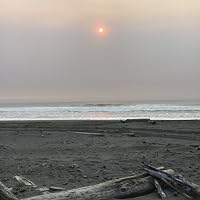
The character development is intense yet beautifully grounded in the immediate moment. The author avoids overusing flashbacks, taking you into a character's past only when it strategically builds the core plot. The character descriptions are exceptionally rich and entirely unique, such as this striking observation: “Her eyes had a heatwave dance of hippiness, that quality that made her less a personality than a series of impulses.” Every single loose end is tied up in a surprising, deeply satisfying conclusion. Furthermore, having personally lived on the southern Oregon coast, his evocative descriptions of the Pacific Ocean made me ache to return to the water. As the author beautifully wrote, “Mostly water, I thought. We're mostly water, capsules of orphaned ocean, harder in form but following the same basic pattern of spreading and filling all possible spaces.” Ultimately, this magnificent book spread through the spaces of my own mind, and I highly recommend it.