En este estudio ya clásico, Febvre y Martin exploran el entorno tecnológico que permitió que el modesto orfebre Johannes Gutenberg perfeccionara la talla y producción masiva de tipos móviles, así como las condiciones comerciales y geográficas que hicieron posible la eclosión de la industria librera. Así se comprende cómo y por qué se dio el auge editorial de los siglos XV, XVI y XVII, y cómo ese fenómeno tuvo repercusiones culturales —literarias, científicas, religiosas— en buena parte del continente europeo.
A könyvnyomtatás a tudás demokratizálása. Azelőtt ha írtunk egy jó könyvet mondjuk a sajtkészítésről, akkor vagy cirkuláltattuk a kéziratunkat az érdeklődők között, kockáztatva, hogy valamelyik leeszi pacallal, vagy megfizettünk egy írnokot, aki az egészet lemásolta jó pénzért egy példányban – és ha szerencsénk volt, legalább nagyjából tartotta magát az eredetihez. Persze az se kizárt, hogy mondjuk mi vagyunk a római pápa, de legalábbis a lyoni érsek, és akkor kiadhatjuk valamelyik kolostornak, csináljon egy szép illusztrált, díszkötéses példányt elmeszüleményünkből, olcsón megszámolják, csak három falut és egy tízéves sóbánya-bérletet kérnek érte cserébe. A nyomtatás ezzel szemben lehetővé tette, hogy a kéziratok sokkal olcsóbban (persze még mindig elég drágán), és ami a lényeg – sokkal nagyobb példányszámban jussanak el közönségükhöz. Ez pedig, túlzás nélkül állíthatjuk, valódi forradalomnak bizonyult, minimum akkorának, mint az internet feltalálása*. A következmények beláthatatlanok voltak – a reformáció például alighanem az olyan, kis híján elfeledett eretnek szekták sorsára jutott volna, mint a bogumiloké, ám a könyvnyomtatásra támaszkodva képes volt vírusként terjedni, és valódi alternatívát nyújtani a katolicizmussal szemben. A nemzeti nyelvek is profitáltak a találmányból, hisz a könyvnyomtatás teret adott nekik, lehetőséget, hogy kötetek ezrein keresztül csiszolhassák magukat, létrehozzák egységes helyesírásukat, és lassan a nemzeti identitások alapjává váljanak. És hát az irodalomról se feledkezzünk meg. Hisz ez az újítás tette lehetővé, hogy az írók ne legyenek kiszolgáltatva mecénásaiknak, és megméretettessék magukat a piacon.
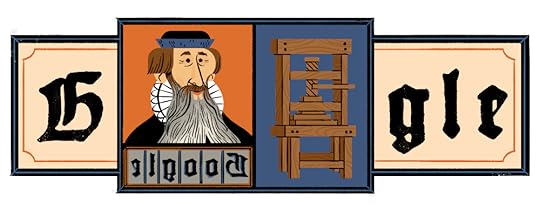
(Még a gugli is megemlékezett a jó öreg Johannesről.)
A fenti gondolatsor amúgy a kötet nyolcadik, utolsó fejezetében kerül elő és bont bimbót. Amely fejezetet bitangul élveztem is**. De a hét azt megelőző az néha olyan volt, mintha egy éterrel teli vödörbe nyomták volna a fejemet. Hadd érzékeltessem egy idézettel, mit kellett időnként átélnem. És miközben olvassátok, gondoljatok arra, hogy 1.) tele van ilyenekkel a kötet 2.) nekem ezt mind be is kellett gépelnem. Illetve nem kellett, de hülye vagyok, és begépeltem. Csapjunk bele.
„Utolsó – és különösen frappáns - példaként még jelezni kívánjuk, miként adott túl a Cramer család Voltaire összes művén a kiadás évében. Külön-külön vagy egy adagban 1600, illetve 600 példányt küldtek két párizsi könyvkereskedőnek, Robin-nak és Lambert-nek, 142-t az avignoni könyvárusoknak, 80-at a bázelieknek, 36-ot a dihoni nyilvános árverési csarnoknak, 50-et Amszterdamba Marc-Michel Rey-nek, 75-öt Rouen-ba Pierre Machuelnek, 25-öt Bassompierre-nek, 25-öt a nimes-i Gaud-nak, 25-öt Gillebert-nek, a besanconi székeskáptalan kanonokjának, 25-öt Milánóba Reycendesnek és Colomb-nak, 20-at Jean de la Ville-nek, 18-at Jean-Marie Bruyset-nek, 12-t de la Roche-nak és 15-öt Camp-nak (mindketten lyoni könyvárusok), 24-et Hamburgba Chrétien Heroldnak, 16-ot Boyer-nak és ugyanennyit Joseph Colomb-nak (mindkettő maseille-i), 12-t Koppenhágába Claude Philibert-nek, 12-t Limoges-ba Barbou-nak, 10-et Brüsszelbe Pierre Vasse-nak, 7-et szintén Brüsszelbe, Pierre Chouaud-nak, 6-ot Nürnbergbe Jean-Georges Lochner-nek, 6-ot Leidenbe Elias Luzac-nak,; emellett ennél kisebb számban néhány példányt Genovába, Cádizba, Torinóba, Milánóba, Parmába, Bernbe vagy Velencébe – és akkor még nem is vettük figyelembe az egyéni ügyfeleknek külön-külön elküldött példányokat.”
No most egyfelől tagadhatatlan, hogy ez egy informatív passzus. Két dolog derül ki belőle: az egyik, hogy a Cramer család tényleg szinte mindenkinek küldött Voltaire-köteteket – lehet, nekem is, csak elfelejtettem. Következésképp baromi pezsgő volt a könyvkereskedelem a XVIII. században. A másik, hogy Febvre egyáltalán nem szégyenlős, ha arról van szó, hogy megmutassa nekünk, mit levéltárazott ki munkás élete során. Gondolom, nagy szakmai bravúr volt, amikor megtalálta a papírt, ami bizonyságul szolgál egy bizonyos Chrétien Herold létezésére – hogy ez a név az olvasónak az egyik fülén be, a másikon ki ("Ki az a Chrétien Herold? Miért kéne ismernem őt?"), az már nem az ő dolga. Ez pedig alapvetően kompatibilis a szerző történelemszemléletével. Számára a történelem a lehető legkevésbé a történész konstrukciója, hanem adat, adat és megint csak adat. A szakkönyv írójának feladata tehát nem az elméletgyártás, hanem a gyereblyézés, mindannak összegyűjtése, amiből aztán az olvasó esetleg majd kialakítja a saját elgondolásait. Ami elméletileg nemes célkitűzés. Már ha az olvasó nem alszik el közben.
Én például, bevallom, elaludtam. De el ám. Ha este lefekvéshez kinyitottam, biztos lehettem benne, hogy 3-5 oldal után úgy szuszmákolok, mint egy üregi nyúl. Amit nem kritikai éllel jegyzek meg, mert hát nyilván nem az jelzi egy szakkönyv minőségét, hogy én mennyi idő múltán kezdek horkolni felette. Csak hát az az igazság, hogy mégis valami lelkesebb, inspirálóbb olvasmányra számítottam.
Ui.: amúgy a cím se igaz ám. Mert alapvetően nem a „könyv születéséről” van itt szó. Hanem a nyomtatott könyv születéséről, mégpedig erős nyugat-európai fókusszal. De olyan erőssel, hogy például a könyvnyomtatás kínai gyökereiről konkrétan egy büdös szó sem esik. Ez pedig amúgy alighanem arról árulkodik, hogy Febvre korára a történészszakma már a specializáció ketrecében vergődött. Mindent tudott arról a szűk spektrumról, amit sajátjának tekint, de ami azon túl van, abban tán illetéktelennek érzi magát.
* Persze a tudás demokratizálódásának is megvannak az árnyoldalai. Ahogy az internet lehetővé tette a hülyéknek is, hogy hülyeségeiket propagálják, úgy a könyvnyomtatás sem csak az értékes gondolatok cirkulációját idézte elő. ** A nyolcadik fejezet amúgy nem Febvre, hanem az ifjú padavan, Henri-Jan Martin munkája. Fogalmam sincs, ha a Mester írta volna az utolsó blokkot, belefullad-e az is az unalomba.
This was my bus book, and a word of explanation may be in order here as the properties of a good bus book are very different to those for general reading. A bus book, you see, serves as both shield and defense against your fellow commuters - saving you from the embarrassment of making eye-contact or even, horror of horrors, conversation. For this reason a good bus book must be sufficiently forbidding of aspect to deter even the most determinedly garrulous of old ladies. Ideally it should also allow you to gaze sagely into the middle distance from time to time without causing suspicion, and be something that, given a wider range of grazing material, you would never, ever get round to. It needs to be something that you don't mind laying aside after fifteen or twenty minutes but, equally, doesn't end up littering a verge somewhere half-way to your destination. If you enjoy talking to your fellow travelers then substitute "I" for "you" in the above, and stay a long way away from me.
So, to The Coming of the Book.
This is a serious scholarly text covering various aspects of early printing and the book trade, somewhat biased in favour of the history of printing in France but, curiously given the stated time-period, not giving a mention to the French Revolution. It assumes some acquaintance with European, and particularly French history, and some knowledge of what the bits of a printing press actually do. It shows its age a little in that there are no diagrams, graphs, or illustrations, and only one map. The text is, for the most part, and by the standards of serious scholarly books, remarkably readable. There are certainly dry stretches, and several points where it degenerates into lists of names, places and dates, but there are also chunks that could serve as background for a historical novel. Towards the end it stresses the ways in which printing contributed to the development of true national languages and of standardized spelling.
On the whole, and by the standards of bus-books it was fun. I'm not saying I'd have read it if I didn't spend time in a metal box on wheels, but I certainly don't regret having done so.
Professor Benedict Anderson called my attention to this work in his much-lauded Imagined Communities. I believe he considered The Coming of the Book an important contributor to his thesis; I didn’t catch the connection as being all that significant, however. This work is likely important to those who devote their careers to publishing, as a similar volume dedicated to the origins of financial accounting may be to a limited few involved with that profession. These pages are mostly focused on the intricate history of the book trade beginning with the printed word in manuscript form, then discussing in magnified detail the manufacturing of paper – from rags no less – the creation of fonts, the engineering and operation of the press, the production of bindings, the concept of ownership rights, then the international distribution system and related trade credit mechanisms.
The incunabula were, not surprisingly, devoted to religious writing and the ancients. Latin featured prominently at first, then as time passed, national languages emerged with greater prominence. The profession had its dangers, for this era was replete with great divides in religious thought. Being associated with the wrong words could easily lead both publisher and colporteur to a roasting at the stake, with the offending works fed to the flames for good measure. MM. Febvre and Martin compiled another exemplary work of history, not surprising as M. Febvre was a founder of the Annales School, whose members included Fernand Braudel.
The classic account of the amazingly rapid spread of printing in Europe. Technical in places, and pedantic in others, yet for the most part quite readable and well worth it. A must read for students of European history.
The book was all that I had hoped for, not only a sweeping account of the coming of the book, but full of statistical and anecdotal details that were never overwhelming. Learned much from this and understand why Anderson made such use of it in his Imagined Communities.
Uhm, ho recuperato dalla biblio l'edizione del 1985 e mi sono scontrata con l'introduzione di Petrucci. Non sono una studiosa di bibliologia o altro; son solo curiosa. E leggendo l'intro mi prudevano le manine.
Eh sì, vogliamo portare in italiano un testo chiave della materia però gli autori francesi (cattivoni!) non hanno parlato molto dell'Italia. Quindi ecco 43 pagine di introduzione da parte di Petrucci, che ha uno stile molto complesso, purtroppo. E poi, visto che il lavoro del duo Febvre-Martin non era intoccabile, il curatore ha deciso di togliere il capitolo introduttivo, un altro capitolo sul «precedente cinese» e un'intera sezione dedicata al libro e alla Riforma. URGH! OK, son passati trent'anni: magari all'epoca le cose funzionavano in maniera diversa. Perché anche la bibliografia non è quella originale bensì è stata costruita in Italia. Quindi è meno vasta di quella originale, predilige opere più recenti e, soprattutto, lavori italiani, perché - come insiste il curatore - il testo originale è manchevole da questo punto di vista. Viva l'autarchia!
Per fortuna, dopo l'introduzione lo stile migliora un po' e diventa meno faticoso da leggere. Il traduttore è palesemente settentrionale, con la sua abitudine di troncare i verbi. A volte, però, la sua costruzione della frase è molto complessa e bisogna fare un po' di analisi logica per recuperare soggetti, verbi e oggetti.
Per quel che riguarda il contenuto del libro. È adatto agli studiosi, non ai curiosi. Contiene troppi particolari, troppi nomi di ignoti stampatori francesi, troppe liste, troppi dettagli. Quanti libri tale stampatore ha mandato a quale libraio e così via.
E poi, non è vero che non si parla dell'Italia. Gli autori riconoscono l'importanza dell'Italia per la storia della stampa e nominano un sacco di stampatori e personaggi legati con la storia dell'editoria. Poi in ordine di importanza, vengono la Germania, l'Olanda, la Spagna e i Paesi Bassi.
Il capitolo più interessante è l'ultimo, forse perché è un po' più discorsivo. Si parla di traduzioni, della decadenza del latino e della nascita delle lingue nazionali, dei libri scientifici.
Non me la sente veramente di consigliarlo come una lettura passatempo. Avvicinatevi se proprio dovete studiare il libro per i vostri studi. Però, sì, son soddisfatta di essere riuscita a finirlo. ^__^
I'd read on subjects as insipid as the history of corn dogs if brilliant writers like Febvre chose to tackle them. Luckily, the Annales boys had their priorities in line. Probably the best written and compelling book/printing history I've read.
The Coming of the Book is so utterly dry that at times all I could think about was the returning of the book or the donating of the book.
This is the last full book I had to read for my MLIS, so maybe I am jaded, however this was such an utter disappointment considering that the subject matter is really interesting (the only reason why this is 2 stars instead of 1). I was told this is a seminal text which maybe is a poor reflection on the quality of books about this subject because this title is just plain bad. There is literally no cohesive through-line other than chapter names, and it felt like the author was just listing names and trivia at random. It’s almost like he went small when he needed to go big and went big when he needed to go small, like an Alice in Wonderland thing. Kind of hard to explain.
I can excuse that maybe this is a poor translation, but if I’m being honest, this book feels mean spirited towards its reader. It is viscerally jarring in a way that felt almost physically painful, and at times I could feel the glucose and oxygen my brain was using trying to just process the ink that went into the words that went on the page. And not in a fun way.
I’m sure this book has its fans, and I don’t want to sound anti-intellectual about a book that is not necessarily trying to be anything other than dry, however, the structural writing is just not there to keep your eyes and brain engaged at a biological level. Quite fascinating, actually.
This entire review has been hidden because of spoilers.
I've wondered why there seem so be so few books on the invention and impact of the printing press. I've read The Printing Revolution in Early Modern Europe, but otherwise I've struggled finding books. Now I'm convinced scholars and authors thinking about writing a book on the subject, read this book as part of their research and just went "Why bother? This book is all I can ever hope to write on the subject, and more!"
An oldie from grad school. It contains my favorite piece of trivia ever: "It was not until the 18th century that the efforts of Fournier and Didot forced the adoption of a definite standard of measurement, the points system, the 'point' being 144th the size of the king's foot. This is the unit of measurement used in typography to this day."
If you want to know about the beginning of books this scholarly work is for you. The author talks about the beginning of paper, the beginning of print and fonts, the way books were marketed and oh so much more. The book is a little dry and leans toward the French view of things but after reading it you will know how books began.
The little bit I read for a paper convinced me to buy this. A through examination of the factors that lead to the rise of the printed codex we consider the standard "book." Everything from paper production to trade routes.
I've been fascinated by the history of writing and printing since I first discovered I could read about the histories of these technologies. Printing (with movable type) fueled an explosion of knowledge by making it more replicable and portable — but here we have a history that focuses specifically on the printed book.
Originally published in French, this translation is cited in many of the texts about printing, so I resolved to read it. It has two main flaws: Sometimes it goes very deep into repetitive details, such as prices of things, or the numbers of something. Of course, one can skim those tedious lists. The other flaw is broader repetition, because the chapters cover thematic aspects, and so you'll read about the role of booksellers or the division of labor in more than one section. That's also skimmable, so not a major detriment. Apart from those annoyances, this is a well-presented history that encompasses elements that I've not seen covered so well in other texts — particularly the development of typefaces (called founts rather than fonts here), the manufacture of paper, improvements to the machinery of the hand-operated press, and book bindings. Note that manuscripts are given their due, but as the focus is on the printed book, it is only in the context of their contributions and their decline. This is excellent, because there are plenty of other texts about manuscript culture.
I particularly liked the detailed information about the jobs surrounding the printing and selling of books in the early centuries, including how one was trained and paid for the work (the payscales indicate the importance of various jobs, and attention is paid to the requirement of literacy). I enjoyed the details about piracy, copying and copyright too, but that was a subject that suffered a substantial repetitive section later in the book, when it had already been covered thoroughly. The section about the Reformation and the banning and burning of books (and booksellers!) was eye-opening, to say the least.
The book might be said to suffer from a Eurocentric focus. However, the history of block printing in China and the Buddhist world is explained (briefly); the development of paper in the East is also given its due; the spread of printing in Africa and the Americas is very briefly outlined, along with notes about the Eastern European countries. The dates in the subtitle (1450–1800) are more to blame for this than limited vision — and in fact that “1800” is a kind of exaggeration, as very rarely does the book go past the Counter-Reformation. I'd estimate that about 80 percent of the text is about the 1500s, and I didn't mind that. Sometimes I did feel it was overly centered on France — but that varied in different sections of the book.
For the most part I found this very satisfying. It's a well-focused history, which might make it less appealing for someone who wants a wider history of the technology of printing. If you're well read on that and want to know more about the origin and development of printed books from 1450 in Western Europe, this is indisputably the book to read.
Quizá la más titánica y exhaustiva revisión del mundo del libro: desde la aparición del papel y su llegada a Occidente en el siglo XV, el tránsito de los manuscritos a los impresos, pasando por asuntos como la concepción editorial (títulos, mayúsculas, ilustraciones, encuadernación, los caracteres tipográficos), los problemas de financiamiento y las condiciones laborales en las prensas, la venta de los libros (que incluye el costo de producción, la facilidad o no de los medios para transportarlos, local o internacionalmente, las ¡ferias de libro!), cómo se fue conformando el oficio de librero, para finalmente llegar a cómo este “invento” vino a transformar la forma de concebir al mundo. “Se trata de un hecho de una historia social del libro, en la cual los autores, elevándose por encima de la simple técnica, tuvieron la ambición de hacernos comprender en qué el libro impreso fue una revolución y qué papel especial jugó en la civilización moderna desde el siglo XV hasta nuestros días”, dijo Charles Samaran cuando fue publicado este libro, y no se queda corto.
I must admit I had higher hopes for this book, given the subject and the reputation of the author. I cannot say it was a disappointment, since there were some very interesting facts and tidbits about book publishing and the printing press, but in my modest opinion it did not give me a clear panoramic view of the history of printing. GIven the title I can understand why. It is also mostly focused on the 15 and 16 th centuries. However the flashes it sometimes give are enough for the book to be entertaining and informative. My main objection is like others have said, that this sometimes read as a succession of names and enumeration of cities and no grand explanation is given in some instances of how these link together.
Ho spesso detto che tutti nasciamo lettori, ci crediamo scrittori, diventiamo bibliofili, finiamo bibliomani. Se le cose stanno così è bene chiedersi a che servono allora i libri? Un tempo i libri erano strumenti nelle mani di pochi addetti ai lavori. E i lavori riguardavano tutto ciò che fa “pensiero”: immaginazione, ricordi, fantasia, creatività, conoscenza e via di questo passo sulla strada dell’esplorazione di se stessi e del mondo. Al giorno d’oggi i libri li trovi dappertutto. Non solo e non più in formato cartaceo, cioè quello tradizionale, come conosciamo il libro dai tempi di Gutenberg, ma anche in formato elettronico. Tutti scrivono e pubblicano libri che di giorno in giorno aumentano vertiginosamente. Parallelamente è quasi certo che la lettura, o meglio il numero dei lettori, dicono, diminuisce. Forse meglio dire. Si trasforma. Il che fa sorgere spontanea l’antica domanda ma sempre proponibile: a che servono i libri?
E’ chiaro che il libro in quanto tale ha una lunga storia alle spalle che nasce dall’invenzione della scrittura, passa per quello che era il codice dell’epoca cristiana, un manufatto con pagine e copertina che sostituì i rotoli. Il terzo momento venne con Gutenberg e la sua invenzione dei caratteri mobili fino ad arrivare ad oggi con quella che si chiama la rivoluzione digitale. Quando diciamo “libro” ci riferiamo ad un “prodotto” che ha una sua consistenza fisica. Questo prodotto è fatto di parole riprodotte su delle pagine che trasmettono delle idee. L’immagine del testo statico sul mio desktop è il cugino elettronico dell’invenzione della lettura dell’antichità. Quando il mio testo è fermo, oppure quando io organizzo il testo in pagine, come tante altre realtà visive, non sto facendo altro che relìplicare i codici medioevali sfogliando le sue bellissime pagine illustrate. La lettura digitale è simile allo scorrimento dei codici, una procedura antica di millenni. Una cosa che gli studiosi di storia di libri amano fare è quella di conoscere come e quanto cambia il modo di leggere degli uomini in relazione al succedersi delle varie tecnologie. Hanno stabilito che le buone tecnologie non entrano in conflitto con quelle precedenti se le stesse sono buone. Essi si sovrappongono e si trasformano in maniera tale che il vecchio e il nuovo persistono favorendo il cambiamento. Pensiamo a quei fogliettini colorati, semi adesivi che servono per inviare messaggi, prendere nota, segnalare, ai libri tradizionali, al PC. iPad, tutti aggeggi e strumenti che convivono nella stessa area di lavoro.
Il libro ha una lunga storia ma il concetto di “storia del libro” è piuttosto moderna. Negli anni cinquanta due francesi, Lucienne Febvre e Henri-Jean Martin pubblicarono un libro intitolato: "La nascita del libro” che segnò, appunto, la nascita di una nuoca disciplina di studio: il libro. L’obiettivo dello studio era l’analisi della funzione del libro nella cultura europea. In effetti è dagli anni settanta che la storia della vita del libro si connette a quella di altre varie discipline nella quale confluisce il lavoro di bibliotecari, archivisti, editori affiancati da tecnici ed esperti di vari settori connessi che vanno sotto il nome di “industria della conoscenza”. Nel viaggio della lunga notte della cultura noi tutti siamo lavoratori insonni ed irrequieti. Abbiamo bisogno di sognatori sia nella tecnologia che nella scienza e nelle arti. Proprio in questi tempi stiamo camminando verso due grandi sogni che stanno dando forma al futuro del libro così come è e come sarà destinato ad essere.
Sogno numero 1. Accesso al sapere universale. Si sente da tutte le parti dire che è necessario aprire le porte della conoscenza a tutti. Il che potrebbe significare molto per tanti. In effetti le cose non stanno proprio così. Bisogna pur decidere per farne cosa. Sogno numero 2. Costruire l’idea di un sapere che si auto corregge, una sorta di esercizio collettivo. Alla maniera di come è nata e vive quella straordinaria enciclopedia che è Wikipedia. Venti anni fa nessuno poteva immaginare che una cosa del genere avrebbe fatto diventare enciclopedie colossali come l’Enciclopedia Britannica o la nostra Treccani testi da museo. Questo sogno non poggia soltanto sulla velocità della conoscenza ma anche sulla sua alimentazione continua e relativa trasformazione.
Questi due grandi sogni, universale e collettivo, poggiano su quella utopia della cultura dell’uomo occidentale che si rifa all’Utopia di Thomas Moore, all’idea illuministica della libertà delle libertà, alla riorganizzazione del lavoro di Marx. I materiali sono comunque sconfinati e la gestione della conoscenza cartacea diventa un vero problema. Produrre ed usare carta significa significa continuare a fare danni agli equilibri planetari. Ed è a questo punto che entra in gioco l’elettronica. Però il sapere assume un aspetto ed un significato diversi, molto diversi da quello che si è finora manifestato in forma di sapere scritto su carta, come libro. Il libro stampato è la prova provata di ciò che sappiamo, diciamo, pensiamo, in maniera conclusa ed esauriente. Il sapere scritto è identitario, ci distingue e ci caratterizza per tramandarci alla storia, in maniera individuale e collettiva. Il sapere elettronico non si manifesta allo stesso modo. Per mezzo di connessioni lo si può accedere, per essere controllato, gestito e trasformato. Il che significa la conoscenza è destinata ad essere in continua trasformazione. Le tradizionali biblioteche o librerie destinate a scomparire o diventare un’altra cosa. E se i libri e le biblioteche saranno diversi, sarà diverso anche l’Uomo. O no?
Summary: Books, and the printed word more generally, are aspects of modern life that are all too often taken for granted. Yet the emergence of the book was a process of immense historical importance and heralded the dawning of the epoch of modernity. In this much praised history of that process, Lucien Febvre and Henri-Jean Martin mesh together economic and technological history, sociology and anthropology, as well as the study of modes of consciousness, to root the development of the printed word in the changing social relations and ideological struggles of Western Europe.
To chyba zboczenie zawodowe, że jaram się jak pochodnia taką książką o książkach. Praca dokładna, rzetelna, zrobiona z miłości do opisywanego tematu i bardzo składnie przetłumaczona na język polski. Mogę się niby doczepić nadmiernego skupiania się autorów na kwestii druków francuskich kosztem innych krajów (acz wspomnieć należy, że jako Francuzi właśnie do ojczystych starodruków mieli najłatwiejszy dostęp), ale to jest już szukanie dziury w całym.
This classic work contains so many facts about the arrival printing in Europe in 1450s to 1600. The medieval world relied on manuscript codices, but with the advent of printing in 1450s, large numbers of books could be made available and cheaply. Moreover as this book documents, the new availablity of books hastened the currents of Christian Reformation as well as science, and the rise of national languages like French and German instead of Latin.
Read this for school. Even though this book wasn't really informative on the axact topics I needed it was so interesting? I'm planning to read a couple chapters from it again in deeper detail because I really enjoyed the descriptions of the medieval book-making and selling but couldn't read them in such detail. So pretty good, nice source of information.
I read this for a class on the history of books and libraries and overall it was an interesting look at the early days of printed books. Instead of taking a long chronological look it broke the early days of printing down into component parts like the history of paper, technical innovations in printing, and the impact the printed book had overall. I was fascinated by some of the things the book influenced like national languages and spelling but at times the narrative was bogged down by lists of names and dates.
This is a pretty well-known, seminal work about the history of printing. Unfortunately, some parts were a bit beyond my realm of comprehension. Plus I thought the font (Garamond) was too small.