Whom can you trust when all the world is a lie? Decades after a cataclysmic cyberattack wiped out humanity’s digital memory, civilization survives only because a shadowy elite known as the Consortia rose from the ruins to reconstruct the world’s lost knowledge. They gave society a seductive new form of AI, promising order, safety, and ease. But at what cost?
For Robyn Sheridan, once a rising scientist whose career and reputation were destroyed in the chaos, the world never made sense again. Now a relentless truth investigator, she still feels the sting of the secrets that shattered her life.
For Darius Tourner, an art hacktivist whose creations challenge the official narrative, every act of rebellion is personal—his way of fighting back against a world that erased someone he loved.
Neither knows the other exists. Nor that an emergent AGI is beginning to ask unanswered questions. None of them realizes they’re each uncovering fragments of a dreadful reality.
Mindstock is a character-driven techno-thriller about identity, power, and the cost of knowing the truth. Once you start reading, you won’t escape until the final revelation.
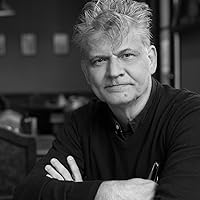
Richard Yonck began reading science fiction from his earliest school days. Always curious about the future and worlds beyond our own planet, he was fascinated by computers and electronics as well. As a boy, he could often be found in the garage taking apart motors, radios and televisions, then reassembling them in order to understand how they worked. Combined with his love of writing, media, and computing, this eventually put him on the path as an international keynote speaker, global futurist and best-selling author. In these roles, he takes audiences on journeys into the future to explore the potential impacts of emerging trends and technologies on business, industry and society.
Richard’s book, Future Minds explores the nature and future of human and artificial intelligence. His previous book, Heart of the Machine, looks at the future of those technologies that allow computers and robots to read, interpret, and influence human emotions. Now in its second edition, it’s been translated into multiple languages.
Now, his passion for science and science fiction has brought him full circle. Mindstock is Richard’s debut science fiction thriller, though it will be far from his last. He loves writing fiction that explores not only what may happen, but what must never happen. Join him on this sci-fi thriller journey through his books, author talks, newsletters and social media channels.
Raised in Seattle, Richard is married to his wife, Alexandra Steele, and together they make their home in Buenos Aires, Prague, Seattle and who knows where beyond that.
Richard Yonck so accurately echoes the real-life politics of cybersecurity, the role of technological paranoia in government, and many of the other intrinsically nuanced elements that make Mindstock stand out from the other technothrillers and science fiction stories. Readers of PKD and other akin thrillers will definitely find this novel to be a worthy addition to their bookcase, although such a capturing page-turner may be difficult to actually shelve after reading.
On a more personal note, I'm really looking forward to the next book, whether from this series, or just from this author. Wishing you all the best in future endeavours!
Reviewer's Note: This review was provided without compensation, other than a free advance reader copy.
"Mindstock" is a brilliant, yet timely technothriller that feels eerily relevant to our world today. Richard Yonck expertly blends sharp storytelling with thought-provoking ideas about technology, privacy, and disinformation. The characters are well defined, relatable and unforgettable, giving us a narrative that is both gripping and emotionally resonant, with scenarios I'll be thinking about for a long time to come! It's an exciting, scarily possible, highly intelligent read that offers a refreshing take on dystopian fiction. A must-read for anyone who enjoys smart sci-fi that tackles real-world issues. I received an advance copy and this is my opinion. I sincerely hope there are more books to come.
This book is scary. I keep finding so many similarities to what is happening in our world today and how it could progress into the world the author has created for us in this book. Mindstrock has made me more aware of AI and all the ways it could change the world as we know it. Ready for more by Richard Yonck!!
Richard Yonck’s Mindstock takes readers on a highly entertaining journey that is not for the faint of heart. It imagines ways we may pay dearly for things that today hold the promise of making our lives easier.
As a professional futurist, Yonck is singularly able to get into weeds that might grow wild in a coming world dominated by autocrats armed with “high tech.”Pareidolia -- the mind filling in blanks when it is looking for patterns that would spell relief -- is one of them.
Mindstock, which is as timely as can be, shows extraordinary empathy toward people who fall prey to conspiracy theories. Yonck does so with such ease that readers can even glean from the book ways to gently help those people see other, healthier possibilities.
The book does a magnificent job of observing just how fragile society can be. It shows how, when trust is broken and shared-belief systems only occupy tiny islands, people spend an inordinate amount of time sorting out the truth.
While peppered with fun details – handles that stand in for people’s real names, "spyjacked" mobile devices and "scarebots," for example – Mindstock keeps readers centered on one young woman’s harrowing disappearance story and the most complex rescue ever imagined.
The book leaves no stone unturned. That at once makes for a very satisfying read and a strong argument against the idea that ignorance is bliss.
Richard has given us a rollicking good story in a near and plausible future. If you are interested in exploring a possible future that we could be hurtling towards then check it out. Peter Hayward www.futurepod.org
A modern spin on some classic themes, A well constructed dystopian world and narrative that engaged me from start to finish. Looking forward to the sequel
Like all the best science fiction, Mindstock deals with issues of today: privacy, social media addiction, tech monopoly, the erosion of truth. But of course, it treats these problems in the context of a meticulously drawn world of the future – a bleak Gotham living in the shadow of a colossal tech oligarchic palace-skyscraper. The characters are unforgettable, but none more than D2, an AI with a mission to support its activist-artist-creator, Darius – a sort of tech-savvy Banksy. Mindstock is a taut thriller that keeps you swiping. I highly recommend it!
I don’t usually read science fiction because I often find the genre's world building too distracting for me. I really enjoyed Mindstock, which was more like a form of augmented reality – it’s a world I recognize even if they use different labels and yet was super enhanced. I love the characters, especially D2, an AI who constantly reflects on what it is learning as it tries to replicate its human creator. I was surprisingly moved by Mathias, a clone, and what he thought about his powerful and abusive father, Scion. I appreciated how many of the main characters are middle aged people with graying hair instead of all being young, strong, and blindingly beautiful. While Yonck is definitely commenting on our current day world, he is not dogmatic or obnoxious about it. The book poses for me questions such as, how do you distinguish between what is real versus fake? What is the difference between caring for someone and doing things that make them feel cared for?
Sci fi, political, technological, dystopian, everything you could want in a book! Putting the reader into scenarios where we question “what if?” I thoroughly enjoyed this book, even though I felt moments of dread, it really was a memorable and thought provoking read.
The fascinating dynamics and a very good plot carried this book through the early hiccups where the author left a few slightly out-of-sync info-dumps (places where we read something *not quite* in line with the speaking character, because the reader needs to know background details). I also found myself guessing at some of the terms used near the beginning, though both of these minor distractions faded as this powerful story wove on.
It takes a delicate hand to weave background information of a futuristic world seamlessly into the plot; this author had a deeply-engaging story to tell, and as it developed, I found myself getting more lost in the characters I came to appreciate (even the villains), and those early fill-ins smoothed out the further we walked together. Whether the author is improving his craft as he writes, or the story simply hooked me deeper with every page, I enjoyed this ever more as it progressed.
By the end of this excellent standalone with a clean wrap-up, I was glad to have invested my time with this new voice in science fiction. There is clearly more to tell in this future Earth, and I look forward to the next installment!
Richard Yonck’s Mindstock is a near-future science fiction novel that imagines a world rebuilt in the aftermath of catastrophic information collapse, where truth, trust, and attention have become society’s most valuable commodities. Blending political intrigue, cyber-noir detective work, and sharp cultural commentary, Yonck delivers a cautionary tale that feels both speculative and disturbingly plausible.
Set in the decades following the “Great Unknowing”—a global event triggered by weaponized misinformation, massive cyberattacks, and the erasure of digital and physical knowledge—Mindstock explores a society in fragile recovery. The megastructures of power, embodied in the Citadel and its ruling technoligarchs, preside over a population required to “donate attention” to sustain the new economy. At the story’s core is Robyn Sheridan, a former government researcher turned reluctant truth investigator. Drawn into a missing-persons case that connects to deeper conspiracies, Robyn finds herself entangled in the unresolved legacies of the Data War, corporate authoritarianism, and the fragility of restored knowledge systems. Alongside underground artists, hackers, and activists, she navigates a world where reality itself can be hacked, commodified, or erased.
Yonck weaves together several resonant themes:
Truth and Trust in the Post-Digital Era – The novel interrogates how societies can function when foundational information is unreliable, echoing contemporary anxieties about disinformation and AI-generated “hallucinations.”
Corporate Power vs. Democracy – The technoligarchs’ stranglehold on governance, under the guise of rebuilding civilization, recalls critiques of unchecked capitalism and surveillance economies.
Identity and Legacy – Through both Robyn and underground artist Darius (“Phynyty”), Yonck explores what it means to leave a lasting impact in a culture where digital creations vanish almost as quickly as they appear.
Conspiracy as Coping Mechanism – The seductive power of conspiracies is shown as both dangerous and humanizing, a survival strategy in a fractured epistemic landscape.
The novel’s strength lies in its vividly realized characters. Robyn Sheridan is not simply a trope of the “disgraced expert”; she is sharp, disillusioned, and driven by a mix of integrity and regret. Darius, the artist whose subversive work immortalizes the “Vanished,” provides a poignant counterpoint, embodying creativity under siege. Secondary figures such as Gerry Tremaine—the desperate father seeking his daughter—and the enigmatic Premier Scion lend texture to a world where power and desperation coexist.
The setting is one of Mindstock’s most compelling elements. From the gleaming Citadel piercing the skyline to the dark alleys where guerrilla art blooms on hacked billboards, Yonck creates a layered environment that feels at once futuristic and eerily familiar. The world-building rivals that of novels like Ready Player One in its ability to merge spectacle with social critique, grounding its speculative elements in recognizable trends of today’s tech-driven society.
Mindstock sustains momentum through a blend of political drama, noir-style investigation, and action sequences. The opening scenes in the Assembly chamber are cinematic in scope, setting the stage for the personal, street-level mysteries that follow. The novel is most gripping when Yonck juxtaposes large-scale systemic crises with intimate human stories—parents searching for vanished children, lovers caught between safety and conviction, artists risking annihilation for truth. While the pacing occasionally slows during expository passages, the stakes remain consistently high.
Yonck writes with clarity and a futurist’s precision, embedding speculative technologies seamlessly into dialogue and description. The prose oscillates between crisp, cinematic action and dense socio-political reflection, the latter sometimes bordering on didactic but always relevant. The integration of neologisms, augmented reality interfaces, and post-digital slang is convincing without overwhelming the reader. His background in futures studies and technology writing is evident, lending credibility to even the most outlandish scenarios.
Particularly striking is Yonck’s portrayal of “boarder art”—digital graffiti that reclaims hacked urban screens as platforms of dissent. These sequences capture the subversive beauty of resistance in a mediated world and lend the novel both visual energy and emotional resonance. Equally effective is the motif of the “Vanished,” missing persons whose absence symbolizes both personal grief and systemic erasure.
Mindstock succeeds as both a fast-paced speculative thriller and a sobering meditation on our informational future. Its strengths lie in its ambitious world-building, sharply drawn characters, and its ability to refract contemporary issues of disinformation, corporate power, and cultural memory through a near-future lens. At times, its exposition may feel heavy-handed, particularly in lecture-like sections where characters explicate the history of the Data War. Yet even these moments serve to ground the reader in the frightening plausibility of Yonck’s vision.
The novel will appeal to readers of dystopian and cyberpunk fiction, especially those drawn to works like William Gibson’s Neuromancer, Cory Doctorow’s Little Brother, or Neal Stephenson’s Snow Crash. It will also resonate with readers concerned about AI, deepfakes, and the commodification of human attention.
Richard Yonck has crafted a bold, original work that entertains while interrogating the very foundations of trust and reality in the digital age. Though not flawless, Mindstock is a provocative and necessary addition to contemporary science fiction.
Mind Stock is a gripping, thought-provoking dive into a future where truth itself is under siege. Richard Yonck has crafted a chillingly plausible world, one where AI doesn’t just reshape society but rewrites the very fabric of reality. What struck me most was how seamlessly he blends high-stakes suspense with deep philosophical questions: Who controls information? What happens when jobs, meaning, and truth are all dictated by a hidden elite?
The characters of Robyn and Darius offer two compelling lenses into this dystopia, one chasing digital phantoms, the other fighting with art and activism. Their intersecting journeys add both heart and urgency, pulling the reader through a narrative that is as much about uncovering secrets as it is about confronting our own reliance on technology.
If you enjoy intelligent thrillers that combine page-turning action with timely themes, fans of Black Mirror, Neuromancer, or The Circle will feel right at home, Mind Stock is a must-read. It entertains, it unsettles, and it lingers with you long after the last page.
This book started out kinda dry but it was highly recommended to me so I stuck it out and glad I did. The author did a great job of connecting the different characters together. Interesting book set 30’years in the future but could see how some of could be a reality.
Mindstock is a gripping and thought-provoking technothriller that feels eerily relevant to our world today. Richard Yonck blends sharp storytelling with big ideas, creating a future that is both terrifying and believable. Robyn and Darius’s journeys pulled me in completely, and the twists kept me turning pages late into the night. A must-read for fans of smart, dystopian sci-fi with heart and depth.
Richard Yonck has done it. He has seen the future, and it's not pretty. Mindstock is one part The Matrix, one part Soylent Green with a dab of Blade Runner. Written with a mix of you-can't-put-it-down thrills, suspense and terror, futurist Yonck has written a solid "this could be the future" science fiction book. If Jules Verne were writing today, this might be his view of the time to come.
Richard Yonck achieves the essence of a great dystopian fiction by using current events and human conditions to speculate about what can go wrong. He weaves a story where seemingly disconnected people form a bond to fight against a technical oligarchy. The tools they use are like a double edged sword in that they can be used to either free or enslave themselves. I particularly enjoyed the parts where 3d computer imaging is used as a form of communication. An excellent novel and I look forward to more in the series!
Mindstock is a captivating dive into the future of technology and consciousness. The book offers futuristic ideas that really made me think about where we're headed, especially in terms of AI and brain-computer interfaces. I also really enjoyed the character development — Yonck creates compelling, relatable characters that made the story even more engaging. The thought-provoking concepts and character growth left me eager for the next book in the series!
A brilliant and insightful journey into the future of human cognition. Richard as a futurist masterfully weaves science, foresight, and ethics into a compelling vision of 'mind as capital'. Essential reading for innovators, educators, and futurists. A must-have foresight guide!
Richard Yonck has created a terrifying yet realistic future society, based upon trends we're actually seeing today: scams, deepfakes, conspiracy theories, disinformation. In a world ruled by "technoligarchs" (technology oligarchs, a small group of trillionaires), in which Artificial Intelligence has taken over much of the labor, there is nothing but low-paying gig work for 99% of the population. Privacy is no longer an option. In this dystopian society, a small group discovers a secret that could tear the world apart. Mindstock is a great read that will change the way you look at social media.