

What do you think?
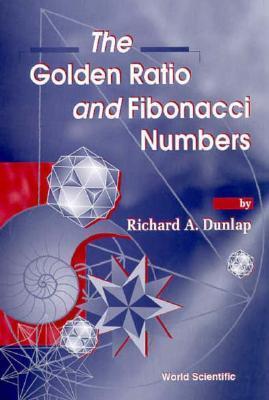
GOLDEN RATIO AND FIBONACCI NUMBERS, THE
In this invaluable book, the basic mathematical properties of the golden ratio and its occurrence in the dimensions of two- and three-dimensional figures with fivefold symmetry are discussed. In addition, the generation of the Fibonacci series and generalized Fibonacci series and their relationship to the golden ratio are presented. These concepts are applied to algorithms for searching and function minimization. The Fibonacci sequence is viewed as a one-dimensional aperiodic, lattice and these ideas are extended to two- and three-dimensional Penrose tilings and the concept of incommensurate projections. The structural properties of aperiodic crystals and the growth of certain biological organisms are described in terms of Fibonacci sequences.
162 pages, Hardcover
First published December 16, 1997
Ratings & Reviews
Friends & Following
Create a free account to discover what your friends think of this book!
Community Reviews
Displaying 1 - 3 of 3 reviews

January 13, 2010
"Fibonacci numbers are frequently found in nature. For example, the pattern of sunflower seeds takes the Fibonacci series to maximize light exposure."

January 2, 2018
Simple with great illustrations though some Mathematical facts cannot be easily understood, gives amazing insight of the existence and usage of Phi

July 15, 2024
Peccato per un paio di refusi
I libri sul rapporto aureo, nel bene e nel male, sono solitamente pieni di fattoidi tendenti al new age, anche quando l'autore vuole spiegare perché quelle associazioni sono tirate per i capelli e non hanno nessun fondamento reale. Ben venga quindi questo libro, dove Dunlap si limita a considerazioni puramente matematiche sul rapporto aureo (e sui numeri di Fibonacci e di Lucas, che sono strettamente collegati ad esso). È un po' buffo che Dunlap usi il "vecchio" simbolo τ per il numero, dopo che già da un paio di decenni Martin Gardner aveva sdoganato il ϕ (più per Fibonacci che per Fidia, secondo me), ma non è un problema. Peccato per qualche refuso che rende più complicata la lettura, come quando un ottaedro è diventato un tetraedro.
I libri sul rapporto aureo, nel bene e nel male, sono solitamente pieni di fattoidi tendenti al new age, anche quando l'autore vuole spiegare perché quelle associazioni sono tirate per i capelli e non hanno nessun fondamento reale. Ben venga quindi questo libro, dove Dunlap si limita a considerazioni puramente matematiche sul rapporto aureo (e sui numeri di Fibonacci e di Lucas, che sono strettamente collegati ad esso). È un po' buffo che Dunlap usi il "vecchio" simbolo τ per il numero, dopo che già da un paio di decenni Martin Gardner aveva sdoganato il ϕ (più per Fibonacci che per Fidia, secondo me), ma non è un problema. Peccato per qualche refuso che rende più complicata la lettura, come quando un ottaedro è diventato un tetraedro.
Displaying 1 - 3 of 3 reviews