Molly Bloom's Soliloquy, the remarkable climactic conclusion to Ulysses, remains, nearly a century after its first publication, one of the most remarkable chapters in world literature. It is night, the end of a long day (16 June 1904) for Leopold Bloom's wife, Molly. She lies in bed, muses on the events of the day, her life with her husband, her affair with Blazes Boylan, and drifts towards sleep. Joyce tried to document a woman's thoughts in an unexpurgated stream of consciousness: subjects, memories, fantasies interweave among the incomplete sentences. Regarded as scandalous and brilliant in its intimacy, the soliloquy is captivating and engrossing, especially when read so convincingly by the Irish actress Marcella Riordan. For those who have found it difficult to get to the end of Ulysses, here, unabridged, is the soliloquy on its own - and curiously it works almost as an extended poem, with a rhythm and an intimate power that are unforgettable.
James Joyce was an Irish novelist, poet, and a pivotal figure in 20th-century modernist literature, renowned for his highly experimental approach to language and narrative structure, particularly his pioneering mastery and popularization of the stream-of-consciousness technique. Born into a middle-class Catholic family in the Rathgar suburb of Dublin in 1882, Joyce spent the majority of his adult life in self-imposed exile across continental Europe—living in Trieste, Zurich, and Paris—yet his entire, meticulous body of work remained obsessively and comprehensively focused on the minutiae of his native city, making Dublin both the meticulously detailed setting and a central, inescapable character in his literary universe. His work is consistently characterized by its technical complexity, rich literary allusion, intricate symbolism, and an unflinching examination of the spectrum of human consciousness. Joyce began his published career with Dubliners (1914), a collection of fifteen short stories offering a naturalistic, often stark, depiction of middle-class Irish life and the moral and spiritual paralysis he observed in its inhabitants, concluding each story with a moment of crucial, sudden self-understanding he termed an "epiphany." This collection was followed by the highly autobiographical novel A Portrait of the Artist as a Young Man (1916), a Bildungsroman that meticulously chronicled the intellectual and artistic awakening of its protagonist, Stephen Dedalus, who would become Joyce's recurring alter ego and intellectual stand-in throughout his major works. His magnum opus, Ulysses (1922), is universally regarded as a landmark work of fiction that fundamentally revolutionized the novel form. It compressed the events of a single, ordinary day—June 16, 1904, a date now globally celebrated by literary enthusiasts as "Bloomsday"—into a sprawling, epic narrative that structurally and symbolically paralleled Homer's Odyssey, using a dazzling array of distinct styles and linguistic invention across its eighteen episodes to explore the lives of Leopold Bloom, his wife Molly Bloom, and Stephen Dedalus in hyper-minute detail. The novel's explicit content and innovative, challenging structure led to its initial banning for obscenity in the United States and the United Kingdom, turning Joyce into a cause célèbre for artistic freedom and the boundaries of literary expression. His final, most challenging work, Finnegans Wake (1939), pushed the boundaries of language and conventional narrative even further, employing a dense, dream-like prose filled with multilingual puns, invented portmanteau words, and layered allusions that continues to divide and challenge readers and scholars to this day. A dedicated polyglot who reportedly learned several languages, including Norwegian simply to read Ibsen in the original, Joyce approached the English language not as a fixed entity with rigid rules, but as a malleable medium capable of infinite reinvention and expression. His personal life was marked by an unwavering dedication to his literary craft, a complex, devoted relationship with his wife Nora Barnacle, and chronic, debilitating eye problems that necessitated numerous painful surgeries throughout his life, sometimes forcing him to write with crayons on large white paper. Despite these severe physical ailments and financial struggles, his singular literary vision remained sharp, focused, and profoundly revolutionary. Joyce passed away in Zurich, Switzerland, in 1941, shortly after undergoing one of his many eye operations. Today, he is widely regarded as perhaps the most significant and challenging writer of the 20th century. His immense, complex legacy is robustly maintained by global academic study and institutions such as the James Joyce Centre in Dublin, which ensures his complex, demanding, and utterly brilliant work endures, inviting new generations of readers to explore the very essence of what it means to be hum
James Joyce es uno de los autores que marcan más el siglo XX e inauguran la literatura contemporánea. Su obra Ulysses une la réplica en una época contemporánea de la aventura homérica de Ulises con un hipernaturalismo exhaustivo en el que seguimos el itinerario por la calles de Dublín de Leopold Bloom y su encuentro con el joven Stephen Dedalus. Una odisea de lo trivial, en el que Bloom se siente forzado a dejar su casa porque esa tarde su esposa Molly Bloom va a tener un encuentro sexual con Hugh 'Blazes' Boylan, su amante. Y una jornada en la que se concitan todas las actividades de lo humano, de lo más alto a lo más bajo, y en la que Bloom concibe la idea, ya que él se siente impotente para recuperar a su esposa, de darle a Dedalus como alternativa a su presuntuoso rival. El libro esta conformado por 18 largos capítulos, en los que, pese a su continuidad temporal, cada uno de ellos tiene una personalidad propia y utiliza una técnica específica. El último capítulo, Penélope, le da protagonismo a la voz de Molly Bloom. Es un largo monólogo, cercano al centenar de páginas, articulado en ocho largas frases, en el que no existen signos de puntuación, ni comas ni puntos. Joyce se basó en la forma de escribir de su mujer, Nora Barnacle de soltera. Nos encontramos con ocho, realmente una única frase, en la que cada una de las sentencias se entremezcla con las demás. El texto refleja el pensamiento errabundo de Molly / Penélope / Nora, que en vez de pensar de forma lineal lo hace a través de una multiplicidad de capas que se van fundiendo una de otras. No es sólo cuestión de libre asociación, sino de ruttura de la linealidad discursiva, al igual que la cronológica. La voz de Molly, rodeada de todos los hombres que han conformado su vida, tal como Penélope en La odisea está rodeada de pretendientes, vive todos los acontecimientos y todos los tiempos en un mismo instante. Aparte, en este capítulo hay una libertad de lenguaje brutal, que nos descarta ni lo trivial ni lo obsceno, como es característico de Joyce. Molly nos muestra con palabras descarnadas sus sentimientos, deseos, instintos, pensamientos. De alguna manera, este texto por primera vez sitúa a una mujer en el centro de la narración, con todo lo que representa el ser mujer, sin que la sombra del hombre llegue a mediatizar sus expresiones, anhelos, puntos de vista. La figura de Nora Barnacle, de forma más o menos activa, no deja de estar presente en esta escritura y podría pensarse en lago más que en una inspiración para Joyce. El deseo masculino está considerado desde el punto de vista de la mujer, como algo ajeno y que no va a traerle ni su satisfacción espiritual ni física, sino una carga más en su vida con la que jugar. Pero eso no les hace renunciar de su derecho natural a sentir placer, a sentirse deseadas y a ejercer de forma activa en el sexo. Joyce paradójicamente y a través de la negación de lo masculino, se convierte en un precursor de la expresión de la voz femenina.
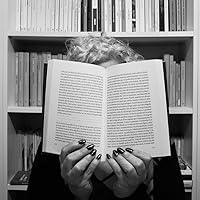
I didn't read the separate volume pictured here but instead, for my modernist literature seniors course assignment, reread the section containing the soliloquy in the 1990 Vintage International edition of Ulysses I read earlier this summer. On its own, rather than at the end of Bloom and Dedalus' long day and again with the help of Patrick Hastings' excellent Ulyssesguide.com website, I read it probably a bit more closely and certainly with additional pleasure.
Deslumbrante monólogo que marca el final de Ulisses, un ejercició fantástico de pensamiento interior en el que la mujer del protagonista reflexiona sobre sus aventuras sexuales, sobre su relación con su marido, todo mientras se agolpan -mediante un texto escrito del tirón y sin puntuación alguna- en un torrente de verborrea mental sin descanso.