In this raw and lyrical memoir as rich and insightful as How to Say Babylon and as vulnerable and provocative as Heavy, an Emmy Award-winning director chronicles his struggle to break free from—and live outside of—the prescribed paradigms of Blackness and masculinity that shaped him.
Long before every moment of our lives was tracked by technology, Phill Branch was under surveillance. His father was a football-playing, weed-smoking, Army vet—the guy men wanted to be around, and women loved. Phill was different. His father treated him as if he were defective and continually searched for proof to support this belief. Phill paid greatly for his failures at boyhood, especially when he was caught playing jump rope with girls. This taught him there were standards to be met, codes that were not to be violated, and strict punishment for any deviation from a Black man’s assigned position in the world.
In this poignant, illuminating personal narrative, Branch reckons with the patriarchy and tradition of these social structures in Black America, their legacy, and how they molded and silenced him. Taking us from Newark, New Jersey, to Los Angeles, California, Branch writes unflinchingly about growing up as the queer black son of a complicated and often absent father with rigid ideas of masculinity. From early inappropriate relationships with men twice his age, to his successful rebranding at Hampton University, to the dichotomy of Hollywood—living in a world of wealthy celebrities while struggling to survive as a writer—Branch navigates his complex emotions surrounding success, perceptions of manhood, and ultimately his father.
The Double Dutch Fuss recounts growing up under the heavy burden of expectation—to be a boy, to be Black, and to be queer in ways that conform to rigid, often unforgiving norms. It is about the knotted path of becoming, while navigating the always-present fear of emotional and physical violence, and the threat of isolation for simply being who you are. Branch explores the cosmic pull between fathers and sons, and how healing wounds can open a pathway toward freedom and wholeness. His is an insightful and surprisingly humorous reflection on identity, masculinity, and the quiet, radical act of choosing to exist on your own terms.
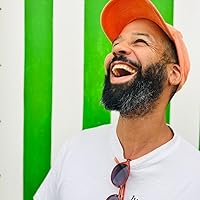
Phill Branch is a writer, storyteller, and Emmy Award–winning filmmaker. His work spans memoir, documentary, and live performance, including appearances on The Moth. A Hampton University graduate and former writing professor, he holds an MFA in Screenwriting from the American Film Institute and founded the Baltimore Story Fest.
His forthcoming memoir, The Double Dutch Fuss will be released by Amistad/HarperCollins on May, 26, 2026.
DNF’d @ 35%. This is a fine book and I will (maybe) get back to it later. I only just got into memoirs this year, having read two so far, and they’re simultaneously incredibly draining and eye-opening.
The amount of books I have started and finished since I picked up this one is astounding. 47, to be exact. This book isn’t long, at only 250-odd pages, but it simultaneously reads like it’s 10 pages long and 1,000 pages long. And it’s not that the novel isn’t interesting, because it is. It really is.
I know what the problem is. It’s the “memoir” of it all. And because of that, I have to care a certain amount in order to keep going. And unfortunately, the level required for me is just consistently absent—or it depletes very quickly.
And the irony is, I’m almost positive I would’ve swept through this had I not known this was a recount of someone’s life and just thought it was a fiction.
I came across "The Double Dutch Fuss: A Memoir" by Phill Branch through Goodreads' "Read the Rainbow" Pride reading challenge. Every June, I try to pick up a few nonfiction books by LGBTQ+ authors, and this memoir immediately caught my attention.
Before reading, I wasn't familiar with Phill Branch, but I found his life story compelling. The memoir follows his upbringing between Newark, New Jersey, and Los Angeles, exploring the pressures of growing up Black, queer, and male in environments where rigid ideas of masculinity often left little room for individuality. At its heart, this is a story about identity, belonging, and learning to live authentically despite the expectations imposed by family, culture, and society.
The strongest aspect of the book for me was Branch's exploration of masculinity and its performance. As a child, he wanted to jump Double Dutch with the girls instead of playing catch with his father, but those desires were met with criticism and punishment. Later, while attending Hampton University, he felt pressured to hide his sexuality to fit in with other Black men. Watching him slowly shed that mask and grow into himself after moving to Los Angeles was rewarding as a reader.
The emotional core of the book is Branch's complicated relationship with his father. I spent most of the memoir frustrated on his behalf. His father abandons the family, starts a new life elsewhere, and repeatedly causes pain throughout Branch's childhood and adulthood. Because of that, I was genuinely surprised by the amount of grace and forgiveness Branch ultimately extends to him, particularly when he returns decades later to help care for his dying father. He is a far more forgiving person than I think I would be.
My main criticism is that there were several moments when I wanted more detail. Branch occasionally glosses over experiences that felt particularly significant, moving on just as I became invested in certain parts of his story. As a result, some sections felt less developed than I would have liked.
A thoughtful reflection on navigating oneself, The Double Dutch Fuss is a salve to those who have carried secrets. It’s personal, charming, and beautifully written. I can’t wait for the world to know this story.
I'm a sucker for a memoir on audio and this was no exception. It was not his entire life but rather his relationship with his father, his sexuality and how it shaped him. I did not know Branch before this book and now I want to know more.
Reading 2026 Book 146: The Double Dutch Fuss: A Memoir by Phill Branch
A memoir that pooped up a bunch, so listened to the book. I enjoy listening to memoirs especially when they are narrated by the author. The title caught my eye as well and made me think of the song The Double Dutch Bus.
Synopsis: In this raw and lyrical memoir as rich and insightful as How to Say Babylon and as vulnerable and provocative as Heavy, an Emmy Award-winning director chronicles his struggle to break free from—and live outside of—the prescribed paradigms of Blackness and masculinity that shaped him.
Review: I did not know who Phill Branch was before this memoir, but what an interesting life he has lead. I will say that in the end the memoir was okay for me. I felt like there was some redundancy especially recounting the relationship with his dad. Some things were a bit glossed over as well, so I was hoping for more details. The author is very accomplished, but that was not detailed as well as everything else. 3.5⭐️
In this raw and lyrical memoir as rich and insightful as How to Say Babylon and as vulnerable and provocative as Heavy, an Emmy Award-winning director chronicles his struggle to break free from—and live outside of—the prescribed paradigms of Blackness and masculinity that shaped him.
Long before every moment of our lives was tracked by technology, Phill Branch was under surveillance. His father was a football-playing, weed-smoking, Army vet—the guy men wanted to be around, and women loved. Phill was different. His father treated him as if he were defective and continually searched for proof to support this belief. Phill paid greatly for his failures at boyhood, especially when he was caught playing jump rope with girls. This taught him there were standards to be met, codes that were not to be violated, and strict punishment for any deviation from a Black man’s assigned position in the world.
In this poignant, illuminating personal narrative, Branch reckons with the patriarchy and tradition of these social structures in Black America, their legacy, and how they molded and silenced him. Taking us from Newark, New Jersey, to Los Angeles, California, Branch writes unflinchingly about growing up as the queer black son of a complicated and often absent father with rigid ideas of masculinity. From early inappropriate relationships with men twice his age, to his successful rebranding at Hampton University, to the dichotomy of Hollywood—living in a world of wealthy celebrities while struggling to survive as a writer—Branch navigates his complex emotions surrounding success, perceptions of manhood, and ultimately his father.
The Double Dutch Fuss recounts growing up under the heavy burden of expectation—to be a boy, to be Black, and to be queer in ways that conform to rigid, often unforgiving norms. It is about the knotted path of becoming, while navigating the always-present fear of emotional and physical violence, and the threat of isolation for simply being who you are. Branch explores the cosmic pull between fathers and sons, and how healing wounds can open a pathway toward freedom and wholeness. His is an insightful and surprisingly humorous reflection on identity, masculinity, and the quiet, radical act of choosing to exist on your own terms.
The Double Dutch Fuss is one of those memoirs that doesn’t just tell a story it sits with you long after you’ve turned the last page. Phill Branch writes with a raw honesty that feels both intimate and unfiltered, pulling you straight into his world and refusing to let you look away from the hard truths he’s lived through.
What stood out most to me was how layered this book is. On the surface, it’s a coming-of-age story, but underneath that, it’s a powerful exploration of identity what it means to be Black, to be a man, and to exist outside the narrow boxes society tries to force you into. Branch doesn’t soften the edges of his experiences, especially when it comes to his relationship with his father and the pressure to conform to rigid expectations of masculinity. That vulnerability makes the book hit even harder.
The writing itself is sharp, reflective, and often surprisingly humorous in moments where you wouldn’t expect it. There’s a balance between pain and self-awareness that keeps the narrative grounded and real. His journey from Newark to Los Angeles, from confusion to a kind of self-acceptance, feels earnednot rushed or overly polished.
This memoir also does something important: it gives voice to experiences that are often ignored or misunderstood. The way Branch navigates queerness, family dynamics, and personal reinvention is both deeply personal and widely relatable.
If I had to be honest, this isn’t always an easy read but that’s exactly why it’s such an important one. It challenges you, makes you uncomfortable at times, and ultimately leaves you thinking more deeply about identity, freedom, and what it really means to live authentically.
A powerful, thought-provoking memoir that deserves far more attention.
Phill Branch’s **The Double Dutch Fuss** is a stunningly evocative memoir that captures the heartbeat of a community through the rhythmic "slap-slap" of ropes on pavement. Branch doesn’t just recount his past; he breathes life into it, inviting readers into a world where Double Dutch wasn’t just a playground game—it was a social currency, a masterclass in teamwork, and the backdrop for a coming-of-age story that is as hilarious as it is heartfelt.
What makes this memoir stand out is Branch’s voice. He writes with a snappy, conversational wit that feels like sitting on a stoop with an old friend. He masterfully balances the lighthearted "fuss" of neighborhood rivalries with deeper reflections on identity, belonging, and the cultural touchstones of Black joy. The way he describes the precision and athleticism of the sport serves as a beautiful metaphor for the coordination and resilience required to navigate life in a tight-knit community.
Ultimately, *The Double Dutch Fuss* is a love letter to the people and traditions that shape us. It’s a nostalgic, deeply moving look at how the simplest traditions can carry the heaviest weight of our history. Whether you grew up jumping in the ropes or just appreciate a beautifully told life story, Branch’s memoir is a rhythmic, soulful must-read that will leave you smiling long after the final page.
I know Phill as a fellow artist and studio neighbor; friendly, humble, somewhat quiet, gentle and reserved on the surface, but richly insightful with thought-provoking perspectives. After our chats in the building, watching his documentary and following his social media posts, I was excited to support his work and learn more about him by reading his book. I wasn’t ready for how much Phill’s story would move me. He is undoubtedly a skilled storyteller and talented writer who brings the reader along on his journey while keeping the chapter themes in mind by circling back. While the details are unique to his life, I found human relationship issues that went straight to my heart and resonated with me. Phill’s honest recounting of his life and vulnerable assessment of his feelings and memories are beautifully written in his clear, straightforward and inspiring manner. I’m sure that his bravery in sharing his story will help many people on countless ways.
Growing up gay with a hypermasculine father who relentlessly mocked him, Branch knew early on that he didn't fit the mold expected of him. His father abandoned the family — leaving Branch, his younger brother, and their mother to fend for themselves. During this period his father retreated further into addiction and started a new family, never formally divorcing his wife.
Branch opens the book with a disarmingly tender image: the joy he felt playing double dutch with the girls in elementary school, a happiness that became a lightning rod for his father's contempt and the first wound in a long pattern of rejection.
Yet the book's quiet power lies in what Branch refuses to surrender — the capacity for love. As an adult, he finds his way back to his father, and the relationship that slowly takes shape between them becomes a testament to how kindness and grace can take root even in the hardest soil, transforming a legacy of neglect and verbal abuse into something neither man expected: connection.
Thank you to Amistad and NetGalley for the ARC of this book.
This was a poignant memoir; Mr. Branch's ability to show his vulnerability made this such a moving story. Branch shares the challenges of growing up with a certain level of expectations placed on him by a parent with a narrow vision that does not allow the expression of certain feelings and thoughts. The elder Mr. Branch's rigidity made things such as identity and belonging a challenge, bu Phill Branch eventually finds his road to joy and belonging, with a bit of humor and storytelling that is masterful.
I absolutely loved reading and listening to Phil Branch’s memoir, Double Dutch Fuss. Phil is an incredibly witty and compassionate storyteller. From his epic comedy night takedown to the deeply touching moments with his father, his story is an inspiring journey filled with love, courage, and success.
This entire review has been hidden because of spoilers.
The writing throughout the book contained such thoughtfully crafted sentences that I was constantly highlighting. However, there was a convention this writer used where he did the opposite of burying the lead. It was a little too jarring of a reading experience for me. I would recommend this to anyone who enjoys memoir from new voices all the same.
This Memoir was deep and thought-provoking. Unconditional love of a child for their parent, no matter what has happened. The author's focus on personal discovery and identity is great example to young people.
My goodness. This was one of the most poignant and emotional memoirs I can remember reading. If you’re in any way recovering from being raised in the toxic masculinity of the 80s or from conditional love from your parents, you’ll feel seen in this (and probably have a good cry).
Whenever I don’t have anything to say about a book that I did finish I tend to give it a 3 star review. Not a bad book by any means but also not one that held me captive
Whenever I don’t have anything to say about a book that I did finish I tend to give it a 3 star review. Not a bad book by any means but also not one that held me captive