

What do you think?
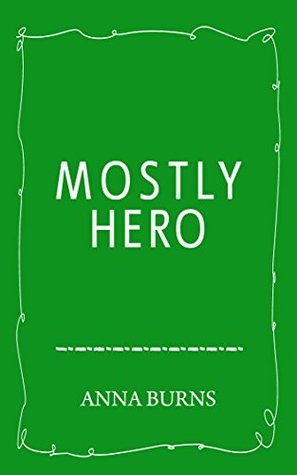
Mostly Hero
Femme is under a magic spell to kill her lover, Hero. Hero is on a mission to discover if Femme’s Great Aunt - the old lady who lives alone in a skyscraper - is his own disreputable grandmother. Master villain Great Aunt needs to know whether or not her favourite niece, Femme, is in love with her arch-enemy, Hero. Meantime, Freddie, Femme’s lovelorn cousin, must seek out and destroy Great Aunt otherwise his sweet-natured fiancée, Monique Frostique, absolutely refuses to marry him. This novella has it all: life, death, life after death, life in spite of death, love, truth, deception, good guys, bad guys and the guy who considered himself good but now isn’t so sure.
An entertaining and strangely spiritual tale.
About the Author
Anna Burns is the critically-acclaimed author of the novels No Bones and Little Constructions. Her first book won the Winifred Holtby Memorial Prize and was short-listed for the Orange Prize for Fiction. Born and raised in Belfast in Northern Ireland, Anna now lives by the sea in East Sussex.
An entertaining and strangely spiritual tale.
About the Author
Anna Burns is the critically-acclaimed author of the novels No Bones and Little Constructions. Her first book won the Winifred Holtby Memorial Prize and was short-listed for the Orange Prize for Fiction. Born and raised in Belfast in Northern Ireland, Anna now lives by the sea in East Sussex.
74 pages, Kindle Edition
First published August 13, 2014
About the author
Anna Burns
18 books1,200 followersAnna Burns (born 1962) is an Irish author. She was born in Belfast and moved to London in 1987. Her first novel, No Bones, is an account of a girl's life growing up in Belfast during the Troubles.
Awards:
Winner of the 2001 Winifred Holtby Memorial Prize
Shortlisted for the 2002 Orange Prize (No Bones)
Winner of the 2018 Man Booker Prize (Milkman)
National Book Critics Circle Award 2019 Nominee (Milkman)
Women's Prize for Fiction 2019 Nominee (Milkman)
Winner of the 2020 International Dublin Literary Award (Milkman)
Awards:
Winner of the 2001 Winifred Holtby Memorial Prize
Shortlisted for the 2002 Orange Prize (No Bones)
Winner of the 2018 Man Booker Prize (Milkman)
National Book Critics Circle Award 2019 Nominee (Milkman)
Women's Prize for Fiction 2019 Nominee (Milkman)
Winner of the 2020 International Dublin Literary Award (Milkman)
Ratings & Reviews
Friends & Following
Create a free account to discover what your friends think of this book!
Community Reviews
Displaying 1 - 30 of 236 reviews

May 12, 2026
mostly is pretty good considering.
https://emmareadstoomuch.substack.com...
this is a satire of the superhero genre, which you can tell because the characters' names are things like "hero" or "femme" (short for fatale) instead of steve or pepper, and people don't die.
well, they do, but only after making clear that in other cases this would probably not happen.
functionally, it is a superhero story. one with a few extra jokes and a beautiful, lush ending, yes, but definitely a superhero story.
and a writing style not unlike a young boy attempting marvel fanfiction.
bottom line: sorry.
(2.5 / thanks to the publisher for the copy)
https://emmareadstoomuch.substack.com...
this is a satire of the superhero genre, which you can tell because the characters' names are things like "hero" or "femme" (short for fatale) instead of steve or pepper, and people don't die.
well, they do, but only after making clear that in other cases this would probably not happen.
functionally, it is a superhero story. one with a few extra jokes and a beautiful, lush ending, yes, but definitely a superhero story.
and a writing style not unlike a young boy attempting marvel fanfiction.
bottom line: sorry.
(2.5 / thanks to the publisher for the copy)

June 2, 2020
Standing up for old-fashioned values of black and white morality.
This crazy little nugget from the winner of the Booker prize for Milkman is a brutal satire of the superhero phenomenon. It ridicules the mindlessness of violence and the glorification of the same in popular culture, and that with a touch of feminism.
Here, the author turns the popular trope on its head, swapping the handsome young male hero with a very old granny-like figure with magnificent powers, who is hell-bent on achieving her goal by any means, possible or literally impossible!
Still eighty-two, still with fifty-seven bullets in her, still dying, and with a blood-trail resembling a post-structuralist anti-principle of a traditional abstracted countercomposition, she was softly cursing and willing herself not to die.
February '21
This crazy little nugget from the winner of the Booker prize for Milkman is a brutal satire of the superhero phenomenon. It ridicules the mindlessness of violence and the glorification of the same in popular culture, and that with a touch of feminism.
Here, the author turns the popular trope on its head, swapping the handsome young male hero with a very old granny-like figure with magnificent powers, who is hell-bent on achieving her goal by any means, possible or literally impossible!
Still eighty-two, still with fifty-seven bullets in her, still dying, and with a blood-trail resembling a post-structuralist anti-principle of a traditional abstracted countercomposition, she was softly cursing and willing herself not to die.
February '21

January 16, 2020
Anna Burns' third book was first published exclusively as an e-book, but thanks to the success of her brilliant Milkman, it is now available in this print miniature thanks to Faber.
It is a rather curious post-modern subversion of fairytale and comic-book storytelling. As in Milkman, the main protagonists are only named indirectly. The characters and situations are pure fantasy, but the book is an entertaining and often surprising read. Probably one for completists only.
It is a rather curious post-modern subversion of fairytale and comic-book storytelling. As in Milkman, the main protagonists are only named indirectly. The characters and situations are pure fantasy, but the book is an entertaining and often surprising read. Probably one for completists only.
November 28, 2021
I am partial to a good run-on sentence, and Anna Burns knows the kind I like, the kind that feels uncontrolled and yet is anything but, that heaps clause upon clause and absurdity upon improbability, and inverts words for an effect that is more comic than it has any right to be.
How could he have fallen in love when, one, he didn’t fall in love; two, he never mixed personal with professional; three, hardly ever did he allow personal; four, he was descended from morally-excellent superhero stock whereas she was descended from fatale, fall-guy and ultra-villain stock; five, she was intermittently trying to kill him; six, she would be his second cousin if Great Aunt proved to be his grandmother; and seven, he was a legs man and she was not legs.
Milkman was probably my favourite novel of the last few years and this 100-page novella is not five stars in the way that was five stars, but it’s marvellous nonetheless. It’s marvellous not only because I spent the summer watching ridiculous superhero movies in a completely-out-of-character-I-must-save-my-sanity-after-testing-positive-for-Covid-one-day-before-my-flight-to-see-my-parents-if-I-cannot-travel-I-will-buy-a-TV way, but also because it furthers what I understand Burns’ larger project to be: telling the story of the Troubles in a non-dreary-lit-fic-full-of-tragedy-and-teeth-gnashing way. So we have superheroes who gradually come to the realization that they are more than a little villainous, and we have reckonings of the type:
What if he was neither “super-this” nor “super-that” but instead just average and ordinary? To be average and ordinary equated in hero’s mind with being sub-average and less than ordinary, which itself equated with not being acceptable, not being respectable, not being lovable – though of course he himself would never think in such New Age, self-absorbed terms.
And we also have my favourite description all year, as a dying antagonist , early on in her (lengthy) dying, has “a blood-trail resembling a post-structuralist anti-principle of traditional abstracted countercomposition.”
All in all reading Burns is kind of like being kidnapped by a garrulous Irish aunt, locked in her kitchen, forced to listen to her stories to cup after cup after cup (about twenty) of tea and yet not really wanting to get away, when it comes down to it.
How could he have fallen in love when, one, he didn’t fall in love; two, he never mixed personal with professional; three, hardly ever did he allow personal; four, he was descended from morally-excellent superhero stock whereas she was descended from fatale, fall-guy and ultra-villain stock; five, she was intermittently trying to kill him; six, she would be his second cousin if Great Aunt proved to be his grandmother; and seven, he was a legs man and she was not legs.
Milkman was probably my favourite novel of the last few years and this 100-page novella is not five stars in the way that was five stars, but it’s marvellous nonetheless. It’s marvellous not only because I spent the summer watching ridiculous superhero movies in a completely-out-of-character-I-must-save-my-sanity-after-testing-positive-for-Covid-one-day-before-my-flight-to-see-my-parents-if-I-cannot-travel-I-will-buy-a-TV way, but also because it furthers what I understand Burns’ larger project to be: telling the story of the Troubles in a non-dreary-lit-fic-full-of-tragedy-and-teeth-gnashing way. So we have superheroes who gradually come to the realization that they are more than a little villainous, and we have reckonings of the type:
What if he was neither “super-this” nor “super-that” but instead just average and ordinary? To be average and ordinary equated in hero’s mind with being sub-average and less than ordinary, which itself equated with not being acceptable, not being respectable, not being lovable – though of course he himself would never think in such New Age, self-absorbed terms.
And we also have my favourite description all year, as a dying antagonist , early on in her (lengthy) dying, has “a blood-trail resembling a post-structuralist anti-principle of traditional abstracted countercomposition.”
All in all reading Burns is kind of like being kidnapped by a garrulous Irish aunt, locked in her kitchen, forced to listen to her stories to cup after cup after cup (about twenty) of tea and yet not really wanting to get away, when it comes down to it.

April 8, 2026
Nie do końca rozumiem to, co przeczytałam, ale język jest wspaniały. Czy Aga Zano może już zawsze tłumaczyć książki Anny Burns?
May 2, 2026
KOCHAM KOCHAM KOCHAM
Wielu twórców komiksowych podejmuje się przełożenia prozy na język tego medium, ale nie znalazł się dotąd śmiałek ani śmiałka, którx spróbował(a)by uczynić na odwrót.
Aż zjawia się ona, Anna Burns, pisze komiks bez obrazków, używając litego tekstu i robi to wyśmienicie! Kadry same układają się w głowie, postaci są tak charakterystyczne, że stają przed oczami jak żywe, akcja nie zwalnia nawet na moment i ciągle zaskakuje.
Jak na komiks przystało mamy tu Superbohatera, który poza ratowaniem świata musi ratować też siebie, gdyż jego ukochana Femme Fatale, na skutek okrutnego zaklęcia, czycha na jego życie. Bohater przeżywa akurat głęboki kryzys egzystencjalny, który jak to bywa ma źródła w rodzinnej przeszłości. Spokój ducha zaburza mu także miłość, która nie zdarza się często osobom tak skupionym na sobie i nieufającym nikomu. Uczucie niełatwe, bo trudno kochać kogoś kto co chwilę próbuje cię zabić w najbardziej wymyślne sposoby. Femme z kolei, jak to kobieta u boku narcyza, jest w ciągłym trybie psychoanalizy, nazywa defekty partnera, wpienia się non stop, ale nie umie się wyrwać spod jego uroku i po cichu liczy na to, że ukochany się zmieni, a ich związek stanie się stabilny i dojrzały. Zamiast tego najpierw wyląduje na skraju grożącego zawaleniem klifu, potem pod ostrzałem w hotelowym lobby, a na koniec na kuchennej podłodze, z igłą w dłoni i rękoma umazanymi krwią do łokci.
Jestem pewna, że to najfajniejsza książka, jaką przeczytam w tym roku. Anna Burns doskonale rozumie konwencję superhero i bawi się z nią w najlepsze. Świadczą o tym wszystkie hiperbole, absurd sytuacyjny, klisze z twistem, szwarccharaktery o 75 życiach, pseudo głębia niektórych zdań i filmowość poszczególnych scen.
I jakie to jest śmieszne! Nigdy nie ufam wydawcy, który w pierwszym zdaniu blurba pisze „arcyzabawna historia” - najczęściej okazuje się, że to humor z dykty. Ale tym razem to prawda! Nie jest to dowcip osadzony na gagach, nie czyta się „Raczej bohatera” od jednego do drugiego wybuchu śmiechu. To humor bardzo inteligentny, skrzący się w języku, który sprawił, że uśmiech nie schodził mi z ust przez całą lekturę. Niewątpliwie ogromna tu zasługa Agi Zano, która jest absolutną królową polskiej translatoryki i umie wybrać takie słówka, tak je rozmontować, przekręcić, posklejać, że chce się ten tekst jeść całą gębą prosto z michy.
Jest to historia miłosna, która analizuje dynamikę współczesnych związków, mówi o trudnościach z zaufaniem i komunikacją, o oczekiwaniach, które mamy wobec innych i siebie, o tym, że trzeba odpuszczać. Stawia też pytania o to na ile rodzinna scheda kształtuje ludzkie wybory i charaktery, a także gdzie kończy się maska, a zaczyna prawdziwe ja i jak trudno jest pokazać je innym.
Ale moim zdaniem w tym przypadku w ogóle nie należy się zastanawiać „co autorka chciała nam powiedzieć” - tę przewspaniale wydaną przez Artrage nowelkę czyta się dla czystej frajdy.
Nie warto myśleć, trzeba dać się porwać i płynąć. I ja chcę więcej takich książek! Mogłabym je czytać do końca mojego jedynego życia, albo przynajmniej jedną miesięcznie w parytecie.
WAŻNE: pod żadnym pozorem NIE CZYTAJCIE BLURBA. Moim zdaniem spoileruje on dużo za dużo.
Wielu twórców komiksowych podejmuje się przełożenia prozy na język tego medium, ale nie znalazł się dotąd śmiałek ani śmiałka, którx spróbował(a)by uczynić na odwrót.
Aż zjawia się ona, Anna Burns, pisze komiks bez obrazków, używając litego tekstu i robi to wyśmienicie! Kadry same układają się w głowie, postaci są tak charakterystyczne, że stają przed oczami jak żywe, akcja nie zwalnia nawet na moment i ciągle zaskakuje.
Jak na komiks przystało mamy tu Superbohatera, który poza ratowaniem świata musi ratować też siebie, gdyż jego ukochana Femme Fatale, na skutek okrutnego zaklęcia, czycha na jego życie. Bohater przeżywa akurat głęboki kryzys egzystencjalny, który jak to bywa ma źródła w rodzinnej przeszłości. Spokój ducha zaburza mu także miłość, która nie zdarza się często osobom tak skupionym na sobie i nieufającym nikomu. Uczucie niełatwe, bo trudno kochać kogoś kto co chwilę próbuje cię zabić w najbardziej wymyślne sposoby. Femme z kolei, jak to kobieta u boku narcyza, jest w ciągłym trybie psychoanalizy, nazywa defekty partnera, wpienia się non stop, ale nie umie się wyrwać spod jego uroku i po cichu liczy na to, że ukochany się zmieni, a ich związek stanie się stabilny i dojrzały. Zamiast tego najpierw wyląduje na skraju grożącego zawaleniem klifu, potem pod ostrzałem w hotelowym lobby, a na koniec na kuchennej podłodze, z igłą w dłoni i rękoma umazanymi krwią do łokci.
Jestem pewna, że to najfajniejsza książka, jaką przeczytam w tym roku. Anna Burns doskonale rozumie konwencję superhero i bawi się z nią w najlepsze. Świadczą o tym wszystkie hiperbole, absurd sytuacyjny, klisze z twistem, szwarccharaktery o 75 życiach, pseudo głębia niektórych zdań i filmowość poszczególnych scen.
I jakie to jest śmieszne! Nigdy nie ufam wydawcy, który w pierwszym zdaniu blurba pisze „arcyzabawna historia” - najczęściej okazuje się, że to humor z dykty. Ale tym razem to prawda! Nie jest to dowcip osadzony na gagach, nie czyta się „Raczej bohatera” od jednego do drugiego wybuchu śmiechu. To humor bardzo inteligentny, skrzący się w języku, który sprawił, że uśmiech nie schodził mi z ust przez całą lekturę. Niewątpliwie ogromna tu zasługa Agi Zano, która jest absolutną królową polskiej translatoryki i umie wybrać takie słówka, tak je rozmontować, przekręcić, posklejać, że chce się ten tekst jeść całą gębą prosto z michy.
Jest to historia miłosna, która analizuje dynamikę współczesnych związków, mówi o trudnościach z zaufaniem i komunikacją, o oczekiwaniach, które mamy wobec innych i siebie, o tym, że trzeba odpuszczać. Stawia też pytania o to na ile rodzinna scheda kształtuje ludzkie wybory i charaktery, a także gdzie kończy się maska, a zaczyna prawdziwe ja i jak trudno jest pokazać je innym.
Ale moim zdaniem w tym przypadku w ogóle nie należy się zastanawiać „co autorka chciała nam powiedzieć” - tę przewspaniale wydaną przez Artrage nowelkę czyta się dla czystej frajdy.
Nie warto myśleć, trzeba dać się porwać i płynąć. I ja chcę więcej takich książek! Mogłabym je czytać do końca mojego jedynego życia, albo przynajmniej jedną miesięcznie w parytecie.
WAŻNE: pod żadnym pozorem NIE CZYTAJCIE BLURBA. Moim zdaniem spoileruje on dużo za dużo.
March 8, 2026
The device that each character is named after their archetype is a bit 🙄 but I thought what the heck it’s 75 pages! Plus I was curious about the author after all the accolades for Milkman. Ultimately the device worked well with how the rest of the story unfolded and I wasn’t annoyed after the first 8ish pages.
I enjoyed it enough that I’m glad I read it but not so much that I think it will really stick with me.
I enjoyed it enough that I’m glad I read it but not so much that I think it will really stick with me.

April 11, 2020
“It is unusual but not impossible to have a corpse do a killing, any type of killing, just as long as it is done within a certain timeframe. ‘Corps don’t live long’, was the explanation offered by top scientific experts.(...)Great Aunt was dead, definitively dead, so it had been her corpse that had taken the initiative.
Anna Burns, que não me canso de elogiar, faz uma pequena paródia ao mundo dos super-heróis, onde há todo o género de vilões e mulheres fatais munidos dos seus clichés, mas tudo levado ao absurdo com muita inteligência e graça.
“Murders they might be, but in no way could anybody accuse them of prudish judgementalism. Each to their own. That was their motto. Live and let live. That was another motto, though it must to be said not really one of theirs.
Anna Burns, que não me canso de elogiar, faz uma pequena paródia ao mundo dos super-heróis, onde há todo o género de vilões e mulheres fatais munidos dos seus clichés, mas tudo levado ao absurdo com muita inteligência e graça.
“Murders they might be, but in no way could anybody accuse them of prudish judgementalism. Each to their own. That was their motto. Live and let live. That was another motto, though it must to be said not really one of theirs.

March 1, 2021
I find it hard to engage with satire, or parody, when it concerns genres I don’t normally watch or read (see my review of The Fire Gospel). And that's how I mostly felt about this long short-story of the superhero/villain genre, though it ends up a great metaphor for our mental defenses and (mis)communications with others. I enjoyed Burns’ intelligence and wit.

December 24, 2019
Synopsis
This is a spoof take on the Marvel story tales of superheroes taking on organised crime. It’s very funny and features a number of great, exaggerated, characters.
‘Hero’ woos “femme” despite the fact that ”he was a legs man and she was not legs” (37)
Highlights
The characterisation is so tongue- in - cheek. The villains are the best and in particular Great Aunt (82 yrs old);
“she had not further for this world” (35/61),
and Monique Frostique
“the ne plus ultra of femme fatale villains” (58).
Monique reminded me of the eponymous lead in Bulgakov’s The Master and Margarita (a book Anna Burns told me was one of her favourites).
Lowlights
It’s a tiny book (novella) and the final quarter isn’t quite as strong as Hero wraps things up.
Historical & Literary
This is a re- release as part of Faber & Fabers ninetieth year celebration. It was first published in 2014 and immediately preceded Milkman
Author background & Reviews
Since its original publication Anna Burns has achieved worldwide commercial success and fame following the surprise win for Milkman in the Booker Prize 2018.
I met Anna Burns at the time of her Booker win (Oct 2018) and she was in very obvious (back) pain. Meeting her again in December 2019 at a Booker Foundation reading at Brighton University she looks ten years younger and transformed.
Anna Burns in the Brighton University conversation with her Faber editor Louise Joyner made a number of interesting comments (on her style, and specifically on Milkman):
*Anna’s writing style best described as being like a jigsaw. She gets the pieces, but. It always sure how to join them up.
• sometimes has the end of a sentence then the rest of the phrase comes along.
*Annas characters (on the page) dictate the narrative to Anna.” It can be difficult dealing with them”! She wanted more on the ‘ wee sisters’ but it didn’t come.
*Hearing the words helps. Anna used to write while walking, to get the rhythm, using a dictaphone to record.
*Hard men and their Mums. Contrast their violence at large and fear of Mum. In discussion about the power of women during the Troubles Anna mentioned Dolours Price. The subject of the highly acclaimed, multiple prize listed Patrick Radden Keefe’s, 2019, Say Nothing (non Fiction). It sounds as though this is an excellent companion piece to Milkman
*Psychoanalytical community in Australia focused on addictions. This was a surprise to Anna.
Quotations
All feature Monique Frostique (!)
“Frostique had a gun in her hand. Such cool advanced flirting”(77)
“MF was looking fabulous and deadly” (77)
“MF had herself been, and probably always would be, pure alpha- villain material”(93)
Monique’s suitor is Freddie Ditchlingtonne’ly. Freddie shoots Great Aunt:
”auntricide, not theft, was the qualification for marrying Monique”(60)
Recommend
A great way to get a feel for Anna Burns writing style, and highly recommended as a precursor to Milkman. Fans of Milkman will enjoy this, I think, while the many Milkman sceptics will like this much more.
This is a spoof take on the Marvel story tales of superheroes taking on organised crime. It’s very funny and features a number of great, exaggerated, characters.
‘Hero’ woos “femme” despite the fact that ”he was a legs man and she was not legs” (37)
Highlights
The characterisation is so tongue- in - cheek. The villains are the best and in particular Great Aunt (82 yrs old);
“she had not further for this world” (35/61),
and Monique Frostique
“the ne plus ultra of femme fatale villains” (58).
Monique reminded me of the eponymous lead in Bulgakov’s The Master and Margarita (a book Anna Burns told me was one of her favourites).
Lowlights
It’s a tiny book (novella) and the final quarter isn’t quite as strong as Hero wraps things up.
Historical & Literary
This is a re- release as part of Faber & Fabers ninetieth year celebration. It was first published in 2014 and immediately preceded Milkman
Author background & Reviews
Since its original publication Anna Burns has achieved worldwide commercial success and fame following the surprise win for Milkman in the Booker Prize 2018.
I met Anna Burns at the time of her Booker win (Oct 2018) and she was in very obvious (back) pain. Meeting her again in December 2019 at a Booker Foundation reading at Brighton University she looks ten years younger and transformed.
Anna Burns in the Brighton University conversation with her Faber editor Louise Joyner made a number of interesting comments (on her style, and specifically on Milkman):
*Anna’s writing style best described as being like a jigsaw. She gets the pieces, but. It always sure how to join them up.
• sometimes has the end of a sentence then the rest of the phrase comes along.
*Annas characters (on the page) dictate the narrative to Anna.” It can be difficult dealing with them”! She wanted more on the ‘ wee sisters’ but it didn’t come.
*Hearing the words helps. Anna used to write while walking, to get the rhythm, using a dictaphone to record.
*Hard men and their Mums. Contrast their violence at large and fear of Mum. In discussion about the power of women during the Troubles Anna mentioned Dolours Price. The subject of the highly acclaimed, multiple prize listed Patrick Radden Keefe’s, 2019, Say Nothing (non Fiction). It sounds as though this is an excellent companion piece to Milkman
*Psychoanalytical community in Australia focused on addictions. This was a surprise to Anna.
Quotations
All feature Monique Frostique (!)
“Frostique had a gun in her hand. Such cool advanced flirting”(77)
“MF was looking fabulous and deadly” (77)
“MF had herself been, and probably always would be, pure alpha- villain material”(93)
Monique’s suitor is Freddie Ditchlingtonne’ly. Freddie shoots Great Aunt:
”auntricide, not theft, was the qualification for marrying Monique”(60)
Recommend
A great way to get a feel for Anna Burns writing style, and highly recommended as a precursor to Milkman. Fans of Milkman will enjoy this, I think, while the many Milkman sceptics will like this much more.

February 6, 2021
Anna Burns's novella Mostly Hero was originally published in 2014, in the long gap between her second novel Little Constructions (2007) and the brilliant Booker winning Milkman (2018), but was reissued by Faber in their Faber Stories series to mark their 90th anniversary.
Faber's blurb describes it as "the hilarious, hell-raising descendant of Quentin Tarantino and the Brothers Grimm," which isn't a bad description, although for me it had shades of Roald Dahl or even a rather darker, more adult David Walliams in its humour.
It's a breathless, read-in-one-sitting, exaggerated recasting of the superhero / supervillian story, such as this scene when Femme Fatale's Great Aunt (who is actually a world-domination desiring Supervillian) finally meet her last death (her one hundred and sixty first):
After she was shot, she staggered about the room in quite the required fashion, knocking things off shelves, everything off tables, flinging arms, splattering blood. This proceeded for two full minutes, with aunt clutching everyday items as if realising these were treasures dearer to her than anything, before dropping them and staggering with equal intensity to another piece of bric-a-brac somewhere else. Yes, a good two minutes, which shows that just because the last death must occur, doesn’t mean it can’t be a long, drawn-out Shakespearean one.
and actually her death is drawn out a good deal longer, managing to kill her killer and a rival super-villain in the process, the second while dead (shades of The Princess Bride and being 'almost dead').
It's all a lot of fun - although a rather minor* work compared to Little Constructions and certainly not at the brilliance of Milkman, so 3 stars (3.5) but still recommended, particularly for anyone who has read all of Burns' novels.
(* although this review from Lee Foust https://www.goodreads.com/review/show... made me sit-up as he makes a clearer link with the troubles, the source of Milkman and Little Constructions, than perhaps had occured to me while reading)
Faber's blurb describes it as "the hilarious, hell-raising descendant of Quentin Tarantino and the Brothers Grimm," which isn't a bad description, although for me it had shades of Roald Dahl or even a rather darker, more adult David Walliams in its humour.
It's a breathless, read-in-one-sitting, exaggerated recasting of the superhero / supervillian story, such as this scene when Femme Fatale's Great Aunt (who is actually a world-domination desiring Supervillian) finally meet her last death (her one hundred and sixty first):
After she was shot, she staggered about the room in quite the required fashion, knocking things off shelves, everything off tables, flinging arms, splattering blood. This proceeded for two full minutes, with aunt clutching everyday items as if realising these were treasures dearer to her than anything, before dropping them and staggering with equal intensity to another piece of bric-a-brac somewhere else. Yes, a good two minutes, which shows that just because the last death must occur, doesn’t mean it can’t be a long, drawn-out Shakespearean one.
and actually her death is drawn out a good deal longer, managing to kill her killer and a rival super-villain in the process, the second while dead (shades of The Princess Bride and being 'almost dead').
It's all a lot of fun - although a rather minor* work compared to Little Constructions and certainly not at the brilliance of Milkman, so 3 stars (3.5) but still recommended, particularly for anyone who has read all of Burns' novels.
(* although this review from Lee Foust https://www.goodreads.com/review/show... made me sit-up as he makes a clearer link with the troubles, the source of Milkman and Little Constructions, than perhaps had occured to me while reading)

March 30, 2026
Jakbym wiedziała, że Anna Burns tak fantastycznie pisze (a przecież wiem, że mnóstwo osób mi ją polecało), to już wcześniej bym się wzięła za jej inne książki.
W tej malutkiej książeczce (niecałe 100 stron) znajdziecie cudowny pastisz wszelkich dzieł o superbohaterach, napisany tak zabawnie, że parskanie śmiechem w głos będzie bardzo naturalnym odruchem. Językowo, w tłumaczeniu Agi Zano, to cacuszko. Fabularnie jest równie dobrze - poziom szczegółowości i niuansu jest uderzający. Bardzo polecam!
W tej malutkiej książeczce (niecałe 100 stron) znajdziecie cudowny pastisz wszelkich dzieł o superbohaterach, napisany tak zabawnie, że parskanie śmiechem w głos będzie bardzo naturalnym odruchem. Językowo, w tłumaczeniu Agi Zano, to cacuszko. Fabularnie jest równie dobrze - poziom szczegółowości i niuansu jest uderzający. Bardzo polecam!

August 3, 2022
This is a truly curious book - I have to say it was not the quick and easy read I was expecting but it had its strange charm that did draw you in. From its reference to architypes used more as names that titles (Femme Fatal, Great Aunt, superhero) or the breathless narrative which you could imagine being said at a pace - almost gushing forth - the whole book has a striking and unusual approach to telling its story.
And the story itself - although presented in a comic book in your face style there are subtleties and nuances which feel like they were hidden from casual view which make the characters all the more human even as the dialogue gets more ridiculous.
This is a clever book that takes time and yes for me, effort to appreciate but it is there and I have to say I think I appreciate it more for that. Another clever and interesting entry in to the faber90 series
And the story itself - although presented in a comic book in your face style there are subtleties and nuances which feel like they were hidden from casual view which make the characters all the more human even as the dialogue gets more ridiculous.
This is a clever book that takes time and yes for me, effort to appreciate but it is there and I have to say I think I appreciate it more for that. Another clever and interesting entry in to the faber90 series
Read
June 28, 2026Dawno nie spotkałam się z literaturą, która tak umiejętnie odzwierciedlałaby moje poczucie humoru. Świetna, inteligentna językiem, ze swadą dekonstruująca klisze. Zaczynam być fanką Anny Burns.

December 24, 2019
This is the third Anna Burns text I've read in the last month, since I casually picked up Milkman and devoured it in only a couple of sittings. Although that novel, her previous novel No Bones, and this short novel or longish short story, all treat of the Northern Irish experience of violence, vendetta, and the PTSD of their female heroines, I find Burns's prose style, aplomb, and terror-based humor really fabulous. She is a great stylist.
As an added bonus, Mostly Hero uses an absurd version of superhero comic language and situation to describe more of the Northern Irish civil war experience, taking the piss out of that tradition and drawing, in my opinion, the obvious parallel between humankind's worst idiocy--violence and warfare--and our so-called pop culture (really corporate/state propaganda) art--all that Star Wars and Marvel comix crap that indoctrinates our children into believing in the overly simplistic good guys/bad guys scenario, that heroes are invulnerable (quite useful in garnering recruits for the military), that violence solves every problem, and that violence and coercion through the threat of violence are the best measures of manhood, dignity, and pride.
Let my children read fables of anarcho-syndicalism!
--------------------
Just presented this novel novel to students. They enjoyed the humor, for the most part, but didn't seem to feel it as deeply as I feel it as an important take on how we cover our crimes in mythic hero and villain thought. Still, I loved the reread. I'd forgotten that Anna Burns and I are the same age. 1962 produced a few great writers: Burns, Paul Beatty, Donna Tartt, and yours, truly. Heh heh. Putting myself in rather illustrious company I know.
As an added bonus, Mostly Hero uses an absurd version of superhero comic language and situation to describe more of the Northern Irish civil war experience, taking the piss out of that tradition and drawing, in my opinion, the obvious parallel between humankind's worst idiocy--violence and warfare--and our so-called pop culture (really corporate/state propaganda) art--all that Star Wars and Marvel comix crap that indoctrinates our children into believing in the overly simplistic good guys/bad guys scenario, that heroes are invulnerable (quite useful in garnering recruits for the military), that violence solves every problem, and that violence and coercion through the threat of violence are the best measures of manhood, dignity, and pride.
Let my children read fables of anarcho-syndicalism!
--------------------
Just presented this novel novel to students. They enjoyed the humor, for the most part, but didn't seem to feel it as deeply as I feel it as an important take on how we cover our crimes in mythic hero and villain thought. Still, I loved the reread. I'd forgotten that Anna Burns and I are the same age. 1962 produced a few great writers: Burns, Paul Beatty, Donna Tartt, and yours, truly. Heh heh. Putting myself in rather illustrious company I know.

May 23, 2020
3.5 stars
A story about intimacy and vulnerability couched in a parody of superheroes and villains--just the kind of bizarre but affecting story that Anna Burns excels at.
A story about intimacy and vulnerability couched in a parody of superheroes and villains--just the kind of bizarre but affecting story that Anna Burns excels at.
June 21, 2026
nowelkę oceniam na takie 3 łamane na 3.5. językowo bardzo mi się podobała, te absurdy były nieco zabawne, jednak historia sama w sobie nie porwała mnie zbyt mocno. utwierdzam się w przekonaniu, że z superbohaterami i złoczyńcami mi nie po drodze:’-)

March 27, 2026
Ta nowela brzmiała tak, jakby kilka osób po paru głębszych postanowiło wspólnie napisać najbardziej absurdalną historię i każdy pokolei wymyślał co się dalej wydarzy aż zlepili to w całość.

May 24, 2026
Brawurowo napisana i przetłumaczona opowieść

April 23, 2026
Nowelka typu czadowego

January 10, 2020
Cute and quick. Not my cup of tea. You can see in this the bones of what works so well for Milkman but Mostly Hero was a little forgettable.

March 30, 2026
Konglomerat nie kłamał - jest to zabawne

March 29, 2026
PRZEZABAWNA, ŚWIETNA
December 24, 2019
Hilariously wonderful! It's got a superhero aptly called 'hero', a femme fatale called 'femme' and the villains (Great Aunt and Monique Frostique) are even better, but it's more than just a brilliant spoof on superhero movies/books. I already adored Milkman, so excited to read her other books as well.
July 22, 2023
3.5 ⭐ very meta, self-reflexive, postmodern, at times confusing, but also fun?


July 2, 2026
Wziąłem Raczej bohatera Anny Burns na jeden luźny dzień i ostatecznie wystawiam takie mocne, uczciwe 4/5. Książka jest dobra, momentami naprawdę zabawna, ale ma też swoje wady, przez które nie nazwałbym jej arcydziełem.
To krótka nowela, która bierze na warsztat oklepane klisze o superbohaterach i bezczelnie obraca je w totalny absurd. Burns ma specyficzne, czarne poczucie humoru, które bardzo mi podeszło.
Najbardziej zaskoczyło mnie to, że pod tą całą rozwałką i gagami kryje się całkiem sensowna, życiowa historia o relacjach. Główny bohater utknął w potężnym szpagacie między obowiązkiem ratowania świata a nagłym uczuciem, które spada na niego jak śnieg w lipcu. Fajnie pokazano, jak to zakochanie zmusza faceta do zdjęcia maski twardziela i obnaża jego wrażliwe, bezbronne wnętrze. Kupuję to, bo autorka ucieka tu od taniego romansidła na rzecz fajnej psychologii.
Językowo jest ciekawie styl bywa rwany, zdania są czasami poprzestawiane jak puzzle, ale tłumaczka Aga Zano zrobiła świetną robotę i czyta się to gładko.
Dlaczego więc urwałem jedną gwiazdkę? Bo ta książka to w zasadzie literacka miniaturka, a jej ostatnia ćwiartka wyraźnie siada. Kiedy Hero zaczyna na szybko domykać wszystkie wątki, tempo spada, a cała ta świetna, groteskowa energia z początku gdzieś się ulatnia.
Mimo tego minusa to naprawdę solidna pozycja. Jeśli szukasz czegoś z dystansem, ironią i nieszablonowym humorem do połknięcia w dwie godziny, będziesz zadowolony.
To krótka nowela, która bierze na warsztat oklepane klisze o superbohaterach i bezczelnie obraca je w totalny absurd. Burns ma specyficzne, czarne poczucie humoru, które bardzo mi podeszło.
Najbardziej zaskoczyło mnie to, że pod tą całą rozwałką i gagami kryje się całkiem sensowna, życiowa historia o relacjach. Główny bohater utknął w potężnym szpagacie między obowiązkiem ratowania świata a nagłym uczuciem, które spada na niego jak śnieg w lipcu. Fajnie pokazano, jak to zakochanie zmusza faceta do zdjęcia maski twardziela i obnaża jego wrażliwe, bezbronne wnętrze. Kupuję to, bo autorka ucieka tu od taniego romansidła na rzecz fajnej psychologii.
Językowo jest ciekawie styl bywa rwany, zdania są czasami poprzestawiane jak puzzle, ale tłumaczka Aga Zano zrobiła świetną robotę i czyta się to gładko.
Dlaczego więc urwałem jedną gwiazdkę? Bo ta książka to w zasadzie literacka miniaturka, a jej ostatnia ćwiartka wyraźnie siada. Kiedy Hero zaczyna na szybko domykać wszystkie wątki, tempo spada, a cała ta świetna, groteskowa energia z początku gdzieś się ulatnia.
Mimo tego minusa to naprawdę solidna pozycja. Jeśli szukasz czegoś z dystansem, ironią i nieszablonowym humorem do połknięcia w dwie godziny, będziesz zadowolony.
April 20, 2026
Totalnie odjechana książka, idealna do czytania w drodze.

March 25, 2021
Very readable but honestly quite mediocre, somewhat funny at times but never really progressed beyond that? Imo it was an allegory for cycles of abuse in families but honestly considering how Burns basically tells us the novella is about love towards the end I think our opinions probably align.
Still, apart from the use of some fun vocabulary and oblique references to post-structuralist humour of some sort, it doesn’t feel particularly uwu literary or meaningful. It’s enjoyable though.
Still, apart from the use of some fun vocabulary and oblique references to post-structuralist humour of some sort, it doesn’t feel particularly uwu literary or meaningful. It’s enjoyable though.

November 17, 2019
3.5/5 rounded up to 4 🌟
Displaying 1 - 30 of 236 reviews