Jump to ratings and reviews
Rate this book

Dikke kus, dag-dag

Rate this book
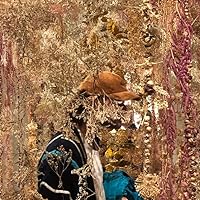
De hoofdpersoon van Dikke kus, dag-dag is van de stad naar het verre platteland verhuisd. Daar, ontworteld en zwevend tussen twee werelden, denkt ze aan iedereen die ze heeft achtergelaten. Vooral aan haar oudere minnaar Xavier, die haar – zo zegt hij – beter kent dan zij zichzelf. Ze houdt nog steeds van hem, maar het verlangen is verdwenen. Een onverwachte brief rakelt nog meer herinneringen aan vroegere liefdes op. Er was geluk en ongeluk, bevrijding en beknotting. De sporen die zij achterlieten in haar leven – koffievlekken, voicemails, bloemboeketten – vormen een rariteitenkabinet waardoorheen ze zich beweegt, terwijl ze steeds dichter om de kern cirkelt van wat het betekent om je te verbinden. Waarom willen we de ander aanraken, wie mag ons aanraken? En hoe laten we weer los?

220 pages, Paperback

First published October 9, 2025

244 people are currently reading
8061 people want to read

About the author

Claire-Louise Bennett

18 books734 followers
Claire-Louise Bennett grew up in Wiltshire and studied literature and drama at the University of Roehampton, before moving to Ireland where she worked in and studied theatre for several years. In 2013 she was awarded the inaugural White Review Short Story Prize and went on to complete her debut book, Pond, which was published by The Stinging Fly (Ireland) and Fitzcarraldo Editions (UK) in 2015, and by Riverhead (US) in 2016. Pond was shortlisted for the Dylan Thomas Prize in 2016.

Her second novel, Checkout 19, was published in 2021 and was selected as one of the ten best books of 2022 by the New York Times.

Ratings & Reviews

What do you think?
Rate this book

Friends & Following

Create a free account to discover what your friends think of this book!

Community Reviews

5 stars
109 (14%)
4 stars
268 (34%)
3 stars
246 (31%)
2 stars
119 (15%)
1 star
34 (4%)
Displaying 1 - 30 of 167 reviews
Profile Image for Katia N.
710 reviews1,110 followers
Read
October 18, 2025
For quite some time now, I’ve been attracted to the pieces of fiction that allow me to travel through the mind of its author either implicitly or explicitly. Implicitly: when I can imagine or infer what the author was thinking writing this work. And explicitly: when the author or her narrator describes that place that is her mind; signposts or maps it for me so this mind becomes still strange but gradually more familiar country. And like with any country, it is often fascinating to visit it for the first time. But some of them, minds and countries, are so unlike my own, so intriguing, so risky to enter but so exciting that I tend to come back for a new visit with each new work out there.

I tend to think of Beckett or Murnane in this way. It seems Claire-Louise Bennett has joined their company. It is the third book by her I’ve read. With previous books, I haven't managed to grasp what was that exactly making me turning the pages of her books. But now I’ve figured this out I think. I like to be a witness how her mind excavates those words as if I could’ve seen this process in real time. Her narrator is aware that she is trying to capture what happens to her while she is in the process of writing. She is trying to catch this elusive personage inside herself who creates and at the same time to lose the connection with this another “I” who is deeply ingrained in her social milieu. Is it even possible? She keeps trying:

I don’t like to be too aware it’s me writing. That might sound nonsensical, given that so many sentences here begin with ‘I’. How then could I not be aware that it is me writing this? I don’t know exactly. Perhaps what I’m getting at is that other people’s ideas about me aren’t something I want to be too aware of while I’m writing this. I don’t want the way they see me to interfere and keep me at the surface of things. I need to sink down a bit. I need to disappear, go under, get down to where she is. Then it is she who says I, not me, not me.


The result of this quest is the text of a fragmentary stream of consciousness. Similar to Woolf’s work though the text is far from a raw consciousness. This is a verbally dexterous and carefully stylised narrative. However she manages to preserve the sense of immediacy somehow. For example, in the following fragment she describes a moment when a child first realises the power of language. For me it was an equivalent of Proust’s ‘madeleine cake’ moment, sensual and forming a life-long memory:

You begin to discover that having certain words in your mouth can make you feel the most extraordinary and exhilarating sensations. These sensations are occasioned by little flares going off inside of you, briefly illuminating that dark innermost space, plethoric and phantasmal, that you don’t know very much about but sometimes feel yourself sinking into. By the slow, cascading light of these fleet fire-bursts, set off by words, words spoken, strange and potent, you begin to see how vast and elaborate all that secluded darkness is. Is this scintillating shade you or was it there before you? You don’t know. Is it inside everyone? You don’t know that either. You want to stay, you don’t want to stay. You want to say more, you want to bite your lip hard and remain perdurably mute. It never ends. It never ends.


This feeling she projects at the end of the passage of wanting to stop the torrent of internal speech-making but not being able to is very Beckettian. But she reveals the joy of discovering rather than Beckettian angst of struggling with words. Unlike Beckett, she is also never abstract even when she struggles with the borders of her selfhood and her language. She is rather a poet of specificity, of the small moments of life, concrete and moving details: flowers, discarded coins, small and big objects of nature. Her narrator is getting sardines and oranges and yogurt and pears, and Earl Grey tea bags. At the first glance, it is just a fragment of the ordinary shopping list. And it is. But it seems there is some visual and sonic harmony in this phrase that lifts it to the level of poetical.

The following episode has resonated with me as I’ve just moved house for the third time in two years. So I have to admit that it might be simply too relatable at the moment. But I've enjoyed how she tried to observe, with a degree of detachment but very acutely, both her external surroundings and her internal state:

My belongings are arranged in the corner. They consist mostly of plants. Everything else went into storage yesterday. Something is loosened. The things that hold life in place have been lifted off and put away. I wonder about those rare people who never move. Who live on and on in the same house. Never really needing to sort through anything. Never having to handle each and every object in turn. Never having to weigh up its value. Never having to ask, what do I take with me? Never seeing their life like this. All up in a heap. I haven’t written so much in aeons, yet I’m no closer to why I do it. Is there, after all, a story I am hoping to uncover and make mine? Never, not in a million years. Pfennig. Pfennig. Pfennig. They have gone now and the word has gone now. Can’t there be a new thing we call ‘pfennig’?


For me this fragmentation and immediacy of experience is the main attraction of her novels. The subject matter respectively takes the back seat. Here it is men and her “dealings” with them. The key relationships described are with much older men and well past romantic stage. Though in her thoughts she constantly comes back to that romantic stage. This adds circularity to the already fragmented novel. Some readers might find it a bit tedious. But for me yet again it has reminded how a mind often acts going in circles that more often not the circles at all. Rather those shapes are more like spirals adding a new twist at each iteration. But let’s come from geometry back to her men.

Xavier, now in his eighties and on a wheel chair, is a constant presence. But he is more like a motive rather than a character. It does not mean of course that Xavier does not possess the character: he is quite possessive to say at least. But still for me he was more like a reoccurring phenomenon in the novel. The same with the colour green. The appearance of green initially seems spontaneous but then one can see how carefully she weaves it into the narrative. Even her intertextuality is playing with green. The narrator reads K. Huysmans’s 1891 novel, The Damned (Là-bas). To her shock, she finds out that a lady in the novel uses green ink for her letters. So does our narrator.

Xavier constantly buys her flowers containing green fern she does not seem to like. Green and “greenness” is a prominent motive in her interactions with other man, her English teacher Terence Stone. Deliberately or not, she has created a character who has reminded me another English teacher William Stoner from Stoner. Both come across as detached from social fabric of reality and more interested in literature than people. We see Stone only through the process of the narrator mentally composing pieces of correspondence with him in reply to his letter. We are not aware of what would be sent eventually. But green somehow forms a big part of this imaginary correspondence starting with some fragment that might be considered as a poem on “greenness” and finishing with the reference to Hildegard, a German medieval saint. The narrator plant to add a few luminous words of her (Hildegard)own about the luscious healing power of viriditas.

Initially I wondered why green, the symbol of vitality, is associated with the end of romance and with much too old men. Apart from Xavier, there was another teacher, not Stone, when the narrator has had 'the dealings' with while still at school. That throws even darker undertone on the whole story. I guess the obvious cliche type of the answer would be that every end is some sort of beginning. Every innocence would have ripened into something mature. I am not totally happy with such answers but I am happy not to have the better ones. I’ve just enjoyed looking closely at many sides of “greenness” through the author’s eyes.

Sex is a big part of 'the dealings' with men. And there is a fair amount of it here including coffee in bed; or rather spilling coffee on the bed. But there is a lengthy scene where a Corinthian column serves as a prop so to speak. Some would find the whole thing cringy. In my old age, it is difficult to surprise me or even to convince me of necessity of depicting in details the shenanigans of such a nature. But I’ve surprised myself by actually finding this scene quite sensual and aesthetically strong. It is quite explicit in parts but there is enough understatement and negative space in it to avoid vulgarity often pertinent to this stuff in literature (usually passed as a brave new way how to make it). There is nothing like that here. There is subtlety that enhances sensuality. The grooves of the column right behind me and one leg, the left leg, lifted, lifted up and out. The shoe gaping mid-air, possibly seen..

Not solely sex. She also talks about sex and violence. But instead of the usual angle how a predatory man violates his victim, she talks about the violence a woman does to herself due to inability to conform with the related societal expectations and norms. She starts the conversation through the prism of The Piano Teacher (more of the movie though) and moves to the wider picture.

Unlike a country with its limited territory and usually well defined borders, a mind is infinite. And in the case of Claire-Luis Bennett - infinitely creative. While writing about this book, I was imagining I was also creating a map. However, any map of such a place is illusive and temporary. The map is a shapeshifter. It might find its reflection in the mind of the reader or it might not. But travelling without any map is what people called the process of exploration and discovery. And it is a worthy adventure.

Ps
And now when I’ve done with my bit, i would recommend you to read a very good text about this book. I’ve written my stuff and then decided to look how this book has been reviewed in the press. It was very uninspiring until I’ve read this piece. So i decided to share Green, Lively, and Full of Decay by Audrey Wallen.
Profile Image for Paul Fulcher.
Author 2 books1,951 followers
October 17, 2025
And now you must kiss me so that your error is unveiled and you encounter how far you are exactly from being able to sweep me right off my feet and I must remain absolutely still in order to feel you grasp and falter, rasp and dodder - because, after all, it's not as if you are not a captivating man, you are a very captivating man indeed, and I must forthwith feel the failure of your kiss upon my lips, stuttering unmistakably throughout me, and you must and will feel it too.
It will be a most terrible kiss, sluggish and lathery, aphotic and unsteady, forgettable - it will die within moments.
A cold submerged thing, briefly spurtive, barely supported. Poor flesh, sad bone. And then it will all be over. Walk across the room now old man and kiss me - let's put an end to this.


Claire-Louise Bennett's Pond is, for me, one of the finest novels of the 21st century, and Checkout 19, if not quite reaching that height (but then nor has anyone else, as Joseph Heller once said) was equally inventive. Big Kiss, Bye-Bye, her third novel is less formally inventive, and in its basic plot possibly overly familiar, but showcases Bennett's brilliant prose.

It's almost compulsory to use the term phenomenological about Bennett's writing (and when I asked ChatGPT for a 21st century author writing in this style, she was top of the list) - and indeed Bennett has identified it, e.g. here in a Paris Review conversation with Lauren Elkin, as a key thread among writers she admires:
Many writers I enjoy—Deborah Levy, Eimear McBride, Jon Fosse, Thomas Bernhard, Marguerite Duras, Sartre, Beckett—have been involved with or have written for theater. When I think about it now, what engages me about all these writers’ books, including yours, is the phenomenological dimension of their work, which I can engage with and am moved by much more than say a purely psychological mode.


In an Observer interview for this novel, she gave more of a definition:
My favourite writers are writers who pay attention – very close attention – to the world around them. That feels like a very intimate thing. So writers such as Beckett and Virginia Woolf, Jean Rhys, Annie Ernaux, Natalia Ginzburg. Noticing human behaviour and little changes that occur and wondering about them, that’s an act of love. It’s that willingness to sit there and spend time, which is becoming scarcer and scarcer.

Some favourite quotes:

Anything can be dealt with, he said, you just have to figure out what it is you're dealing with. " Alright then,' I said, "but it's difficult to describe, and I'm not sure talking about it is of much use." 'It's not useful to talk about it?' he said. 'No, not really - I'll overthink it if I try to put it into words. I'll end up saying things that relate to an idea, rather than to the experience itself - I'll end up talking rubbish. "I see,' he said. 'And why's that?' he said. 'I don't know, I said. 'Some things are resistant to words may-be, and when you start trying to apply them you end up with something else, another thing - a theory, I suppose. 'A theory?' he said. 'Yes. Or a poem perhaps. Some kind of made-up thing anyway,' I said.

and

Terence Stone upped the ante in his next email by referring to Andrew Marvell's poem 'The Garden', the sixth stanza of which concludes with the line 'Annihilating all that's made / To a green thought in a green shade,' a line I remembered well, and which, seeing it again, sent me into a pastoral reverie, there in the woodshed, and at the bosky heart of this veritable oasis thrummed the greening power of God', viriditas itself, an enlivening yet concurrently soothing notion that I fortuitously came across in the writings of Hildegard von Bingen during the early days of the pandemic and which I did consider referring to in my follow up email to Terence Stone. I desisted, however, for the reason that it was far too pleasing a reference, and at the time of rejecting this very apposite literary invocation, of not just green but greenness itself, on the grounds that it was much too pleasant and agreeable, I had not yet read Huysmans's The Damned, but when, weeks later, I had commenced it and had arrived at the section where Durtal receives a strange and excited letter, written in thin myrtle green ink, I knew, right away and without a shadow of a doubt, that it would be by reference to this situation that I would continue with the theme of green.

This Yale Review piece tackles the novel better than I am able, including its argument that the narrator exceeds the phenomenological.

4.5 stars.
Profile Image for Flo.
487 reviews528 followers
December 18, 2025
An intellectual novel isn’t necessarily a good novel. Sometimes you have expertise and talent, but you don’t have a story to tell. Big Kiss, Bye Bye is the type of book that needs controversy to make it worthwhile, and unfortunately it doesn’t deliver on that front. Its greatest sin is probably that it thinks it does, but having an affair with a much older man isn’t as edgy as the author seems to think. Reading Huysmans (around Christmas), like the heroine does, isn’t something special if you are an adult. I can admire an author who wants to provoke, but you won’t provoke anyone with commentary on past works.
Profile Image for Jim Elkins.
361 reviews454 followers
Read
October 31, 2025
What counts as an interesting novel now?

Big Kiss, Bye-Bye is well observed, sensitively and carefully written, and it feels fully contemporary -- so why, when I finished it, did I feel it has nothing in common with what I think of as interesting current fiction? How can it be that the category of the novel is such a poor descriptor that it includes both this book and ones I read and write? It's as if I want to buy a TV, and I go into the electronics section of Walmart or Target and find flowers and cookware on the shelves along with televisions. I wonder if any other medium or genre has such an unhelpfully broad range of reference.

Skill and writing in Big Kiss, Bye-Bye

A useful way into this question is to ask what counts, for the implied author and ideal reader of Big Kiss, Bye-Bye, as a successful description, passage, or chapter. What is on the implied author's mind when it comes to writing a publishable novel? What do the book's ideal or implied readers feel are its criteria of success?

As I see it, what counts is the depiction of inner life, both the narrator's and her intermittent partner Xavier's. It's delightful when the narrator gets annoyed, and then fixated, on Xavier's extravagant weekly gift of a bouquet of flowers. She doesn't like his choices, and we get to hear about her least favorite flowers and her sense of taste, and then, when she cleverly arranges things so she can choose the flowers herself, she is tormented by the florist, who expects her to spend 50 Euro each week. Her irritations are on full self-conscious display: we know that she knows she's over the top about it. It's delightful, too, when her perplexities over Xavier's lack of self-awareness keep bubbling to the surface, sometimes as irritations at herself, other times as sudden negative judgments about things in the world or as transient flushes of indecision. Bennett's prose is a continuous see-sawing from guarded and qualified positives to their complementary negatives and back again, and it can be beautifully balanced, as here:

I certainly did realize how hard Xavier tried--I realized it and it moved me, again and again. That's probably why I kept the dozen red roses. They weren't an original choice, not at all, but that's precisely what made them so touching. I took off all the heads when they went over, and when the petals were completely dried up I put them in a crystal bowl, and so for years there was this crystal bowl full of dried roese heads on my drinks tray. And then I was sorting throgh everything--towels, bedding, cables, everything--and still I hadn't heard from Xavier, not since that last dinner when he'd invited me to kisshim and I hadn't wanted to and he'd said, "Do I seem old to you?" and I'd said, "Yes," so I picked up the crystal bowl and shook all the rose headsout into a black sack, out they tumbled, already downcast, I'm not taking you with me, I'm not taking you with me, and some petals came loose and fell to the floor, and later, when I swept them up, I felt bad, I felt a pang, but there was still so much to do that I didn't dwell on it for very long. [p. 65]

This is well managed, phrase by phrase, and the writing dependably provides inventive variations on this kind of pleasure. It paints a vivid portrait of a woman who is self-aware, self-doubting, insecure but sharp, unhelpfully overly thoughtful, intermittently hapless, combattive but dependent, a kind of cross between Simone de Beauvoir and Bridget Jones. At the same time, because this is the era of autofiction, the implied author hovers coyly over the whole, since her narrator is roughly Bennett's age, and Xavier is significantly older (75 years old at one point in the narrative).

All this is fun, and for me, it has nothing to do with what makes novels interesting or worth spending time on. It would have been helpful, for me, if the novel had acknowledged some of the writers that formed it, or against which it was writtrn. There are some passages that echo Beckett and Joyce, but that similarity is not acknowledged:

How could we have possibly known then what people were like? At that time. At that time. When what? When we are at our most alert and sensitive and independent. Never mind. Never mind. [p. 178]

The history of novels that are similarly interested in women's voices, or writers interested in women'sinner monologues, from Woolf to Ellmann and Tillman, are entirely absent from the book. By this I don't mean that Big Kiss, Bye-Bye lacks references to Beckett and others, although it could easily have accommodated them since it includes names of actual writers; I mean passages like the one I quoted are not in dialogue with Beckett and others: there's no sign the writing is responding to anything other than the narrator's mood.

What does Bennett, the implied author, think a novel is? Something like a vehicle, of optimal flexibility and eloquence, for describing new forms of subjectivity, specifically the narrator's in her relation with Xavier. For me, that's not what novels since modernism primarily are.

Some potentially useful terms

The art historian Terry Smith is one of several who make a distinction between contemporary and contemporaneous. An artwork is contemporary if it was done this year or this decade. It's contemporaneous if it participates in current conversations about its genre, medium, style, or content: that is, if it reflects and reflects on ideas and strategies of artmaking that are under discussion at the moment. In visual art, an example of a contemporaneous work might be a piece by Kara Walker or Julie Mehretu, since they engage -- in quite different ways -- with ideas current in the culture. A contemporary work might be a traditional landscape or still life painting that is but in dialogue with techniques and conventions that have not been current for some time. In literature, many best sellers, detective fiction, and romances are contemporary in this sense.

The situation is more complicated in literature, because of two terms, literary and experimental.

Literary fiction has a shallow history. As Dan Sinykin suggested in The Nation, the expression first appeared in the 1980s, long after the high modernist classics that are now identified as literary fiction, and most of a generation after the postmodern novels by Pynchon and others that are still contrasted against popular fiction ("What Was Literary Fiction?," Oct. 10, 2023). From his point of view, literary fiction is part of the capitalist enterprise, the "conglomerate superorganism," comprised of editors, publishers, publicists, and others, who conspire -- often with the best intentions -- to produce, for a public, a packaged product that can be consumed as the sole product of an indvidual writer engaged with the practice of their craft. In Sinykin's view, literary fiction emerged as a market category in response to the rise of mass-market genre publishing, including mystery, SF, and romance, because it became necessary to label whatever fiction didn't fit those categories.

That way of thinking about literary fiction helps explain why it is so hopeless as definition of any particular of fiction: it's whatever can be marketed as "character-driven and realistic, whereas genre fiction generally describes work that’s plot-driven" ("Literary Fiction vs. Genre Fiction" on writers.com), or whatever ticks the boxes on the Wilipedia page for "Fiction": it "does not fit neatly into an established genre... is character-driven rather than plot-driven, examines the human condition, uses language in an experimental or poetic fashion" or "is considered serious as a work of art."

Experimental fiction had a bad name as early as 1978. In an interview Georges Perec says he doesn't want to be associated with the "experimental" work of Alain Robbe-Grillet and Tel quel. The journal was openly experimental, and so was the group Oulipo, which Perec joined just seven years after it was founded. (The expression, in French, goes back to Emile Zola’s Le Roman expérimental, 1891, which had an entirely different meaning.)

Experimental fiction's current bad name comes from its assocation with extensions of Oulipo such as conceptual poetry, where the author risks getting lost in theories, philosophies of fiction, and self-imposed schemata or constraints. At the same time experimentalfiction is associated with the adoption of unusual page formats: multiple columns, concrete poetry, photographs, footnotes, and so on. Those conventions are then associated with two more traits that could in theory be quite different: a skepticism about the conventions of realist fiction, especially in regard to recognizable or conventional storylines; and a lack of interest in plot (which is one of the principal qualities assigned to literary fiction). At the same time, experimental fiction is also associated with two more possibilities: skepticism about the narration of subjectivity, and an explicit, thematized fascination with the traditions and nature of the novel itself. That's four markers, in the enumeration I'm adopting here: theory and constraints, formatting, unconventional narratives, and lack of plot.

Some writers associate experimental fiction with just one or two of these. In "Experimental Fiction, Or What Is a Novel and How Do I Know?" (2018) Ralph Barry describes experimental fictions as "attempts to determine what a novel is, rather than as formal innovations or challenges to realist conventions." He praises some novels written between 2000 and 20o4, such Carole Maso’s AVA (2002), Steve Tomasula’s VAS (2004), and David Markson’s Vanishing Point (2004), because there "the predicament in the novel is also the predicament of the novel." But for my purposes, any combination of those is enough to label a novel "experimental."

Triangulating different senses of the novel

These elements can help articulate the distance I feel between "a good novel" as it is proposed by Big Kiss, Bye-Bye and "a good novel" in the senses that interest me. Bennett's book can be placed in the 21st century by the texture of the narrator's second thoughts and judgments, but it is not contemporaneous in its underlying project of exploring subjectivity, which has been part of fiction from James, Proust, and Woolf onward. Big Kiss, Bye-Bye is literary fiction in that it's "character-driven" and the plot and action are minimal. It's not experimental fiction because it's uninterested in being skeptical about conventional storylines, it is utterly uncritical about the project of narrating subjectivity, and it is free of any markers of awareness of the traditions of the novel itself.

For me, a contemporaneous novel has to show some skepticism about received forms of narrative (why not? It's been over a hundred years since the 19th century naturalistic novel was critiqued by modernism), some wariness of the project of describing inner states and subjectivity (that's been on writers' agendas since Stein, Camus, and Beckett), and some awareness of its place in the history of novels since modernism and postmodernism (that's been part of modernism since Joyce, Pound, and Eliot). Otherwise--what else is there to say?--the novel is entertainment or nostalgia.
Profile Image for Chris.
612 reviews183 followers
August 8, 2025
It’s either a hit or miss for me with Claire Louise Bennett, and I’m afraid this was a bit of a miss. The beginning was very promising and even though I didn’t really understand what exactly was going on I was still very fascinated. Also Bennett just writes beautifully.
In the end I guess I admired this more than I really liked it though, and I had some trouble finishing it.
Thank you Penguin Random House US and Edelweiss for the ARC.
Profile Image for Tim Atkinson.
Author 26 books20 followers
October 23, 2025
So, what did I think of this book, eh? Difficult to say; really difficult. Did I say difficult? I did! I did and I added an exclamation mark. I hope he notices. I hope he isn’t distracted by the antelopes (or were they deer?) falling from the sky. But never mind all that. Will he kiss me? Do I want him to? I wish he would. Or do I? No. Yes. Pulchritudinously his false teeth are spotless. Spitless, too. Beautifully spotless. But he never replies to my emails. He says he can’t see me. But can he? I mean, he’s got eyes, hasn’t he? He might be old but his eyes still work… in the sense that they gather light reflected beatifically from around him and gather it up into his optic nerve and send it to the brain: his old, old brain. But his brain makes such wonderful pictures, doesn’t it! Doesn’t it? I don’t know. What are you asking me for? The end.
Profile Image for Nelson Zagalo.
Author 15 books465 followers
December 13, 2025
There are books that you don't read: they settle in. "Big Kiss, Bye-Bye" (2025) belongs to that rare territory where literature does not advance through plot or characters in the classical sense, but through presence. What Bennett constructs here is not a story about a relationship; rather, it is the continuous exposition of consciousness in action, lucid, sometimes cruel, but alive, always thinking about itself as it lives.

Full review at Narrativa X: https://narrativax.blogspot.com/2025/...
Profile Image for ocelia.
148 reviews
June 7, 2025
stellar weekend book. claire louise bennett writes in such a particular brute force stream of consciousness style, which with Pond I found somewhat dense and challenging, but here propelled me straight through. she also does such a good job with the internal monologue of a woman who’s a little fussy about her domestic situation
Profile Image for Birch.
7 reviews1 follower
April 9, 2025
A beautiful, addictive work of interiority like only Claire-Louise Bennett can write. She scrapes at something deeply buried, deeply human, and completely unnamable.
Profile Image for Kirsten Paoline König.
871 reviews96 followers
September 28, 2025
Heel mooi.

Het bitterzoets, licht triests en meanderend beschouwende karakter van de roman 'Dikke kus, dag-dag' heb ik koesterend tot me genomen. De geestige, haast hardop nadenkende stem van de ik-persoon door auteur Claire-Louise Bennett doet me mijn eigen pogingen tot liefde, contact en het bewust verbreken daarvan overpeinzen. Het verlangen naar herstel, en ook de zoete bevestiging van de onmogelijkheid daarvan.

Het is zoals Bennett zelf zei, een avond in De Balie: er gebeurt altijd zoveel meer in mijn hoofd, in mijn gedachten, dan in mijn echte leven. Zo is het.

''Ik dacht aan de uitdrukking 𝘮𝘢𝘬𝘪𝘯𝘨 𝘭𝘰𝘷𝘦 en hoe ik tegen Xavier had gezegd op een ochtend lang geleden dat het zo genoemd werd omdat steeds weer seks hebben met iemand op een heel natuurlijke manier diepe en alomvattende gevoelens van liefde en zorg en trouw opwekt. 'We zijn letterlijk liefde aan het maken,' zei ik tegen hem. 'Daarom voelt het zo intens en ongelooflijk en heerlijk uitputtend. We maken het. Liefde.'''

Chapeau aan de vertalers voor het zo goed weten over te brengen van de sfeer van deze roman en de stem van de ik-persoon in de Nederlandse taal.


---
Tijdens het lezen

60
Wát een fijne vertelstem! En wat een humor en moedwil en misverstand in kleine dingen als een opdringerige lopende rekening voor bloemen. Bennet schrijft als een stroom van emoties en gedachten die nog niet helemaal plaats krijgen terwijl de hoofdpersoon ze uit, en dat werkt betoverend.

69-74
Meest opwindende bijna-seks-scène die ik misschien wel ooit heb gelezen.

108
'''Rijke mensen hebben graag het gevoel dat ze ergens mee wegkomen, hè?' zeg ik. 'Dat klopt. En ze komen met akelig veel weg,' zei hij.''

---
Boek gekocht, totebag met quote gekregen, aardige lange man van Koppernik bedankt voor het mogen bijwonen van een avond met Claire-Louise Bennett in De Balie, Amsterdam. Topavond!
Profile Image for Laura.
7 reviews
November 23, 2025
It was all I could do to finish this tedious, repetitive trope. It was no better than the writing in my own journal, unedited. Even I can come up with a decent poem from time to time. I became so weary of the constant complaining of the main character. I’m actually rather proud of having finished it. It was character building.
Profile Image for J.
78 reviews13 followers
Read
October 21, 2025
Dnf'd halfway through the second chapter. Absolutely do not recommend the audiobook version, her tone is obnoxiously evil. Get me far away from whatever is going on here!
Profile Image for Ian Scuffling.
176 reviews88 followers
December 16, 2025
I guess Novembers are for Claire-Louise Bennett as I’ve somehow accidentally managed to be reading her three novels in three Novembers of different years. When I originally discovered Bennett—a total fluke of whim and circumstance, seeing her pop up in some algorithmic recommendation one tends to ignore a million times to one—I was dazzled and instantly struck by her intoxicating style, unique voice, and surprising complexity in simple themes in her second novel, Checkout 19.

Now, here we have her latest, the oddly titled Big Kiss, Bye-Bye, which centers around an unnamed narrator as she navigates the dissolution of her unconventional, and sex-free affair with a man named Xavier who is much older than she. I said it before in my review of her first hybrid story collection qua novel, Pond, but Bennett maps the interior like no one else since maybe Clarice Lispector. And her lyrical skills are still a hurricane force in this novel.

While I’ll admit I enjoyed both of her previous novels quite a bit more than this one, there’s really something captivating in the project of interiority here in Big Kiss, Bye-Bye, name Bennett seems to be exploring this idea of how people exist in our own minds. How other people exist merely as memories, ephemera, words, reactions, emotions and everything else of the alchemical amalgam that makes up human relationships. It’s not a new idea—that you can never fully know the people you’re even the most intimate with, but Bennett explores it through a lens triggered by a significant house move after a devastating loss of love.

Compared to, say, Checkout 19 which explored the complexity of a live lived through a person’s relationship to literature, this one explores the life lived through others—who are other people but merely parts of ourselves manifest externally? An interesting idea, though, perhaps not quite so fully engaged in this novel as it is in its predecessor.

But seriously, Bennett is a very real talent and what a joy to read.
Profile Image for Steven.
444 reviews11 followers
October 24, 2025
tl;dr Bennett’s breakup novel is driven by her signature anxious, almost claustrophobic interiority, highlighting everything that is ridiculous in relationships

“I moved away a couple of months ago, I’m not sure if you know that.” I’m not sure why I wrote that I left two months ago when in fact it’s only been two weeks and two days. Saying two months makes me feel stronger, more detached and independent, perhaps because it conveys that life, my life, continues, that I exist outside of and separately to his mind. That I am not always where he thinks I am. Maybe Xavier isn’t where I think he is. Perhaps he has managed to get away at last. (pp. 85-86)


The events of Big Kiss, Bye-Bye would, in a book with a ‘properly’ structured plot arc, take place during the first half of a final act. Of course, the Goldsmiths Prize-shortlisted Claire-Louise Bennett is no ‘proper’ author; she’s made her name in the modern literary consciousness with her singularly strange sense of interiority, her narrators the prose-heir to Molly Bloom.

We meet our nameless narrator in the throes of post breakup estrangement with her boyfriend(?)/sugar daddy(?) Xavier (pronounced by Bennett in the audiobook as “Zah-vi-ayy”), wondering where to go from there. The rest of the novel traces the period of moving from her current house to a different, more remote location, and that helps to frame her emotional journey, or at least, as much of an emotional journey as Bennett can undergo with her signature style: huge, unbroken paragraphs that span pages and pages.

In Bennett’s novel Checkout 19, the interior monologue felt both expansive and hypnotic. In Big Kiss, the narrator is obsessive, anxious, and circular. The many woes of relationships at every stage, the before, the during, and especially the after, are highlighted by the narration. One of the inciting incidents of their breakup was Xavier’s reaction to one of the narrator’s novels, which connects to fundamental differences between how the two of them view and value art, and the world. There is tangible frustration present in the narration, but it’s also laced with a cheeky, droll kind of humor, like the music of Dry Cleaning. Whether she ponders the logistical and capitalistic implications of a flower arrangement allowance…
“Aren’t they beautiful?” I would write underneath. But it did get tiresome, having to spend fifty. One week I spent thirty and she said she’d carry the twenty over to the following visit, so that meant I had to spend seventy next time I came in and the next time I went in there weren’t many flowers on display that I liked especially, so then I was in a real quandary. (pp. 59-60)

…the agonies of asynchronous communication…
If I were to email him, he would, if he was going to reply, reply almost straight away. He checks his emails at least once a day. Unless something has changed. Unless he has died. (p. 38)

…or whether or not a cash prize validates your art…
I was promptly sent a cheque for £500. I was over the moon, yet when I told Xavier I was pretty cool about it, as if it were only to be expected because actually, despite what he thought, it was a very good story, and look, here was a cheque for five hundred that attested to its indisputable brilliance. (p. 49)

…Bennett’s never sounded more human, more relatable. There is also a hike the narrator takes with a friend in the book's final chapter, which unleashes some of the funniest writing that Bennett's ever put to paper.

Bennett’s portrayals of romance and sex are even further explorations of humanity, and more specifically, womanhood. Chapter Four contains a “love” scene that is, GoodReads reviews reflecting, quite polarizing, but I found it utterly hypnotic, especially while listening to Bennett’s audiobook narration at the same time. The eponymous large smooch is drawn out over two pages of an unbroken paragraph, consisting of staccato imperative commands. An implied “you” feels rare and special for Bennett, and enhances the sense of (or, the longing for) connection that pervades the narrator’s brain for the remainder of the page count.

There are echoes of Checkout 19 in this novel; I found the dream sequences reminiscent of that novel’s more digressive tendencies. There is also a section towards the end of Big Kiss that somewhat mirrors the opening of Checkout 19, which is told through the POV of “we” versus “I”. In Checkout 19, the narrator waxes (and waxes and waxes) poetic about how “we” check out way too many books “don’t we” than we can possibly read: an addiction of sorts, to possibility. The “we” in Big Kiss feels like a somber coda by comparison, and an invitation for the reader to feel the heartbreak alongside the narrator. Both feel universal, both feel genuine.

I think, for as avant garde or experimental Bennett can appear, there is an endearingly humanistic core to her writing that, at its best, feels inviting and real (hence her use of “we”). The post heartbreak limbo is something that is felt by all, and Bennett explores the universal in the only way she can: turning a single detail around in her head over and over and over hoping to find something new, only to realize she’s written a novel about it.
Profile Image for Leen.
72 reviews9 followers
Read
December 12, 2025
Hele grote fan van Kassa19 en Poel maar jeetje, met deze roman wil het me maar niet lukken… ik ben net over de helft gestrand en ga het later opnieuw proberen.
Profile Image for Hanna Auer.
231 reviews2 followers
Read
October 29, 2025
I wanted to like this soo bad that I almost did
Profile Image for David Cantin.
17 reviews9 followers
April 26, 2025
Probably Claire-Louise Bennett's strongest book to date and fascinating prose unfolding in real time.
Profile Image for Clinton.
111 reviews
November 23, 2025
Short review: Claire-Louise Bennett writes beautiful and enigmatic prose about the process of writing. I hesitate to call it stream of consciousness as she is more focused than this implies. She writes about thinking about writing; writes about writing about writing; writes about drafting writing; writes about talking about what she might write…

Long review: It’s hard to write a review of anything by Claire-Louise Bennett. I don’t fully understand her books even when I like them. Reviewing her books is stressful. Distressing. I think I’ll try writing just as she does in Big Kiss, Bye-Bye, but not as good as her obviously. So probably not like her at all. I told my wife that I was reading the next book by Claire-Louise Bennett and she wished me well. She asked me to tell her my verdict on the book. I will tell her my verdict on the book.

Is this as good as her earlier novels? I loved them, but I’m not sure why, exactly. This doesn’t seem as good. How disappointing. Frustrating. But maybe it’s just me. Maybe I don’t get it. Maybe I just need more time. I’ve only barely started after all.

I’m writing with a ball-point pen on paper, but later I’ll retype the words on my computer. I have no idea how she punctuates her writing as I only have her spoken word on her audiobook. But it is her spoken word which makes it alright. While I write I’m listening to the rain patter on the roof. Thankfully the wind has stopped roaring over the house. But now I think I need to sleep.

It occurred to me to write an update on my reading. I could let my friends know I am enjoying the book, but I think maybe her earlier books were better. “I’m trying to write like Claire-Louise Bennett,” I write. “I think this will help me understand Big Kiss, Bye-Bye from the inside, so to speak.”

I’ve read this before. Is she repeating? She is repeating.

I read a book last week and the ending really bothered me. The book was about life and death, grief and loss. But at the end, instead of dying, the aged main character escapes to a kind of fantasy world of their own making. At first I was moved. “Wow” I thought. But then I was incensed. “What a cop-out!” I thought. You can’t write an insightful book about grief and dying where the character escapes death completely. It's like the false consolation we offer children when their beloved pet dies. “He’s gone to live at a farm,” we say, offering false consolation.

He was enjoying the book, despite initial misgivings, the weirdness of being inside another person’s head. “It is a very odd head to be in,” he thought. But he didn’t mean she is odd, just it is not his head, and it feels so different.

Now that I think about it, there is more than one voice in Big Kiss, Bye-Bye. Of course there is, in fact, only one. Claire-Louise Bennett doesn’t put on a different voice. I mean the book includes more than one way of speaking. Bennett makes dramatic changes in the style and tone of her writing, as if it were a different person writing, speaking. No, that’s totally wrong.

She is repeating and she repeats this technique from Checkout 19. I remember that.

I told her what I thought of the book. “I think I might like it,” I said. “So, the book wasn’t well written?” she said. “Yes, it was well written,” I said. “But it wasn’t engaging?” she said. “Yes, it was engaging,” I said. “So, why aren’t you sure you like it?” she said. I paused. “I did like the book,” I said eventually. “But you can’t say why you like it?” she said. “Maybe, I don’t know, maybe,” I said. “It is a very odd book.”

I read an astute review. Big Kiss, Bye-Bye contains multiple voices, and repeated ideas, the reviewer explained, because the protagonist relates her thoughts at different times, in different formats, and to different people. The email she actually writes is the same but different from the imagined email, and the same but different from the chat with a friend.

“So, Big Kiss, Bye-Bye was good?” she said. “That’s right.” I said. “I enjoyed it, but I’m not sure why. I’m not sure why.”
Profile Image for Marte Poelstra.
62 reviews1 follower
November 13, 2025
2.5

sorry maar dit was echt zo oppervlakkig en saai. echt heel jammer want ik vond pond prachtig en ik snap niet hoe ze hier dan zo de mist in gaat voor mij. waar pond het haar stream of consciousness en het alledaagse heel poëtisch maakte, beschrijft dit boek alles gewoon zo banaal en met zo veel letterlijke herhaling dat het echt irritant wordt. ook gaat het volledige boek over haar relaties, die op een veel te oppervlakkige manier beschreven worden waardoor het moeilijk is om er echt iets bij te voelen. heel jammer claire! doet me denken aan een paar maanden geleden toen mijn tweede jenny hval read zo tegenviel. can't trust any of these bitches!

"I was afraid of his shoulders, and I was afraid of his eyes, and I was afraid of his fingernails even, because what if I get lost in them, see the wheat fields and the slack bicycle chain and the oil getting everywhere and his poor forehead, what if I love them now and further back, see the whole thing in them, up ahead too, how it all could be, what if I can't ever get them out of my mind, what if worse my mind can't hold on to them."
Profile Image for Feebrecht.
49 reviews11 followers
November 12, 2025
I enjoyed reading this - probably would have less if I wasn’t on vacation - but still it was fun and funny and what I expect from Bennett (<3) I love her writing and the assembly of thoughts, memories, dreams etc. It’s not that it was messy or uninteresting, but it didn’t quite hold anything together or go somewhere else - not that it has to. Don’t know!
74 reviews37 followers
November 6, 2025
Pretty empty of plot and feeling, for me! Idk why I have such a deep seated belief that I, personally, ought to love Bennet, even though I keep not loving her books!
Profile Image for Charlie Gill.
332 reviews4 followers
October 20, 2025
2.5 Stars

I imagine for fans of Claire-Louise Bennett, the aspects of this novel which (I suspect) are autofictional are very gratifying and compelling, but to me the book felt uninspired and unalive. The rictus excavation of the everyday was infused with a sterility of character/s. I did become absorbed in the relationship between the narrator and Xavier, but felt it was only knowable via negativa, which made grasping at it frustrating and unrewarding. Two scenes bucked this trend, where the narrative shifts into third person around particuarly erotic scenes, I found Bennett's prose gave way to something more charged and interesting.
Profile Image for Zhou.
70 reviews
November 27, 2025
I should have trusted my gut on this. I knew that a story about a situationship with an old man named Xavier would be unrewarding. That's if you'd even consider this a story. It's one of those 'no plot all vibes' kind of books, which I do enjoy – but a good one requires a certain energy and cadence, which this one lacks. There's a fine line between 'minimalist writing' and vapid drivel. This book comes across as sterile as my dentist, whom I adore, because she's really sweet (shout out to Dr. Sandra, ILU). But she is a dentist after all, with her ice-cold scalers and saliva ejector sucking the joy out of me. It's simultaneously uncomfortable, intrusive, yet boring. Also do you know the feeling you get when you look at a contemporary art installation made of metal scraps and human hair from barber shops? The dissociation, the bewilderment? I get the same feeling from this.

Not actual conversion, but my general impression of the book:
'Do you like flowers?' he asked. 'Some small ones are nice,' I said. 'Ok, I got you some VIP subscription with the florist on a credit basis,' he said, 'make sure you get yourself some nice flowers.' 'OK thanks,' I said. 'Hey you didn't buy flowers', he said. 'I didn't want so many flowers', I replied. 'Well you need to buy flowers, the flowers aren't going to buy itself', he said. 'Yeah yeah I will...'

'Buy more flowers!', he reminded me, 'why is there so much credit left untouched?' 'Ok look, I did go to the florist, but it's actually very difficult to hit fifty pounds with every purchase', I said. 'Then you need more flowers, better flowers,' he said. 'Don't you like a big, beautiful bouquet?' 'This whole setup is starting to give me anxiety', I said. 'Do I seem old to you?' he asked. 'Dude you're fucking 75 or something', I said.

Actual passage lifted from the book:
'Alright then,' he said, 'if that's what you'd like. And do I come up then, or what happens, darling?' 'No,' I said, 'don't come right away. When I've said your name, I don't know, three or four times, you simply reply, "Yes?" '"Yes?"' he said. 'That's all?' 'That's right, "yes."' I said, 'and then I'll say, "Can you come here, love?"' 'And then I come?' he said. 'Yes,' I said, 'then you come.' 'Good,' he said. 'That's good, darling.' 'I'm going up now,' I said. 'OK, love,' he said.

I will again quote directly from the book to summarize itself: "Here it was, unequivocally inviting me to feel triumphant and optimistic, and I felt nothing but mild disdain – because while it is true that things aren't what they were, nothing has changed. There really is nothing at all to get excited about. After the swim we had decaf flat whites and some sticky pastries."
Profile Image for Gigi.
339 reviews9 followers
December 20, 2025
You wade through the swirling stream of consciousness waiting for the other shoe to drop and realize it’s been dropping the whole time. What a writer. This is a bewitching book, it’s sort of hard to write about, it writes about the interconnection of toxicity and yearning, which is something a lot of people do quite poorly and this does really well and it’s hard to express exactly why. Everything here is just very in tune, precise when it needs to be, and evocative. Its aptitudes are quiet and pristine. Prose beautifully woven together, appearing simple until you look closer. Especially in the second half, chapters will end with extended pitch perfect passages that read like poetry, it’s like all the noise suddenly drops away and you find yourself in the most beautiful green field.
Displaying 1 - 30 of 167 reviews

Can't find what you're looking for?

Get help and learn more about the design.