

What do you think?

The Hidden Nations of Animals: A Grand Tour of Earth's Wild Civilizations
A transformative exploration of the animal kingdom that will fill you with wonder, revealing Earth's wild civilizations as you've never seen them before
In The Hidden Nations of Animals, Ryan Huling takes us on an odyssey to places most people don’t even know exist. From far-flung forest settlements in Canada’s “beaver belt” and disputed territories of clashing Argentine ant armies to the secluded margins of the Korean DMZ—which, despite its reputation as a desolate no-man’s-land, teems with life—Huling’s journey unveils a radically reimagined world, brimming with abundance.
Along the way, we meet internationally renowned wildlife researchers, geographers, anthropologists, and historians whose work has uncovered animal metropolises nestled within the urban sprawl of the American Southwest, vast sub-Saharan tunnel complexes mere inches beneath our feet, and ancient Silk Road-style migration routes that traverse the Eurasian Steppe.
When humans settle in an area, it is deemed, by definition, populated. By contrast, the millions of other species we share this planet with have long been viewed as fleeting ephemera, living brief and transitory lives in “uninhabited” wilderness.
Over the course of a year, Huling investigates how technology is rapidly changing that perception by deepening humanity’s understanding of our fellow animals and their unique relationships with the land, air, and sea. His immersive account fuses with vivid full-color maps and hand-drawn sketches by award-winning cartographer Oliver Uberti, adding new layers to our landscapes and illuminating their true contours for the first time.
An instant classic of nature writing, The Hidden Nations of Animals is a breathtaking blueprint for a more expansive view of animalkind, inspired by the profound sense of awe that accompanies an expedition into unknown lands.
In The Hidden Nations of Animals, Ryan Huling takes us on an odyssey to places most people don’t even know exist. From far-flung forest settlements in Canada’s “beaver belt” and disputed territories of clashing Argentine ant armies to the secluded margins of the Korean DMZ—which, despite its reputation as a desolate no-man’s-land, teems with life—Huling’s journey unveils a radically reimagined world, brimming with abundance.
Along the way, we meet internationally renowned wildlife researchers, geographers, anthropologists, and historians whose work has uncovered animal metropolises nestled within the urban sprawl of the American Southwest, vast sub-Saharan tunnel complexes mere inches beneath our feet, and ancient Silk Road-style migration routes that traverse the Eurasian Steppe.
When humans settle in an area, it is deemed, by definition, populated. By contrast, the millions of other species we share this planet with have long been viewed as fleeting ephemera, living brief and transitory lives in “uninhabited” wilderness.
Over the course of a year, Huling investigates how technology is rapidly changing that perception by deepening humanity’s understanding of our fellow animals and their unique relationships with the land, air, and sea. His immersive account fuses with vivid full-color maps and hand-drawn sketches by award-winning cartographer Oliver Uberti, adding new layers to our landscapes and illuminating their true contours for the first time.
An instant classic of nature writing, The Hidden Nations of Animals is a breathtaking blueprint for a more expansive view of animalkind, inspired by the profound sense of awe that accompanies an expedition into unknown lands.
288 pages, Hardcover
First published June 2, 2026
Ratings & Reviews
Friends & Following
Create a free account to discover what your friends think of this book!
Community Reviews
Displaying 1 - 18 of 18 reviews
September 16, 2026
A delectable whirlwind tour of six far-flung animal “civilizations” — large, purposeful, well-organized and wondrous animal communities. It’s a gorgeous book, larded with full-color watercolor illustrations, photographs and maps by Oliver Uberti. Huling presents each animal “nation” as an exemplar of a different urban design theme, so to speak. The travels were truly adventurous -- extreme weather, devastating fires, and all kinds of challenges in getting from here to there.
1. “Settlements” visits Beavers in Canada’s “Beaver Belt” who have vastly remodeled enormous areas — no, I mean VASTLY remodeled ENORMOUS areas — you can’t imagine until you see the maps. I’d call it the Beavercene. Their work allows water to permeate the land and defends it against the infamous Canadian wildfires.
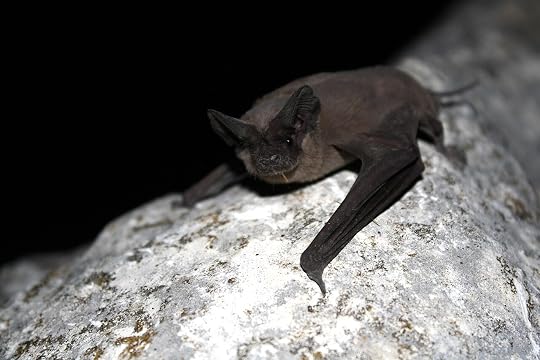
2. “Cities” — Our famous migratory Mexican Freetail Bats who gather by the millions in Central Texas caves and under urban bridges in the City of Austin to raise their young -- and a scientist who has been instrumental in changing people's minds from fear to appreciation of bats.
3. “Nations” — Argentine Ants who have spread via shipping all over the Mediterranean but still recognize each other as one of their own.
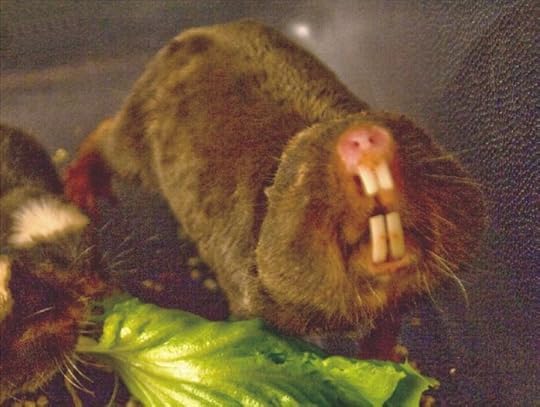
4. “Layers” — In an African preserve famous for elephants and other charismatic large animals, Huling sought out the hidden African Mole Rats who build vast, complex underground networks of tunnels — and seemingly “farm” them for root vegetables. (Beavers “farm” plants too but that wasn’t mentioned. Ants who farm fungus got a shout-out.)
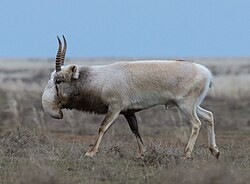
5. “Transit” — Saiga antelope, nomads of the Eurasian steppe traversing Ukraine, Russia, Kazakhstan, Siberia (i.e. more Russia), Mongolia, and China and the trouble these migrations encounter in the modern world where our transit systems cross theirs.
6. “Latitude” meaning not degrees north or south from the Equator, but more conceptually, the “space” in which to move — focusing on the various migratory Crane populations who take advantage of the unpeopled zones between North and South Korea. (Demilitarized Zone-DMZ and Civilian Control Zone-CCZ)
An uplifting epilogue in the author’s native California focused on many ways wild lives are being saved by ingenious road crossings.
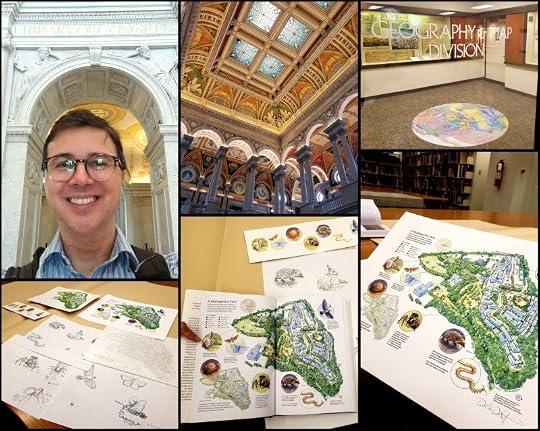
If you are looking for a book with a good balance of travel adventure and popular science, this is a good choice. I was a wee bit disappointed because the introduction, with a fabulous map tracking all kinds of species on the University of Exeter’s Penryn (Wales) campus led me to believe this new 2026 book was going to focus on all the exciting new animal tracking technologies and what had been learned from them. It didn’t. It is also not an exhaustive deep dive on any animal — focusing instead on concepts the author wanted to emphasize - with the (successful, I thought) intention of showing us that animals are to be respected and considered as worthy residents of our planet, with complex societies not too dissimilar to ours.
At the end I really liked it for what it was — a sort of educational progressive dinner — where our guide took us all over the globe from animal community to animal community and at each “house” we were served a delectable “course” of knowledge, wonder and delight, all together making up a memorable and unrepeatable meal. If you ever regarded any place on Earth as empty or unpopulated, you won't think that again.
***************
Picture of author Ryan Huling and the book's Penryn campus map illustration (and others) posted by Ryan Huling and reposted by Oliver Uberti on LinkedIn.
1. “Settlements” visits Beavers in Canada’s “Beaver Belt” who have vastly remodeled enormous areas — no, I mean VASTLY remodeled ENORMOUS areas — you can’t imagine until you see the maps. I’d call it the Beavercene. Their work allows water to permeate the land and defends it against the infamous Canadian wildfires.
2. “Cities” — Our famous migratory Mexican Freetail Bats who gather by the millions in Central Texas caves and under urban bridges in the City of Austin to raise their young -- and a scientist who has been instrumental in changing people's minds from fear to appreciation of bats.
3. “Nations” — Argentine Ants who have spread via shipping all over the Mediterranean but still recognize each other as one of their own.
4. “Layers” — In an African preserve famous for elephants and other charismatic large animals, Huling sought out the hidden African Mole Rats who build vast, complex underground networks of tunnels — and seemingly “farm” them for root vegetables. (Beavers “farm” plants too but that wasn’t mentioned. Ants who farm fungus got a shout-out.)
5. “Transit” — Saiga antelope, nomads of the Eurasian steppe traversing Ukraine, Russia, Kazakhstan, Siberia (i.e. more Russia), Mongolia, and China and the trouble these migrations encounter in the modern world where our transit systems cross theirs.
6. “Latitude” meaning not degrees north or south from the Equator, but more conceptually, the “space” in which to move — focusing on the various migratory Crane populations who take advantage of the unpeopled zones between North and South Korea. (Demilitarized Zone-DMZ and Civilian Control Zone-CCZ)
An uplifting epilogue in the author’s native California focused on many ways wild lives are being saved by ingenious road crossings.
If you are looking for a book with a good balance of travel adventure and popular science, this is a good choice. I was a wee bit disappointed because the introduction, with a fabulous map tracking all kinds of species on the University of Exeter’s Penryn (Wales) campus led me to believe this new 2026 book was going to focus on all the exciting new animal tracking technologies and what had been learned from them. It didn’t. It is also not an exhaustive deep dive on any animal — focusing instead on concepts the author wanted to emphasize - with the (successful, I thought) intention of showing us that animals are to be respected and considered as worthy residents of our planet, with complex societies not too dissimilar to ours.
At the end I really liked it for what it was — a sort of educational progressive dinner — where our guide took us all over the globe from animal community to animal community and at each “house” we were served a delectable “course” of knowledge, wonder and delight, all together making up a memorable and unrepeatable meal. If you ever regarded any place on Earth as empty or unpopulated, you won't think that again.
***************
Picture of author Ryan Huling and the book's Penryn campus map illustration (and others) posted by Ryan Huling and reposted by Oliver Uberti on LinkedIn.

June 8, 2026
"Humanity is not the custodian of creation. Indeed we are often the followers, chasing other animals and navigating their worlds which we often think of as our own."
Thank you to the author and Haven for an advanced copy of this title
I got strong vibes of Douglas Adams' Last Chance to See from this title.
This was a fantastic dive into the unknown world of life on planet Earth.
I appreciated how the author's approach on this: starting with settlements, and then proceeding through zoocities, and then animal "nations" as the complexity of each level of ecologicial interaction increases. His chapter on animal transit channels was also sobering to remind us that we are all creatures that need to get around (and I especially loved the idea of elephants being able to re-pave ancient migratory roads).
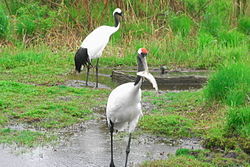
My main regret is that I did not have a physical copy which undoubtedly would have photographs of the creatures featured within: Saiga antelopes, Red-Crowned Cranes, Mexican Free-tail bats, Zambian Mole Rats etc.

August 7, 2026
Reading a book or watching a documentary about animals stirs two completely opposing feelings in me. On one hand, there's nothing more beautiful or marvelous than animals. How they live, how they build, how they behave in ways that make perfect sense to them and almost none to us. On the other, you can't help feeling that humans have quietly sealed their fate without them ever knowing it. As an animal lover, that second thought is always playing somewhere in the back of my mind.
This book does both. It moves through beavers, ants, mole rats, and bats, from Canada all the way to the DMZ between the two Koreas. Each chapter treats these as animal places, not human landscapes that animals happen to turn up in. It shows how life flourishes when given half a chance, often in the unlikeliest of places, and also what poaching, farming and a changing climate are doing to it. Just under our feet (quite literally in some cases), there's a whole nation living and breathing. I loved that the author chose to focus on the smaller animals (small not just in size) - the ones that rarely get the attention they deserve.
The maps and artwork are lovely too. This book is a reminder that even though the world is a frightening place right now, especially for animals, there's still nothing more beautiful to read about. Maybe that's exactly why we should.
This book does both. It moves through beavers, ants, mole rats, and bats, from Canada all the way to the DMZ between the two Koreas. Each chapter treats these as animal places, not human landscapes that animals happen to turn up in. It shows how life flourishes when given half a chance, often in the unlikeliest of places, and also what poaching, farming and a changing climate are doing to it. Just under our feet (quite literally in some cases), there's a whole nation living and breathing. I loved that the author chose to focus on the smaller animals (small not just in size) - the ones that rarely get the attention they deserve.
The maps and artwork are lovely too. This book is a reminder that even though the world is a frightening place right now, especially for animals, there's still nothing more beautiful to read about. Maybe that's exactly why we should.
June 10, 2026
Two overlapping kinds of people will like this book: (1) those who enjoy spending lots of unplanned, uncertain time in nature (that's not me very much); (2) those who believe that we humans are messing up the world and that we need to reorient our thinking to appreciate that all being have a right to live out their own destiny (that's me and that's why I read the book).
June 4, 2026
Fascinating Read!
The Hidden Nations of Animals by Ryan Huling is a fresh and visually stunning work of nature writing that challenges the idea that civilization is a purely human invention. It’s the kind of book that makes you step outside and look at everything differently.
The Hidden Nations of Animals by Ryan Huling is a fresh and visually stunning work of nature writing that challenges the idea that civilization is a purely human invention. It’s the kind of book that makes you step outside and look at everything differently.

August 26, 2026
This was an awesome book! I’m very interested in animals and how they are coexisting with us as we take over the planet! Seriously their habitat dwindles daily.
The author actually went to all the places that he writes about. Each chapter is nicely organized. There is a chapter devoted to bats, which I found very interesting. There is a cave in Texas that he actually visited and watched the phenomenon of millions of bats taking over three hours to leave the cave entrance every night to go hunt. I learned so much about bats. Who knew they talk to each other and can find their own baby amongst millions of other babies.
There is a chapter devoted to beavers. I learned so much about how beavers changed the landscape and have had miles and miles of structures and family groups all in community. Humans of course wrecked their communities by over hunting the beavers. And now they’re learning that beavers are very important in how they manage the landscape and prevent flooding, keeping the waterways healthy.
Who knew there were mole rats underground in Africa? They have continuous burrows and communities living completely underground. They eat the root of plants including bulbs and tubers, but they are able to farm what they eat and manage the plants that they like to continue to keep growing. Unfortunately people haven’t liked them and would kill them. I found their communities very interesting and saddened that habitats are being destroyed by people.
I learned how there is an antelope in the steppe land near China and Russia in the smaller countries south of Russia near the Ukraine. The land is flat and pretty frozen most of the year. These animals had migratory pathways for mating, rearing their young and traveling for food sources. Unfortunately, people interfere with new homes, railroads being built, etc. the animals are not able to travel safely to where they need to go. Also, China loves the horns on these antelope for medicinal uses, and they have been hunted to dangerous low levels. A design in barbed wire fencing has been used so that the antelope can go underneath the fencing in certain areas in the X shape. I thought this was very clever.
Other animals have been explored in the book, including cranes in the demilitarized zone between north and South Korea, which I found very fascinating. I have seen the crane exhibit in Baraboo, Wisconsin and learned all about crane conservation around the world. You do wonder about all the areas for migration and food sources that war has eliminated from groups of animals. How they have had to adjust and change their course of migratory patterns to find other food and water sources.
Overall, I think the author’s travels were very interesting with little snippets of how the author got around and coped with different situations in such a variety of countries.
This book also is illustrated with water colors by the illustrator. That was rather unique and enjoyable to study the pictures and maps, etc..
Overall, I think this is an excellent book and very much needed for today. I’m an animal advocate. I think awareness needs to be raised for what we are doing to the various animal species in terms of destroying their population groups through habitat loss, hunting, and other things. On the other hand, how different solutions can be negotiated too. I think we need to look hard at how we are sharing the planet with animals and what can we do to help them live here safely and access safe habitat, food and water. As well as be able to continue migratory patterns even if there are fences or highways! We need to treat our fellow animal citizens on planet earth better!
The author actually went to all the places that he writes about. Each chapter is nicely organized. There is a chapter devoted to bats, which I found very interesting. There is a cave in Texas that he actually visited and watched the phenomenon of millions of bats taking over three hours to leave the cave entrance every night to go hunt. I learned so much about bats. Who knew they talk to each other and can find their own baby amongst millions of other babies.
There is a chapter devoted to beavers. I learned so much about how beavers changed the landscape and have had miles and miles of structures and family groups all in community. Humans of course wrecked their communities by over hunting the beavers. And now they’re learning that beavers are very important in how they manage the landscape and prevent flooding, keeping the waterways healthy.
Who knew there were mole rats underground in Africa? They have continuous burrows and communities living completely underground. They eat the root of plants including bulbs and tubers, but they are able to farm what they eat and manage the plants that they like to continue to keep growing. Unfortunately people haven’t liked them and would kill them. I found their communities very interesting and saddened that habitats are being destroyed by people.
I learned how there is an antelope in the steppe land near China and Russia in the smaller countries south of Russia near the Ukraine. The land is flat and pretty frozen most of the year. These animals had migratory pathways for mating, rearing their young and traveling for food sources. Unfortunately, people interfere with new homes, railroads being built, etc. the animals are not able to travel safely to where they need to go. Also, China loves the horns on these antelope for medicinal uses, and they have been hunted to dangerous low levels. A design in barbed wire fencing has been used so that the antelope can go underneath the fencing in certain areas in the X shape. I thought this was very clever.
Other animals have been explored in the book, including cranes in the demilitarized zone between north and South Korea, which I found very fascinating. I have seen the crane exhibit in Baraboo, Wisconsin and learned all about crane conservation around the world. You do wonder about all the areas for migration and food sources that war has eliminated from groups of animals. How they have had to adjust and change their course of migratory patterns to find other food and water sources.
Overall, I think the author’s travels were very interesting with little snippets of how the author got around and coped with different situations in such a variety of countries.
This book also is illustrated with water colors by the illustrator. That was rather unique and enjoyable to study the pictures and maps, etc..
Overall, I think this is an excellent book and very much needed for today. I’m an animal advocate. I think awareness needs to be raised for what we are doing to the various animal species in terms of destroying their population groups through habitat loss, hunting, and other things. On the other hand, how different solutions can be negotiated too. I think we need to look hard at how we are sharing the planet with animals and what can we do to help them live here safely and access safe habitat, food and water. As well as be able to continue migratory patterns even if there are fences or highways! We need to treat our fellow animal citizens on planet earth better!

July 27, 2026
A delightful and insightful trip through the world of animal societies. There are discussions of some pretty sad and even abhorrent injustices visited on animal cultures by humans, some inadvertent and some quite intentional; these may be disturbing for some readers.
I listened to the audiobook, narrated by the author. I love author-read audiobooks because we get the cadence and emphasis as the author intended. In this case, we also get Huling's enthusiasm about the topic, which really added to its charm.
As we travel around the world, meeting local experts on various animal cultures, we learn about behaviors, reproductive strategies, migrations, and also how human borders and infrastructure affect--for worse and, sometimes, for better--the ancient routines of those animals.
This isn't intended to be a comprehensive or scholarly treatise. It offers a few stories to remind us that the other lives on our earth have rich and meaningful cultures of which we should be aware.
I listened to the audiobook, narrated by the author. I love author-read audiobooks because we get the cadence and emphasis as the author intended. In this case, we also get Huling's enthusiasm about the topic, which really added to its charm.
As we travel around the world, meeting local experts on various animal cultures, we learn about behaviors, reproductive strategies, migrations, and also how human borders and infrastructure affect--for worse and, sometimes, for better--the ancient routines of those animals.
This isn't intended to be a comprehensive or scholarly treatise. It offers a few stories to remind us that the other lives on our earth have rich and meaningful cultures of which we should be aware.
July 11, 2026
Distinctly broken up into different sections exploring unique animals “nations”, this book did a great job expanding individual worlds, and showing how full this vast planet truly is. I enjoyed how the novel tried to break are human-centric view of the animal kingdom, which often diminishes the achievements of incredible creatures, and showed the complex societies they form on their own. Each section was interesting in its own right, but I was most drawn to the underground world of the mole rats. Outside of the exploration of the animals themselves, I enjoyed the authors own journey exploring these remote regions of the plant. This book did a good job of engaging the reader in the wanderlust of the author and passion for wildlife.
September 2, 2026
Very different approach to writing but felt like I learned a lot about each animal the author observed in their natural habitat. Part history lesson, part wildlife education. Especially appreciated the attention given to the wildlife crossing on the 101 freeway in Southern California. I’ve been following that story for many years and excited to see that it’s opening soon!
July 18, 2026
This book is a hopeful idea that humans will look at the communities of all creatures, birds etc differently. We don't seem to consider that other species behave in ways very similar to us. Humans have such a take all and expendable way of dealing with other living things.
As a sign of how this book is received I would guess most who choose to read it have some sympathy towards our fellow natural neighbors and others that would scoff at the idea and carry on in the way humans have for centuries.
As a sign of how this book is received I would guess most who choose to read it have some sympathy towards our fellow natural neighbors and others that would scoff at the idea and carry on in the way humans have for centuries.
September 12, 2026
Super interesting book with lots of behavioral insights that humans could learn from. Also learned a lot about geography, culture, and history.

September 22, 2026
The Hidden Nations of Animals was a book I was especially eager to read, and it did not disappoint. What stayed with me most is Huling’s central idea that although animals are much like us in the ways they organize, struggle, cooperate, compete, migrate, adapt, succeed, and fail, we need to be careful about interpreting their lives through an entirely human lens. They may be doing many of the things we do, but they may be doing them for reasons and in ways we don't yet understand.
Huling takes us on a series of personalized journeys, each centered on a different member of the animal nations. His watercolor drawings, photographs, and maps add to the feeling that we are accompanying him rather than simply reading about animals from a distance. His writing style is unusual as well. He frequently writes in fragments—something I initially took to be editing mistakes—until I realized that the fragments were an intentional storytelling device.
What I particularly enjoyed was the way the book moves back and forth between the very small and the very large: exquisitely detailed observations of how a particular animal lives, alongside much broader questions about how animals think, communicate, organize themselves, and exist in a world increasingly altered by humans. At times, the shifts are startling, but they gradually broaden the way we look at the natural world.
By the end, I found myself reconsidering some assumptions I carry about intelligence, superiority, entitlement, and even cooperation. Huling asks us to imagine animals not merely as creatures whose lives intersect with ours, but as fellow inhabitants of a world that we (should) share with them. There is something both humbling and hopeful in that idea.
The book ultimately left me thinking about how much we still don't know—and about how cautiously we should proceed with our own developments when the lives and habitats of so many other species are at stake.
Quotes…
Freed from the petty distractions of wartime life, Beston began to meticulously observe and document his non human neighbors, whose daily routines appeared far more orderly and sensible than those of his fellow humans. In contrast to the instability and recklessness he saw in Europe other animals appeared to behave in a logical manner one that was thoughtful and reflective of changes in their environment. Theirs was a world of balance as ours was increasingly falling off its axis. 2
But conventional thinking has long held that only human communities are inhabited places. Once we settle in an area, it is by definition, populated. 3
The most memorable journey always begins with a bit of uncertainty. Uncertainty of how to reach 1's destination. Uncertainty of what can be gained by doing so. In my experience, certainty on these points is the sure sign that a journey should not be undertaken 23
The dams, Morgan, wrote, “have Existed in the same places for hundreds and thousands of years and have been maintained by a system of continuous repairs.” 32
In October 2007, Thie stumbled onto what was soon declared the longest Beaver Dam on earth, hidden among the spruce and firs of Wood Buffalo National Park. The dam is 2007 feet across--the length of seven football fields period from the ground, it appears in photos to simply be a generic large pond; But when viewed with high resolution cameras from above, the canals and family lodges are visible in all their glory. 34
Many First Nations tribes view non-human worlds as independent communities, sometimes referring to Beavers and other creatures as “the animal people.” 37
Those who do make it out of a fire's path alive often find themselves indefinitely displaced and disoriented, with none of the familiar geographical landmarks they have come to know. When a forest burns to the ground, vegetation can take up to a dozen years to return to the levels that large mammals need. Their world, as they knew it, is gone. 40
I asked Carl how long it would have taken a Beaver to bring down something so colossal. “About Half a day,” he said, glancing starkly into the distance to survey the scene. They can't carry a tree this large, he noted. It's way too heavy period what they're really after are the twigs and branches higher up, which would normally be out of reach but have now been brought down to earth. 45
For the past 8500 to 10,000 years, the community inside The Cave has swelled exponentially every spring as up to 10 million free tales fly 700 miles north from various smaller roosts in and around central Mexico. By August, the bad population will double again to nearly 20 million--the largest congregation of non human mammals on earth. 56-57
The millions of Bracken moms will then give birth to exactly 1 pup, who weighs about as much as a dime. … The pups are placed inside makeshift creshes in the crevices of the cave's enormous nursery alongside millions of other babies, where they will be fed several times a day. 57
… naturalist Vernon Bailey show that as recently as 1900, a single Prairie dog town--or perhaps more accurately, city--in North Central Texas was home to an estimated 400 million residents and spanned 25,000 square miles--about 40 times the size of modern day Houston. 66
Crouched as close as I could get to the ground, I saw 10s of thousands of seemingly identical looking bats barreling around just inches above me, generating an astounding amount of wind. A few gently clunks me on the side of the head before rebounding and continuing onward. 72
When Henry Beston first reimagined the animal Kingdom as one composed of “other nations,” he employed that metaphor in service of making a more fundamental point: that humankind is not the standard by which other species should be judged. That the sophisticated animal societies he glimpsed through his seaside cabin windows, do not exist for us, or below us, but alongside us. 89
Species-level identification allows social animals to interact through a baseline set of shared norms, such as mutual recognition of a homeland, landmark, or territory, or, acceptance of boundaries in sovereign areas. (“This Is my dbaver dam. Yours is over there. Stay in your lane.”) Among some species, shared communication systems--verbal or otherwise--can be used to convey useful information about food sources or perceived threats. When encountering an unfamiliar animal, such methods can also be used to announce, “This is who I am and where I'm from.” 95
In total, soils are home to more than half of all life on earth, including at least 85% of all plants and 90% of fungi, making them a popular destination for all manner of subterranean creatures. 127
In some cases, competitive populations will reach a mutual consensus on how to divide things. In tracking 2 distinct populations of warblers, for instance, researchers observed that one population lived entirely at an elevation below 4800 feet, while the other was found only at 4800 feet and above. In other words, instead of engaging in a daily food fight, the two populations apparently concluded that it would be easier for everyone if they just occupied different planes. Variations on these dynamics can be found everywhere from the tallest mountains to the deepest oceans. 128
And in Cappadocia, Turkey, Where the landscape is covered in volcanic rock called tuff--which, despite its name, is quite malleable--hundreds of underground cities have been uncovered, some of which date back to the 8th century BCE and descend 18 stories deep. Within the region's rolling hills, 10s of thousands of ancient peoples once stored gods, hid from foreign attackers, and lived year round inside thermoregulated labyrinths just below the surface. 128
Japanese scientists discovered that a particular kind of damsel-fish known as Stegastes nigricans, aka the “dusky farmerfish,” uses advanced agricultural practices to farm their favorite kind of red algae, While fiercely defending their farms against thieves and intruders. As a result, they have constructed tiny agrarian settlements that provide a steady supply of their favorite food. 133
Unlike excavation, which destroys a habitat in the process of exploring, GPR sends out electromagnetic pulses that can reveal with high resolution accuracy where gaps less than two inches wide can be found. Simply by pushing what looks like a fancy lawn mower over a particular area, researchers can survey the same spot over and over again, helping us to better understand who our subterranean neighbors are without upending their lives. 141
Elephant trails have such a profound imprint on the landscape that if foot traffic is heavy enough, over time it can compress the soil and create canals that link isolated rivers or ponds together, potentially opening the floodgates for aquatic animals to forge new pathways into unchartered waters. 155
It’s a familiar refrain I'd heard many times in my foods sustainability work, where farmers will fundamentally change lands use in a way that upends the lives of wild animals living nearby. Then, they blame the wildlife for causing trouble. 163
Among humankind, they note, there is typically a 200-millisecond gap between turns in a conversation, because that's the time it takes for the brain to recognize the other person has stopped talking, prepare thought, and respond. By contrast, songbirds reportedly wait roughly 50 milliseconds to reply during a conversation… 194
Upon retrieving the bird, he was stunned to find that the animal had an entire wooden spear protruding vertically out of his or her body. The count took the bird to a local professor, who identified the sphere as being African in origin, signaling that the stork had traveled a remarkably long distance before blasted out of the sky. 195
Yet in the years that followed, the evidence for transcontinental migration kept mounting. Dozens more birds were found throughout northern Europe with African Spears jutting out of their bodies, so many that they were given a name: … arrowstorks. 195
A good portion of this book was written from the roadside and no chapter was complete without a full read in the open air. 218
Without a viable path across one of the busiest roadways in the world, the cougar population trapped on the South side of the 101 now has among the lowest genetic diversity ever recorded, as a result of unavoidably inbreeding between brother and sister, or parent and child, triggering what research call an “extinction vortex.” 220
… more than 80% of the ocean remains “unmapped, unobserved, and unexplored,” but is nonetheless believed to contain upward of a million species, at least 2/3 of which we've never seen before. 230
Huling takes us on a series of personalized journeys, each centered on a different member of the animal nations. His watercolor drawings, photographs, and maps add to the feeling that we are accompanying him rather than simply reading about animals from a distance. His writing style is unusual as well. He frequently writes in fragments—something I initially took to be editing mistakes—until I realized that the fragments were an intentional storytelling device.
What I particularly enjoyed was the way the book moves back and forth between the very small and the very large: exquisitely detailed observations of how a particular animal lives, alongside much broader questions about how animals think, communicate, organize themselves, and exist in a world increasingly altered by humans. At times, the shifts are startling, but they gradually broaden the way we look at the natural world.
By the end, I found myself reconsidering some assumptions I carry about intelligence, superiority, entitlement, and even cooperation. Huling asks us to imagine animals not merely as creatures whose lives intersect with ours, but as fellow inhabitants of a world that we (should) share with them. There is something both humbling and hopeful in that idea.
The book ultimately left me thinking about how much we still don't know—and about how cautiously we should proceed with our own developments when the lives and habitats of so many other species are at stake.
Quotes…
Freed from the petty distractions of wartime life, Beston began to meticulously observe and document his non human neighbors, whose daily routines appeared far more orderly and sensible than those of his fellow humans. In contrast to the instability and recklessness he saw in Europe other animals appeared to behave in a logical manner one that was thoughtful and reflective of changes in their environment. Theirs was a world of balance as ours was increasingly falling off its axis. 2
But conventional thinking has long held that only human communities are inhabited places. Once we settle in an area, it is by definition, populated. 3
The most memorable journey always begins with a bit of uncertainty. Uncertainty of how to reach 1's destination. Uncertainty of what can be gained by doing so. In my experience, certainty on these points is the sure sign that a journey should not be undertaken 23
The dams, Morgan, wrote, “have Existed in the same places for hundreds and thousands of years and have been maintained by a system of continuous repairs.” 32
In October 2007, Thie stumbled onto what was soon declared the longest Beaver Dam on earth, hidden among the spruce and firs of Wood Buffalo National Park. The dam is 2007 feet across--the length of seven football fields period from the ground, it appears in photos to simply be a generic large pond; But when viewed with high resolution cameras from above, the canals and family lodges are visible in all their glory. 34
Many First Nations tribes view non-human worlds as independent communities, sometimes referring to Beavers and other creatures as “the animal people.” 37
Those who do make it out of a fire's path alive often find themselves indefinitely displaced and disoriented, with none of the familiar geographical landmarks they have come to know. When a forest burns to the ground, vegetation can take up to a dozen years to return to the levels that large mammals need. Their world, as they knew it, is gone. 40
I asked Carl how long it would have taken a Beaver to bring down something so colossal. “About Half a day,” he said, glancing starkly into the distance to survey the scene. They can't carry a tree this large, he noted. It's way too heavy period what they're really after are the twigs and branches higher up, which would normally be out of reach but have now been brought down to earth. 45
For the past 8500 to 10,000 years, the community inside The Cave has swelled exponentially every spring as up to 10 million free tales fly 700 miles north from various smaller roosts in and around central Mexico. By August, the bad population will double again to nearly 20 million--the largest congregation of non human mammals on earth. 56-57
The millions of Bracken moms will then give birth to exactly 1 pup, who weighs about as much as a dime. … The pups are placed inside makeshift creshes in the crevices of the cave's enormous nursery alongside millions of other babies, where they will be fed several times a day. 57
… naturalist Vernon Bailey show that as recently as 1900, a single Prairie dog town--or perhaps more accurately, city--in North Central Texas was home to an estimated 400 million residents and spanned 25,000 square miles--about 40 times the size of modern day Houston. 66
Crouched as close as I could get to the ground, I saw 10s of thousands of seemingly identical looking bats barreling around just inches above me, generating an astounding amount of wind. A few gently clunks me on the side of the head before rebounding and continuing onward. 72
When Henry Beston first reimagined the animal Kingdom as one composed of “other nations,” he employed that metaphor in service of making a more fundamental point: that humankind is not the standard by which other species should be judged. That the sophisticated animal societies he glimpsed through his seaside cabin windows, do not exist for us, or below us, but alongside us. 89
Species-level identification allows social animals to interact through a baseline set of shared norms, such as mutual recognition of a homeland, landmark, or territory, or, acceptance of boundaries in sovereign areas. (“This Is my dbaver dam. Yours is over there. Stay in your lane.”) Among some species, shared communication systems--verbal or otherwise--can be used to convey useful information about food sources or perceived threats. When encountering an unfamiliar animal, such methods can also be used to announce, “This is who I am and where I'm from.” 95
In total, soils are home to more than half of all life on earth, including at least 85% of all plants and 90% of fungi, making them a popular destination for all manner of subterranean creatures. 127
In some cases, competitive populations will reach a mutual consensus on how to divide things. In tracking 2 distinct populations of warblers, for instance, researchers observed that one population lived entirely at an elevation below 4800 feet, while the other was found only at 4800 feet and above. In other words, instead of engaging in a daily food fight, the two populations apparently concluded that it would be easier for everyone if they just occupied different planes. Variations on these dynamics can be found everywhere from the tallest mountains to the deepest oceans. 128
And in Cappadocia, Turkey, Where the landscape is covered in volcanic rock called tuff--which, despite its name, is quite malleable--hundreds of underground cities have been uncovered, some of which date back to the 8th century BCE and descend 18 stories deep. Within the region's rolling hills, 10s of thousands of ancient peoples once stored gods, hid from foreign attackers, and lived year round inside thermoregulated labyrinths just below the surface. 128
Japanese scientists discovered that a particular kind of damsel-fish known as Stegastes nigricans, aka the “dusky farmerfish,” uses advanced agricultural practices to farm their favorite kind of red algae, While fiercely defending their farms against thieves and intruders. As a result, they have constructed tiny agrarian settlements that provide a steady supply of their favorite food. 133
Unlike excavation, which destroys a habitat in the process of exploring, GPR sends out electromagnetic pulses that can reveal with high resolution accuracy where gaps less than two inches wide can be found. Simply by pushing what looks like a fancy lawn mower over a particular area, researchers can survey the same spot over and over again, helping us to better understand who our subterranean neighbors are without upending their lives. 141
Elephant trails have such a profound imprint on the landscape that if foot traffic is heavy enough, over time it can compress the soil and create canals that link isolated rivers or ponds together, potentially opening the floodgates for aquatic animals to forge new pathways into unchartered waters. 155
It’s a familiar refrain I'd heard many times in my foods sustainability work, where farmers will fundamentally change lands use in a way that upends the lives of wild animals living nearby. Then, they blame the wildlife for causing trouble. 163
Among humankind, they note, there is typically a 200-millisecond gap between turns in a conversation, because that's the time it takes for the brain to recognize the other person has stopped talking, prepare thought, and respond. By contrast, songbirds reportedly wait roughly 50 milliseconds to reply during a conversation… 194
Upon retrieving the bird, he was stunned to find that the animal had an entire wooden spear protruding vertically out of his or her body. The count took the bird to a local professor, who identified the sphere as being African in origin, signaling that the stork had traveled a remarkably long distance before blasted out of the sky. 195
Yet in the years that followed, the evidence for transcontinental migration kept mounting. Dozens more birds were found throughout northern Europe with African Spears jutting out of their bodies, so many that they were given a name: … arrowstorks. 195
A good portion of this book was written from the roadside and no chapter was complete without a full read in the open air. 218
Without a viable path across one of the busiest roadways in the world, the cougar population trapped on the South side of the 101 now has among the lowest genetic diversity ever recorded, as a result of unavoidably inbreeding between brother and sister, or parent and child, triggering what research call an “extinction vortex.” 220
… more than 80% of the ocean remains “unmapped, unobserved, and unexplored,” but is nonetheless believed to contain upward of a million species, at least 2/3 of which we've never seen before. 230
June 30, 2026
I adored The Hidden Nations of Animals! Ryan Huling presents a compelling case for looking at animal communities in a new way that considers their interests first and foremost, not as an afterthought to human societies. I was particularly struck by the chapter about bats, where Huling impressively captures his on-the-ground experience observing bats and provides so much fascinating context. I really came to appreciate his delightful narrative voice and his way of getting across lots of information in an enjoyable and easily digestible way. I highly recommend this book, and I hope that Huling has more books up his sleeve.
August 10, 2026
Hit the right spot between overly wax poetic about nature and writing non fiction with a heart. Similarity the water color illustrations gave the book a feeling of warmth and intimacy. I learned so many new things about beavers mole rats and cranes just to name the most memorable and will see my own world a little bit differently

xx-dnf-skim-reference
July 15, 2026I guess I've just read, and thought, too much about all this sort of stuff already. There more be unfamiliar details buried in the text, but intro and epilogue don't appeal, illustrations are not captioned, and there is no index via which I could find more new science bits.
July 2026
July 2026

July 21, 2026
This was a bit more of a travelogue than I expected. Still, some interesting insights on animal native territories and migrations.

Review of advance copy received from Author
Dazzling, wise, and full of surprise, The Hidden Nations of Animals brings us face to face with the extraordinary societies of our fellow creatures. Reading it feels less like learning than remembering something essential we've always known.

August 8, 2026
I'm vegan and interested in the general topic but couldn't finish this book. For me the writing is too slowly paced and not terribly interesting.
Displaying 1 - 18 of 18 reviews