

What do you think?
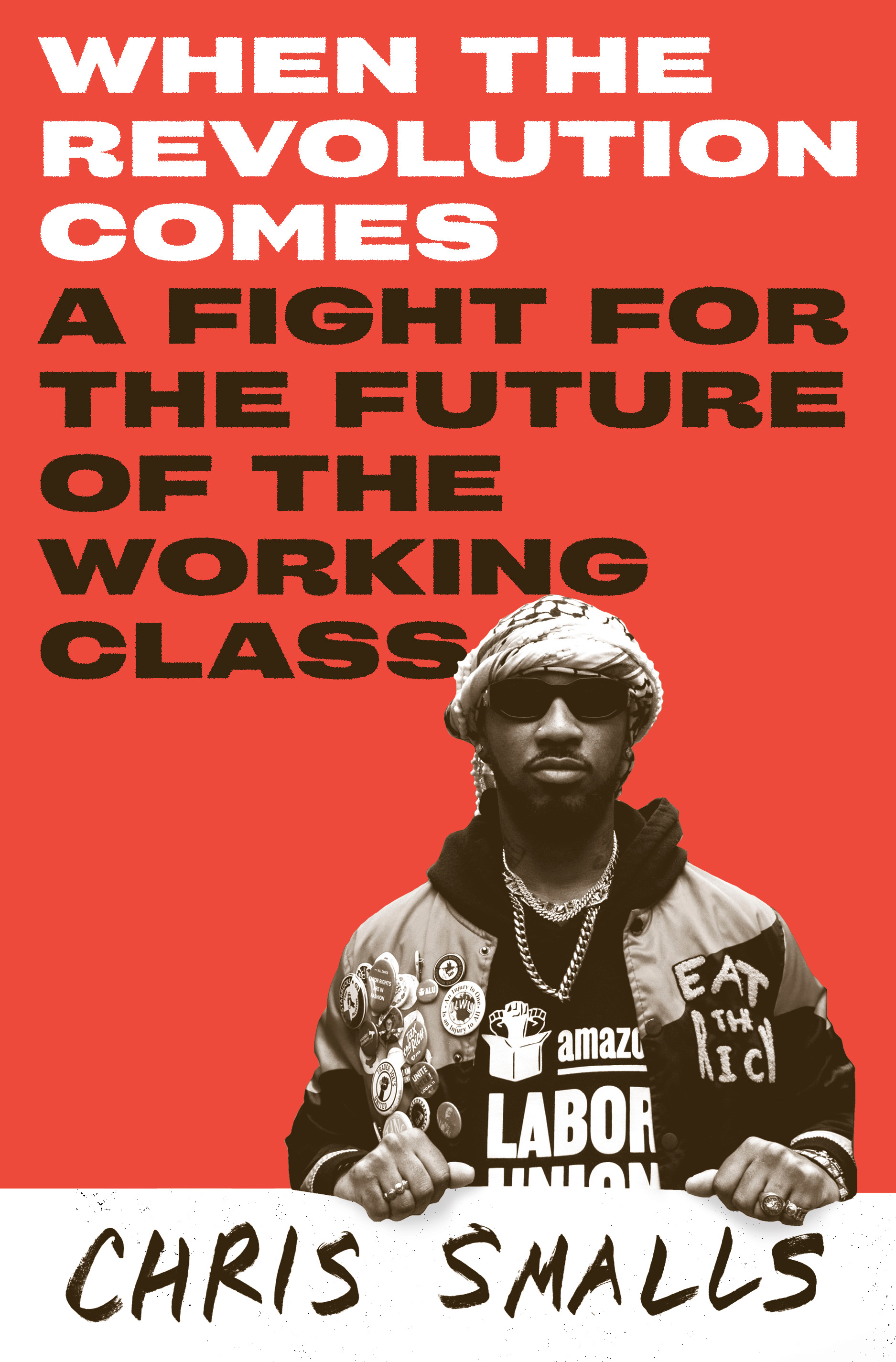
When the Revolution Comes: A Fight for the Future of the Working Class
From one of the most electric and consequential figures to emerge from the contemporary American labor movement, the remarkable story of his battle to create the first Amazon union in the U.S. and a powerful call to arms on behalf of the working class
“With candor and fierce moral clarity, Chris Smalls takes readers behind the scenes of the most consequential labor uprising in modern history—and it’s one hell of a ride.” —Jessica Bruder, author of Nomadland
In the early days of the COVID pandemic, warehouse worker Chris Smalls and his colleagues continued showing up as the rest of the world was shutting down. A dedicated and experienced Amazon employee, increasingly frustrated by the inner workings of the retail giant, Smalls had already felt himself reaching a breaking point. So when coworkers around him began falling ill, and with no transparency or assurances of safety coming from those in charge, he made the only choice left available to him. He staged a walkout with friend Derrick Palmer, eventually finding himself on the picket line without a job. But what began as a demand to keep essential employees safe in a crisis would grow into a movement devoted to achieving dignity and security for the American wageworker, sparking a groundswell of organizers at the most notable companies across the nation—including Starbucks, Trader Joe's, and Apple—and leading to lasting change for labor.
When the Revolution Comes is the riveting inside story of how a young Black man from Hackensack, New Jersey with few to no resources, led a scrappy band of Staten Island warehouse workers in an improbable fight against Amazon, the second largest private employer in the United States, and won. This epic David and Goliath tale follows Smalls from a childhood spent navigating his dad’s stints in and out of prison, to his years of sacrifice and economic uncertainty as a father of three, to his ascension as the leader of a new generation’s labor movement.
A deeply personal and eye-opening account of the creation of the Amazon Labor Union, When the Revolution Comes offers both a searing exposé of what it’s like to be working class in America and inspiring evidence of what is possible when the overworked, underpaid, and disempowered join together, a movement born in community.
“With candor and fierce moral clarity, Chris Smalls takes readers behind the scenes of the most consequential labor uprising in modern history—and it’s one hell of a ride.” —Jessica Bruder, author of Nomadland
In the early days of the COVID pandemic, warehouse worker Chris Smalls and his colleagues continued showing up as the rest of the world was shutting down. A dedicated and experienced Amazon employee, increasingly frustrated by the inner workings of the retail giant, Smalls had already felt himself reaching a breaking point. So when coworkers around him began falling ill, and with no transparency or assurances of safety coming from those in charge, he made the only choice left available to him. He staged a walkout with friend Derrick Palmer, eventually finding himself on the picket line without a job. But what began as a demand to keep essential employees safe in a crisis would grow into a movement devoted to achieving dignity and security for the American wageworker, sparking a groundswell of organizers at the most notable companies across the nation—including Starbucks, Trader Joe's, and Apple—and leading to lasting change for labor.
When the Revolution Comes is the riveting inside story of how a young Black man from Hackensack, New Jersey with few to no resources, led a scrappy band of Staten Island warehouse workers in an improbable fight against Amazon, the second largest private employer in the United States, and won. This epic David and Goliath tale follows Smalls from a childhood spent navigating his dad’s stints in and out of prison, to his years of sacrifice and economic uncertainty as a father of three, to his ascension as the leader of a new generation’s labor movement.
A deeply personal and eye-opening account of the creation of the Amazon Labor Union, When the Revolution Comes offers both a searing exposé of what it’s like to be working class in America and inspiring evidence of what is possible when the overworked, underpaid, and disempowered join together, a movement born in community.
289 pages, Kindle Edition
Published June 2, 2026
Ratings & Reviews
Friends & Following
Create a free account to discover what your friends think of this book!
Community Reviews
Displaying 1 - 30 of 44 reviews

May 31, 2026
This book is SO GOOD and so necessary.
I first learned of Smalls through his participation in the Freedom Flotilla and subsequent extra-abusive treatment in the hands of the IOF. And after finishing his memoir, I understand why.
For Smalls is everything that The Establishment fears, and teaches us to dismiss.
1. He rejects notions of “respectability” both in how he presents himself and how he writes.
Smalls explains that, despite his increased visibility, he still refuses to change his personal fashion style to fit conventional assumptions about what a leader is supposed to look like—because, he says, “If they would respect me only if I dressed or spoke like them, I knew they would never truly respect me, and more important, they would never respect the workers.”
I love that his prose style is totally unpretentious. I mean, why would he use Ivory Tower language if his people, the community whom he is fighting for, are the labor class?
2. He comes to his beliefs from lived experience, not theory.
While parts of WHEN THE REVOLUTION COMES do cover the historically broken and exploitative systems of the U.S., it is clear that Smalls learned this by noticing the odds stacked against him and his community, while learning the history and theory later. This is refreshing because he shows that, while he is certainly a force to be reckoned with, the realizations he’s reached are within the grasp of anyone in the working class.
3. He’s insightful.
No matter how little or much you know about U.S. history, Smalls has got something to say to you. Some of my favorite quotes are when he straight-up describes how the elites have designed the system to work in their favor:
On “essential workers” during COVID:
On who should be in leadership positions for the revolution:
-
WHEN THE REVOLUTION COMES brings Assata vibes and energy to the current discourse around eating the rich and building a better world to serve the most oppressed in our society. I loved it.
I first learned of Smalls through his participation in the Freedom Flotilla and subsequent extra-abusive treatment in the hands of the IOF. And after finishing his memoir, I understand why.
For Smalls is everything that The Establishment fears, and teaches us to dismiss.
1. He rejects notions of “respectability” both in how he presents himself and how he writes.
Smalls explains that, despite his increased visibility, he still refuses to change his personal fashion style to fit conventional assumptions about what a leader is supposed to look like—because, he says, “If they would respect me only if I dressed or spoke like them, I knew they would never truly respect me, and more important, they would never respect the workers.”
I love that his prose style is totally unpretentious. I mean, why would he use Ivory Tower language if his people, the community whom he is fighting for, are the labor class?
2. He comes to his beliefs from lived experience, not theory.
While parts of WHEN THE REVOLUTION COMES do cover the historically broken and exploitative systems of the U.S., it is clear that Smalls learned this by noticing the odds stacked against him and his community, while learning the history and theory later. This is refreshing because he shows that, while he is certainly a force to be reckoned with, the realizations he’s reached are within the grasp of anyone in the working class.
3. He’s insightful.
No matter how little or much you know about U.S. history, Smalls has got something to say to you. Some of my favorite quotes are when he straight-up describes how the elites have designed the system to work in their favor:
On “essential workers” during COVID:
“In a lot of cases, [...] some rich person needed you to keep going to work so that they could keep making money. They acted like you were essential to society, but really you were just essential to their bank account.”
On who should be in leadership positions for the revolution:
“Organizing Black and brown workers goes beyond having people who look like them in positions of power, though it’s often reduced to that. It’s about people being represented by those who have lived lives similar to theirs. It’s about ceding power to the people you are representing. It can never work if you don’t do that.”
-
WHEN THE REVOLUTION COMES brings Assata vibes and energy to the current discourse around eating the rich and building a better world to serve the most oppressed in our society. I loved it.

November 6, 2025
Chris Smalls is, quite frankly, a person who believes in The Dream. Not the random ones, but the one that means you earn an actual living wage, you can afford to feed your family, and you don’t spend your entire life crushed under the soles of some mega-wealthy person’s shoe. Not rich. WEALTHY. There is a difference, and since this man worked for Amazon, he clearly knows that.
Anyone who thinks Labor isn’t important in this century, who believes that unions are obsolete and dumb, and who really thinks that those wealthy folks care about them? Well, you might want to think again. And then you might want to listen to an impassioned voice for the People. That’s who Chris is, honestly. He knows how to hustle, but he knows that all but that super elite 1% or so are closer to ruin than 15 minutes in space on a private rocket. And he’s determined to make a decent life for the ones who really built this economy: the workers.
He’s led an interesting life and he’s not afraid to admit his shortcomings. That only makes him more likable and similar to who you see in the mirror. His message is also a good one: they need us. Why should the wealthy get wealthier while the workers get ground into ash? Why, indeed. I think he’s at the helm of our next big Labor movement. And I think we really need him there.
Anyone who thinks Labor isn’t important in this century, who believes that unions are obsolete and dumb, and who really thinks that those wealthy folks care about them? Well, you might want to think again. And then you might want to listen to an impassioned voice for the People. That’s who Chris is, honestly. He knows how to hustle, but he knows that all but that super elite 1% or so are closer to ruin than 15 minutes in space on a private rocket. And he’s determined to make a decent life for the ones who really built this economy: the workers.
He’s led an interesting life and he’s not afraid to admit his shortcomings. That only makes him more likable and similar to who you see in the mirror. His message is also a good one: they need us. Why should the wealthy get wealthier while the workers get ground into ash? Why, indeed. I think he’s at the helm of our next big Labor movement. And I think we really need him there.

November 14, 2025
I loved this so much!
This is a brilliant account of Chris Smalls' experience in the labor force as a part of the exploited class and his time organizing a union against the tech giant Amazon. I didn't want to put this book down. Chris Smalls is a brilliant storyteller and he knows it. He is great at placing little pieces of info at the right places that keeps your interest and also creates suspense.
Chris Smalls grew up with big dreams. But because those are increasingly hard to achieve in the US, especially when you account for system racism, exploitation, and lack of social protections, his original plans fell through in different ways. But all of those experiences culminated in skills that are perfect for being an organizer; and once he realized this, he wouldn't be stopped.
The first half of this book talks about Smalls' life with a focus on his experience in the labor market being an exploited worker. From a young age we see how corporations and wealthy people were treating him and other workers as disposable. The workforce in amerika is one that lacks humanity and it is undeniable here.
The second half of the book focuses on Chris Smalls' experience organizing JKF8, an Amazon warehouse, to become unionized. It also has critique on the capitalist system in amerika. He recognizes that amerika is a difficult place to organize as Black and Brown workers because even the leaders of unions, who are meant to protect workers, are overwhelming white and bourgeois and working with a government who also wants to protect capital and corporations over workers. It at times seems like an impossible place to be able to get anything down that would advantage the exploited workers of capitalism.
I really appreciated the critique in the second half because the first half I felt it was lacking and at times wondering where that acknowledgement was. But I think this is true to his experience. When he started to think critically about what was happening and why, he was able to make connections about corporations, govt, capitalism. So the fact that this critique is heavily only in the second half of the book mirrors his own experience. I think this also holds true to who Chris Smalls is as a person. He knows that if we are to build people power, we need to connect with each other and that includes getting to know each other and our needs. Therefore, the first half of this book also reads as an invitation to get to know him.
I recently read Revolutionary Suicide by Huey Newton and this book reminded me a lot of that. I was wondering if Chris Smalls has read it. I find a lot of what drove Huey Newton and Bobby Seale to start the BPP similar to what Chris Smalls also experienced and how that also culminated in organizing the people together. Also while recognizing that this is dangerous work. Once you bring people together, once you get people recognizing their power, you become a serious threat to the capitalist empire and Chris Smalls recognizes this, but also recognizes that we need to stand strong and united in order to create the change everyone deserves for a dignified life free of exploitation.
Highly recommend this book.
Thank you to the publisher and netgalley for a gifted e-arc.
This is a brilliant account of Chris Smalls' experience in the labor force as a part of the exploited class and his time organizing a union against the tech giant Amazon. I didn't want to put this book down. Chris Smalls is a brilliant storyteller and he knows it. He is great at placing little pieces of info at the right places that keeps your interest and also creates suspense.
Chris Smalls grew up with big dreams. But because those are increasingly hard to achieve in the US, especially when you account for system racism, exploitation, and lack of social protections, his original plans fell through in different ways. But all of those experiences culminated in skills that are perfect for being an organizer; and once he realized this, he wouldn't be stopped.
The first half of this book talks about Smalls' life with a focus on his experience in the labor market being an exploited worker. From a young age we see how corporations and wealthy people were treating him and other workers as disposable. The workforce in amerika is one that lacks humanity and it is undeniable here.
The second half of the book focuses on Chris Smalls' experience organizing JKF8, an Amazon warehouse, to become unionized. It also has critique on the capitalist system in amerika. He recognizes that amerika is a difficult place to organize as Black and Brown workers because even the leaders of unions, who are meant to protect workers, are overwhelming white and bourgeois and working with a government who also wants to protect capital and corporations over workers. It at times seems like an impossible place to be able to get anything down that would advantage the exploited workers of capitalism.
I really appreciated the critique in the second half because the first half I felt it was lacking and at times wondering where that acknowledgement was. But I think this is true to his experience. When he started to think critically about what was happening and why, he was able to make connections about corporations, govt, capitalism. So the fact that this critique is heavily only in the second half of the book mirrors his own experience. I think this also holds true to who Chris Smalls is as a person. He knows that if we are to build people power, we need to connect with each other and that includes getting to know each other and our needs. Therefore, the first half of this book also reads as an invitation to get to know him.
I recently read Revolutionary Suicide by Huey Newton and this book reminded me a lot of that. I was wondering if Chris Smalls has read it. I find a lot of what drove Huey Newton and Bobby Seale to start the BPP similar to what Chris Smalls also experienced and how that also culminated in organizing the people together. Also while recognizing that this is dangerous work. Once you bring people together, once you get people recognizing their power, you become a serious threat to the capitalist empire and Chris Smalls recognizes this, but also recognizes that we need to stand strong and united in order to create the change everyone deserves for a dignified life free of exploitation.
Highly recommend this book.
Thank you to the publisher and netgalley for a gifted e-arc.

August 5, 2026
This needs to be required reading for *everyone*
June 28, 2026
Inspiring.

August 29, 2026
Chris Smalls is a contemporary hero of mine. He represents the body on the line and an unwavering voice against labor-adversarial power. I admire and support his advocacy for labor and for human rights, and his steadfast fight against the powerful, unconscionable billionaires making our world unsafe for democracy and fair labor.
I listened to the audiobook to learn about the life and advocacy of this modern-day warrior for the people. I learned about his charisma, his experience with the music and entertainment industry, his upbringing in the working class, and his experience working for Amazon , fighting stigma and discrimination there, and rising up against Amazon by organizing workers and mobilizing for a union, which has been undermined and fought by the unlimited funds and powerful lawyers working for Amazon at the expense of the working class labor force.
He emphasized that leadership for labor must prioritize Black and brown bodies, and I agree with this. Smalls is in line with Fred Hampton, Malcolm X, Martin Luther King Jr., and Coretta Scott King.
I listened to the audiobook to learn about the life and advocacy of this modern-day warrior for the people. I learned about his charisma, his experience with the music and entertainment industry, his upbringing in the working class, and his experience working for Amazon , fighting stigma and discrimination there, and rising up against Amazon by organizing workers and mobilizing for a union, which has been undermined and fought by the unlimited funds and powerful lawyers working for Amazon at the expense of the working class labor force.
He emphasized that leadership for labor must prioritize Black and brown bodies, and I agree with this. Smalls is in line with Fred Hampton, Malcolm X, Martin Luther King Jr., and Coretta Scott King.

August 23, 2026
Really liked this! Who knew that he performed with Meek Mill?

Review of advance copy
The Warehouse Door Left Open
Chris Smalls’s “When the Revolution Comes” turns Amazon’s first union victory into a memoir of work, humiliation, style, and collective nerve.
By Demetris Papadimitropoulos | May 31st, 2026
Dignity, in “When the Revolution Comes,” is not a virtue, chant, or poster-ready word. It is a condition of employment: enough safety to keep the body intact, enough wages to keep panic out of the refrigerator, enough say that a worker is not merely a pair of hands answering to a scanner and a clock. Chris Smalls’s memoir of helping create the first successful Amazon union in the United States is not the tidy worker-versus-giant version. It is brash, bruising, and too restless for its headline uniform. Its real subject is how humiliation, repeated often enough, becomes a method for reading power – how quota-speed, insult, surveillance, blocked promotion, unpaid risk, and public underestimation teach a person to stop confusing endurance with leverage.
Early on, Smalls makes the book’s smartest structural decision. He does not begin with the vote. He begins with work. Not “work” as the padded word used by people spared the shift, but work as quota, freezer, pallet, plastic wrap, sore ankle, bathroom beating, supervisor, clock. The opening pages return labor to its floor-level human scale: not a managerial abstraction, but a room as large as a city block where the body is measured by the minute. Smalls is fast, capable, useful to the system. The job uses his speed; it does not make him safe.
More than any single organizing scene, the prologue’s emptied apartment explains the book’s politics. Smalls has worked brutal shifts, saved what he can, taken his family to Disneyworld, and returned to find nearly everything portable enough to sell stolen. It is the country’s favorite bedtime story about work interrupted by a crowbar: keep going, provide, do everything right enough, and one disaster can still reset you to zero. The scene does not need thunder. It shows how thin the drywall is between effort and ruin when no cushion, inheritance, or institution stands behind you. Private toughness, that overpraised American appliance, cannot sign a contract.
Even Amazon’s entrance is staged with sharp irony. After rougher jobs, the company first appears clean, modern, tablet-bright, diverse, and almost tender in its onboarding manners. There are snacks. There are smiles. There is the air-freshened promise that opportunity has finally learned manners. Smalls lets the reader feel that courtship before he shows the reveal: metrics, undertraining, selective write-ups, promotion games, and a management culture that can praise talent while keeping it below decision-making power. The logo smiles, and the floor counts. That is the joke, though nobody on the floor is paid enough to laugh.
The most durable phrase appears when the Amazon promise begins to sour: “weaponized incompetence.” Smalls means a system in which workers patch over managerial failure because they care about one another. A supervisor fails to train. A process collapses. A schedule strains a parent. Someone is grieving, sick, new, late, exhausted, or frightened of losing hours. The crew quietly absorbs what the institution will not. The company profits from that decency because decency works for free. That is sharper than simply joining the ready-made complaint against Amazon. It sees the shop floor as a place where solidarity already exists, then asks what happens when a corporation learns to skim it before workers can organize it.
Risk, in this book, often looks like style. Smalls refuses the gray suit of labor seriousness. Braids, clothes, profanity, humor, music-world instincts, food, spectacle, media sense, “Union Drip”: none of this is garnish. It is part of his argument that organizing must be warm enough to gather around. A campaign cannot survive on righteousness alone, especially in a country where many workers have been taught that unions are remote, corrupt, dull, already owned, or for someone else. Smalls understands that the bus stop can be a political school, but only if someone keeps showing up with a plate, a joke, a pitch, and enough confidence to make the impossible seem less embarrassing.
In that sense, “When the Revolution Comes” is a memoir about charisma as infrastructure. This is both its gift and its hazard. Smalls is a vivid central presence: defiant, funny, wounded, grand, impatient, occasionally vain, often acute, allergic to being handled. He knows attention is a usable resource. Cameras can become rent money. A celebrity photograph can raise morale. A public insult can become proof. When he testifies, travels, fundraises, appears beside famous people, or insists that labor needs cultural voltage, he is not only basking, though he does not pretend the light is cold. He is making a practical claim: workers need proof that power can look like them.
Prose is where the book shows its working rhythm. Smalls writes in an oral, high-pressure style: direct, profane, anecdotal, fond of rhetorical jabs and clipped verdicts after long builds. He often walks the reader through a scene as if walking through a facility: here is the aisle, here is the pallet, here is the rule, here is how the rule hurts you. The diction is plain, but not slack. It is strongest when grounded in things – boxes, freezers, clocks, buses, PPE, handcuffs, ballots, champagne. It is weakest when the lesson arrives after the scene has already taught it. Smalls sometimes hammers what he has proven, as if afraid that anyone who misses the point might accidentally end up supervising a shift.
At its best, that insistence has an organizer’s rhythm. The book does not want prose admired for refinement; it wants to recruit the nervous system. Long catalogues of warehouse goods make consumer abundance feel absurdly dependent on invisible bodies. Short sentences snap shut like lockers. The profanity is not seasoning. It is class position, a refusal to translate insult into memo language. The style shapes the meaning because the book’s claim is also stylistic: workers do not need to be laundered through professional diction before their analysis counts. The floor already knows things. Almost everyone above it has been trained not to listen.
Pacing is strongest when COVID turns grievance into emergency. Workers are getting sick. Management is opaque. Barbara’s illness becomes the terrifying evidence of what everyone suspects. Smalls and Derrick Palmer leave the building. Calls are made. Reporters are contacted. Demands take shape. Amazon’s quarantine logic suddenly narrows around Smalls in a way he reads as targeted. Then he is fired during the walkout. The scene works because the book never lets firing become symbolic. This is not glamorous exile from a profession with backup options. It is a father without a paycheck, a man who understands exactly why an older coworker with children might agree with him and still stay inside.
After the firing, the memoir becomes a shop-floor campaign story: The Congress of Essential Workers, the Bezos actions, the Bessemer lessons, the launch of the Amazon Labor Union, the bus-stop campaign, anti-union meetings, the police arrest, the NLRB office, the count. Smalls is especially good on the daily grain of organizing: small turnout that still matters, food as invitation, repetition as trust, jokes as weatherproofing, a conversation that fails on Tuesday and works on Friday. The JFK8 victory has clean lift. Smalls and Derrick in “Union Drip,” Amazon’s legal machinery nearby, the yes votes moving ahead, champagne outside: it is earned theater. The book has shown enough fear to deserve the photograph.
Deliberately, however, Smalls does not stop at the confetti. This is one of the book’s better design choices. A cheaper version would end at victory and let readers leave with the comforting mistake that winning a union election is the same as winning power. Smalls follows the story into legal delay, stalled bargaining, failed campaigns at LDJ5 and Albany, internal ALU conflict, arguments over elections, fundraising, public visibility, race, leadership, strategy, and his eventual departure as interim president after the union affiliates with the Teamsters. The final third becomes less cleanly shaped, and usefully so. A vote still has to survive paperwork, personalities, and time.
It is here that the memoir becomes most uneven. Smalls includes the conflicts, which matters, but he often interprets them through the force field of his own vindication. The Reform Caucus, outside organizers, established unions, politicians, Amazon managers, and institutional skeptics can begin to share the same mask: people who do not understand workers, do not understand him, or do not understand what made ALU possible. Often, his case is persuasive. A worker-led, Black and brown-led campaign should not be smoothed into something tidier, safer, and less worker-led. But the book sometimes gives less interior complexity to dissent than the drama deserves. Charisma can gather a crowd; it can also make procedure sound like betrayal.
Much of that limitation belongs to the form. “When the Revolution Comes” is not a neutral institutional history, and scolding it for partiality would be like scolding a picket sign for not itemizing the budget. It is memoir-manifesto. The memoir gives the manifesto its authority; the manifesto sometimes narrows the memoir’s patience. Smalls is most convincing when he lets experience breathe long enough to indict the system. He is less convincing when the argument leaps toward total political prescription – especially the final call for a larger labor movement and a real Labor Party – without fully building the practical bridgework. The dream has pulse; the route toward it is still being argued over, probably outside the building.
If that sounds like complaint, it is also part of the book’s appeal. Smalls’s overreach is not empty theater. He wants labor to become as culturally present as music or fashion; he wants workers to stop experiencing victories as miracles; he wants an internationalist movement with enough glamour and muscle to make dignity ordinary. These claims can swell, but they emerge from the book’s best diagnosis: Americans are quick to praise workers once harm becomes visible and slow to surrender even the smallest instrument of power before then. The gap between calling people essential and treating them as disposable is the bruise the book keeps pressing.
The most useful comparisons are not only to Amazon books or labor histories. Ben Hamper’s “Rivethead” comes to mind for shop-floor irreverence, but Smalls is less comic saboteur than organizer. Barbara Ehrenreich’s “Nickel and Dimed” hovers as a classic account of work without security, but Smalls is not an outsider entering low-wage labor as an experiment. Jamie K. McCallum’s “Essential” offers the wider pandemic-labor frame, while Alec MacGillis’s “Fulfillment” supplies the national shadow of Amazon’s reach. “When the Revolution Comes” is hotter and narrower than those books: not a book about workers so much as a worker’s book about what happens when the people being discussed seize the microphone and do not return it after the panel.
Reviewed as prose, not merely witness, the book has real limits. It is not architecturally graceful. It has little interest in compression for its own sake, and its repetitions can be blunt. Secondary figures – Derrick, Gerald, Barbara, Jordan, Smalls’s mother – flare vividly, then often return to orbit around the narrator’s larger weather. Yet its achievement is substantial. It drags labor back from the seminar table to the freezer aisle, the bus stop, the NLRB room. You feel the freezer before the argument. You feel the paycheck before the principle. You feel the humiliation before the slogan. That sequence is the book’s method and its moral claim.
On balance, “When the Revolution Comes” earns a strongly favorable but not unqualified judgment: vivid, consequential, voice-driven, sometimes repetitive, sometimes overcertain, and more alive than resolved. I would rate it 84/100, which translates to 4/5 Goodreads stars under my rubric. Its imperfections are not ornamental. They belong to a book trying to preserve the inside story, defend the organizer, honor the workers, answer the critics, explain the system, and keep one historic vote from being embalmed as a tidy labor anecdote.
Perhaps the book’s deepest tension is that it distrusts institutions while needing institution-building to make its victory durable. It praises worker-led energy, but worker-led energy still has to survive constitutions, elections, budgets, factions, law, bargaining, dues, exhaustion, and the peculiar human talent for turning yesterday’s solidarity into today’s bylaw quarrel. Smalls knows this, even when the book does not always linger there comfortably. The final chapters matter because they admit what the victory photograph cannot show: being right does not exempt anyone from budgets, factions, and boredom.
Open to unfinished work, “When the Revolution Comes” leaves behind the sound of a warehouse door propped open. That is right. Smalls’s book is not flawless, and it is not modest, but modesty would be an odd virtue to demand from someone whose central lesson is that power rarely yields to the politely aggrieved. Its best pages understand that a movement begins not when suffering is discovered, but when suffering stops being private.
Until then, the system depends on separation. One worker gets sick. One worker gets written up. One worker loses a promotion, a shift, a check, a case, a claim to being believed. The book’s insistence, sometimes elegant and sometimes blunt as a pallet jack, is that the word “one” is the employer’s favorite unit of measurement. Smalls’s great refusal is to stay inside it.
Late in the memoir, when the triumph has already frayed, the point becomes harsher and more useful. A union vote can be historic and still not feed anyone by itself. A charismatic leader can open a door and still not become the building. A campaign can be right and still be undone by law, time, pride, money, fatigue, and the long administrative revenge of the powerful. Victory does not purify the victors. It gives them a harder job.
Only then does Smalls’s loudest claim become most grounded: the work is not surviving the warehouse, but changing the terms under which anyone enters it. The revolution he imagines does not arrive first as marble, anthem, or historical inevitability. It arrives as logistics: a table, a tent, a foil-covered plate, a stack of cards, another conversation with someone who has every reason to be afraid.
Somewhere between the bus stop and the ballot box, the impossible becomes less theatrical than practical. A worker clocks out, accepts the plate, hears the pitch, mistrusts the swagger, laughs despite himself, returns the next day, listens again. The door has not opened by magic. Someone has stood there long enough to make a threshold.
Chris Smalls’s “When the Revolution Comes” turns Amazon’s first union victory into a memoir of work, humiliation, style, and collective nerve.
By Demetris Papadimitropoulos | May 31st, 2026
Dignity, in “When the Revolution Comes,” is not a virtue, chant, or poster-ready word. It is a condition of employment: enough safety to keep the body intact, enough wages to keep panic out of the refrigerator, enough say that a worker is not merely a pair of hands answering to a scanner and a clock. Chris Smalls’s memoir of helping create the first successful Amazon union in the United States is not the tidy worker-versus-giant version. It is brash, bruising, and too restless for its headline uniform. Its real subject is how humiliation, repeated often enough, becomes a method for reading power – how quota-speed, insult, surveillance, blocked promotion, unpaid risk, and public underestimation teach a person to stop confusing endurance with leverage.
Early on, Smalls makes the book’s smartest structural decision. He does not begin with the vote. He begins with work. Not “work” as the padded word used by people spared the shift, but work as quota, freezer, pallet, plastic wrap, sore ankle, bathroom beating, supervisor, clock. The opening pages return labor to its floor-level human scale: not a managerial abstraction, but a room as large as a city block where the body is measured by the minute. Smalls is fast, capable, useful to the system. The job uses his speed; it does not make him safe.
More than any single organizing scene, the prologue’s emptied apartment explains the book’s politics. Smalls has worked brutal shifts, saved what he can, taken his family to Disneyworld, and returned to find nearly everything portable enough to sell stolen. It is the country’s favorite bedtime story about work interrupted by a crowbar: keep going, provide, do everything right enough, and one disaster can still reset you to zero. The scene does not need thunder. It shows how thin the drywall is between effort and ruin when no cushion, inheritance, or institution stands behind you. Private toughness, that overpraised American appliance, cannot sign a contract.
Even Amazon’s entrance is staged with sharp irony. After rougher jobs, the company first appears clean, modern, tablet-bright, diverse, and almost tender in its onboarding manners. There are snacks. There are smiles. There is the air-freshened promise that opportunity has finally learned manners. Smalls lets the reader feel that courtship before he shows the reveal: metrics, undertraining, selective write-ups, promotion games, and a management culture that can praise talent while keeping it below decision-making power. The logo smiles, and the floor counts. That is the joke, though nobody on the floor is paid enough to laugh.
The most durable phrase appears when the Amazon promise begins to sour: “weaponized incompetence.” Smalls means a system in which workers patch over managerial failure because they care about one another. A supervisor fails to train. A process collapses. A schedule strains a parent. Someone is grieving, sick, new, late, exhausted, or frightened of losing hours. The crew quietly absorbs what the institution will not. The company profits from that decency because decency works for free. That is sharper than simply joining the ready-made complaint against Amazon. It sees the shop floor as a place where solidarity already exists, then asks what happens when a corporation learns to skim it before workers can organize it.
Risk, in this book, often looks like style. Smalls refuses the gray suit of labor seriousness. Braids, clothes, profanity, humor, music-world instincts, food, spectacle, media sense, “Union Drip”: none of this is garnish. It is part of his argument that organizing must be warm enough to gather around. A campaign cannot survive on righteousness alone, especially in a country where many workers have been taught that unions are remote, corrupt, dull, already owned, or for someone else. Smalls understands that the bus stop can be a political school, but only if someone keeps showing up with a plate, a joke, a pitch, and enough confidence to make the impossible seem less embarrassing.
In that sense, “When the Revolution Comes” is a memoir about charisma as infrastructure. This is both its gift and its hazard. Smalls is a vivid central presence: defiant, funny, wounded, grand, impatient, occasionally vain, often acute, allergic to being handled. He knows attention is a usable resource. Cameras can become rent money. A celebrity photograph can raise morale. A public insult can become proof. When he testifies, travels, fundraises, appears beside famous people, or insists that labor needs cultural voltage, he is not only basking, though he does not pretend the light is cold. He is making a practical claim: workers need proof that power can look like them.
Prose is where the book shows its working rhythm. Smalls writes in an oral, high-pressure style: direct, profane, anecdotal, fond of rhetorical jabs and clipped verdicts after long builds. He often walks the reader through a scene as if walking through a facility: here is the aisle, here is the pallet, here is the rule, here is how the rule hurts you. The diction is plain, but not slack. It is strongest when grounded in things – boxes, freezers, clocks, buses, PPE, handcuffs, ballots, champagne. It is weakest when the lesson arrives after the scene has already taught it. Smalls sometimes hammers what he has proven, as if afraid that anyone who misses the point might accidentally end up supervising a shift.
At its best, that insistence has an organizer’s rhythm. The book does not want prose admired for refinement; it wants to recruit the nervous system. Long catalogues of warehouse goods make consumer abundance feel absurdly dependent on invisible bodies. Short sentences snap shut like lockers. The profanity is not seasoning. It is class position, a refusal to translate insult into memo language. The style shapes the meaning because the book’s claim is also stylistic: workers do not need to be laundered through professional diction before their analysis counts. The floor already knows things. Almost everyone above it has been trained not to listen.
Pacing is strongest when COVID turns grievance into emergency. Workers are getting sick. Management is opaque. Barbara’s illness becomes the terrifying evidence of what everyone suspects. Smalls and Derrick Palmer leave the building. Calls are made. Reporters are contacted. Demands take shape. Amazon’s quarantine logic suddenly narrows around Smalls in a way he reads as targeted. Then he is fired during the walkout. The scene works because the book never lets firing become symbolic. This is not glamorous exile from a profession with backup options. It is a father without a paycheck, a man who understands exactly why an older coworker with children might agree with him and still stay inside.
After the firing, the memoir becomes a shop-floor campaign story: The Congress of Essential Workers, the Bezos actions, the Bessemer lessons, the launch of the Amazon Labor Union, the bus-stop campaign, anti-union meetings, the police arrest, the NLRB office, the count. Smalls is especially good on the daily grain of organizing: small turnout that still matters, food as invitation, repetition as trust, jokes as weatherproofing, a conversation that fails on Tuesday and works on Friday. The JFK8 victory has clean lift. Smalls and Derrick in “Union Drip,” Amazon’s legal machinery nearby, the yes votes moving ahead, champagne outside: it is earned theater. The book has shown enough fear to deserve the photograph.
Deliberately, however, Smalls does not stop at the confetti. This is one of the book’s better design choices. A cheaper version would end at victory and let readers leave with the comforting mistake that winning a union election is the same as winning power. Smalls follows the story into legal delay, stalled bargaining, failed campaigns at LDJ5 and Albany, internal ALU conflict, arguments over elections, fundraising, public visibility, race, leadership, strategy, and his eventual departure as interim president after the union affiliates with the Teamsters. The final third becomes less cleanly shaped, and usefully so. A vote still has to survive paperwork, personalities, and time.
It is here that the memoir becomes most uneven. Smalls includes the conflicts, which matters, but he often interprets them through the force field of his own vindication. The Reform Caucus, outside organizers, established unions, politicians, Amazon managers, and institutional skeptics can begin to share the same mask: people who do not understand workers, do not understand him, or do not understand what made ALU possible. Often, his case is persuasive. A worker-led, Black and brown-led campaign should not be smoothed into something tidier, safer, and less worker-led. But the book sometimes gives less interior complexity to dissent than the drama deserves. Charisma can gather a crowd; it can also make procedure sound like betrayal.
Much of that limitation belongs to the form. “When the Revolution Comes” is not a neutral institutional history, and scolding it for partiality would be like scolding a picket sign for not itemizing the budget. It is memoir-manifesto. The memoir gives the manifesto its authority; the manifesto sometimes narrows the memoir’s patience. Smalls is most convincing when he lets experience breathe long enough to indict the system. He is less convincing when the argument leaps toward total political prescription – especially the final call for a larger labor movement and a real Labor Party – without fully building the practical bridgework. The dream has pulse; the route toward it is still being argued over, probably outside the building.
If that sounds like complaint, it is also part of the book’s appeal. Smalls’s overreach is not empty theater. He wants labor to become as culturally present as music or fashion; he wants workers to stop experiencing victories as miracles; he wants an internationalist movement with enough glamour and muscle to make dignity ordinary. These claims can swell, but they emerge from the book’s best diagnosis: Americans are quick to praise workers once harm becomes visible and slow to surrender even the smallest instrument of power before then. The gap between calling people essential and treating them as disposable is the bruise the book keeps pressing.
The most useful comparisons are not only to Amazon books or labor histories. Ben Hamper’s “Rivethead” comes to mind for shop-floor irreverence, but Smalls is less comic saboteur than organizer. Barbara Ehrenreich’s “Nickel and Dimed” hovers as a classic account of work without security, but Smalls is not an outsider entering low-wage labor as an experiment. Jamie K. McCallum’s “Essential” offers the wider pandemic-labor frame, while Alec MacGillis’s “Fulfillment” supplies the national shadow of Amazon’s reach. “When the Revolution Comes” is hotter and narrower than those books: not a book about workers so much as a worker’s book about what happens when the people being discussed seize the microphone and do not return it after the panel.
Reviewed as prose, not merely witness, the book has real limits. It is not architecturally graceful. It has little interest in compression for its own sake, and its repetitions can be blunt. Secondary figures – Derrick, Gerald, Barbara, Jordan, Smalls’s mother – flare vividly, then often return to orbit around the narrator’s larger weather. Yet its achievement is substantial. It drags labor back from the seminar table to the freezer aisle, the bus stop, the NLRB room. You feel the freezer before the argument. You feel the paycheck before the principle. You feel the humiliation before the slogan. That sequence is the book’s method and its moral claim.
On balance, “When the Revolution Comes” earns a strongly favorable but not unqualified judgment: vivid, consequential, voice-driven, sometimes repetitive, sometimes overcertain, and more alive than resolved. I would rate it 84/100, which translates to 4/5 Goodreads stars under my rubric. Its imperfections are not ornamental. They belong to a book trying to preserve the inside story, defend the organizer, honor the workers, answer the critics, explain the system, and keep one historic vote from being embalmed as a tidy labor anecdote.
Perhaps the book’s deepest tension is that it distrusts institutions while needing institution-building to make its victory durable. It praises worker-led energy, but worker-led energy still has to survive constitutions, elections, budgets, factions, law, bargaining, dues, exhaustion, and the peculiar human talent for turning yesterday’s solidarity into today’s bylaw quarrel. Smalls knows this, even when the book does not always linger there comfortably. The final chapters matter because they admit what the victory photograph cannot show: being right does not exempt anyone from budgets, factions, and boredom.
Open to unfinished work, “When the Revolution Comes” leaves behind the sound of a warehouse door propped open. That is right. Smalls’s book is not flawless, and it is not modest, but modesty would be an odd virtue to demand from someone whose central lesson is that power rarely yields to the politely aggrieved. Its best pages understand that a movement begins not when suffering is discovered, but when suffering stops being private.
Until then, the system depends on separation. One worker gets sick. One worker gets written up. One worker loses a promotion, a shift, a check, a case, a claim to being believed. The book’s insistence, sometimes elegant and sometimes blunt as a pallet jack, is that the word “one” is the employer’s favorite unit of measurement. Smalls’s great refusal is to stay inside it.
Late in the memoir, when the triumph has already frayed, the point becomes harsher and more useful. A union vote can be historic and still not feed anyone by itself. A charismatic leader can open a door and still not become the building. A campaign can be right and still be undone by law, time, pride, money, fatigue, and the long administrative revenge of the powerful. Victory does not purify the victors. It gives them a harder job.
Only then does Smalls’s loudest claim become most grounded: the work is not surviving the warehouse, but changing the terms under which anyone enters it. The revolution he imagines does not arrive first as marble, anthem, or historical inevitability. It arrives as logistics: a table, a tent, a foil-covered plate, a stack of cards, another conversation with someone who has every reason to be afraid.
Somewhere between the bus stop and the ballot box, the impossible becomes less theatrical than practical. A worker clocks out, accepts the plate, hears the pitch, mistrusts the swagger, laughs despite himself, returns the next day, listens again. The door has not opened by magic. Someone has stood there long enough to make a threshold.

July 16, 2026
A mind-bending exposé that should be essential reading for labor organizers and those seeking to change a job market that prioritizes profit over people at every possible turn. Accessible and widely applicable to more than just current labor movements, this is a scorching reality check for people who think things will get better on their own. If you need hope and a reminder that a better world is possible when we work together, check this book out and another Amazon Labor Union co-founder’s book, Handbook for the Revolution, by Derrick Palmer.

Review of advance copy received from NetGalley
"My problem is I know what I'm worth - as a human being and as a man. I might have grown up not having much, but I was raised with high self-esteem. That means I'm always going to be a nightmare for people with money and power who want to get away with abusing workers."
Chris Smalls takes the reader of this debut work, When the Revolution Comes, on a journey of the making of a labor leader from the inside.
I found myself tearing through this book, seeing myself in the story. Chris and I were both born and raised in the same part of New Jersey, and had a similar upbringing on the edge of some very wealthy communities. When you are living on the edge, no matter how protective your parents are, you become aware of how close your family is to falling off - and just how far you are from the people in the big houses on the hill. Unlike Chris, I am a white woman who lived in a two-parent home, and was able to complete my college education, which allowed me to have better traditional economic opportunities as a young adult. Like Chris, I *have* been the employee who has never tolerated unethical or illegal behavior, towards me or towards my coworkers:
"Most of the time, when you let people take one step over you, that's basically their cue to walk all over you. That's just how some people are, people who want to cross you and treat you like you're worth less than them. If you let them do it once, they'll do it again."
Again like Chris, this has caused issues for me with upper management, kept me from being promoted, and eventually caused me to leave my employer. I've been able to largely keep my distance from employment by billionaires, but so many of us cannot - their companies are often the major employers in rural areas, including the one in which I currently live. The exploitation of these companies truly knows no bounds, as Chris amply illustrates through both anecdotes and data.
Chris also makes strong connections between capitalism and the exploitation of marginalized people in the United States, and relates these practices to our nation's roots. At this time of observing 250 years of existence as a nation this is particularly poignant to recognize, and Chris does it both sharply and eloquently:
"The first revenue model in America was production with stolen land and stolen labor. The slave trade, taking place on plantations that had been gained in the genocide of Native Americans, created extreme wealth for a select few people...our history classes kept us from making the connection between American wealth and labor exploitation. The truth is that Black bodies were for a time the nation's most important material asset and slavery, particularly cotton slavery, made a lot of money for a lot of people outside the South."
As Chris points out, many of us feel hopelessly trapped by the oppressive systems within which we live, but there is room for everyone in the labor movement. I encourage EVERY worker to read this book, know their worth, and find their place in the fight. You are not alone!
"The fight for labor rights is a fight for survival."
Thank you to NetGalley, Pantheon Books and Chris Smalls for this amazing work. In solidarity!
Chris Smalls takes the reader of this debut work, When the Revolution Comes, on a journey of the making of a labor leader from the inside.
I found myself tearing through this book, seeing myself in the story. Chris and I were both born and raised in the same part of New Jersey, and had a similar upbringing on the edge of some very wealthy communities. When you are living on the edge, no matter how protective your parents are, you become aware of how close your family is to falling off - and just how far you are from the people in the big houses on the hill. Unlike Chris, I am a white woman who lived in a two-parent home, and was able to complete my college education, which allowed me to have better traditional economic opportunities as a young adult. Like Chris, I *have* been the employee who has never tolerated unethical or illegal behavior, towards me or towards my coworkers:
"Most of the time, when you let people take one step over you, that's basically their cue to walk all over you. That's just how some people are, people who want to cross you and treat you like you're worth less than them. If you let them do it once, they'll do it again."
Again like Chris, this has caused issues for me with upper management, kept me from being promoted, and eventually caused me to leave my employer. I've been able to largely keep my distance from employment by billionaires, but so many of us cannot - their companies are often the major employers in rural areas, including the one in which I currently live. The exploitation of these companies truly knows no bounds, as Chris amply illustrates through both anecdotes and data.
Chris also makes strong connections between capitalism and the exploitation of marginalized people in the United States, and relates these practices to our nation's roots. At this time of observing 250 years of existence as a nation this is particularly poignant to recognize, and Chris does it both sharply and eloquently:
"The first revenue model in America was production with stolen land and stolen labor. The slave trade, taking place on plantations that had been gained in the genocide of Native Americans, created extreme wealth for a select few people...our history classes kept us from making the connection between American wealth and labor exploitation. The truth is that Black bodies were for a time the nation's most important material asset and slavery, particularly cotton slavery, made a lot of money for a lot of people outside the South."
As Chris points out, many of us feel hopelessly trapped by the oppressive systems within which we live, but there is room for everyone in the labor movement. I encourage EVERY worker to read this book, know their worth, and find their place in the fight. You are not alone!
"The fight for labor rights is a fight for survival."
Thank you to NetGalley, Pantheon Books and Chris Smalls for this amazing work. In solidarity!

July 7, 2026
Last year, one of my favourite books was David Ranney’s “Living and Dying on the Factory Floor.” In retrospect, this is probably because I am drawn to leftist theorizing, and this book was a material manifestation and living account of why, and how, to care, and act. It all comes down to labour.
“When the Revolution Comes” feels like the perfect modern-day follow-up to the Ranney book. Labour has built lavishness for few and meant exploitation for most. Amazon is a prime (pun intended) example of that.
“The problem is that once you see what corporations have been doing, you can’t unsee it. We’ve been getting fucking duped by everyone for decades.” (p. 276)
Chris shares a potent take on the differences between organizing as a progression stemming from (acute) exploitative living circumstances, and organizing because you feel political/ethical/moral/spiritual alignment with the movement and want to be a part of it. This is where the dichotomy of leader versus organizer is most clear: “If you’re an outside organizer, all you can do is empower people to move.” (p. 226)
Another omnipresent sentiment is that everything is political. The book is seeping in this message, not overtly, but organically; our upbringings, our living conditions, our daily experiences are the material distillation of politicized systems and structures. And equity, opportunity, and freedom should not have a political “side.”
“I knew that disliking Amazon had no political affiliation, especially not among the workers. Workers don’t like to be abused, and they don’t like employers who abuse them. The sentiment against Amazon exists because Amazon is abusive. Period.” (p. 250)
I find it incredibly perplexing that when presented with a more free and empowering system, people will still opt for, believe in, and defend an exploitative, unjust, and repressive system (of course, this is because they believe they are “winners,” are inherently of more value than others, or they receive other privileges from the system). For those who are most deeply exploited by it, it is clear that the system does a good enough job at scaring these folks from retaliating for this to be a widely attainable pathway. But there is power in numbers, in education, and in collective action. We are all oppressed by the systems we live within, but those who have more resources ought to be an adequate base of that foundation of numbers; after all, those with more resources are better equipped to mitigate and adapt to harm.
“The whole point of most business, of course, is to make as much money as you can off people’s labor while paying the labourers as little as possible.” (p. 167)
The quote I will end this review with weighed on me so heavily I had to put down the book for a moment before continuing: “I was an anonymous wage worker in an anonymous warehouse.” (p. 121)
Also, don't get me started on the irony of using goodreads, an Amazon product, to publish my reviews lakjdflaskjfljk
“When the Revolution Comes” feels like the perfect modern-day follow-up to the Ranney book. Labour has built lavishness for few and meant exploitation for most. Amazon is a prime (pun intended) example of that.
“The problem is that once you see what corporations have been doing, you can’t unsee it. We’ve been getting fucking duped by everyone for decades.” (p. 276)
Chris shares a potent take on the differences between organizing as a progression stemming from (acute) exploitative living circumstances, and organizing because you feel political/ethical/moral/spiritual alignment with the movement and want to be a part of it. This is where the dichotomy of leader versus organizer is most clear: “If you’re an outside organizer, all you can do is empower people to move.” (p. 226)
Another omnipresent sentiment is that everything is political. The book is seeping in this message, not overtly, but organically; our upbringings, our living conditions, our daily experiences are the material distillation of politicized systems and structures. And equity, opportunity, and freedom should not have a political “side.”
“I knew that disliking Amazon had no political affiliation, especially not among the workers. Workers don’t like to be abused, and they don’t like employers who abuse them. The sentiment against Amazon exists because Amazon is abusive. Period.” (p. 250)
I find it incredibly perplexing that when presented with a more free and empowering system, people will still opt for, believe in, and defend an exploitative, unjust, and repressive system (of course, this is because they believe they are “winners,” are inherently of more value than others, or they receive other privileges from the system). For those who are most deeply exploited by it, it is clear that the system does a good enough job at scaring these folks from retaliating for this to be a widely attainable pathway. But there is power in numbers, in education, and in collective action. We are all oppressed by the systems we live within, but those who have more resources ought to be an adequate base of that foundation of numbers; after all, those with more resources are better equipped to mitigate and adapt to harm.
“The whole point of most business, of course, is to make as much money as you can off people’s labor while paying the labourers as little as possible.” (p. 167)
The quote I will end this review with weighed on me so heavily I had to put down the book for a moment before continuing: “I was an anonymous wage worker in an anonymous warehouse.” (p. 121)
Also, don't get me started on the irony of using goodreads, an Amazon product, to publish my reviews lakjdflaskjfljk

Review of advance copy received from Publisher
Going into this one I wasn't sure how excited I was to read it. I had heard of the story and it was intriguing so I wanted to check it out.
I devoured this book. Chris Smalls writes a compelling and digestible account of his life leading up to and after his efforts to unionize at Amazon. Despite being from a different demographic and having completely different life circumstances the writing felt very relatable. Smalls has the natural ability to connect with people as he explains in the book. Turns out that ability extends to his written word.
If there was ever any doubt that Amazon was the villain, it will be erased after you read what they put their workers through. As someone who has worked union and non-union jobs, laborer and management, I have to laugh at how scared of unions some places are. When I worked direct care and managed one of the group homes we had an all hands on deck meeting regarding rumblings of unionization. One of the big things they hammered home as an evil of unions was the dues paid. I've worked 3 different union jobs and can say without a doubt that I don't even notice the dues coming out of my paychecks. The amount is insignificant compared to the benefit that the union provides.
I received an advance copy of this from Pantheon but all opinions expressed are my own. This one comes out June 2nd!
I devoured this book. Chris Smalls writes a compelling and digestible account of his life leading up to and after his efforts to unionize at Amazon. Despite being from a different demographic and having completely different life circumstances the writing felt very relatable. Smalls has the natural ability to connect with people as he explains in the book. Turns out that ability extends to his written word.
If there was ever any doubt that Amazon was the villain, it will be erased after you read what they put their workers through. As someone who has worked union and non-union jobs, laborer and management, I have to laugh at how scared of unions some places are. When I worked direct care and managed one of the group homes we had an all hands on deck meeting regarding rumblings of unionization. One of the big things they hammered home as an evil of unions was the dues paid. I've worked 3 different union jobs and can say without a doubt that I don't even notice the dues coming out of my paychecks. The amount is insignificant compared to the benefit that the union provides.
I received an advance copy of this from Pantheon but all opinions expressed are my own. This one comes out June 2nd!

July 18, 2026
(3.5) I knew exactly who I was going to talk about before I even finished this book.
Her name was Susan.
When the Revolution Comes by Chris Smalls isn’t really why I’m thinking about her. Chris just reminded me she existed.
Susan was one of the smartest people in the building. She understood the processes better than almost anyone. She trained people. People trusted her. She was patient, knowledgeable, and exactly the kind of person you’d want leading a team.
But she had missing teeth.
And she was told she wouldn’t be considered for management until she addressed that.
That’s the lens I read this book through.
Most people are going to read When the Revolution Comes as a labor memoir or a union story. And it is those things. But I don’t think that’s what stayed with me.
To me, it’s about what happens when someone gives everything they have to a system that was never designed to fully see them.
Chris Smalls didn’t walk into Amazon looking to start a revolution. He walked in believing what so many of us believe: that if you work hard enough, become indispensable, understand the operation, solve problems, and prove yourself over and over again, eventually the opportunity will come.
Instead, the better he became at the job, the more useful he became… without becoming more valued.
Her name was Susan.
When the Revolution Comes by Chris Smalls isn’t really why I’m thinking about her. Chris just reminded me she existed.
Susan was one of the smartest people in the building. She understood the processes better than almost anyone. She trained people. People trusted her. She was patient, knowledgeable, and exactly the kind of person you’d want leading a team.
But she had missing teeth.
And she was told she wouldn’t be considered for management until she addressed that.
That’s the lens I read this book through.
Most people are going to read When the Revolution Comes as a labor memoir or a union story. And it is those things. But I don’t think that’s what stayed with me.
To me, it’s about what happens when someone gives everything they have to a system that was never designed to fully see them.
Chris Smalls didn’t walk into Amazon looking to start a revolution. He walked in believing what so many of us believe: that if you work hard enough, become indispensable, understand the operation, solve problems, and prove yourself over and over again, eventually the opportunity will come.
Instead, the better he became at the job, the more useful he became… without becoming more valued.

August 16, 2026
File this under the "memoirs by authors who are amazing people but def aren't writers" section. I appreciate that Smalls made a deliberate attempt to make his book accessible (love the shade thrown at leftists who think they've done something just by reading Franz Fanon), though I don't think this is the best example of being both accessible and well-written. Some sentences get repeated, and things are often described in that [insert event] "That made me feel [insert one word descriptor for emotion" formula, which does a lot of telling instead of showing (and I could already tell the emotion). It's good at what it does, not great. Still would recommend to anyone new to this whole labor thing.
Loved that he emphasized black and brown working class people -- people who actually face the brunt of capitalism's bullshit -- should be at the forefront of unions and other labor orgs, and not just as the token POC but as actually being centered in all conversations and actions. Crazy how so many veteran activists don't know that people from a community are the best at reaching a community. Also love that he pointed out that slavery was/is a labor rights issue, something I rarely hear/read, including from otherwise very astute people.
Loved that he emphasized black and brown working class people -- people who actually face the brunt of capitalism's bullshit -- should be at the forefront of unions and other labor orgs, and not just as the token POC but as actually being centered in all conversations and actions. Crazy how so many veteran activists don't know that people from a community are the best at reaching a community. Also love that he pointed out that slavery was/is a labor rights issue, something I rarely hear/read, including from otherwise very astute people.

June 24, 2026
I really enjoyed reading this book and it was so refreshing to read about worker’s rights through Chris Small’s voice. As he emphasizes, so often we hear about worker’s rights through the White leftist perspective. While not all of the time, these voices often lack lived experience of the working class struggle or they fail to see how their White privilege makes their experience much different than those of Black and Brown workers.
As someone that recently wrapped up state service in the employment law field, I found this book inspiring and made me think critically about my motivations for doing this work. It’s easy to find yourself interested in the cause of worker’s rights but then ending up in a position where you are only “checking boxes” and not making meaningful change. I think there is something in this book for everyone, but I think practitioners in this space (Union Stewards, public servants, social workers, lawyers, etc.) should pay special attention.
If you like reading any of Matthew Desmond’s works (Evicted, Poverty by America), then you will surely enjoy Chris Smalls’s debut.
As someone that recently wrapped up state service in the employment law field, I found this book inspiring and made me think critically about my motivations for doing this work. It’s easy to find yourself interested in the cause of worker’s rights but then ending up in a position where you are only “checking boxes” and not making meaningful change. I think there is something in this book for everyone, but I think practitioners in this space (Union Stewards, public servants, social workers, lawyers, etc.) should pay special attention.
If you like reading any of Matthew Desmond’s works (Evicted, Poverty by America), then you will surely enjoy Chris Smalls’s debut.
Read
April 3, 2026When the Revolution Comes: A Fight for the Future of the Working Class by Chris Smalls is a powerful and deeply personal account of resistance, leadership, and the fight for dignity in the modern workforce.
Smalls delivers a compelling narrative that goes beyond a single moment of protest, offering insight into the lived realities of working class life. His journey from warehouse employee to labor leader is told with clarity and purpose, highlighting both the challenges and the determination required to stand against powerful systems.
What makes this book especially impactful is its balance between personal story and broader social significance. It captures the urgency of labor issues today while showing how collective action can create real change. The writing is direct, engaging, and grounded in lived experience, making it both accessible and inspiring.
A bold and important work that speaks to resilience, unity, and the power of standing together in pursuit of fairness and opportunity.
Smalls delivers a compelling narrative that goes beyond a single moment of protest, offering insight into the lived realities of working class life. His journey from warehouse employee to labor leader is told with clarity and purpose, highlighting both the challenges and the determination required to stand against powerful systems.
What makes this book especially impactful is its balance between personal story and broader social significance. It captures the urgency of labor issues today while showing how collective action can create real change. The writing is direct, engaging, and grounded in lived experience, making it both accessible and inspiring.
A bold and important work that speaks to resilience, unity, and the power of standing together in pursuit of fairness and opportunity.

June 23, 2026
NOT AN ADVANCE COPY/NOT INCENTIVIZED TO REVIEW. I've reached out to goodreads about reviews for this book being improperly tagged as advanced copies
A new all time favorite. I've already started recommending to all my friends, family, and coworkers. Smalls writes with such a candid and engaging voice. The book shows us the story of how workers across the United States are treated, reminds us of the acts of injustice that are done against us every day, how the system is failing the people, and how we can organize against it. I appreciate the international perspective Smalls brings in at the end, reminding us that our two party system run by corporations is not how it has to be.
Smalls has spent the years after writing this book organizing for the freedom and safety of Palestinians. If you have the chance to see him speak or to support the work he's doing, please take it.
A new all time favorite. I've already started recommending to all my friends, family, and coworkers. Smalls writes with such a candid and engaging voice. The book shows us the story of how workers across the United States are treated, reminds us of the acts of injustice that are done against us every day, how the system is failing the people, and how we can organize against it. I appreciate the international perspective Smalls brings in at the end, reminding us that our two party system run by corporations is not how it has to be.
Smalls has spent the years after writing this book organizing for the freedom and safety of Palestinians. If you have the chance to see him speak or to support the work he's doing, please take it.
June 27, 2026
The following sentence is grossly overused, but this book is essential. I finished it about one day after picking up from the library.
My favourite stories are those that use a small lens to illustrate systemic issues, and this book is a perfect example of that. Chris Smalls is just one man, but his life and story is incredibly inspiring. He is not a mythological hero, but rather a hero created out of necessity due to his circumstances and struggles, and injustices against him and his fellow workers. The Amazon Labor Union and their methods of organizing are part of the blueprint to bridge the gap between leftist theory and actual working-class solidarity.
Real action against the forces of late-stage capitalism can feel out of reach or impossible to imagine, and this book proves that it is within our grasp.
My favourite stories are those that use a small lens to illustrate systemic issues, and this book is a perfect example of that. Chris Smalls is just one man, but his life and story is incredibly inspiring. He is not a mythological hero, but rather a hero created out of necessity due to his circumstances and struggles, and injustices against him and his fellow workers. The Amazon Labor Union and their methods of organizing are part of the blueprint to bridge the gap between leftist theory and actual working-class solidarity.
Real action against the forces of late-stage capitalism can feel out of reach or impossible to imagine, and this book proves that it is within our grasp.

July 25, 2026
Chris Smalls you are a legend and an inspiration to us all. This is such a great read - inspiring, gripping, perfectly structured and with so many iconic mic drops 🎤 🫳 it also clearly and succinctly explains the historical roots of exploitative workplaces, the systemic racism and injustice woven into the way things are structured and continue to operate in America. This book is a galvanising call to action, an invitation to dare to believe that things can be different. And, perhaps most importantly, a crucial reminder that no one is *ever* too small to make a difference.
“I know I sound like someone who has lost touch with reality. I know I’m dreaming about things that sound impossible.
But you should know by now that when the revolution comes, it comes disguised as an impossible dream.” 🔥🕊️🌱
“I know I sound like someone who has lost touch with reality. I know I’m dreaming about things that sound impossible.
But you should know by now that when the revolution comes, it comes disguised as an impossible dream.” 🔥🕊️🌱

September 28, 2026
When the Revolution Comes offers a deeply personal account of Chris Smalls’s journey from warehouse worker to a central figure in the Amazon Labor Union’s organizing campaign.
The memoir combines personal history with a detailed look at workplace organizing, economic uncertainty, and the experiences that shaped Smalls’s commitment to working-class issues.
Its account of the Staten Island warehouse campaign gives readers an inside perspective on one of the most closely watched labor-organizing stories of recent years.
The book’s combination of memoir, labor history, workplace experience, and organizing lessons creates several natural avenues for reaching nonfiction readers.
With a strong 4.35 Goodreads rating from 172 ratings and 43 reviews, the book has already attracted substantial reader engagement and has clear potential for continued discovery.
The memoir combines personal history with a detailed look at workplace organizing, economic uncertainty, and the experiences that shaped Smalls’s commitment to working-class issues.
Its account of the Staten Island warehouse campaign gives readers an inside perspective on one of the most closely watched labor-organizing stories of recent years.
The book’s combination of memoir, labor history, workplace experience, and organizing lessons creates several natural avenues for reaching nonfiction readers.
With a strong 4.35 Goodreads rating from 172 ratings and 43 reviews, the book has already attracted substantial reader engagement and has clear potential for continued discovery.

June 3, 2026
We're going to need a lot more brave people like Mr. Smalls to protect the average worker against the huge power and selfishness of today's corporations. But fear freezes most of us from action not to mention structural barriers, co-opted institutions that were supposed to help, and other power imbalances.
The author's sacrifices and life's work join him to the long line of true Americans who fought/fight for justice and civil rights in a land that has always served the powerful.
The later chapters are also a really good summary of U.S. labor history, and class and racial history, exploitation, and manipulation by the powers that be. Bravo on a book well done and a life lived with integrity.
The author's sacrifices and life's work join him to the long line of true Americans who fought/fight for justice and civil rights in a land that has always served the powerful.
The later chapters are also a really good summary of U.S. labor history, and class and racial history, exploitation, and manipulation by the powers that be. Bravo on a book well done and a life lived with integrity.

June 16, 2026
This book is both a compelling memoir and an important labour history; Chris Smalls (from Hackensack, New Jersey) started out in a job at an Amazon warehouse promising to allow him to support his family, but the oppressive tactics of the employer led to Smalls' leadership in organizing the first Union representing Amazon workers. This is a story of racism, union leadership dynamics, and much more; but as Smalls wrote, he never had a dream of becoming a Union president, and has moved on to other things (including his participation in the Freedom Flotilla to Gaza, but that is not mentioned in this book). Recommended reading for all, and particularly for anyone interested in fighting for the working class, particularly for massively large employers such as Amazon.

Did Not Finish
August 23, 2026Bailed at 41%. There was nothing of substance here. The author offers very little by way of actual anecdote and instead just regales the reader with the fact that he was a good team leader on the floor and that he was passed up for promotions. This could have been written about any employee working for any basic company. I wanted to know more about the actual day to day experiences that the author and his coworkers had. Instead it was just very vague.
I’ve read other books about working for Amazon and/or working minimum wage jobs that were much more enjoyable for me. On the Clock is the one that immediately springs to mind. Nickel and Dimed is also a good place to start.
If you’re looking to read a book by a POC in a similar vein as this one, I’d recommend I Don’t Want to Die Poor.
I’ve read other books about working for Amazon and/or working minimum wage jobs that were much more enjoyable for me. On the Clock is the one that immediately springs to mind. Nickel and Dimed is also a good place to start.
If you’re looking to read a book by a POC in a similar vein as this one, I’d recommend I Don’t Want to Die Poor.
August 24, 2026
If I had to suggest anyone to read just ONE BOOK in this time and age, it would be this one.
I am just in awe, Chris is an amazing storyteller but most importantly, an incredibly resilient, determined, principled and inspiring human being.
This is a story that has to do with all of us. If each one of us had even half of the spirit and mindset that Chris has, we could move mountains and force change in many broken systems that are designed to profit off of our passiveness, numbness and fear.
Community over individuality is the only way forward. Please read this book and be inspired by it.
5 stars ⭐️⭐️⭐️⭐️⭐️
I am just in awe, Chris is an amazing storyteller but most importantly, an incredibly resilient, determined, principled and inspiring human being.
This is a story that has to do with all of us. If each one of us had even half of the spirit and mindset that Chris has, we could move mountains and force change in many broken systems that are designed to profit off of our passiveness, numbness and fear.
Community over individuality is the only way forward. Please read this book and be inspired by it.
5 stars ⭐️⭐️⭐️⭐️⭐️
Review of advance copy received from Publisher
Absolutely brilliant read Chris Small is an American hero fighting for the rights of the labor force.I have heard horrible stories about working in these big box warehouses Chris shares with us what a day inside is really like.His efforts and success to create the first Amazon union wow.Chris Smalls is quite the personality and it was so interesting learning about his strong determination .Thanks @pantheon books for my advance copy.
July 1, 2026
A book that tells some extremely uncomfortable truths about the modern labor movement. The bulk of it is compelling stuff about efforts to unionize a portion of Amazon's warehouse operations... something that proved successful, but remains tenuous in this era. The author comes across as a little too full of himself at times, but he tells a compelling story about the need for a new kind of effort that rejects affiliation with political parties and the major unions. Good luck.

July 15, 2026
I loved getting to read the story of Amazon’s Union from the workers themselves, and Chris had a very powerful voice and perspective. The journey was very detailed and well told. My biggest gripe is that for the most part, it was only Chris’ perspective; very few other players had any real personality or influence at all, even though they were central to Chris’ personal journey or the journey of the union. At times, especially near the end, it felt kind of braggy and egocentric.

July 22, 2026
I have read about Chris Smalls in so many other recent books that I was excited to find that he wrote his own book. He is a FASCINATING individual with a tenacious work ethic and never-say-die spirit. He is the type of person that will succeed at anything he sets his mind to. This book is no exception; it is very well written and gets it point across.
July 28, 2026
An extremely important book for the times a biography and breakdown of his battle with Amazon and their Union busting challenges. I will say the book revitalizes the idea of the American Dream through unionization and details the efforts in organizing the first union for Amazon. However the book leaves you with several questions as to the next steps, or statistically backed info. Regardless it’s an essential book for the times and a poignant story for working class going forward.
August 7, 2026
I have my own personal non-Amazon crusade (apart from using Goodreads obviously) and this was an interesting account of the author's attempts to rally workers to form a union to challenge the mighty behemoth about their employment rights.
It was very frank and he's honest about where mistakes were made in their quest. It shows its hard to motivate people to action when they're scared about the consequences. Bring back power to the labour force!
It was very frank and he's honest about where mistakes were made in their quest. It shows its hard to motivate people to action when they're scared about the consequences. Bring back power to the labour force!
Displaying 1 - 30 of 44 reviews