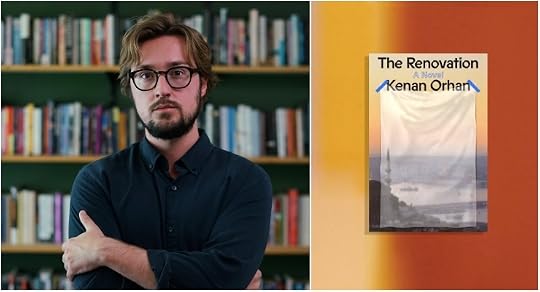
There are prisons made of concrete and steel. Others made of illness, memory, guilt and exile. And then, there are the prisons we carry inside us even without realizing it. “The Renovation” by Kenan Orhan is about all of them.
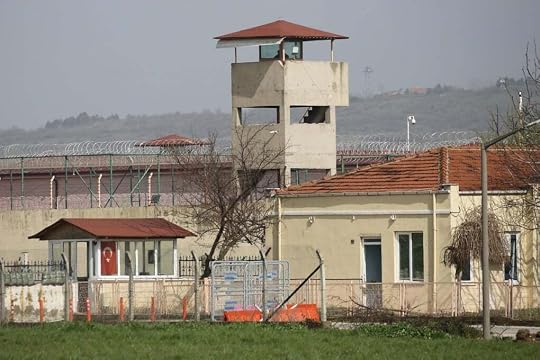
The novel is set in Italy and follows Dilara, a Turkish woman, who lives there after being exiled from her home country with her husband and father that suffers from Alzheimer’s disease. When the work of renovating her bathroom is finished she opens the door and realizes that behind it there is a prison cell from Silivri prison in Instanbul; and this becomes the central paradox of the book, as Dilara has escaped Turkey, but Turkey has somehow found its way into her home. Inside the prison she encounters guards and imprisoned women and the surreal premise becomes psychologically powerful. Because as a political exile attempting to establish a new life, Dilara struggles professionally, in her marriage and with her demented father whose memories are disappearing. So the prison becomes strangely comforting and simultaneously the physical embodiment of exile, political trauma, memory and the impossibility of ever completely leaving home behind. I do not understand how this book did not enter the shortlist for the Booker Prize 2026. The premise is unforgettable. But the real achievement is that Orhan manages to turn the absurd premise into something emotionally meaningful. His writing is magic. Elegant and lyrical, yet clean and controlled masterfully. I loved some parts so much that I kept reading them again and again. Dilara might not be a fully developed character but you can’t help but feeling sad for her and in extension for all those people that fled their countries. The use of dementia in the storyline gives the political story an intimate dimension, as the memory of a human being is lost simultaneously with the memory of a country. The ending is soooooo good leaving you with the thought that we can be imprisoned by the things we love just as easily as by the things we fear, and among the countless novels about immigration, this, is one that will stay in your mind forever (and that’s a promise!).
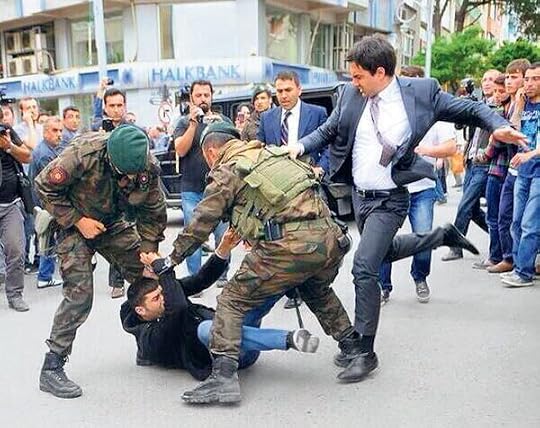
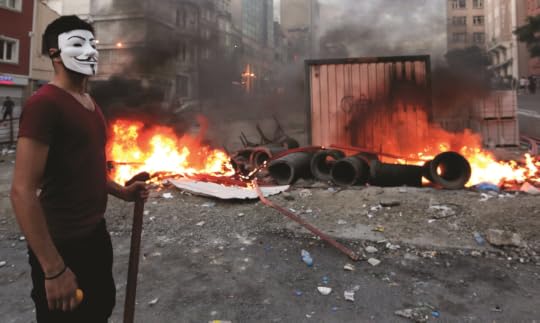
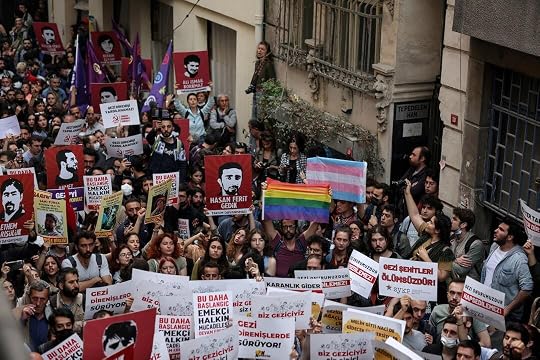
This is a book about home, belonging and exile. Refugees, emigration and homesickness. Separation and the guilt of leaving. Exile as a form of imprisonment. About the feelings of abandonment and being trapped when you are away from home. Our need to find comfort in the familiar. A story about memory and dementia. The fact that memory is not something we simply possess; it is something we constantly reconstruct. Holding on to something that is disappearing. The opposition between body and mind. Alzheimer’s disease and the burden of responsibility for caregivers. How you might feel imprisoned by duty when you care for an ill person. It is also a book about political repression, countries in struggle and the erosion of democracy. Police raids, bombings, crackdowns and curfews, arrests, murders, leftist protests and ultranationalist rallies ending with violence. How political violence continues to shape someone’s identity after decades. About authoritarian regimes and the fear of holding tyrants into account. A story about the power of our mother language and the sense of identity it gives. Racism, misogyny and the exploitation and oppression of women. Activism and the need to revolt. Mostly though, this is a book about the strange psychological condition of leaving a place but never really escaping it. The fact that you can lose your homeland without ever finding another one. The idea that freedom and imprisonment can become two sides of the same experience. About the feeling you do not deserve what you are going through and the need to escape the harsh absurdity of life. The promise of returning home, for which you might sacrifice everything.
Why should you read “The Renovation”?
Because you will understand the burden of distance between you and your home country when you live abroad.
Because you will realize that when you use a different language you become a new person because your identity changes.
Because you will acknowledge how much it hurts to watch someone you love evaporating and have a mind that is dissolving because of Alzheimer’s disease.
Because you will feel the fear of your memories falling away.
Because you will accept that emigration feels like exile.
Because you will reflect on the fact that the strangest thing about exile is that leaving your country does not necessarily mean you leave it behind.
Favorite quotes:
“As we learn a new language, we become different person. As we access different linguistic structures, our personalities shift: to reflect the different concepts available to us through different words, but also because of the new company we keep in a new language, and because of our preconceived notions about the language-all these things we become under it”.
“Language is a fickle, feeble pathway. When it retreats from us, what means remain for revealing ourselves to others? Music without lyrics. Film without dialogue. Paintings without subjects. Am I less of a person, the fewer words I have in my pocket? Or am I simply shallower?”.
“Leaving always looks easier from the outside. How much do we bellyache when the nearest supermarket is closed and the next one is a half hour out of our way? How impossible then to cross a border-illusory or otherwise.
“What is the weight of a memory?”.
“Do you think is hard to be a woman?
No, I do it everyday. What appears to be difficult is for others to approach my existence as a woman with compassion”.
“What a torturous existence to have a bit of imagination”.
“Exile is an abusive relationship, and even when you leave-when you pack up your duffel bag, and take off into the long, long sea hoping to resurface in some shining world without pain, and instead end up in a place with its own harms and passions and joys and tortures (that is everywhere), and you set up a life again, safeguarded this time, put into a special box-your homeland reaches out a cruel hand and injures you again, even here, even in your haven, because what people don’t mention about exile is the hostages it creates. For every exile, there is a family of hostages, a host of lovers, friends, colleagues, rivals, affable greengrocers, lascivious taxi drivers-all left behind in their hostage’s bindings, and the country calls out that it misses you, don’t you miss it back? To prove it, it is time for pain!”.