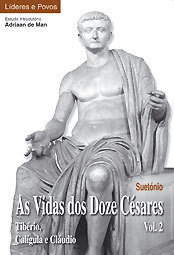
A biografia de três imperadores romanos: Tibério, Calígula e Cláudio. Escritas com grande elegância e detalhe, As Vidas dos Doze Césares têm-se afirmado como obras de inegável valor documental e histórico. Repletas de riquíssimas descrições acerca da vida pública e privada dos Césares, dos seus desejos e ambições, gostos pessoais e, inclusivamente, da sua aparência física, revela-se essencial para um melhor conhecimento de alguns dos homens mais importantes da história da humanidade. Descreve também pormenores da vida no palácio e esquemas de poder vigentes no Estado Romano.
Gaius Suetonius Tranquillus, commonly known as Suetonius (ca. 69/75 - after 130), was a Roman historian belonging to the equestrian order in the early Imperial era. His most important surviving work is a set of biographies of twelve successive Roman rulers, from Julius Caesar until Domitian, entitled De Vita Caesarum. Other works by Suetonius concern the daily life of Rome, politics, oratory, and the lives of famous writers, including poets, historians, and grammarians. A few of these books have partially survived, but many are entirely lost.
I read this book in the original 1903 edition in conjunction with a group on the Latin Study email list, where we are translating all of Suetonius's Lives of the Twelve Caesars. I'm surprised these scurrilous short biographies were ever thought suitable for school reading, though admittedly some of the racier chapters of Tiberius and Nero are omitted from the present edition. (I give it four stars rather than five only because it's not complete.) It's my third reading of Suetonius; it has been fun, though it's hard to believe it can all be true.