Jump to ratings and reviews
Rate this book

The Dig

Rate this book
Deep in rural Wales, a farmer is struggling through lambing season when he becomes aware that his land is being stalked by a badger-baiter who brings with him the stark threat of violence. Built of the interlocking fates of these two solitary men, this is a searing story of isolation and loss, from a writer of uncommon gifts.

156 pages, Paperback

First published January 2, 2014

Loading...
Loading...

About the author

Cynan Jones

21 books381 followers
Cynan Jones was born in 1975 near Aberaeron, Wales where he now lives and works.

He is the author of five short novels, The Long Dry, Everything I Found on the Beach, Bird, Blood, Snow, The Dig, and Cove.

He has been longlisted and shortlisted for numerous international prizes and won a Society of Authors Betty Trask Award (2007), a Jerwood Fiction Uncovered Prize (2014), the Wales Book of the Year Fiction Prize (2015) and the BBC National Short Story Award (2017).

His work has been published in more than twenty countries, and short stories have appeared on BBC Radio 4 and in a number of anthologies and publications including Granta Magazine and The New Yorker. He also wrote the screenplay for an episode of the BAFTA-winning crime drama Hinterland, and Three Tales, a collection of stories for children.

The Independent on Sunday declared "There is no doubt that Jones is one of the most talented writers in Britain” and he is frequently
acknowledged as one of the most exciting voices of his generation.

His most recent work, Stillicide, is a collection of twelve stories commissioned by BBC Radio 4 that aired over the summer 2019.

He is also responsible for 'The Fart'.

Ratings & Reviews

What do you think?
Rate this book

Friends & Following

Create a free account to discover what your friends think of this book!

Community Reviews

5 stars
583 (27%)
4 stars
895 (42%)
3 stars
449 (21%)
2 stars
122 (5%)
1 star
38 (1%)
Displaying 1 - 30 of 354 reviews
Profile Image for Paul.
Author 142 books12.7k followers
July 28, 2018
I was totally entranced by this book. Brutal, haunting, beautiful.

REREAD 1/12-1/13. Even more brutal, haunting, and beautiful on the re-read.
Profile Image for Hugh.
1,313 reviews49 followers
April 25, 2017
A stark, uncompromising and poetic novella which documents the hard lives of two solitary men in Welsh sheep country.

Daniel is a sheep farmer, coping alone with lambing after his wife has been killed in an accident. His story is interwoven with that of "the big man", who operates beyond the law as a badger baiter. Both of these stories are told in simple and unsentimental language that retains a beauty and a poetic precision. The two men's paths eventually collide in a brutal conclusion the precise nature of which is left unsaid.

Jones is clearly a very promising writer, and this book promises to remain in the mind. I knew nothing of his work before picking up this book, but I am very glad I did.
Profile Image for Paula Mota.
1,850 reviews636 followers
March 4, 2022
3,5*
#dewithon2022

O campo não é apenas o sítio bucólico dos folhetos turísticos, bem sei, sendo neta de agricultores e tendo percebido muito nova que animais que eu achava amorosos, como as toupeiras, eram considerados uma ameaça numa horta. Ainda assim, se eu soubesse do nível de crueldade contra os animais que há neste livro, acho que não teria começado por ele para conhecer Cynan Jones, um autor galês que me despertava o interesse há muito tempo.
Daniel é um criador de ovelhas que perdeu a mulher repentinamente e ainda não se habituou sequer à ideia de já não a ter ao seu lado.

Parecia ser um sinal, por a conhecer tão bem, o facto de conseguir tão facilmente imaginá-la velha, da mesma forma que conseguia recordá-la enquanto criança, como se ele fosse capaz de a ver nos dois extremos da vida, como se a conseguisse ver completamente. Mas não a conseguia imaginar morta. Ele fechara a porta do quarto. Sabia que, a certa altura, o cheiro dela se dissiparia e desapareceria.

Nas imediações, gravita o homem grande, exterminador e caçador de animais protegidos por lei, como o texugo, que captura também para lutas ilegais com cães. Foram partes cuja violência posso apenas imaginar, visto que tive de passá-las à frente.
Em “A Cova” o tema do luto e da fragilidade da vida é explorado de forma opressiva e ominosa, com uma tensão latente entre homem/homem e homem/animal que desde a primeira página se sente não só que é impossível acabar bem, como também pode acabar precipitadamente, a qualquer instante.

Sentiu a ombreira da porta sob a sua mão e esfregou a madeira gasta ao mesmo tempo que descalçava os sapatos. Há muito que sentia aquela necessidade de pousar a mão nas coisas – de as sentir, como se fossem pontos de referência. A ombreira da porta, a pedra áspera no canto do alpendre, o velho parapeito de ardósia a caminho dos redis.
Profile Image for Teresa.
1,492 reviews
January 30, 2016
Hoje, tinha decidido não sair de casa. Mas, enquanto tomava o café da manhã, pus-me a cirandar pelos sites das livrarias e caí na Cova. A sinopse aliciante e uma média superior a 4 estrelas no Goodreads fez-me correr para a rua (eu sou esquisita, sim). A livraria não o tinha; massacrei tanto o vendedor para que o procurasse bem que o coitado, para que eu o deixasse em paz, me disse que só indo a Coimbra. Finalmente convencida de que não tinham o livro escondido, corri para outra livraria e, ah! Achei!
Aproveitei para ir à padaria comprar pão; enquanto esperava a minha vez, tirei-o do saco, comecei a lê-lo e...tive de ir buscar uma nova senha.
Terminei-o agora (já não estou na padaria) e só me anima a esperança de que os outros quatro livros que comprei (para atenuar o desgosto de a primeira livraria não ter A Cova) sejam, pelo menos um bocadinho, mais interessantes.

Para quem aguentou ler a história da minha vida de hoje, e quiser saber porque me desiludiu tanto este livro (que provavelmente foi porque não percebi nada), segue uma pequena descrição do que "vi".
Dois vizinhos que vivem no campo:
- Daniel que tenta sobreviver ao desgosto pela morte da mulher, mantendo a sua rotina de criador de ovelhas, principalmente de parteiro.
- O homem grande que se dedica à caça de texugos para serem usados em lutas e que torturam de uma forma abominável. Quero acreditar que este tipo de jogos, a que os homens se dedicam, só existe na imaginação de Cynan Jones.

Um dos motivos que me fez interessar por este livro foi ter lido na contra-capa que "contém ecos de Cormac McCarthy" (por quem sou louca). O único "som" que ouvi foi, no princípio de um capítulo: ", e os produtos de limpeza, e a graxa, e a pá do lixo, e a escova, e a caixa de nozes, e as dobradiças,...". Cormac faz música quando utiliza, repetidamente, vírgula com e mas não é a tirar as compras do saco...

Talvez o livro até seja bom e eu não tenha gostado, apenas, pela agressividade para com os animais, a única coisa que me custa tolerar na literatura.
Profile Image for Doug H.
286 reviews
March 16, 2014
A modern classic. Pared to the essentials. Dark and poetic. If I were teaching a course in literature, I would include this novel in my syllabus. It's all here: symbolism, foreshadowing, mythological archetypes, allegory. It's a brutal and depressing tale (more so than anything I've read in recent memory), but it is deepened and lifted beyond mere horror by the author's firm control and underlying sensitivity and the karmic retribution in the epilogue delivers the final stroke. Genius.
Profile Image for Pedro.
998 reviews368 followers
August 21, 2021
Después de un primer capítulo que es un golpe a la mandíbula, Daniel continúa, a pesar de su pena, con sus tareas de la granja, lleno de presagios. En forma paralela se desarrolla la vida del hombre corpulento, que se dedica a sacar tejones de sus cuevas, con alguna escena bastante brutal.

El tejón (badger) existe en la mayor parte de Gran Bretaña, y está considerada una especie protegida; en Gales se otorgan licencias para su captura y eventual sacrificio en caso de enfermedad transmisible (tuberculosis) o cuando su proliferación descontrolada comienza a amenazar los cultivos y cría de animales pequeños de las granjas.

La novela se desarrolla en el estilo austero que ya le he conocido al autor, en su novela Tiempo sin lluvia. Pero en este caso, me ha parecido que no logra el mismo nivel dramático, y que las historias parecen un poco disociadas.

El final nos permite hacer algunas conjeturas sobre lo ocurrido en la última parte de la historia, y que no son mencionadas.

Un buen libro, y un autor galés que merece ser tomado en cuenta.
Profile Image for Alan.
Author 16 books197 followers
May 7, 2014
wonderful. A Welsh Cormac McCarthy.

Jones has a firm but poetic grip on his narrative, which follows the (mis)fortunes of a grieving farmer and a badger-baiter in an isolated part of Wales. Life and death are unsentimentally portrayed, grass, sheep, dogs, rats, humans all treated the same really; although it is impossible not to empathise with Daniel, the farmer as he struggles to keep up with his chores and thinks of his wife. Even the brutal badger baiter evinces sympathy (from me anyway) in the way he stands outside society, tough on the outside but inwardly panicky as the police move in. The writing is pared down, but occasionally lush (hence the Cormac McCarthy comparison: particularly 'The Road' because the world is sometimes filtered through the perception of a boy). Here’s a sample, from when they've been digging into a badger's sett:

They sent the bitch in and Jip came up. He looked like he was grinning. His mouth was open and flecked with spit. The dog was exhausted and thirsty but gleamed with the event somehow and when they took off the box and collar, steam came into the morning air off his body. The boy was confused that they ignored the thick obvious blood that came out of the Patterdale and spread down its throat.

The boy kept looking at the exhausted bleeding stubborn dog. The fresh blood seemed a synthetic colour against the dun-green slope.


That'll probably convince you one way or the other.

Profile Image for Alice-Elizabeth (Prolific Reader Alice).
1,163 reviews168 followers
March 2, 2020
I'm definitely in the minority here by saying that The Dig fell a little underwhelming, but also quite violent too. Told from multiple POVs, we have a farmer mourning the loss of his wife and another man who is involved in the act of badger-baiting. Towards the end of the book, both of them come together in shocking circumstances. It's a real dog eat dog kind of situation. Yet even though the story layout was clear and easy to read, I really struggled to determine what was going on with the characters and the surroundings they were in. The content doesn't hold back on animal cruelty, so this triggered me a little. I wanted to read some more Welsh literature. This one sadly wasn't for me!
Profile Image for Laura.
887 reviews336 followers
April 12, 2020
Not my favorite by the author but a very worthy read. More plot driven then the other two I have read. A little more violent than the past reads of his. I will say his descriptions of lambing are spot on. Don’t even begin to think cute and cuddly. I had a learning curve on one aspect of the plot and I’m not sure I completely understood. Started with Cove, next The Long Dry and finished with The Dig. To me this was the perfect sequence. The Long Dry my favorite.
Profile Image for Alexander.
163 reviews37 followers
February 25, 2021
2-3 Sterne.
Arg plump geratene Erzählung vom Kampf Gut gegen Böse.
Profile Image for Justin Griffiths-Bell.
39 reviews4 followers
December 6, 2013
This is a powerful book by a class writer with a pitch-perfect ear for the sound of the language.

Revolving around twin narratives, it is a study of loss and isolation, focusing on two characters, each a counterpoint to the other; one, a farmer, a brooding thinker, lost and cut adrift, becoming dimly aware of the world shutting off before him; the other, a rat-catcher and badger baiter, a perennial stranger, brooding still more darkly, disconnected. Each suffers apart in a way that’s entirely different to the other. Daniel, the farmer, is a creator, nurturing life, caring, a husband, a man,in tune to the rhythms that the natural world impresses upon man, and the rhythms of his marriage, in a system that worked in its particular unique beauty. The big man, he has no name except this, lives alone and stands outside, antipathetic to the society and people, haunted and uncertain, and in all, but stature, wholly misnamed.

This novel is brutal and at the same time warm, breathless but with a quality of stillness. It is far, far bigger than its 156 pages.
Profile Image for Moira Macfarlane.
948 reviews112 followers
July 17, 2018
It's a tender and brutal story, harsh. Cynan Jones writes the most intense short novels and has a naturalistic writing style, never romanticising life, but there is passion in the way he describes the landscape with it's colours, textures and scents. I slow my pace, feel spellbound, his writing resonates. 
I've read Cove too and am pretty sure I want to read his other books as well.

"The scent of her was in the room and it almost choked him to understand how vital to him this was; how he could never understand her need for his own smell, could not even understand how she could find it on him under the animal smells, the carbolic, the tractor oil and bales and all the things he could pick out on his own hands. He had this idea of smells layering themselves over him, like paint on a stone wall, and again he has this sense of extraordinary resilient tiredness. He wondered what isolated, essential smell she found on him, knew the mammalian power of this from the way pups would stumble blindly to their mother’s teat, the way a ewe would butt a lamb that wasn’t hers. In tbhe shock of birthing, all that first recognition would be in that smell. They would take the skin sometimes of a dead lamb and tie it on an orphan like a coat in the hope that the mother who had lost her lamb would accept and raise it as her own."
Profile Image for Kirk Smith.
234 reviews94 followers
December 4, 2016
This is such a strange story and with such startling contrasts. Love loss and tenderness, Pursuit abuse and savagery. Fragile births and horrible endings. A true pastoral (shepherding is a third of the story) delivered in sparse elegiac prose. So beautifully abbreviated it becomes more by its simplicity and surely harbors deeper meanings. What does it say when the instinctual savagery at our core must be abandoned in order to evolve? Will we be more or will we be less prepared for our future? It might as easily have been titled "The Pit" where we fall with our back to the corner when we make our final stand. Brutal and impossible to describe.
Profile Image for Rebecca.
4,250 reviews3,571 followers
November 24, 2019
Daniel is a recently widowed farmer in rural Wales. On his own for the challenges of lambing, he hates who he’s become. “She would not have liked this anger in me. I was not an angry man.” In the meantime, a badger-baiter worries the police are getting wise to his nocturnal misdemeanors and looks for a new, remote locale to dig for badgers. I kept waiting for these two story lines to meet explosively, but instead they just fizzle out. I should have been prepared for the animal cruelty I’d encounter here, but it still bothered me. Even the descriptions of lambing, and of Daniel’s wife’s death, are brutal. Jones’s writing reminded me of Andrew Michael Hurley’s; while I did appreciate the observation that violence begets more violence in groups of men (“It was the gangness of it”), this was a tough read for me.
Profile Image for Lori.
1,921 reviews55.6k followers
March 30, 2020
Gosh, I do love me some Cynan. He never wastes a word. Simultaneously masculine and tender, the strong, dark imagery absolutely gutted me. It's a violent, unforgiving novel that is not for the weak of stomach. If you can push through the animal brutality, you'll be rewarded with a book about survival and territory and making your last stand.
Profile Image for João Carlos.
677 reviews327 followers
January 6, 2016

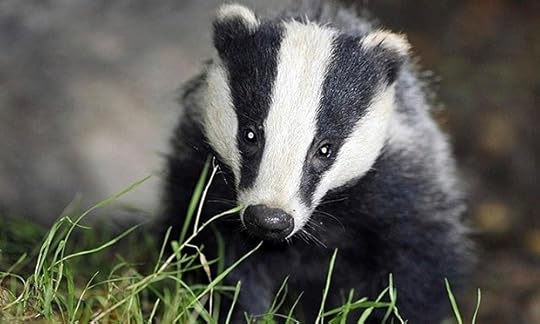
Texugo (Fotografia de Ben Birchall)

Cynan Jones (n. 1975) desenvolve a narrativa de ”A Cova” (2014) na paisagem rural do País de Gales, cenários com uma beleza natural deslumbrante, num clima agreste, dominado pela intensidade das chuvas e pelos nevoeiros sombrios.
Duas histórias que se desenrolam em paralelo: a de Daniel, um agricultor, abalado pela tragédia, que explora uma quinta agrícola, onde se dedica, essencialmente, há produção de ovelhas; e a do “homem grande”, sem nome, uma personagem enigmática, um indivíduo grosseiro e ignorante, que se dedica à caça ilegal e furtiva de texugos, uma espécie animal protegida pela lei, e que comercializa ilegalmente, para combates clandestinos.
A escrita de Cynan Jones é extraordinariamente poderosa, numa narrativa intensa, cruelmente descritiva, simultaneamente, visceral e concisa, num tom intimista e constante, onde acaba por não existir nenhuma diferença entre as violentas sequências em que intervêm as personagens principais e as que se associam especificamente aos animais, essencialmente, ovelhas, cães e texugos. Há um factor que é diferenciador na prosa de Cynan Jones, a repetição, que é acentuada pelo clima impiedoso e pelas contrariedades na produção agro-pecuária, nomeadamente, na criação de ovinos e que imprimem ao romance ”A Cova” um tom de desconforto e tristeza.
Associo ”A Cova” a dois excelentes romances – que li nos últimos dois ou três anos: o Daniel fez-me lembrar o Bjartur, o pobre agricultor islandês, igualmente, criador de ovelhas do excepcional romance de Halldór Laxness, Gente Independente ; e o “homem grande”, sem nome, um caçador clandestino, que relaciono ao Juiz Holden, personagem onipresente e onipotente de Meridiano de Sangue ou O Crepúsculo Vermelho no Oeste de Cormac McCarthy.
”A Cova” é um romance curto, demasiado curto, com 142 páginas e com um Epílogo – apenas duas páginas – demasiado abrupto; uma falha menor – a única – que lhe retira as 5*.
”A Cova” é livro não recomendável para os leitores que não suportam a luta ou a crueldade com animais, que detestam o trabalho ou o dia-a-dia de uma quinta agrícola, onde se criam ovelhas, e que se enojam com a descrição e as cores dos fluídos e dos mucos provenientes do nascimento de ovelhas.


Cynan Jones (n. 1975)
Profile Image for Robert Williams.
189 reviews
November 1, 2016
Wow, very bleak but strangely poetic. Horrible scenes of badger baiting juxtaposed with the grief and loneliness of a welsh sheep farmer. A compelling story by a Welsh writer and I will look out for his others.
Profile Image for Steffi.
1,159 reviews288 followers
March 18, 2018
Eine ländliche Gegend in Wales. Zwei Männer, die in ihrer Einsamkeit und Rauheit Teil der kargen Landschaft zu sein scheinen, dabei aber nicht unterschiedlicher sein könnten.

Da ist der Schafzüchter und Witwer Daniel, den wir bei der harten, ermüdenden Arbeit auf der Farm erleben, ein Mann der notwendigerweise ohne übertriebene Sentimentalität für seine Schafe sorgt. Dabei ist er auf wunderbare Weise dem Leben zugewandt, was sich nicht nur an seinem Bemühen um die schwächsten Lämmer zeigt.

Auf der anderen Seite ist da ein namenlos bleibender Hundezüchter mit krimineller Energie, meist nur als „großer Mann“ bezeichnet. Er steht für Destruktion und Verachtung des Lebens. Er organisiert illegale Dachskämpfe und ich hätte nie gedacht, dass ich solches Mitleid mit einem Dachs haben könnte. Aber auch die anderen Männer, die an diesen Kämpfen beteiligt sind, bleiben mir fremd. Wie sie ihre eigenen Hunde, die sie aufgezogen und abgerichtet haben, in solchen Kämpfen zerfleischen lassen, kann beim Leser nur Ekel hervorrufen.

Irgendwie bewegen sich diese beiden Männer aufeinander zu und – Klappentext sei Dank – wissen wir schon, dass es zu einer Auseinandersetzung kommen wird. Die Art der Charaktere und die Knappheit des Erzählstils (der Roman besteht ausschließlich aus sehr kurzen Absätzen, oft nur einen Satz lang) haben bei mir bewirkt, dass ich mich oft nicht in Wales, sondern in einem amerikanischen Western oder auf einer amerikanischen Farm wähnte.

Doch für mich ist das garnicht in erster Linie die Geschichte einer Auseinandersetzung. Das ist einer der traurigsten, berührendsten Liebesromane, die ich je gelesen habe. Daniel ist nach dem Tod seiner Frau in einem so tiefen Kummer gefangen, dass er daran zu zerbrechen droht. Immer wieder während der harten Farmarbeit überwältigen ihn Emotionen und Erinnerungen. Diese Liebe wird unglaublich zärtlich skizziert, aber nie aufdringlich oder kitschig. Gerade weil die Sprache so karg und knapp, hat mich diese Geschichte eines ungeheuren Verlustes ungemein getroffen.
457 reviews1 follower
June 4, 2014
I should say up front that this is not a book I would have ever chosen to read - I had to do so for my book group - and as in the book group, so it is here, in that I am very much in the minority in my reaction to it.

I did think it was a very effective and moving portrait of loss and isolation, and that is a genuine achievement. However, the violence and animal cruelty described in the scenes with the Big Man were so unpleasant and, to my mind at least, so completely unnecessary that they totally coloured my feelings towards the rest of the book. My heart sank and my stomach churned every time the story returned to him. There were other graphic scenes in the book, for example, where he describes the farmer's efforts to help a ewe struggling in labour, which I had no problem with, in fact found very effective, but the depictions of animal cruelty were just too much for me.

Some of the descriptions of the landscape were great, others I found clunky and ineffective, and despite having grown up on farms in the same area, for me there was nothing that particularly anchored his descriptions to that part of Wales (which may or may not have been deliberate on the part of the author, or a mis-reading on my part).
Profile Image for Deea.
380 reviews103 followers
February 15, 2021
4.5*

I have to admit that I had not heard about this author until hearing him speak in a literary podcast. The way he was phrasing his words intrigued me and I decided to give his book(s) a go. And I am so glad I did!

His writing is the most intense and visual writing I have ever stumbled upon. There are two interrelated stories in this book and I really did not care for one of them (reading detailed descriptions of how badgers are killed in the Welsh countryside cannot really be my thing), but the other story from the book is about grief and oh God, can Cynan Jones express the subtilities of grief! In a few poetic, very intense sentences he gets you transported there, in the realm of someone else’s grief and I have to say that his words work like a spell! The way he uses and combines them in order to get this very intense result is simply astonishing. I’ll be sure to try his other books (novellas) as well.
Profile Image for Marc.
1,074 reviews150 followers
July 2, 2017
Poetically brutal. This is such a masculine landscape where the lines between animal and people blur, where pain and grief simply get ground into the pulp that is daily survival. One man attempts to nurture animal life while dealing with human death. The other seems to foster animal death, which seems like such a savage way of life. Rich. Visceral. At times, throat-closing. Jones weaves a fascinatingly touching story while simultaneously repelling the reader with scenes of such stark violence. Disturbingly lyrical.
----------------------------------------------
WORDS I LEARNED WHILE READING THIS BOOK:
aubergine | sett | ogham
Profile Image for G.
Author 37 books220 followers
December 27, 2021
La crueldad sustancial del mundo. Su omnipotencia constitutiva. Cualquier voluntad que se contraponga es de la misma naturaleza. Es el gran descubrimiento de la dialéctica. Todos los personajes son variaciones en rojo de la misma intuición, tanto los tejones como sus torturadores. Es como si Kafka hubiera logrado superar su indefensión estructural para colapsar en victimario, pero sin temblar. Quizás haya algo universal en ese gradiente depresivo de crueldad que tiene a Kafkas de un lado y a Jones del otro. Magnífica sobriedad narrativa. Muy buena la edición de Chai.
Profile Image for Kansas.
892 reviews563 followers
November 14, 2026
https://kansasbooks.blogspot.com/2026...

"Esto lo es todo. Esto es todo lo que necesito."

Este momento, que suena casi como una epifanía en el discurrir del protagonista, Daniel, consigue comprimir perfectamente el universo literario de Cynan Jones: con una escritura muy parca, hermética, pero con una habilidad especial para quedarse en lo mínimo y hacer que unas pocas palabras contengan mucho más de lo que dicen. Es el recuerdo de un instante de plenitud, de un momento en el que la vida parecía no necesitar nada más. En un momento dado, estaban su mujer, la tierra, la luz, los animales, el mundo. Todo estaba ahí y todo parecía suficiente. Solo después de haber perdido un momento fugaz, podremos reconocer la dimensión de aquella felicidad. Lo que entonces era simplemente la vida, la rutina del día a día, algo que no necesitaba explicación ni conciencia de sí mismo, se convierte ahora en la imagen de un mundo irrecuperable.

La frase encierra también una contradicción que atraviesa toda la novela: podemos sentirnos completamente integrados en la vida, formar parte del paisaje y de un orden que nos contiene, pero eso no significa que podamos protegernos de lo que está por venir. La plenitud no nos hace menos vulnerables. Al contrario, quizá sea precisamente nuestra profunda vinculación con aquello que amamos lo que nos expone a la dimensión irreparable de la pérdida.

Esta era la única novela de Cynan Jones publicada en español que todavía me quedaba por leer. Y ahora, después de terminarla, tengo la impresión de que quizá sea la que mejor representa, más que ninguna otra, su universo literario. En La tejonera están presentes algunos de los rasgos que atraviesan su obra: el hermetismo porque Jones nunca explica demasiado. Su escritura obliga al lector a permanecer dentro de un mundo que no siempre ofrece claves para interpretar lo que sucede, la conciencia permanente de la mortalidad, la profunda inserción de los seres vivos en los ciclos de la naturaleza y, sobre todo, la imposibilidad de controlar sus fuerzas cuando estas se ponen en marcha porque el ser humano puede construir refugios, organizar su vida e intentar proteger aquello que ama, pero hay fuerzas que escapan por completo a su voluntad.

Hay también una representación de la violencia que me ha impresionado especialmente, más que en otras novelas suyas, quizás porque esta sea su novela más descarnada y seca. No me gusta demasiado establecer comparaciones entre escritores, pero hay algo en la manera en que Jones la describe, en su crudeza y en su integración en el curso mismo de la vida, que solo he encontrado con una intensidad semejante en Cormac McCarthy. No es una violencia espectacular ni busca provocar un efecto dramático: es física, seca, vital. Está ahí, forma parte del mundo y de la existencia de los animales y de los hombres. No necesita justificación ni explicación.

La tejonera, de Cynan Jones, es una novela breve que entrelaza dos historias aparentemente distintas: la de un hombre que caza tejones ilegalmente y la de Daniel, un ganadero que vive marcado por la reciente muerte de su mujer. La novela transcurre en el campo galés y presenta un mundo rural duro, donde la vida y la muerte están constantemente presentes. Por un lado, conocemos a un hombre corpulento que se dedica a cazar tejones utilizando perros. Su actividad es violenta y clandestina. Los animales son perseguidos, sacados de sus madrigueras y sometidos a una crueldad que revela una relación de dominio sobre la naturaleza. Por otro lado, seguimos a Daniel, que vive profundamente afectado por la muerte accidental de su mujer, que fue pateada por un caballo en su granja. Daniel intenta continuar con su vida y con su trabajo, cuidando de sus animales y ocupándose de la tierra. Sin embargo, su existencia está atravesada por la ausencia de su esposa, todos los espacios de la granja le recuerdan a ella. Su relación con la naturaleza es muy intensa: encuentra en los animales y en el paisaje una forma de conexión con el mundo que ha perdido. Las dos historias terminan convergiendo. La actividad del cazador de tejones y la vida de Daniel se aproximan hasta crear un clima de amenaza y violencia. La novela contrapone así dos maneras de relacionarse con los animales y con el territorio: la explotación y la destrucción frente al cuidado y la protección. 


“Los lugares tienen memoria, pensó. Los lugares deben tener memoria.”


La historia de Daniel está atravesada por la muerte de su mujer. Su ausencia no es solo una pérdida afectiva, sino la ruptura de un mundo que hasta entonces había sido su refugio. A partir de esa pérdida, el paisaje adquiere otra dimensión: los lugares dejan de ser espacios neutros y quedan impregnados de su recuerdo. Cada rincón parece devolverle algo de ella, hasta el punto de que el lugar donde fue pateada por el caballo se convierte en un espacio casi prohibido, un territorio al que le resulta difícil acercarse. El concepto de que los lugares tienen memoria expresa una de las intuiciones más hermosas de la novela: la posibilidad de que la tierra conserve las huellas de quienes han vivido en ella, de que los espacios guarden algo de lo sucedido y sigan conteniendo la presencia de quienes ya no están.

Esta idea de la memoria del paisaje adquiere una dimensión todavía más profunda con el fragmento de metal del que Daniel es testigo desde que es pequeño y que es desenterrado. No lo contempla como un simple trozo de chatarra o un resto de alguna instalación olvidada, sino como una marca del lugar, algo que pertenece al paisaje y que guarda una historia anterior a él. Si los lugares conservan para Daniel la memoria de su mujer, ese fragmento parece contener una memoria mucho más antigua: la de la propia tierra, una huella material de un tiempo cuyo significado quizá se haya perdido, pero cuya presencia permanece. Las inscripciones que aparecen en el metal, semejantes a un alfabeto antiguo, refuerzan esa impresión de estar ante algo que excede la experiencia individual de Daniel. La memoria ya no es únicamente la de quienes han vivido en un lugar, sino también la de todo aquello que ha pasado por él a lo largo del tiempo. La tierra conserva rastros de otras vidas y otras historias, incluso cuando ya no somos capaces de descifrarlas. 

Lo que en un principio parecía un simple fragmento de metal enterrado en una zanja, se acaba convirtiendo en una especie de leitmotif  y acaba adquiriendo  su importancia más profunda. En medio de la pérdida y de la conciencia de su propia mortalidad, Daniel encuentra en él una especie de tabla de salvación: la prueba de que hay algo que permanece más allá de nuestra existencia, algo que nos precede y nos sobrevivirá. No es un consuelo que pueda devolverle lo perdido, pero sí una forma de intuir que la vida individual no agota la existencia, que somos apenas una parte de una continuidad mucho más extensa. La tierra estaba ahí antes de nosotros y seguirá guardando sus marcas cuando ya no estemos. No se trata de descifrar el pasado ni de recuperar aquello que se ha perdido, sino de aceptar que existen cosas que nos preceden y nos sobrevivirán, realidades cuyo sentido no depende de que podamos comprenderlas o dominarlas.

En este sentido, resulta especialmente significativa la imagen de la madriguera del tejón que a priori parece construida como refugio por los tejones, un espacio seguro y aislado del mundo, pero en cualquier momento puede ocurrir algo y ser destruido. La madriguera se convierte así en una poderosa alegoría de la fragilidad de esos refugios. Daniel ha perdido el suyo. La muerte de su mujer ha deshecho el espacio en el que se sostenía su vida, y la novela no parece interesada en ofrecerle una reconstrucción ni una salida tranquilizadora sino que lo que le interesa a Jones es narrarnos ese ciclo de la vida que va más allá de nosotros mismos.

La muerte, de hecho, no aparece en la novela como una anomalía que interrumpe el orden natural. Está presente en los partos, en la vida de los animales, en los tejones y en las personas. Forma parte de una continuidad que no se detiene ante el dolor individual. La vida sigue, aunque para quien ha perdido a alguien el mundo parezca haberse detenido. Quizá esa sea la forma de reconciliación que propone Jones, si es que podemos llamarla así: no la recuperación de una armonía perdida, sino el reconocimiento de que somos parte de algo mucho más antiguo y vasto que nosotros mismos, y creo que para ello, Jones confronta dos símbolos brutales: el cordero frente a ese fragmento de metal. La tejonera habla de la fragilidad de nuestros refugios, de la memoria que permanece en los lugares y de la dificultad de aceptar que la vida continúa sin ofrecernos explicaciones. Una novela que me ha resultado absolutamente impactante en su manera de acercarse al dolor de la ausencia, hasta convertirlo en algo casi físico, palpable. Jones tiene una muy particular habilidad en su forma de narrar, en su manera de nombrar el mundo y sus heridas, hasta el punto de que casi parece inventar un idioma propio: un lenguaje áspero, esencial y profundamente sensorial, capaz de expresar con muy poco aquello que resulta casi imposible de poner en palabras. Brillante con aureola de clásico.

“Lo invadió un sentimiento de decepción, de traición, por el hecho de que el fragmento tuviera que extraerse de la tierra. De niño lo había mitificado: una porción de rayo solidificada, una enorme espada que a lo largo de los años él mismo había pugnado por mover. Pensaba que era una pieza de camión o una herramienta abandonada hacía mucho tiempo, y él la veía como una marca. Como ese lunar en la cadera del que ella se avergonzaba.”

 🎶The second skin - Anne Bloom  🎶


Profile Image for Sarah.
1,255 reviews34 followers
June 21, 2018
Cynan Jones can do no wrong. Seriously, no-one can write like him - and nobody can write about Wales and the countryside (and the people who live there) like he can.

The Dig focuses on two different men - a farmer and a badger-baiter. The farmer realises the badger-baiter is on his land, and things go from there. The novel is pretty short so that to reveal much else would get into spoiler territory.

Don't misunderstand when I say that Jones writes about the countryside - this isn't cosy nature writing like most non-fiction or novels out there. This is the grim, dark side -- the underbelly, where people are lonely, isolated, and lead tough lives, animals die in unpleasant ways and gruesome things happen. Let's just say I now know way more about badger-baiting than I ever wanted or needed to know. (If you don't like violence against animals in your novels I'd suggest giving this one a miss; it gets incredibly graphic at times.)

Although Jones' writing is sparse it is so alive and unique. I'm just sad that I only have one book of his left unread.
Profile Image for Mark Bailey.
248 reviews45 followers
August 14, 2021
'There was the clatter of the chainsaw and the metallic yelps of the dogs. That made a main terrible noise. It was a brief, flurried clatter of killing'.

A phenonemal novel centered around the intertwining fates of a widowed farmer and callous Badger baiter.

Brutal and intense, set in bleak, unembellished rural farmland in isolated Wales, Jones writes with extreme beauty, in which every sentence is prudently constructed with deft precision. 

An absolutely stunning novel and one of my favourite reads of this year.
Profile Image for Kathleen.
Author 1 book292 followers
July 2, 2017
“He believed by this point that the badger deserved it.”

This is a gut-punch of a read, but massively inspiring to the writer in me. Cynan Jones’ prose is stunning—filled with passages of uncomfortable but simple and meticulous truth. The story is rich and thought-provoking, and explores our relationships with our past, our surroundings, our loved-ones, and the animals we share this life with. Disturbing, but so worth it.
Profile Image for Victoria (Eve's Alexandria).
861 reviews455 followers
January 3, 2014
A brutal, visceral and excruciating read, but deeply beautiful and moving. Daniel is a Welsh sheep farmer who has lost his wife; another nameless man is digging for badgers in his woods, baiting them with dogs for the entertainment of other cruel men. Their worlds converge, symbolically and actually, with violence and grief. Highly recommended, and easy to read in a single sitting.
Profile Image for Kris McCracken.
2,004 reviews70 followers
January 18, 2016
A brilliant, if immensely troubling, short novel that explores the interior lives of two very different men. One, a grieving farmer struggling for the survival of his farm in lambing season, and the other an unnamed badger baiter, who exists seemingly to torture animals for the entertainment of others.

The two lonely men live close to each other in remote Wales, and it is clear from the bleak and foreboding beginning of the book that their lives are set on a collision course that cannot possibly end well.

Equal parts tender and brutal, this really is a fine work. The odd stylistic feature of very little punctuation and no quotation marks at all give it a dreamlike quality, and really does work in transmitting the nature of the two taciturn men, both of whom are struggling with tumultuous inner lives.

Exploring the struggle of farming, the casual brutality of nature and men, and the broken shreds of community, this is not a book for the fainthearted. The stark and very raw depictions of intense grief and of the violence used against the animals are equally breathtaking and appalling. This really is a gut punch of a read (in the best possible way).

I could not recommend it more highly.
Profile Image for Becky.
1,382 reviews56 followers
January 14, 2014
With the badger culls still in the news this feels topical, however it isn't that which makes this such a dramatic and moving book. This is rural Wales with all the romance sucked out of it, leaving only the dirt, blood and harsh reality. The story maybe short but that doesn't prevent it having an impact as the reader is drawn into the lives of Daniel, the grieving sheep farmer, and Ag the badger baiter. I defy anyone with an ounce of empathy to read this book without being moved by the depiction of raw grief given here, or by the visceral dark images of the fate of the creatures Ag digs out of their setts. It is inevitable that the two men's lives will collide. The ending is left uncertain but we can assume that we know what has happened. It is often difficult to convince people that short novella style books are worth buying, but this one manages to create a whole convincing world with a few well placed lines and is worth every penny.
Displaying 1 - 30 of 354 reviews