

What do you think?

Salto mortal
«Una obra maestra de la narrativa existencial.» Jonathan Coe
¿Cómo sería suplantar a un desconocido, infiltrarte en su matrimonio, su casa y sus costumbres? F. Scott Fitzgerald dijo que no hay segundos actos en las vidas americanas, pero Salto mortal es precisamente eso, la historia de un impostor que accede a todo aquello que el destino le tenía vedado: amor, lujo, prestigio y éxito profesional.
Bajo una trama absorbente que avanza con el ímpetu de las mejores historias de aventuras, Salto mortal se revela como una ambiciosa novela filosófica sobre las trampas del yo, el misterio de la identidad y la búsqueda de la trascendencia en un mundo caótico y hostil.
¿Cómo sería suplantar a un desconocido, infiltrarte en su matrimonio, su casa y sus costumbres? F. Scott Fitzgerald dijo que no hay segundos actos en las vidas americanas, pero Salto mortal es precisamente eso, la historia de un impostor que accede a todo aquello que el destino le tenía vedado: amor, lujo, prestigio y éxito profesional.
Bajo una trama absorbente que avanza con el ímpetu de las mejores historias de aventuras, Salto mortal se revela como una ambiciosa novela filosófica sobre las trampas del yo, el misterio de la identidad y la búsqueda de la trascendencia en un mundo caótico y hostil.
348 pages, Paperback
First published January 1, 1964
About the author
MacDonald Harris
31 books25 followersPseudonym of Donald Heiney
Donald Heiney was born in South Pasadena in 1921. Seastruck from the time he read Stevenson at the age of twelve, he went to sea in earnest as a merchant marine cadet in 1942, sat for his Third Mate's license in 1943, and spent the rest of the war as a naval officer on a fleet oiler. After the war he earned a B.A. at Redlands and a doctorate in comparative literature at the University of Southern California. In 1964 he lived with his wife and son in Salt Lake City where he taught writing and comparative literature.
Taking the pseudonym MacDonald Harris for his fiction, his first story appeared in Esquire in 1947. Since then he has published stories in The Atlantic Monthly, Harpers Bazaar, Cosmopolitan, and The Saturday Evening Post, as well as a number of literary quarterlies. His story "Second Circle" was reprinted in the 1959 O. Henry Collection. Private Demons, his first novel, was published in 1961. Mortal Leap, his second, was finished in the summer of 1963 in Rome.
His novel The Balloonist was nominated for the National Book Award in 1977. He received a 1982 Award in Literature from the American Academy of Arts and Sciences for his entire body of work.
Heiney died in 1993, at age 71, at his home in Newport Beach, California.
Donald Heiney was born in South Pasadena in 1921. Seastruck from the time he read Stevenson at the age of twelve, he went to sea in earnest as a merchant marine cadet in 1942, sat for his Third Mate's license in 1943, and spent the rest of the war as a naval officer on a fleet oiler. After the war he earned a B.A. at Redlands and a doctorate in comparative literature at the University of Southern California. In 1964 he lived with his wife and son in Salt Lake City where he taught writing and comparative literature.
Taking the pseudonym MacDonald Harris for his fiction, his first story appeared in Esquire in 1947. Since then he has published stories in The Atlantic Monthly, Harpers Bazaar, Cosmopolitan, and The Saturday Evening Post, as well as a number of literary quarterlies. His story "Second Circle" was reprinted in the 1959 O. Henry Collection. Private Demons, his first novel, was published in 1961. Mortal Leap, his second, was finished in the summer of 1963 in Rome.
His novel The Balloonist was nominated for the National Book Award in 1977. He received a 1982 Award in Literature from the American Academy of Arts and Sciences for his entire body of work.
Heiney died in 1993, at age 71, at his home in Newport Beach, California.
Ratings & Reviews
Friends & Following
Create a free account to discover what your friends think of this book!
Community Reviews
Displaying 1 - 30 of 51 reviews

July 17, 2012
”You! You!” I shouted. “Pay attention, God damn it, now listen to me!”
Probably I was still drunk from the whiskey. I threw a crowbar, a heavy one; it soared end-over-end and vanished softly and invisibly like a bird.
“Listen! this is serious!” I yelled.
It wasn’t that there was nothing there. It was the silence was there, a physical presence, and wouldn’t answer. I wouldn’t have minded if there had been no God, then the universe would be empty and all things would be possible. But that HE should exist--that HE should hover up there looking at me like the fog and be indifferent--was intolerable.

I know that several of my friends have reviewed this book glowingly on GR and maybe some of them feel like they have a special relationship with this book, but the truth of the matter is that MacDonald Harris/ Donald Heiney wrote this book for me. He was a man who planned ahead writing this book three years before I was born and then waiting patiently for me to find it. Unfortunately I must have zigged when he zagged and even though he passed away in 1993 I’m sure he still held the faith that I would eventually read this book.
Larry Backus aka Ben Davenant grew up in a strict Mormon household and all was going well until he was seduced by those evil, insidious, seductive compiled tree slices commonly referred to as books. Reading late one night his father popped into his room to see what he was doing. He hid the Joseph Conrad and yanked out a copy of Nifty Pics that he had bought under the counter from a local businessman who had heeded the call for supply and demand (capitalism at it’s best). The interesting part was that in Larry’s mind it was a bigger problem getting caught reading Conrad than it was to be found with what his father considered to be pornography.
It made perfect sense to me.
Larry realizing that his home life was going to become more and more a problem so he runs away and joins the Merchant Marines.
He drinks.
He spends time with whores.
He drinks.
He reads.
He drinks.
He meets a Russian named Victor.
Now Victor’s idea of friendship is basically that “friendship” allows him better access to take advantage of his friends. We all have friends and we try to help them the best we can by softening the blows that we all experience, and being there for our friends when they find themselves in jeopardy. Victor believes that the best service he can perform for Larry is to make sure that calamites not only find Larry, but that they hit hard enough to give him a lesson he won’t forget. The parts of the book that Larry spends with Victor are fascinating and certainly were among the most interesting for me.
Most of the women that Larry has access to are whores and he classifies women into two categories receptacles or machines. He isn’t picky about the whores he sleeps with. In fact most of his descriptions of the women are not attractive in the least.
”I sat around for an hour or so drinking whiskey, and then I got bored and decided to go upstairs with a girl named Abby, who was short-legged and strong as a bull and looked ready for anything. Everything about her was hard, mechanical, and business-like; it was like going to bed with a tractor.”
His relationship with women is fairly uncomplicated until later in the book when he meets up with Ary.
Larry reads constantly. As a note to all those aspiring writers out there if the book didn’t grab him in the first ten pages he threw it overboard. So if you don’t want your work of brilliance floating in the Pacific Ocean you better make those first ten pages count.

Didn't make the cut.
His ship is making an ordinance run during World War II when it is blown up. In the melee that happens he is burned and battered and ends up in a Navy hospital. He doesn’t tell them who he is and they diagnose him with amnesia.
Most people believed in a body and also in a soul, or whatever you wanted to call it, an ego. But it was more complicated than they thought. They thought of the ego as a kind of a foggy pear-shaped essence inside you that stayed the same no matter what happened to the body: aware of other people and different from them, knowing its name, preferring coffee with cream, disliking warm beer. It didn’t matter what you did with your body, tattooed yourself blue, became a hashish addict or fell into a sausage machine, you were still you and inside there was an unconquerable soul that went marching on. All this was probably true and I had had an ego like that once too. But what they couldn’t get through their heads was that this part of me had been burned away too that night in the water. They thought the burns were only third degree (charred skin, some tissue damage) but they had gone deeper than that. Or perhaps my ego had been closer to the surface than most people’s, out in the skin where the fire could burn it away. Anyhow it was gone, disappeared with the fingerprints that had slid off on the hot metal and dissolved in the sea.
Since he is found near the wreckage of a destroyer the military makes the assumption that he was on that ship. The wife of a Lieutenant Ben Davenant identifies him as her husband. He liked floating along through the system as a John Doe and it throws a monkey wrench into his plans when Ary claims him. He isn’t sure what she is up to, but decides to play along. Which really is the way that Larry has moved through life like a cork in the ocean letting the tide take him wherever he is supposed to be next.
He decides to live the lie.
The biggest part of the puzzle of course is Ary.
It wasn’t enough for her to have two sides, it seemed she was some kind of a polyhedron. Then as I came to know her a little better I saw that all the sides were one, but this didn’t make it any easier to understand. For a long time I didn’t like the tangoing, flower-strewing, slightly affected Ary, and I fought against it and tried to pull her away from that world. When we were together again in the blue bedroom it would be the same as before and I would think I had won, then the next night the house would be full of friends and she would be a stranger again. When I got to know the friends better that side of her seemed a little less mysterious, but by that time I had discovered other sides I hadn’t even suspected. The more I knew her outwardly the more something inward and secret in her seemed to elude me. Who was she anyhow?
There are so many great passages in the book in regards to Ary.
Sometimes after we had made love and she had gone to sleep I would lie there contemplating her for what seemed like hours on end. There the two long amber legs came together, the even swell of the stomach tapered away between them, and deeper there was only shadow, mute and chthonic. What was I, some kind of a voyeur? The more I looked the less I understood. But I was looking in the wrong place for the mystery. I began to realize finally that it was not in her body, in this simple concave mechanism which was designed to receive a convexity, but in myself.
The struggle for Larry to become Ben, this privileged college man who did so many things differently than Larry and knew those cultured things about wine, food, and high society that Larry had only read about, is really fascinating to follow. Employing some of the lessons he learned from Victor he listens and learns until he can tentatively begin to speak their language. His ideas about women change as he meets women who are cultured, intelligent, and frankly more fascinating than any women that he has met before. He uses his knowledge of ships to build a business for himself from scratch. He starts to understand his new life, his stolen life, but there is always lurking that thought that he will be found out.
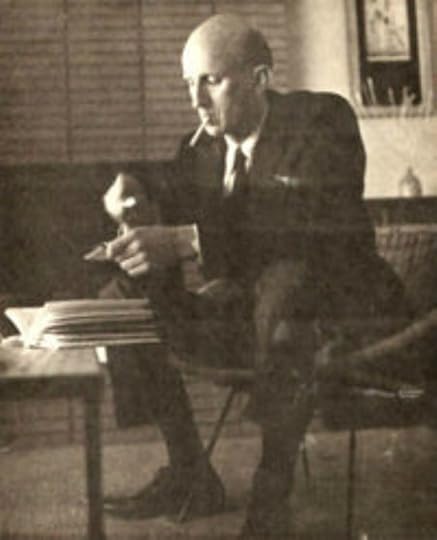
MacDonald Harris, the man who wrote this book for me
This is truly an intriguing book infested with philosophy and psychology in an attempt to understand why we are driven to do anything when life itself seems so futile. It seems like a book that you can sit down and finish in a day or two, but it actually took me much longer because I found myself rereading and thinking and savoring these 270 pages. It is too bad this book is so difficult to find. NYRB is really the perfect publisher to bring this book back into print. If after reading this review you decide you must read this book, and I heartily suggest that you do, your best bet might be as Tuck said on the thread for this review to request it through inter-library loan. Meanwhile I will keep trolling through dank, dimly lit paperback exchanges all across the Midwest looking for copies to share with my GR friends.
If you wish to see more of my most recent book and movie reviews, visit http://www.jeffreykeeten.com
I also have a Facebook blogger page at:https://www.facebook.com/JeffreyKeeten
Probably I was still drunk from the whiskey. I threw a crowbar, a heavy one; it soared end-over-end and vanished softly and invisibly like a bird.
“Listen! this is serious!” I yelled.
It wasn’t that there was nothing there. It was the silence was there, a physical presence, and wouldn’t answer. I wouldn’t have minded if there had been no God, then the universe would be empty and all things would be possible. But that HE should exist--that HE should hover up there looking at me like the fog and be indifferent--was intolerable.

I know that several of my friends have reviewed this book glowingly on GR and maybe some of them feel like they have a special relationship with this book, but the truth of the matter is that MacDonald Harris/ Donald Heiney wrote this book for me. He was a man who planned ahead writing this book three years before I was born and then waiting patiently for me to find it. Unfortunately I must have zigged when he zagged and even though he passed away in 1993 I’m sure he still held the faith that I would eventually read this book.
Larry Backus aka Ben Davenant grew up in a strict Mormon household and all was going well until he was seduced by those evil, insidious, seductive compiled tree slices commonly referred to as books. Reading late one night his father popped into his room to see what he was doing. He hid the Joseph Conrad and yanked out a copy of Nifty Pics that he had bought under the counter from a local businessman who had heeded the call for supply and demand (capitalism at it’s best). The interesting part was that in Larry’s mind it was a bigger problem getting caught reading Conrad than it was to be found with what his father considered to be pornography.
It made perfect sense to me.
Larry realizing that his home life was going to become more and more a problem so he runs away and joins the Merchant Marines.
He drinks.
He spends time with whores.
He drinks.
He reads.
He drinks.
He meets a Russian named Victor.
Now Victor’s idea of friendship is basically that “friendship” allows him better access to take advantage of his friends. We all have friends and we try to help them the best we can by softening the blows that we all experience, and being there for our friends when they find themselves in jeopardy. Victor believes that the best service he can perform for Larry is to make sure that calamites not only find Larry, but that they hit hard enough to give him a lesson he won’t forget. The parts of the book that Larry spends with Victor are fascinating and certainly were among the most interesting for me.
Most of the women that Larry has access to are whores and he classifies women into two categories receptacles or machines. He isn’t picky about the whores he sleeps with. In fact most of his descriptions of the women are not attractive in the least.
”I sat around for an hour or so drinking whiskey, and then I got bored and decided to go upstairs with a girl named Abby, who was short-legged and strong as a bull and looked ready for anything. Everything about her was hard, mechanical, and business-like; it was like going to bed with a tractor.”
His relationship with women is fairly uncomplicated until later in the book when he meets up with Ary.
Larry reads constantly. As a note to all those aspiring writers out there if the book didn’t grab him in the first ten pages he threw it overboard. So if you don’t want your work of brilliance floating in the Pacific Ocean you better make those first ten pages count.

Didn't make the cut.
His ship is making an ordinance run during World War II when it is blown up. In the melee that happens he is burned and battered and ends up in a Navy hospital. He doesn’t tell them who he is and they diagnose him with amnesia.
Most people believed in a body and also in a soul, or whatever you wanted to call it, an ego. But it was more complicated than they thought. They thought of the ego as a kind of a foggy pear-shaped essence inside you that stayed the same no matter what happened to the body: aware of other people and different from them, knowing its name, preferring coffee with cream, disliking warm beer. It didn’t matter what you did with your body, tattooed yourself blue, became a hashish addict or fell into a sausage machine, you were still you and inside there was an unconquerable soul that went marching on. All this was probably true and I had had an ego like that once too. But what they couldn’t get through their heads was that this part of me had been burned away too that night in the water. They thought the burns were only third degree (charred skin, some tissue damage) but they had gone deeper than that. Or perhaps my ego had been closer to the surface than most people’s, out in the skin where the fire could burn it away. Anyhow it was gone, disappeared with the fingerprints that had slid off on the hot metal and dissolved in the sea.
Since he is found near the wreckage of a destroyer the military makes the assumption that he was on that ship. The wife of a Lieutenant Ben Davenant identifies him as her husband. He liked floating along through the system as a John Doe and it throws a monkey wrench into his plans when Ary claims him. He isn’t sure what she is up to, but decides to play along. Which really is the way that Larry has moved through life like a cork in the ocean letting the tide take him wherever he is supposed to be next.
He decides to live the lie.
The biggest part of the puzzle of course is Ary.
It wasn’t enough for her to have two sides, it seemed she was some kind of a polyhedron. Then as I came to know her a little better I saw that all the sides were one, but this didn’t make it any easier to understand. For a long time I didn’t like the tangoing, flower-strewing, slightly affected Ary, and I fought against it and tried to pull her away from that world. When we were together again in the blue bedroom it would be the same as before and I would think I had won, then the next night the house would be full of friends and she would be a stranger again. When I got to know the friends better that side of her seemed a little less mysterious, but by that time I had discovered other sides I hadn’t even suspected. The more I knew her outwardly the more something inward and secret in her seemed to elude me. Who was she anyhow?
There are so many great passages in the book in regards to Ary.
Sometimes after we had made love and she had gone to sleep I would lie there contemplating her for what seemed like hours on end. There the two long amber legs came together, the even swell of the stomach tapered away between them, and deeper there was only shadow, mute and chthonic. What was I, some kind of a voyeur? The more I looked the less I understood. But I was looking in the wrong place for the mystery. I began to realize finally that it was not in her body, in this simple concave mechanism which was designed to receive a convexity, but in myself.
The struggle for Larry to become Ben, this privileged college man who did so many things differently than Larry and knew those cultured things about wine, food, and high society that Larry had only read about, is really fascinating to follow. Employing some of the lessons he learned from Victor he listens and learns until he can tentatively begin to speak their language. His ideas about women change as he meets women who are cultured, intelligent, and frankly more fascinating than any women that he has met before. He uses his knowledge of ships to build a business for himself from scratch. He starts to understand his new life, his stolen life, but there is always lurking that thought that he will be found out.

MacDonald Harris, the man who wrote this book for me
This is truly an intriguing book infested with philosophy and psychology in an attempt to understand why we are driven to do anything when life itself seems so futile. It seems like a book that you can sit down and finish in a day or two, but it actually took me much longer because I found myself rereading and thinking and savoring these 270 pages. It is too bad this book is so difficult to find. NYRB is really the perfect publisher to bring this book back into print. If after reading this review you decide you must read this book, and I heartily suggest that you do, your best bet might be as Tuck said on the thread for this review to request it through inter-library loan. Meanwhile I will keep trolling through dank, dimly lit paperback exchanges all across the Midwest looking for copies to share with my GR friends.
If you wish to see more of my most recent book and movie reviews, visit http://www.jeffreykeeten.com
I also have a Facebook blogger page at:https://www.facebook.com/JeffreyKeeten

June 14, 2012
if you had said to me - "here karen, i have this book for you about a merchant marine and his grapplings with such untidy philosophical questions as the difference between selfhood and identity and how much of love is just self-deception," i would have politely thanked you, and then put the book in that safe dark place with the red sweater with the teddy bear on it and the ceramic angel jewelry-box.
but, you read enough positive reviews of something, and it gets hard to not have your interest piqued.
i'm grateful for those reviews, and grateful to maureen for sending this to me in the "great mortal leap mailing-chain of 2012."because this is indeed a good read.
raised in a mormon household, our antihero is accustomed to being denied certain pleasures. after a comical misunderstanding, he makes his great escape into the world, and discovers that the pleasures denied him by his faith are not that great after all. rather than using this revelation as an opportunity to cleave to the beliefs of his family, he instead settles for a life on the sea, where he exists in a basically anhedonic state until a combination of the war and an accident grants him the opportunity to start again as a new man with a wife and a history fortuitously supplied for him, plenty of friends, material possessions, money, and pleasures. while this new role is physically very comfortable, it invites psychological wariness and unease until he realizes if he is a fraud, so is everybody else. how freeing that is!
and it is marvelous.
man is basically an opportunistic beast. and even as we work our way through our narcissistic solipsism and our existential crises, we will take our opportunities where we can, no matter the cost. and it is horrifying, but it is true. untethered by love,loyalty, or commitments, man is like any other animal - survival, even in an emotional vacuum, will be the first priority. and for most beasts, that will be enough. until it isn't.
and then the desire to leave a mark on the world; a legacy, will assert itself, and then the real fun begins. the anxiety and the sleepless nights and the finding a way to make life matter. and this book examines all of this and more.
much of the writing here is beautiful. i was going to type out all kinds of passages, but it just got to the point where i was making notes of pages i liked, and they were too numerous, and i thought that they wouldn't make any sense out of context, so i basically just gave up on that plan.
try to find this book.
it is more than it appears.
 come to my blog!
but, you read enough positive reviews of something, and it gets hard to not have your interest piqued.
i'm grateful for those reviews, and grateful to maureen for sending this to me in the "great mortal leap mailing-chain of 2012."because this is indeed a good read.
raised in a mormon household, our antihero is accustomed to being denied certain pleasures. after a comical misunderstanding, he makes his great escape into the world, and discovers that the pleasures denied him by his faith are not that great after all. rather than using this revelation as an opportunity to cleave to the beliefs of his family, he instead settles for a life on the sea, where he exists in a basically anhedonic state until a combination of the war and an accident grants him the opportunity to start again as a new man with a wife and a history fortuitously supplied for him, plenty of friends, material possessions, money, and pleasures. while this new role is physically very comfortable, it invites psychological wariness and unease until he realizes if he is a fraud, so is everybody else. how freeing that is!
and it is marvelous.
man is basically an opportunistic beast. and even as we work our way through our narcissistic solipsism and our existential crises, we will take our opportunities where we can, no matter the cost. and it is horrifying, but it is true. untethered by love,loyalty, or commitments, man is like any other animal - survival, even in an emotional vacuum, will be the first priority. and for most beasts, that will be enough. until it isn't.
and then the desire to leave a mark on the world; a legacy, will assert itself, and then the real fun begins. the anxiety and the sleepless nights and the finding a way to make life matter. and this book examines all of this and more.
much of the writing here is beautiful. i was going to type out all kinds of passages, but it just got to the point where i was making notes of pages i liked, and they were too numerous, and i thought that they wouldn't make any sense out of context, so i basically just gave up on that plan.
try to find this book.
it is more than it appears.
come to my blog!
February 16, 2014
Dead-Soul Boy runs away from home; he becomes a merchant marine and travels the world. Dead-Soul Boy sees the world through his dead, dead eyes. does Dead-Soul Boy's soul ever come alive? stay tuned!
S P O I L E R S | A H O Y
so something fairly insane happens...
hey:
S P O I L E R S | A H O Y
I had the odd sensation that the nothingness began at the surface of my skin and went on forever, in every direction, to infinity. Well, I finally had what I wanted, I was alone!so Rod recommended this to me after reading my review of the equally superb The Story of Harold. the books are radically different in style and tone and certainly in their narratives, but they do share a common agenda. namely: There is hope for you yet. you can find your place, person without affect or hope or dreams, person who lives an unlife. life is full of small moments, meaningful and otherwise, you can make a life out of those moments. you can build yourself into a real person. life is a series of choices; even choosing not to make a choice is its own choice. you can choose stasis or you can choose movement but the important thing is recognizing your ability to make choices in the first place - and that you have to make those choices.
Nobody gives it to him; only gradually does he free himself from the things that have made him, and create his unique nature, his self. He does this by making choices... And in choosing between A and B he creates his own freedom, because freedom is simply the state of being able to make decisions.Mortal Leap and Story of Harold are inspiring antidotes to books like Zone One that posit that all of those small moments, the regularity of day-to-day life, the familiarity of it all... that all of those things are symptoms of the meaninglessness of life. Zone One really impressed me with its astonishing prose but it also felt like a work of condescension and pretension, the product of a mind that views the world with a sense of anomie and then assumes that putting that alienated viewpoint on the page is somehow meaningful. Zone One is the story of an author who is smart but immature; Mortal Leap and The Story of Harold are works from actual adults who are able to understand that not only is meaning something to strive for, but it is something that can be found in both the extraordinary and the mundane. neither of these books make the journey easy for the protagonist - or the reader. the reader must deal with these anti-heroes on a very intimate level. it's uncomfortable and sorta awful. these guys are assholes and we see the world through their asshole eyes. "asshole eyes" - nice phrase, mark. Mortal Leap's protagonist is a special sort of asshole.
“The Korkasow syndrome is characterized by a lack of affective feeling, along with a breakdown of imagination and thought-production. The key to it lies in a failure of registration of sensory stimuli. The patient is aware of his environment, but he sees each event around him as isolated and meaningless.”the novel's first half is... well, it's something. for an emotional reader like myself, it was often pure torture. I'm usually repulsed by people without affect and so being forced to deal with this kid wasn't just irritating or wearying, it was practically debilitating. words can barely convey the kneejerk loathing I had for this character; I wanted to slap him, shake him, smash his face in, just do something to cause an actual reaction.
I realized what I was angry at and what had become my enemy: the survival instinct. Well, what was so damned important about staying alive anyhow? That was the question that needed answering.but for an intellectual reader (also like myself), the first half was in its own way completely enthralling. MacDonald Harris is an excellent writer. he's a rigorous one as well. the first half was an almost hypnotic experience. Harris conveys his protagonist's lack of affect perfectly, he gets you inside that unpleasant little head and makes you live there. not a word, not a sentence out of place - everything contributes to how Harris wants to illustrate this kid's viewpoint. there is absolutely no kowtowing to the reader yearning for something positive or pleasant to cling to, whether it be some sneaky humor or some bit of empathy, some sexiness or some adventure, just some ray of light in the landscape of bleak banality. I was rather in awe of the choices the author made time and again in depicting this world. tones of gray. squalid, depressing, without meaning. dead soul, dead soul. Marguerite Duras' dead-soulmate.
Inside was nobody. There was only a nexus of existence, buried very deep and only gradually working to the surface.but then that second half. there is no sudden shift in tone, no parting of the clouds to let the sun in - it's gradual.
so something fairly insane happens...
The yelling came out of a different world, a world where I didn’t belong, a world where men felt different courages and despairs and were moved by emotions that were inexplicable to me....and then another insane thing, and then another. at first the protagonist reacts to all of it in his typically alienated, fuck-off, I-could-give-a-shit, I-may-as-well-be-dead way. at first. but life has a way of happening to people and change can come in different ways. he starts to come to life. it is not so much a thawing that happens, it is a life beginning where there was no life before. a planet takes a while to develop life and the same goes for a person. sometimes creating that life, creating that person, means scrapping what came before and starting fresh. sometimes it means taking on a role, living that role, fake it til you make it, until that role is you, until you equal that role that is no longer just a costume you put on, a role you chose - it is a new you.
I still had the sensation I was playing a role but it didn’t bother me any more, because I knew now that everybody else played a role too; it was just that some played them well and some badly.so "Ben Davenant" takes one step and then another, he decides to sample life - and he finds the taste to his liking. he takes a mortal leap. the circumstances of his leap are crazy, a one-of-a-kind sort of leap, right outta a book. but he takes the leap that all adults should take in their lives, a leap into a life that you, yourself, and no one else, has created.
In this way my situation was a kind of a metaphor of the whole human predicament; I sensed I was balancing over a chasm but I preferred not to look down. And probably I was right; now that I had walked out over the chasm what good would looking down do?he creates his life and then he slowly embraces it. I rejoiced, watching that embrace. I like rejoicing when reading a book.
hey:

April 15, 2011
Update January 30, 2024. At last, the day is finally close at hand: The long awaited reissue of Mortal Leap by Boiler House Press. Pre-orders are being taken for release on March 29, 2024.
https://a.co/d/4Xx2HLF
[Update May 4, 2021: Read for fifth time. Just realized it’s just a few days past the ten year anniversary of first reading it, and still no one’s put out a reissue.]
Ever have one of those books that just sticks with you, and you find yourself thinking about it at random times for no particular reason? For me, this is one of those; it's attached itself to my cerebrum like a barnacle on the hull of a tramp steamer. Just looking at the cover provokes an emotional response in me, a powerful urge to delve into its pages once again. That cover. The stark monochrome; the hand-written script of the title; that strange, lonely, blurry face with the dark hollowed-out eyes that could be sunglasses but look to me like two empty voids, like that horrific final image of Ray Milland in X: The Man with the X-Ray Eyes. Oops, I hope I didn't spoil the ending for anybody that hasn't seen and was planning to watch that nearly fifty-year-old movie. Anyway, rarely does a book's cover evoke so well the contents within, and this is a perfect marriage.
The plot seems familiar, bearing a superficial resemblance to any number of movies, TV shows (Mad Men comes immediately to mind) and potboiler novels: A man takes on the identity of a dead man and has to learn to live life in the other man's shoes. Stop me if you've heard this one before. You've heard it before, but probably not done this well. Harris takes what was probably already a tired old trope in 1964 and invests it with enough psychological realism to make it not only plausible but completely riveting.
We meet the narrator as a youngster living under a strict Mormon upbringing during the Depression. Once in his teens, always independent and aloof, he decides he's had all that he can take and runs away, drifting around and working odd jobs, eventually ending up as a merchant seaman on a rickety old freighter. There he befriends Victor, an old Russian ex-anarchist who teaches him how to survive in a harsh world--usually the hard way, i.e., taking advantage of him and screwing him over, you know, so maybe he'll learn a lesson and not be so stupid next time. Now, on the surface it seems crazy that a man would choose to be friends with someone that he doesn't trust and that has betrayed him on more than one occasion, but Victor doesn't trust anyone, either, so their bond is based on just a kind of mutually felt kinship and liking for one another, a mutually shared misanthropy. For some reason that really resonated with me, and the parts of the book portraying the narrator's and Victor's relationship are some of my very favorite parts of the novel.
The crux of the story occurs when the ship they are serving on is called on to deliver war munitions to the South Pacific and is attacked and sunk. Our narrator is rescued, but not before he is badly burned and near death. Awaking in a Navy hospital, his fingerprints seared off by burning engine fuel, his face burned temporarily beyond recognition, and no longer caring if he lives or dies, he capriciously decides to feign amnesia, discovering a certain freedom in having no identity. Unable to identify him, the hospital officials assume that he was an officer on the naval boat and question him in attempt to determine his identity, to no avail, until a woman shows up and claims him as her husband, Ben Davenant. Is she crazy? Very possibly, but he makes another capricious decision to simply play along and see where it takes him. The remainder of the novel concerns his struggle to forge his own identity while in the guise of someone else, and to possibly build a genuine relationship with this mysterious woman. It isn't a thriller/mystery as you might expect, but it nonetheless is an engrossing, stimulating read that has a way of getting under your skin.
This book's been out of print for probably a good four decades, which is a shame because it's terrific. Someone reissue this, stat.
https://a.co/d/4Xx2HLF
[Update May 4, 2021: Read for fifth time. Just realized it’s just a few days past the ten year anniversary of first reading it, and still no one’s put out a reissue.]
Ever have one of those books that just sticks with you, and you find yourself thinking about it at random times for no particular reason? For me, this is one of those; it's attached itself to my cerebrum like a barnacle on the hull of a tramp steamer. Just looking at the cover provokes an emotional response in me, a powerful urge to delve into its pages once again. That cover. The stark monochrome; the hand-written script of the title; that strange, lonely, blurry face with the dark hollowed-out eyes that could be sunglasses but look to me like two empty voids, like that horrific final image of Ray Milland in X: The Man with the X-Ray Eyes. Oops, I hope I didn't spoil the ending for anybody that hasn't seen and was planning to watch that nearly fifty-year-old movie. Anyway, rarely does a book's cover evoke so well the contents within, and this is a perfect marriage.
The plot seems familiar, bearing a superficial resemblance to any number of movies, TV shows (Mad Men comes immediately to mind) and potboiler novels: A man takes on the identity of a dead man and has to learn to live life in the other man's shoes. Stop me if you've heard this one before. You've heard it before, but probably not done this well. Harris takes what was probably already a tired old trope in 1964 and invests it with enough psychological realism to make it not only plausible but completely riveting.
We meet the narrator as a youngster living under a strict Mormon upbringing during the Depression. Once in his teens, always independent and aloof, he decides he's had all that he can take and runs away, drifting around and working odd jobs, eventually ending up as a merchant seaman on a rickety old freighter. There he befriends Victor, an old Russian ex-anarchist who teaches him how to survive in a harsh world--usually the hard way, i.e., taking advantage of him and screwing him over, you know, so maybe he'll learn a lesson and not be so stupid next time. Now, on the surface it seems crazy that a man would choose to be friends with someone that he doesn't trust and that has betrayed him on more than one occasion, but Victor doesn't trust anyone, either, so their bond is based on just a kind of mutually felt kinship and liking for one another, a mutually shared misanthropy. For some reason that really resonated with me, and the parts of the book portraying the narrator's and Victor's relationship are some of my very favorite parts of the novel.
The crux of the story occurs when the ship they are serving on is called on to deliver war munitions to the South Pacific and is attacked and sunk. Our narrator is rescued, but not before he is badly burned and near death. Awaking in a Navy hospital, his fingerprints seared off by burning engine fuel, his face burned temporarily beyond recognition, and no longer caring if he lives or dies, he capriciously decides to feign amnesia, discovering a certain freedom in having no identity. Unable to identify him, the hospital officials assume that he was an officer on the naval boat and question him in attempt to determine his identity, to no avail, until a woman shows up and claims him as her husband, Ben Davenant. Is she crazy? Very possibly, but he makes another capricious decision to simply play along and see where it takes him. The remainder of the novel concerns his struggle to forge his own identity while in the guise of someone else, and to possibly build a genuine relationship with this mysterious woman. It isn't a thriller/mystery as you might expect, but it nonetheless is an engrossing, stimulating read that has a way of getting under your skin.
This book's been out of print for probably a good four decades, which is a shame because it's terrific. Someone reissue this, stat.

April 24, 2012
You know what's depressing? Don't worry. I'll tell you. There was this guy named MacDonald Harris (who apparently looked a little like the lead singer of Midnight Oil), and this MacDonald Harris guy wrote a novel in the 1960s called Mortal Leap that was a good deal better than many of the 24k gold-plated tomes that have since ascended into the pantheon of canonical literature (to the accompaniment of Handel's Messiah and an overactive fog machine, no doubt). But that novel, good as it was, quickly went out of print and was forgotten, and probably earned fewer critical mentions in its day than Snooki's autobiography.
So do you see what can happen? Either by sheer talent or hard work [or an amalgam of the two], a guy shits out a really great book—something that, statistically speaking, not many people accomplish in their lifetimes—and then nothing at all happens with it. It doesn't even get a second printing, for Chrissake.
So there's this to consider: that even if you happen to excel at whatever it is you do, maybe nobody will ever even notice. So it's almost like you did nothing with your life at all. You might just as well have sat on your ass all those years eating Cheetos and watching reruns of Hoarders on Netflix. I mean, if a book falls into the Bargain Book section at B&N and there's nobody there to read it, does it really even exist at all? I'll leave that one for the philosophers.
Well, here's a little good news... People are starting to notice Mortal Leap. They're realizing that it's a great little American novel about human identity that shuttles deftly between narrative intensity and ruminative insight—so much so that I'm not really sure which it does better. But the bad news nevertheless continues to reassert itself: MacDonald Harris is conspicuously and resolutely dead—and is therefore unable to enjoy any prospective revitalization of his career.
I guess if you believe that any reader's appreciation of his work is a (quasispiritual) validation of Harris's labors, even after his death, then maybe this offers some half-assed consolation. But I happen to think it's a total fucking ripoff.
So do you see what can happen? Either by sheer talent or hard work [or an amalgam of the two], a guy shits out a really great book—something that, statistically speaking, not many people accomplish in their lifetimes—and then nothing at all happens with it. It doesn't even get a second printing, for Chrissake.
So there's this to consider: that even if you happen to excel at whatever it is you do, maybe nobody will ever even notice. So it's almost like you did nothing with your life at all. You might just as well have sat on your ass all those years eating Cheetos and watching reruns of Hoarders on Netflix. I mean, if a book falls into the Bargain Book section at B&N and there's nobody there to read it, does it really even exist at all? I'll leave that one for the philosophers.
Well, here's a little good news... People are starting to notice Mortal Leap. They're realizing that it's a great little American novel about human identity that shuttles deftly between narrative intensity and ruminative insight—so much so that I'm not really sure which it does better. But the bad news nevertheless continues to reassert itself: MacDonald Harris is conspicuously and resolutely dead—and is therefore unable to enjoy any prospective revitalization of his career.
I guess if you believe that any reader's appreciation of his work is a (quasispiritual) validation of Harris's labors, even after his death, then maybe this offers some half-assed consolation. But I happen to think it's a total fucking ripoff.

April 18, 2012
it's every booknerd's dream to find an unknown & outta print book that rocks his/her world. well, booknerd, get your cock (or some such other corporeal appendage) in here quick, b/c i suspect pretty soon this book ain't gonna be all that unknown.
as a kid i was always turned off by the too-cool-for-school guys, those fonzified turdfucks who felt it cool to act casual about everything. oh, fuck that. i'm one easily enthused jackass and i'd have it no other way. back then, those guys who talked very casually about banging some chick (whereas for me, every single time a girl reached back, unsnapped her bra, and new breasts tumbled out, it was like they (the breasts, that is) socked me in the gut. it was magical lifestuff which always left me breathless and mystified. every time.) are the same dicks who now, in our late 30s, hate their fucking jobs, wives, kids, and spend their weekends eating steak and watching football. yuk. and mortal leap kinda takes on all this kinda stuff in its quest to understand the meaning of 'identity' and how it relates, really, to what and who we are on the inside. are we merely a composite of all we've ever done? of all we wanna do? all that's been done to us? or is it something more mystical? or something way more simple? tough stuff to figure out. macdonald harris takes a fantastic crack at it.
mortal leap concerns a taciturn chap who leaves his uptight mormon family to become a merchant marine who engages in a whole lotta rather un-mormonlike activity: harddrinking, whorebanging, cardplaying, dealmaking, lifeliving, etc. well, during WW2 he takes on the identity of a fallen soldier (NOT don draper) and pretty seamlessly slips into a new life. as y'might imagine the whole thing's just on the brink of slipping into the wannabe-tough-guy hard-living territory, and it would, if not for the latter half of the book. y'see, macdonald harris sets up all that bukowski crap only to tear it down. what mortal leap is really all about is the will to live, to really live: to stop playing it cool and taciturn and to howl, madly, into the abyss, to put it all on the line, to act like a jackass and kick against the pricks and make one's mark in the world. here's how harris puts it:
"the important thing was that being alive was all there was, and the more deeply you could savor and know things, the roughness of the sand or the smell of the rain or making love, the more fully you were alive."
mortal leap's first and last printing was in 1964.
considering all the utter crap that's been foisted on the reading public over the years, i find this damn near criminal.
"We move blindly toward our sins, and the things we do and the things we suffer for don't have much to do with one each other. In the end there's no justice: the universe is not an auditing firm. Would we like it better if it were? If we had to pay for everything, down to the last cruelty, the last fornication, the last harmless lie? Let's leave the dark places where they are." - from mortal leap
as a kid i was always turned off by the too-cool-for-school guys, those fonzified turdfucks who felt it cool to act casual about everything. oh, fuck that. i'm one easily enthused jackass and i'd have it no other way. back then, those guys who talked very casually about banging some chick (whereas for me, every single time a girl reached back, unsnapped her bra, and new breasts tumbled out, it was like they (the breasts, that is) socked me in the gut. it was magical lifestuff which always left me breathless and mystified. every time.) are the same dicks who now, in our late 30s, hate their fucking jobs, wives, kids, and spend their weekends eating steak and watching football. yuk. and mortal leap kinda takes on all this kinda stuff in its quest to understand the meaning of 'identity' and how it relates, really, to what and who we are on the inside. are we merely a composite of all we've ever done? of all we wanna do? all that's been done to us? or is it something more mystical? or something way more simple? tough stuff to figure out. macdonald harris takes a fantastic crack at it.
mortal leap concerns a taciturn chap who leaves his uptight mormon family to become a merchant marine who engages in a whole lotta rather un-mormonlike activity: harddrinking, whorebanging, cardplaying, dealmaking, lifeliving, etc. well, during WW2 he takes on the identity of a fallen soldier (NOT don draper) and pretty seamlessly slips into a new life. as y'might imagine the whole thing's just on the brink of slipping into the wannabe-tough-guy hard-living territory, and it would, if not for the latter half of the book. y'see, macdonald harris sets up all that bukowski crap only to tear it down. what mortal leap is really all about is the will to live, to really live: to stop playing it cool and taciturn and to howl, madly, into the abyss, to put it all on the line, to act like a jackass and kick against the pricks and make one's mark in the world. here's how harris puts it:
"the important thing was that being alive was all there was, and the more deeply you could savor and know things, the roughness of the sand or the smell of the rain or making love, the more fully you were alive."
mortal leap's first and last printing was in 1964.
considering all the utter crap that's been foisted on the reading public over the years, i find this damn near criminal.
"We move blindly toward our sins, and the things we do and the things we suffer for don't have much to do with one each other. In the end there's no justice: the universe is not an auditing firm. Would we like it better if it were? If we had to pay for everything, down to the last cruelty, the last fornication, the last harmless lie? Let's leave the dark places where they are." - from mortal leap

June 27, 2012
As of 6/30/12 at 10:53 am EST, no one on goodreads.com has rated this book who isn't a friend of mine. This is a little weird. It's becoming something of a cult favorite among the little speck of the goodreads world I move about in.
I'm not positive but I think this all started with Brian reading the book, and then him and Kowalski spooging on the internets about it. And then apparently a copy started floating around, I think stemming from Rod, that is making the rounds among people. I'm only cool enough to have my hands on the book right now because I'm the designated best friend of Karen, and she graced me with the chance to read it before it moves on to other people.
This is an undeservedly obscure book from the early 1960's. In a better version of the world than the one we live in this would probably be a perennial classic and there would be a stack of them right now on the summer reading table at work, maybe in the place where Confederacy of Dunces sits right now. Or maybe it would have still disappeared for a while but in another better world than our own New York Review of Books would have re-issued this with a spectacular cover and people would be reading it. In the best of all possible worlds maybe this would be in print and right now someone on goodreads would be writing a review about some left to obscurity author named Jack Kerouac and deciding that maybe it was for the best that self-indulgent high-fiving novels about a dude and his cool friends was best forgotten so long ago.
But those aren't the worlds I get to live in, although the second one could still come to pass one day, right?
Surprisingly this novel didn't force the normal ennui I feel whenever a large portion of a novel takes place on a boat. This might not sound like much, but a novel has to be extra special not to make my eyes glaze over and boredom set in when boats are introduced and long stretches of the novel take place on them.
Even though the main character is a Merchant Marine and most of the first half of the book takes place on boats, it's not a nautical novel (does this need to be said, Greg?) With all the bad connotations the genre has, I'm still going to just say that this is pretty much an Existential Novel. Not that it's Nausea on a boat, but what happens after the boating stops is akin to main character staring into his glass of beer and finding his "in-the-world-ness" shattered.
Even though there are a lot of differences, this book brought to mind Paul Nizan's Aden, Arabie another sort of obscure existential novel but one with a lot more open nihilism than Mortal Leap.
Better writers than me have written reviews of this book, and you should read their reviews. Although, most likely you already have since you're probably part of the same clique that I am.
My one complaint about the book was the infuriating stubbornness of the main character towards the middle of the book. I never quite got if he was just being a dick, seriously unmoored existentially, or suffering from some kind of real problem (not that our existential angst isn't a real problem). This section of the book started to drag on a little too long I thought, but it wasn't a problem that ruined the book for me.
Whatever though, this is just me whining about me wanting a novel to be exactly as I'd like it instead of it being like it really is. Ignore the whining and go find a copy of this for yourself. All the cool kids are doing it.
I'm not positive but I think this all started with Brian reading the book, and then him and Kowalski spooging on the internets about it. And then apparently a copy started floating around, I think stemming from Rod, that is making the rounds among people. I'm only cool enough to have my hands on the book right now because I'm the designated best friend of Karen, and she graced me with the chance to read it before it moves on to other people.
This is an undeservedly obscure book from the early 1960's. In a better version of the world than the one we live in this would probably be a perennial classic and there would be a stack of them right now on the summer reading table at work, maybe in the place where Confederacy of Dunces sits right now. Or maybe it would have still disappeared for a while but in another better world than our own New York Review of Books would have re-issued this with a spectacular cover and people would be reading it. In the best of all possible worlds maybe this would be in print and right now someone on goodreads would be writing a review about some left to obscurity author named Jack Kerouac and deciding that maybe it was for the best that self-indulgent high-fiving novels about a dude and his cool friends was best forgotten so long ago.
But those aren't the worlds I get to live in, although the second one could still come to pass one day, right?
Surprisingly this novel didn't force the normal ennui I feel whenever a large portion of a novel takes place on a boat. This might not sound like much, but a novel has to be extra special not to make my eyes glaze over and boredom set in when boats are introduced and long stretches of the novel take place on them.
Even though the main character is a Merchant Marine and most of the first half of the book takes place on boats, it's not a nautical novel (does this need to be said, Greg?) With all the bad connotations the genre has, I'm still going to just say that this is pretty much an Existential Novel. Not that it's Nausea on a boat, but what happens after the boating stops is akin to main character staring into his glass of beer and finding his "in-the-world-ness" shattered.
Even though there are a lot of differences, this book brought to mind Paul Nizan's Aden, Arabie another sort of obscure existential novel but one with a lot more open nihilism than Mortal Leap.
Better writers than me have written reviews of this book, and you should read their reviews. Although, most likely you already have since you're probably part of the same clique that I am.
My one complaint about the book was the infuriating stubbornness of the main character towards the middle of the book. I never quite got if he was just being a dick, seriously unmoored existentially, or suffering from some kind of real problem (not that our existential angst isn't a real problem). This section of the book started to drag on a little too long I thought, but it wasn't a problem that ruined the book for me.
Whatever though, this is just me whining about me wanting a novel to be exactly as I'd like it instead of it being like it really is. Ignore the whining and go find a copy of this for yourself. All the cool kids are doing it.

June 11, 2014
MacDonald Harris’ stunning novel Mortal Leap is a refutation of F. Scott Fitzgerald’s line about American lives having no second act. The protagonist of the story is our narrator and it is through his experiences that we are given a mirror to witness our own. It is strange that it is only I who give a reality to this world, these objects that seem so solid: all that is inside me our narrator posits, very early in the book. I often think this thought. You may, too.
You could read the blurb here on GR about the book – but don’t. This review will give no spoilers, not even a hint of the tremendous narrative, because it must be allowed to bloom in each reader in its unique flowering. Is my life, like the narrator opines about one of the book’s other characters, a dirty game of hide-and-seek with the undertaker? Am I, as the Japanese saying goes, the man that is in whatever room I am in? Who I am here on Goodreads - is that the same person as the one earning a living, arguing with the Hertz representative, tucking his daughter into bed?
Known fact: every seven years or so the cells in our bodies are completely renewed. I’m physically not the same person. The corporal version of me is a handshake that occurs between a dying cell to a live one without my conscious help. Or approval. Like the protagonist in this book, I have to create, then recreate and sometimes drastically change my identity. I want a Second Act, perhaps a Third. But I must do it as Joan Didion recommends, keeping on nodding terms with the person I used to be – whether or not I find him attractive company. “As long as you refuse to accept your identity, you won’t become yourself – and nobody is going to recognize you.” This is advice given by one of the characters to the narrator. Does he heed it? Should he? Should we?
Read this book. If you cannot find a copy, and would like one, please PM me. And bless you, Rod, for pointing me to this book and providing me the means to read it.
You could read the blurb here on GR about the book – but don’t. This review will give no spoilers, not even a hint of the tremendous narrative, because it must be allowed to bloom in each reader in its unique flowering. Is my life, like the narrator opines about one of the book’s other characters, a dirty game of hide-and-seek with the undertaker? Am I, as the Japanese saying goes, the man that is in whatever room I am in? Who I am here on Goodreads - is that the same person as the one earning a living, arguing with the Hertz representative, tucking his daughter into bed?
Known fact: every seven years or so the cells in our bodies are completely renewed. I’m physically not the same person. The corporal version of me is a handshake that occurs between a dying cell to a live one without my conscious help. Or approval. Like the protagonist in this book, I have to create, then recreate and sometimes drastically change my identity. I want a Second Act, perhaps a Third. But I must do it as Joan Didion recommends, keeping on nodding terms with the person I used to be – whether or not I find him attractive company. “As long as you refuse to accept your identity, you won’t become yourself – and nobody is going to recognize you.” This is advice given by one of the characters to the narrator. Does he heed it? Should he? Should we?
Read this book. If you cannot find a copy, and would like one, please PM me. And bless you, Rod, for pointing me to this book and providing me the means to read it.

October 1, 2011
i will never be able to say enough about mortal leap: the plot and its turns, the characterization, the relationships, and above all, the intelligence and heart that went into this book. this deeply resonant, erudite and accessible, sadly out-of-print novel is pointedly prefaced by a quote from pascal (pensées, vi:17):
He who loves a person on account of their beauty, does he love the person? No; for the small pox, which kills the beauty without killing the person, will destroy the love. And if one loves me for my judgement, for my memory, does he love me? No; for I may lose those faculties without losing myself. Where, then is this ME, if it is neither in the body nor in the soul; and how love the body or the soul, except for these endowments, which are not what constitute the ME, since they are perishable? For could we love the substance of a person's soul abstractly, and without reference to its qualities? This is impossible, and would be unjust. One never loves the person then, but only the qualities.
it's heavy, i know. there's a lot to think about right there, before he even begins. but what's wonderful about mortal leap is that it's a very contemplative novel, yet it also manages to be witty, and quixotic, fraught, and surprising too, even when i think i know what to expect: the scenes in the solomon islands are very primal, still tying back to the overarching questions. And then there are the sly, off-the-cuff remarks where a doctor brings up bierce, or sweet little returns like the poplars coming back around, a connection that he couldn't shake.
i should say that rod found this treasure and recognized it as a novel so good that it could not languish in obscurity so he began to champion this book. and people began to listen. rod graciously mailed me the book. i read it once, then started again, having ordered a copy off the internet for myself, ready to pass rod's on to another friend (karen next, i think). i read the new copy, the third time through, and stuck sticky notes on what i thought were all crucial passages -- doubling its thickness with curled yellow feathers, that indicated sparks of pure insight, beautifully written passages in a intensely human, haunting and reflective novel.
after the third reading i took to just picking up on a random stickied page, and starting again. the jimmys (hi jimmy!) of the world are shuddering right now, a chill in their bones brought on by my brazen re-readings, my squanderings of time. but what's it all about anyway, right? and mortal leap was so full of thoughts that i wanted to think about, that i began to despair of doing it justice in a review. and yet, it is a grand book, and i think, an important one, and so demands that i give it its due. for we are all flitcrafts and prufrocks, and we know larry backus and ben davenant, inside our beautiful padded cells, these skins containing jumbles. i was preoccupied by the turns in this book, the cleanly written account of the life of a man who takes on another man's life, who remakes himself. the pseudonymous macdonald harris has an extraordinary style: his protagonist is disarming from the first, companionably explaining that he doesn't have any answers to the question "who am i?" but certainly has thought a lot about it. but let him put it plainly:
Who doesn't have a dark place somewhere inside him that comes out sometimes when he's looking in a mirror? Dark and light, we are all made out of shadows like the shapes on a motion-picture screen. A lot of people think that the function of the projector is to throw light onto the screen, just as the function of the story-telling is to stop fooling around and simply tell what happened, but the dark places must be there too, because without the dark places there would be no image and the figure on the screen would not exist. Fine, let's look at the dark places. To do this we have to roll the film back to a previous incarnation of myself: I am twenty-five years old, looking the same as I do now except a little thinner and more cocky, without the scars and the furrow between the eyes. In this somewhat faded photograph I am wearing a dirty cap with gold braid on it, the third engineer of a ship which through a piece of stupidity was sunk in the Solomon Islands in the fall of 1942. It was an event of no particular military or historical importance; a merchant ship had no business being in that part of the world in the first place and that was the year they were getting the gas oven into high gear at Auschwitz. What possible significance can be attached to any individual fate, the things that happen to any single collection of bones, ligaments, reflexes, sensations in a time when six million people were exterminated according to the latest scientific methods? It was not an important agony, looked at objectively. What happened was simple, even banal: I became naked, died, lost parts of my flesh and most of my ego along with a few illusions such as a belief in the uniqueness of my personal scrap of consciousness and the cosmic importance there of, and went from there. All that was left was something inside that I don't know what call -- a soul? Even the theologians don't believe in that anymore. Maybe it's better to believe in ghosts.
that's just the second page. the second page!! it's a classically modelled text: the author states the intentions of the novel quite plainly at the beginning, a precis communicated so companionably, immediately trusting the reader so implicitly, embracing them in an everyman voice that is remarkably real. we are all in this together, he assures us, not just trying to understand the question "who am i?" but also, "to what purpose"? for consciousness can be a trap, and self-awareness only makes us realize that we are stuck inside our own head, alone, undefined, struggling to figure out who the hell we are, what our places are, and what we mean in the grand scheme of things. capital "p" Purpose, plagues us. but for people like our man in the mirror, the protagonist (who really succeeds in shucking his name), that Purpose is easily found, and that's where I found this novel a little hard to accept, and a little too convenient a beam, the bar before the book's eponymous moment. and the purpose he finds, it's not what i am looking for -- i cannot reconcile to it, though i know it is a way that works for others. and so i dwell over the flurry of flagged passages of this book that resonate, trying to figure what i can take away to build on, because so much appeals to me in this thinking, as i continue to look for the answers, for the beam falling, for the bar before the mortal leap -- the description of which i was very tempted to transcribe here (i wanted to transcribe so much!), except that is arguably the zenith of this novel, of the wisdom it relays, and so please seek it out, and read for yourself. :)
** i would love to talk more about mortal leap: maybe i should post a thread in the fiction files, and link to it here, so here's the link: http://www.goodreads.com/topic/show/9... i tried not to put any spoilers in this review, but i think there are a bazillion in my comments already anyway. you are forewarned!:P
He who loves a person on account of their beauty, does he love the person? No; for the small pox, which kills the beauty without killing the person, will destroy the love. And if one loves me for my judgement, for my memory, does he love me? No; for I may lose those faculties without losing myself. Where, then is this ME, if it is neither in the body nor in the soul; and how love the body or the soul, except for these endowments, which are not what constitute the ME, since they are perishable? For could we love the substance of a person's soul abstractly, and without reference to its qualities? This is impossible, and would be unjust. One never loves the person then, but only the qualities.
it's heavy, i know. there's a lot to think about right there, before he even begins. but what's wonderful about mortal leap is that it's a very contemplative novel, yet it also manages to be witty, and quixotic, fraught, and surprising too, even when i think i know what to expect: the scenes in the solomon islands are very primal, still tying back to the overarching questions. And then there are the sly, off-the-cuff remarks where a doctor brings up bierce, or sweet little returns like the poplars coming back around, a connection that he couldn't shake.
i should say that rod found this treasure and recognized it as a novel so good that it could not languish in obscurity so he began to champion this book. and people began to listen. rod graciously mailed me the book. i read it once, then started again, having ordered a copy off the internet for myself, ready to pass rod's on to another friend (karen next, i think). i read the new copy, the third time through, and stuck sticky notes on what i thought were all crucial passages -- doubling its thickness with curled yellow feathers, that indicated sparks of pure insight, beautifully written passages in a intensely human, haunting and reflective novel.
after the third reading i took to just picking up on a random stickied page, and starting again. the jimmys (hi jimmy!) of the world are shuddering right now, a chill in their bones brought on by my brazen re-readings, my squanderings of time. but what's it all about anyway, right? and mortal leap was so full of thoughts that i wanted to think about, that i began to despair of doing it justice in a review. and yet, it is a grand book, and i think, an important one, and so demands that i give it its due. for we are all flitcrafts and prufrocks, and we know larry backus and ben davenant, inside our beautiful padded cells, these skins containing jumbles. i was preoccupied by the turns in this book, the cleanly written account of the life of a man who takes on another man's life, who remakes himself. the pseudonymous macdonald harris has an extraordinary style: his protagonist is disarming from the first, companionably explaining that he doesn't have any answers to the question "who am i?" but certainly has thought a lot about it. but let him put it plainly:
Who doesn't have a dark place somewhere inside him that comes out sometimes when he's looking in a mirror? Dark and light, we are all made out of shadows like the shapes on a motion-picture screen. A lot of people think that the function of the projector is to throw light onto the screen, just as the function of the story-telling is to stop fooling around and simply tell what happened, but the dark places must be there too, because without the dark places there would be no image and the figure on the screen would not exist. Fine, let's look at the dark places. To do this we have to roll the film back to a previous incarnation of myself: I am twenty-five years old, looking the same as I do now except a little thinner and more cocky, without the scars and the furrow between the eyes. In this somewhat faded photograph I am wearing a dirty cap with gold braid on it, the third engineer of a ship which through a piece of stupidity was sunk in the Solomon Islands in the fall of 1942. It was an event of no particular military or historical importance; a merchant ship had no business being in that part of the world in the first place and that was the year they were getting the gas oven into high gear at Auschwitz. What possible significance can be attached to any individual fate, the things that happen to any single collection of bones, ligaments, reflexes, sensations in a time when six million people were exterminated according to the latest scientific methods? It was not an important agony, looked at objectively. What happened was simple, even banal: I became naked, died, lost parts of my flesh and most of my ego along with a few illusions such as a belief in the uniqueness of my personal scrap of consciousness and the cosmic importance there of, and went from there. All that was left was something inside that I don't know what call -- a soul? Even the theologians don't believe in that anymore. Maybe it's better to believe in ghosts.
that's just the second page. the second page!! it's a classically modelled text: the author states the intentions of the novel quite plainly at the beginning, a precis communicated so companionably, immediately trusting the reader so implicitly, embracing them in an everyman voice that is remarkably real. we are all in this together, he assures us, not just trying to understand the question "who am i?" but also, "to what purpose"? for consciousness can be a trap, and self-awareness only makes us realize that we are stuck inside our own head, alone, undefined, struggling to figure out who the hell we are, what our places are, and what we mean in the grand scheme of things. capital "p" Purpose, plagues us. but for people like our man in the mirror, the protagonist (who really succeeds in shucking his name), that Purpose is easily found, and that's where I found this novel a little hard to accept, and a little too convenient a beam, the bar before the book's eponymous moment. and the purpose he finds, it's not what i am looking for -- i cannot reconcile to it, though i know it is a way that works for others. and so i dwell over the flurry of flagged passages of this book that resonate, trying to figure what i can take away to build on, because so much appeals to me in this thinking, as i continue to look for the answers, for the beam falling, for the bar before the mortal leap -- the description of which i was very tempted to transcribe here (i wanted to transcribe so much!), except that is arguably the zenith of this novel, of the wisdom it relays, and so please seek it out, and read for yourself. :)
** i would love to talk more about mortal leap: maybe i should post a thread in the fiction files, and link to it here, so here's the link: http://www.goodreads.com/topic/show/9... i tried not to put any spoilers in this review, but i think there are a bazillion in my comments already anyway. you are forewarned!:P

March 13, 2013
3.5 stars
My bad that I came to this book immediately after reading Gass and Lowry's glorious prose- part Conrad, part noir, and part existential musings, Mortal Leap is an interesting, & at times, a captivating take on the weighty issues of seeking and forging an identity and finding meaning in the act of being, living, and co-existing, but this reader felt excluded by its overtly male-centric pov.
The narrative tone somewhat softened in the second half with the entry of the female lead. (Don't women always bring out the best and the worst in men?).
But overall it remained a predictable fare.
Now MacDonald Harris is a Buried writer so I must be fair in my assessment– it is a lot better than that NYRB "the greatest book you have never read," get it? It also meets Gass' page 99 test so that's something.
Mike Puma has written a fantastic review, so check that out.
Sharing the Epigraph 'cause I'm fond of it, and 'cause it really captures the central theme of identity:
"He who loves a person on account of that person's beauty, does he love the person? No; for the smallpox, which kills the beauty without killing the person, will destroy the love. And if one loves me for my judgement, for my memory, does he love me? No; for I may lose those faculties without losing myself. Where, then is this ME, if it is neither in the body nor in the soul; and how love the body or the soul, except for these endowments, which are not what constitute the ME, since they are perishable? For could we love the substance of a person's soul abstractly, and without reference to its qualities? This is impossible, and would be unjust. One never loves the person, then, but only the qualities."
* * * * * -Pascal, Pensees, VI: 17
* * *
"My real sin had been apathy, the kind of cockeyed contempt for everything I had learned from the others on all the bad ships I had sailed on in all those pointless wandering years. I had never known a name for this until I read Dante; it was called acedia and it was one of the seven deadly sins, and the Church knew what it was talking about. You couldn't spend your whole life just standing on a throttle platform and watching the gauges, four on and eight off, because that wasn't a life. In order for it to be a life you had to make something, even if it wasn't something very important, so you could feel that your being around and breathing and taking up space in the world made at least a little difference."

May 7, 2012
"The resentment I felt inside was not hatred for being imprisoned or for Victor who had betrayed me but something deeper: a rebellion against the very way of things that condemned men to be imprisoned inside their own identities."
Larry doesn't really know who he is. He simply knows that his whole life he's been battling and fighting against how his current environment has defined him.
Until he's given a rare opportunity.
Plucked from the sea amidst the burning wreckage of a sunken Naval ship, injured enough to erase his identity, he leaps-- and decides to become an unknown man. Faking amnesia, he ponders what his future holds (if anything), if life has any meaning anyway, and if he truly even cares.
Then he's given a second opportunity to leap. A woman walks into his hospital room and claims he's her husband.
"Inside I felt something precious and irretrievable slipping away from me: my right to nothingness."
What follows is a fascinating portrayal of a man struggling not only to fit within the confines and memory of a dead man, but to figure out himself in the process.
And if that isn't enough, he has to redefine what he thought he knew of women.
"I had always classified women in these two groups-- receptacles and machines." vs. his current thoughts on his "wife:" "The more I knew her outwardly the more something inward and secret in her seemed to elude me. Who was she anyhow? I was the one who was supposed to be a mystery!"
He has to redefine what's in a name.
What is love?
What is madness vs. sanity?
What makes a life?
"In order for it to be a life you had to make something, even if it wasn't something very important, so you could feel that your being around and breathing and taking up space in the world made at least a little difference."
To leap, he finds, is the key:
"You have to make the leap at least once, because on the other side is yourself, and this is the only way of finding out what it is. It wasn't just a matter of proving your courage, to yourself or anybody else. ...you would never know what you were until you let go of everything that was comfortable and secure-- your family, your background, everything you had as a child-- and went out into empty space. The thing was that you had to have faith there would be something on the other side-- another bar to meet your hand-- even if you didn't know what it was."
How many people have wanted to make the leap ... and haven't? How many feel like they missed their opportunity to do so? Or perhaps simply lack the faith that the other bar will be there to meet their hand.
"...the important thing was that being alive was all there was, and the more deeply you could savor and know things, the roughness of sand or the smell of rain or making love, the more fully you were alive."
My brain feels heavy after reading this book. Full. Satisfied. And inspired to make leaps.
(thank you to my friends who brought this book to my attention! The fact that it is out of print and so unknown is an ignominy.)
To those of you who are accustomed to my normally brief reviews, I found it absolutely impossible to sum up this one quite so succinctly. I highlighted more in this story than I have in any book I've read in years. So, my apologies for my longwindedness. And rather than rely on my meager attempts at touting this man's genius, find a copy and read it!
Larry doesn't really know who he is. He simply knows that his whole life he's been battling and fighting against how his current environment has defined him.
Until he's given a rare opportunity.
Plucked from the sea amidst the burning wreckage of a sunken Naval ship, injured enough to erase his identity, he leaps-- and decides to become an unknown man. Faking amnesia, he ponders what his future holds (if anything), if life has any meaning anyway, and if he truly even cares.
Then he's given a second opportunity to leap. A woman walks into his hospital room and claims he's her husband.
"Inside I felt something precious and irretrievable slipping away from me: my right to nothingness."
What follows is a fascinating portrayal of a man struggling not only to fit within the confines and memory of a dead man, but to figure out himself in the process.
And if that isn't enough, he has to redefine what he thought he knew of women.
"I had always classified women in these two groups-- receptacles and machines." vs. his current thoughts on his "wife:" "The more I knew her outwardly the more something inward and secret in her seemed to elude me. Who was she anyhow? I was the one who was supposed to be a mystery!"
He has to redefine what's in a name.
What is love?
What is madness vs. sanity?
What makes a life?
"In order for it to be a life you had to make something, even if it wasn't something very important, so you could feel that your being around and breathing and taking up space in the world made at least a little difference."
To leap, he finds, is the key:
"You have to make the leap at least once, because on the other side is yourself, and this is the only way of finding out what it is. It wasn't just a matter of proving your courage, to yourself or anybody else. ...you would never know what you were until you let go of everything that was comfortable and secure-- your family, your background, everything you had as a child-- and went out into empty space. The thing was that you had to have faith there would be something on the other side-- another bar to meet your hand-- even if you didn't know what it was."
How many people have wanted to make the leap ... and haven't? How many feel like they missed their opportunity to do so? Or perhaps simply lack the faith that the other bar will be there to meet their hand.
"...the important thing was that being alive was all there was, and the more deeply you could savor and know things, the roughness of sand or the smell of rain or making love, the more fully you were alive."
My brain feels heavy after reading this book. Full. Satisfied. And inspired to make leaps.
(thank you to my friends who brought this book to my attention! The fact that it is out of print and so unknown is an ignominy.)
To those of you who are accustomed to my normally brief reviews, I found it absolutely impossible to sum up this one quite so succinctly. I highlighted more in this story than I have in any book I've read in years. So, my apologies for my longwindedness. And rather than rely on my meager attempts at touting this man's genius, find a copy and read it!

March 25, 2025
A superb read. The lost great American novel, now rediscovered. For all Noir fans, but beyond that this is such a remarkable book. It almost has a Proustian quality, which is unusual for a book/narrative like this. I won't go into the plot, but it's a page-turner, and so beautifully written. I love this book.
Here are my thoughts on Mortal Leap:
https://open.substack.com/pub/tosh/p/...
Here are my thoughts on Mortal Leap:
https://open.substack.com/pub/tosh/p/...

October 3, 2016
full(er) review to follow; maybe. But i'm not sure i can say much about this book. It left me a tad muzzy about my own identity which has taken a few (external) pirouettes in the last decade -mine not as radical as our dear protagonist "Ben". For now - it is a delicious, thoughtful romp through nihilism, masochism, existentialism, and contented capitalism. Play your role well and it will all work out.
They really should re-release this. i had to check out via shipped (inter-library) from University of Redlands to San Francisco Public Library - perhaps the only copy in California?
They really should re-release this. i had to check out via shipped (inter-library) from University of Redlands to San Francisco Public Library - perhaps the only copy in California?

August 9, 2012
this book came so highly recommended i almost didn't want to read it, i figured it couldn't possibly live up to the hype. but it did, and in a nice way-- a calm, quiet, sure way. i think i expected a lot of fireworks or something. instead, this book struck me as something of a dead breed. it kinda reminded me of john marquand's Point of No Return. it's a wise book, without being some kind of alchemist-type thing where all the secrets of the universe are supposedly explained. it made me realize how frantic so many books seem today. there's so much tap-dancing and joking going on, or on the other hand there's all this straining-for-transcendence type stuff where you're supposed to feel like you're being swept away to some lush and dreamy other land. this book just feels like some guy telling you a story. he's a smart guy but he's not trying to impress you. he seems mainly to be working through the inherent meaninglessness of everything, but not in a way that feels despairing or snide. it was funny because the book felt almost haunted by its other self, which would be a film noir everyone's seen a million times... but at every turn it's upside-down, in a mirror, backwards... it's disconcerting and mysterious and feels very alive.
it is definitely strange that this book is out of print. i can't imagine it will be that way for long.
it is definitely strange that this book is out of print. i can't imagine it will be that way for long.

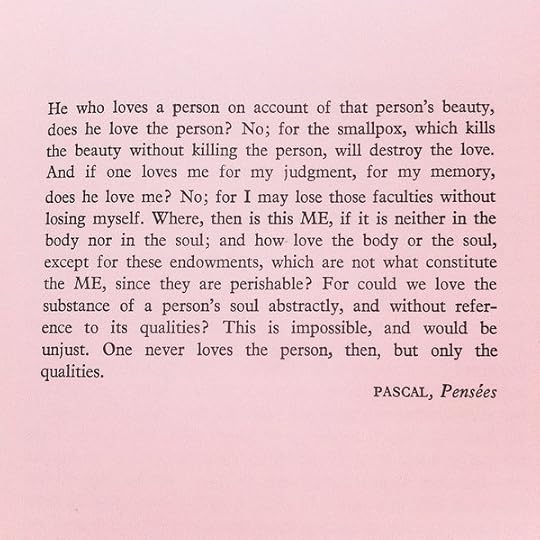

June 2, 2012
I’ve been afraid of writing this review because I know I’m not a good writer, and I want to find the words to express how I feel about Mortal Leap, but I realize I can’t ever really find the perfect way to describe this book, so why bother, right? But I guess that is what this book is really about, not some idiot trying to write a book review, but taking the “leap” into the unknown and trusting that you will find yourself, or whatever it is you are looking for, on the other side. Let’s see if I have found myself at the end of this review.
I think what I noticed most about this book is similar to what Ben Loory says in his review: that this book calmly meanders its way to its end. This book appears aimless as its protagonist, “Ben,” abandons his Mormon childhood, becomes a merchant, gets arrested, becomes shipwrecked, loses his identity, etc. But it’s not loose and unstructured, Harris is just not anxious to show everything up front. Rather, he has certain ideas running through the whole book. I marked in my notebook something that struck me when first reading it: on page 112, after a crucial moment in his moral development, our protagonist concludes, “Well, it’s better not to look in mirrors.” What impressed me was that this continues a thought he has on page 2, 110 pages earlier. (Note: I no longer have the book, so I can’t double check this.) What interests me even more is that I am not sure that the protagonist would even agree with such a statement by the end of the book. He becomes so many different people in the course of the story, and many of his developments are steps in the wrong direction and will need to be undone by the end. This faux-messiness is probably what makes this book so interesting, plot-wise.
But it’s this inability to look at one’s self that really struck me. It turns out that Ben’s habit of making life changing decisions quite rashly is not just a way to rid the parts of himself he dislikes, it’s a way of jumping into something entirely new in order to find a self that is in some way truer. He hates himself. He wants to run away from love and the burden of having a self, but cannot. Ben is given a chance to actually rid himself entirely of everything that he was, which is still fascinating even though I’ve seen the first season of Mad Men, and yet one wonders if such a thing is ever possible. Can Ben actually hide his past from his new life? And if he pretends somewhat successfully, is he really rid of it?
Look, to wrap it up, this book is refreshing. It’s an adventure story without the fast pacing, it’s philosophy with a plot, and it’s all completely compelling. Read the damn thing, you’ll get street cred because it’s out of print.
(And look, there I am! I found out that I am totally and only interested in what people think of me! Maybe I’ll run away from home and see if that changes. Thanks, Mortal Leap!)
PS. I suggested this title to be picked up by New York Review of Books for a reprint. Perhaps if we all go to their website and do the same, it’ll happen!
I think what I noticed most about this book is similar to what Ben Loory says in his review: that this book calmly meanders its way to its end. This book appears aimless as its protagonist, “Ben,” abandons his Mormon childhood, becomes a merchant, gets arrested, becomes shipwrecked, loses his identity, etc. But it’s not loose and unstructured, Harris is just not anxious to show everything up front. Rather, he has certain ideas running through the whole book. I marked in my notebook something that struck me when first reading it: on page 112, after a crucial moment in his moral development, our protagonist concludes, “Well, it’s better not to look in mirrors.” What impressed me was that this continues a thought he has on page 2, 110 pages earlier. (Note: I no longer have the book, so I can’t double check this.) What interests me even more is that I am not sure that the protagonist would even agree with such a statement by the end of the book. He becomes so many different people in the course of the story, and many of his developments are steps in the wrong direction and will need to be undone by the end. This faux-messiness is probably what makes this book so interesting, plot-wise.
But it’s this inability to look at one’s self that really struck me. It turns out that Ben’s habit of making life changing decisions quite rashly is not just a way to rid the parts of himself he dislikes, it’s a way of jumping into something entirely new in order to find a self that is in some way truer. He hates himself. He wants to run away from love and the burden of having a self, but cannot. Ben is given a chance to actually rid himself entirely of everything that he was, which is still fascinating even though I’ve seen the first season of Mad Men, and yet one wonders if such a thing is ever possible. Can Ben actually hide his past from his new life? And if he pretends somewhat successfully, is he really rid of it?
Look, to wrap it up, this book is refreshing. It’s an adventure story without the fast pacing, it’s philosophy with a plot, and it’s all completely compelling. Read the damn thing, you’ll get street cred because it’s out of print.
(And look, there I am! I found out that I am totally and only interested in what people think of me! Maybe I’ll run away from home and see if that changes. Thanks, Mortal Leap!)
PS. I suggested this title to be picked up by New York Review of Books for a reprint. Perhaps if we all go to their website and do the same, it’ll happen!

October 1, 2011
My favorite moments in the book came very early. I loved the portrayal of sneaking off to read as an illicit act, and I was sorry when the protagonist succumbed to the more ordinary, typical illicit acts to be found in the wider world outside of the family home. I was also sorry that the thread of reading was only very cursorily continued, as it was the thing that I related to the most. I also love the moments of survival on the island, before the "rescue." I think the second half of the book paled in comparison with the opening, but the opening was engaging enough that it carried me through.
I sort of resented the fact that a man's life was erased by the events in the second half of the book, his parents were never given the chance to properly mourn or celebrate their son's life, and that that aspect of the story was treated almost cavalierly.
All in all, a very thought provoking novel. I highly recommend.
I sort of resented the fact that a man's life was erased by the events in the second half of the book, his parents were never given the chance to properly mourn or celebrate their son's life, and that that aspect of the story was treated almost cavalierly.
All in all, a very thought provoking novel. I highly recommend.

July 1, 2012
**UPDATE** I want to let fans of Mortal Leap know that we will be reissuing it in March 2024 as part of the Recovered Books series that I edit for Boiler House Press, with an introduction by novelist Jonathan Coe, who called it "An amazing, stunning book" when I sent it to him.
-----------
Mortal Leap tells a story it seems as if we’ve seen on TV a dozen times: a man takes on another’s identity, abandoning his own, and lives out a new life. But have we?
There are plenty of stories of mistaken identity, and plenty more, like the Kevin Kline comedy, “Dave”, where one person pretends to be another (in that case, the President of the United States) to deceive others. In Mortal Leap, however, we are led, with careful attention to detail, motivation, and effect, through a man’s decision to utterly abandon the life he’s lived, the person he’s become in twenty-some years since birth, and become another man. Another man with a history, possessions, relationships, traits, habits. Another man with a wife, a family, a life already being lived. Have we ever really heard this story before?
In this book, his second novel, MacDonald Harris takes us, as if in freeze-frame, through a salto mortale–literally, a mortal leap–the circus acrobat’s mid-air vault from one trapeze to another. We follow the nameless protagonist as he swings back and forth through a life as a merchant seaman in the 1930s and early 1940s.
His freighter is sent to take a load of fuel and supplies to a nameless southwest Pacific island–probably Guadalcanal. Ambushed along with its escort by a group of Japanese ships, the ship is hit and sunk. The man survives and makes it to an unhabited atoll, but in his attempt to get off the island, he is caught in a naval battle and severely burned.
From the circumstances of his rescue, his apparent age and physical features, Navy investigators finally speculate that the man is Lieutenant Ben Davenant, an officer on the U.S.S. Marcus, one of the ships lost in the night battle. They send a photo of the man’s scarred face to Davenant’s parents, who do not recognize him. Davenant’s wife, however, comes to Hawaii to see for herself.
The man still has no intention of doing anything, of merely plunging forward into oblivion. But then the wife comes into the hospital room and another trapeze appears before him:
"A moment later she was bending over the bed and I felt the light touch of her lips on my forehead; I caught an elusive scent of linen and perfume. Even then I was not fully awake. And yet in those few seconds when everything hung on a knife edge I committed myself by my silence. I felt words forming in my mouth, but I couldn’t arrange them properly; the time passed when I might have spoken and still I said nothing."
One could say that the salto mortale analogy–which Harris himself introduces later in the book–misses the point somewhat. The man doesn’t grab for the other bar. He merely says nothing–he allows the woman to say that he is Davenant. And at first, though he goes along with the deceit, he’s in many ways just as passive as he was in free fall. Ary, the wife, takes charge. She gets them back to the U.S., arranges for man/Davenant’s discharge, and settles them in her father’s large seaside house in Laguna Beach.
Becoming another person, as Harris shows us, is much harder than it ever seems in the movies. There are so many little practical hurdles. The man, after all, was a rough merchant sailor before, and now he is in the midst of a wealthy, cultured family. He has to learn not to dig wax out of his ear with his pinky, not to ask for ketchup when eating a steak, how to mix a cocktail.
I first read Mortal Leap almost thirty years ago, and I remember how the narrative seized my attention. It was one of those books you begrudge the rest of your life for taking you away from. When you don’t know how it’s going to turn out, you feel as if you are hurtling forward along with the protagonist.
When I reread the book recently, it seemed even more powerful and affecting. I knew how it would turn out, but now the suspense was in seeing how Harris could make it plausible. What I saw this time around was how he manages to make this wildly improbable situation into a very basic lesson about being. So the man learns how to imitate Ben Davenant without getting caught–or at least, so he thinks. The man has made the leap and a new bar is in his hands. But he still has to confront the question, “Now what?”
Read more at http://neglectedbooks.com/?p=206.
-----------
Mortal Leap tells a story it seems as if we’ve seen on TV a dozen times: a man takes on another’s identity, abandoning his own, and lives out a new life. But have we?
There are plenty of stories of mistaken identity, and plenty more, like the Kevin Kline comedy, “Dave”, where one person pretends to be another (in that case, the President of the United States) to deceive others. In Mortal Leap, however, we are led, with careful attention to detail, motivation, and effect, through a man’s decision to utterly abandon the life he’s lived, the person he’s become in twenty-some years since birth, and become another man. Another man with a history, possessions, relationships, traits, habits. Another man with a wife, a family, a life already being lived. Have we ever really heard this story before?
In this book, his second novel, MacDonald Harris takes us, as if in freeze-frame, through a salto mortale–literally, a mortal leap–the circus acrobat’s mid-air vault from one trapeze to another. We follow the nameless protagonist as he swings back and forth through a life as a merchant seaman in the 1930s and early 1940s.
His freighter is sent to take a load of fuel and supplies to a nameless southwest Pacific island–probably Guadalcanal. Ambushed along with its escort by a group of Japanese ships, the ship is hit and sunk. The man survives and makes it to an unhabited atoll, but in his attempt to get off the island, he is caught in a naval battle and severely burned.
From the circumstances of his rescue, his apparent age and physical features, Navy investigators finally speculate that the man is Lieutenant Ben Davenant, an officer on the U.S.S. Marcus, one of the ships lost in the night battle. They send a photo of the man’s scarred face to Davenant’s parents, who do not recognize him. Davenant’s wife, however, comes to Hawaii to see for herself.
The man still has no intention of doing anything, of merely plunging forward into oblivion. But then the wife comes into the hospital room and another trapeze appears before him:
"A moment later she was bending over the bed and I felt the light touch of her lips on my forehead; I caught an elusive scent of linen and perfume. Even then I was not fully awake. And yet in those few seconds when everything hung on a knife edge I committed myself by my silence. I felt words forming in my mouth, but I couldn’t arrange them properly; the time passed when I might have spoken and still I said nothing."
One could say that the salto mortale analogy–which Harris himself introduces later in the book–misses the point somewhat. The man doesn’t grab for the other bar. He merely says nothing–he allows the woman to say that he is Davenant. And at first, though he goes along with the deceit, he’s in many ways just as passive as he was in free fall. Ary, the wife, takes charge. She gets them back to the U.S., arranges for man/Davenant’s discharge, and settles them in her father’s large seaside house in Laguna Beach.
Becoming another person, as Harris shows us, is much harder than it ever seems in the movies. There are so many little practical hurdles. The man, after all, was a rough merchant sailor before, and now he is in the midst of a wealthy, cultured family. He has to learn not to dig wax out of his ear with his pinky, not to ask for ketchup when eating a steak, how to mix a cocktail.
I first read Mortal Leap almost thirty years ago, and I remember how the narrative seized my attention. It was one of those books you begrudge the rest of your life for taking you away from. When you don’t know how it’s going to turn out, you feel as if you are hurtling forward along with the protagonist.
When I reread the book recently, it seemed even more powerful and affecting. I knew how it would turn out, but now the suspense was in seeing how Harris could make it plausible. What I saw this time around was how he manages to make this wildly improbable situation into a very basic lesson about being. So the man learns how to imitate Ben Davenant without getting caught–or at least, so he thinks. The man has made the leap and a new bar is in his hands. But he still has to confront the question, “Now what?”
Read more at http://neglectedbooks.com/?p=206.

May 20, 2013
Excellent stuff, and most unjustly buried. Lots of interesting exploration of self/narrative/memory/identity which resonated perfectly with my current Ricoeur reading. Deserves a better review than this, and I will try and write something when I have more time.

March 21, 2016
Edited 7/6/17: It's a 5
I still think about this book. A lot.
I still think about this book. A lot.

October 20, 2012
I am a lazy reviewer and wish to change that by actually reviewing some of the books I read. It should start with this one, but time does not permit it at the moment. So, a promised review soon.
In the meantime, I can give no better recommendation for Mortal Leap than adding it to my Essential list (consider it my 6 star or the best of my favorites). It IS that good.
"I had no objection to facts and labels in principle. Let them find out the facts, let them write labels all day if it gave them pleasure. I had no facts to give them, that was all. I had stopped believing in facts the way an atheist stops believing in God. I was in the water and then it had all been burned away--past, ego, identity, memory. There was something left, evidently. Something was thinking. But what?"
. . .
"Most people believed in a body and also in a soul, or whatever you wanted to call it, an ego. But it was more complicated than they thought. They thought of the ego as a kind of foggy pear-shaped essence inside you that stayed the same no matter what happened to the body: aware of other people and different from them, knowing its name, preferring coffee with cream, disliking warm beer. It didn't matter what you did with your body, tattooed yourself blue, became a hashish addict or fell into a sausage machine, you were still you and inside there was an unconquerable soul that went marching on. All this was probably true and I had had an ego like that once too. But what they couldn't get through their heads, Baroni and the others with clipboards and their questions, was that this part of me had been burned away too that night in the water. They thought the burns were only third degree (charred skin, some tissue damage) but they had gone deeper than that. Or perhaps my ego had been closer to the surface than most people's, out in the skin where the fire could burn it away. Anyhow it was gone, disappeared with the fingerprints that had slid off on the hot metal and dissolved in the sea.
P. 130
P. 40
"He meant everything, the money, my rage, the agony of the sausage-eater in Odessa. Doubled up with pain on the floor of the cabin I saw he was right, and I had been wrestling with the wrong person. It was a part of myself that was my enemy; I still had a childish illusion that the flesh on my own bones was somehow unique and precious to the universe, in some obscure corner of my mind I wanted others to love me and make exceptions for me simply because I felt heat and cold, pain and loneliness as they did. Now this was gone once and for all, and I understood there were no exceptions and no one was invulnerable, we all had to share the same conditions and in the end this was simply mortality, the mortality of things as well as ourselves. After that I didn't expect anybody to love me and I understood why Victor kept his money taped to his chest. I got up off the floor impassively and went away without a word. Victor didn't give me back my money, and neither of us ever mentioned the subject again."
Damn.
In the meantime, I can give no better recommendation for Mortal Leap than adding it to my Essential list (consider it my 6 star or the best of my favorites). It IS that good.
"I had no objection to facts and labels in principle. Let them find out the facts, let them write labels all day if it gave them pleasure. I had no facts to give them, that was all. I had stopped believing in facts the way an atheist stops believing in God. I was in the water and then it had all been burned away--past, ego, identity, memory. There was something left, evidently. Something was thinking. But what?"
. . .
"Most people believed in a body and also in a soul, or whatever you wanted to call it, an ego. But it was more complicated than they thought. They thought of the ego as a kind of foggy pear-shaped essence inside you that stayed the same no matter what happened to the body: aware of other people and different from them, knowing its name, preferring coffee with cream, disliking warm beer. It didn't matter what you did with your body, tattooed yourself blue, became a hashish addict or fell into a sausage machine, you were still you and inside there was an unconquerable soul that went marching on. All this was probably true and I had had an ego like that once too. But what they couldn't get through their heads, Baroni and the others with clipboards and their questions, was that this part of me had been burned away too that night in the water. They thought the burns were only third degree (charred skin, some tissue damage) but they had gone deeper than that. Or perhaps my ego had been closer to the surface than most people's, out in the skin where the fire could burn it away. Anyhow it was gone, disappeared with the fingerprints that had slid off on the hot metal and dissolved in the sea.
P. 130
P. 40
"He meant everything, the money, my rage, the agony of the sausage-eater in Odessa. Doubled up with pain on the floor of the cabin I saw he was right, and I had been wrestling with the wrong person. It was a part of myself that was my enemy; I still had a childish illusion that the flesh on my own bones was somehow unique and precious to the universe, in some obscure corner of my mind I wanted others to love me and make exceptions for me simply because I felt heat and cold, pain and loneliness as they did. Now this was gone once and for all, and I understood there were no exceptions and no one was invulnerable, we all had to share the same conditions and in the end this was simply mortality, the mortality of things as well as ourselves. After that I didn't expect anybody to love me and I understood why Victor kept his money taped to his chest. I got up off the floor impassively and went away without a word. Victor didn't give me back my money, and neither of us ever mentioned the subject again."
Damn.

July 6, 2013
I'd been highly recommended Mortal Leap for about a year and a half before I finally requested it through inter-library loan (my reading time may be infringed upon by my grad student life but I wouldn't give up the library privileges for the world, except maybe graduating eventually). It showed up right as the semester went nuts. Of course, not as nuts as the plot and premise of this novel.
Our narrator starts out as a young man in Utah, from a devout Mormon family, who will rather get caught reading a girly mag instead of the Joseph Conrad novels he loves. He has issues for sure, and before too long our narrator is on his way to reinvention, first on a ship and then having his face and hands so badly burned he cannot be identified. His purest form of reinvention is literally erasing his previous identity.
Mortal Leap was originally published in 1964 and it's difficult to get a copy outside of libraries. The story itself is strange and captivating, and I can't seem to figure out why the book went out of print. The nameless narrator deals with what happens when one does not feel strongly attached to a particular place or way of life, and what happens when people start to drift. There are some weaknesses in the middle of the novel while there is a sense of safety where the narrator is passing himself off as a man with a wife and history outside of his own sad life, but these are remedied by the end of the novel in a very neat way. The wife that our narrator comes out of the woodwork to claim is not just some object, as the narrator first sees him, and I loved how she was given a larger role by the finale.
There is some lower than navel-gazing, over-thinking about life, and some great commentary on readers and literature, in addition to the crazy plot. It's multilayered enough that no matter how annoying or rude the narrator becomes, there is still a reason to stick it out until the end.
A man with a poor, unimportant background sees chances to reinvent himself, finally literally as a different person, with a different identity and different family.
(Those of you Mad Men nerds out there know what I'm talking about. The rest of you, don't Google just go watch the show. You'll see the connection and it's even more unbelievable that Mortal Leap has not been reprinted. NYRB could make a mint.)
Also posted on BookLikes.com here.
Our narrator starts out as a young man in Utah, from a devout Mormon family, who will rather get caught reading a girly mag instead of the Joseph Conrad novels he loves. He has issues for sure, and before too long our narrator is on his way to reinvention, first on a ship and then having his face and hands so badly burned he cannot be identified. His purest form of reinvention is literally erasing his previous identity.
Mortal Leap was originally published in 1964 and it's difficult to get a copy outside of libraries. The story itself is strange and captivating, and I can't seem to figure out why the book went out of print. The nameless narrator deals with what happens when one does not feel strongly attached to a particular place or way of life, and what happens when people start to drift. There are some weaknesses in the middle of the novel while there is a sense of safety where the narrator is passing himself off as a man with a wife and history outside of his own sad life, but these are remedied by the end of the novel in a very neat way. The wife that our narrator comes out of the woodwork to claim is not just some object, as the narrator first sees him, and I loved how she was given a larger role by the finale.
There is some lower than navel-gazing, over-thinking about life, and some great commentary on readers and literature, in addition to the crazy plot. It's multilayered enough that no matter how annoying or rude the narrator becomes, there is still a reason to stick it out until the end.
A man with a poor, unimportant background sees chances to reinvent himself, finally literally as a different person, with a different identity and different family.
(Those of you Mad Men nerds out there know what I'm talking about. The rest of you, don't Google just go watch the show. You'll see the connection and it's even more unbelievable that Mortal Leap has not been reprinted. NYRB could make a mint.)
Also posted on BookLikes.com here.
July 5, 2012
Big news, folks. From the Twitter of Brad Bigelow, the mensch behind Neglected Books:
"I'm delighted to announce that we just signed the contract to reissue Macdonald Harris's first novel, Mortal Leap in 2024 as part of the Recovered Books series from @bhousepress. Mortal Leap has become something of a cult classic, with copies going for as much as $300. I first read Mortal Leap in 1980 when found it in the base library at Keesler Air Force Base in Biloxi, Mississippi. It was one of the books that inspired me start NeglectedBooks."
Mortal Leap is FINALLY coming back into print!
"I'm delighted to announce that we just signed the contract to reissue Macdonald Harris's first novel, Mortal Leap in 2024 as part of the Recovered Books series from @bhousepress. Mortal Leap has become something of a cult classic, with copies going for as much as $300. I first read Mortal Leap in 1980 when found it in the base library at Keesler Air Force Base in Biloxi, Mississippi. It was one of the books that inspired me start NeglectedBooks."
Mortal Leap is FINALLY coming back into print!

February 17, 2024
A wonderful lost book about the impermanence of identity, the compromises made for a shot at happiness, and autodidacticism taken much too far. At times it has the air of a Patricia Highsmith novel, but not in the ways you might expect--it wrongfoots you several times when you think you're entering psychological thriller territory. A deeply satisfying book.

Read
May 19, 2024I understand why this fell out of favor, though I enjoyed the existentialism. This reprint also suffers from poor proofreading, which is a shame. There are typos throughout that are quite distracting.
But still, keep this unburied.
But still, keep this unburied.

March 12, 2021
One of my favorite authors, Joe Hill, stated this is one of his favorite books so I was determined to read it. It's no longer in print and any copies you manage to find on EBay or Amazon are ridiculously expensive; luckily my local library was able to find me a copy through an interlibrary loan. For the first hundred pages or so I wasn't sure where the novel might be heading, and truly the actual happenings of the novel seem to be second in importance to the philosophical musings of our main character. But that took me awhile to figure out. Although the actual substance of the novel was interesting and engaging, I think the stuff that really resonated with readers (I mean, this GoodReads score is pretty unreal), myself included, is the philosophical. What does it mean to "make love" (that actually made me laugh), Goethe: "All that lives, lives through something outside oneself," the "salto mortale." The final question seems to be: who are we really? Are we who we choose to be, or what happens to us? Are we willing to take the salto morale, the mortal leap, when the chance arises? As MacDonald Harris puts it so eloquently: "This was life? Pass the popcorn." (pg. 246)
"My real sin had been apathy, the kind of cockeyed contempt for everything I had learned from the others on all the bad ships I had sailed on in all those pointless wandering years. I had never known a name for this until I read Dante; it was called acedia and it was one of the seven deadly sins, and the Church knew what it was talking about. You couldn't spend your whole life just standing on a throttle platform and watching the gauges, four on and eight off, because that wasn't a life. In order for it to be a life you had to make something, even if it wasn't something very important, so you could feel that your being around and breathing and taking up space in the world made at least a difference." (pg. 227)
"Ary was different now too, or rather the rest of her was still the same but the irregular polyhedron had taken on yet another side. (It was about this time that I learned that if you went on adding sides to a polyhedron eventually it became a circle, the shape of absolute simplicity, but that didn't make it any clearer.)" (pg. 246)
"You have to make the leap at least once, because on the other side is yourself, and this is the only way of finding out what it is. It wasn't just a matter of proving your courage, to yourself or anybody else. The important thing was letting go of the bar when all your instincts were against it. I think he meant you would never know what you were until you let go of everything that was comfortable and secure-- your family, your background, everything you had been as a child-- and went out into empty space. The thing was that you had to have faith that there would be something on the other side-- another bar to meet your hand-- even if you didn't know what it was." (pg. 249)
"Myself... who is that?" ...the truth was an infinitely dark and complicated thing; it was not merely a name she wanted to know because she already knew that, and if I had known the answer to what she asked I would have known the answer to everything and I would have been God. But I was not God and I had never felt so human and so mortal, and all I could do was to stand there naked before her with my hands turned out like a saint of Piero della Francesca showing the stigmata: "I don't know." (pg. 257)
"... the sea was the same but I had changed. Was I any better now? I didn't know that either, and perhaps there wasn't any point in talking about whether people were better or worse. They were the way they were, and the things that changed them came from the outside as much as from the inside; sometimes it was the things they wanted least, the sufferings and defeats, that changed them the most. I had changed but I couldn't really take credit for it, even if I had chosen and worked to make myself the way I was. We were all free and we were all responsible, but in the end the changes we could make in things were very slight and the best we could hope was to understand ourselves a little... I wasn't a philosopher and I didn't exactly grasp the secret of the universe, but at least I knew now what I believed in: the earth, and other men. I had got over wanting things to be any different from the way they were, and I was content merely to sit on the beach and feel the rough wet sand against my haunches. Perhaps that was a cockeyed kind of religion; my religion." (pg. 269-270)
"My real sin had been apathy, the kind of cockeyed contempt for everything I had learned from the others on all the bad ships I had sailed on in all those pointless wandering years. I had never known a name for this until I read Dante; it was called acedia and it was one of the seven deadly sins, and the Church knew what it was talking about. You couldn't spend your whole life just standing on a throttle platform and watching the gauges, four on and eight off, because that wasn't a life. In order for it to be a life you had to make something, even if it wasn't something very important, so you could feel that your being around and breathing and taking up space in the world made at least a difference." (pg. 227)
"Ary was different now too, or rather the rest of her was still the same but the irregular polyhedron had taken on yet another side. (It was about this time that I learned that if you went on adding sides to a polyhedron eventually it became a circle, the shape of absolute simplicity, but that didn't make it any clearer.)" (pg. 246)
"You have to make the leap at least once, because on the other side is yourself, and this is the only way of finding out what it is. It wasn't just a matter of proving your courage, to yourself or anybody else. The important thing was letting go of the bar when all your instincts were against it. I think he meant you would never know what you were until you let go of everything that was comfortable and secure-- your family, your background, everything you had been as a child-- and went out into empty space. The thing was that you had to have faith that there would be something on the other side-- another bar to meet your hand-- even if you didn't know what it was." (pg. 249)
"Myself... who is that?" ...the truth was an infinitely dark and complicated thing; it was not merely a name she wanted to know because she already knew that, and if I had known the answer to what she asked I would have known the answer to everything and I would have been God. But I was not God and I had never felt so human and so mortal, and all I could do was to stand there naked before her with my hands turned out like a saint of Piero della Francesca showing the stigmata: "I don't know." (pg. 257)
"... the sea was the same but I had changed. Was I any better now? I didn't know that either, and perhaps there wasn't any point in talking about whether people were better or worse. They were the way they were, and the things that changed them came from the outside as much as from the inside; sometimes it was the things they wanted least, the sufferings and defeats, that changed them the most. I had changed but I couldn't really take credit for it, even if I had chosen and worked to make myself the way I was. We were all free and we were all responsible, but in the end the changes we could make in things were very slight and the best we could hope was to understand ourselves a little... I wasn't a philosopher and I didn't exactly grasp the secret of the universe, but at least I knew now what I believed in: the earth, and other men. I had got over wanting things to be any different from the way they were, and I was content merely to sit on the beach and feel the rough wet sand against my haunches. Perhaps that was a cockeyed kind of religion; my religion." (pg. 269-270)
December 16, 2020
I've been evangelizing this (quite hard-to-find) book to my friends and having a lot of difficulty doing it. War-damaged guy inhabits a false life and reflects on the falsity of all lives, including his own that had come before, with gritty unsentimental adventure. They'd say "so it's Hemingway but they shot the guy's face off instead of his dick?" or "sounds like that episode of Mad Men" (I haven't seen it). I think what I'd say is that this book isn't so unique in what it's trying to do, it's unique in actually achieving it. There are thousands of tales of adventure and thousands of disaffected postwar novels and somehow in the bunch there are a few Conrads, a few Hemingways, and apparently MacDonald Harris. When it philosophizes it does so with real insight and no parlour tricks. It neither glorifies nor wallows in the hero's perspective, he has a reflective but not superior vantage. The adventure is gripping and the sailor Victor is one of the finest bastard mariners ever written. Feels like a good amount of it may be firsthand from the author's experience in the Merchant Marine during WWII, and seems like a good account of some of the chaos there. First I've read by Harris (aka Donald Heiney) of I'm sure many to come.

April 11, 2013
This was very nearly a 4 and if I hadn't read so many good books this year, it might well have been. This was a first for me; the very first book I've e-read and the experience was very strange after so many decades of reading paper books. I think I prefer paper - I missed the cover, the blurb and the recommendations by various newspapers and reviewers.
The book was very unusual and was in two distinct halves. One before the 'leap' and one after. The first half reminded me of Catcher in the Rye - disaffected, loner, monologue etc. The second half was quite different, deeper, psychological, snatches of philosophy and lots of emotion.
The novel starts with our hero leaving home at a very young age never to get in touch with his parents again. He joins a ship and spends years working as an engineer, grabbing drink and women on his stops in various ports around the world. Following a spell in hospital, he is claimed by a woman who says he is her husband.
The life he lives after this event is well developed and the loose ends neatly tied at the end. Strange but compelling and grateful to my friend for emailing me a copy.
The book was very unusual and was in two distinct halves. One before the 'leap' and one after. The first half reminded me of Catcher in the Rye - disaffected, loner, monologue etc. The second half was quite different, deeper, psychological, snatches of philosophy and lots of emotion.
The novel starts with our hero leaving home at a very young age never to get in touch with his parents again. He joins a ship and spends years working as an engineer, grabbing drink and women on his stops in various ports around the world. Following a spell in hospital, he is claimed by a woman who says he is her husband.
The life he lives after this event is well developed and the loose ends neatly tied at the end. Strange but compelling and grateful to my friend for emailing me a copy.

January 22, 2013
thoughtful and exciting novel of a man who loses his identities in wwii. it's like of james cain somehow mind-melded with denis johnson and wrote about a merchant marine in the dirty thirties. please see other wonderful reviews for some smart and passionate ideas of this wonderful almost "lost" novel. like maureen's http://www.goodreads.com/review/show/...
rod's, who started this all by his championing http://www.goodreads.com/review/show/...
brian's http://www.goodreads.com/review/show/...
rod's, who started this all by his championing http://www.goodreads.com/review/show/...
brian's http://www.goodreads.com/review/show/...

July 15, 2015
I was actually hoping I wouldn't like this. If I didn't like it, I would never feel compelled to track down a physical copy for my very own. As it is, though, it's a singular, unexpectedly philosophical novel, and now I need one, and the cheapest on the internet is something like $500. Bother.
Displaying 1 - 30 of 51 reviews