

What do you think?

Alfom
Blessed is the Rot
Fenrir is a mask. Before his fall from grace, he was Ashtin, a lauded surveyor responsible for containing distortions, corrupted pockets of space-time that twist all they touch into horrid creatures. Five years prior, Ashtin defied the teachings of the Church he once served, costing him privilege, purpose, and his old name. Now, he is Fenrir, a shadow of his former self, reduced to ringing a bell for his livelihood.
When a distortion claims Fenrir’s bell tower, the Church sends Surveyor Sophie to assess and contain the threat. She is a painful reminder of all that Fenrir has lost, but as the weeks slip by, Fenrir falls for her. And her him, even after learning his true identity.
But Sophie harbors an even darker secret. Her only hope of salvation? Commit an unforgivable sin by descending into ancient ruins festering with distortions and their horrifying victims. Fenrir accompanies Sophie on the journey, but the truths they uncover are heinous in their own right. He must make a choice—abandon Sophie to fate or throw the world into chaos.
Blessed is the Rot is a dark science fantasy novel, the first in the Bit trilogy and part of the Alfom shared universe. It can be a standalone read.
When a distortion claims Fenrir’s bell tower, the Church sends Surveyor Sophie to assess and contain the threat. She is a painful reminder of all that Fenrir has lost, but as the weeks slip by, Fenrir falls for her. And her him, even after learning his true identity.
But Sophie harbors an even darker secret. Her only hope of salvation? Commit an unforgivable sin by descending into ancient ruins festering with distortions and their horrifying victims. Fenrir accompanies Sophie on the journey, but the truths they uncover are heinous in their own right. He must make a choice—abandon Sophie to fate or throw the world into chaos.
Blessed is the Rot is a dark science fantasy novel, the first in the Bit trilogy and part of the Alfom shared universe. It can be a standalone read.
303 pages, Kindle Edition
Published January 13, 2026
About the author
Sheri Singerling
12 books31 followersSHERI SINGERLING spends her days staring at rocks and dust from space and her nights crafting worlds via the written word. She is a US native living in Germany, where she works as a laboratory manager, lecturer, and research scientist.
Everything Sheri writes falls into the Alfom shared universe, a series of interconnected stories. Her novels are published under the imprint HypIn Publishing, and her short fiction has appeared in Clarkesworld Magazine.
Although the Alfom series can mostly* be read in any order, here is the author-suggested reading order:
- The Seed (Clarkesworld Magazine 223)
- The Badge
- Nytho
- Rogue
- Neuen
- To Keep the Non-Euclidean at Bay (Bit #0.25)
- Paper Airplane Poet (Bit #0.5) (Clarkesworld Magazine 236)
- Blessed is the Rot (Bit #1)
- Disaffected (Bit #1.5)
- Blessed is the Link (Bit #2)
- Wireworks (Clarkesworld Magazine 228)
*The Bit trilogy ought to be read in the order indicated to avoid spoilers and general confusion
Everything Sheri writes falls into the Alfom shared universe, a series of interconnected stories. Her novels are published under the imprint HypIn Publishing, and her short fiction has appeared in Clarkesworld Magazine.
Although the Alfom series can mostly* be read in any order, here is the author-suggested reading order:
- The Seed (Clarkesworld Magazine 223)
- The Badge
- Nytho
- Rogue
- Neuen
- To Keep the Non-Euclidean at Bay (Bit #0.25)
- Paper Airplane Poet (Bit #0.5) (Clarkesworld Magazine 236)
- Blessed is the Rot (Bit #1)
- Disaffected (Bit #1.5)
- Blessed is the Link (Bit #2)
- Wireworks (Clarkesworld Magazine 228)
*The Bit trilogy ought to be read in the order indicated to avoid spoilers and general confusion
Ratings & Reviews
Friends & Following
Create a free account to discover what your friends think of this book!
Community Reviews
Displaying 1 - 30 of 64 reviews
Review of advance copy received from Netgalley
I was provided this ARC in exchange for my review.
The setting and atmosphere were absolutely phenomenal! I love medieval style religions and societies and I think this story really nailed that. I also think the way math and science were used was unique and creative. Unfortunately while I found the characters compelling and interesting, I struggled to separate their character voices from each other. The pacing was strong up until the last 20% or so where I felt like the story lost a bit of steam. Overall I enjoyed the eldritch themes and unique world building and I'm quite interested to read more from this author.
The setting and atmosphere were absolutely phenomenal! I love medieval style religions and societies and I think this story really nailed that. I also think the way math and science were used was unique and creative. Unfortunately while I found the characters compelling and interesting, I struggled to separate their character voices from each other. The pacing was strong up until the last 20% or so where I felt like the story lost a bit of steam. Overall I enjoyed the eldritch themes and unique world building and I'm quite interested to read more from this author.

December 29, 2025
Incredibly fresh take on fantasy and sci-fi. The world-building in this was unique. The author does not hold your hand through it, but you get enough information to put the pieces together.
The main characters are interesting and compelling, with unique twists and secrets that drive their actions. Even when I didn’t like them, I was incredibly engaged to see how their stories would turn out.
I do have a small gripe with the pacing of the novel - the front and back halves of the book felt like separate stories, and I enjoyed the first half much more. The first half felt much more like a quest, and the back half very political/relationship drama. It wasn’t poorly done, but lost a lot of the interesting elements of world-building that the first half brought.
Thank you to Sheri Singerling, HypIn Publishing, and NetGalley for the ARC!
The main characters are interesting and compelling, with unique twists and secrets that drive their actions. Even when I didn’t like them, I was incredibly engaged to see how their stories would turn out.
I do have a small gripe with the pacing of the novel - the front and back halves of the book felt like separate stories, and I enjoyed the first half much more. The first half felt much more like a quest, and the back half very political/relationship drama. It wasn’t poorly done, but lost a lot of the interesting elements of world-building that the first half brought.
Thank you to Sheri Singerling, HypIn Publishing, and NetGalley for the ARC!
Review of advance copy
I received an advance review copy for free, and I am leaving this review voluntarily.
This is a strong start to my 2026 reads, dystopian sci-fi with heavy religious theming is a very specific pairing that works very well for me personally, and this delivered in spades, with worldbuilding and ceremony integrating the digital, religious and technological themes in a really coherent way that did a great job of foreshadowing and misleading at the same time.
The characters were interesting as well, with all three of the POV characters having clear goals while still maintaining a sense of mystery to their backstories which added weight to revelations at various points on an individual level, although I did find the character interactions and chemistry to feel a little wonky at times but I can't put my finger on why, so it's likely down to personal taste in that one.
I had 2 working theories while reading through (i have not read any of the other books from this shared world, but I will be!) and I am not quite sure if either was right by the end of the book, which sets up the rest of the trilogy nicely.
Overall i give this a 4.25 stars, with the other books set in the world on my list for later in the year, and I will be keeping my eyes peeled for the second part of this trilogy coming out.
This is a strong start to my 2026 reads, dystopian sci-fi with heavy religious theming is a very specific pairing that works very well for me personally, and this delivered in spades, with worldbuilding and ceremony integrating the digital, religious and technological themes in a really coherent way that did a great job of foreshadowing and misleading at the same time.
The characters were interesting as well, with all three of the POV characters having clear goals while still maintaining a sense of mystery to their backstories which added weight to revelations at various points on an individual level, although I did find the character interactions and chemistry to feel a little wonky at times but I can't put my finger on why, so it's likely down to personal taste in that one.
I had 2 working theories while reading through (i have not read any of the other books from this shared world, but I will be!) and I am not quite sure if either was right by the end of the book, which sets up the rest of the trilogy nicely.
Overall i give this a 4.25 stars, with the other books set in the world on my list for later in the year, and I will be keeping my eyes peeled for the second part of this trilogy coming out.
November 26, 2025
Singerling gives us a beautifully bold blend of dark fantasy, science fiction and horror. It gives us grim settings and the magically macabre with a dash of philosophical doom. Let me point out right away that the world building and atmosphere in this novel is so well done. We have a constant sense of dread, isolation, and decay which only adds an immersive feel to the story and pulls you in from the first chapter.
Lets talk character development. We have a complex protagonist named Fenrir, once respected Surveyor who defies the church and looses everything. Then we have Sophie, a Surveyor for the church who is sent out to investigate a distortion, putting her face to face with Fenrir. The dynamic between these two characters is incredible. We have forbidden connection leading to heavy moral consequences that inevitably gives us high emotional stakes and Singerling’s writing will make you feel it all.
Though the story itself is very intriguing its Singerling’s writing style that makes this story work so well. Its full of dark atmosphere, slow-burn of emotions and moral complexity which makes the story completely captivating. Overall if you enjoy a story that blends the supernatural elements of fantasy with the dread and moral complexity of horror featuring morally grey characters creating a heavy and ominous mood, you will love everything about Blessed Is The Rot.
Lets talk character development. We have a complex protagonist named Fenrir, once respected Surveyor who defies the church and looses everything. Then we have Sophie, a Surveyor for the church who is sent out to investigate a distortion, putting her face to face with Fenrir. The dynamic between these two characters is incredible. We have forbidden connection leading to heavy moral consequences that inevitably gives us high emotional stakes and Singerling’s writing will make you feel it all.
Though the story itself is very intriguing its Singerling’s writing style that makes this story work so well. Its full of dark atmosphere, slow-burn of emotions and moral complexity which makes the story completely captivating. Overall if you enjoy a story that blends the supernatural elements of fantasy with the dread and moral complexity of horror featuring morally grey characters creating a heavy and ominous mood, you will love everything about Blessed Is The Rot.
January 17, 2026
3.5/5 stars
This is one of those books where the ambition and imagination are immediately obvious.
The worldbuilding is genuinely compelling. It is a dark science fantasy with eldritch horror vibes, featuring a strict religious authority and a society propped up by lies that are slowly rotting from the inside. I’ve been finding myself especially drawn to stories that explore what happens when power structures collapse under the weight of their own lies and corruption, and this book definitely plays in that space.
The themes of decay (and its numerous facets), religious corruption, social class, and personal guilt are woven into the narrative, and they give the story a strong, thoughtful backbone. I also thought the character concepts were all fascinating, and I enjoyed all three of the major players. Though emotionally, they never quite landed for me. Fenrir and Sophie’s relationship had solid potential and plenty of physical tension, but the emotional connection felt underdeveloped.
I did struggle a bit with pacing and cohesion. The story often felt rushed, especially toward the ending. I found myself far more invested in the first half, where everything had more room to breathe. Major emotional beats seemed to pass too quickly and the story moved on without giving its characters time to really resonate with me. There were moments where the book seemed poised for something devastatingly powerful, and I just wanted a bit more depth and time on the page to get there.
Still, the bones here are very good. The ideas are strong, the world is richly imagined, and the author’s talent is unmistakable. With more breathing room for character development and emotional payoff, this could have been exceptional. But I enjoyed myself regardless. I’ll definitely be keeping an eye on what Singerling does next.
I received an advance review copy from Booksirens for free, and I am leaving this review voluntarily. All opinions are my own.
This is one of those books where the ambition and imagination are immediately obvious.
The worldbuilding is genuinely compelling. It is a dark science fantasy with eldritch horror vibes, featuring a strict religious authority and a society propped up by lies that are slowly rotting from the inside. I’ve been finding myself especially drawn to stories that explore what happens when power structures collapse under the weight of their own lies and corruption, and this book definitely plays in that space.
The themes of decay (and its numerous facets), religious corruption, social class, and personal guilt are woven into the narrative, and they give the story a strong, thoughtful backbone. I also thought the character concepts were all fascinating, and I enjoyed all three of the major players. Though emotionally, they never quite landed for me. Fenrir and Sophie’s relationship had solid potential and plenty of physical tension, but the emotional connection felt underdeveloped.
I did struggle a bit with pacing and cohesion. The story often felt rushed, especially toward the ending. I found myself far more invested in the first half, where everything had more room to breathe. Major emotional beats seemed to pass too quickly and the story moved on without giving its characters time to really resonate with me. There were moments where the book seemed poised for something devastatingly powerful, and I just wanted a bit more depth and time on the page to get there.
Still, the bones here are very good. The ideas are strong, the world is richly imagined, and the author’s talent is unmistakable. With more breathing room for character development and emotional payoff, this could have been exceptional. But I enjoyed myself regardless. I’ll definitely be keeping an eye on what Singerling does next.
I received an advance review copy from Booksirens for free, and I am leaving this review voluntarily. All opinions are my own.

February 5, 2026
When I first received the ARC for Blessed Is the Rot, I didn’t realize it was part of a much wider universe. I started reading, got about halfway through, and then paused to go back and read the earlier novels and short stories. Honestly, I’m so glad I did! Having the backstory of the universe was so impactful for the last half of the book.
This is a wildly unique story using math and science as the basis of a religion after the collapse of the Old World. This entry into the universe is dark science fantasy whereas the other books and stories are firmly scifi. I loved this blending of the genres so much especially because there was a strong romantic subplot as well.
Honestly, I loved almost everything about this book from the characters and their development to the pacing and overall structure. I was intrigued the entire way through. There’s just enough mystery to keep you hooked, but never so much that it becomes frustrating or overwhelming. I was confused in the beginning and did have to google what “Euclidean” meant because that is the basis for the religion, but once I understood that, everything made sense. Because it is tied to other books and stories, I had such a blast trying to figure out the connections. The only thing I didn’t enjoy was how confused I was in the first chapter or so because of not understanding the science. I wish there were some definitions in the beginning to help newbies understand the science/math concepts before diving in.
If you love sci-fi and fantasy and are looking for something truly unique, I highly recommend this book. Overall it is a solid 4.75 stars for me. I’m completely obsessed with this universe now and genuinely cannot wait for the next book.
Thank you to NetGalley and Hypin Publishing for an advanced reader digital copy of this book in exchange for my honest review. All opinions are my own.
This is a wildly unique story using math and science as the basis of a religion after the collapse of the Old World. This entry into the universe is dark science fantasy whereas the other books and stories are firmly scifi. I loved this blending of the genres so much especially because there was a strong romantic subplot as well.
Honestly, I loved almost everything about this book from the characters and their development to the pacing and overall structure. I was intrigued the entire way through. There’s just enough mystery to keep you hooked, but never so much that it becomes frustrating or overwhelming. I was confused in the beginning and did have to google what “Euclidean” meant because that is the basis for the religion, but once I understood that, everything made sense. Because it is tied to other books and stories, I had such a blast trying to figure out the connections. The only thing I didn’t enjoy was how confused I was in the first chapter or so because of not understanding the science. I wish there were some definitions in the beginning to help newbies understand the science/math concepts before diving in.
If you love sci-fi and fantasy and are looking for something truly unique, I highly recommend this book. Overall it is a solid 4.75 stars for me. I’m completely obsessed with this universe now and genuinely cannot wait for the next book.
Thank you to NetGalley and Hypin Publishing for an advanced reader digital copy of this book in exchange for my honest review. All opinions are my own.
December 31, 2025
A mouldering and death-defying romp through a strange future and a signal-scrambled past, and an intriguing new addition to an expanding shared universe of cyberpunk-meets-science-fiction tales by Sheri Singerling. BTW, have you checked out previous
Alfom
installments
Nytho
and
Neuen
yet?
I mean this in the best and most intriguing way possible: this book, which weaves a fascinating futuristic dark age with themes of decay and disillusionment on the back of technology’s downfall and the rise of a new and blessed Church, had me questioning if I had any idea of what was actually going on for a solid chunk of pages. I loved it.
Themes of social class and (im)mobility, political and religious corruption, deification, double-crossing, punitive justice and the guilt of closely-guarded secrets leave none of our main cast untouched, and make no mistake: the city of Simetria is, herself, one such member of this main cast.
My challenge: for me, the greatest interest and intrigue lie in the fictive science of its worldbuilding and the mystery of its retro-futuristic (or neo-Luddite?) system of religion, but the story itself extends beyond the thick of the action with regard to distortions and relics and journeys into the cavernous world before and into the personal lives of several of our main characters in a way that may require more social finesse than I possess to fully appreciate. I’m mostly here for the cosmic sci-fi/antasy and the mushrooms (our most holy messengers of the intangible concept of universal entropy, of course), and Singerling delivered.
“There, there, nothing to be glum about,” he said. “It was a joy while it lasted, but everything, by its nature, is ephemeral. That’s what makes life so interesting.”
Many thanks to NetGalley and HypIn Publishing for the chance to share my thoughts on this ARC!
I mean this in the best and most intriguing way possible: this book, which weaves a fascinating futuristic dark age with themes of decay and disillusionment on the back of technology’s downfall and the rise of a new and blessed Church, had me questioning if I had any idea of what was actually going on for a solid chunk of pages. I loved it.
Themes of social class and (im)mobility, political and religious corruption, deification, double-crossing, punitive justice and the guilt of closely-guarded secrets leave none of our main cast untouched, and make no mistake: the city of Simetria is, herself, one such member of this main cast.
My challenge: for me, the greatest interest and intrigue lie in the fictive science of its worldbuilding and the mystery of its retro-futuristic (or neo-Luddite?) system of religion, but the story itself extends beyond the thick of the action with regard to distortions and relics and journeys into the cavernous world before and into the personal lives of several of our main characters in a way that may require more social finesse than I possess to fully appreciate. I’m mostly here for the cosmic sci-fi/antasy and the mushrooms (our most holy messengers of the intangible concept of universal entropy, of course), and Singerling delivered.
“There, there, nothing to be glum about,” he said. “It was a joy while it lasted, but everything, by its nature, is ephemeral. That’s what makes life so interesting.”
Many thanks to NetGalley and HypIn Publishing for the chance to share my thoughts on this ARC!
April 29, 2026
Really disappointed by this one, so it’s a 2.5 stars rounded down. This leaned a lot more fantasy vs sci-fi than I expected, which was okay, but the characters and overblown romance plot just didn’t hit for me. The first chunk of the book and the premise itself were promising. It’s a well past post apocalyptic world in which mathematic rituals ordained by a powerful church are enacted to keep some mysterious distorting force at bay. This same force wiped out past civilization, which this current world was literally built atop the ruins of. Now technology is treated as heresy, and reality-bending distortions continually threaten to overtake the world. Neat! But then all that interesting worldbuilding is brushed aside for an utterly cookie cutter love triangle / forbidden romance plot. The story builds to an expedition down into the Old World, and it’s wrapped up disappointingly fast. Church politics and power struggles are also handled too neatly — all of the interesting stuff happens off the page and is summarized in a “months passed” paragraph just so we can get back to the boring romance. The characters are just too flat to be more compelling than the world they exist in.
There’s also a bizarre sideplot about the main villain being in a gay bdsm arrangement with one of his underlings, and it’s used only to highlight how shitty and evil the guy is. It’s brought up early and then dropped until the very end, at which point I’d almost forgotten it — but then I was reminded at the last minute that it was a totally unnecessary thing to include. And I feel like that reflects how frustratingly milquetoast the whole thing was in spite of the really intriguing and rich setting. You could’ve plopped these characters in any other dark fantasy romance sort of book and nothing about them would’ve changed. Which sucks, because the world should have been influencing them much more!
There’s also a bizarre sideplot about the main villain being in a gay bdsm arrangement with one of his underlings, and it’s used only to highlight how shitty and evil the guy is. It’s brought up early and then dropped until the very end, at which point I’d almost forgotten it — but then I was reminded at the last minute that it was a totally unnecessary thing to include. And I feel like that reflects how frustratingly milquetoast the whole thing was in spite of the really intriguing and rich setting. You could’ve plopped these characters in any other dark fantasy romance sort of book and nothing about them would’ve changed. Which sucks, because the world should have been influencing them much more!
January 7, 2026
thank you to HypIn Publishing & Sheri Singerling for an ARC copy of Blessed is the Rot in exchange for honest feedback.
01/05/26-01/06/2026
release date : January 13, 2026
4 stars
genres: science fiction, dark fantasy, speculative fiction
~~~~
i went into blessed is the rot really curious because the premise is honestly so cool. it has this wild sci fi core with a fantasy twist toward the end that feels different from a lot of what i usually read. it sets up a world that is strange and unsettling in the best way and right away you can tell the author had big ideas about reality, power, and what happens when things start falling apart.
the worldbuilding is definitely one of the biggest strengths here, but it also ended up being one of the harder parts for me. everything is super detailed and layered but you get dropped into it and kind of just have to keep moving and hope you eventually understand what’s going on. there were moments where i felt lost instead of intrigued and that pulled me out a bit. i like complex worlds, but this one sometimes felt like it needed just a little more guidance for the reader.
the character dynamics are interesting, especially between fenrir and sophie. i liked the idea of their connection and what it was supposed to mean, but it didn’t totally land for me. i think i would have loved it more if we actually got to see more of their bond building instead of mostly being told that it existed. there was potential for some really emotional moments there and i just wanted more of it on the page.
pacing was another struggle. the story will be intense and something huge is happening and then suddenly it jumps forward and we’re months later. it made some scenes feel rushed and others weirdly slow and i never fully settled into the rhythm of the book. i think a bit more breathing room in key moments would have helped a lot.
that said, i really do think this book stands out. even when parts of it didn’t completely work for me, i still appreciated how unique it felt and how confidently it leans into its own vibe. it’s different from a lot of sci fi and fantasy i’ve read lately and i respect that.
i’ve seen some people not loving the ending, and yeah it’s definitely jarring, but i actually liked that there was room for interpretation. it left me thinking about the story afterward instead of just closing the book and moving on. i just wish we had a bit more clarity about the lady and the others because there’s still so much we don’t really know and i was craving more answers there.
overall this was a good but imperfect read for me. there’s so much ambition here and a ton of creativity. it didn’t fully hit all the emotional and storytelling beats i wanted, but it’s still the kind of book i think a lot of readers will connect with, especially if they love weird, complex, genre-bendy stories. i’m curious to see where the series goes next, because there’s definitely something special here even if it didn’t all come together for me.
01/05/26-01/06/2026
release date : January 13, 2026
4 stars
genres: science fiction, dark fantasy, speculative fiction
~~~~
i went into blessed is the rot really curious because the premise is honestly so cool. it has this wild sci fi core with a fantasy twist toward the end that feels different from a lot of what i usually read. it sets up a world that is strange and unsettling in the best way and right away you can tell the author had big ideas about reality, power, and what happens when things start falling apart.
the worldbuilding is definitely one of the biggest strengths here, but it also ended up being one of the harder parts for me. everything is super detailed and layered but you get dropped into it and kind of just have to keep moving and hope you eventually understand what’s going on. there were moments where i felt lost instead of intrigued and that pulled me out a bit. i like complex worlds, but this one sometimes felt like it needed just a little more guidance for the reader.
the character dynamics are interesting, especially between fenrir and sophie. i liked the idea of their connection and what it was supposed to mean, but it didn’t totally land for me. i think i would have loved it more if we actually got to see more of their bond building instead of mostly being told that it existed. there was potential for some really emotional moments there and i just wanted more of it on the page.
pacing was another struggle. the story will be intense and something huge is happening and then suddenly it jumps forward and we’re months later. it made some scenes feel rushed and others weirdly slow and i never fully settled into the rhythm of the book. i think a bit more breathing room in key moments would have helped a lot.
that said, i really do think this book stands out. even when parts of it didn’t completely work for me, i still appreciated how unique it felt and how confidently it leans into its own vibe. it’s different from a lot of sci fi and fantasy i’ve read lately and i respect that.
i’ve seen some people not loving the ending, and yeah it’s definitely jarring, but i actually liked that there was room for interpretation. it left me thinking about the story afterward instead of just closing the book and moving on. i just wish we had a bit more clarity about the lady and the others because there’s still so much we don’t really know and i was craving more answers there.
overall this was a good but imperfect read for me. there’s so much ambition here and a ton of creativity. it didn’t fully hit all the emotional and storytelling beats i wanted, but it’s still the kind of book i think a lot of readers will connect with, especially if they love weird, complex, genre-bendy stories. i’m curious to see where the series goes next, because there’s definitely something special here even if it didn’t all come together for me.

December 30, 2025
Thank you to BookSirens and the author for the ARC!
The concept of this story is unique; a mathematical lean to religion in a post-apocalyptic sci-fi world, and the start lives up to that intrigue. There’s the deliberate construction of a quest undertaking between Sophie, a highborn lady engaged to a bishop, and Fenrir, a disgraced clergyman, with threads of the wider plot line being established right up until the approximate halfway point.
Then, the necessary revelations and intrigue happen in a rather clunky manner when what was needed was either more time spent or a less complicated plot, although the plot itself isn’t complex. It relies on the character’s misconceptions which can be guessed by the reader. There were some more historical potential mysteries that weren’t covered by the story.
The main theming in the story is the Rot of an idea or a concept, or the very literal connection to a deity, and while I enjoyed the mushroom motifs at the balls and parties, I felt like more could have been done. If the church is archaic after five centuries, show it more, have a black market trade in full overt swing, introduce more fringe movements in the framework of the current religion.
I enjoyed the romance as it felt very natural between the two characters of Sophie and Fenrir, but it fell by the wayside after the half mark and the return didn’t feel as solid. It’s also worth mentioning that the only two vaguely non-straight characters are a villain and his sycophant.
However, I enjoyed the world created, loved the haunted maths concept, and I would read more books in this universe.
The concept of this story is unique; a mathematical lean to religion in a post-apocalyptic sci-fi world, and the start lives up to that intrigue. There’s the deliberate construction of a quest undertaking between Sophie, a highborn lady engaged to a bishop, and Fenrir, a disgraced clergyman, with threads of the wider plot line being established right up until the approximate halfway point.
Then, the necessary revelations and intrigue happen in a rather clunky manner when what was needed was either more time spent or a less complicated plot, although the plot itself isn’t complex. It relies on the character’s misconceptions which can be guessed by the reader. There were some more historical potential mysteries that weren’t covered by the story.
The main theming in the story is the Rot of an idea or a concept, or the very literal connection to a deity, and while I enjoyed the mushroom motifs at the balls and parties, I felt like more could have been done. If the church is archaic after five centuries, show it more, have a black market trade in full overt swing, introduce more fringe movements in the framework of the current religion.
I enjoyed the romance as it felt very natural between the two characters of Sophie and Fenrir, but it fell by the wayside after the half mark and the return didn’t feel as solid. It’s also worth mentioning that the only two vaguely non-straight characters are a villain and his sycophant.
However, I enjoyed the world created, loved the haunted maths concept, and I would read more books in this universe.
Review of advance copy
A big thank you goes to Singerling and Book Sirens for giving me this ARC. I had a fantastic time with this one. The world and the pacing kept me engaged consistently.
This novel worked well in a lot of ways. The first half of the book is absolutely 5 stars. I love the world, the characters, the stakes, even descriptions of rot. I'll admit it…I was googling “euclidean” a few pages into the novel. To save you a search: it's a system of geometry. I absolutely adore that as a base for how this world functions. I can see this becoming a hot new favorite for a lot of people.
So if 50% is 5 stars, why is it sitting at 4 stars? I was really looking forward to unraveling the mysteries behind distortions, the old world, and even the secrets of the church. Unfortunately, not all the answers are here. After the halfway mark, we lose the sense of danger or urgency that pushed us to that point. The world we spent time with is simply gone. Ultimately we don't understand how it all happened and more importantly, who to trust in the aftermath. The novel is part of a shared universe series called “Alfom” but listed as the first book in its own series. I'm wondering if the unanswered questions rely on the other two novels for more context in the Euclidean system. I don't mind being thrown into an existing world without context, but I really needed a bit more explanation, especially since we lose it all in the span of one novel. If those answers aren't available from the other books, I'm interested to see what direction Singerling is pointing us in. I'm hoping for more breadcrumbs from the past.
My other issue stems from the characters. Overall, I'm a fan, but I walk away from the novel wondering who I need to trust in all this. I really started questioning around the 60-70% mark in the book when one character goes along with a highly too convenient escape plan and then keeps secrets right through the end of the novel. It felt like the other character turned into a means to an end. Are we *supposed* to lose trust? Are we meant to brush it off as a survival tactic? I really do enjoy this novel and would love to see more. But going forward, I'm suspicious of most of our characters. If that wasn't the intention, I took a wrong turn somewhere!
This novel worked well in a lot of ways. The first half of the book is absolutely 5 stars. I love the world, the characters, the stakes, even descriptions of rot. I'll admit it…I was googling “euclidean” a few pages into the novel. To save you a search: it's a system of geometry. I absolutely adore that as a base for how this world functions. I can see this becoming a hot new favorite for a lot of people.
So if 50% is 5 stars, why is it sitting at 4 stars? I was really looking forward to unraveling the mysteries behind distortions, the old world, and even the secrets of the church. Unfortunately, not all the answers are here. After the halfway mark, we lose the sense of danger or urgency that pushed us to that point. The world we spent time with is simply gone. Ultimately we don't understand how it all happened and more importantly, who to trust in the aftermath. The novel is part of a shared universe series called “Alfom” but listed as the first book in its own series. I'm wondering if the unanswered questions rely on the other two novels for more context in the Euclidean system. I don't mind being thrown into an existing world without context, but I really needed a bit more explanation, especially since we lose it all in the span of one novel. If those answers aren't available from the other books, I'm interested to see what direction Singerling is pointing us in. I'm hoping for more breadcrumbs from the past.
My other issue stems from the characters. Overall, I'm a fan, but I walk away from the novel wondering who I need to trust in all this. I really started questioning around the 60-70% mark in the book when one character goes along with a highly too convenient escape plan and then keeps secrets right through the end of the novel. It felt like the other character turned into a means to an end. Are we *supposed* to lose trust? Are we meant to brush it off as a survival tactic? I really do enjoy this novel and would love to see more. But going forward, I'm suspicious of most of our characters. If that wasn't the intention, I took a wrong turn somewhere!

Review of advance copy
Blessed Is The Rot contains triggering situations such as profanity, violence, death and explicit sexual situations.
Blessed Is The Rot is a dark fantasy, science fiction, and horror novel that will draw you in with its grim settings and magically macabre atmosphere, infused with philosophical doom.
I rated this book 3.5* it was an excellent book, just not the right book for my personal taste. The world-building is exceptional, creating a sense of dread, isolation, and decay that permeates every aspect of the story. The book's exploration of ideas, concepts, and divine connections is thought-provoking, but I couldn't help but feel that more could have been done with the church's influence, such as a black market or fringe movements. Nevertheless, the novel's dark atmosphere and moral complexity make it impossible to put down.
Sophie and Fenrir's romance was my favourite part, felt so natural! But it kinda disappeared after the halfway point and the resolution felt forced. Luckily, the main characters are complex and intriguing, with secrets galore that kept me invested in their journeys.
Fenrir, once a renowned surveyor, lost everything after defying the Church. Now, he's a shadow, ringing a bell for survival. When Surveyor Sophie arrives, Fenrir's past resurfaces, and he finds himself falling for her, despite the danger. But Sophie's secrets threaten to destroy them both. Will Fenrir choose the Church or the girl he's fallen for?
If you're a fan of supernatural fantasy and horror with morally grey characters, you'll be enthralled by Blessed Is The Rot.
I received an advance review copy for free, and I am leaving this review voluntarily.
Blessed Is The Rot is a dark fantasy, science fiction, and horror novel that will draw you in with its grim settings and magically macabre atmosphere, infused with philosophical doom.
I rated this book 3.5* it was an excellent book, just not the right book for my personal taste. The world-building is exceptional, creating a sense of dread, isolation, and decay that permeates every aspect of the story. The book's exploration of ideas, concepts, and divine connections is thought-provoking, but I couldn't help but feel that more could have been done with the church's influence, such as a black market or fringe movements. Nevertheless, the novel's dark atmosphere and moral complexity make it impossible to put down.
Sophie and Fenrir's romance was my favourite part, felt so natural! But it kinda disappeared after the halfway point and the resolution felt forced. Luckily, the main characters are complex and intriguing, with secrets galore that kept me invested in their journeys.
Fenrir, once a renowned surveyor, lost everything after defying the Church. Now, he's a shadow, ringing a bell for survival. When Surveyor Sophie arrives, Fenrir's past resurfaces, and he finds himself falling for her, despite the danger. But Sophie's secrets threaten to destroy them both. Will Fenrir choose the Church or the girl he's fallen for?
If you're a fan of supernatural fantasy and horror with morally grey characters, you'll be enthralled by Blessed Is The Rot.
I received an advance review copy for free, and I am leaving this review voluntarily.

January 6, 2026
Blessed is the Rot is an extremely unique story in that it seamlessly blends Fantasy, Science Fiction, and Gothic Horror all into one. The story follows Fenrir, a toller with a murky past. Sophie, a surveyor begins working with him on a project. They are then tasked by Sophie’s betrothed to take on a greater mission than they could’ve imagined, one that will put all of their lives at stake.
This book has many moments where the reader must use context and previously revealed information to make sense of the story. The author does a fantastic job of building a distinctive world of darkness, intrigue, and betrayal. Readers who enjoy an immersive world and prefer not to have their hand held while being told a story will devour this book.
My thanks to the publisher for sending me an Advance Reader Copy of this book. It was provided to me through NetGalley in exchange for an honest review. Everything stated in my review is my own opinion written in my own words.
This book has many moments where the reader must use context and previously revealed information to make sense of the story. The author does a fantastic job of building a distinctive world of darkness, intrigue, and betrayal. Readers who enjoy an immersive world and prefer not to have their hand held while being told a story will devour this book.
My thanks to the publisher for sending me an Advance Reader Copy of this book. It was provided to me through NetGalley in exchange for an honest review. Everything stated in my review is my own opinion written in my own words.
November 21, 2025
I don’t think I’ve ever read anything like Blessed is the Rot before! At first, I was sure that it wasn’t for me but by about midway I just couldn’t stop reading. It’s firmly science-fiction/romance and that’s not normally my thing.
The world building was incredible, Singerling has created a world that felt really new and interesting to me. I wanted to understand it better, to get to the bottom of its history. I do think the build up took a little long though, I wanted the pace to be a little faster.
Characters were multifaceted and well developed but I didn’t particularly like any of them. This didn’t lessen my enjoyment of the book, it’s just something to note.
Overall, I will happily go find more books by Sheri Singerling and recommend this book to others.
ARC review
The world building was incredible, Singerling has created a world that felt really new and interesting to me. I wanted to understand it better, to get to the bottom of its history. I do think the build up took a little long though, I wanted the pace to be a little faster.
Characters were multifaceted and well developed but I didn’t particularly like any of them. This didn’t lessen my enjoyment of the book, it’s just something to note.
Overall, I will happily go find more books by Sheri Singerling and recommend this book to others.
ARC review

December 31, 2025
A unique world with some really interesting concepts. I’ve learned that this is my favourite type of fantasy story. It’s dark, gritty and otherworldly. At times I just couldn’t place the setting both time or place but that was a good thing. The portals and the remnants of what used to be people add a little sci-fi element that is very cool.
The world is rich even if it is only a snippet of time, and I’d read more of it. Fenrir has a dark, intriguing past, which closed him off from the world. Seeing how Sophie brings him out of these feelings is rewarding as it seems he hesitantly returns to his former glory.
There was a tad more romance than I expected and would normally read. But it wasn’t overwhelming and didn’t take up much more time than needed to build the plot.
I read this in a sitting because I couldn’t put it down. Excellent short, dark fantasy!
Thank you BookSirens for a copy of this to read in return for my honest review.
The world is rich even if it is only a snippet of time, and I’d read more of it. Fenrir has a dark, intriguing past, which closed him off from the world. Seeing how Sophie brings him out of these feelings is rewarding as it seems he hesitantly returns to his former glory.
There was a tad more romance than I expected and would normally read. But it wasn’t overwhelming and didn’t take up much more time than needed to build the plot.
I read this in a sitting because I couldn’t put it down. Excellent short, dark fantasy!
Thank you BookSirens for a copy of this to read in return for my honest review.
December 1, 2025
*No Spoilers* With 'Blessed is the Rot' Singerling continues to build out her ambitious Alfom Shared Universe.
This is a fun read for fans of traditional science fiction/fantasy storytelling filled with heroes and villains and winners and losers. Readers can expect a lot of religion, political intrigue, romance, and action, all in the setting of a high concept science fiction world wrought with tenuous social power structures and systems of control with secrets that could destroy it all.
The author wisely holds the story together through its characters' circumstances and motivations, and how they navigate a complicated world in which one misstep could lead to destructive consequences.
From the top of the highest towers to the deepest caverns of the 'Old World' Singerling takes the reader on a page turning adventure that hopefully continues to develop and fulfill its promise in subsequent installments of her Alfom Shared Universe.
This is a fun read for fans of traditional science fiction/fantasy storytelling filled with heroes and villains and winners and losers. Readers can expect a lot of religion, political intrigue, romance, and action, all in the setting of a high concept science fiction world wrought with tenuous social power structures and systems of control with secrets that could destroy it all.
The author wisely holds the story together through its characters' circumstances and motivations, and how they navigate a complicated world in which one misstep could lead to destructive consequences.
From the top of the highest towers to the deepest caverns of the 'Old World' Singerling takes the reader on a page turning adventure that hopefully continues to develop and fulfill its promise in subsequent installments of her Alfom Shared Universe.
November 15, 2025
Welcome to a powerful read in a unique, new world! While centered around a few key characters who drive this tale, the world they inhabit (and must try to shape to survive) has been falling apart around them for centuries when this story opens. And that’s just a bit of background in this richly-woven adventure, as our protagonist opens the book with a riveting discovery on page one.
I enjoy Sheri’s writing more with every new book of hers I discover, and she delivers a new masterpiece of science, fantasy, and a hopeful love story here. While I feel there’s even more backstory to discover in later novels, the author guides us lightly through this complex world, touching on only what we need to know to appreciate each scene. In this dark fantasy, where magic is performed through careful mathematics, we discover how things work through the eyes and the memories of the characters we meet, and everything is paced perfectly to get to know these people and their unusual way of life.
Along with the fascinating new magic and the curious rules of reality, this is at its core a very human story, too. One of Sheri’s hallmarks is a deep exploration of her characters, and another is fast-moving plots. Both are present in full measure in this exciting new book that opens a trilogy, of which I eagerly look forward to seeing more.
I enjoy Sheri’s writing more with every new book of hers I discover, and she delivers a new masterpiece of science, fantasy, and a hopeful love story here. While I feel there’s even more backstory to discover in later novels, the author guides us lightly through this complex world, touching on only what we need to know to appreciate each scene. In this dark fantasy, where magic is performed through careful mathematics, we discover how things work through the eyes and the memories of the characters we meet, and everything is paced perfectly to get to know these people and their unusual way of life.
Along with the fascinating new magic and the curious rules of reality, this is at its core a very human story, too. One of Sheri’s hallmarks is a deep exploration of her characters, and another is fast-moving plots. Both are present in full measure in this exciting new book that opens a trilogy, of which I eagerly look forward to seeing more.

November 21, 2025
Thank you to Book Sirens for the opportunity to ARC read this book.
4.5 rounded up. A super unique and interesting dark fantasy/sci-fi! I was very pleasantly surprised when I got into this and discovered that it was not your typical dark fantasy. The math-based magic system was super cool and you don’t need to have a good understating of math to follow along (this is coming from someone who is terrible at math). The plot is engaging the whole time if maybe just a touch slow, but my interest in the world and world building made up for that. The ending felt a little weird, like I was waiting for something else to happen, but maybe that is just me. Overall I highly recommend this for anyone who is looking from something a little different to shake up your reading.
4.5 rounded up. A super unique and interesting dark fantasy/sci-fi! I was very pleasantly surprised when I got into this and discovered that it was not your typical dark fantasy. The math-based magic system was super cool and you don’t need to have a good understating of math to follow along (this is coming from someone who is terrible at math). The plot is engaging the whole time if maybe just a touch slow, but my interest in the world and world building made up for that. The ending felt a little weird, like I was waiting for something else to happen, but maybe that is just me. Overall I highly recommend this for anyone who is looking from something a little different to shake up your reading.
November 10, 2025
I enjoyed this book. I like unique world building and fresh takes, and this book had a lot of it. The writing is well done and the pacing was good. The author does not lay everything out there for the reader right up front, things unfold during the course of the book. If you like this genre, give it a chance, you will not regret it.
I don’t take many ARC reviews, but this one grabbed me. This was a new author for me and I will be following for updates.
I received an advance review copy for free, and I am leaving this review voluntarily.
I don’t take many ARC reviews, but this one grabbed me. This was a new author for me and I will be following for updates.
I received an advance review copy for free, and I am leaving this review voluntarily.
January 30, 2026
This was an amazing wild ride of a book and I LOVED every second of it!! The unique magical system, the underlying dystopia, the mysterious world that we don’t know much about yet. Alfom has my heart and I am desperate to read all the novellas and get deeply immersed in this book. This is a perfect mind bending book for scifi and dark fantasy lovers alike. It’s not for everyone but I think being a hardcore scifi girlie I really loved it so much. I’m so curious to see what these Other beings are in the world that we just started learning about.
Thank you netgalley for the e-arc!
Thank you netgalley for the e-arc!
Review of advance copy received from Netgalley
Read this review and more on my Medium page: Distorted Visions
Score: 2.25/5
Since this is an ARC, the review aims to be as Spoiler-free as possible.
Welcome to 2026!
Welcome to the Rot!
In an effort to pick up more books in the indie space, the cover of Blessed Is The Rot, coupled with the title, piqued my interest to dive into this novel. Set in the Singerling’s Alfom shared universe, Blessed Is The Rot is a post-apocalyptic science fantasy tale of techno-magic, religious fanaticism, and good ol’ dark fantasy intrigue.
The tale focuses on the “rot of the link”, a source of reality-bending disturbances that plague the city state. The local religion centers around these disturbances, and deploy their religious-warriors, the surveyors, to keep the disturbances at bay, before it infects the townsfolk, changing them into crazed mutants.
The dual protagonists are Surveyor Sophie, a noble scion with a dark secret of her own, and Fenrir, a disgraced surveyor — now lowly peasant, as they are drawn into the machinations of the nefarious Bishop Vergil. In classic dark fantasy fashion, Vergil aims to upend the religious power hierarchy to put him on top, by wielding the “rot”.
The plot of Blessed Is The Rot, unfortunately, is lukewarm and is bog-standard for anyone acquainted with the “technology as magic” trope. The story trudges from convenient checkpoint to another, with very little to flesh out the world at large. The major conflict is trite at best, and Vergil is more of a moustache-twirling villain, with paper-thin “deceptions” (especially for those steeped in the grimdark mire) than a compelling antagonist.
The most disappointing part of Blessed is the Rot is the duet of protagonists. In Sophie and Fenrir, we get the blandest versions possible. Fenrir is a one-dimensional whiny “grizzled veteran” with “past regrets”, those being extremely stereotypical, coming off as very filler, almost to satisfy the “trope board” that new authors are so fond of in the BookTok era. Worse so, is Sophie, the disgruntled Sophie with the “oh I am more than a noble piece of meat to be married off to the clear villain, Vergil. I am a bird in a cage” trope with the depth of a puddle. In fact, Sophie is more manipulative than first imagined, and would have made a more competent villain than Vergil.
Lastly, Blessed Is The Rot has a romantic subplot (may as well have been the main motivation), that felt very left-field judging by the title, cover, and description. The romance between Sophie and Fenrir (duh!) is so hamfisted, accelerated, and altogether infantile for characters in their late twenties! Singerling’s emphasis on the romantic passages took away major sections that could have been better used to flesh out the world, or dive into the magic system, or beef up the climax, or add some weight to the lackluster side characters, or anything really! The peasant class in this story is so infuriatingly obscured (with one glaring instance of wildly disproportionate violence), that the messaging in this story feels very uneven, and frankly… icky.
The magic system in Blessed Is The Rot pulled me in, with the surveyors using real-life mathematical concepts like the quadratic equations, sine functions, and conic sections, to keep the “non-Euclidean” disturbances at bay. I wish author Singerling spent more time with these ideas, rather than the superficial treatment we receive instead, especially with pages spent on the “romantic rot”.
The short length, the obvious connection to the shared Alfom universe, held together by a bland plot, a wafer-thin trio of main characters, infuriatingly unnecessary romance, and a barebones science-fantasy motif, holds Blessed Is The Rot from leaving the indie space.
Advanced Review Copy provided in exchange for an honest review. Thank you to Victory Editing and NetGalley
Score: 2.25/5
Since this is an ARC, the review aims to be as Spoiler-free as possible.
Welcome to 2026!
Welcome to the Rot!
In an effort to pick up more books in the indie space, the cover of Blessed Is The Rot, coupled with the title, piqued my interest to dive into this novel. Set in the Singerling’s Alfom shared universe, Blessed Is The Rot is a post-apocalyptic science fantasy tale of techno-magic, religious fanaticism, and good ol’ dark fantasy intrigue.
The tale focuses on the “rot of the link”, a source of reality-bending disturbances that plague the city state. The local religion centers around these disturbances, and deploy their religious-warriors, the surveyors, to keep the disturbances at bay, before it infects the townsfolk, changing them into crazed mutants.
The dual protagonists are Surveyor Sophie, a noble scion with a dark secret of her own, and Fenrir, a disgraced surveyor — now lowly peasant, as they are drawn into the machinations of the nefarious Bishop Vergil. In classic dark fantasy fashion, Vergil aims to upend the religious power hierarchy to put him on top, by wielding the “rot”.
The plot of Blessed Is The Rot, unfortunately, is lukewarm and is bog-standard for anyone acquainted with the “technology as magic” trope. The story trudges from convenient checkpoint to another, with very little to flesh out the world at large. The major conflict is trite at best, and Vergil is more of a moustache-twirling villain, with paper-thin “deceptions” (especially for those steeped in the grimdark mire) than a compelling antagonist.
The most disappointing part of Blessed is the Rot is the duet of protagonists. In Sophie and Fenrir, we get the blandest versions possible. Fenrir is a one-dimensional whiny “grizzled veteran” with “past regrets”, those being extremely stereotypical, coming off as very filler, almost to satisfy the “trope board” that new authors are so fond of in the BookTok era. Worse so, is Sophie, the disgruntled Sophie with the “oh I am more than a noble piece of meat to be married off to the clear villain, Vergil. I am a bird in a cage” trope with the depth of a puddle. In fact, Sophie is more manipulative than first imagined, and would have made a more competent villain than Vergil.
Lastly, Blessed Is The Rot has a romantic subplot (may as well have been the main motivation), that felt very left-field judging by the title, cover, and description. The romance between Sophie and Fenrir (duh!) is so hamfisted, accelerated, and altogether infantile for characters in their late twenties! Singerling’s emphasis on the romantic passages took away major sections that could have been better used to flesh out the world, or dive into the magic system, or beef up the climax, or add some weight to the lackluster side characters, or anything really! The peasant class in this story is so infuriatingly obscured (with one glaring instance of wildly disproportionate violence), that the messaging in this story feels very uneven, and frankly… icky.
The magic system in Blessed Is The Rot pulled me in, with the surveyors using real-life mathematical concepts like the quadratic equations, sine functions, and conic sections, to keep the “non-Euclidean” disturbances at bay. I wish author Singerling spent more time with these ideas, rather than the superficial treatment we receive instead, especially with pages spent on the “romantic rot”.
The short length, the obvious connection to the shared Alfom universe, held together by a bland plot, a wafer-thin trio of main characters, infuriatingly unnecessary romance, and a barebones science-fantasy motif, holds Blessed Is The Rot from leaving the indie space.
Advanced Review Copy provided in exchange for an honest review. Thank you to Victory Editing and NetGalley
January 15, 2026
A unique mixture of Lovecraftian horror and sci-fi that stumbles in the execution. Thank you to NetGalley for the ARC.
Positives! I thought the vibes of this novel were very cool. I loved the idea of using ritualized Euclidean geometry to beat back the distortions, and the culture surrounding order and decay. I thought Fenrir and Sophie's backstories were interesting, and I particularly liked the beginning of their romance. The plot was generally engaging, I loved the fucked up creatures (and wish there had been more of them!), and the technology introduced was cool. This is the third of several novels set in a larger universe, and while I think more context might have made the ending a little less ambiguous, I got along fine with just looking at the plot summary of the first one.
However, once you think on things a little harder, the novel starts to crumble. The world-building is cool, until I began to be tormented by questions of how these people grow food, when they all seemingly live in big cities with early modern technology for the most part. Cocoa is mentioned; where is it from? I'm aware that this is a little nit-picky, but it makes the setting feel less real. Likewise, once Fenrir and Sophie get together, their relationship goes from interesting to just two people who are willing to do anything for each other in a rather uninteresting way. Sophie also expresses some pretty intense classism that the novel never really remarks on. It does make sense, considering her background and her motivations, but it seems like a bold choice for one of our heroic POV characters. It also leads me to question the author's opinions, because the "low bloods" (as the novel refers to them) are generally treated as stupid and easily swayed by the church. To be fair, the characters that express these ideas the most are Vergil (just a straight-up bad guy) and Sophie, who both are upper class, but this disdain for lower class people feels cruel and unnecessary.
I did enjoy the process of reading this, tearing through it in less than 24 hours, but it didn't leave me particularly satisfied.
Positives! I thought the vibes of this novel were very cool. I loved the idea of using ritualized Euclidean geometry to beat back the distortions, and the culture surrounding order and decay. I thought Fenrir and Sophie's backstories were interesting, and I particularly liked the beginning of their romance. The plot was generally engaging, I loved the fucked up creatures (and wish there had been more of them!), and the technology introduced was cool. This is the third of several novels set in a larger universe, and while I think more context might have made the ending a little less ambiguous, I got along fine with just looking at the plot summary of the first one.
However, once you think on things a little harder, the novel starts to crumble. The world-building is cool, until I began to be tormented by questions of how these people grow food, when they all seemingly live in big cities with early modern technology for the most part. Cocoa is mentioned; where is it from? I'm aware that this is a little nit-picky, but it makes the setting feel less real. Likewise, once Fenrir and Sophie get together, their relationship goes from interesting to just two people who are willing to do anything for each other in a rather uninteresting way. Sophie also expresses some pretty intense classism that the novel never really remarks on. It does make sense, considering her background and her motivations, but it seems like a bold choice for one of our heroic POV characters. It also leads me to question the author's opinions, because the "low bloods" (as the novel refers to them) are generally treated as stupid and easily swayed by the church. To be fair, the characters that express these ideas the most are Vergil (just a straight-up bad guy) and Sophie, who both are upper class, but this disdain for lower class people feels cruel and unnecessary.
I did enjoy the process of reading this, tearing through it in less than 24 hours, but it didn't leave me particularly satisfied.
January 19, 2026
7.5/10
“Blessed is the Rot” skillfully mixes dark fantasy with science fiction and a hint of horror (although there could be a bit more of the latter), while not completely categorizing itself into any of the genres. I like books like this one - not easy, but good. Somewhat formulaic, but well-thought-out enough to explore the beaten paths in its own way.
At first glance, it's a fantasy like many others - dark reality, a clear classicism, religious fanaticism, terrifying supernatural threats, and an extensive magic system (kudos to the author for basing it on geometry, although it required me to refresh some terms). However, the deeper we immerse ourselves in this world, the more things defy familiar boundaries, and the elaborate world-building increasingly deviates from expectations. At first, the sheer amount of detail is a bit overwhelming, but all the elements quickly fall into place.
The third-person narrative jumps between characters, introducing too many threads at once. I also felt that the "mythical first 100 pages" tried to establish motivations and relationships too quickly – alliances were formed and broken in a rather chaotic manner (it was particularly visible in the somewhat forced romance between Fenrir and Sophie), but fortunately, at some point, the story gains the space needed to fill in the initial gaps and smooth out the rough edges. The plot explains enough to leave no gaps, while also leaving enough unsaid to open room for interpretation and speculation before the sequel. The ending, however, feels rather conclusive, so I'm curious to see how it unfolds.
The characters are probably my biggest problem with this novel - they're not the most original or surprising. The good guys are good, and the bad guys are bad. I missed some plot twists, deeper character development, and shades of gray. Still, I'd say it makes sense in the context of the story, and everyone has a predetermined role to fulfill. I got the impression that the inhabitants of Simetria weren't the ones who were supposed to be the focus of the story, but rather, in a sense, merely served as conduits for getting to know the "real" characters hiding behind-the-scenes. To some extent, this reminded me of "Clair Obscur: Expedition 33". And while the story doesn't seem to be heading in exactly the same direction (iykyk), the sparked imagination and potential solutions make me willing to give this approach the benefit of the doubt. Even if I feel a bit unsatisfied.
Will my suspicions be confirmed? Will the current approach work in context of the planned trilogy? I'm really eager to find out :)
---
Book read as an ARC on NetGalley
“Blessed is the Rot” skillfully mixes dark fantasy with science fiction and a hint of horror (although there could be a bit more of the latter), while not completely categorizing itself into any of the genres. I like books like this one - not easy, but good. Somewhat formulaic, but well-thought-out enough to explore the beaten paths in its own way.
At first glance, it's a fantasy like many others - dark reality, a clear classicism, religious fanaticism, terrifying supernatural threats, and an extensive magic system (kudos to the author for basing it on geometry, although it required me to refresh some terms). However, the deeper we immerse ourselves in this world, the more things defy familiar boundaries, and the elaborate world-building increasingly deviates from expectations. At first, the sheer amount of detail is a bit overwhelming, but all the elements quickly fall into place.
The third-person narrative jumps between characters, introducing too many threads at once. I also felt that the "mythical first 100 pages" tried to establish motivations and relationships too quickly – alliances were formed and broken in a rather chaotic manner (it was particularly visible in the somewhat forced romance between Fenrir and Sophie), but fortunately, at some point, the story gains the space needed to fill in the initial gaps and smooth out the rough edges. The plot explains enough to leave no gaps, while also leaving enough unsaid to open room for interpretation and speculation before the sequel. The ending, however, feels rather conclusive, so I'm curious to see how it unfolds.
The characters are probably my biggest problem with this novel - they're not the most original or surprising. The good guys are good, and the bad guys are bad. I missed some plot twists, deeper character development, and shades of gray. Still, I'd say it makes sense in the context of the story, and everyone has a predetermined role to fulfill. I got the impression that the inhabitants of Simetria weren't the ones who were supposed to be the focus of the story, but rather, in a sense, merely served as conduits for getting to know the "real" characters hiding behind-the-scenes. To some extent, this reminded me of "Clair Obscur: Expedition 33". And while the story doesn't seem to be heading in exactly the same direction (iykyk), the sparked imagination and potential solutions make me willing to give this approach the benefit of the doubt. Even if I feel a bit unsatisfied.
Will my suspicions be confirmed? Will the current approach work in context of the planned trilogy? I'm really eager to find out :)
---
Book read as an ARC on NetGalley
Review of advance copy received from Author
Dark, sexy, mathematical, and full of religious zeal and fungus, Blessed Is the Rot by Sheri Singerling begins by introducing us to Fenrir, a disgraced man living a solitary life, tolling a ceremonial bell in a tower above the slums of a great city. Fenrir’s sequestered isolation is interrupted by a mote of the non-Euclidean—a distortion appearing in his bell tower. This distortion can only be contained by a surveyor, a religious guard sent out by the Church of Impotence to combat the growing distortion threat that rips normal space apart and drives people into body-horror madness.
This is how we meet our second POV character, Surveyor Sophie, and later our third POV character: Sophie’s betrothed, the ambitious Bishop Vergil. Relationships bloom, schemes abound, and the origins of our characters and their distorted world unfurl.
Singerling crafts distinct and driven characters with rich interiority. Fenrir is brooding and held captive by his past. Sophie is desperately curious, probing for an escape from her caged upbringing and a secret curse. Vergil has the recognizable fervor of a religious leader who is more motivated by power than faith, with a vision for the future that will disrupt his city, church, and world. The plot is character-driven and moves at a steady pace, bringing together our leads and a cast of supporting characters.
The story is lavish with desire and has a damp, steamy atmosphere that surprised me with moments of erotic intensity and passionate embrace. Fans of Horizon Zero Dawn and post-apocalyptic settings that beg the question, “How did this sh*t get so fucked up?” will be delighted by the twists and turns that provide exposition about this feudal world. World building felt consistent, engaging, and shifts us to new settings with unique flavors I haven't tasted in other novels in the genre.
Sheri Singerling’s novel is set in her Alform shared universe, and perhaps my one complaint is that the origins and motivations of the enigmatic Alform remain elusive as they interact with the characters. However, I read this novel out of order, and I’m certain that answers to my lingering questions can be found in her other books.
The ideal reader for this book is a mathematician who loves Pythagorean theorems, smut, chaotic bisexuals, and horror. If you’re not an enjoyer of unfamiliar settings, body horror, moody men, toxic obsessions, religious politics, and feudal science fiction, I’d probably skip this read. But if these descriptions sound like your bookshelf, I’d highly suggest Blessed Is the Rot.
This is how we meet our second POV character, Surveyor Sophie, and later our third POV character: Sophie’s betrothed, the ambitious Bishop Vergil. Relationships bloom, schemes abound, and the origins of our characters and their distorted world unfurl.
Singerling crafts distinct and driven characters with rich interiority. Fenrir is brooding and held captive by his past. Sophie is desperately curious, probing for an escape from her caged upbringing and a secret curse. Vergil has the recognizable fervor of a religious leader who is more motivated by power than faith, with a vision for the future that will disrupt his city, church, and world. The plot is character-driven and moves at a steady pace, bringing together our leads and a cast of supporting characters.
The story is lavish with desire and has a damp, steamy atmosphere that surprised me with moments of erotic intensity and passionate embrace. Fans of Horizon Zero Dawn and post-apocalyptic settings that beg the question, “How did this sh*t get so fucked up?” will be delighted by the twists and turns that provide exposition about this feudal world. World building felt consistent, engaging, and shifts us to new settings with unique flavors I haven't tasted in other novels in the genre.
Sheri Singerling’s novel is set in her Alform shared universe, and perhaps my one complaint is that the origins and motivations of the enigmatic Alform remain elusive as they interact with the characters. However, I read this novel out of order, and I’m certain that answers to my lingering questions can be found in her other books.
The ideal reader for this book is a mathematician who loves Pythagorean theorems, smut, chaotic bisexuals, and horror. If you’re not an enjoyer of unfamiliar settings, body horror, moody men, toxic obsessions, religious politics, and feudal science fiction, I’d probably skip this read. But if these descriptions sound like your bookshelf, I’d highly suggest Blessed Is the Rot.
Review of advance copy received from Netgalley
NetGalley ARC Review: Thank you to HypIn Publishing
It genuinely surprised me how quickly I fell in love with Blessed Is the Rot. Blending horror sci-fi with theology, morally grey characters, and paladins of mathematics battling literal tears in reality, what’s there not to love? This book is unapologetically strange in the best possible way. From the outset, it commits fully to its premise, delivering a story that feels both ambitious and carefully constructed.
The world building is one of the book’s greatest strengths. The concept of mathematical paladins alone is wonderfully unique, grounding the more abstract horror elements in something familiar but compelling. The theology woven throughout is beautifully handled. There is a real weight to the story’s exploration of faith, belief, and doubt. Despite being part of a wider series, this can easily be read as a standalone, which makes it accessible as the first in a new trilogy in the Alfom world.
The cast is compellingly unhinged. Fenrir has firmly secured his place as a new favourite book boyfriend as he is morally grey, intense, and undeniably magnetic. His chemistry with Sophie is a highlight, delivering angsty joy, and some toe-curling lines. Sophie herself is a strong heroine who makes difficult choices and brings the reader along for the ride, never losing her agency in the process.
Vergil is another standout, a bishop in a church he doesn’t believe in, whose evolution over the course of the novel is fascinating to watch. The villainous characters all have an odd charm, quirks and all, adding texture rather than detracting from the tension.
The pacing strikes an excellent balance. It’s fast enough to keep the pages turning, but slow enough to allow readers to savour the depth of the world and its characters. Ultimately, Blessed Is the Rot is a bold, inventive, and emotionally charged read. I would happily recommend it to anyone who enjoys unique worlds, morally complex characters, and stories that aren’t afraid to take risks.
It genuinely surprised me how quickly I fell in love with Blessed Is the Rot. Blending horror sci-fi with theology, morally grey characters, and paladins of mathematics battling literal tears in reality, what’s there not to love? This book is unapologetically strange in the best possible way. From the outset, it commits fully to its premise, delivering a story that feels both ambitious and carefully constructed.
The world building is one of the book’s greatest strengths. The concept of mathematical paladins alone is wonderfully unique, grounding the more abstract horror elements in something familiar but compelling. The theology woven throughout is beautifully handled. There is a real weight to the story’s exploration of faith, belief, and doubt. Despite being part of a wider series, this can easily be read as a standalone, which makes it accessible as the first in a new trilogy in the Alfom world.
The cast is compellingly unhinged. Fenrir has firmly secured his place as a new favourite book boyfriend as he is morally grey, intense, and undeniably magnetic. His chemistry with Sophie is a highlight, delivering angsty joy, and some toe-curling lines. Sophie herself is a strong heroine who makes difficult choices and brings the reader along for the ride, never losing her agency in the process.
Vergil is another standout, a bishop in a church he doesn’t believe in, whose evolution over the course of the novel is fascinating to watch. The villainous characters all have an odd charm, quirks and all, adding texture rather than detracting from the tension.
The pacing strikes an excellent balance. It’s fast enough to keep the pages turning, but slow enough to allow readers to savour the depth of the world and its characters. Ultimately, Blessed Is the Rot is a bold, inventive, and emotionally charged read. I would happily recommend it to anyone who enjoys unique worlds, morally complex characters, and stories that aren’t afraid to take risks.

January 14, 2026
Sometimes I read a high-concept fantasy and just don't get the concept. This is usually on me, maybe I was speed reading early sections of a book, or not quite noticing the key exposition. This happened to me with Blessed Is The Rot, and yet whilst I never quite understood aspects of the Rot that was being blessed, I still followed the human drama. This is a post-apocalyptic novel where something in modern society caused an eruption in what is known as distortions, which appear to be areas where the rules of geometry no longer apply, I thought of them as distorted portals in space-time, the book certainly contrasts Euclidean and non-Euclidean space as the centre of the religion. The religion is bedded in a very class-ridden society; it feels a bit Regency in both levels of caste, and that of romance. Our heroine, high-born Survyor Sophie, was born with a distortion in her, something her family's money was able to hide. And while it allows her to find and solve distortions before they grow, it complicates her betrothal to a local bishop. He comes up with a solution, sending her on a trip back to the old world underground to try to find the source of the distortion, and he sends along with her an ex-criminal with who she has started having an affair. It's rather a torrid gothic romance if you take all the science-fantasy stuff off of the top.
Because this is basically a tragic gothic romance, the story works. So while I never understood the difference between the Rot that caused distortions, and the Rot that underpins the very church her nasty lover worked for, I did understand the power-plays at work. There are some lovely touches, for example, the bishop hires a prostitute who looks like Sophie, which Sophie later uses as a decoy to allow her to have her affair. This is part of a larger universe, and it feels like the leftover hints about computers and "the others" feel like some form of AI warning. So I struggled a bit with the setting, but I still enjoyed the story and the turns it took.
Because this is basically a tragic gothic romance, the story works. So while I never understood the difference between the Rot that caused distortions, and the Rot that underpins the very church her nasty lover worked for, I did understand the power-plays at work. There are some lovely touches, for example, the bishop hires a prostitute who looks like Sophie, which Sophie later uses as a decoy to allow her to have her affair. This is part of a larger universe, and it feels like the leftover hints about computers and "the others" feel like some form of AI warning. So I struggled a bit with the setting, but I still enjoyed the story and the turns it took.
Review of advance copy received from Author
I was provided this ARC in exchange for my review.
Blessed Is the Rot is a beautiful blend of dark fantasy, science fiction, and horror that leans into atmosphere, philosophy, and moral decay. The worldbuilding is one of the novel’s greatest strengths. Singerling crafts a haunting, post-apocalyptic setting where faith is built on mathematics and divine connection, and where the Church’s authority feels both immense and fragile. I especially loved the way the idea of “rot” operates on multiple levels: faith, institutions, relationships, and even truth itself.
Fenrir is a great protagonist. Once a respected Surveyor, now reduced to ringing a bell for survival after defying the Church. He carries so much quiet grief, guilt, and moral exhaustion that every choice he makes feels weighted. Sophie, arriving as a Surveyor still tied to the Church’s authority, is his complete opposite. She’s intelligent, conflicted, and carrying secrets of her own, and the tension between who she is and what she represents adds constant emotional pressure to every scene they share.
Their relationship is, hands down, my favorite part of the novel. The connection between Fenrir and Sophie develops naturally and believably, built on shared curiosity, mutual respect, and an undercurrent of danger. There’s something deeply compelling about watching two people drawn together while standing on opposite sides of a decaying belief system. By the end of the novel, I felt connected to them and absolutely needed to know what would happen to them.
I'm really picky with my scifi, and I wasn't sure what to expect with genre blending etc, but I've been pleasantly surprised. The worldbuilding was incredibly creative, the characters memorable, and it left me with the desire to read more about their world.
Thank you to Sheri Singerling for the ARC!
Blessed Is the Rot is a beautiful blend of dark fantasy, science fiction, and horror that leans into atmosphere, philosophy, and moral decay. The worldbuilding is one of the novel’s greatest strengths. Singerling crafts a haunting, post-apocalyptic setting where faith is built on mathematics and divine connection, and where the Church’s authority feels both immense and fragile. I especially loved the way the idea of “rot” operates on multiple levels: faith, institutions, relationships, and even truth itself.
Fenrir is a great protagonist. Once a respected Surveyor, now reduced to ringing a bell for survival after defying the Church. He carries so much quiet grief, guilt, and moral exhaustion that every choice he makes feels weighted. Sophie, arriving as a Surveyor still tied to the Church’s authority, is his complete opposite. She’s intelligent, conflicted, and carrying secrets of her own, and the tension between who she is and what she represents adds constant emotional pressure to every scene they share.
Their relationship is, hands down, my favorite part of the novel. The connection between Fenrir and Sophie develops naturally and believably, built on shared curiosity, mutual respect, and an undercurrent of danger. There’s something deeply compelling about watching two people drawn together while standing on opposite sides of a decaying belief system. By the end of the novel, I felt connected to them and absolutely needed to know what would happen to them.
I'm really picky with my scifi, and I wasn't sure what to expect with genre blending etc, but I've been pleasantly surprised. The worldbuilding was incredibly creative, the characters memorable, and it left me with the desire to read more about their world.
Thank you to Sheri Singerling for the ARC!
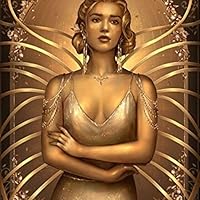
Review of advance copy received from Netgalley
Thank you to the author, publisher, and NetGalley for the eARC!
Blessed is the rot in one of the most well-designed two-genre hybrids. It was executed artfully and successfully. The story, which begins as a medieval fantasy, quickly transitions into science fiction. This unexpected plot twist is executed exceptionally well.
I was pleasantly surprised by the intricate plot and its seamless integration.
Before I delve any further, let me introduce the story.
The narrative begins as a medieval fantasy world where religious zealots, controlled by the church, live their lives around three daily prayers. They fight cursed distortions that displace their reality and afflict innocent people. The war against these distortions is losing ground. The distortions are becoming more frequent, powerful, and there seems to be no solution in sight. Our MMC, is tolling a bell in a religious tower, reminding the citizens that they must “pray” by writing down math equations. Our FMC is a knight of sorts in the religious order, whose sole purpose is to block and fight the distortions. By sheer luck, their paths cross, and they embark on a journey to uncover the secrets of their universe and find a potential solution that could liberate all the denizens.
The book is part of the ALFOM series, tying it to the Nytho directly. While knowing the backstory enhances the reading experience, it’s possible to enjoy the book without prior knowledge of the series. The quality of writing, the atmosphere of unease, fear, and control, and the even distribution of male and female characters’ POVs throughout the book make it a compelling read. The story flows smoothly, and the confusing religion of rot gradually reveals itself, making more sense with each discovery made by the main characters.
Blessed is the rot in one of the most well-designed two-genre hybrids. It was executed artfully and successfully. The story, which begins as a medieval fantasy, quickly transitions into science fiction. This unexpected plot twist is executed exceptionally well.
I was pleasantly surprised by the intricate plot and its seamless integration.
Before I delve any further, let me introduce the story.
The narrative begins as a medieval fantasy world where religious zealots, controlled by the church, live their lives around three daily prayers. They fight cursed distortions that displace their reality and afflict innocent people. The war against these distortions is losing ground. The distortions are becoming more frequent, powerful, and there seems to be no solution in sight. Our MMC, is tolling a bell in a religious tower, reminding the citizens that they must “pray” by writing down math equations. Our FMC is a knight of sorts in the religious order, whose sole purpose is to block and fight the distortions. By sheer luck, their paths cross, and they embark on a journey to uncover the secrets of their universe and find a potential solution that could liberate all the denizens.
The book is part of the ALFOM series, tying it to the Nytho directly. While knowing the backstory enhances the reading experience, it’s possible to enjoy the book without prior knowledge of the series. The quality of writing, the atmosphere of unease, fear, and control, and the even distribution of male and female characters’ POVs throughout the book make it a compelling read. The story flows smoothly, and the confusing religion of rot gradually reveals itself, making more sense with each discovery made by the main characters.
Review of advance copy
Blessed Is the Rot is one of those books that quietly challenges you. It blends fantasy and sci-fi in a post-apocalyptic setting where belief systems, decay, and logic are deeply entangled. The concept alone is bold, but what really stood out to me was how confidently the author lets the reader find their own footing in this world.
I won’t lie — the beginning took some patience. I started the book once, put it aside, and only truly connected with it when I picked it up again later. From that moment on, I was fully immersed and read most of it in one sitting. This isn’t a flaw so much as a reflection of how layered the story is; it asks for attention, but it rewards it.
The worldbuilding is subtle and thoughtful. Rot isn’t just something that exists physically, it seeps into ideas, faith, and institutions. I really appreciated how these themes unfolded naturally through rituals, traditions, and quiet details rather than heavy exposition.
Sophie and Fenrir are complex protagonists, shaped by belief, doubt, and personal secrets. Even when their choices frustrated me, I found myself deeply invested in their journey. Their relationship develops gently and realistically, fitting the tone of the story, though it fades slightly into the background later on.
For me, the pacing shifted halfway through. The first part felt exploratory and rich with discovery, while the latter leaned more toward politics and interpersonal conflict. I didn’t dislike that shift, but I was more drawn to the atmosphere and tension of the earlier chapters.
Overall, this was an original and thought-provoking read that left a strong impression. I’d happily return to this universe if given the chance.
Thank you to BookSirens and the author for my first ARC through them — a memorable start.
I won’t lie — the beginning took some patience. I started the book once, put it aside, and only truly connected with it when I picked it up again later. From that moment on, I was fully immersed and read most of it in one sitting. This isn’t a flaw so much as a reflection of how layered the story is; it asks for attention, but it rewards it.
The worldbuilding is subtle and thoughtful. Rot isn’t just something that exists physically, it seeps into ideas, faith, and institutions. I really appreciated how these themes unfolded naturally through rituals, traditions, and quiet details rather than heavy exposition.
Sophie and Fenrir are complex protagonists, shaped by belief, doubt, and personal secrets. Even when their choices frustrated me, I found myself deeply invested in their journey. Their relationship develops gently and realistically, fitting the tone of the story, though it fades slightly into the background later on.
For me, the pacing shifted halfway through. The first part felt exploratory and rich with discovery, while the latter leaned more toward politics and interpersonal conflict. I didn’t dislike that shift, but I was more drawn to the atmosphere and tension of the earlier chapters.
Overall, this was an original and thought-provoking read that left a strong impression. I’d happily return to this universe if given the chance.
Thank you to BookSirens and the author for my first ARC through them — a memorable start.
January 30, 2026
Blessed is the Rot is a great addition to gothic sci-fi, one of my favorite sub-genres. This book is so unique, combining sci-fi concepts, gothic themes, and elements most often found in fantasy into a story that is difficult to describe but very easy to enjoy.
We follow Fenrir, who used to serve the Church but has been cast out, and Sophie, a current agent of the Church as they fight to control a dangerous distortion in Fenrir’s town. Though they are eventually drawn together, there are dark secrets in the past and dangers in the present that may end up tearing them and their world apart.
I really enjoyed how unique this book was, especially in terms of how much the author was able to convey tonally; there is a grand scope to everything that feels very fantastical, but also a rotting core to the foundations of the story that brings us back to a gothic atmosphere. Though I struggled a bit with pacing in the first part of the book, the story kept drawing me back into the wonderfully strange world the author was building, and when I hit the second half of the book I was hooked until the end. This is tonally very different from earlier books I’ve read by the author, and I am intrigued to see where this trilogy goes; I will certainly read the second book!
I would recommend Blessed is the Rot to fans of Leech by Hiron Ennes and The Crypt of the Moon Spider by Nathan Ballingrud, as well as to readers who enjoy weird fiction, fantastical gothic stories, and fantasy that leans grimdark.
Thank you to the author & NetGalley for the arc! All thoughts & opinions in the review are my own.
We follow Fenrir, who used to serve the Church but has been cast out, and Sophie, a current agent of the Church as they fight to control a dangerous distortion in Fenrir’s town. Though they are eventually drawn together, there are dark secrets in the past and dangers in the present that may end up tearing them and their world apart.
I really enjoyed how unique this book was, especially in terms of how much the author was able to convey tonally; there is a grand scope to everything that feels very fantastical, but also a rotting core to the foundations of the story that brings us back to a gothic atmosphere. Though I struggled a bit with pacing in the first part of the book, the story kept drawing me back into the wonderfully strange world the author was building, and when I hit the second half of the book I was hooked until the end. This is tonally very different from earlier books I’ve read by the author, and I am intrigued to see where this trilogy goes; I will certainly read the second book!
I would recommend Blessed is the Rot to fans of Leech by Hiron Ennes and The Crypt of the Moon Spider by Nathan Ballingrud, as well as to readers who enjoy weird fiction, fantastical gothic stories, and fantasy that leans grimdark.
Thank you to the author & NetGalley for the arc! All thoughts & opinions in the review are my own.
Displaying 1 - 30 of 64 reviews