Alexandre Dumas hat ihm Unsterblichkeit verliehen -Charles d'Artagnan, Kapitän der Musketiere im Dienst der französischen Krone. Ihn und seine Freunde Aramis, Athos und Porthos kennt wohl jeder, kaum aber einer die historische Quelle, aus welcher der Romancier für diesen literarischen Welterfolg schöpfte: die apokryphen »Memoires de Monsieur d'Artagnan« (1700/01) von Gatien de Courtiis de Sandras, bislang einzig 1919 in deutscher Sprache erschienen und als Ursprungswerk nunmehr dem Leser endlich wiederentdeckt.
Disclaimer: this book is only for very massive The Three Musketeers -geeks. I am not talking about 'I enjoyed the book and [(the movie with Michael York/Charlie Sheen)/Dogtanion and the three Muskehounds was a really nice show]'. I am talking about 'I have read the book and the sequels (possibly more than once), have spent an unreasonable amount of time hunting down and watching obscure movie-adaptation of it (including the one with David Hasselhoff let us not speak of this ever), once bought a bottle of wine just because it was called 'The White Musketeer' and still have the wrapper of that d'Artagnan chocolate-bar'-level geekery. (Obviously I would never do any of these things. I have a friend who does. Yep. She's also writing this review. Really. I am not a weird person at all. *tries to smile reassuringly* SEE! Nobody can prove anything. Nobody!)
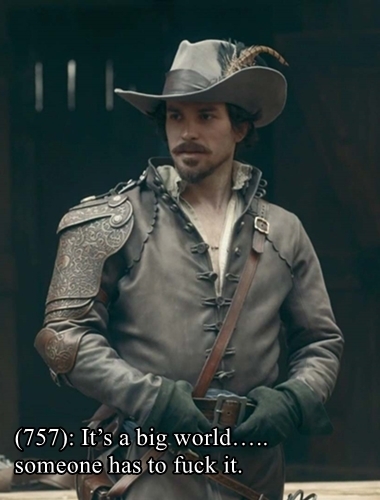
Anyway...back to the book. It is not particularly...thrilling. About 2/3 of it is "d'Artagnan gets into trouble because he couldn't keep his pants on but gets quickly out of it again because he is just that awesome". No seriously...this guy has more romantic adventures than all the Musketeers in all the various adaptations put together. And yes, this includes BBC!Aramis
(I should clarify: 2/3 of the edition I was reading: a German translation where the translator pointed out in the afterword that he heavily edited/shortened it and that he considered the sexy adventures much more interesting than the description of battles and of political stuff (which Sandras got mostly wrong anyway apparently))
The rest is mostly about work he does for Cardinal Mazarin (and whining about how much of a penny-pincher he is) and the occasional trouble he got in for reasons other than 'could not keep his pants on' (those are rare...very rare). There is no actual red line in the book. With the exception of Mazarin there are almost no recurring characters, people appear for a few pages (if they're female d'Artagnan sleeps with them, if they're male they get angry at him for sleeping with their wives) and are never seen or even mentioned again. For a Musketeer-geek it's still interesting to see where Dumas got his inspiration from. Though if you expect this book to be a less polished version of The Three Musketeers you will also be disappointed. In the first quarter there is some stuff that will be familiar: the very beginning is quite similar to TTM, including the scene with Rochefort (who has a different name here), Athos, Porthos and Aramis are mentioned (though only two or three times), a character that was very likely the inspiration for Constance appears and so does Milady but that's it. Not much swashbuckling adventures, no secret letters that have to be delivered...so without a strong interest for Dumas (or perhaps the time-period this was written) you will probably be bored very quickly. But if you're enough of a nerd this is just the book for you at least my friend says so.
Konečně jsem se odhodlala k přečtení této útlé knížky. Hlavním překvapením pro mě bylo, že Dumas, autor Tří mušketýrů, se inspiroval dílem tohoto autora. Že Athos, Portos a Aramis s d'Artagnanem nebyli z jeho hlavy (podle wikipedie tyto postavy byly inspirovány skutečnými mušketýry, což by mě zajímalo až do jaké míry).
Děj jako takový je obyčejný, ničím přespříliš zajímavý. Nepůsobí jako ucelený příběh, vypadalo to spíše jako povídky. Nečekejte žádné dobrodružství v boji, bitky s nepřáteli země. Kdepak. Většina knihy se víceméně točí kolem toho jak zhýralý d'Artagnan prohání ženským sukně, chce zbohatnout a ulovit si zajištěnou paničku všemožnými úklady. Rozhodně to není žádný kladný hrdina, kterého by mohl mít čtenář v oblibě.
Bohužel velkým problémem pro mě byl zastaralý jazyk. Sice cením snahu, aby kniha působila atmosférou dané doby, ale přece jsme už někde jinde a zmodernizovat text by byl mnohem lepší nápad. Nemluvě o samotném překladu, podivném slovosledu, který taky nebyl nejzdařilejší. Trochu mi i vadilo, že v knize se nachází pár ilustrací, ale absolutně nesedí do dané kapitoly a tak si přečtete nějaké hrdinovo dobrodružství a ilustraci najdete až o mnoho stránek dále.
Kniha nemá příliš co nabídnout. Neustálé postelové pletky nebo vzájemné bitky kvůli uražené cti. Sem tam nějaká "mise" pro kardinála či krále. Ale po nějaké době je to spíš jako kolovrátek stále dokola. Pořád jsem čekala, kdy se hlavní hrdina trochu umoudří nebo kdy se dozvím něco z historie, ale tyhle vsuvky se objevily jen sporadicky a zabraly pár řádků.
Per gli amanti del genere e dei personaggi una vera chicca da gustare pagina dopo pagina. Un vero intrigo senza fine, come le successive avventure di D'Artagnan!
lch fürchte ich hätte lieber die Rekonstruktion des Lebens des tatsächlichen historischen d'Artagnans gelesen (die im Nachwort erwähnt werden) als diesen stark gekürzten Abenteuerroman mit dem Anstrich der Memoiren.
Als kleiner Abstecher in die Lebensweise eines französischen Edelmannes ist das Buch zwar interessant (dessen Zeitgenosse der ursprüngliche Autor war. Wenn auch alle Ereignisse in dieser apokryphen Biografie erfunden sind, so stellen sie doch immer noch die Umgebung eines Charakters wie d'Artagnan glaubhaft genug da, dass seine Zeitgenossen darin etwas Wahrheit darin erkannten) aber weniger detailliert als ich mit erhofft hatte.
Vielleicht ist das den starken Kürzungen zu verdanken die der Übersetzer vorgenommen hat (laut Nachwort). Bis zu einer neuen Bearbeitung des Stoffes würde ich daher empfehlen, dass, wer dessen mächtig ist, sich besser das Original zuführt.
RECENZE: Gatien Courtilz de Sandras vytvořil dílo, o němž by se dalo říct, že není ryba ani rak. Námět tří mušketýrů je dozajista zajímavý, leč autor zejména u dnešních čtenářů narazí. Pro milovníky Tří mušketýrů jsou Paměti hraběte d’Artagnana dobrou volbou, jak si zpestřit poličku své knihovny. Ale také pro všechny, kteří chtějí jednoduše vědět, jak moc se tímto dílem Alexandre Dumas inspiroval a co všechno ve svém slavném díle pozměnil.