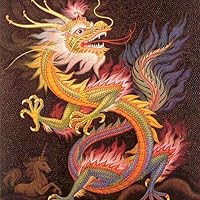
An alternate history of the ancient world, three or four thousand years ago, in which Minoans build a global trading community based on mutual obligation and a trust-but-verify approach to communication. We meet people, human and imperfect people of the steppe, Central America, the North American plains, northwest coast, plus the piratical Sea People who prey on them, and see how the Minoan credo—pay attention, communicate, tell the truth (particularly to yourself), and trust-but-verify—can build a working world in which capitalism, global trade, and fairness are not contradictions in terms. There is still conflict—war and famine, fear and hatred, love and friendship, human dignity and human slavery—because people are people, but it is a marvelous vision of how the world might have been, perhaps once was, and might, still, one day be.
Vonda Neel McIntyre was a U.S. science fiction author. She was one of the first successful graduates of the Clarion Science fiction writers workshop. She attended the workshop in 1970. By 1973 she had won her first Nebula Award, for the novelette "Of Mist, and Grass and Sand." This later became part of the novel Dreamsnake, which won both the Hugo and Nebula Awards. The novelette and novel both concern a female healer in a desolate primitivized venue. McIntyre's debut novel was The Exile Waiting which was published in 1975. Her novel Dreamsnake won the Nebula Award and Hugo Award for best novel in 1978 and her novel The Moon and the Sun won the Nebula in 1997. She has also written a number of Star Trek and Star Wars novels, including Enterprise: The First Adventure and The Entropy Effect. She wrote the novelizations of the films Star Trek II: The Wrath of Khan, Star Trek III: The Search for Spock, and Star Trek IV: The Voyage Home.
A speculation of what Minoan civilization could have been like, and what they could have accomplished, had they survived.
The structure of the book is a journey of discovery across the world. The purpose of the journey is to return an adopted child to their original birthplace, but that's the impetus that drives the plot. The custom of 'given' children is these cultures is explained, and many aspects of trade are encountered.
There is not a precise match of cultures encountered, and the reader shouldn't be misled to think that was the author's intention. But as with Guy Gavriel Kay's novels, there are resonances with older civilizations that ring true.
Vonda McIntyre was a good friend and colleague of Ursula K. Le Guin, and the people and cultures described in this book seem very 'Le Guinian' to me, and is probably not accidental. While McIntyre passed away before delivering the manuscript to a publisher, by all accounts the manuscript was in its final form before a crew of friends, editors and publisher came together to shape the published book. Unlike other posthumously published books (such as John M. Ford's 'Aspects'), this is a completed story and reads very satisfyingly. While there would be room for a natural sequel at the end, there is no indication that McIntyre intended one. The story is complete.
And I don't say that very often. I laughed, I cried, I was angry, I was afraid. A beautiful exploration of exploration, family, and what it means to be human.
McIntyre finished Curve of the World just before she died in 2019. After a long delay, it was published this year by Aqueduct Press.
Short version: It's good. Most highly recommended.
Curve of the World is an alternative history of sorts. What if the Late Bronze Age collapse of the 12th century BCE never happened? What would the Eastern Mediterranean world look like if the bull dancing, Labrys using Cretian civilization that preceded the Greeks was still around in the 6th century BCE? (we're told of a volcanic eruption a thousand years earlier, which I think refers to the famous Minoan eruption of Thera circa 1550 BCE, placing the story around 550).
I've read just enough ancient history to be able to recognize and appreciate the research McIntyre did and the work she put into fleshing out the bare archaeology of the Minoans into a living, breathing culture (which she names Idaean) that doesn't contradict the little we know about that time and place. But she also felt free to steer her extrapolations into the kind of society she wanted to write about - a peaceful matriarchy that hasn't been at war in living memory, set amongst other matriarchies (the Pharaoh is a woman, the People are basically Amazonian horse nomads). We do meet two warlike societies, and the Idaeans are skilled at defending themselves from pirate attacks just as the People are skilled at fighting off pillaging raiders from the north. But overall, she wanted to write a story about traders who make friends, not bullies who take.
Iakinthu is an Idaean trader and professional diplomat. She sails the seas, meeting new peoples, trading with them, and ensuring ongoing peaceful relations by a system of exchanging foster children. With their consent, tween-ish Idaean children go off to be raised by people she meets, and vice-versa. The fosters return home once they reach adulthood, and only then, after reuniting with their birth family, do they make a choice of which culture they will stay with.
Iakinthu has traded with Egypt, with the horseback riding nomadic People (Amazons, basically), and, taking advantage of the ancient Canal of the Pharaohs linking the Nile to the Red Sea (this existed, look it up), she has visited Hind (India) and Sheng (China). Going the other direction, she has been to the eastern coast of North America and traded with the maize growing Maisusutha. Her ship, the Flying Fish, has an advantage on these extremely long voyagers - Aranthau, its captain and her lover, is part human, part Sea People (aquatic humans, a recurring trope in McIntyre's fiction), which makes him very good at talking to whales, navigating, and avoiding dangerous weather.
At the start of the novel, Iakinthu is middle aged and considering retirement, but her adopted son Rhenthizu has reached adulthood and it is time to reunite him with his birth family. The problem is that Rhenthizu was enslaved at a very young age, then traded from one master to another over a vast distance before Iakinthu freed and adopted him. He remembers very little of his birth family, but he knows it lies on the coast where the sun rises above the Salish sea (America's Northwest Coast). For her last voyage, Iakinthu sets out to return him to his homeland, seemingly impossibly far from the east side of the continent where she has been before.
Structurally speaking, the book is more a travelogue than a novel. There's very little conflict and no real antagonist. Instead, McIntyre takes us on a delightful tour through a might have been world.
Don't expect this to be a rigorously historical book. Idaeans enjoy silk and paper imported from the Sheng over the Silk Road, but both paper and the trading route were not things until centuries later than my best guess at the time of the novel. McIntyre does not hesitate to have appearances by species that became extinct thousands of years before the story takes place (a huge ground sloth), or that might not ever have existed (a giant squid larger than the Flying Fish). And she arranged for the Bronze age to still be going on in the places we see, with "sky iron" and "earth iron" being exotic trading items rather than things the Idaeans make themselves.
One place where I think McIntyre made the wrong choice: after visiting the Maisusutha, and with the guidance of their former foster child Uinthi, who has explored very far in search of someone who speaks Rhenthizu's language, the Idaeans head south. Eventually they come to the waters off central America and meet Lady Jaguar, a Mayan-like ruler. McIntyre wanted Jaguar's empire to be expansionist, so she gives them the Incan system of inheritance - dead rulers continue to own their lands, forcing their children to conquer if they want to have an estate of their own. And that mixing felt uncomfortably close to the Western movie tradition of treating Indian peoples as all the same, mixing up wildly different cultures into a single imaginary blenderized "Indian". Especially when there were real central American conquest based empires she could have drawn on, like the Aztecs. Someone who knows a lot more about the First Nations that McIntyre drew on for her Maisusutha and for the Northwest Coast people she depicts might be able to point out other points where she mixed different things together.
On the other hand, given the way the book rearranges other timelines, perhaps McIntyre meant for Lady Jaguar's empire to be an Andes-mesoamerican mix that stretches from Peru to the Yucatan.
I enjoyed this book very much and could burble on much longer. It's good. It's beautifully written. And given the way things are going in the real world, it was a much needed balm to read about a leader and a people who aren't bullies and aren't out to pillage for their own enrichment.
I bought "The Curve of the World" because McIntyre wrote a science-fiction/fantasy blend I admired. The book was well crafted, but it was more guided tour than story.
The setting is an alternate history, not in the common sense of the world being different because some events turned out differently, but in the sense that it's a different history inspired by ours. There is no way to 'date' the story coherently, but it is basically iron age - call it 500 BC - with some elements from a millennium earlier and some from a millennium later. (The blurb says 'bronze age', but iron knives, iron nails, and what may have been a Thera eruption about a millenium earlier.)
The main characters are from Crete. (We are never told that they are from Crete, but mediterranean, double-headed axes, dancing with bulls...) Crete has, or is part of, a significant trade network, and it has a custom of exchanging fosterlings with other lands. When fosterlings grow up, they decide which land to call home. 'Curve' is the story of a voyage to return a fosterling (he is actually a rescued child, but he has the status of a fosterling) to his home. He only barely remembers his home but, from what he remembers, the reader will recognize it as being in the Pacific Northwest. So it's an extremely-ambitious voyage.
The voyage is a guided tour of sexual politics and polities, more than of other civilizations. Crete is matriarchal to the point where it is considered bad manners to speak of children's fathers. We never see Egypt, but we are told that the Pharaoh is female. 'The People' are mostly female, and foster out most of their boy children. The northern pirates are at the far end of the women-are-chattel spectrum.
A very slow starter, it takes almost until halfway before the story picks up. But then it gets good, really good. Near the end it requires an increasing suspense of disbelief.
Not the book I hoped for. Maybe I'm just in the wrong mood for scented oil and wine poured over bodies before sex, and then detailed sex before and after... Maybe.