

What do you think?

As If: A Novel
A slender, sly, and profoundly intelligent novel about two strangers who swap lives to find new a story of aspiration, ambition, and the possibility of radical newness.
Two men meet in an apartment in London. They are strangers to one another, and yet they look remarkably alike. Lewis is grieving his dead wife; Korine is hiding from his very-much-alive one. Lewis never had children; Korine has just walked out on his. Lewis is a retired actor whose career never amounted to much beyond a bit part on a B-list sitcom; Korine has always dreamed of acting.
Slowly and then all at once, each begins to live on the other’s behalf. As Korine answers a casting call under Lewis's name, Lewis finds himself playing father to the other man’s son. Each day the strange ruse becomes truer and stranger, more entrenched. Plunged into an existential game of cat-and-mouse, pursuit and retreat, they find that acting might make it possible to, finally, live.
Isabel Waidner's As If is a wily, propulsive, and unusually wise novel about what happens when we fall out of our roles and attempt to make new a tale of thwarted expectation, renewed ambition, and the possibility of escape. It is the story of two men, or maybe a love story and a ghost story both.
Two men meet in an apartment in London. They are strangers to one another, and yet they look remarkably alike. Lewis is grieving his dead wife; Korine is hiding from his very-much-alive one. Lewis never had children; Korine has just walked out on his. Lewis is a retired actor whose career never amounted to much beyond a bit part on a B-list sitcom; Korine has always dreamed of acting.
Slowly and then all at once, each begins to live on the other’s behalf. As Korine answers a casting call under Lewis's name, Lewis finds himself playing father to the other man’s son. Each day the strange ruse becomes truer and stranger, more entrenched. Plunged into an existential game of cat-and-mouse, pursuit and retreat, they find that acting might make it possible to, finally, live.
Isabel Waidner's As If is a wily, propulsive, and unusually wise novel about what happens when we fall out of our roles and attempt to make new a tale of thwarted expectation, renewed ambition, and the possibility of escape. It is the story of two men, or maybe a love story and a ghost story both.
179 pages, Kindle Edition
First published February 26, 2026
About the author
Isabel Waidner
13 books147 followersIsabel Waidner is a writer and critical theorist.
Their books include We Are Made Of Diamond Stuff (2019), Gaudy Bauble (2017) and Liberating the Canon: An Anthology of Innovative Literature (ed., 2018), published by Dostoyevsky Wannabe.
Waidner's critical and creative texts have appeared in journals including AQNB, Cambridge Literary Review, The Happy Hypocrite, Tank Magazine and Tripwire.
They are the co-founder of the event series Queers Read This at the Institute of Contemporary Art (with Richard Porter), and an academic at University of Roehampton, London.
Their books include We Are Made Of Diamond Stuff (2019), Gaudy Bauble (2017) and Liberating the Canon: An Anthology of Innovative Literature (ed., 2018), published by Dostoyevsky Wannabe.
Waidner's critical and creative texts have appeared in journals including AQNB, Cambridge Literary Review, The Happy Hypocrite, Tank Magazine and Tripwire.
They are the co-founder of the event series Queers Read This at the Institute of Contemporary Art (with Richard Porter), and an academic at University of Roehampton, London.
Ratings & Reviews
Friends & Following
Create a free account to discover what your friends think of this book!
Community Reviews
Displaying 1 - 30 of 111 reviews

November 29, 2025
Primarily, I based my performance on a combination of what I myself had seen of Korine (enough) and the fact I was navigating a set of conditions which, taken together, amounted to Korine's life and produced Korine-like responses. If acting was indeed living truthfully under imaginary circumstances, I had the advantage that on this occasion said circumstances were real.
Not that I didn't get it wrong. I frequently did Korine incorrectly. Like the time I neglected to mispronounce Cyril's teacher's Korean name which I gathered Korine did without fail.
A towering achievement from one of contemporary literature’s most original minds. - Kirkus Reviews
My first encounter with Isabel Waidner's work was in September 2017 when their Gaudy Bauble was entered, and later shortlisted, for the 2018 Republic of Consciousness Prize, of which I was then a readers-panel judge.
The novel began with the memorable line: A formidable micro-horse sprang across a Formica tabletop. By the end of a first paragraph that included the motifs on a sweater becoming animate, and which concluded and this was just the beginning, I realised this was something very different to anything I'd read previously, Awkwardgarde fiction, potentially trailblazing as the authorial stand-in put it before the narrative baton was seized from them by a pegasus, and I must admit it took me several reads of that first page, and a read of the author's PhD thesis, before I really understood what they had achieved: Transliterary, a new genre of its own, "sharing agency (the capacity to influence the narrative) across assemblages of human and nonhuman, fictional and real, material and semiotic 'actors' ... to subvert normative versions of authorship, intentionality, causality, and process."
By the time of Waidner's 2nd novel We are Made of Diamond Stuff, I was, and remain, convinced that they were, in the words that opened my review, Britain's most exciting and important writer, an impression that was fully confirmed by Stirling Karat Gold, which won the one prize that, for me, compares to the Republic of Consciousness in its literary ambition, the Goldsmiths Prize.
And winning that Prize “as a writer lacking the structural privileges related to class, native status and cisgender” (as Waidner commented thanking the Prize organisers and judges), combined with a striking sobriquet of 'a modern-day Joe Orton' bestowed in a Goodreads review by a well-regarded blogger was the starting point for Waidner's fourth novel, Corey Fah Does Social Mobility, a brilliant exploration of one of the most neglected barriers to social mobility, cultural capital. That novel memorably included the character Sean St Orton, a version of Joe Orton in an alternative timeline where he escaped the real-life fate of the playwright as described in Prick Up Your Ears: The Biography of Joe Orton by John Lah.
Lah's work was adapted by Alan Bennett into a screenplay for the 1987 film of the same name, directed by Stephen Frears, and starring the New Cross born working class actor, Gary Oldman.
And Oldman's upbringings and career are of crucial importance for each of the two main characters in 'As If', Waidner's latest novel, forthcoming in 2026, which again includes social mobility as one key theme. Aubrey Lewis and Lindsey Korine are both, like Oldman, from New Cross and they attended the West Greenwich School in Deptford around 20 years after the actor.
They were in the same year, although Aubrey doesn't seem to remember Korine, and Korine only vaguely remembers Aubrey. Korine remembers wanting to be an actor 'for about a minute aged ten or eleven' after seeing Oldman in Prick Up Your Ears, but took Oldman's example as very much an exception that proved the rule, while Lewis pursued a semi-successful acting career, following Oldman's example:
I come from a vastly different set of material circumstances compared to most actors I met in the industry over the decades. You’d think it doesn’t matter, but it does. It means that I come at it, acting, differently. I never even thought of it as something people did until I saw Gary Oldman play Joe Orton in Prick Up Your Ears one night on the BBC. I was ten or eleven. I was completely arrested. I’d heard that he, Oldman, went to the same secondary school in Deptford as I did, twenty years prior, which can’t have helped my subsequent overidentification with him.
However As If is primarily a distinguished admission to the literary list of dopplegangers, particularly those that represent to each other a different path not taken, from Doestevsky through Beckett to Jon Fosse's Septology and it's two Asles.
Each man has, or had, a wife named Laurie who had cancer, and both couples lived around the Barbican Estate. But Korine's wife is in remission, while Aubrey's Laurie died 18 months earlier. Korine has struggled economically, rather relying on his wife's career, in some form of gathering intelligence. Aubrey began his acting career, at the Barbican, as Vladimir in Waiting for Godot but ended in a long-running (seventeen seasons, three-hundred and eight four episodes) BBC TV series, about two sleuths, each hired to keep an eye on the other, Aubrey in a secondary role as the partner of one of the sleuths.
But Aubrey has become disillusioned with acting, in part after Laurie's death but also realising the TV show is a 'professional, defanged' version of what drew him to acting - 'playing a role, any role, like it mattered'. When is approached to play the lead role in a new series, As If, where the twin secondary roles become the lead, he declines
Meanwhile Korine has left his family, in a 'popping-out-to-the-shop-for-a-pint-of-milk' moment (in a brilliantly written scene involving a kitten), unable to cope with his wife's illness and recovery and the responsibility it transfers on to him, and hiding in the Barbican underpass, Beech Street, sees Aubrey pass by, and, on a whim follows him to his flat. Both men are essentially opting out of their responsibilities - while people 'stepped gingerly over them' (from Waidner's cleverly chosen epigraph from Beckett's Molloy), literally so in Korine's case in the underpass.
The plot has the two men, more by accident than design, and certainly not by connivance, swapping each lives, or, more accurately, swapping roles, an immediate second read strengthening how cleverly this, and the layers of doubling, have been constructed.
But for both Aubrey and Korine, far from playing a role, they need to discover themselves - as Korine notes from watching acting videos 'there is more to acting than just pretending to be someone else'. There's a brilliant passage where Korine's wife remarks sarcastically, as Aubrey starts to mirror Korine's unreliability - 'One thing's for certain, you're getting better at Korine', which he misinterprets as a comment on his acting skills:
On the surface of course, Laurie was affirming me in my role: you're getting better at Korine. But by openly referring to Korine as a third party, she was effectively undermining me in it. She had as good as announced to hypothetical theatregoers that someone, I, was acting while the play was in progress, disrupting the fictive reality.
The novel's title comes - I think even if subliminally - from acting coach Sanford Miesner's (represented in the novel as 'Sandy M.') technique of 'as ifs', building on Stanislasky's concept of particularization: “A particularization, an as, if, is something else. It’s your personal example chosen from your experience or your imagination which emotionally clarifies the cold material of the text.”
And while my reading of the novel erred to a realistic explanation, Waidner (rather like Fosse) leaves open an alternative explanation, including in the novel’s emotionally moving closing scene.
The novel is both unmistakably Waidner - the crisp staccato sentences; the strong sense of place; the keen visual eye and particular interest in fashion (even if here it tending to the beige and unfashionable); the theme of social mobility; and the cultural and literary links (here extended to fascinating insight into the profession of acting) - but a further evolution of their literary style, with the pyrotechnics of Waidner's earlier work perhaps fading, but this allowing the novel to showcase their deeply intelligent writing and empathetic poignacy.
Another brilliant addition to an impressive ouevre.
Thanks to both the publisher via Netgalley but also the author directly for the advanced review copy.
Some visual images from the novel:
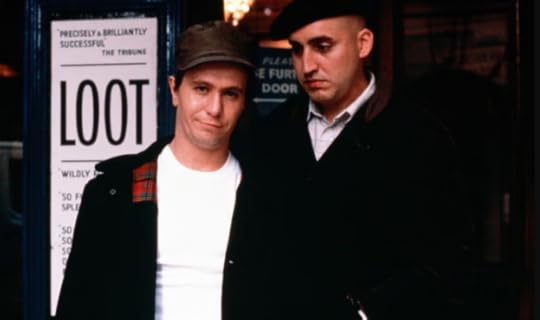
I saw Gary Oldman play Joe Orton in Prick Up Your Ears one night on the BBC
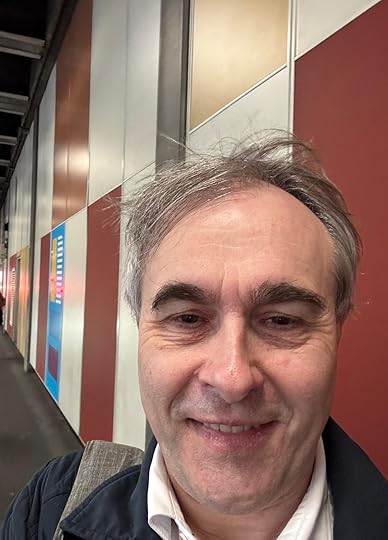
I was sitting in the Barbican underpass, Beech Street I think the official name is, I must’ve seen something. I was sitting on the pavement, leaning against one of the panels cladding the walls: a chipper palette of beige and its foils: light blue, maroon, white, bright yellow, I want to say sand.
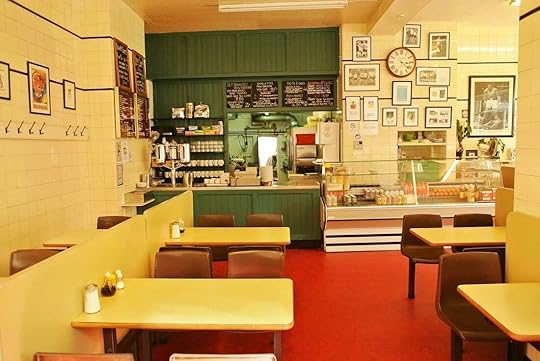
The Regency Cafe, Westminister, source of the UK cover photo and perhaps a model for Ludo's.
Twenty or so wooden tables, the typical condiments on each: salt and pepper shakers, sugar pourer, ketchup and brown sauce plastic squeeze bottles. Fake-leather-bound menus, not a tablecloth far and wide ... and framed celebrity photos all over the walls

One of the architectural idiosyncrasies of Basterfield House: sets of concrete steps provided direct access from the communal garden to the balconies of the upper-ground-floor maisonettes.
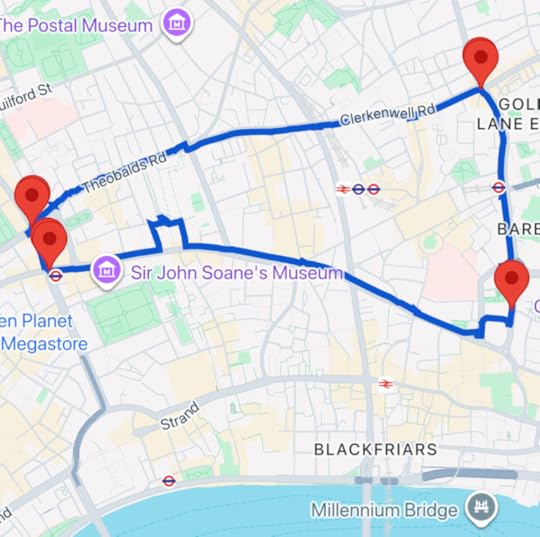
So I walked, circuting an area defined by my physical capabilities: northbound on Aldersgate Street, then left into Clerkenwell Road leading into Theobalds Road, then left into Southampton Row and left again into Holborn.
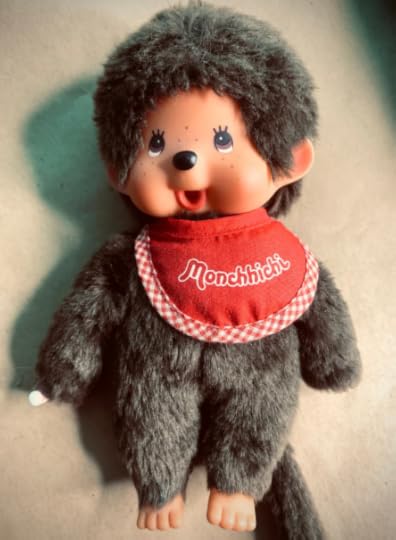
He pulled a children's toy, a little monkey with puffy cheeks, a Moncchichi, I believed, out of the plastic bag.
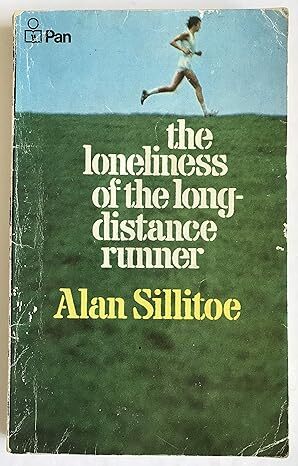
I walked straight into the lead of The Loneliness of the Long Distance Runner after that. The production, at the National, of all places, marked forty years since the publication of Sillitoe ’s novella.
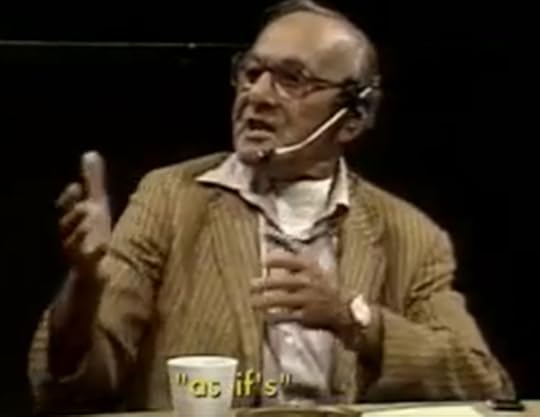
Sandy M., one of the most influential and revered acting teachers in modern times, sits behind a desk.
Sanford Meisner, explaining to an acting student, reciting Humpty Dumpty, 'that's where your liking for "as if's" comes in.'
Not that I didn't get it wrong. I frequently did Korine incorrectly. Like the time I neglected to mispronounce Cyril's teacher's Korean name which I gathered Korine did without fail.
A towering achievement from one of contemporary literature’s most original minds. - Kirkus Reviews
My first encounter with Isabel Waidner's work was in September 2017 when their Gaudy Bauble was entered, and later shortlisted, for the 2018 Republic of Consciousness Prize, of which I was then a readers-panel judge.
The novel began with the memorable line: A formidable micro-horse sprang across a Formica tabletop. By the end of a first paragraph that included the motifs on a sweater becoming animate, and which concluded and this was just the beginning, I realised this was something very different to anything I'd read previously, Awkwardgarde fiction, potentially trailblazing as the authorial stand-in put it before the narrative baton was seized from them by a pegasus, and I must admit it took me several reads of that first page, and a read of the author's PhD thesis, before I really understood what they had achieved: Transliterary, a new genre of its own, "sharing agency (the capacity to influence the narrative) across assemblages of human and nonhuman, fictional and real, material and semiotic 'actors' ... to subvert normative versions of authorship, intentionality, causality, and process."
By the time of Waidner's 2nd novel We are Made of Diamond Stuff, I was, and remain, convinced that they were, in the words that opened my review, Britain's most exciting and important writer, an impression that was fully confirmed by Stirling Karat Gold, which won the one prize that, for me, compares to the Republic of Consciousness in its literary ambition, the Goldsmiths Prize.
And winning that Prize “as a writer lacking the structural privileges related to class, native status and cisgender” (as Waidner commented thanking the Prize organisers and judges), combined with a striking sobriquet of 'a modern-day Joe Orton' bestowed in a Goodreads review by a well-regarded blogger was the starting point for Waidner's fourth novel, Corey Fah Does Social Mobility, a brilliant exploration of one of the most neglected barriers to social mobility, cultural capital. That novel memorably included the character Sean St Orton, a version of Joe Orton in an alternative timeline where he escaped the real-life fate of the playwright as described in Prick Up Your Ears: The Biography of Joe Orton by John Lah.
Lah's work was adapted by Alan Bennett into a screenplay for the 1987 film of the same name, directed by Stephen Frears, and starring the New Cross born working class actor, Gary Oldman.
And Oldman's upbringings and career are of crucial importance for each of the two main characters in 'As If', Waidner's latest novel, forthcoming in 2026, which again includes social mobility as one key theme. Aubrey Lewis and Lindsey Korine are both, like Oldman, from New Cross and they attended the West Greenwich School in Deptford around 20 years after the actor.
They were in the same year, although Aubrey doesn't seem to remember Korine, and Korine only vaguely remembers Aubrey. Korine remembers wanting to be an actor 'for about a minute aged ten or eleven' after seeing Oldman in Prick Up Your Ears, but took Oldman's example as very much an exception that proved the rule, while Lewis pursued a semi-successful acting career, following Oldman's example:
I come from a vastly different set of material circumstances compared to most actors I met in the industry over the decades. You’d think it doesn’t matter, but it does. It means that I come at it, acting, differently. I never even thought of it as something people did until I saw Gary Oldman play Joe Orton in Prick Up Your Ears one night on the BBC. I was ten or eleven. I was completely arrested. I’d heard that he, Oldman, went to the same secondary school in Deptford as I did, twenty years prior, which can’t have helped my subsequent overidentification with him.
However As If is primarily a distinguished admission to the literary list of dopplegangers, particularly those that represent to each other a different path not taken, from Doestevsky through Beckett to Jon Fosse's Septology and it's two Asles.
Each man has, or had, a wife named Laurie who had cancer, and both couples lived around the Barbican Estate. But Korine's wife is in remission, while Aubrey's Laurie died 18 months earlier. Korine has struggled economically, rather relying on his wife's career, in some form of gathering intelligence. Aubrey began his acting career, at the Barbican, as Vladimir in Waiting for Godot but ended in a long-running (seventeen seasons, three-hundred and eight four episodes) BBC TV series, about two sleuths, each hired to keep an eye on the other, Aubrey in a secondary role as the partner of one of the sleuths.
But Aubrey has become disillusioned with acting, in part after Laurie's death but also realising the TV show is a 'professional, defanged' version of what drew him to acting - 'playing a role, any role, like it mattered'. When is approached to play the lead role in a new series, As If, where the twin secondary roles become the lead, he declines
Meanwhile Korine has left his family, in a 'popping-out-to-the-shop-for-a-pint-of-milk' moment (in a brilliantly written scene involving a kitten), unable to cope with his wife's illness and recovery and the responsibility it transfers on to him, and hiding in the Barbican underpass, Beech Street, sees Aubrey pass by, and, on a whim follows him to his flat. Both men are essentially opting out of their responsibilities - while people 'stepped gingerly over them' (from Waidner's cleverly chosen epigraph from Beckett's Molloy), literally so in Korine's case in the underpass.
The plot has the two men, more by accident than design, and certainly not by connivance, swapping each lives, or, more accurately, swapping roles, an immediate second read strengthening how cleverly this, and the layers of doubling, have been constructed.
But for both Aubrey and Korine, far from playing a role, they need to discover themselves - as Korine notes from watching acting videos 'there is more to acting than just pretending to be someone else'. There's a brilliant passage where Korine's wife remarks sarcastically, as Aubrey starts to mirror Korine's unreliability - 'One thing's for certain, you're getting better at Korine', which he misinterprets as a comment on his acting skills:
On the surface of course, Laurie was affirming me in my role: you're getting better at Korine. But by openly referring to Korine as a third party, she was effectively undermining me in it. She had as good as announced to hypothetical theatregoers that someone, I, was acting while the play was in progress, disrupting the fictive reality.
The novel's title comes - I think even if subliminally - from acting coach Sanford Miesner's (represented in the novel as 'Sandy M.') technique of 'as ifs', building on Stanislasky's concept of particularization: “A particularization, an as, if, is something else. It’s your personal example chosen from your experience or your imagination which emotionally clarifies the cold material of the text.”
And while my reading of the novel erred to a realistic explanation, Waidner (rather like Fosse) leaves open an alternative explanation, including in the novel’s emotionally moving closing scene.
The novel is both unmistakably Waidner - the crisp staccato sentences; the strong sense of place; the keen visual eye and particular interest in fashion (even if here it tending to the beige and unfashionable); the theme of social mobility; and the cultural and literary links (here extended to fascinating insight into the profession of acting) - but a further evolution of their literary style, with the pyrotechnics of Waidner's earlier work perhaps fading, but this allowing the novel to showcase their deeply intelligent writing and empathetic poignacy.
Another brilliant addition to an impressive ouevre.
Thanks to both the publisher via Netgalley but also the author directly for the advanced review copy.
Some visual images from the novel:
I saw Gary Oldman play Joe Orton in Prick Up Your Ears one night on the BBC
I was sitting in the Barbican underpass, Beech Street I think the official name is, I must’ve seen something. I was sitting on the pavement, leaning against one of the panels cladding the walls: a chipper palette of beige and its foils: light blue, maroon, white, bright yellow, I want to say sand.
The Regency Cafe, Westminister, source of the UK cover photo and perhaps a model for Ludo's.
Twenty or so wooden tables, the typical condiments on each: salt and pepper shakers, sugar pourer, ketchup and brown sauce plastic squeeze bottles. Fake-leather-bound menus, not a tablecloth far and wide ... and framed celebrity photos all over the walls
One of the architectural idiosyncrasies of Basterfield House: sets of concrete steps provided direct access from the communal garden to the balconies of the upper-ground-floor maisonettes.
So I walked, circuting an area defined by my physical capabilities: northbound on Aldersgate Street, then left into Clerkenwell Road leading into Theobalds Road, then left into Southampton Row and left again into Holborn.
He pulled a children's toy, a little monkey with puffy cheeks, a Moncchichi, I believed, out of the plastic bag.
I walked straight into the lead of The Loneliness of the Long Distance Runner after that. The production, at the National, of all places, marked forty years since the publication of Sillitoe ’s novella.
Sandy M., one of the most influential and revered acting teachers in modern times, sits behind a desk.
Sanford Meisner, explaining to an acting student, reciting Humpty Dumpty, 'that's where your liking for "as if's" comes in.'

Review of advance copy received from Publisher
Isabel Waidner ( Sterling Karat Gold; Corey Fah Does Social Mobility”) is easily one of the most exciting writers working in the Anglophone world today. Faultlessly experimental and endlessly enjoyable, their books delight in troubling the conventional, historically middle-class concerns of fiction by engaging our surreal, improbable present through a queer, working-class, immigrant lens. In As If, this lens is crystal clear – it informs the narrative in all its light and shade without ever imposing on it.
The novel begins with two strangers meeting in a flat in London; two men who are remarkably alike and whose individual trajectories reveal the road not taken by the other. Most of us would have wondered what it would be like to slip into another version of our lives, to experience the selves we would be if only we had made different decisions, or had been dealt slightly different hands. So have our protagonists Aubrey Lewis and Lindsey Korine. And when the opportunity to explore these mirror lives presents itself, they both – if somewhat reluctantly, and entirely accidentally – take it.
For Korine, who wanted to be an actor ‘for about a minute aged ten or eleven,’ the chance to audition for a role in Lewis’s stead feels like a dream come true. Meanwhile, Lewis, having lost his own wife to cancer two years ago, finds more purpose in playing husband to Korine’s – who happens to be in remission – than in the ‘professional, defanged’ version of acting that his erstwhile TV career had demanded. Both men initially revel in being granted a second chance. But as the substance of their new responsibilities catches up with them, they each realise that ‘there is more to acting than just pretending to be someone else,’ that distance does not lighten the burden of the lived realities they are each running from. Indeed, for all the good it really does them, each alter-ego may well be a figment of their respective imaginations.
As If may be the most accessible of Waidner’s novels: It is far less reliant on the dreamlike, absurdist logic of their earlier works, and more attuned to an emotive, empathetic view into the human condition. The latter is evident, as others have pointed out, in the poignancy of a scene in which a careless remark about a kitten reveals an irreparable crack in a marriage that appeared to have survived its greatest challenge, and in the moment that one of our protagonists finally stops to think:
But it is also unmistakably Waidnerian as a work that examines social mobility and the psychological make-up of working-class artists; in its atmospheric evocation of left-field London and its oddball, self-referential humour. (the TV show Lewis used to act on ‘revolved around the premise of one sleuth A. Smythe, who was hired to keep watch on another sleuth B. Smith who was in turn hired to keep watch on A. Smythe.’ Lewis, of course, played his attention-deprived partner, called C. Schmidt.) While the only queer character here is a minor supporting act in our story (albeit co-lead in the TV show they are to appear in), everything, from the ambiguously gendered names of the characters to the social roles they are trying on for size, harkens to a sense of becoming-through-performance a lá Judith Butler and the queer canon. Even at its most farcical – and certainly at its most existential – this book seamlessly marries critical engagement with compulsively readable prose.
I came to As If with my hopes sky-high (it was in fact my most anticipated book of the year) and found myself nourished and plenty rewarded. It was nothing like I could have known to expect – and it was everything. Pure work of genius, really.
_____
*Fun fact: ‘Dead leaf on springs’ was the working title of the novel, and the scene with the kitten its genesis.
The novel begins with two strangers meeting in a flat in London; two men who are remarkably alike and whose individual trajectories reveal the road not taken by the other. Most of us would have wondered what it would be like to slip into another version of our lives, to experience the selves we would be if only we had made different decisions, or had been dealt slightly different hands. So have our protagonists Aubrey Lewis and Lindsey Korine. And when the opportunity to explore these mirror lives presents itself, they both – if somewhat reluctantly, and entirely accidentally – take it.
For Korine, who wanted to be an actor ‘for about a minute aged ten or eleven,’ the chance to audition for a role in Lewis’s stead feels like a dream come true. Meanwhile, Lewis, having lost his own wife to cancer two years ago, finds more purpose in playing husband to Korine’s – who happens to be in remission – than in the ‘professional, defanged’ version of acting that his erstwhile TV career had demanded. Both men initially revel in being granted a second chance. But as the substance of their new responsibilities catches up with them, they each realise that ‘there is more to acting than just pretending to be someone else,’ that distance does not lighten the burden of the lived realities they are each running from. Indeed, for all the good it really does them, each alter-ego may well be a figment of their respective imaginations.
As If may be the most accessible of Waidner’s novels: It is far less reliant on the dreamlike, absurdist logic of their earlier works, and more attuned to an emotive, empathetic view into the human condition. The latter is evident, as others have pointed out, in the poignancy of a scene in which a careless remark about a kitten reveals an irreparable crack in a marriage that appeared to have survived its greatest challenge, and in the moment that one of our protagonists finally stops to think:
I felt like a dead leaf on springs, meaning a strange mechanism kept me going, resisting environmental forces – goings-on I barely understood – and fighting, in an understated way, for my life.*
But it is also unmistakably Waidnerian as a work that examines social mobility and the psychological make-up of working-class artists; in its atmospheric evocation of left-field London and its oddball, self-referential humour. (the TV show Lewis used to act on ‘revolved around the premise of one sleuth A. Smythe, who was hired to keep watch on another sleuth B. Smith who was in turn hired to keep watch on A. Smythe.’ Lewis, of course, played his attention-deprived partner, called C. Schmidt.) While the only queer character here is a minor supporting act in our story (albeit co-lead in the TV show they are to appear in), everything, from the ambiguously gendered names of the characters to the social roles they are trying on for size, harkens to a sense of becoming-through-performance a lá Judith Butler and the queer canon. Even at its most farcical – and certainly at its most existential – this book seamlessly marries critical engagement with compulsively readable prose.
I came to As If with my hopes sky-high (it was in fact my most anticipated book of the year) and found myself nourished and plenty rewarded. It was nothing like I could have known to expect – and it was everything. Pure work of genius, really.
_____
*Fun fact: ‘Dead leaf on springs’ was the working title of the novel, and the scene with the kitten its genesis.

June 4, 2026
This is a book about failure and redemption. It's about what happens when you achieve your dreams and they still fail to satisfy. As If has its moments of nihilism, but it's laced with gentle humor. Full review on BookBrowse: https://www.bookbrowse.com/mag/review...

Read
December 28, 2025If I wanted to be cheeky, I’d say this is Gender Trouble without gender. Read in relation to Waidner’s earlier work, which reveled in freewheeling queerness, this marks a 180-degree turn: there’s not a queer in sight. But - and this is why Butler still matters, I think - As If remains firmly on queer ground in how it explodes cherished social roles (fatherhood, nuclear family, the singular person), revealing them as purely performative: no substance, no essence, only repetitions and mirrorings with no origin or ground to speak of. I’m very excited to see what Waidner brings next. Their work has become essential queer reading.

July 7, 2026
Lost interest in this one, the wittering of the narrator(s) and the puzzle around the wittering narrator(s)’s multiple selves became an increasing chore to muster up the excitement for, in spite of a strong opening.

Review of advance copy received from Netgalley
3.5
Lewis is an out of work actor, once successful but now mourning the death of his wife, he is stalled in life. Lindsay has walked out on his wife and child, avoiding life . The two meet in a subway where Lindsay follows Lewis home and moves in.
From this point on the two men's lives swap and change with the roles alternating in a strange story where neither man seems to know what he wants, where he should be or even who he truly is.
As If is a strange tale but surprisingly compulsive reading as you try to work out whether the story is fiction and if either man is real or a figment of the other's imagination.
I did get a bit bewildered at one point but I still couldn't stop reading. Recommended if you enjoy ethereal, existential tales that question most things about reality.
Thankyou to Netgalley and Farrar, Strauss and Giroux for the advance review copy.
Lewis is an out of work actor, once successful but now mourning the death of his wife, he is stalled in life. Lindsay has walked out on his wife and child, avoiding life . The two meet in a subway where Lindsay follows Lewis home and moves in.
From this point on the two men's lives swap and change with the roles alternating in a strange story where neither man seems to know what he wants, where he should be or even who he truly is.
As If is a strange tale but surprisingly compulsive reading as you try to work out whether the story is fiction and if either man is real or a figment of the other's imagination.
I did get a bit bewildered at one point but I still couldn't stop reading. Recommended if you enjoy ethereal, existential tales that question most things about reality.
Thankyou to Netgalley and Farrar, Strauss and Giroux for the advance review copy.
Review of advance copy received from Netgalley
| ARC REVIEW | Publication Date: 26th Feb 2026
ᯓ ꒰ Trigger Warnings ꒱ ᯓ
⚠️ Bereavement
⚠️ Cancer
ᯓ ꒰ Summary ꒱ ᯓ ✧
Two virtually identical men, despite having taken different paths in life, find themselves living strangely similar lives to one another. With both men feeling unfulfilled and desperate to get a taste of the life the other one has, they decide to trade places and become the main character in a life that isn't truly theirs. Both men hope this could be their second chance to not mess things up again, but is the grass ever really greener on the other side?
ᯓ ꒰ My Thoughts ꒱ ᯓ
Right from the very get go, Aubrey Lewis' and Lindsay Korine's a-million-mile-an-hour monologues (both inner and outer) gave a fantastic insight into their personalities: both erratic, overwhelmed and indecisive. Both characters were written in a way that portrayed their depth and complexity, making them feel well-rounded and life-like.
I personally haven't read any of Isabel Waider's previous works, and also haven't read a book which is in any way similar to the plot of As If, so I was unsure of what to expect. However, I found it an intriguing story. I thought the level of description was fantastic. And although the story was heavily emotionally motivated, there were several parts which were also comically ironic and slyly funny.
I did find some parts of the story a bit overly complicated and lacking clarity — especially during the parts where the characters' thoughts seemed to wander off on many a tangent — which occasionally made the plot difficult to keep track of. But overall, I thought the book was fast-paced, strangely quirky, and enjoyably surreal, with a premise I've not encountered before.
Thank you to NetGalley, Isabel Waidner, and Penguin General UK | Hamish Hamilton for gifting this eBook in exchange for an honest and unbiased review. All opinions are my own.
ᯓ ꒰ Trigger Warnings ꒱ ᯓ
⚠️ Bereavement
⚠️ Cancer
ᯓ ꒰ Summary ꒱ ᯓ ✧
Two virtually identical men, despite having taken different paths in life, find themselves living strangely similar lives to one another. With both men feeling unfulfilled and desperate to get a taste of the life the other one has, they decide to trade places and become the main character in a life that isn't truly theirs. Both men hope this could be their second chance to not mess things up again, but is the grass ever really greener on the other side?
ᯓ ꒰ My Thoughts ꒱ ᯓ
Right from the very get go, Aubrey Lewis' and Lindsay Korine's a-million-mile-an-hour monologues (both inner and outer) gave a fantastic insight into their personalities: both erratic, overwhelmed and indecisive. Both characters were written in a way that portrayed their depth and complexity, making them feel well-rounded and life-like.
I personally haven't read any of Isabel Waider's previous works, and also haven't read a book which is in any way similar to the plot of As If, so I was unsure of what to expect. However, I found it an intriguing story. I thought the level of description was fantastic. And although the story was heavily emotionally motivated, there were several parts which were also comically ironic and slyly funny.
I did find some parts of the story a bit overly complicated and lacking clarity — especially during the parts where the characters' thoughts seemed to wander off on many a tangent — which occasionally made the plot difficult to keep track of. But overall, I thought the book was fast-paced, strangely quirky, and enjoyably surreal, with a premise I've not encountered before.
Thank you to NetGalley, Isabel Waidner, and Penguin General UK | Hamish Hamilton for gifting this eBook in exchange for an honest and unbiased review. All opinions are my own.

March 7, 2026
Waidner is one of my favourite authors.
This latest novel is rather more conventional than the previous ones but still excellent nonetheless.
This latest novel is rather more conventional than the previous ones but still excellent nonetheless.

July 1, 2026
Omg, I loved this. So trippy and fascinating.
We have two narrators, who we are immediately told are doppelgängers. Aubrey Lewis is a retired actor, whose career never took off the way it should. Lindsay Korine is an aimless hothead and an absentee father. Note that both men have wives named Laurie (Lewis’ wife died from throat cancer, Korine’s spouse is a throat cancer survivor). Both men are stunned by their uncanny physical resemblance and before we know it, they embark on becoming the other person by switching roles. Lewis will go on to be a family man. Korine will pursue acting.
Okay, so a few things. This novel reminded me of SEPTOLOGY, a novel I adore. Although these two novels aren’t approaching duality in the very same way. In SEPTOLOGY, there is allusions to a parallel universe, two halves of the same life playing out at the same time. Gahh, I’m ripe for a reread. In AS IF, duality is played out more in the vein of performance.
Yes, performance, or better yet the study of performance is a key element in this novel. How does one go about prepping for the role of a lifetime? How does one perform within their own lives? Do we all walk around giving performances in our day to day? Are these performances an act of deception? Is performance art or artifice? Can impersonation have as much value as the real thing?
I even wonder if the novel is trying to explore clinical dissociation: a disorder that functions as a coping mechanism. You could theorize that Aubrey Lewis and Lindsay Korine are one and the same person. There’s enough in the book to come to that conclusion; there’s also enough evidence to back up that they are separate individuals. I have theories, but won’t say, just in case it feels spolier-ish. Let’s say that the novel was quite successful in making me feel like I was losing my mind. Quite often I felt as if my brain was malfunctioning trying to do mental gymnastics on which character I was following. The writing is fluid yet deceptively disorienting. I kept saying to myself: which one is he again? I do believe this is quite intentional on the author’s part.
I really had a lot of fun with this one. The writing was outstanding. The premise was riveting. There was lots of plot, symbolism, imagery, and thematic contemplations to chew on. It felt both Kafkaesque and cinematic, like a meditative art film. I was truly impressed, as well as entertained. An offbeat jigsaw puzzle. LOVED ALL OF IT!!
We have two narrators, who we are immediately told are doppelgängers. Aubrey Lewis is a retired actor, whose career never took off the way it should. Lindsay Korine is an aimless hothead and an absentee father. Note that both men have wives named Laurie (Lewis’ wife died from throat cancer, Korine’s spouse is a throat cancer survivor). Both men are stunned by their uncanny physical resemblance and before we know it, they embark on becoming the other person by switching roles. Lewis will go on to be a family man. Korine will pursue acting.
Okay, so a few things. This novel reminded me of SEPTOLOGY, a novel I adore. Although these two novels aren’t approaching duality in the very same way. In SEPTOLOGY, there is allusions to a parallel universe, two halves of the same life playing out at the same time. Gahh, I’m ripe for a reread. In AS IF, duality is played out more in the vein of performance.
Yes, performance, or better yet the study of performance is a key element in this novel. How does one go about prepping for the role of a lifetime? How does one perform within their own lives? Do we all walk around giving performances in our day to day? Are these performances an act of deception? Is performance art or artifice? Can impersonation have as much value as the real thing?
I even wonder if the novel is trying to explore clinical dissociation: a disorder that functions as a coping mechanism. You could theorize that Aubrey Lewis and Lindsay Korine are one and the same person. There’s enough in the book to come to that conclusion; there’s also enough evidence to back up that they are separate individuals. I have theories, but won’t say, just in case it feels spolier-ish. Let’s say that the novel was quite successful in making me feel like I was losing my mind. Quite often I felt as if my brain was malfunctioning trying to do mental gymnastics on which character I was following. The writing is fluid yet deceptively disorienting. I kept saying to myself: which one is he again? I do believe this is quite intentional on the author’s part.
I really had a lot of fun with this one. The writing was outstanding. The premise was riveting. There was lots of plot, symbolism, imagery, and thematic contemplations to chew on. It felt both Kafkaesque and cinematic, like a meditative art film. I was truly impressed, as well as entertained. An offbeat jigsaw puzzle. LOVED ALL OF IT!!

August 21, 2026
That was a surreal performance, the story, the blending of lives, the observation of performance. Maybe I’m just throwing words around, but this went over my head. Still, not that hard to follow.
June 11, 2026
Hey! I'm Doing A Thing! #9: Transmission Report
LETTER OF TRANSMITTAL
To: Goodreads/Whom It May Concern
cc: (Lurkers...)
Date: 6.11.2026
Re: Isabel Waidner’s As If and Their Novel as Evidence of Motility in Modern Fiction
Dear So & So So & So From Wherever Wherever
I do so hope this finds you well. Please see attached: Mr. JCG’s deliberations, musings, notes, arguments, scrutinization, subterranean plumbing of As If’s moral rigor, evidence of the Scientific Method, models of falsifiability, drawings of models of anti-falsifiability, traditional triumvirate of requirements (blood; semen; spit) for entry into the Temple ov Psychick Youth, Waidner’s results against the Moh’s hardness test, assorted screeds/litanies to God, Pitchfork Score, and other selfsame review criteria. Suffice it: JCG is over the moon; raving like a loon; exclaiming As If a boon, etcetera etc. To wit: “Naysayers that see less overt experimentalism and confuse that with the younger Waidner’s ‘conscientious experimentalism functioning as experimentalism for no purpose other than itself’ are myopic, cloistered fools; yes, Waidner has lessened the circumference of her spectacles, but only to better sound their depths, layers, nuances, and pinpoint the innate parasitism of human roles functioning as being human.” I don’t know; it’s 143 pgs. attached, rangy as only Mr JCG on too little sleep and undergoing The (Great) Cigarette Switch o’ ’26. Which is why, more than ever, I
Must Remain,
M. Judy Concertina Guadalupe
Hey! I'm Doing A Thing!
To clear a backlog of books and a surplus of guilt, twelve reviews were subjected to twelve blindly assigned constraints. An AI assistant possessing no knowledge of the books, titles, authors, genres, reputations, publication dates, or my opinions was given a single instruction: brevity. The resulting constraints1 were randomly assigned to positions one through twelve and subsequently matched against a pre-existing numbered reading list2. A final (and much later) number randomization3 determined the order of review: 10, 4, 1, 8, 12, 3, 6, 11, 5, 2, 9, 7. This review is what survived.
1 Constraint Sequence Formal review methodology.
1. One Sentence
2. Only Contradictions
3. Artifact Log
4. Mechanical Failure Report
5. One Compliment, One Complaint
6. The Wrong Comparison
7. Future Self
8. Three Nouns
9. Transmission Report
10. Found Graffiti
11. Baseball
12. Verdict Withheld
2 Book Reading Sequence Pre-existing numbered list.
1. Purnell — 100 Boyfriends
2. Gover — Voodoo Contra
3. Gover — Poorboy at the Party
4. Manzanera — Revolución to Roxy
5. Porter — Journey to the Center of the Cramps
6. George-Warren — A Man Called Destruction
7. Purnell — Since I Laid My Burden Down
8. Himes — A Case of Rape
9. Modiano — Dora Bruder
10. Himes — Plan B
11. Waidner — As If
12. Himes — Blind Man with a Gun
3 Review Assignation Sequence Determines order of execution.
10, 4, 1, 8, 12, 3, 6, 11, 5, 2, 9, 7
SCOREBOARD
☑ Purnell — 100 Boyfriends (Three Nouns)
☐ Gover — Voodoo Contra (Artifact Log)
☐ Gover — Poorboy at the Party (Baseball)
☑ Manzanera — Revolución to Roxy (One Sentence)
☐ Porter — Journey to the Center of the Cramps (Future Self)
☐ George-Warren — A Man Called Destruction (Verdict Withheld)
☐ Purnell — Since I Laid My Burden Down (Only Contradictions)
☑ Himes — A Case of Rape (Found Graffiti)
☐ Modiano — Dora Bruder (One Compliment, One Complaint)
☑ Himes — Plan B (Mechanical Failure Report)
☑ Waidner — As If (Transmission Report)
☐ Himes — Blind Man with a Gun (The Wrong Comparison)
LETTER OF TRANSMITTAL
To: Goodreads/Whom It May Concern
cc: (Lurkers...)
Date: 6.11.2026
Re: Isabel Waidner’s As If and Their Novel as Evidence of Motility in Modern Fiction
Dear So & So So & So From Wherever Wherever
I do so hope this finds you well. Please see attached: Mr. JCG’s deliberations, musings, notes, arguments, scrutinization, subterranean plumbing of As If’s moral rigor, evidence of the Scientific Method, models of falsifiability, drawings of models of anti-falsifiability, traditional triumvirate of requirements (blood; semen; spit) for entry into the Temple ov Psychick Youth, Waidner’s results against the Moh’s hardness test, assorted screeds/litanies to God, Pitchfork Score, and other selfsame review criteria. Suffice it: JCG is over the moon; raving like a loon; exclaiming As If a boon, etcetera etc. To wit: “Naysayers that see less overt experimentalism and confuse that with the younger Waidner’s ‘conscientious experimentalism functioning as experimentalism for no purpose other than itself’ are myopic, cloistered fools; yes, Waidner has lessened the circumference of her spectacles, but only to better sound their depths, layers, nuances, and pinpoint the innate parasitism of human roles functioning as being human.” I don’t know; it’s 143 pgs. attached, rangy as only Mr JCG on too little sleep and undergoing The (Great) Cigarette Switch o’ ’26. Which is why, more than ever, I
Must Remain,
M. Judy Concertina Guadalupe
Hey! I'm Doing A Thing!
To clear a backlog of books and a surplus of guilt, twelve reviews were subjected to twelve blindly assigned constraints. An AI assistant possessing no knowledge of the books, titles, authors, genres, reputations, publication dates, or my opinions was given a single instruction: brevity. The resulting constraints1 were randomly assigned to positions one through twelve and subsequently matched against a pre-existing numbered reading list2. A final (and much later) number randomization3 determined the order of review: 10, 4, 1, 8, 12, 3, 6, 11, 5, 2, 9, 7. This review is what survived.
1 Constraint Sequence Formal review methodology.
1. One Sentence
2. Only Contradictions
3. Artifact Log
4. Mechanical Failure Report
5. One Compliment, One Complaint
6. The Wrong Comparison
7. Future Self
8. Three Nouns
9. Transmission Report
10. Found Graffiti
11. Baseball
12. Verdict Withheld
2 Book Reading Sequence Pre-existing numbered list.
1. Purnell — 100 Boyfriends
2. Gover — Voodoo Contra
3. Gover — Poorboy at the Party
4. Manzanera — Revolución to Roxy
5. Porter — Journey to the Center of the Cramps
6. George-Warren — A Man Called Destruction
7. Purnell — Since I Laid My Burden Down
8. Himes — A Case of Rape
9. Modiano — Dora Bruder
10. Himes — Plan B
11. Waidner — As If
12. Himes — Blind Man with a Gun
3 Review Assignation Sequence Determines order of execution.
10, 4, 1, 8, 12, 3, 6, 11, 5, 2, 9, 7
SCOREBOARD
☑ Purnell — 100 Boyfriends (Three Nouns)
☐ Gover — Voodoo Contra (Artifact Log)
☐ Gover — Poorboy at the Party (Baseball)
☑ Manzanera — Revolución to Roxy (One Sentence)
☐ Porter — Journey to the Center of the Cramps (Future Self)
☐ George-Warren — A Man Called Destruction (Verdict Withheld)
☐ Purnell — Since I Laid My Burden Down (Only Contradictions)
☑ Himes — A Case of Rape (Found Graffiti)
☐ Modiano — Dora Bruder (One Compliment, One Complaint)
☑ Himes — Plan B (Mechanical Failure Report)
☑ Waidner — As If (Transmission Report)
☐ Himes — Blind Man with a Gun (The Wrong Comparison)

April 10, 2026
3.5 stars
A cleverly constructed maze, which I admired more than I enjoyed.
Two men seemingly swapping lives sounds compelling on paper, but the deliberate blurring of who was who left me more puzzled than moved.
My thanks to Farrar, Straus and Giroux and NetGalley for the ARC.
A cleverly constructed maze, which I admired more than I enjoyed.
Two men seemingly swapping lives sounds compelling on paper, but the deliberate blurring of who was who left me more puzzled than moved.
My thanks to Farrar, Straus and Giroux and NetGalley for the ARC.

August 1, 2026
I’ve tried Waidner twice now and her writing doesn’t hold my attention.
There’s an interesting premise, and I was prepared for her to try to confuse me, send me in the wrong directions, but I got bored instead..
There’s an interesting premise, and I was prepared for her to try to confuse me, send me in the wrong directions, but I got bored instead..

August 24, 2026
Das war irgendwie so verwirrend und klug und anders als alles was ich in den letzten Jahren gelesen habe. 4.5⭐️

March 20, 2026
Another novel from Waidner that is smart with heart. This time the plot concerns an actor and his apparent doppelganger, who also wants to be an actor. These men could be equals except for small differences and exploring this idea provides the drama and absurd humour of the story. We end up with scenes where someone is acting at being an actor and knowing other actors who should know him…
As usual with Waidner's work there are plenty of cultural references which are fun but also a way to explore how performance relates to identity. Sometimes it felt like a re-write of the film PERFORMANCE but I think that is my imagination running away with me.
As usual with Waidner's work there are plenty of cultural references which are fun but also a way to explore how performance relates to identity. Sometimes it felt like a re-write of the film PERFORMANCE but I think that is my imagination running away with me.

Read
February 28, 2026This, my first taste of Waidner’s fiction, is an oddly charming little novel about two men who essentially swap lives, assuming that both are real, and one isn’t just a funhouse-mirror reflection of the other. But which would be which? One is Aubrey Lewis, whose wife Laurie has just died of throat cancer and whose high-profile on-stage breakdown early in his acting career led him to a safe, stagnant role as a detective’s sidekick on seventeen seasons of a BBC stalwart. The other is Lindsey Korine, whose wife Laurie is in remission from throat cancer; he never pursued acting, initially for fear of mockery at school and later from an apparent lack of stick-to-it-ive-ness, and has bounced between jobs. The men live around the corner from one another. One night, after Korine has walked out on his family and taken to living in the Barbican underpass, he spots Lewis – whom he recognises as a school acquaintance, and to whom he bears some resemblance – and follows him home. Korine goes for a last-ditch TV audition, pretending to be Lewis, and gets the gig; Lewis goes home to Korine’s wife and child, and assumes the responsibilities of parenthood. As If would probably be reminiscent of Paul Auster, if I’d ever read any Auster. (The title refers to the name of the TV project, which is based on a novel that, itself, is some kind of spinoff from Lewis’s earlier show; it also pretty clearly gestures to the novel’s themes of chance, risk, and, faintly, hope.) It’s never so weird as to utterly defy possibility, but it certainly dances merrily along possibility’s edge. I was surprised by how much I enjoyed this, mostly down to Waidner’s perfect tone, which contains just the right blend of humor and pathos. I’d definitely read their work again. Thanks to NetGalley for the eARC; As If was published on 26 February.
Review of advance copy received from Netgalley
I liked this both for the story and the style of writing used by the author. I could picture some of the places used in London but also felt a real sense of involvement in the story. I felt that the story had tension and humour. The concept seemed so bizarre that two individuals could trade places with each other and then want to do better in the others' life which then seemed to cause annoyance on the part of the other.
I wasn't sure if there were actually two men or if there was one man imagining the path his life might have taken. As I neared the conclusion of the novel and looked for some kind of ending (as the characters seemed to with their own role swap), I decided that it was a story about one man who was imagining an alternative life with a different ending. The book left me puzzling and did provoke my thinking which I liked.
I don't think either of the main characters is particularly likeable and I think the book is about life more broadly than the individual characters used within it.
If you have a curious mind and want to try something new, a bit different and not too long then I would suggest this.
I wasn't sure if there were actually two men or if there was one man imagining the path his life might have taken. As I neared the conclusion of the novel and looked for some kind of ending (as the characters seemed to with their own role swap), I decided that it was a story about one man who was imagining an alternative life with a different ending. The book left me puzzling and did provoke my thinking which I liked.
I don't think either of the main characters is particularly likeable and I think the book is about life more broadly than the individual characters used within it.
If you have a curious mind and want to try something new, a bit different and not too long then I would suggest this.
December 29, 2025
As If is a story about how we make our own luck, about the expansive nature of second chances, about fate, grief, hope, about how we all seem to think that one day we’ll get to a magical point where everything falls into place, and we won’t question any of our choices ever again. This book is a deeply poignant musing on living life in a busy city, a place where your very existence feels microscopic, and you wonder how many more times you will survive getting spat back out into the cold, concrete landscape.
Waidner writes with a sharp, quick wittedness that weaves its way effortlessly into the narrative, expertly striking the delicate balance of absurdity and dark humour, with a deeply melancholic, and pensive story.
If you like slightly bonkers, surreal, and brilliantly unique narrative voices, you’ll love this! I’m so glad that I’ve discovered Waidner’s writing, and I intend to read their other books very soon.
Thank you Penguin Books, Penguin Hamish Hamilton and Viking Books for sending me this brilliant book, out 26th February 2026.
Waidner writes with a sharp, quick wittedness that weaves its way effortlessly into the narrative, expertly striking the delicate balance of absurdity and dark humour, with a deeply melancholic, and pensive story.
If you like slightly bonkers, surreal, and brilliantly unique narrative voices, you’ll love this! I’m so glad that I’ve discovered Waidner’s writing, and I intend to read their other books very soon.
Thank you Penguin Books, Penguin Hamish Hamilton and Viking Books for sending me this brilliant book, out 26th February 2026.
July 23, 2026
"It was madness. By which I meant, all of it. I began to entertain the idea that none of it —least of all Korine— was actually real. Why would there be anyone here: there never was, was the whole point."

Review of advance copy received from Netgalley
This is based on a prepublication ARC for this short novel that will be published on 26 February, 2026.
3.5 stars rounded up.
This short novel is the story of two men who live around the Barbican in London who live different but weirdly parallel lives. They end up swapping places after both coming to a point of impasse with how their lives are going (Aubrey, an actor, after feeling constrained by his job as a telly actor and the death of his wife and Korine, a husband and father who cannot cope with his wife's illness). The transfer of lives goes as far as to have Korine auditioning and playing roles and Aubrey living with Korine's family.
I found the setting appealing and well described, and understood the motivations of the POV characters in their exchange of lives, even if seemingly more hesitantly in Aubrey's case. This is my first time reading a book by Waidner, and I felt like the experimental nature left me drifting a bit as a reader. However, it felt like something you could acclimate yourself to if you read more of her novels.
Thanks to NetGalley and the publishers for this advance copy.
3.5 stars rounded up.
This short novel is the story of two men who live around the Barbican in London who live different but weirdly parallel lives. They end up swapping places after both coming to a point of impasse with how their lives are going (Aubrey, an actor, after feeling constrained by his job as a telly actor and the death of his wife and Korine, a husband and father who cannot cope with his wife's illness). The transfer of lives goes as far as to have Korine auditioning and playing roles and Aubrey living with Korine's family.
I found the setting appealing and well described, and understood the motivations of the POV characters in their exchange of lives, even if seemingly more hesitantly in Aubrey's case. This is my first time reading a book by Waidner, and I felt like the experimental nature left me drifting a bit as a reader. However, it felt like something you could acclimate yourself to if you read more of her novels.
Thanks to NetGalley and the publishers for this advance copy.

Review of advance copy received from Netgalley
As If, the latest novel from Isabel Waidner, is as startlingly original and challenging as any of their other works, though this one feels much more accepting of newcomers than their last novel. This is a story of doubles - nothing new in fiction in that - but the way in which Waidner uses this motif to explore class, identity, queerness, and life itself is brilliant.
Aubrey Lewis is a successful actor, about to head to an audition when Lindsay Korine, an old classmate, walks into his life. Korine has just walked out on his wife and child, and takes Lewis's place at the audition. Lewis, meanwhile, moves in with Korine's wife. This is just the beginning of the mirroring, the doubling up, of a tale that becomes more engaging and entertaining as it progresses and which, by novels end, leaves you certain that Waidner is a great novelist.
I can highly recommend this novel - as I can any of Waidner's other works - and I expect it to be on many best of lists at the end of 2026.
Thank you to Netgalley and the publishers for the ARC.
Aubrey Lewis is a successful actor, about to head to an audition when Lindsay Korine, an old classmate, walks into his life. Korine has just walked out on his wife and child, and takes Lewis's place at the audition. Lewis, meanwhile, moves in with Korine's wife. This is just the beginning of the mirroring, the doubling up, of a tale that becomes more engaging and entertaining as it progresses and which, by novels end, leaves you certain that Waidner is a great novelist.
I can highly recommend this novel - as I can any of Waidner's other works - and I expect it to be on many best of lists at the end of 2026.
Thank you to Netgalley and the publishers for the ARC.

Read
July 28, 2026This book was oddly strange, and I have to admit I don't think I've ever checked to make sure I was reading the perspectives correctly before in my life. And yet...I enjoyed it.
"As If" follows Aubrey Lewis and Lindsey Korine, two men who look alike and end up swapping lives without giving permission to the other to do so. It just naturally occurs in a strange twist of fate. Korine takes over Lewis' life, living in his empty subletted apartment after his wife died, and Korine goes to an audition pretending to be Lewis and gets the role. Lewis, when confronted by Korine's wife, who also happens to share the name of his dead wife Laurie, is dragged to Korine's family home, where he slowly becomes the husband and father that Korine wasn't to his family before he walked out on them.
Korine grows obsessed with acting like Lewis to make sure he can become a good actor himself, and failing, Lewis starts to embrace the family life and take it as his own, feeling threatened when even the thought of Korine coming back crosses his mind.
As the story starts to shift between narrators and the two men seem to go deeper into their obsessions and instability within their lives and minds, cracks start to show in the narratives and make the reader question what and who is real and what and who isn't. It made the book jarring at times, and in the very beginning I nearly put the book down; however, as the book went on I found myself becoming more invested in unraveling the game of cat and mouse and delusion the men were playing with themselves and others. There were often times the narration made me question what was happening and who was real, which can lead to a disorienting yet effective reading experience, and I am glad I continued with it despite taking a while to get invested in the story.
Overall, it was an interesting book, short but can feel long at times because of its slower pace and how you might have to go back a few times to make sure you were reading things correctly. But if you stick with it, you might come across a very interesting book and an ending whose outcome and meaning can be debated in quite a few ways. This is also one of the few books that I think could be even better as a movie; I often could see the scene playing out in my head and think it would be a concept that would be even better on screen than on page.
"As If" follows Aubrey Lewis and Lindsey Korine, two men who look alike and end up swapping lives without giving permission to the other to do so. It just naturally occurs in a strange twist of fate. Korine takes over Lewis' life, living in his empty subletted apartment after his wife died, and Korine goes to an audition pretending to be Lewis and gets the role. Lewis, when confronted by Korine's wife, who also happens to share the name of his dead wife Laurie, is dragged to Korine's family home, where he slowly becomes the husband and father that Korine wasn't to his family before he walked out on them.
Korine grows obsessed with acting like Lewis to make sure he can become a good actor himself, and failing, Lewis starts to embrace the family life and take it as his own, feeling threatened when even the thought of Korine coming back crosses his mind.
As the story starts to shift between narrators and the two men seem to go deeper into their obsessions and instability within their lives and minds, cracks start to show in the narratives and make the reader question what and who is real and what and who isn't. It made the book jarring at times, and in the very beginning I nearly put the book down; however, as the book went on I found myself becoming more invested in unraveling the game of cat and mouse and delusion the men were playing with themselves and others. There were often times the narration made me question what was happening and who was real, which can lead to a disorienting yet effective reading experience, and I am glad I continued with it despite taking a while to get invested in the story.
Overall, it was an interesting book, short but can feel long at times because of its slower pace and how you might have to go back a few times to make sure you were reading things correctly. But if you stick with it, you might come across a very interesting book and an ending whose outcome and meaning can be debated in quite a few ways. This is also one of the few books that I think could be even better as a movie; I often could see the scene playing out in my head and think it would be a concept that would be even better on screen than on page.

February 14, 2026
Lindsey Korine walks out on his wife Laurie (in remission from cancer) and his child into Aubrey Lewis’s flat one evening, after spotting him and following him home.
He and Aubrey are almost identical. Aubrey, an actor,is grief-stricken after the death of his wife Laurie from cancer.
Aubrey has been offered the lead in a television show resurrecting a past character of his. But he’s so mired in his grief, he won’t attend the audition.
Korine goes instead, impersonating Lewis (and none of his previous cast mates or crew seem to realise) and gets the job on behalf of Lewis.
So the two men swap lives. Lewis ends up moving in with Korine’s wife and child. They do know that it’s not Korine, but go along with the pretence, seemingly preferring Lewis.
This is a strange little tale, but then, I wouldn’t have expected anything different from Isabel Waidner.
I’m not entirely sure what to make of it though. Although again, that’s probably the point. This is definitely not a story that has a clear path or is neatly wrapped up at the end.
He and Aubrey are almost identical. Aubrey, an actor,is grief-stricken after the death of his wife Laurie from cancer.
Aubrey has been offered the lead in a television show resurrecting a past character of his. But he’s so mired in his grief, he won’t attend the audition.
Korine goes instead, impersonating Lewis (and none of his previous cast mates or crew seem to realise) and gets the job on behalf of Lewis.
So the two men swap lives. Lewis ends up moving in with Korine’s wife and child. They do know that it’s not Korine, but go along with the pretence, seemingly preferring Lewis.
This is a strange little tale, but then, I wouldn’t have expected anything different from Isabel Waidner.
I’m not entirely sure what to make of it though. Although again, that’s probably the point. This is definitely not a story that has a clear path or is neatly wrapped up at the end.
September 11, 2026
An intriguing read about inner dialogue, failure, imposter syndrome of an actor. It’s not always clear if it’s one or two characters but that adds to the confusion and complexity of the story and concept. I read it in one sitting which kept me in the world, otherwise I think it might have been harder to follow because all the names are quite similar. The writing feels ambitious like Zadie Smith says on the back cover.
June 18, 2026
3.5⭐️
I was reading this book only as a go between but I did actually end up enjoying it!
it was frankly bizarre but also an interesting musing on identity.
I’ve never read anything quite like it and was somewhat baffled at times but more power to waidner and their writing powers on that front!
I was reading this book only as a go between but I did actually end up enjoying it!
it was frankly bizarre but also an interesting musing on identity.
I’ve never read anything quite like it and was somewhat baffled at times but more power to waidner and their writing powers on that front!
March 8, 2026
3.5 didn’t hit like waidner’s earlier work despite knowing it’s the start of a new literary project. surreality added to by intimately knowing the streets it is set in. one to stew

March 31, 2026
SO GOOD

July 29, 2026
Surreal. Life swap. Dopplegangers. Redemption. Enlightenment. Godot.
Don’t wait.
Read this.
Don’t wait.
Read this.
August 21, 2026
To be fair, it's not going to explode the world with the novelty of its concept - but it's charming and warm: good clean metafictional fun.
April 19, 2026
Wtf did I just read?! Very absurd and existential. Not sure I understood the novel but maybe that's the point. I love how outlandish the author's plots always are. I definitely liked this better than Corey Fah Does Social Mobility, which I read with my queer book club.
Displaying 1 - 30 of 111 reviews