

What do you think?

Trash!: A Garbageman's Story
A Montreal garbageman's sharp and funny memoir/exposé, in which he attempts to convince people to "stop imagining that your garbage magically disappears" . . .
This fascinating no-bullshit account of twenty years in waste management paints a vivid portrait of the heroic labor, anarchic spirit, and violent conditions of the people who keep our cities clean.
Paré-Poupart’s story is he started working as a garbageman to pay for school, and after earning graduate degrees and working in more “respectable” fields, he is still on a truck — out of love for the physical rush, for his rough-and-tumble colleagues, and for an honesty and freedom that no other job has yet given him.
Includes eight black and white photographs of the author on the job.
His sociology background informs his inquiry into our collective wastefulness and individual failure to confront the trash we produce. Every abstract observation comes with hilarious and hair-raising stories from the collection route to his days off spent hunting down furniture and toys for family and friends, as a committed freegan.
Trash! — the French edition of which is a runaway bestseller in Canada — explains and questions efforts to “clean up” a business with longstanding conventions of its own, a last bastion of well-paid employment for people who cannot fit in anywhere else.
Aligned with great books about work from Zola to Orwell to Lucia Berlin, and in dialogue with societal critiques like How To Do Nothing, Trash! will change how you think about your waste and the people who handle it.
This fascinating no-bullshit account of twenty years in waste management paints a vivid portrait of the heroic labor, anarchic spirit, and violent conditions of the people who keep our cities clean.
Paré-Poupart’s story is he started working as a garbageman to pay for school, and after earning graduate degrees and working in more “respectable” fields, he is still on a truck — out of love for the physical rush, for his rough-and-tumble colleagues, and for an honesty and freedom that no other job has yet given him.
Includes eight black and white photographs of the author on the job.
His sociology background informs his inquiry into our collective wastefulness and individual failure to confront the trash we produce. Every abstract observation comes with hilarious and hair-raising stories from the collection route to his days off spent hunting down furniture and toys for family and friends, as a committed freegan.
Trash! — the French edition of which is a runaway bestseller in Canada — explains and questions efforts to “clean up” a business with longstanding conventions of its own, a last bastion of well-paid employment for people who cannot fit in anywhere else.
Aligned with great books about work from Zola to Orwell to Lucia Berlin, and in dialogue with societal critiques like How To Do Nothing, Trash! will change how you think about your waste and the people who handle it.
192 pages, Kindle Edition
First published June 16, 2026
About the author
Simon Paré-Poupart
2 books106 followersSimon Paré-Poupart ramasse les ordures depuis vingt ans. Ses études universitaires en sociologie et en administration internationale, ainsi que son expérience comme intervenant social n’auront pas eu raison de sa vocation de vidangeur. Ordures! est son premier livre.
Ratings & Reviews
Friends & Following
Create a free account to discover what your friends think of this book!
Community Reviews
Displaying 1 - 30 of 1,518 reviews

September 12, 2024
Mon père étant éboueur (ou préposé à la collecte des matières résiduelles comme disent ses patrons) j’avais très hâte de lire ce livre !! J’y ai retrouvé tellement de similitudes:
- Shoushoune (mon père a aussi un collègue qui se surnomme de cette façon tser déjà la sa part fort 😂).
- Tu côtoies toute sorte de monde (des alcooliques, des toxicomanes, des ex détenus) comme tu peux retrouver des fratries (mon père travaille avec son frère).
- Les jeunes enfants qui sont en admiration devant le camion (mais tsé clairement que rendu plus vieux ils ne voudront pas faire se métier).
- Le monde se caliss des éboueurs, ils veulent juste que tu ramasses leurs poubelles qui la plupart du temps sont mal triées.
- Qu’il fasse 40 ou -40 ils travaillent, tempête de neige ou pluie ils travaillent, ils n’ont littéralement aucun congé férié mise à part Noël et le jour de l’An, pis encore la le monde vont chialer que leurs poubelles seront pas ramassées 😤
Bref, je vous invite réellement à lire ce livre pour mieux comprendre la réalité de ce métier qui est carrément essentiel parce que tsé personne n’a envie que nos villes aient l’air de dépotoirs right?
- Shoushoune (mon père a aussi un collègue qui se surnomme de cette façon tser déjà la sa part fort 😂).
- Tu côtoies toute sorte de monde (des alcooliques, des toxicomanes, des ex détenus) comme tu peux retrouver des fratries (mon père travaille avec son frère).
- Les jeunes enfants qui sont en admiration devant le camion (mais tsé clairement que rendu plus vieux ils ne voudront pas faire se métier).
- Le monde se caliss des éboueurs, ils veulent juste que tu ramasses leurs poubelles qui la plupart du temps sont mal triées.
- Qu’il fasse 40 ou -40 ils travaillent, tempête de neige ou pluie ils travaillent, ils n’ont littéralement aucun congé férié mise à part Noël et le jour de l’An, pis encore la le monde vont chialer que leurs poubelles seront pas ramassées 😤
Bref, je vous invite réellement à lire ce livre pour mieux comprendre la réalité de ce métier qui est carrément essentiel parce que tsé personne n’a envie que nos villes aient l’air de dépotoirs right?

September 8, 2024
"Dans le regard du passant, il m'arrive de voir qu'on me confond avec les déchets que je transporte. Mais à mes yeux, mon métier est autrement plus important."

Read
March 25, 2025J’ai appris beaucoup!

August 18, 2025
Tellement, tellement bien. 🖤
Un livre vif. Haut en couleurs.
Sans les médias, je n’aurais certainement jamais vu / connu / voulu lire ce livre. Chose rare : médiatiser de bons livres est une chose encore possible mesdames et messieurs 👏🏻👏🏻👏🏻
Je vois ce livre comme une insertion dans la vie de l’auteur. Dans son métier. Dans ses constats. On dirait que y’a de quoi d’universel dans ses propos.
J’ai aussi beaucoup aimé son style d’écriture. Juste assez soigné. Juste assez exemplifié. Juste assez sarcastique.
C’est une lecture courte, mais malgré le sujet abordé, j’ai l’impression qu’on a eu un bon tour d’horizon ? On pourrait sûrement avoir 1001 infos supplémentaires. Mais l’essentiel est là, bien pesant.
Je lis peu de ce type de « roman ». Ce livre est peut-être mon signe de m’y intéresser davantage ?
J’ai lu près de 50 livres à ce jour, cette année, et celui-ci vient rejoindre mon top 5.
Je recommande 🤝🏻
Un livre vif. Haut en couleurs.
Sans les médias, je n’aurais certainement jamais vu / connu / voulu lire ce livre. Chose rare : médiatiser de bons livres est une chose encore possible mesdames et messieurs 👏🏻👏🏻👏🏻
Je vois ce livre comme une insertion dans la vie de l’auteur. Dans son métier. Dans ses constats. On dirait que y’a de quoi d’universel dans ses propos.
J’ai aussi beaucoup aimé son style d’écriture. Juste assez soigné. Juste assez exemplifié. Juste assez sarcastique.
C’est une lecture courte, mais malgré le sujet abordé, j’ai l’impression qu’on a eu un bon tour d’horizon ? On pourrait sûrement avoir 1001 infos supplémentaires. Mais l’essentiel est là, bien pesant.
Je lis peu de ce type de « roman ». Ce livre est peut-être mon signe de m’y intéresser davantage ?
J’ai lu près de 50 livres à ce jour, cette année, et celui-ci vient rejoindre mon top 5.
Je recommande 🤝🏻

June 29, 2026
I have a whole new appreciation for garbagemen!!!! Why are we so ungrateful?!? While most of what was covered is common sense, I feel like we don't normally put together how the world would probably fall apart without them. I really enjoyed this memoir (though I do wish it were a tiny bit more memoir and a tiny less nonfiction) and I thought it was the perfect length.
I listened to this on audio and I 10000% recommend! The narrator was fantastic, and easy to understand. Thank you so much to Libro.fm for the ALC.
I listened to this on audio and I 10000% recommend! The narrator was fantastic, and easy to understand. Thank you so much to Libro.fm for the ALC.
August 23, 2026
Simon Paré-Poupart rode a Montreal garbage truck for twenty years. A shy teenager pushed by a stepfather to build some muscle takes his first shift in Mirabel during a heat warning, and the truck becomes his gym, his classroom, and eventually something close to a calling. Between shifts he completes a bachelor's degree, then a master's, then climbs right back on the truck. The work feeds something school missed entirely.
Along his routes he meets frozen bins, furious homeowners, split garbage bags, and coworkers with names like Gratton and Steve, each a specialist in a different style of heavy lifting. The book tracks that arc from rookie thrower to twenty year veteran while pausing often to survey the wider industry, recycling economics, electronic waste, freeganism, and the history of sanitation labor in Quebec.
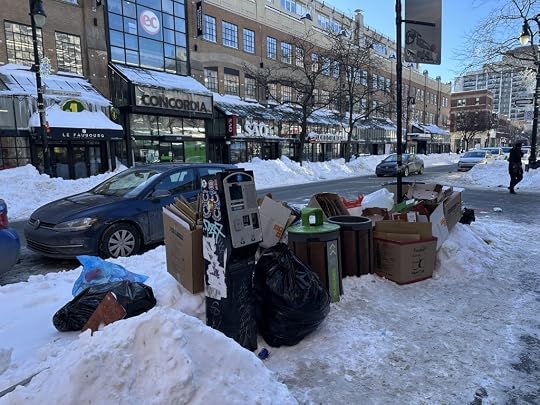
Short physical lines pile up fast, then a swearing streak breaks through like a split bag spilling its contents on the sidewalk. A phone call about televisions ends with a government official denying the obvious and hanging up the phone. A local saint gets canonized for reasons that have little to do with sainthood. Every chapter labeled Garbage Doesn't Lie works as a small fable, plastic crusting on ocean rocks, contaminated bales shipped across the world, a Vietnamese sorter asking to move to France for better work. Paré-Poupart keeps lifting the lid on comfortable assumptions and letting the smell escape.
The book carries real anger too. Class resentment runs through every page. Homeowners toss a bag at his feet without a glance. One neighbor tells him to pursue more schooling, then learns Paré-Poupart already has a master's degree.
He compares his shift to an Olympic event and means it. He adopts the title anarchist garbageman and sounds proud of it. Freeganism, hauling other people's discarded furniture home in a trailer, turns his entire life into a running protest against buying anything new.
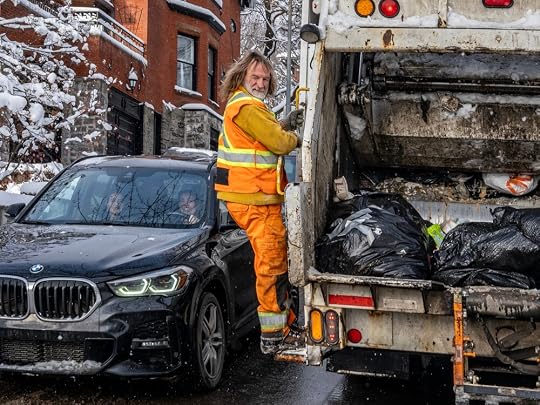
Long passages on sanitation history sit heavier than the personal chapters around them, and, although interesting, I grew impatient for Paré-Poupart to climb back on the truck. The personal material, fear of injury, a father lost to alcohol, a marriage that absorbs long absences, pulled the book back onto its route every time.
Anyone curious about labor, class, or the true cost of a throwaway economy cannot afford to discard this book. It is a blunt, funny nonfiction about unglamorous work. This book is loud, physical, occasionally profane, and full of genuine affection for a job many people work hard to ignore. Pick it up. Then give your own garbageman a nod on collection day.
❤️ 🇮🇱
Along his routes he meets frozen bins, furious homeowners, split garbage bags, and coworkers with names like Gratton and Steve, each a specialist in a different style of heavy lifting. The book tracks that arc from rookie thrower to twenty year veteran while pausing often to survey the wider industry, recycling economics, electronic waste, freeganism, and the history of sanitation labor in Quebec.
Short physical lines pile up fast, then a swearing streak breaks through like a split bag spilling its contents on the sidewalk. A phone call about televisions ends with a government official denying the obvious and hanging up the phone. A local saint gets canonized for reasons that have little to do with sainthood. Every chapter labeled Garbage Doesn't Lie works as a small fable, plastic crusting on ocean rocks, contaminated bales shipped across the world, a Vietnamese sorter asking to move to France for better work. Paré-Poupart keeps lifting the lid on comfortable assumptions and letting the smell escape.
The book carries real anger too. Class resentment runs through every page. Homeowners toss a bag at his feet without a glance. One neighbor tells him to pursue more schooling, then learns Paré-Poupart already has a master's degree.
He compares his shift to an Olympic event and means it. He adopts the title anarchist garbageman and sounds proud of it. Freeganism, hauling other people's discarded furniture home in a trailer, turns his entire life into a running protest against buying anything new.
Long passages on sanitation history sit heavier than the personal chapters around them, and, although interesting, I grew impatient for Paré-Poupart to climb back on the truck. The personal material, fear of injury, a father lost to alcohol, a marriage that absorbs long absences, pulled the book back onto its route every time.
Anyone curious about labor, class, or the true cost of a throwaway economy cannot afford to discard this book. It is a blunt, funny nonfiction about unglamorous work. This book is loud, physical, occasionally profane, and full of genuine affection for a job many people work hard to ignore. Pick it up. Then give your own garbageman a nod on collection day.
❤️ 🇮🇱

September 21, 2026
As a teenager in Quebec, Simon Paré-Poupart (b. 1985) liked school, and reading, and role-playing games. Paré-Poupart was sure he'd be an intellectual some day and he was right. Simon completed graduate studies in sociology and international business, and has work experience as a journalist and social worker. He's also a garbageman.
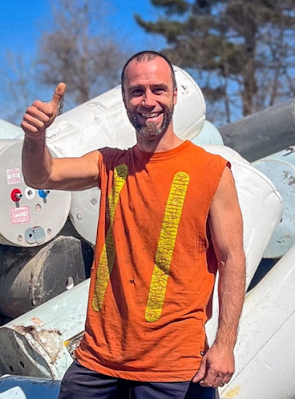
Author Simon Paré-Poupart
Simon's trashman career began at age eighteen, when his stepfather, whose world was the gym, kept telling Simon "Be a man." When Simon asked how he could be a man, his stepfather said, 'Try doing a run behind a garbage truck. That's supposed to be a tough job!"
So in summer 2003, Paré-Poupart became a runner - a guy who runs behind the truck picking up garbage. Little did Simon know the job would put him through college and university and that he'd "keep right on throwing trash, where the physical challenge, camaraderie, and steady income balance out the intellectual satisfactions of other jobs in journalism, research and social services."
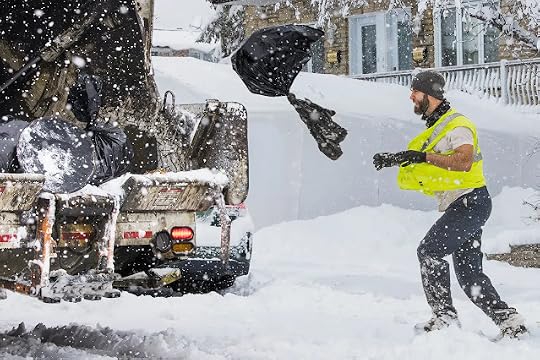
Simon Paré-Poupart throwing trash.
Paré-Poupart tells his story in a series of anecdotes about himself, his co-workers, the trash-disposing public, and the garbage industry. Garbage is a dirty, often unscrupulous business. Besides household bins and bags, Simon observes, "Nighttime is when construction trucks roam the streets to illegally dump their waste...That means our routes are littered with big bags full of glass and sharp nails. They're so heavy you have to prop them against your legs to lift them...You don't know when you've cut yourself until you feel the warm blood running down your leg."
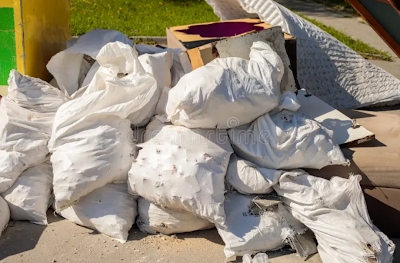
Construction Waste.
Paré-Poupart notes garbage collection is a family business, passed on from father to son, relative to relative, and that the job often inspires loyalty. As an example, Simon mentions a co-worker called Rock'nRoll, who was still driving a garbage truck at age seventy - with an IV drip in the cab. Rock'nRoll had throat cancer and was administering his own treatment. Simon writes, "And his two sons were just like him: proud and plenty scrappy."
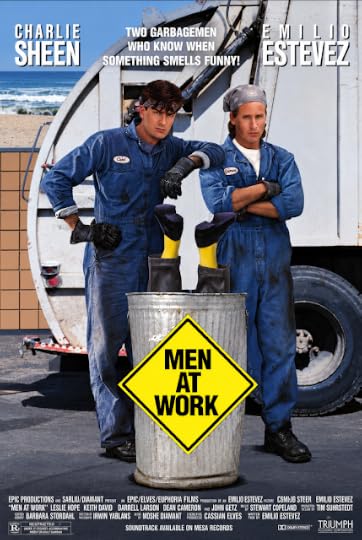
Real-life brothers Charlie Sheen (left) and Emilio Estevez play garbagemen in the comedy 'Men at Work' (1990)
Many trash collectors are marginalized men who might drink, smoke weed, take speed, use drugs, sleep in the street, have dysfunctional home lives, be ex-convicts, etc. [Note: there are very few women on garbage trucks.] Paré-Poupart has worked with all manner of garbagemen, and he writes about them with empathy, describing trashmen as nonconformists out of necessity, rebels without a cause, chaotic, pathetic, and fiercely independent.
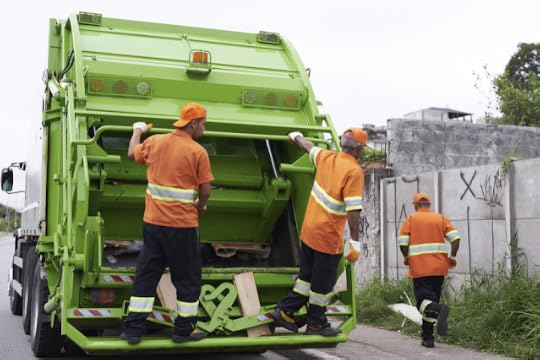
Runners working on a garbage truck
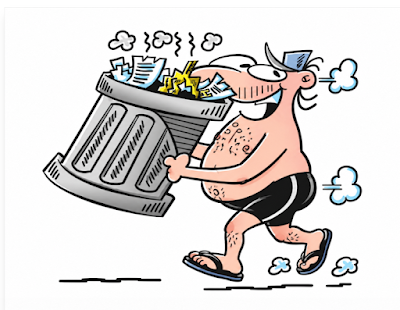
One of Paré-Poupart's memorable colleagues is called Spandex, for the shorts he wears. Spandex runs behind a truck shirtless, in flip-flops and bike shorts, and "He talks to the trash. It's like he'd rather have a conversation with a garbage bag full of vegetable peels or broken bottles than human beings. He tells the garbage all about the weather and fills it in with what's new in his life...he also asks the garbage how it's doing, despite the cold, mud, and heat, and the worms eating away at what few shards of dignity [Spandex] is clinging to. How did Spandex get into this unusual habit? No one really knows. Some say it's the outcome of a life stacking up failure after failure, a sense of shame, a response to the mockery of others. Of course, it could also just be good old-fashioned substance abuse."
Paré-Poupart also touches on the business end of waste management. He writes that many municipalities have been pressured to subcontract garbage collection to private entities, and this pattern holds in Greater Montreal as well. Simon observes, the deregulation of waste management has been filled by major conglomerates or organized crime, and frequently some combination of the two - and entrusting waste management to gangsters has repercussions. "In Naples, Italy, the mafia has buried toxic waste everywhere, creating crisis after scandal for years. In an area known as the 'triangle of death,' cancer rates have soared, fields are poisoned, the rivers stink. It's a plague."
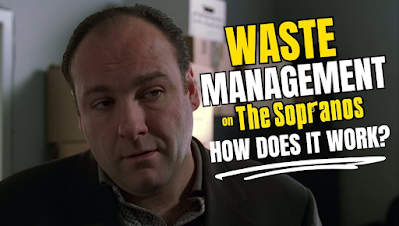
On 'The Sopranos' TV series, mafioso Tony Soprano runs a waste management business
With regard to corporations, "massive corporations are good at finding loopholes in laws and and regulations...and apply pressure to create a legislative environment favorable to their interests." For his part, Paré-Poupart likes this just fine. He says, "I hate the very idea of the over-regulated life of civil servants...it just doesn't work for me...From where I stand, none of these management systems listens to the garbagemen themselves; none of them trusts our experience, considers making us part of the actual waste management processes, or cares about our culture." Simon adds, "I dream of a world where the castoffs of society self-manage the project of managing its waste."

A waste management corporation
A whole other area of waste management is recycling, which is an industry of its own, but one that doesn't work well. In 2021, Paré-Poupart worked for a recycling company, and this is how he describes a sorting center: "Wherever I turn my head, I see mind-boggling heaps of garbage. There's glass all over the place, seagulls perched on bales, and the whole site is so cluttered that vehicles can barely get around. Trucks are driving on a layer of loose waste, crushing it...it's utter chaos."
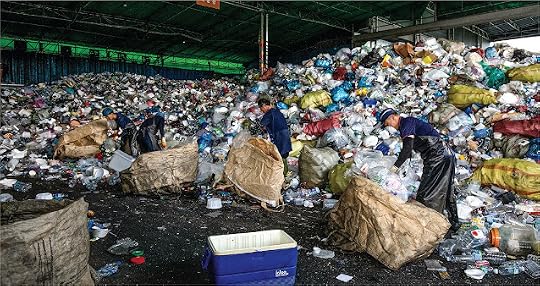
A trash recycling site
In addition, North America sends recycling to China, India, Vietnam, Indonesia, and the Philippines, where poor workers sort through paper, plastic, human waste, and other things. Recently, China curtailed imports because of contamination with useless things like cement, which increases the weight, and thus the cost to China. (There's no honor in the recycling business.)
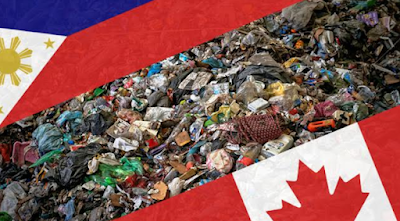
Some Canadian trash is sent to the Philippines
Many people (including Paré-Poupart's mother) don't understand the job he's chosen. Simon writes, "The world of garbage is a Wild West, and that's exactly what I love about it. I love straddling the fine line between dirty and clean. I love the joyful chaos of garbagemen, our anarchic spirit and vague desperation...It gives me a space of freedom I can't find anywhere else." The author goes on, "It seems eminently reasonable to me to maintain a gray area, one where those who struggle to find their place in society can form a community...a universal brotherhood of trash."
Paré-Poupart is a "freegan" who collects trash even when he's not working. Simon writes, "If you pass me on the street on my day off, there's a good chance I'll have a piece of salvaged junk in my hands. I'm a gleaner, a picker, a collector...When there's something I need, I'll often put off buying it...[and] I'll find exactly what I'm looking for on the side of the road." The salvaged items are used, sold, given away, or recycled. In fact, Simon has bought fewer than five pieces of clothing in the last twenty years. LOL
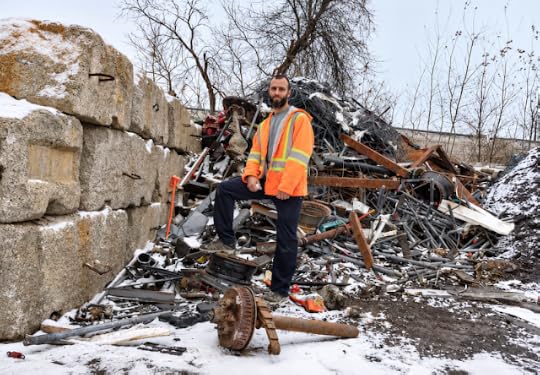
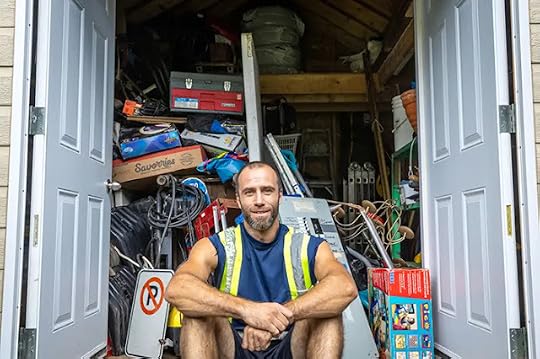
Simon Paré-Poupart is a freegan who scavenges trash for his own use
Paré-Poupart mentions other aspects of garbage pickup as well, such as the disrespect of the public; working in storms, snow, cold, and heat; overloaded/overweight bins and bags; injuries on the job; and so on. The author also provides a brief discourse on the HORRIFIC STINK of cities in the Middle Ages, where the streets were repositories for every kind of refuse...and there were no garbagemen.

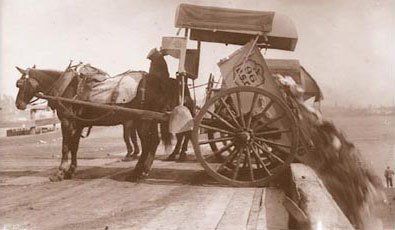
Cities in the Middle Ages had sanitation problems
For a quick overview of garbage, you can't go wrong with this book, which is informative and fun.
Simon Paré-Poupart wrote the book in Quebec French and it's been translated into English by Pablo Strauss.
Thanks to Netgalley, Simon Paré-Poupart, and Melville House for an ARC of the book.
You can follow my reviews at https://reviewsbybarbsaffer.blogspot.com

December 20, 2024
J'avoue que j'ai été un peu déçu du livre. Peut-être parce qu'avant une grosse blessure au dos mon père était vidangeur. C'est donc monnaie courante chez moi d'usé nos objets a la corde, de recycler en achetant pas du neuf! Mon père ne sait jamais acheter de paire de short de sa vie, c'est des vieux jeans recycler.
Je comprends le crie du coeur de l'auteur et le supporte a 100% dans ses propos. Naïvement je croyais que le mode de vie de ma famille était monnaie courante, naïvement je pensais que la population québécoise n'avait pas de sous métier parce que je suis la fille d'un père qui se lève a l'heure, qui travail fort, d'un ouvrier.
Dans le fond c'est pas du livre que je suis déçu, c'est des Québécois, avide de surconsommation.
Je comprends le crie du coeur de l'auteur et le supporte a 100% dans ses propos. Naïvement je croyais que le mode de vie de ma famille était monnaie courante, naïvement je pensais que la population québécoise n'avait pas de sous métier parce que je suis la fille d'un père qui se lève a l'heure, qui travail fort, d'un ouvrier.
Dans le fond c'est pas du livre que je suis déçu, c'est des Québécois, avide de surconsommation.

March 19, 2025
chaque québécois(e) et être humain doit lire ce livre. voilà, c'est dit. 💙💯👌

August 17, 2025
Depuis que j’ai commencé ce livre, à chaque fois que je croise un camion de vidanges, je l’observe et l’admire tel une vraie groupie. C’était super intéressant comme lecture. Je promets de toujours saluer les vidangeurs à l’avenir.
October 1, 2025
Tout le monde devrait lire ce livre, ne serait-ce que pour comprendre comment fonctionne l’univers des vidanges, et réaliser l’ampleur du travail hors-pair et si exigeant qu’accomplissent les vidangeurs.
Ce que l’on ne veut pas voir mais que l’on devrait.
Respect!
Ce que l’on ne veut pas voir mais que l’on devrait.
Respect!

March 11, 2026
Livre intéressant et original.

January 27, 2025
J’ai toujours eu beaucoup d’admiration pour les vidangeurs, je les trouve franchement vraiment cool. C’est un bel essai qui met en lumière nos enjeux environnementaux et de surconsommation, mais aussi des personnes marginalisées.

January 3, 2025
Un livre que j'ai dévoré. Pertinent, allumé, authentique, honnête. J'enlève quelques étoiles pour l'écriture. Loin d'être mal écrit, c'est un peu disparate. Reste que cela est à lire!

January 30, 2026
i don't feel like i've gained any new perspective on waste management idk. might just be a matter of managing expectations i was So Hyped (my coworker recommended it to me) for this and like. it was fine. might also be because i haven't read extensively in french in a while. i do think some of these rave reviews are giving like... middle class guilt --> overperforming sympathy for blue collar work
sort of an ethnography (except the author presents himself as a neutral participant as if thats a thing thats possible and there's not much discussion of how his identity affects his interactions with the public or his coworkers)? some colourful characters? there's this part where he and his coworker are talking about a documentary made about the industry and complaining about how despite its good intentions it's tinged with a sort of pity and disdain for the work and fails to explain what value does exist. i do think this book was at least successful at conveying that.
sort of an ethnography (except the author presents himself as a neutral participant as if thats a thing thats possible and there's not much discussion of how his identity affects his interactions with the public or his coworkers)? some colourful characters? there's this part where he and his coworker are talking about a documentary made about the industry and complaining about how despite its good intentions it's tinged with a sort of pity and disdain for the work and fails to explain what value does exist. i do think this book was at least successful at conveying that.

July 12, 2026
Absolutely marvellous. Simon’s ability to philosophize on garbage is entrancing and framed by extensive references to research and classical literature. The audio narration was ably done by a Francophone and we are thankfully spared having to listen to someone mangle the names of Montreal’s neighborhoods. Overall, highly recommended.

November 22, 2025
Vraiment très intéressant comme lecture, autant les anecdotes que les faits historiques. Je finis ma lecture en ayant un regard différent sur ce métier et de ma propre production de déchets.
Read
April 27, 2026j'avais envie de lire ce livre depuis que j'avais entendu parler de sa parution au Québec, il est enfin sorti en France et il est tout ce que j'attendais
une personne qui parle avec attention de son métier marginal et méconnu c'est déjà 100% ma came mais alors en ajoutant par dessus... de la passion... de la socio... du syndicalisme... de l'anticapitalisme... à quel point je me régale... ça se lit d'un coup... je suis tel un homme élevé par une mouche tellement je me frotte les mains...
en plus ça se lit tout seul j'ai tout avalé entre la rue et le métro. y'a même une petite comparaison avec la situation française -
ça va direct dans ma collec de livres super sur les métiers bizarres (je prend toutes les recos)
une personne qui parle avec attention de son métier marginal et méconnu c'est déjà 100% ma came mais alors en ajoutant par dessus... de la passion... de la socio... du syndicalisme... de l'anticapitalisme... à quel point je me régale... ça se lit d'un coup... je suis tel un homme élevé par une mouche tellement je me frotte les mains...
en plus ça se lit tout seul j'ai tout avalé entre la rue et le métro. y'a même une petite comparaison avec la situation française -
ça va direct dans ma collec de livres super sur les métiers bizarres (je prend toutes les recos)
June 25, 2026
Perhaps my expectations were too high after reading reviews but this got boring quickly. Luckily it was a short book. I'm still searching for the kernels of wisdom others found in this, but have come to the realization that those "blown away" by this love letter to hard work have probably never actually done hard work. Those who have participated in the dirty, grimy, jobs of life will read this with a "yes, and?" perspective. Blue collar work isn't new and it is important to hear/read from those walks of life, but this entire book seems to be about Pare-Poupart complaining that everyone else is trash because they haven't had the same trash experiences he has. Also, how many times in a 200-page book is it necessary to remind the readers that despite your blue collar credentials, you have a masters degree?

Read
February 10, 2025Ce livre là m'a rappelé un souvenir du secondaire. Un prof de français nous avait dit un truc du style : " crachez dans un verre, puis ravaler votre bave". Ya pas grand monde qui l'ont fait, tsé.
Ctun peu ça notre relation avec les déchets, on crache nos cossins partout, pis on exige de ne plus les voir illico presto. Je sais pas pourquoi, j'ai eu une image de Denis Coderre qui ramasse des ordures dans les banlieues cossues de l'ouest de Montréal. Satisfait.
Ctun peu ça notre relation avec les déchets, on crache nos cossins partout, pis on exige de ne plus les voir illico presto. Je sais pas pourquoi, j'ai eu une image de Denis Coderre qui ramasse des ordures dans les banlieues cossues de l'ouest de Montréal. Satisfait.

September 9, 2026
In my mid-twenties, I was friends with two garbagemen. They worked for a family-owned company in the Chicago suburbs that rented dumpsters, including to the bookstore I worked at. The stories they would tell! I kept thinking about Matt and Josh as I read about Paré-Poupart's very different experience as a garbageman in Quebec.
Most days he works 7 am to 10 pm and enjoys the physical challenge, as well as the way he subverts expectations about who a garbageman is. He has multiple degrees and no interest in doing anything else, aside from writing this book, that is. He revels in the misfits and misanthropes this industry tends to attract. He attempted to organize a union once but that failed and he kind of shrugs it off. I'm genuinely worried about his work-life balance. A happy medium must exist; I'm sure his wife and kids would appreciate having him home more often at the very least.
I would order these essays differently, given how much stronger the second half is. I really enjoyed the essays about recycling, freeganism, and electronic waste. He rails about management and government never asking garbagemen for their solutions. But aside from those essays, he doesn't delve into practical action. I wish he had!
People without any understanding of waste management should find this illuminating. I hope it will make readers think twice about their consumption habits at the very least.
Translated from the French by Pablo Strauss.
Content notes: anxiety attacks, nightmare, past child abuse, alcoholic parent, substance abuse (coworkers), past sex work related to addiction (colleague), environmental abuse, financial abuse, past stabbing, assassination of MLK Jr., work-related injuries and deaths, heatstroke, dehydration, vomit, grubs, racism, toxic masculinity, classism, capitalism, consumerism, debt, garbage strikes, anti-union bias, parental divorce, family estrangement, inebriation, smoking, gendered pejorative, ableist language, hyperbolic language around addiction
Most days he works 7 am to 10 pm and enjoys the physical challenge, as well as the way he subverts expectations about who a garbageman is. He has multiple degrees and no interest in doing anything else, aside from writing this book, that is. He revels in the misfits and misanthropes this industry tends to attract. He attempted to organize a union once but that failed and he kind of shrugs it off. I'm genuinely worried about his work-life balance. A happy medium must exist; I'm sure his wife and kids would appreciate having him home more often at the very least.
I would order these essays differently, given how much stronger the second half is. I really enjoyed the essays about recycling, freeganism, and electronic waste. He rails about management and government never asking garbagemen for their solutions. But aside from those essays, he doesn't delve into practical action. I wish he had!
People without any understanding of waste management should find this illuminating. I hope it will make readers think twice about their consumption habits at the very least.
Translated from the French by Pablo Strauss.
Content notes: anxiety attacks, nightmare, past child abuse, alcoholic parent, substance abuse (coworkers), past sex work related to addiction (colleague), environmental abuse, financial abuse, past stabbing, assassination of MLK Jr., work-related injuries and deaths, heatstroke, dehydration, vomit, grubs, racism, toxic masculinity, classism, capitalism, consumerism, debt, garbage strikes, anti-union bias, parental divorce, family estrangement, inebriation, smoking, gendered pejorative, ableist language, hyperbolic language around addiction

October 27, 2024
3.5 ☆
Super intéressant et agréable à lire!
J'ai beaucoup aimé lire sur l'aspect historique et la représentation sociologique de la gestion des déchets. J'aurais même aimé que ça soit abordé plus en profondeur.
Cette lecture a certainement changé ma vision du métier d'éboueur et des gens qui en vivent. J'ai d'ailleurs l'impression que c'est vraiment un corps de métier 100% masculin. Les seules mentions de femmes sont des mères ou des conjointes.
Super intéressant et agréable à lire!
J'ai beaucoup aimé lire sur l'aspect historique et la représentation sociologique de la gestion des déchets. J'aurais même aimé que ça soit abordé plus en profondeur.
Cette lecture a certainement changé ma vision du métier d'éboueur et des gens qui en vivent. J'ai d'ailleurs l'impression que c'est vraiment un corps de métier 100% masculin. Les seules mentions de femmes sont des mères ou des conjointes.

March 24, 2025
Un petit livre très intéressant. On y retrouve des anecdotes, mais aussi un regard sociologique sur le métier d’éboueur. Les segments plus historiques étaient aussi très intéressants. J’ai bien aimé.
⭐️⭐️⭐️⭐️ : Beaucoup aimé
⭐️⭐️⭐️⭐️ : Beaucoup aimé

February 16, 2025
Wow, ce livre devrait être lu par tout le monde!
September 11, 2026
A fascinating read! Written by a Québécois garbage man, this short book is both a love letter to the garbage men, sanitation workers and waste managers and a condemnation of our wasteful consumer society. Simon Pare-Poupart documents his claims while taking us out on his nightly runs through the neighborhoods of Montreal.
Pare-Poupart does have an axe to grind. He hammers away at the disdain and prejudice of against those who work in the waste industry. However, he also argues the need for this industry is not just for keeping our living spaces clean but for the misfits of society because it creates a space of belonging and camaraderie.
At times I felt the arguments were too Us vs. Them, but Pare-Poupart opens a window on to a nation within a nation all of us cannot live without while seeing every day in action but without the appreciation it deserves.
🌹🌹🌹 to Pablo Strauss’ translation. Smooth and energetic.
Pare-Poupart does have an axe to grind. He hammers away at the disdain and prejudice of against those who work in the waste industry. However, he also argues the need for this industry is not just for keeping our living spaces clean but for the misfits of society because it creates a space of belonging and camaraderie.
At times I felt the arguments were too Us vs. Them, but Pare-Poupart opens a window on to a nation within a nation all of us cannot live without while seeing every day in action but without the appreciation it deserves.
🌹🌹🌹 to Pablo Strauss’ translation. Smooth and energetic.

December 16, 2024
J’ai adoré ma lecture de ce livre sur le travail d’un vidangeur. J’ai toujours pensé que c’était un travail difficile et je le pense encore, mais j’ai un nouveau regard sur les gens qui ont font leur métier et sur ce que cela peut leur apporter comme satisfaction.
J’ai apprécié en apprendre plus sur la dimension athlétique du travail. J’ignorais tout de la dimension « réinsertion sociale » de ce type de métier.
Bien écrit et construit, j’ai apprécié les réflexions sur notre rapport au déchet, la critique de notre société de consommation capitaliste.
C’était court et bon. Je recommande vivement.
J’ai apprécié en apprendre plus sur la dimension athlétique du travail. J’ignorais tout de la dimension « réinsertion sociale » de ce type de métier.
Bien écrit et construit, j’ai apprécié les réflexions sur notre rapport au déchet, la critique de notre société de consommation capitaliste.
C’était court et bon. Je recommande vivement.
April 13, 2025
J’ai bien aimé ma lecture et si l’un des objectifs est de nous conscientiser, ça aura marché pour moi. Quel métier!

February 19, 2026
4.5 ⭐ Tellement intéressant et instructif! Quel univers à découvrir à travers l'auteur passionné. Quelques moments historiques insérés aussi. J'ai bien aimé la plume de l'auteur. J'ai également apprécié les quelques images intégrées.
"Le milieu des poubelles, que plusieurs jugeraient, j'imagine, rétrograde et arriéré, présente une admirable ouverture d'esprit. [...] Quand ta vie dérape, ce dont tu as le plus besoin pour te relever, c'est de ne pas être jugé. Le milieu des vidangeurs offre à ces personnes de continuer à être ce qu'elles sont, en progressant à leur rythme, à travers une job."
"Le milieu des poubelles, que plusieurs jugeraient, j'imagine, rétrograde et arriéré, présente une admirable ouverture d'esprit. [...] Quand ta vie dérape, ce dont tu as le plus besoin pour te relever, c'est de ne pas être jugé. Le milieu des vidangeurs offre à ces personnes de continuer à être ce qu'elles sont, en progressant à leur rythme, à travers une job."

May 28, 2026
3,5 ⭐️ Très instructif et tellement nécessaire!
Ce qui a teinté mon appréciation, c’est simplement parce que ce n’était pas ce à quoi je m’attendais / ce que j’étais dans le mood pour lire. Je croyais que ce serait un récit plus narratif, alors que c’est un essai. Mon erreur haha 🤪
Ce qui a teinté mon appréciation, c’est simplement parce que ce n’était pas ce à quoi je m’attendais / ce que j’étais dans le mood pour lire. Je croyais que ce serait un récit plus narratif, alors que c’est un essai. Mon erreur haha 🤪

unable-to-finish
August 26, 2026I listened to about half of this memoir about a very educated garbageman. It was fascinating for a while but the author soon ran out of material. How many ways can you describe how dirty and backbreaking the job is?
Displaying 1 - 30 of 1,518 reviews