On the 22nd of January 2017, Pateh Sabally, a twenty-two-year-old Gambian refugee living in Italy since 2015, arrives in Venice from Milan. He leaves his backpack near the Scalzi Bridge, puts his train ticket and residence permit in a plastic pouch, and then plunges into the cold waters of the Grand Canal, amidst the gaze of onlookers and tourists. As he drowns, some insult him, while others shout "Africa". Outraged by this tragic death, the novel’s narrator, a young writer based in Paris, follows Pateh’s trail aiming to piece together and understand the sequence of events leading up to his death. Venice Requiem tells the story of a Venice where literature grapples with the pressing dramas of our time. Throughout the novel, the narrator quotes authors who lived in or wrote about Venice: Goldoni, Thomas Mann, Ernest Hemingway, Lord Byron, Marcel Proust, and others. Through a dialogue with the writings and experiences of these authors, the novel explores the potential of literature to rescue humanity.
this is a harrowing but absolutely essential read about the (mis)treatment of immigrants. based on the tragic true story where 22 year old Pateh Sabally, a Gambian refugee living in Italy, drowned in the cold waters of the Canal, we get a fictional reimagining of what led up to this moment.
the story is written from the perspective of an unnamed narrator who is speaking to Pateh directly, asking him questions, inquiring about his decisions and, ultimately, bringing his memory to life. Pateh’s story underpins this novel, but throughout we hear other refugees’ stories:
“Pateh, I don't know you, but it's as if your story has taken care of the introductions. An impossible encounter brought about by my naive need to redeem myself […] I feel as if I'm too late. Like a missed appointment with the blank page. Writing after the fact. Telling myself I needed time to absorb the event or step back from it. All those worn-out excuses proffered so as not to look bad. I'm determined to write, but I already know that no book will suffice to tell the full story, to do justice to your death.”
“My gaze hovers over the aisle of the bus as I continue to wonder what I hope to find in Venice, almost tour years atter your death. I end up convincing myself that writing is a mere pretext, a way of filling the vacuum, breaking the silence and fleshing out a disjointed story that refuses closure. A story essentially of borders. Where does your tragedy end and the shame of the world begin? I can no longer bear my compulsion to add questions on top of questions. I always return to the same point. As if your death defies reason, resists the act of reconstruction. But actually, what is there to reconstruct?”
indeed, this novel is dedicated to all of the Africans who died far from their homelands, shrouded in silence and oblivion. Venice Requiem forces you to look directly into refugees’ lives and struggles; it forces you to see their death as more than just a news headline or statistic; it humanises people who have been cast aside in a world of figures and villanised by society for decades.
Venice Requiem is a powerful and moving novel, with literary observations and an investigative prose that makes it an extremely compelling read. Published by Small Axes, an imprint of Peepal Tree Press and the same radical publisher who published Small Boat (last year’s IBP longlisted title), this is an extremely fitting and timely read that needs to be widely read.
En se jetant dans le Grand Canal de Venise le 22 janvier 2017, Pateh Sabally fait irruption dans un espace qui ne lui était pas destiné. Il brise d’un seul coup cette insouciance qui conforte nos pays, tout en révélant brutalement les conséquences de l’hypocrisie occidentale et la violence de son système administratif.
La vidéo de sa mort n’est que la preuve effroyable d’un manque d’empathie qui condamne des êtres humains sans cesse. Car se questionner sur pourquoi il s’est laissé mourir alors que des bouées de sauvetage lui étaient lancées, sans même penser à sauter pour le sauver, en dit long sur notre perception de ce que les migrants endurent chaque jour.
Traducere din limba franceză și note de Alexandra Ionel [proud sister] Editura Casa Cărții de Știință, Cluj-Napoca, 2025
“De fiecare dată când încerc să fac ordine printre notițe, îmi sare în ochi un lucru evident: s-ar părea că nu există nicio formă de scriitură care să-ți poată prelua drama. Nici ficțiunea, nici povestirea. Nici confesiunea imaginară, nici biografia poetică sau romanțată. Acest memorial este asemeni lagunei, fâșii de uscat împresurate de apă și nesiguranță. Un vârtej de praf, o puzderie de fisuri, țăndări pe care nimic nu e în stare să le strângă laolaltă, poate doar gustul stăruitor al înfrângerii.” (p. 162)
If you enjoy beautiful, lucid and poetic prose written in a fragmentary style on an important and timely subject, I highly recommend Venice Requiem by the Moroccan writer, @khalid_lyamalahy in a sensitive translation by @roschwartz.
It’s published by @hoperoadpublishing who also published ‘Small Boats’ which was shortlisted for the International Booker Prize last year. I think Venice Requiem is even stronger.
This is a powerful and deeply moving short novel inspired by the true story of a 22 year old Gambian refugee, Pateh Sabally, who in January 2017 drowned in a busy stretch of the Grand Canal in Venice in full view of tourists and other onlookers, some of whom shouted abuse: ‘He is stupid. He wants to die’ and ‘Go on, go back home’. While life rings were thrown to Pateh and there were numbers of boats nearby, nobody made any further effort to save him. The book is a tribute not just to Pateh Sabally, but is dedicated to ‘the memory of all Africans who have died far from their homelands’.
In the book, the narrator who is an unnamed French writer, travels to Venice and reimagines Pateh’s 5761km journey from his hometown Banjul to Venice and the last moments of his young life. The narrator confronts, and forces the reader to confront, difficult moral questions about complicity and indifference: ‘Your bequest to Venice: a cracked mirror in which the entire world can see its smugness reflected’. The narrator also confronts his own feelings of shame: ‘Pateh, each little scrap of your stories made from the bitter stuff of shame’.
The fragmentary style of the writing perfectly matches the fragmented lives of people forced to leave their homeland: ‘This requiem is like the lagoon: parcels of land, surrounded by water and uncertainty. A cloud of dust, a procession of fragments, pieces that nothing can bring together other than the persistent taste of defeat’.
Touching on representations of Venice from Canaletto to Goldoni, Byron and Thomas Mann, Lyamalahy evokes a Venice that is far from the picture perfect city captured in countless photos. His Venice is a ‘submerged city’, ‘a city of the dead’, ‘an invitation to cross the porous frontier between the here and elsewhere’, ’a slimy octopus that puts out its tentacles to grab your memory and crush your chest’, where gondolas are like ‘coffins’.
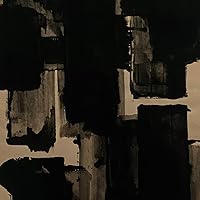
Reading this book brought back my own memories of attending the Venice Biennale in 2024, the theme of which was ‘Foreigners Everywhere’, and being confronted by the juxtaposition of uncomfortable truths about the refugee experience, the global South and colonialism in a city that is legendary for its beauty. I’ve been thinking again in particular about: - ‘The Mapping Journey Project’ by the Moroccan-French artist, Boucher Khalili who made a series of videos telling the story of eight individuals forced by political and economic circumstances to travel illegally through the Mediterranean. The artist invited each person to narrate their journey in a permanent marker pen on a geopolitical map of the region (see the second picture). We hear their stories but do not see their faces; and - The work of the Franco-Senegalese artist, Alioune Diagne. ‘Bokk-Bounds’ who created a huge wall panel featuring several of his works, depicting scenes from life in Senegal, natural disasters and migration resulting from climate change. A large traditional Senegalese canoe, called a pirogue, is displayed in front: it’s broken in two to represent the tragedy of migration.
At a time when the Middle East is being ravaged by yet another war which will force thousands more people to seek safety by leaving their homeland and when governments in the UK, the USA and across Europe pull up the drawbridge, using rhetoric and implementing policy that demonises and dehumanises refugees, Venice Requiem is an important and highly relevant book that deserves to be widely read. The drowning of Pateh Sabally is a microcosm that represents what is happening in the world on a global scale.
The 1st third felt strong and had me gripped; deep in reflection and research, which I think is a win, yes.
About half-way through, the story started to feel like it was meandering too much. I know the aim was to partially convey how 'impossible it felt/was' to write a novel about what had happened, about the importance of Pateh and his story, its impact and so the need to keep trying to change things and not forget. Yet in the end that 'impossbility' started to turn into what felt at quite a few times a kind of literary indulgence, over-blown and oversaturated in meaning in some potentially wrong places due to them creeping into too much self-insertion and the wrong type of intellectualism. Listing addresses, names, places and I don't mean the immigrants here as that did feel crucial. I didn’t feel like the connection of it all to the city of Venice panned out.
Some of the lines didn’t feel unfinished in a purposeful or rather meaninful way, but more like an attempt to sound poetic and emotion evoking without substance behind it; random even at times. Mind you definitely not all of it, but more so the closer it got to the end. To the extent that some of it started to feel like the type of forced emotional manipulation through painting a picture with words that stopped referring to the original point and so I almost felt cheated as a reader. And I know authors have the absolute right to shift reality, but some moments felt too fake, even if they were maybe true - like the last paragraph for example.
May be it’s just me - I am sure there are many readers with a different reading of this and so a different experience and I am happy for them. There was still a lot of important points carried across at the beginning.
I am reading it among other literary novels focusing on migration and displacement, ones that are also poetic. The comparison of the style supporting the narrative is just much more highlighted I think, as I have read a few in recent months/weeks that resonated with me more - they felt more rounded and more memorable and galvanising and I did feel that was also the point of this novel. It in the end felt only partially successful.
I don’t regret reading it. There is a level of dissatisfaction in regard to the execution from a structural/ language use standpoint.
On the 22nd January 2017 a Gambian refugee called Patel Sabally threw himself off the Scalzi Bridge in Venice. The onlookers just yelled insults and no one helped him.
The narrator, a Parisian, decides to trace Pateh’s journey from the Gambian village of Dembanding, the boat he went on, his stop at Milan then his life in Venice. Not only does author Khalid Lyamlahy give us a history of Venice and Gambia but in the grand tradition of writers such as Luis Sagasti and Benjamin Labatut, goes beyond history and links Venice’s past with people such as Hemingway and Lord Byron.
The end result is that Europe can be pretty unforgiving when it comes to outsiders, especially migrants (Pateh was a legal one). One part that struck me in the novel are the comments made by people when Pateh’s drowning was announced online - truly we can be heartless when behind a keyboard,
Venice Requiem is a book that quietly shocks the reader. Its deceptively readable tone, much like Venice itself, gives way to the dirty history of this city. I can safely say that this is a book that will change the the reader. HIGHLY recommended.
Many thanks to HopeRoad for providing a copy of Venice Requiem
If you love powerful stories with poetic writing then I have a recommendation for you!
Venice Requiem is inspired by the real-life death of Pateh Sabally, a young Gambian man. Pateh drowned in Venice’s Grand Canal as onlookers failed to intervene, boats passed by, and not a single person chose to help.
Alongside an imagined reconstruction of Sabally’s final moments, Venice Requiem weaves together histories of Venice and of The Gambia, while also honouring the lives of other refugees who have died and whose stories are so often reduced to numbers. Lyamlahy gives migrants presence and dignity, ensuring they are not forgotten. At one point, he writes that this tragedy is our shame - a line that lingers long after reading.
Lyamlahy travels to Venice to imagine the moments leading up to Pateh’s death, piecing together what his life in Europe might have been after arriving via Sicily. Through lyrical, fragmentary reflections, the novel considers where Pateh may have gone, what he may have seen, and what despair carried him to that final moment.
The novel raises uncomfortable questions about complicity and indifference. How can suffering be witnessed and yet still ignored? Its fragmented structure mirrors the broken, interrupted lives within its pages.
This is an impressive, impactful, and important novel. Venice Requiem not only tells the story of a drowned migrant in Venice, but also confronts the reader directly: would you help if you saw a man drowning?
If you loved Small Boat, published by HopeRoad last year, I think you’d love this too. Both novels interrogate moral responsibility and collective indifference, particularly within Europe, and challenge us to reflect on our own complicity.
Another incredible book from @hoperoadpublishing - they’ve done it again. Thank you so much for my early review copy (e-arc). Venice Requiem is out now, and I recommend picking up a copy!
Moving & thought-provoking, but it drags a lot and feels really slow, ultimately not moving much from start to finish. The translation is good but there are a few grammatical mistakes so it doesn't feel like a serious read
This book is published next week, February 5. It is based on a true story of an African migrant who died in a canal in Venice, originally written in French. Very moving and thought provoking.