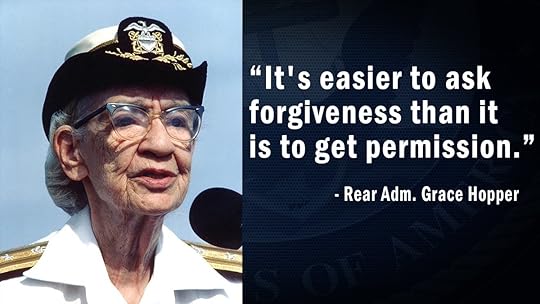
When grace Hopper retired as a rear admiral from the U.S. Navy in 1986, she was the first woman restricted line officer to reach flag rank and, at the age of seventy-nine, the oldest serving officer in the Navy. A mathematician by training who became a computer scientist, the eccentric and outspoken Hopper helped propel the Navy into the computer age. She also was a superb publicist for the Navy, appearing frequently on radio and television and quoted regularly in newspapers and magazines. Yet in spite of all the attention she received, until now "Amazing Grace," as she was called, has never been the subject of a full biography. Kathleen Broome Williams looks at Hopper's entire naval career, from the time she joined the Waves and was sent in 1943 to work on the Mark 1 computer at Harvard, where she became one of the country's first computer programmers. Thanks to this early Navy introduction to computing, the author explains, Hopper had a distinguished civilian career in commercial computing after the war, gaining fame for her part in the creation of COBOL. The admiral's Navy days were far from over, however, and Williams tells how Hopper--already past retirement age--was recalled to active duty at the Pentagon in 1967 to standardize computer-programming languages for Navy computers. Her temporary appointment lasted for nineteen years while she standardized COBOL for the entire department of defense. Based on extensive interviews with colleague and family and on archival material never before examined, this biography not only illuminates Hopper's pioneering accomplishments in a field that came to be dominated by men, but provides a fascinating overview of computing from its beginnings in World War II to the late 1980s.
I was tempted to doc this one a star for a few typos (generally missing words) and some readability issues in several sections (the book greatly needs acronym and important persons glossaries). However, the subject matter is so interesting that I'm willing to overlook those problems.
I figured by about the 35% mark that Hopper must have possessed a time turner. The woman was so prodigiously busy that it was often difficult to keep track of all the projects she was involved in at any given time. I was excited to see that she was a member of SWE, among several other organizations. Williams has clearly thoroughly researched Hopper's life and manages to transmit the incredible energy of Hopper herself into the descriptions of her work. I especially appreciated Williams' occasional comments on the general state of women in computer-related fields; she never overextends but backs up her comparison of Hopper's statements versus the larger picture with factual evidence. Hopper's life was an incredible one; her skills, personality, background, and circumstances all come together in a coherent narrative that was illuminating and inspiring. Hopper's systematic outlook, leadership methods, breadth of technical knowledge, and drive to educate succeeding generations are skills that are still relevant in the tech and business world today.
Highly recommended for readers of military history, computer development history, biographies, leadership, and general real life inspiration.
Grace Hopper, Admiral of the Cyber Sea is just barely a four star read. Author Ms Kathleeh Williams tells a story of a woman who was part of and a leader in great things, but the writer lacks the style of her subject.
It may be that when you write at the request of the Naval Institute and take up the mission of focusing on a very Navy orientation, one can feel constrained to play down the personal and the assume a more professional style. The result approaches the bloodless. The person gets lost in the technology and the challenges are not so much glossed over as championed in generalities.
Admiral Hooper came into the world of computing with doctorate in mathematics, and a commission as a Women Accepted for Volunteer Emergency Service (WAVES) Lieutenant (Junior Grade). All that making her a very rare woman of the 1940’s. She was assigned to a very obscure Navy activity located on the Harvard campus; working for another of the lessor known founding people in the world of computing, Cdr. Howard Aiken. Their primary mission was to perform large numbers of calculations. Their (Aiken’s) Mark I computer was among the world’s first computers and for all of its tonnage was limited to high speed processing of numbers. In some ways it was a mechanical realization of the machine Charles Babbage had never quite made in the Victorian Era.
In the years after WWII Mrs. Hooper maintained a active Navy Reserve commission and continued to work in the early world of non-militarized computers. Years later her reputation, and the respect of her Navy superiors would earn for her positions of increasing importance and eventually senior rank as a full time Navy Officer. A rare woman indeed.
Ms. Williams is careful to clarify Adm. Hooper’s roles in promoting the use of higher languages in computers. Hooper determined that it is more efficient to have the computer learn English rather than the person to learn code. The Admiral did not invent COBOL, she promoted it and aided in its development. She did invent the compiler-that part of a computer that translates from computer code to higher languages like COBOL.
In the long road to become Admiral ( At her retirement in 1986 she was the longest serving officer in the U S Navy), Hooper had to be a forceful and clever speaker to get the respect and attention of her always male, usually senior and rarely as computer savvy Navy decision makers. She proved to be a tireless educator and public speaker. All of which made her more valuable to the Navy.
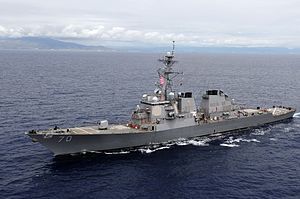
How many women have a US Navy ship named for them, and a NAS building in San Diego as well? That's enough to get my attention! Grace Hopper, who served longer in the US Navy than any other woman, also became a rear admiral, a rare feat. What kept her going and rising in rank? Briefly, the development and advancement of the computer. Historical writer Kathleen Broome Williams has done a great job of telling Grace Hopper's story, which she has thoroughly researched and documented. The book is not a quick read, with technical language and abbreviations galore, but it is worth the time it takes. Grace Hopper was a unique woman who earned her forever spot in the Arlington National Cemetery after her death in January 1992. She had studied mathematics at Vassar and planned to be a teacher, her deep and lifelong love, but World War II intervened and Hopper joined the US Navy. There she encountered the first giant computer, the Mark 1, and learned to use it. Her math background helped her become a whiz at programming and designing tools to make the computer useful in a myriad of ways. Her most important contributions were the COBOL language and her skills in leading others--military, business, and educational institutions --into consolidation of many computer languages and applications, despite hesitation and resistance to change on the part of many. The author has done a great job of making Hopper real and her achievements accessible; I really appreciated having an opportunity to learn more about the history of the modern computer and the life of one special woman, Grace Hopper! Thank you, Kathleen Broome Williams!
Admiral Hopper sometimes gets lost in the arcania of the early days of computing and the bureaucratic fights that went on. Perhaps her career only became became "significant" when the rest of the world "discovered" it? The narrative was plodding, at least for me.
While this was challenge to read because of all the computer terminology and technical lingo, it was very interesting to learn more about the life of an incredibly bright and influential pioneering woman.
The story of Grace Murray Hopper, mathematician and pioneer in computer science. Hopper propelled the Navy into the computer age, retired from the US Navy as a rear admiral and the oldest active duty officer in 1986 at the age of 79. This book is a story of one remarkable woman, but more than that it's the story of computing and of our changing times. A woman I would have loved to have met!
3.5 stars. Enjoyed reading about Grace Hopper and her contributions to computer science. The story bogged down with details of Navy bureaucracy when dealing with standardization and was a bit repetitive about certain details. Overall, I enjoyed the insight to Grace's intelligence, perseverance, and no nonsense approach (common sense). She certainly was "Amazing Grace".
Book was enjoyable, with many references. Adm. Hopper was an outstanding mathematician, programmer, navy officer, and teacher. She led her people to be their best. Fair winds and following seas.
Loved the book! Enthralled with Grace Hopper, her intellect but mostly with her desire to teach and to lead. The book is well put together, flows well and reads easily.