

What do you think?

Yñiga
Winner of a Philippine National Book Award
‘Yñiga is not just a novel; it is an echo of people, of families, who, generation after generation, confront the relentless cycle of political violence.’ Eka Kurniawan
Yñiga Calinauan’s quiet existence in Manila is upended when a biographer starts asking questions about her activist father who disappeared years earlier.
Soon after, a former army general is arrested across the road from her home, and her neighborhood is burnt to the ground. With nowhere to go, Yñiga returns to the small fishing town of her childhood. But the boundaries between her various lives are beginning to crumble.
Set against a backdrop of political upheaval, Yñiga is both a compulsive thriller and a literary treasure. Multi-award-winning author Glenn Diaz forms a complex portrait of a woman and a country haunted by a ‘forest of history’. This is a novel about the routine violence of state terror – and the possibility of everyday resistance.
‘Diaz’s fierce and articulate intellect dazzles in his very evocative and at times funny but mostly deadpan and wry prose. He has captured the often absurd and peculiar life in the Philippines with a fond but critical eye.’ Asian Review of Books
‘This moving, remarkable novel is as much a visceral, unforgettable journey into one woman’s fraught familial legacy of disappearance and resistance, as well as a deeply poignant meditation on nation-building itself.’ Elaine Castillo
‘Yñiga is not just a novel; it is an echo of people, of families, who, generation after generation, confront the relentless cycle of political violence.’ Eka Kurniawan
Yñiga Calinauan’s quiet existence in Manila is upended when a biographer starts asking questions about her activist father who disappeared years earlier.
Soon after, a former army general is arrested across the road from her home, and her neighborhood is burnt to the ground. With nowhere to go, Yñiga returns to the small fishing town of her childhood. But the boundaries between her various lives are beginning to crumble.
Set against a backdrop of political upheaval, Yñiga is both a compulsive thriller and a literary treasure. Multi-award-winning author Glenn Diaz forms a complex portrait of a woman and a country haunted by a ‘forest of history’. This is a novel about the routine violence of state terror – and the possibility of everyday resistance.
‘Diaz’s fierce and articulate intellect dazzles in his very evocative and at times funny but mostly deadpan and wry prose. He has captured the often absurd and peculiar life in the Philippines with a fond but critical eye.’ Asian Review of Books
‘This moving, remarkable novel is as much a visceral, unforgettable journey into one woman’s fraught familial legacy of disappearance and resistance, as well as a deeply poignant meditation on nation-building itself.’ Elaine Castillo
245 pages, Kindle Edition
First published January 1, 2022
About the author
Glenn Diaz
13 books111 followersGlenn Diaz is the author of the novels The Quiet Ones (2017) and Yñiga (2022), recipients of the Philippine National Book Award, and When the World Ended I Was Thinking about the Forest (2022), published by Paper Trail Projects. His writing has appeared in The New York Times, Rosa Mercedes, Liminal, The Johannesburg Review of Books, and others. Born and raised in Manila, he holds a PhD from the University of Adelaide and currently teaches with the Department of English and Comparative Literature at the University of the Philippines Diliman.
Ratings & Reviews
Friends & Following
Create a free account to discover what your friends think of this book!
Community Reviews
Displaying 1 - 30 of 49 reviews
September 24, 2026
I came into this book with the knowledge that it was contemporary fiction about the political turmoil that the Philippines has endured over the years. It was my first foray into Philippine literature, and I had been keen to read it after seeing an item in The Conversation and a blog post at This Reading Life.
https://theconversation.com/the-phili...
https://bronasbooks.com/2026/02/28/yn...
Brona states that “…it will not suit every reader's taste.” I agree. This is not for those who wish for linear-based fiction that is easy to read; this book challenges the reader. I would add that Glenn Diaz, the author, has written in English and has blended, without translation, many Filipino words from Tagalog and local dialogue that give the adventurous reader a multi-dimensional look into the life of the country. I was not reading from a comfortable distance; I was forced to participate. The Conversation article covers this better than I can explain.
The narrative bridges the domestic everyday with the violence of the state. In the acknowledgements, Glenn Diaz makes mention of General Jovito Palparan Jr., who was a historical reality. Hence, Diaz’s novel charts how state-sponsored violence is a systemic apparatus that deploys extrajudicial killings, forced disappearances, surveillance, and terror to dismantle rural peasant organising and community. Main protagonist Yñiga is part of the convoluted telling of this story, mixed in with her family's trials and tribulations.
I actually read this twice. On the first read-through, I marked words that I did not understand (or at least their context) and placed them on a list for research. With that, I realised that food played a large part in the book's attempt to bring the story together as a commentary on class, comfort, and social status. Diaz uses a distinct linguistic style by embedding Tagalog, Taglish, and regional vocabulary without italicisation or explanatory notes for a non-Filipino reader. Phrases like Tao po?, Para po!, and Estribo are integrated seamlessly into the prose. This means, in my opinion, that this is an authentic Philippine English literary voice.
With the second read, the book flowed, though it still had me working hard to understand the non-linear movement of the narrative. Be that as it may, this did not distract from my read, and I consider this an exceptional novel. It won the 2024 Philippine National Book Award, and rightly so. Would it have been published in the Philippines a few decades back? I doubt it.
My Glossary for Yñiga.
A
• Abuloy — Voluntary financial or material contributions given by community members to a grieving family during a wake (lamay), exemplifying mutual aid (bayanihan).
• Arroz Caldo — A ginger-infused chicken and rice porridge topped with toasted garlic, spring onions, and calamansi; an iconic Philippine comfort food adapted from Chinese congee traditions.
B
• Balete Tree — A sacred and feared strangler fig tree associated in Philippine folklore with spirits (kapre, tikbalang) and ancestral memory; symbolic of deep-rooted regional history and nature's endurance.
• Balut & Chicharon — Essential nocturnal street food staples; balut is a fertilized duck egg eaten warm with salt/vinegar, and chicharon consists of salted, deep-fried pork cracklings.
• Banderitas — Triangular paper or plastic pennants strung across streets and plazas during neighborhood fiestas and community celebrations.
• Banana Cue — Deep-fried saba plantains coated in caramelized brown sugar and served on bamboo skewers; a classic afternoon merienda street food.
• Binabayani — A traditional warrior and thanksgiving folk dance from Zambales depicting historical battles or harvest gratitude.
• Brigida Ramos — A key character in the novel modeling real-world Philippine peasant leaders and agrarian rights activists targeted by state violence.
D
• Divina Deogracias — A prominent character whose name ("divine / thanks be to God") evokes colonial Catholic naming conventions (Clavería Decree), creating an ironic contrast between religious piety and worldly corruption.
• Duhat Tree — The Java plum tree (Syzygium cumini), bearing dark purple berries eaten shaken with rock salt; serves as a sensory marker of provincial childhood and rural nostalgia.
E
• Ensaymada — A soft, rich brioche pastry topped with brushed butter, sugar, and grated cheese; introduced during Spanish rule and cherished as a classic merienda treat.
• Estribo — The open rear step or iron ledge of a jeepney where passengers hang on (sabit) during overcrowded commutes, symbolizing the physical hazards of everyday public transit.
F
• Fiesta — A community-wide festival honoring a patron saint or harvest; serves in the novel as a poignant marker of communal unity prior to political displacement.
G
• Ginataang Bilo-Bilo — A warm coconut milk dessert stewed with chewy glutinous rice balls, sweet potato, plantains, jackfruit, and tapioca pearls.
H
• Hampas Palayok — A traditional party game where blindfolded children attempt to strike and break a suspended earthenware clay pot filled with flour, candy, and coins using a wooden stick.
J
• Jose Tajanlangit — A fictional figure in the novel whose surname ("from heaven") satirizes local landed power structures and elite hypocrisy.
• Jovito Palparan (Major General) — A real-life retired military commander convicted for enforced disappearances; cited in the Acknowledgements as the historical archetype for state terrorism and counter-insurgency depicted in the novel.
L
• Lolo / Lola — Grandfather / Grandmother; terms of deep familial respect marking authority and intergenerational memory within the household.
• Lumpia — Filipino spring rolls adapted from Chinese migration; ranges from crispy pork rolls (lumpia shanghai) to fresh vegetable rolls (lumpiang sariwa).
M
• Minda'y Isang Gamu-gamo — A landmark 1976 anti-imperialist political film starring Nora Aunor, critiquing U.S. military bases and extrajudicial impunity in the Philippines.
N
• NBI (National Bureau of Investigation) — The Philippine government's main investigative law enforcement body; evokes themes of state authority, legal scrutiny, and surveillance.
P
• Pakbet (Pinakbet) — An iconic northern Ilocano vegetable stew cooked with fermented shrimp/fish paste (bagoong), bitter melon, eggplant, and squash.
• Panawagan — An influential Philippine protest song calling for rural unity and peasant resistance across fields and mountains.
• Pancit and Puto — A festive culinary pairing of savory stir-fried noodles (pancit) and sweet sweet steamed rice cakes (puto), symbolizing longevity and community hospitality.
• Pandesal — The national "salt bread" roll, lightly dusted in breadcrumbs and eaten warm for breakfast, typically dipped in coffee.
• Para! / Para po! — The universal spoken transit signal (from Spanish parar) shouted by commuters to tell jeepney or tricycle drivers to pull over.
S
• Sala — The central living room or front reception hall of a traditional Filipino home.
• San Andres (Feast of November 30) — Saint Andrew the Apostle, patron saint of fishermen whose martyrdom by crucifixion introduces a dark, foreshadowing motif during a town mass.
• Santo Niño Statues — Devotional statues depicting the Child Jesus, ubiquitous in homes, stores, and vehicles across the Philippines as symbols of faith and protection.
• Sayote — Chayote squash; a budget-friendly vegetable staple widely used to bulk up Philippine home-cooked soups and stir-fries.
• Sinandomeng — A widely popular, fragrant variety of traditional Philippine white rice.
• Sotanghon Noodles — Mung bean thread / glass noodles served in clear, garlic-infused chicken broth or stir-fried during gatherings.
• Subic — A coastal municipality in Zambales and former major U.S. Naval Base, representing the historical intersections of foreign military footprint, commercial trade, and local labor.
• Sunog — "Fire!"; an urgent alarm in urban settlements signifying catastrophic neighborhood fires, often linked in literature to precarity and forced land clearance.
T
• Taglish — The fluid, urban linguistic register blending Tagalog and English, reflecting modern Philippine socio-economic dynamics.
• Taklobo Ceviche — A regional coastal dish made from giant clam meat cured in vinegar, calamansi juice, ginger, and chili.
• Tao po? — The traditional polite verbal call out ("Is anyone home?") used when approaching a home or gate, reflecting domestic social etiquette.
• Taong-labas — Literally "outsiders" or "people from the outside"; a historical and political term for social bandits, rebels, or guerrillas operating beyond state control.
https://theconversation.com/the-phili...
https://bronasbooks.com/2026/02/28/yn...
Brona states that “…it will not suit every reader's taste.” I agree. This is not for those who wish for linear-based fiction that is easy to read; this book challenges the reader. I would add that Glenn Diaz, the author, has written in English and has blended, without translation, many Filipino words from Tagalog and local dialogue that give the adventurous reader a multi-dimensional look into the life of the country. I was not reading from a comfortable distance; I was forced to participate. The Conversation article covers this better than I can explain.
The narrative bridges the domestic everyday with the violence of the state. In the acknowledgements, Glenn Diaz makes mention of General Jovito Palparan Jr., who was a historical reality. Hence, Diaz’s novel charts how state-sponsored violence is a systemic apparatus that deploys extrajudicial killings, forced disappearances, surveillance, and terror to dismantle rural peasant organising and community. Main protagonist Yñiga is part of the convoluted telling of this story, mixed in with her family's trials and tribulations.
I actually read this twice. On the first read-through, I marked words that I did not understand (or at least their context) and placed them on a list for research. With that, I realised that food played a large part in the book's attempt to bring the story together as a commentary on class, comfort, and social status. Diaz uses a distinct linguistic style by embedding Tagalog, Taglish, and regional vocabulary without italicisation or explanatory notes for a non-Filipino reader. Phrases like Tao po?, Para po!, and Estribo are integrated seamlessly into the prose. This means, in my opinion, that this is an authentic Philippine English literary voice.
With the second read, the book flowed, though it still had me working hard to understand the non-linear movement of the narrative. Be that as it may, this did not distract from my read, and I consider this an exceptional novel. It won the 2024 Philippine National Book Award, and rightly so. Would it have been published in the Philippines a few decades back? I doubt it.
My Glossary for Yñiga.
A
• Abuloy — Voluntary financial or material contributions given by community members to a grieving family during a wake (lamay), exemplifying mutual aid (bayanihan).
• Arroz Caldo — A ginger-infused chicken and rice porridge topped with toasted garlic, spring onions, and calamansi; an iconic Philippine comfort food adapted from Chinese congee traditions.
B
• Balete Tree — A sacred and feared strangler fig tree associated in Philippine folklore with spirits (kapre, tikbalang) and ancestral memory; symbolic of deep-rooted regional history and nature's endurance.
• Balut & Chicharon — Essential nocturnal street food staples; balut is a fertilized duck egg eaten warm with salt/vinegar, and chicharon consists of salted, deep-fried pork cracklings.
• Banderitas — Triangular paper or plastic pennants strung across streets and plazas during neighborhood fiestas and community celebrations.
• Banana Cue — Deep-fried saba plantains coated in caramelized brown sugar and served on bamboo skewers; a classic afternoon merienda street food.
• Binabayani — A traditional warrior and thanksgiving folk dance from Zambales depicting historical battles or harvest gratitude.
• Brigida Ramos — A key character in the novel modeling real-world Philippine peasant leaders and agrarian rights activists targeted by state violence.
D
• Divina Deogracias — A prominent character whose name ("divine / thanks be to God") evokes colonial Catholic naming conventions (Clavería Decree), creating an ironic contrast between religious piety and worldly corruption.
• Duhat Tree — The Java plum tree (Syzygium cumini), bearing dark purple berries eaten shaken with rock salt; serves as a sensory marker of provincial childhood and rural nostalgia.
E
• Ensaymada — A soft, rich brioche pastry topped with brushed butter, sugar, and grated cheese; introduced during Spanish rule and cherished as a classic merienda treat.
• Estribo — The open rear step or iron ledge of a jeepney where passengers hang on (sabit) during overcrowded commutes, symbolizing the physical hazards of everyday public transit.
F
• Fiesta — A community-wide festival honoring a patron saint or harvest; serves in the novel as a poignant marker of communal unity prior to political displacement.
G
• Ginataang Bilo-Bilo — A warm coconut milk dessert stewed with chewy glutinous rice balls, sweet potato, plantains, jackfruit, and tapioca pearls.
H
• Hampas Palayok — A traditional party game where blindfolded children attempt to strike and break a suspended earthenware clay pot filled with flour, candy, and coins using a wooden stick.
J
• Jose Tajanlangit — A fictional figure in the novel whose surname ("from heaven") satirizes local landed power structures and elite hypocrisy.
• Jovito Palparan (Major General) — A real-life retired military commander convicted for enforced disappearances; cited in the Acknowledgements as the historical archetype for state terrorism and counter-insurgency depicted in the novel.
L
• Lolo / Lola — Grandfather / Grandmother; terms of deep familial respect marking authority and intergenerational memory within the household.
• Lumpia — Filipino spring rolls adapted from Chinese migration; ranges from crispy pork rolls (lumpia shanghai) to fresh vegetable rolls (lumpiang sariwa).
M
• Minda'y Isang Gamu-gamo — A landmark 1976 anti-imperialist political film starring Nora Aunor, critiquing U.S. military bases and extrajudicial impunity in the Philippines.
N
• NBI (National Bureau of Investigation) — The Philippine government's main investigative law enforcement body; evokes themes of state authority, legal scrutiny, and surveillance.
P
• Pakbet (Pinakbet) — An iconic northern Ilocano vegetable stew cooked with fermented shrimp/fish paste (bagoong), bitter melon, eggplant, and squash.
• Panawagan — An influential Philippine protest song calling for rural unity and peasant resistance across fields and mountains.
• Pancit and Puto — A festive culinary pairing of savory stir-fried noodles (pancit) and sweet sweet steamed rice cakes (puto), symbolizing longevity and community hospitality.
• Pandesal — The national "salt bread" roll, lightly dusted in breadcrumbs and eaten warm for breakfast, typically dipped in coffee.
• Para! / Para po! — The universal spoken transit signal (from Spanish parar) shouted by commuters to tell jeepney or tricycle drivers to pull over.
S
• Sala — The central living room or front reception hall of a traditional Filipino home.
• San Andres (Feast of November 30) — Saint Andrew the Apostle, patron saint of fishermen whose martyrdom by crucifixion introduces a dark, foreshadowing motif during a town mass.
• Santo Niño Statues — Devotional statues depicting the Child Jesus, ubiquitous in homes, stores, and vehicles across the Philippines as symbols of faith and protection.
• Sayote — Chayote squash; a budget-friendly vegetable staple widely used to bulk up Philippine home-cooked soups and stir-fries.
• Sinandomeng — A widely popular, fragrant variety of traditional Philippine white rice.
• Sotanghon Noodles — Mung bean thread / glass noodles served in clear, garlic-infused chicken broth or stir-fried during gatherings.
• Subic — A coastal municipality in Zambales and former major U.S. Naval Base, representing the historical intersections of foreign military footprint, commercial trade, and local labor.
• Sunog — "Fire!"; an urgent alarm in urban settlements signifying catastrophic neighborhood fires, often linked in literature to precarity and forced land clearance.
T
• Taglish — The fluid, urban linguistic register blending Tagalog and English, reflecting modern Philippine socio-economic dynamics.
• Taklobo Ceviche — A regional coastal dish made from giant clam meat cured in vinegar, calamansi juice, ginger, and chili.
• Tao po? — The traditional polite verbal call out ("Is anyone home?") used when approaching a home or gate, reflecting domestic social etiquette.
• Taong-labas — Literally "outsiders" or "people from the outside"; a historical and political term for social bandits, rebels, or guerrillas operating beyond state control.

January 15, 2023
(Glenn Diaz's Yñiga talks a lot about astrology and guessing other people's sun signs. I've never related more in my life.)
In this book, Glenn Diaz served as the readers' guide to the forest that was his central character Yñiga's life and psyche. With erudite and engrossing prose, Diaz slowly unfolded what made Yñiga the person she was: a composed, astrology-loving, intelligent, if lazy and absentminded at times, forty-year old who carried a terror and trauma much heavier than she could handle, than what people around her thought she had. The way Diaz weaved past, present, and future events fluidly was my favorite thing here. I enjoy this blurring of the chronology in the book, for a more elegant unravelling of one's life. And isn't that how we live? Through stories and memories half-told, half-contained. While Yñiga, through her practiced composure, tried not to be the victim she actually was, the horror brought by powerful political forces that followed her as a kid growing up in M—, to her life in the city of T—, and to her eventual return to her childhood town was palpable, not only to her or to the people that went close to her, but also to the readers. Diaz did not hold back at all in incorporating this real-life muggy atmosphere in his text and it was as important and as all-encompassing in Yñiga's life as it was to the novel itself. In his book, When the World Ended, I Was Thinking about the Forest, Diaz wrote: “I think what I'm trying to do is turn the uncertainty into a clearing; the terror, into a project. (A kaingin.)” A novel like this, thought of for ten years, conceptualized and written amidst actual political threats in the country, would for sure had that same uncertainty and terror entailed, but Diaz has succeeded with his kaingin. Yñiga materialized with great strength.
In this book, Glenn Diaz served as the readers' guide to the forest that was his central character Yñiga's life and psyche. With erudite and engrossing prose, Diaz slowly unfolded what made Yñiga the person she was: a composed, astrology-loving, intelligent, if lazy and absentminded at times, forty-year old who carried a terror and trauma much heavier than she could handle, than what people around her thought she had. The way Diaz weaved past, present, and future events fluidly was my favorite thing here. I enjoy this blurring of the chronology in the book, for a more elegant unravelling of one's life. And isn't that how we live? Through stories and memories half-told, half-contained. While Yñiga, through her practiced composure, tried not to be the victim she actually was, the horror brought by powerful political forces that followed her as a kid growing up in M—, to her life in the city of T—, and to her eventual return to her childhood town was palpable, not only to her or to the people that went close to her, but also to the readers. Diaz did not hold back at all in incorporating this real-life muggy atmosphere in his text and it was as important and as all-encompassing in Yñiga's life as it was to the novel itself. In his book, When the World Ended, I Was Thinking about the Forest, Diaz wrote: “I think what I'm trying to do is turn the uncertainty into a clearing; the terror, into a project. (A kaingin.)” A novel like this, thought of for ten years, conceptualized and written amidst actual political threats in the country, would for sure had that same uncertainty and terror entailed, but Diaz has succeeded with his kaingin. Yñiga materialized with great strength.
March 9, 2023
Glenn Diaz understands IPBK on historical, dialectical, and personal levels. Having works like this available in the mainstream is nothing short of revolutionary, especially for a nation where the littlest reference to the world's longest insurgency gets red-tagged. I wish this book becomes a reading requirement across learning institutions.
That being said, there's something about Glenn's writing that makes me feel like I am always put at an arm's length away, unable to fully be engrossed by the personal lives of the characters he depicts. I'm not sure if it was intentional, or if it was the writing style itself, but I also felt it when I read his debut novel The Quiet Ones.
I read this before I read Xochitl Gonzalez's Olga Dies Dreaming, which is similar in how their main characters grapple with their positions in the movement, tainted by their loss of having been left by their parent for it. I couldn't help but compare the two throughout; but ultimately, Yñiga's ending had more weight to it than Olga's.
That being said, there's something about Glenn's writing that makes me feel like I am always put at an arm's length away, unable to fully be engrossed by the personal lives of the characters he depicts. I'm not sure if it was intentional, or if it was the writing style itself, but I also felt it when I read his debut novel The Quiet Ones.
I read this before I read Xochitl Gonzalez's Olga Dies Dreaming, which is similar in how their main characters grapple with their positions in the movement, tainted by their loss of having been left by their parent for it. I couldn't help but compare the two throughout; but ultimately, Yñiga's ending had more weight to it than Olga's.

April 6, 2023
"Every search is a search for something that had always been at hand and therefore beside the point."
———
Glenn Diaz's YÑIGA follows a has-been teacher and writer whose life is marked by loss, both in the literal and figurative sense, and how these play out within the bigger picture of Philippine society.
The novel starts with the arrest of a fugitive military officer responsible for disappeared and killed activists. The protagonist Yñiga watches as state forces swarm into his hiding place one night after years of evading the law. But as the novel progresses, we see that the berdugo (the butcher) is just one of the tools in the bigger machinery of oppression. And such as we've witnessed in reality, the likes of him are still embedded in our daily lives, waiting to redtag (or worse, kill) anyone who dare express opposition to the state.
Yñiga knows these things all too well. The events growing up in a small town north of Metro Manila has predisposed her to the cruelty of life in general. But all cruelty is compounded by the ravenous state across different administrations, which many people in Yñiga's life – most especially his family – has accepted to be the norm. It's that or risk ending up bloated and lifeless floating near shore, after all.
Yñiga herself has tried to evade being involved. She's accepted herself as being mundane, of just becoming a passive viewer of the world. Yet, one cannot really ignore things that have become too blatant to just set aside.
Central to Diaz's recent works are forests, vast playgrounds of trees and animals, also witnesses to clarities that escaped the chaos of the metropolis. In this novel, the forest plays the role of repository of things Yñiga is trying to understand, or perhaps evading. It is in the forest where one understands the most, after all, something that Yñiga has tried her best to not achieve. Understanding, for her, is acknowledgement of things better left untouched.
Reading Diaz is like attending a masterclass. The events that inspired the story are things I know of. The killings, the political history, I've somehow reported on over the years. But when you think you know everything, you're wrong. In YÑIGA, Diaz tackles the communist crackdown with a special focus on the presidency of Ramon Magsaysay and how it played out in the lives of people in Yñiga's community. By doing so, the author makes the political more personal, the history not just words on paper that have to be memorized for examinations.
YÑIGA is the third Glenn Diaz work I've read. As always, I'm blown away. It solidified my belief that he is really one of the best Filipino writers in our generation. I can't wait for his next work (no presure, Glenn hehe)!
5/5
———
Glenn Diaz's YÑIGA follows a has-been teacher and writer whose life is marked by loss, both in the literal and figurative sense, and how these play out within the bigger picture of Philippine society.
The novel starts with the arrest of a fugitive military officer responsible for disappeared and killed activists. The protagonist Yñiga watches as state forces swarm into his hiding place one night after years of evading the law. But as the novel progresses, we see that the berdugo (the butcher) is just one of the tools in the bigger machinery of oppression. And such as we've witnessed in reality, the likes of him are still embedded in our daily lives, waiting to redtag (or worse, kill) anyone who dare express opposition to the state.
Yñiga knows these things all too well. The events growing up in a small town north of Metro Manila has predisposed her to the cruelty of life in general. But all cruelty is compounded by the ravenous state across different administrations, which many people in Yñiga's life – most especially his family – has accepted to be the norm. It's that or risk ending up bloated and lifeless floating near shore, after all.
Yñiga herself has tried to evade being involved. She's accepted herself as being mundane, of just becoming a passive viewer of the world. Yet, one cannot really ignore things that have become too blatant to just set aside.
Central to Diaz's recent works are forests, vast playgrounds of trees and animals, also witnesses to clarities that escaped the chaos of the metropolis. In this novel, the forest plays the role of repository of things Yñiga is trying to understand, or perhaps evading. It is in the forest where one understands the most, after all, something that Yñiga has tried her best to not achieve. Understanding, for her, is acknowledgement of things better left untouched.
Reading Diaz is like attending a masterclass. The events that inspired the story are things I know of. The killings, the political history, I've somehow reported on over the years. But when you think you know everything, you're wrong. In YÑIGA, Diaz tackles the communist crackdown with a special focus on the presidency of Ramon Magsaysay and how it played out in the lives of people in Yñiga's community. By doing so, the author makes the political more personal, the history not just words on paper that have to be memorized for examinations.
YÑIGA is the third Glenn Diaz work I've read. As always, I'm blown away. It solidified my belief that he is really one of the best Filipino writers in our generation. I can't wait for his next work (no presure, Glenn hehe)!
5/5

January 31, 2025
who in philippine literature but glenn diaz has mustered the courage to deal with images of global capitalism and modernity at the level of content? the quiet ones is sui generis in this regard (to my knowledge, at least) and stands as a compelling literary representation of our contemporary moment (gina apostol hailed it as the novel the philippines had been waiting for; i can't help but agree with her). in yñiga, diaz's material pivots from the dehistoricized and fragmented affect of a globalized present (postcolonial agency/desires in thrall to the mute power of transnational capital backed by state surveillance, etc.) to the "forest of history" that characterizes philippine class relations vis-a-vis the fraught project that is the philippine nation. to be sure, there is a thematic throughline that can be gleaned across both novels: the call center-employed precariat of the quiet ones aren't too far removed from the urban, educated, middle-class positionality of yñiga's beleaguered titular protagonist. in yñiga, however, class struggle comes to the fore in its most naked and most virulent form, stripped of the seductive trappings of third-world (post)modernity—short-lived material affordances, diaz shows in the quiet ones, that compensate for the sheer psychic toll exacted on neocolonial manila's "immaterial labor." yñiga, on the other hand, is practically homo sacer, a woman whose very existence is hounded by trauma born of political violence; there is a sense here in which history weighs on her psyche like a nightmare, one that is all the more paralyzing because the state, a key player in this unfolding drama, operates via a state of exception that renders its enemies (including, of couse, individuals deemed subversive) vulnerable to a kind of unchecked violence; this is the biopolitical reality that yñiga is all too familiar with, the pervasive "terror" that follows her everywhere she goes. "preordained. impossible to escape," she says. (her obsession with predetermination is reflected by her frequent references to astrology, her earnest analysis of people in terms of their star signs providing much-needed comic relief.) but the novel is far from realist. its language is not a straightforward signification of political reality in the philippines. if anything, diaz's subversion of writing conventions (quote marks excised from dialogue, unconspicuous temporal leaps) is its own insight, and the novel's most meaningful narrative strategy. by dislodging the principle of legibility, diaz demonstrates the constitutive indeterminacy of the political question, where nothing is, can ever be, final. the novel its own "invisible forest." (watch out for the absolutely gorgeous ending. ripped my heart out.)

June 7, 2023
this was one of my favorite books to read ever it’s unbelievably compelling and poetic, such an amazing character study
December 30, 2023
1. This book felt like reading a lonely lonely child. Snug and fragile and poignant. Kept imagining my province as M—
2. The laughable It's still me line from TQO
3. More readable than the first novel, I think
4. Ang ganda-ganda, ang lungkot-lungkot, ang hopeful-hopeful
Hay. Sana magkaroon ng time para muling basahin.
2. The laughable It's still me line from TQO
3. More readable than the first novel, I think
4. Ang ganda-ganda, ang lungkot-lungkot, ang hopeful-hopeful
Hay. Sana magkaroon ng time para muling basahin.
October 8, 2026
It took me time to accept how it ended, until I realized it had always been about reclaiming agency.
Yñiga is an exiled being of her own embodiment, detached from real life, remaining in a limbo of compromises. Her own detachment isn’t so far from reality, but she’s completely stripped of her own agency. But the thing about grief, trauma, and desire is that it finds spaces in the emptiness. It turns banality into something absurd where the breeze of their tones doesn’t agree with their situation.
This uncompromising, challenging novel meditates on resistance in fluidity; trauma, state oppression, and surveillance flow in a non-linear manner, mirroring the reality of how the state disrespects the illusion of isolation. In fact, it completely rejects isolation in the midst of political unrest.
Isolation in the midst of oppression and repression ties with capitalist individualism. It’s a trap in complicity with the same system that oppresses you. What promises solitude is a life with no sense of social progression, connection, and agency.
Can you really rely on your own isolation if it’s built on maladaptivity? Isolation will only make you rely more on the status-quo. It’s what they want. There’s nothing easier to control than an isolated being. The lack of radical grounding compromises your morality and principles.
There’s nothing more powerful than communal solitude built on radicality. Glenn Diaz uncompromisingly echoed resistance through the forest and mountains, which the system demonized. If not demonized, destroyed for a tedious agenda. It is a well-known fact that the mountains became a refuge for leftist and communist movements. For a country that embraced the colonial mentality of red-tagging activists, this was viscerally powerful.
This book depicted forest as a place of resistance, and an echo of history that an authoritarian regime seeks to eradicate their existence. Forest became a place where real solitude is found, in its own radical way of not isolating itself from humanity. In fact, in the forest, humans become more human. It embodies humanity in its rawest form.
Yñiga’s childhood trauma and grief echo in polyphony. In its repressive state, it walks in the rhythm of her steps, the heaviness of her breathing, the silence of her composure, it inhabits this sensation fluidly, inescapable, and also adaptable. By the end, she transcends the rhythm of her steps. Left, right, left. Embodying the forest, embracing its uncertainty. Her final reclamation of autonomy.
Yñiga is an exiled being of her own embodiment, detached from real life, remaining in a limbo of compromises. Her own detachment isn’t so far from reality, but she’s completely stripped of her own agency. But the thing about grief, trauma, and desire is that it finds spaces in the emptiness. It turns banality into something absurd where the breeze of their tones doesn’t agree with their situation.
This uncompromising, challenging novel meditates on resistance in fluidity; trauma, state oppression, and surveillance flow in a non-linear manner, mirroring the reality of how the state disrespects the illusion of isolation. In fact, it completely rejects isolation in the midst of political unrest.
Isolation in the midst of oppression and repression ties with capitalist individualism. It’s a trap in complicity with the same system that oppresses you. What promises solitude is a life with no sense of social progression, connection, and agency.
Can you really rely on your own isolation if it’s built on maladaptivity? Isolation will only make you rely more on the status-quo. It’s what they want. There’s nothing easier to control than an isolated being. The lack of radical grounding compromises your morality and principles.
There’s nothing more powerful than communal solitude built on radicality. Glenn Diaz uncompromisingly echoed resistance through the forest and mountains, which the system demonized. If not demonized, destroyed for a tedious agenda. It is a well-known fact that the mountains became a refuge for leftist and communist movements. For a country that embraced the colonial mentality of red-tagging activists, this was viscerally powerful.
This book depicted forest as a place of resistance, and an echo of history that an authoritarian regime seeks to eradicate their existence. Forest became a place where real solitude is found, in its own radical way of not isolating itself from humanity. In fact, in the forest, humans become more human. It embodies humanity in its rawest form.
Yñiga’s childhood trauma and grief echo in polyphony. In its repressive state, it walks in the rhythm of her steps, the heaviness of her breathing, the silence of her composure, it inhabits this sensation fluidly, inescapable, and also adaptable. By the end, she transcends the rhythm of her steps. Left, right, left. Embodying the forest, embracing its uncertainty. Her final reclamation of autonomy.
October 7, 2026
It was okay… I enjoyed seeing Tagalog in it and being familiar with the culture and food but honestly the story itself was boring. The ending was not great and I JUST WANT JESTONI back. I was also confused like I really didn’t understand what was happening sometimes.
Tbf this is a pretty ballsy book for a Filipino. Rarely do I ever hear criticism of presidents, capitalism and human rights violations. Philippines is the most dangerous place for activists and this story captures it.
Tbf this is a pretty ballsy book for a Filipino. Rarely do I ever hear criticism of presidents, capitalism and human rights violations. Philippines is the most dangerous place for activists and this story captures it.

September 3, 2024
I am done! Finally!!! Tough to swallow, but these are some inputs for discussion questions:
1. Maganda po ba ang experience ng salamin sa motmot char
2. Astral projection po ba yung jumping timelines and ano po ba si Y, bakit ang hilig sa Sepia? GenX po ba sya?
3. Hindi naman po Scorpio ang mga masuswerteng nilalang, abah? Dapat intense lang sila pero most likely walang accountability char eme
4. Ano pong hilig ni madam sa mga er-er bakit parang bet ko rin yung friendly and flirty experiences ng er-er — writer, construction worker, soldier, garbage collecter, boat rider, cheter (theater) performer, etc.
5. Inflections ba ng teacher (er-er din pala sya) ang magsabi ng "and so on and so forth" kapag nage-explain tulad ni Glenn sa podcast nila ni Egay? char eme
#emenisms putting here before I reassess my book reivew. Tough to crack, this novel. Marami akong tanong sa kabotehan ng coke at bakit gusto na lang ng Pepsi ng mga taga-Kabankalan, Negros.
Char eme ulit.
1. Maganda po ba ang experience ng salamin sa motmot char
2. Astral projection po ba yung jumping timelines and ano po ba si Y, bakit ang hilig sa Sepia? GenX po ba sya?
3. Hindi naman po Scorpio ang mga masuswerteng nilalang, abah? Dapat intense lang sila pero most likely walang accountability char eme
4. Ano pong hilig ni madam sa mga er-er bakit parang bet ko rin yung friendly and flirty experiences ng er-er — writer, construction worker, soldier, garbage collecter, boat rider, cheter (theater) performer, etc.
5. Inflections ba ng teacher (er-er din pala sya) ang magsabi ng "and so on and so forth" kapag nage-explain tulad ni Glenn sa podcast nila ni Egay? char eme
#emenisms putting here before I reassess my book reivew. Tough to crack, this novel. Marami akong tanong sa kabotehan ng coke at bakit gusto na lang ng Pepsi ng mga taga-Kabankalan, Negros.
Char eme ulit.
February 22, 2025
"Isn't it comforting to know, he said, that we are part of something so colossal and unending?"
Glenn Diaz effortlessly, as usual, jumps between multiple interweaved timelines that cut across time and space. He does this to the effect of putting matter-of-factly the institutional and cyclical nature of state-sanctioned violence - so matter-of-factly that it's almost insidious because you come to this realisation only toward the last few pages (when the micros accrue to the societal; why would I expect any other ending?), paralleling the creeping nature of it in reality. I always find Diaz's writing much more engaging because the side characters are fleshed out well and realistically, with their own set of anxieties and ambitions, and it's the same in Yniga - there is that essence of the barangay ("the air smelling of kalachuchi, candles. the hum of prayer laced with the roar of the generator, errant xylophone notes, the buzz of conversation"); the city as desperation, the only escape from (and culminating in) "nostalgic despair".
The only issue is that you can tell Diaz' stories are informed by experiences that are very real - too real, in fact - so while the story ends, the ideas and problems underpinning it do not - and all that's left for the reader is that immense sense of hopelessness, because how else?
Glenn Diaz effortlessly, as usual, jumps between multiple interweaved timelines that cut across time and space. He does this to the effect of putting matter-of-factly the institutional and cyclical nature of state-sanctioned violence - so matter-of-factly that it's almost insidious because you come to this realisation only toward the last few pages (when the micros accrue to the societal; why would I expect any other ending?), paralleling the creeping nature of it in reality. I always find Diaz's writing much more engaging because the side characters are fleshed out well and realistically, with their own set of anxieties and ambitions, and it's the same in Yniga - there is that essence of the barangay ("the air smelling of kalachuchi, candles. the hum of prayer laced with the roar of the generator, errant xylophone notes, the buzz of conversation"); the city as desperation, the only escape from (and culminating in) "nostalgic despair".
The only issue is that you can tell Diaz' stories are informed by experiences that are very real - too real, in fact - so while the story ends, the ideas and problems underpinning it do not - and all that's left for the reader is that immense sense of hopelessness, because how else?

August 18, 2024
Glenn Diaz wrote Yñiga as a character with so many layers and someone who is flawed and human which makes her story more interesting to read and follow. Each character was written with distinct depth and personality with their own singular story of purpose and contribution. Diaz’ fixation with the forest was referenced a lot of times, literally and metaphorically, but it was laid out beautifully, aligned with the entirety of the story. The essence of community, may it be in the urban center of T— or in the provincial setting of M—, albeit different in its capacity, aspect, and way of life, reflected to be the same but powerful when combined if and should every indivual person come together for a one true purpose.
Yes, as brave as this story can be described, Diaz once again has proved to be one hell of a storyteller in the modern Philippine literature. His choice of narration with scattered flashbacks and conversation without the use of quotation marks never lead the reader to confusion. His writing style is unique to his own and dare I say, a breath of fresh air in the local lit.
Yes, as brave as this story can be described, Diaz once again has proved to be one hell of a storyteller in the modern Philippine literature. His choice of narration with scattered flashbacks and conversation without the use of quotation marks never lead the reader to confusion. His writing style is unique to his own and dare I say, a breath of fresh air in the local lit.

July 29, 2024
A captivating read -- I've developed a newfound appreciation for the idea of a forest that this novel portrays.

April 28, 2023
In Yñiga, yet another finely crafted meditation on being Filipino from Glenn Diaz, the author suggests a solution to our learned helplessness in the face of tyranny, “a thing so entrenched it had become invisible.” This solution is community, not trying to be brave by ourselves. “The error was going at it alone,” a character chides Yñiga—and me—as they plan a protest against authorities while smoking cigarettes under a duhat tree.
⭐⭐⭐
My favorite thing about Yñiga is its contemplation of Filipino life. In the novel we hear a Zambales boatman contemplating his town and declaring it “beautiful, but life is hard,” and a long-time resident of a Manila slum describing common sights in the looban—crunched cockroach carcasses and dog turds coexisting with beautiful backyard vegetable gardens. Yñiga ennobles banal experiences by memorializing these in print.
Like Diaz’ other novel, The Quiet Ones, Yñiga is thematically complex and tackles much more than what I’ve described here (the hypocrisies of academia? How a country’s heroes are made? The price of activism? And much more). Glenn Diaz might be the best Filipino novelist right now, and I hope everyone gets to read him.
⭐⭐⭐
My favorite thing about Yñiga is its contemplation of Filipino life. In the novel we hear a Zambales boatman contemplating his town and declaring it “beautiful, but life is hard,” and a long-time resident of a Manila slum describing common sights in the looban—crunched cockroach carcasses and dog turds coexisting with beautiful backyard vegetable gardens. Yñiga ennobles banal experiences by memorializing these in print.
Like Diaz’ other novel, The Quiet Ones, Yñiga is thematically complex and tackles much more than what I’ve described here (the hypocrisies of academia? How a country’s heroes are made? The price of activism? And much more). Glenn Diaz might be the best Filipino novelist right now, and I hope everyone gets to read him.

March 25, 2023
Diaz’s Yñiga transpires on the aftermath of aftermaths— what it meant to grow up with an activist father na namundok sa kasagsagan ng Martial Law, what it meant to live as his daughter, the trauma of having to cope and adjust to a myriad of losses (both coincidental and intentional), and her inner resignation and defiance to commonly-held tenets of how her life must fare out, among others.
Her childhood was rife with political anecdotes, and although some of them weren’t explicitly stated, there was a tacit understanding between the reader (Filipino readers, or readers who are familiar with Philippine history) and the author as to what these anecdotes were exactly about in the grander scheme of history, even from a child’s perspective.
The story begins and ends with Yñiga’s departure, of having to reckon with the liminalities of how events has shaped her life, of having to move forward with an internal compass that points nowhere but assures her that she’s headed towards the right path.
Her childhood was rife with political anecdotes, and although some of them weren’t explicitly stated, there was a tacit understanding between the reader (Filipino readers, or readers who are familiar with Philippine history) and the author as to what these anecdotes were exactly about in the grander scheme of history, even from a child’s perspective.
The story begins and ends with Yñiga’s departure, of having to reckon with the liminalities of how events has shaped her life, of having to move forward with an internal compass that points nowhere but assures her that she’s headed towards the right path.

April 9, 2023
I am a big fan of Glenn Diaz' writing. I don't recall the pages turning. It's all just vibes. The writing reminds me so much of Celeste Ng's works.
Yñiga is very relatable to me. We both just want the quiet life with a patient partner. And we're both anxious of ruining it that we self sabotage 💅🏼. I really liked that her name is a mix of her mom and dad's name. I have never heard of it but it makes sense as a Filipino. She's also very into Astrology, even though I don't relate, it still felt like it's accurate somehow.
With the story, I feel like I did not get anything, apart from these powerful men still attacking (red tagging, torturing, murdering, etc) dissent and families of dissenters years and years after Martial Law. The writing goes back and forth in time and it's full of conspiracy (w/c come to think of it, is an accurate depiction of our lives). I have no idea what's the truth and what did I hallucinate. Still a very entertaining read though.
[Full review]
Yñiga is very relatable to me. We both just want the quiet life with a patient partner. And we're both anxious of ruining it that we self sabotage 💅🏼. I really liked that her name is a mix of her mom and dad's name. I have never heard of it but it makes sense as a Filipino. She's also very into Astrology, even though I don't relate, it still felt like it's accurate somehow.
With the story, I feel like I did not get anything, apart from these powerful men still attacking (red tagging, torturing, murdering, etc) dissent and families of dissenters years and years after Martial Law. The writing goes back and forth in time and it's full of conspiracy (w/c come to think of it, is an accurate depiction of our lives). I have no idea what's the truth and what did I hallucinate. Still a very entertaining read though.
[Full review]

January 28, 2024
Collectively, as a society, we should all live in a forest.
Yñiga is a frustrating creature. Lukewarm, aloof, and cannot commit to anyone or anything except for her cat. Maybe it’s deliberate; she is meant to be a reflection of her own frustrating circumstances, which were far more intriguing than her very character.
When I read The Quiet Ones a few years ago, I was more gripped by Diaz’s writing (‘seduced’ was a word I used then) than the narrative itself. With this one I feel like the story is on par with its telling. The sad thing is it all ends abruptly. I honestly would’ve read 600 more pages of this ‘forest of history.’ Yñiga and I would just have to call it a truce.
Yñiga is a frustrating creature. Lukewarm, aloof, and cannot commit to anyone or anything except for her cat. Maybe it’s deliberate; she is meant to be a reflection of her own frustrating circumstances, which were far more intriguing than her very character.
When I read The Quiet Ones a few years ago, I was more gripped by Diaz’s writing (‘seduced’ was a word I used then) than the narrative itself. With this one I feel like the story is on par with its telling. The sad thing is it all ends abruptly. I honestly would’ve read 600 more pages of this ‘forest of history.’ Yñiga and I would just have to call it a truce.

July 4, 2025
at the end of the day, we are nothing but trees with scratched bark — survivors of silent battles that might seem foolish to most, yet feel revolutionary to you and only you. we carry a boundless forgiveness for those who never knew they broke us, for the system we never chose yet still dared to challenge, and for ourselves, for always placing our hearts last on the list.
at the end of the day, we are all parts of the same forest, each of us holding battles far greater than the ones we dare to name aloud.
look to your right or left — yñiga might be there, a quiet comrade with roots as tangled as yours, waiting to share a whispered truth. or look into the mirror — she might be there too.
at the end of the day, we are all parts of the same forest, each of us holding battles far greater than the ones we dare to name aloud.
look to your right or left — yñiga might be there, a quiet comrade with roots as tangled as yours, waiting to share a whispered truth. or look into the mirror — she might be there too.

June 5, 2024
Not bad I guess. I struggled with this one. I liked that it touched on social issues, but I wasn't too drawn into the story. The shifting timelines were confusing and could have been more seamless. Without dialogue quotations, it was sometimes hard to figure out who was talking because the characters seemed to talk the same way.
January 24, 2024
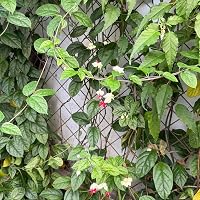
“she had not been alone. an invisible forest around her.”

September 24, 2024
READ FULL REVIEW HERE: https://lawofliteratureph.wordpress.c...
The Duterte administration is one of the worst periods in Philippine history — people are disappeared in the middle of the night, corpses are found littered in ditches, and the masses have grown desensitized to the rising death count of extrajudicial killings. To the older generation, it’s a deja vu of the Martial Law era. But the nightmare hasn’t ended yet.
To write about such a gruesome and violent period with finesse and grace is almost an impossible task. An impossible task that Glenn Diaz not only took on but exceeded in his novel Yñiga with his almost poetic prose. It has been many decades since the death of Jose Garcia Villa, the man whom Gemino Abad credits as the start of when Filipino poets went from writing in English to being wrought from English, and Glenn Diaz shows what being wrought from English truly means. There have been few Filipino writers I’ve read whose prose lingered not only in the eyes but also the tongue and ears such as Nick Joaquin and Gregorio Brillantes, and now Glenn Diaz.
Although I consider Yñiga a crime novel, as there are deaths and mystery in the story, it lacks many of the genre convention I associate with the genre. Maybe it’s more apt to consider it magic realism as there are fantastical scenes that are taken as normal and ordinary, similar to how the Duterte administration was full of crime but felt like magic realism — extraordinary events such as extrajudicial killings and unpresedential behaviors are considered ordinary. I will not claim I understood what Glenn Diaz wanted to say in his novel, it’ll probably take me two or three rereads to fully grasp the story — maybe the novel isn’t even about the Duterte administration and I completely misread the author’s intentions — but I believe it is a book that every Filipino should read.
The Duterte administration is one of the worst periods in Philippine history — people are disappeared in the middle of the night, corpses are found littered in ditches, and the masses have grown desensitized to the rising death count of extrajudicial killings. To the older generation, it’s a deja vu of the Martial Law era. But the nightmare hasn’t ended yet.
To write about such a gruesome and violent period with finesse and grace is almost an impossible task. An impossible task that Glenn Diaz not only took on but exceeded in his novel Yñiga with his almost poetic prose. It has been many decades since the death of Jose Garcia Villa, the man whom Gemino Abad credits as the start of when Filipino poets went from writing in English to being wrought from English, and Glenn Diaz shows what being wrought from English truly means. There have been few Filipino writers I’ve read whose prose lingered not only in the eyes but also the tongue and ears such as Nick Joaquin and Gregorio Brillantes, and now Glenn Diaz.
Although I consider Yñiga a crime novel, as there are deaths and mystery in the story, it lacks many of the genre convention I associate with the genre. Maybe it’s more apt to consider it magic realism as there are fantastical scenes that are taken as normal and ordinary, similar to how the Duterte administration was full of crime but felt like magic realism — extraordinary events such as extrajudicial killings and unpresedential behaviors are considered ordinary. I will not claim I understood what Glenn Diaz wanted to say in his novel, it’ll probably take me two or three rereads to fully grasp the story — maybe the novel isn’t even about the Duterte administration and I completely misread the author’s intentions — but I believe it is a book that every Filipino should read.

August 26, 2024
4.5⭐️
Forty-year-old Yñiga lives with her cat, Jestoni, in
T—, which is located in Central Manila. A former teacher in her province, she works at home and writes essays and papers for foreigners. One day, a retired army general who was notorious for killing activitists was arrested in their neighborhood. Days later, their neighborhood “caught” fire. No house was spared, and Yñiga decided to go back to M—, her hometown in Zambales. However, she did not get the tranquil life she was expecting in her small coastal town. Instead, the horrors of the past followed her, as if history is repeating itself.
This is the second book by Glenn Diaz @kasukalan that I’ve read and again, I am blown away. I annotated and put tabs so much because of the beautiful, beautiful lyrical writing. The author can describe an urban jungle as poetic as he describes the view from a lighthouse. Also, the author made me so emotionally invested with Jestoni the cat that I hugged my cats extra tighter after reading the book.😺
Yñiga is a character with so much depth. She witnessed so much when she was young that she suffered traumas; she did not know that she was just waiting for the right time to avenge for her family. Socio-political issues and activism were tackled, entwined with Yñiga’s penchant for analyzing people through astrology (which really amused me since I related so much). There were scenes difficult and painful to read, but what is even more painful is that this fiction could not be far from what happens in real life.
This is Philippine literary fiction at its best. No wonder it won the Best Novel in English during the 41st National Book Awards.👏 I am sharing my review so that Filipino bookstagrammers will take notice of this gem of a book by Glenn Diaz.
Fave lines:
“They didn’t leave apparently. Not all of then. She had not been alone. An invisible forest around her.”
Forty-year-old Yñiga lives with her cat, Jestoni, in
T—, which is located in Central Manila. A former teacher in her province, she works at home and writes essays and papers for foreigners. One day, a retired army general who was notorious for killing activitists was arrested in their neighborhood. Days later, their neighborhood “caught” fire. No house was spared, and Yñiga decided to go back to M—, her hometown in Zambales. However, she did not get the tranquil life she was expecting in her small coastal town. Instead, the horrors of the past followed her, as if history is repeating itself.
This is the second book by Glenn Diaz @kasukalan that I’ve read and again, I am blown away. I annotated and put tabs so much because of the beautiful, beautiful lyrical writing. The author can describe an urban jungle as poetic as he describes the view from a lighthouse. Also, the author made me so emotionally invested with Jestoni the cat that I hugged my cats extra tighter after reading the book.😺
Yñiga is a character with so much depth. She witnessed so much when she was young that she suffered traumas; she did not know that she was just waiting for the right time to avenge for her family. Socio-political issues and activism were tackled, entwined with Yñiga’s penchant for analyzing people through astrology (which really amused me since I related so much). There were scenes difficult and painful to read, but what is even more painful is that this fiction could not be far from what happens in real life.
This is Philippine literary fiction at its best. No wonder it won the Best Novel in English during the 41st National Book Awards.👏 I am sharing my review so that Filipino bookstagrammers will take notice of this gem of a book by Glenn Diaz.
Fave lines:
“They didn’t leave apparently. Not all of then. She had not been alone. An invisible forest around her.”

April 3, 2024
https://nordis.net/2024/03/31/article...
In Glenn Diaz’s Yñiga, the titular character was with Lolo Ben, a 90-year-old interviewee of an Americana pursuing doctoral tenure (or a promotion?) and academic points by ~investigating~ the possible links between lighthouses and social movements (“sounds like a lot of hubbub for metaphor work,” Yñiga quipped). Lolo Ben claimed that his father and uncle have participated in the 1896 Revolution, and seemed to be familiar with Itos, Yniga’s father who also once supported the armed rebellion not only by handing out resources, but by being part of it himself.
Partly due to Lolo Ben’s presumed dementia and old age, and Diaz’s fictional deployment of techniques (should be: deployment of fictional techniques?), and my selectively redundant excerptions, you will be left with hazy associations…
“That your nobyo, hija? Lolo Ben asked after Marco left. Good-looking guy. He looks familiar. Did he ever go up with Abril?
Go up? Yñiga asked, shielding her eyes from sunlight. Abril?
What’s he saying? Claire (the Americana doing an academic study on lighthouses) asked.
Up, he repeated. A hand impatiently thrown behind him, as if she ought to know what he meant” (see pp. 126-7).
…that will be of service to what I’m getting at with “going up,” pagsampa, resurrections. As if you know what I am getting at, what I mean.
In Glenn Diaz’s Yñiga, the titular character was with Lolo Ben, a 90-year-old interviewee of an Americana pursuing doctoral tenure (or a promotion?) and academic points by ~investigating~ the possible links between lighthouses and social movements (“sounds like a lot of hubbub for metaphor work,” Yñiga quipped). Lolo Ben claimed that his father and uncle have participated in the 1896 Revolution, and seemed to be familiar with Itos, Yniga’s father who also once supported the armed rebellion not only by handing out resources, but by being part of it himself.
Partly due to Lolo Ben’s presumed dementia and old age, and Diaz’s fictional deployment of techniques (should be: deployment of fictional techniques?), and my selectively redundant excerptions, you will be left with hazy associations…
“That your nobyo, hija? Lolo Ben asked after Marco left. Good-looking guy. He looks familiar. Did he ever go up with Abril?
Go up? Yñiga asked, shielding her eyes from sunlight. Abril?
What’s he saying? Claire (the Americana doing an academic study on lighthouses) asked.
Up, he repeated. A hand impatiently thrown behind him, as if she ought to know what he meant” (see pp. 126-7).
…that will be of service to what I’m getting at with “going up,” pagsampa, resurrections. As if you know what I am getting at, what I mean.

June 8, 2025
"In the very best of novels (this one included), personal narratives combine with the country’s tale, imbuing both with greater clarity and meaning. What Diaz also does in Yñiga is to force his reader to take on the mentality of a novelist. It’s not only his chapters that jump backward and forward in time, but sometimes, even his paragraphs (and in one memorable, brief portion, his omniscient narrator becomes a cat). The reader-as-novelist has quite a bit of filling in to do. One needs to read deeply in order to follow the narrative thread, woven mainly through the eyes of a very troubled woman, no longer young, yet lost in a fight that has no end, forever seeking vengeance for her father’s disappearance..."
Read the rest of the review : https://exlibrisphilippines.com/2025/...
Read the rest of the review : https://exlibrisphilippines.com/2025/...

August 12, 2026
Yñiga by Glenn Diaz is a thoughtful and challenging work of contemporary Filipino literature that explores political violence, trauma, memory, and Filipino identity. Following Yñiga, a 40-year-old teacher and writer, the novel moves between past and present, mirroring the fragmented way personal and collective trauma is remembered. I especially appreciated how Diaz connects the intimate details of everyday Filipino life with the country’s history of disappearances, activism, and state violence without becoming overly preachy. The nonlinear structure and emotional distance can make the novel demanding at times, but they also create a lingering sense of unease that stays with you. Layered, ambitious, and deeply relevant, Yñiga is a meaningful piece of Philippine literature that earns 4/5 stars from me. Complete book review in my book blog: https://bongbongbooks.wordpress.com/2...
August 2, 2026
One of the great books na nabasa ko this year. Scratched the itch that fleabag left me after watching the series. Fleabag in a way that the book follows the same woman character-- sardonic, witty, lonely, self destructive, and grief-ridden; but here, the titular character is uniquely Filipino, specifically how living and being a Filipino is contending within and being shaped by the huge forest that is Filipino history of colonization, imperialism, globalization; people's ongoing war (violent nor not) with these invisible forces and the violence that follow. In the novel, the specific historical facts and events became the periphery but can be felt in the characters as these trickle down to their lives and community. What became is a novel with a great character study filled with memorable characters, surprisingly funny too. I also love the book for opening with a quote by Sison

August 14, 2026
Glenn Diaz knows how to write Yñiga for who she is: flawed, hopeful, changing. Always changing. Also superstitious. And emotionally tied to a cat. Been there, done that.
But also, a woman who wants "justice" for her father, her family, her own life, but is not purely that. What even is "justice"? Who benefits from it? Who can fight for it? Who deserves it? Is moral righteousness a prerequisite for wanting (and getting) "justice" for oneself?
These questions, the emotional and sociopolitical whiplash! They are one in the same. Existing is political. Fighting for your life is political. Running away is political. Staying where you are is political. Sir Glenn Diaz, ang husay-husay mo, thank you for teaching me that one CW10 semester. Hanggang dito na lang po ang aking mga saloobin at paghanga sa iyo.
But also, a woman who wants "justice" for her father, her family, her own life, but is not purely that. What even is "justice"? Who benefits from it? Who can fight for it? Who deserves it? Is moral righteousness a prerequisite for wanting (and getting) "justice" for oneself?
These questions, the emotional and sociopolitical whiplash! They are one in the same. Existing is political. Fighting for your life is political. Running away is political. Staying where you are is political. Sir Glenn Diaz, ang husay-husay mo, thank you for teaching me that one CW10 semester. Hanggang dito na lang po ang aking mga saloobin at paghanga sa iyo.
August 12, 2023
“What a blessing it would be to be left alone. For the great landlord of the cosmos to see her tiny figure and declare, with utmost boredom, Nothing to see here, move on.”
Yniga is an important novel in this time of political unrest and unnamed persecutions, reported and unknown to us in the cities. The main character, Yniga, is more colorful than what she claims to be passive and escapist (and a little bit of an Aquarius tbh). Written in non-linear fashion, the events, although fiction, are stories that do not surprise anymore, yet retellings of a national crackdown agenda, state oppressions, disappearances, and the emphasis of the collective (tsk, Yniga, you did things alone too much.)
February 15, 2024
I want to go on a trek after reading this book. 😅
This brilliantly written work follows the journey of Yñiga, a 40-year-old teacher and writer trying to escape her tangled life in T, however, her past will continue to haunt her.
If there is one thing I learned from this book, it is how to handle grief.
Grief is a monster, yet it can be tamed.
You will never truly escape the terror of losing someone you love, but the wonderful memories, lessons, and love you've shared will help you embrace the pain.
This is my first novel as a Filipino.
This is my first novel by a Filipino author, but certainly not my last.
This brilliantly written work follows the journey of Yñiga, a 40-year-old teacher and writer trying to escape her tangled life in T, however, her past will continue to haunt her.
If there is one thing I learned from this book, it is how to handle grief.
Grief is a monster, yet it can be tamed.
You will never truly escape the terror of losing someone you love, but the wonderful memories, lessons, and love you've shared will help you embrace the pain.
This is my first novel as a Filipino.
This is my first novel by a Filipino author, but certainly not my last.

January 17, 2025
This book is currently too smart for me at the moment. So much about the main subject matter just went over my head. As a middle class millennial who has lived all her life in Imperial Manila, has little to no interest in politics, and an infant sense of history, I needed things to be spelled out for me more—and this book is an absolute read-between-the-lines one, which I am unable to do because I lack the schema for it.
Definitely one that needs to be read in an academic setting, with guided discussions afterwards. I plan to revisit this one after I read all the books mention in the acknowledgment.
Definitely one that needs to be read in an academic setting, with guided discussions afterwards. I plan to revisit this one after I read all the books mention in the acknowledgment.
Displaying 1 - 30 of 49 reviews