Perfect for fans of Ottessa Moshfegh and Sally Rooney, Methuselah offers a raw and haunting glimpse into our collective lonelinesses, anxieties, and desires.
Told in alternating chapters that braid the past with the near-present, Methuselah follows Tessa as she shuns college and sets out on the road with her doom metal band, a ragtag group called Pestilential Harbor.
But when she discovers that one of the members has been keeping an explosive secret, the band splinters. Tessa settles in San Diego, drifting through her twenties as love—and meaningful connections with other people—always seems just out of reach.
As droughts and wildfires sweep her home state, she obsessively keeps tabs on the safety of a 4,000-year-old bristlecone pine tree named Methuselah (this means repeatedly pressing return on a Google search of "Is Methuselah still alive?”). But as her grandmother slides into dementia, and the natural world feels more distant than ever, it will take more than refreshing a webpage to keep Tessa's hope in the future alive.
Time folds in on itself, each chapter offering a new vantage point: from a hallucinogenic New Year’s Eve party to a dust-white Bronx apartment to a ghost town in the Mojave Desert.
Methuselah is a meditation on time, memory, family history, and what it means to live in an increasingly fast-paced and disconnected world.
Praise
"Amy DeBellis writes with ferocious conviction for truth. This is what allows her fiction to unabashedly dissect the lives of her characters, peeling back skin and sinew to expose the raw underbelly of desire, insecurity, and rebellion. Methuselah is a masterful display of DeBellis’ dedication to craft, which has enabled her to expertly construct a rich world of her own making—one that feels as authentic and troubled as the one we live in today.”
— Nicholas Claro, author of This Is Where You Are: Stories
“Methuselah is a kaleidoscopic story of longing, anxiety, and mortality—one only a singularly gifted writer like Amy DeBellis could tell. It slowly creeps beneath your skin and finds its way to your marrow. Every page will remind you why you fell in love with reading.”
— Samantha Crewson, author of Every Sweet Thing Is Bitter
“The setting of this gem of a novella is deftly wrought and alluringly atmospheric. With the smoke of climate disasters billowing on the horizon, the distressed and angsty hotel rooms, unkempt apartments, and punk bars, this story is about the power that time holds over our transient lives. The frantic pursuit of bionic memory and immortality, DeBellis shows us, will not elevate humanity. Only art, electric and ephemeral—only nature, imperiled and persistent—only life, grievously and marvelously short—can do that.”
— M. C. Benner Dixon, author of The Height of Land
Amy DeBellis's writing has been nominated multiple times for the Pushcart Prize and The Best of the Net, has appeared in the Wigleaf Top 50 Longlist, and can be found in X-R-A-Y, Uncharted, Passages North, Write or Die, Trampset, Pithead Chapel, Fractured, Vol. 1 Brooklyn, and over 50 other literary journals.
She has served as the judge for two literary contests: The Feign Lit Fiction Prize and the Moonlit Getaway Fiction Prize.
Her literary inspirations include Donna Tartt (her favorite novel of all time is The Secret History), Chuck Palahniuk, R.F. Kuang, Mona Awad, Hanya Yanagihara, and Carmen Maria Machado.
Alongside her fiction, she is passionate about raising awareness of chronic illness, and advocates for greater understanding of the disabled community.
I was fortunate enough to read an ARC of Methuselah. I found it very engaging and pleasant to read. The writing really made me sympathize with Tessa. I enjoyed spending time with her because she was very relatable and sincere in her quest to find a meaning in life. I liked that she was interested in this ancient tree, Methuselah, and that she reached out to it for some spiritual sustenance. I always enjoy DeBellis's writing; the book is well-written and literary in tone without being pretentious or inaccessible.
Thank you to Voracious Readers Only for the opportunity to read this book! It really set itself apart from any other book I have read. I often find it confusing when books shift between time periods, but this was different. Although the text shifts between time periods, it still feels timeless to me.
The various literary techniques and language that DeBellis implemented in this text are extraordinary. Her writing seems to be so poetic and I strongly recommend this book! I look forward to reading more of her writing and appreciate the way that she writes. Definitely worth a re-read, too.
This book was a pleasant surprise. I'm not usually a fan of stories that jump to and fro between past and present times, as it ends up a confusing mess. Methuselah is an exception. The story flows smoothly. It's calm, not rushed and yet keeps you glued until the end. Without going into spoilers, Tessa's experiences reverberate with the experience of heightened anxiousness of current times.
The story’s alternating chapters mirror memory itself: fragmented, looping, and quietly devastating. As Tessa obsesses over the fate of an ancient tree in a dying world, her fixation becomes a poignant metaphor for endurance and fragility: of nature, of family, of hope. The prose feels lyrical and immersive, often blurring the line between introspection and hallucination, between the human and the natural.
What makes Methuselah remarkable is how it connects the personal to the planetary. Tessa’s unraveling parallels the slow collapse of her environment and her grandmother’s fading memory. Each timeline folds into the next, suggesting that survival, like love, is both ancient and impermanent.
A deeply reflective and atmospheric read, Methuselah lingers like smoke: hazy, bittersweet, and impossible to forget.
“Methuselah” is a haunting and layered novel that spans decades and locations—from Barstow’s parched motels to the dense emotional landscapes of New York and San Diego—told through the perspective of Tessa, a young woman wrestling with purpose, aging, and the invisible decay of dreams. The story’s structure reflects the gnarled, ancient bristlecone pine it’s named after—its roots deep in history, its branches stretching towards an uncertain future.
DeBellis captures early adulthood with raw honesty. Tessa’s years touring with her doom metal band, Pestilential Harbor, embody the chaos and recklessness of youth—the smoky motel rooms, late-night breakdowns, and the desperate search for meaning amid creative disillusionment. These scenes feel tangible and immediate; DeBellis writes with cinematic clarity and an ear for rhythm, blending dialogue and introspection seamlessly.
As the novel moves forward in time, Tessa’s youthful rebellion softens into a quiet ache of adulthood. The sections set in New York and San Diego provide stark contrasts: her grandmother’s frailty reflects the fragility of memory, while California’s wildfires highlight the vulnerability of the natural world. The recurring motif of trees—especially the ancient Methuselah—becomes a symbol of endurance against time’s erosion. Through this, DeBellis explores what it means to outlive passion, to keep standing when the fire has passed.
What makes “Methuselah” truly remarkable is its emotional honesty. DeBellis’s prose is unflinching yet poetic, filled with quiet revelations about mortality, art, and the human condition. The novel’s time jumps, alternating between youthful chaos and mature reflection, foster a sense of continuity that echoes the Sylvia Plath and William Golding epigraphs on memory and transience that open the book.
Overall, “Methuselah” is a beautiful and melancholic meditation on aging, art, and the relentless passage of time. It stays with you long after the final page—like the echo of a distant song or the whisper of wind through an ancient forest.
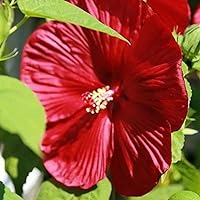
Methuselah is a short book that still packs a lot. (And the author did the cover herself with plants from her mother's garden. How extra is that?)
To me, one of the main strengths was the way it captured the everyday horror and absurdity of our modern world. The fact that you must keep going, doing bullshit jobs that look good on your resume, while everything is burning. Through Tessa, I really got that feeling of existential dread. The line where she speaks about her depression struck me. She doesn't know while she feels bad because she has everything that socially makes a successful individual. Except that the issue isn't with her, but with the world.
(I also appreciated the fact that taking antidepressants wasn't demonized, too many books depict them as "evil drugs you must get rid of" while they are simply meds who help some people living. You know.)
The discussion on aging was also poignant, especially the grief of seeing a loved one slip away.
However, the story also offers solution and insights (and that's what makes it even better in my opinion. Because okay, we are doomed. So what do we do about it now?). The ending deeply touched me, with the focus on the beauty of nature, slowing down, finding community and accepting the transitory nature of things. (I will keep in mind the moment Violet speaks of loosing her wife).
I googled the Methuselah tree and wow, impressive indeed. All twisted, but strong, reaching towards heaven. That made the ending even more powerful.
Amy Debellis's style is beautiful and evocative (I will remember the nightmare about the Neuralink). I highly recommend you try this book. It will offer you a very different experience from the standardized stories published by big companies.
“Sometimes it felt crippling that she was a person, a being made to experience the world in just a few predetermined ways.”
Methuselah by Amy DeBellis is a glimpse of the modern human experience. There is so much dread here, which is an aspect of life I think most people can relate to. Tessa, the main character, tries to find meaning and purpose in her life after her dream of singing in a successful doom metal band fails. Every aspect of her life seems bleak.
I really liked how the book captures the importance of time. Tessa is weighed down by news headlines and the eminent climate change crisis. Her grandmother Grise who is in her 90s is withered and aged in ways that are so far removed from youthful understanding.
In looking to find meaning, Tessa finds herself thinking often about an ancient tree named Methuselah. Its location is protected and it continues to withstand the raging California wildfires. To escape the dread, she turns to nature, which again, is something I think most of us can relate to.
My takeaway from this book is that life is short. Every moment counts. What you do with your time matters. You can’t dwell in the past because time is constantly propelling forward. Aging is beautiful. It is a sign that you have lived and lived well.
This book was a great end to 2025. Thank you so much for the ARC. It was a pleasure to read.
It's about the impermanence of things, including our own lives (which are pretty measly and insignificant in the scheme of things). Does that bring comfort? Existential fear? In this book, it's a bit of both, not unlike the poised-to-end metal band in the book's 2014 timeline with dual vocalists bringing sounds of sweetness and terror.
Methuselah follows Tessa between two timelines, 2014 and the 2020s. The 2014 chapters have a clear conflict with a band on the brink, but the 2020s have a less direct problem, more of a general ennui. In both places Tessa feels that others are leaving (abandoning?) her. The constant in her life is Methuselah, the oldest living tree which Tessa has never seen, but which she fixates on as a way of grounding herself.
I wish there was a simple solution to the general blah we often feel in the age of doomscrolling. I can't say this book is the antidote, but it does make gestures towards greater wholeness.
Thank you so much to Amy DeBellis for sending me an arc of her new book! This in no way affects my review.
I adored the prose in this book, and the story itself is very unique. The way it follows two timelines of Tessa's life is deeply facinating. I feel like I know her intimately, despite the novella only lasting a little over 100 pages. I truly believe Amy DeBellis' writing should be taught in creative writing classes (and I've taken many). It has such good qualities of detail and self reflectiveness that are difficult to pull off in a way that takes the reader wholeheartedly.
I had high hopes after enjoying All our tomorrows and Methuselah did not disappoint. I loved the band mates drama surrounding main character Tessa and her doom metal band, Pestilential Harbor, but this book is so much more, exploring themes of grief, and a despair at the world which is all so relatable these days.
A quick read that made a lasting impression- it was well worth my time. Ideal if you're a reader who likes reflective books!
Engaging plot with a relatable main character, Tessa. I was eager to see how her story unfolded. I could see, feel, and even smell the places described, with its rich imagery of atmosphere and scent. What I loved most of all is the language with which this simple yet profound story is told. Exquisite prose and an undercurrent of existential themes are staples of Debellis' work. (When an author manages to nail all 4 of these aspects- plot, characters, setting, and language- it's marvelous and deeply satisfying for me).
In Methuselah, we follow Tessa, from 19 to her late 20s. We experience formative moments in the progression of her personal aspirations. I sensed a quiet acceptance and resignation, an acquiescence, that often (sadly) comes with aging- that common experience of realizing that our vision for our lives does not or cannot always come to fruition in a society that isn't designed to support or facilitate us- neither the environment nor the economic foundations of modern western society are hospitable.
Tessa's preoccupation with this notorious 4000 year old tree, Methuselah, is perhaps a coping mechanism and a byproduct of her growing discomfort with and awareness of the transience of everything within her life, and of life itself. Tessa is acutely affected by the ever-present insecurity of her financial health, the health of the environment, and the health of her own body and of the people closest to her.
Despite these "heavy" themes, this novella was oddly comforting, reminding me that I am not alone. Even though I'm 37, I identified with Tessa's thoughts, feelings, experiences and obsessive tendencies. I was left with the feeling that everything is ok, even if it's not.
My only gripe is that I would've loved this to be extended into a full-length novel, so the characters, plot, settings and themes could be more fully developed and explored. I would have liked to be more immersed in Tessa's mind. But, better tight and brief than repetitive just for the sake of being longer.
Definitely recommend this one- got me out of a reading slump :)
I am such a fan of this author after loving All Our Tomorrows last year. This author has such a strong voice and can really communicate what it is like being a woman in your twenties trying to navigate loneliness, finding your own way, and grappling with both personal anxieties and anxieties over the world at large particularly as they relate to the climate. For such a short novella, this book has such a strong narrative voice and has solidified DeBellis as an author that I will read pretty much whatever she writes.
In this novella, we follow Tessa through various stages of her life. The author makes the decision to tell the story non-linearly which in the wrong hands can be quite frustrating for a reader but is just done so beautifully and succinctly here. The non-linear framework really adds to the overall mood of the story as Tessa grapples with both her past and future in trying to figure out where she fits in with her family, relationships, and the world at large. Although Tessa can be frustrating at times, the author writes her with such kindness and sympathy that you can’t help but feel for her and want her to find the answers she is seeking.
By juxtaposing Tessa’s personal life with the ever changing climate, particularly through the lens of the tumultuous wildfires of California, the author paints a picture both deeply personal and universal. Time moves forward, but we keep who we were in the past as part of us through memories. Like the titular Methuselah, a tree that withstands environmental catastrophe time and time again, we continue to survive even when knocked down by heartache, the loss of a dream, or even the loss of a loved one.
This is such a beautiful story, and much like her novel last year, I will be recommending this novella for the rest of the year. If you love lyrical writing and thinking deeply and spiritually within yourself, I cannot recommend this author enough.