

What do you think?
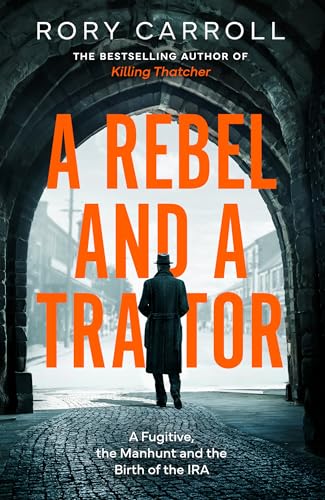
A Rebel and a Traitor: A Fugitive, the Manhunt and the Birth of the IRA
From the master storyteller behind 2023’s critically acclaimed KILLING THATCHER
A Rebel and a Traitor is the story of a rogue imperial consul who sought to forge a new nation in the middle of a war – and the mercurial spy chief who sought to destroy him by any means.
The rogue consul was Sir Roger Casement, a decorated diplomat who turned his back on the British empire and instead joined the rising Irish cause at the turn of the 20th century. At the book’s centre is the manhunt for Casement led by intelligence officer Reginald ‘Blinker’ Hall, the legendary British spy chief who pioneered codebreaking, early mass surveillance and media manipulation.
As he did for the critically acclaimed Killing Thatcher, master storyteller Rory Carroll has combed diaries, letters, police reports, memoirs, court transcripts, secret service archives and declassified government files in the US, Britain, Ireland and Germany to create a page-turning history, and a story that still echoes through Anglo-Irish relations. A Rebel and a Traitor raises profound questions about honour, courage and the price of patriotism.
A Rebel and a Traitor is the story of a rogue imperial consul who sought to forge a new nation in the middle of a war – and the mercurial spy chief who sought to destroy him by any means.
The rogue consul was Sir Roger Casement, a decorated diplomat who turned his back on the British empire and instead joined the rising Irish cause at the turn of the 20th century. At the book’s centre is the manhunt for Casement led by intelligence officer Reginald ‘Blinker’ Hall, the legendary British spy chief who pioneered codebreaking, early mass surveillance and media manipulation.
As he did for the critically acclaimed Killing Thatcher, master storyteller Rory Carroll has combed diaries, letters, police reports, memoirs, court transcripts, secret service archives and declassified government files in the US, Britain, Ireland and Germany to create a page-turning history, and a story that still echoes through Anglo-Irish relations. A Rebel and a Traitor raises profound questions about honour, courage and the price of patriotism.
416 pages, Kindle Edition
First published March 26, 2026
About the author
Rory Carroll
4 books151 followersRory Carroll (b. 1972) is a journalist who started his career in Northern Ireland. As a foreign correspondent for the Guardian, he reported from the Balkans, Afghanistan, Iraq, Africa, Latin American, and the United States. His first book, Comandante: Hugo Chavez’s Venezuela, was named an Economist Book of the Year and BBC Radio 4 Book of the Week. He is now based in his native Dublin as the Guardian’s Ireland correspondent.
Ratings & Reviews
Friends & Following
Create a free account to discover what your friends think of this book!
Community Reviews
Displaying 1 - 30 of 45 reviews

March 29, 2026
The book starts with 3 men leaving a German sub in the dead of night for the southwest coast of Ireland, mid-way through WWI. A group of men prepared to die for their country, but that country is Ireland, not England. One of them is Sir Roger Casement - respected British diplomat with a strong humanitarian record overseas. But also a vocal advocate for Home Rule, devolved government in Ireland. This is the story of how an Irishman came to work for the British government, be knighted for his service, and then collude with Germany in his efforts to initiate revolution in Ireland. But Carroll superbly weaves this together with the emergence of spying and the secret service being used to great effect in wartime, society attitudes to homosexuality, the roots and events of the Easter uprising in 1916, and the seeds of the IRA.
It did take me longer to get into this book than with the author’s brilliant Killing Thatcher, I think, because I didn’t know anything about the characters involved here. But Carroll brilliantly brings them to life. (NB. My proof copy was missing maps and photographs, which I understand the final version includes - I would definitely have referred to these.) There are tragic mistakes and choices, unwavering belief, heartbreaking love stories and an epic battle of wits in the dogged, relentless manhunt for Casement, using some controversial tactics. Carroll has written another well-researched account: history in the guise of breathtaking storytelling.
It did take me longer to get into this book than with the author’s brilliant Killing Thatcher, I think, because I didn’t know anything about the characters involved here. But Carroll brilliantly brings them to life. (NB. My proof copy was missing maps and photographs, which I understand the final version includes - I would definitely have referred to these.) There are tragic mistakes and choices, unwavering belief, heartbreaking love stories and an epic battle of wits in the dogged, relentless manhunt for Casement, using some controversial tactics. Carroll has written another well-researched account: history in the guise of breathtaking storytelling.

April 29, 2026
Another audio version of a book that I should have liked to have seen in print format, not that there’s anything at all wrong with the audio version, far from it, it’s meticulously researched and detailed, but I believe the written format contains maps and photographs that I would have really enjoyed getting eyes on.
An often untold story of the events that preceded the Easter Rising, and while I’d somewhat argue the title of the birth of the IRA, I enjoyed the detail (a lot of which I did already know) I really appreciated hearing extracts from Casements own diary’s.
A must read for history nerds, particularly Irish and British history.
Great narration, and had I not felt I’d missed out on the graphics I’m sure it could’ve been an easy 5 ⭐️
My thanks to HarperCollins U.K. AUDIO and NetGalley for the opportunity to review this ALC, I was late to the party and this is available now.
An often untold story of the events that preceded the Easter Rising, and while I’d somewhat argue the title of the birth of the IRA, I enjoyed the detail (a lot of which I did already know) I really appreciated hearing extracts from Casements own diary’s.
A must read for history nerds, particularly Irish and British history.
Great narration, and had I not felt I’d missed out on the graphics I’m sure it could’ve been an easy 5 ⭐️
My thanks to HarperCollins U.K. AUDIO and NetGalley for the opportunity to review this ALC, I was late to the party and this is available now.

July 23, 2026
A little dry in places, and took some time to get in to, but overall a really engrossing narrative nonfiction book about an important person in Irish history. I didn’t know too much about Casement going in, other than that I had seen his grave in Glasnevin Cemetery and that there are a number of places in Ireland named after him (as with most of the major figures related to the 1916 rising), so this was a really thorough look at a fascinating figure.

August 18, 2026
I enjoyed this less than Carroll's book on Thatcher, but it's still a well-researched, well-written story well told. I think that Carroll is reasonably balanced in how he depicts Casement. But even if you ignore his Irish heritage, one can guess where his sympathies lie. As someone who's against capital punishment and for a united Ireland, I too have a great deal of sympathy for Casement. But I can't say I warmed to him. I didn't warm to Blinker Hall, either, but one can't help feeling a degree of respect for the wily old sea dog.

July 8, 2026
really liked this. suspenseful historic non-fiction which taught me about a part of history i feel i should know more about. want to read more Rory Carroll. Oh and it never felt over long or overdetailed.

April 1, 2026
2026 has been the year of non-fiction books for me. I spent much time in World War II as written by Ben McIntyre and Jonathan Freedland and relished the opportunity to read an equally powerful account of events in and around Ireland at the time of World War I. A Rebel and a Traitor gave amazing insight into the struggles of Ireland to become independent from Great Britain. Specifically focusing on Sir Roger Casement, quite the enigma for a British diplomat, and the Navy man turned intelligence officer hunting him, Reginald ‘Blinker’ Hall.
In true cat and mouse fashion, this was a gripping back-and-forth spanning the globe from America to Germany. The Irish rising is a topic I knew little about and found the thoughtful, balanced assessment of the time and the men working toward Irish independence enthralling. Rory Carroll brought all the key figures to life with true enthusiasm easy to discern as a reader. So well researched, I couldn't put it down. The details and facts liberally woven throughout gave a true feel for the time and events as they occurred.
Though the cover says it is the birth of the IRA, to me it is more about the tactics used by the Irish early on that were then employed and expanded to cruel effect later during the troubles in Northern Ireland. This isn't specifically about the IRA though I am curious to read Carroll's Killing Thatcher as it is well regarded.
If you are on the hunt for compelling non-fiction you surely found it here in A Rebel and a Traitor. I highly recommend.
In true cat and mouse fashion, this was a gripping back-and-forth spanning the globe from America to Germany. The Irish rising is a topic I knew little about and found the thoughtful, balanced assessment of the time and the men working toward Irish independence enthralling. Rory Carroll brought all the key figures to life with true enthusiasm easy to discern as a reader. So well researched, I couldn't put it down. The details and facts liberally woven throughout gave a true feel for the time and events as they occurred.
Though the cover says it is the birth of the IRA, to me it is more about the tactics used by the Irish early on that were then employed and expanded to cruel effect later during the troubles in Northern Ireland. This isn't specifically about the IRA though I am curious to read Carroll's Killing Thatcher as it is well regarded.
If you are on the hunt for compelling non-fiction you surely found it here in A Rebel and a Traitor. I highly recommend.

April 12, 2026
Honestly could not stop once started.
The story of Roger Casement was one I had managed to miss in my education around the easter rising and maybe more purposefully not as publicly acknowledged.
A truly intriguing man, the layers of which are peeled back beautifully by Carroll.
Looking on this past through modern eyes truly brought heartbreak and complexity. This line I felt was tread well, as tempting as it would be to see him as a sanatised martyr, morally unscrupulous and polished. The book does an amazing job of presenting how real life is rarely so spotless.
Once again Carroll does an intricate job of a cat and mouse story while fleshing out history as if it were another world. Deep research allowing me to get lost in scene and learn more details of each figure as we go.
If a book like this could be produced every month I would never tire reading the next. I feel perfectly the audience for this and was looking for something exactly like this when it released, blindsiding me.
I am glad that the excerpts from the diaries were not shyed away from while still giving a sense of how they would have been recieved at the time.
The story of Roger Casement was one I had managed to miss in my education around the easter rising and maybe more purposefully not as publicly acknowledged.
A truly intriguing man, the layers of which are peeled back beautifully by Carroll.
Looking on this past through modern eyes truly brought heartbreak and complexity. This line I felt was tread well, as tempting as it would be to see him as a sanatised martyr, morally unscrupulous and polished. The book does an amazing job of presenting how real life is rarely so spotless.
Once again Carroll does an intricate job of a cat and mouse story while fleshing out history as if it were another world. Deep research allowing me to get lost in scene and learn more details of each figure as we go.
If a book like this could be produced every month I would never tire reading the next. I feel perfectly the audience for this and was looking for something exactly like this when it released, blindsiding me.
I am glad that the excerpts from the diaries were not shyed away from while still giving a sense of how they would have been recieved at the time.

September 23, 2026
This was an interesting read. I particularly liked how it detailed the different fronts of the Easter Rising running parallel to Casement's journey, arrival and arrest in Ireland, and his transfer to London for trial. This gives the story real momentum.
However, I think it could have done more to build up Casement's early life and how he achieved his knighthood. This is only mentioned briefly, and it would have been good to explore what effect his time in the Congo had on him, as that seems key to understanding how he went from British diplomat to rebel.
3.5/5
However, I think it could have done more to build up Casement's early life and how he achieved his knighthood. This is only mentioned briefly, and it would have been good to explore what effect his time in the Congo had on him, as that seems key to understanding how he went from British diplomat to rebel.
3.5/5

August 16, 2026
Carroll has written a thoroughly-researched, engaging narrative of Roger Casement’s days from 1914 to the events of Easter 1916 and beyond.
Casement’s story, and those of the Rising leaders interspersed within the book, are filled with excitement, cunning, double-dealing, espionage, hope, despair, heroism and love.
The twin-track approach to telling the story of both cat and mouse added a lot to the narrative. Reginald Hall is a malign figure. I appreciate he had to do everything in the face of a brutal and total war but I believe certain acts, such as the tacit acceptance of a tragedy such as the sinking of the Lusitania, were too cold & calculating when holding the lives of innocent people in your hands.
More on Casement. He was a dreamer who was willing to die for what he believed in. A man who had to keep his sexual desires hidden from the world, the fear of exposure of which tormented him. A man who never had a real home. A man who witnessed a huge amount of suffering firsthand. A man given to bouts of despondency and hopelessness.
Casement’s memory has lived on after his death, and will live on for a long time more. He inspires Irishmen like myself who come after him. Reading about his last days, and the Rising, gives me a new sense of appreciation for the heroes of 1916, and fills me with a renewed sense of passion for my nation, and our heritage. I am glad that his sexuality is no longer taboo but it illicits sorrow that both Parnell and Casement suffered in public life for their private affairs.
Casement’s story, and those of the Rising leaders interspersed within the book, are filled with excitement, cunning, double-dealing, espionage, hope, despair, heroism and love.
The twin-track approach to telling the story of both cat and mouse added a lot to the narrative. Reginald Hall is a malign figure. I appreciate he had to do everything in the face of a brutal and total war but I believe certain acts, such as the tacit acceptance of a tragedy such as the sinking of the Lusitania, were too cold & calculating when holding the lives of innocent people in your hands.
More on Casement. He was a dreamer who was willing to die for what he believed in. A man who had to keep his sexual desires hidden from the world, the fear of exposure of which tormented him. A man who never had a real home. A man who witnessed a huge amount of suffering firsthand. A man given to bouts of despondency and hopelessness.
Casement’s memory has lived on after his death, and will live on for a long time more. He inspires Irishmen like myself who come after him. Reading about his last days, and the Rising, gives me a new sense of appreciation for the heroes of 1916, and fills me with a renewed sense of passion for my nation, and our heritage. I am glad that his sexuality is no longer taboo but it illicits sorrow that both Parnell and Casement suffered in public life for their private affairs.

June 1, 2026
A Rebel and a Traitor is a story built on contradictions, and Rory Carroll explores them with real unique intent.
At its centre is Roger Casement, a British knight turned Irish revolutionary, and a man willing to court Germany during WWI to spark an uprising at home, only to later recoil from the wheels he put in motion. Opposite him stands Reginald Hall, the British spymaster who treats legality as an optional extra, pioneering an amoral intelligence machine in the name of state survival.
Carroll threads these two men through a narrative that stretches across the Empire and circles back to Ireland, its second colony, where the father figures of the Easter Rising come into view. The book’s power lies in how it exposes the messy, human contradictions behind events often placed into myth.
Carroll may not quite reach the intense, unrelenting drama of Killing Thatcher, but he absolutely does this story justice with the most detailed, far reaching research. Ireland’s history inspires so many great reads, and this is a fascinating part to focus on.
At its centre is Roger Casement, a British knight turned Irish revolutionary, and a man willing to court Germany during WWI to spark an uprising at home, only to later recoil from the wheels he put in motion. Opposite him stands Reginald Hall, the British spymaster who treats legality as an optional extra, pioneering an amoral intelligence machine in the name of state survival.
Carroll threads these two men through a narrative that stretches across the Empire and circles back to Ireland, its second colony, where the father figures of the Easter Rising come into view. The book’s power lies in how it exposes the messy, human contradictions behind events often placed into myth.
Carroll may not quite reach the intense, unrelenting drama of Killing Thatcher, but he absolutely does this story justice with the most detailed, far reaching research. Ireland’s history inspires so many great reads, and this is a fascinating part to focus on.

May 21, 2026
Thanks to Net Galley for a copy of this book.
Sir Roger Casement, in a prisoner of war camp in Germany during the Easter Rising in Ireland, was a dramatic figure, larger than life and well travelled. He is the central person in this account, based on many sources of the day.
We learn that Casement was knighted for having gone as a consul to the Congo and exposed the cruelties of Leopold's Belgian extractive exploiters. Followed by repeating this feat in the rubber plantations of South America. His work helped to end the brutal conditions. However, we're only told this as background, when I would have enjoyed seeing more about this man who exposed for the first time the excessive cruelties of these colonial efforts, similar to the past colonial atrocities in Ireland.
We get ship movements in grand detail, the start of WW1, and the dichotomy of Irish men who got paid for soldiering by the British forces. At the same time, the stealthy import of arms to Ireland is explained. First the unionists in the North armed themselves, so the horrified Home Rulers felt they needed arms for protection.
Signals were coded, often intercepted, not always decoded.
The Rising only occupies a couple of scant chapters, probably because Casement was in Germany trying to harm himself with curare or swallowed nails. He hadn't been able to stir the fellow prisoners to his side.
The book tells us that - at 50, unwed - Casement was gay, which was a crime at the time, and socially forbidden to mention. It seems unlikely and stupid that he should keep notebooks of all his encounters, when he moved so often that he had to store his stuff in various places and had to fear exposure. When some of the diaries were produced by the British (others were burned by a friend), that was the least of his troubles.
I like the spread of photos and the occasional mention of ordinary people and human touches. History is not just made of leaders. The women of 1916 are given space. I felt more women could have been named, such as Molly Osgood Childers, who travelled with her husband and another couple aboard their yacht Asgard to fetch rifles. The background centuries of Irish rule are covered early, seeming perhaps too dry and out of place in a biography.
The book is released during the 110th anniversary of the Easter Rising. References occupy a section at the back, placed by chapter.
I read an e-ARC from Net Galley. This is an unbiased review.
Sir Roger Casement, in a prisoner of war camp in Germany during the Easter Rising in Ireland, was a dramatic figure, larger than life and well travelled. He is the central person in this account, based on many sources of the day.
We learn that Casement was knighted for having gone as a consul to the Congo and exposed the cruelties of Leopold's Belgian extractive exploiters. Followed by repeating this feat in the rubber plantations of South America. His work helped to end the brutal conditions. However, we're only told this as background, when I would have enjoyed seeing more about this man who exposed for the first time the excessive cruelties of these colonial efforts, similar to the past colonial atrocities in Ireland.
We get ship movements in grand detail, the start of WW1, and the dichotomy of Irish men who got paid for soldiering by the British forces. At the same time, the stealthy import of arms to Ireland is explained. First the unionists in the North armed themselves, so the horrified Home Rulers felt they needed arms for protection.
Signals were coded, often intercepted, not always decoded.
The Rising only occupies a couple of scant chapters, probably because Casement was in Germany trying to harm himself with curare or swallowed nails. He hadn't been able to stir the fellow prisoners to his side.
The book tells us that - at 50, unwed - Casement was gay, which was a crime at the time, and socially forbidden to mention. It seems unlikely and stupid that he should keep notebooks of all his encounters, when he moved so often that he had to store his stuff in various places and had to fear exposure. When some of the diaries were produced by the British (others were burned by a friend), that was the least of his troubles.
I like the spread of photos and the occasional mention of ordinary people and human touches. History is not just made of leaders. The women of 1916 are given space. I felt more women could have been named, such as Molly Osgood Childers, who travelled with her husband and another couple aboard their yacht Asgard to fetch rifles. The background centuries of Irish rule are covered early, seeming perhaps too dry and out of place in a biography.
The book is released during the 110th anniversary of the Easter Rising. References occupy a section at the back, placed by chapter.
I read an e-ARC from Net Galley. This is an unbiased review.

September 13, 2026
“A Rebel and a Traitor” is a history book that reads like a fast-paced, intricately plotted thriller, a detail that won’t come as a surprise to anybody who read Rory Carroll’s previous work (“Killing Thatcher”) on the IRA’s attempted assassination of the Tory Prime Minister.
In Sir Roger Casement, the aristocratic human rights campaigner-turned-Irish republican subversive, Carroll has chosen a fascinatingly compelling subject. Even those with prior knowledge of Casement’s doomed attempt to smuggle guns on a German army vessel to support the 1916 Easter Rising will experience Carroll ratcheting up the tension throughout “A Rebel and a Traitor”, especially as Casement’s plotting unravels, leading to his arrest and eventual execution.
While I recognise that “A Rebel and a Traitor” is not a straight biography of Roger Casement (given the book’s primary focus on the 1916 plot and its fallout), I was a little surprised that Rory Carroll didn’t devote more space to Casement’s work on exposing human rights abuses in the Congo (the humanitarianism that made Casement’s name and, more importantly, was visionary in championing the causes of universal human rights and anti-colonialism).
What really comes through on the page is the complexity of Casement’s character, and Carroll does not shy away from highlighting his impetuous nature – frequently bleeding into self-destructive recklessness – not least in relation to his sexual appetite (as recounted in the quite frankly startling ‘Black Diaries’).
There can have been few historical figures who have lived a more quixotic life than that of Roger Casement, the humanitarian hero who became a renegade against the British establishment that had originally feted him. In “A Rebel and a Traitor”, Rory Carroll captures those contradictions and has woven a tale of intrigue worthy of Le Carré.
In Sir Roger Casement, the aristocratic human rights campaigner-turned-Irish republican subversive, Carroll has chosen a fascinatingly compelling subject. Even those with prior knowledge of Casement’s doomed attempt to smuggle guns on a German army vessel to support the 1916 Easter Rising will experience Carroll ratcheting up the tension throughout “A Rebel and a Traitor”, especially as Casement’s plotting unravels, leading to his arrest and eventual execution.
While I recognise that “A Rebel and a Traitor” is not a straight biography of Roger Casement (given the book’s primary focus on the 1916 plot and its fallout), I was a little surprised that Rory Carroll didn’t devote more space to Casement’s work on exposing human rights abuses in the Congo (the humanitarianism that made Casement’s name and, more importantly, was visionary in championing the causes of universal human rights and anti-colonialism).
What really comes through on the page is the complexity of Casement’s character, and Carroll does not shy away from highlighting his impetuous nature – frequently bleeding into self-destructive recklessness – not least in relation to his sexual appetite (as recounted in the quite frankly startling ‘Black Diaries’).
There can have been few historical figures who have lived a more quixotic life than that of Roger Casement, the humanitarian hero who became a renegade against the British establishment that had originally feted him. In “A Rebel and a Traitor”, Rory Carroll captures those contradictions and has woven a tale of intrigue worthy of Le Carré.
Review of advance copy received from Netgalley
An evocative and moving story.
"A Rebel and a Traitor" opens in London in 1914. Roger Casement is set to address the Royal Commission. He is a renowned and respected diplomat and advocate for Irish home rule, but unknown to most, he is also instrumental is arming the cause, and has few qualms about what independence will cost.
The story of Casement, his past, and leading up to his fall is told in minute detail - his early days in Africa, the Congo and south America are all covered, his growing fame as a diplomat, and then his collaboration with Germany to arm the Irish are full of colourful detail and context. At the book’s centre is the hunt for Casement by intelligence officer Reginald Hall, a legendary British spy chief who pioneered codebreaking, mass surveillance and media manipulation. The story is replete with characters who assisted both Casement and Hall, and the part they played in his life.
The research that author Rory Carroll must have carried out is remarkable - he cites diaries (including Casement's own), letters, police reports, court transcripts, secret service archives and government files from the US, Britain, Ireland and Germany. In other hands this book could have been a dry re-telling of a story overlooked nowadays. Instead it reads like a thriller from Frederick Forsyth or Len Deighton.
The book is replate with photographs of Casement and many other key figures, and features a detailed chapter by chapter bibliography and notes. Highly recommended.
"A Rebel and a Traitor" opens in London in 1914. Roger Casement is set to address the Royal Commission. He is a renowned and respected diplomat and advocate for Irish home rule, but unknown to most, he is also instrumental is arming the cause, and has few qualms about what independence will cost.
The story of Casement, his past, and leading up to his fall is told in minute detail - his early days in Africa, the Congo and south America are all covered, his growing fame as a diplomat, and then his collaboration with Germany to arm the Irish are full of colourful detail and context. At the book’s centre is the hunt for Casement by intelligence officer Reginald Hall, a legendary British spy chief who pioneered codebreaking, mass surveillance and media manipulation. The story is replete with characters who assisted both Casement and Hall, and the part they played in his life.
The research that author Rory Carroll must have carried out is remarkable - he cites diaries (including Casement's own), letters, police reports, court transcripts, secret service archives and government files from the US, Britain, Ireland and Germany. In other hands this book could have been a dry re-telling of a story overlooked nowadays. Instead it reads like a thriller from Frederick Forsyth or Len Deighton.
The book is replate with photographs of Casement and many other key figures, and features a detailed chapter by chapter bibliography and notes. Highly recommended.
September 10, 2026
Not quite as impressive as Carroll’s Killing Thatcher, but still a fascinating and very well-researched account of two extraordinary and opposing men. Perhaps trying to tell both Casement’s story and Blinker Hall’s made the book a little too ambitious at times. Hall also disappears from the narrative for periods, which weakened the sense of the cat-and-mouse story at its centre.
Carroll provides fascinating insights into both men, particularly the many contradictions in Casement’s life. I would have liked more on his accomplice Captain Robert Monteith, whose role in the story is intriguing but somewhat underdeveloped.
The trial of Casement is excellent, particularly the extraordinary paradox of Sir Frederick Smith, the Attorney General prosecuting Casement: a former German gun-runner and rebel himself, now prosecuting an Irish nationalist for doing much the same thing. These contradictions are where Carroll is at his best.
I also enjoyed the audiobook - the narration suits the pace and drama of the story.
One slight disappointment is the subtitle. The ‘birth of the IRA’ is not really addressed in any sustained way, and I felt the book was much more about Casement, Hall, espionage and the events surrounding the Easter Rising than the origins of the IRA.
Overall, a fascinating and highly readable account of a complex period and two remarkable men, even if I found Killing Thatcher the stronger book.
Carroll provides fascinating insights into both men, particularly the many contradictions in Casement’s life. I would have liked more on his accomplice Captain Robert Monteith, whose role in the story is intriguing but somewhat underdeveloped.
The trial of Casement is excellent, particularly the extraordinary paradox of Sir Frederick Smith, the Attorney General prosecuting Casement: a former German gun-runner and rebel himself, now prosecuting an Irish nationalist for doing much the same thing. These contradictions are where Carroll is at his best.
I also enjoyed the audiobook - the narration suits the pace and drama of the story.
One slight disappointment is the subtitle. The ‘birth of the IRA’ is not really addressed in any sustained way, and I felt the book was much more about Casement, Hall, espionage and the events surrounding the Easter Rising than the origins of the IRA.
Overall, a fascinating and highly readable account of a complex period and two remarkable men, even if I found Killing Thatcher the stronger book.
Review of advance copy received from Publisher
Author Rory Carroll has combed through countless primary sources to create a fascinating timeline of the Roger Casement's final years. The author has produced a gripping historical picture of a man whose myth has become conflated with the prevailing views of homosexuality that existed in the early twentieth century.
T.E. Lawrence (Lawrence of Arabia) intended to write his own biography of Roger Casement, hoping that "his enemies would think I was with them till they had finished reading it and rose from my book to call him a hero. He had the appeal of a broken archangel."
A Rebel and a Traitor also highlights the story of those who sought Casement's capture, providing an enlightening picture of the development of British spy craft during the First World War.
Essentially an idealist, Roger Casement saw himself very much as a rebel and not a traitor. Rory Carroll tells this complicated and very human story with nuance and sensitivity.
As a Bookseller I would highly recommend this book to those who have an interests in Irish, British and European history, spy craft, and LGBTQ+ issues.
Many thanks to the book's publishers for providing a proof copy of this book for an impartial review.
T.E. Lawrence (Lawrence of Arabia) intended to write his own biography of Roger Casement, hoping that "his enemies would think I was with them till they had finished reading it and rose from my book to call him a hero. He had the appeal of a broken archangel."
A Rebel and a Traitor also highlights the story of those who sought Casement's capture, providing an enlightening picture of the development of British spy craft during the First World War.
Essentially an idealist, Roger Casement saw himself very much as a rebel and not a traitor. Rory Carroll tells this complicated and very human story with nuance and sensitivity.
As a Bookseller I would highly recommend this book to those who have an interests in Irish, British and European history, spy craft, and LGBTQ+ issues.
Many thanks to the book's publishers for providing a proof copy of this book for an impartial review.
Review of advance copy received from Publisher
Thank you to LibroFM, Mudlark and Harper Collins for the ARC and ALC.
Let me start by saying Killing Thatcher is in my personal top ten ever and my continual handselling of this book to customers in the bookshop has led to it being in the top 5 of our best selling history books.
I was therefore very excited to read this by Rory Carroll. Because of lack of time I ended up listening to it rather than reading it and may have rated it higher had I read it. Unfortunately the subject matter didn't grip me in quite the same way and I found myself drifting in and out and not completely engrossed.
It's the story of the incorrigible Sir Roger Casement - a gentleman completely committed to the cause of indiginous people around the world and Irish Home Rule who tried to get Germany to support the Irish cause with weapons around the time of first world war. Casement was also a homosexual who was double crossed by his Norwegian mercenary lover and oddly kept very intimate diaries of his sexual encounters that would be discovered and used against him.
Let me start by saying Killing Thatcher is in my personal top ten ever and my continual handselling of this book to customers in the bookshop has led to it being in the top 5 of our best selling history books.
I was therefore very excited to read this by Rory Carroll. Because of lack of time I ended up listening to it rather than reading it and may have rated it higher had I read it. Unfortunately the subject matter didn't grip me in quite the same way and I found myself drifting in and out and not completely engrossed.
It's the story of the incorrigible Sir Roger Casement - a gentleman completely committed to the cause of indiginous people around the world and Irish Home Rule who tried to get Germany to support the Irish cause with weapons around the time of first world war. Casement was also a homosexual who was double crossed by his Norwegian mercenary lover and oddly kept very intimate diaries of his sexual encounters that would be discovered and used against him.

Review of advance copy received from Netgalley
A gripping account with a somewhat misleading subtitle (the IRA is really not central to the narrative in any way), Rory Carroll exhibits once again his storytelling muscle, albeit with a greater editorial slant than was visible in "Killing Thatcher". The details are confounding, the characters a real interesting lot, and the way they come together integral to forming our understanding of Britain at the cusp of something quite unique and unforeseen till the dust had settled after the events of Easter Monday 1916.
Carroll is at his best when dealing with the complex, overwrought Sir Roger Casement, and slightly less enjoyable as a writer when dealing with the man tracking Casement - Capt Reginald Hall RN. Between the two of them, and the men and women in between, the story of Casement's role in the struggle for Irish independence is a compelling one, and Carroll does it justice.
Carroll is at his best when dealing with the complex, overwrought Sir Roger Casement, and slightly less enjoyable as a writer when dealing with the man tracking Casement - Capt Reginald Hall RN. Between the two of them, and the men and women in between, the story of Casement's role in the struggle for Irish independence is a compelling one, and Carroll does it justice.

June 9, 2026
A detailed and gripping account of the life of Roger Casement. Rory Carroll writes his history with a novelist's voice, and the narrative certainly flows like an historical thriller. But this is a meticulously researched account and balanced re appraisal of the former British diplomat who turned his back on Britain and sewed the seeds of the independent Irish movement during World War I. Carroll doesn't shy away from exploring the uncomfortable historical truths about Ireland's complex relationship with Britain and the British; the ambivalence of many Irish men regarding fighting on the side of the British being just one uncomfortable truth both then and now. Equally, Kitchener's refusal to allow the formation of dedicated Irish regiments in the British army seems particularly churlish and ungrateful.
May 11, 2026
This book is a gripping blend of history, espionage, and political drama that follows Roger Casement and Reginald Hall through the upheavals of World War I and Irish independence. What makes it so powerful is how it shows the same events from opposing angles—Casement shifting from imperial knight to condemned traitor to nationalist martyr, while Hall operates in the shadows shaping outcomes through intelligence and propaganda. It’s both fascinating and unsettling in how it reveals that “truth” and “treason” depend entirely on who controls the narrative. By the end, it doesn’t feel like a story that neatly ends, but one that continues to echo through modern politics and memory—which is why it’s hard to let go of.
July 9, 2026
It’s worth pushing through the semi dry beginning of the book (unless you’re very interesting in WW1 in which case the beginning is probably fascinating). Once you get half way through it becomes a heartbreaking, honest and balanced account of Roger Casement’s life, alongside the 1916 rising on the whole and the operation to catch casement and shut the whole thing down. It’s amazing to read about all the blunders, all the wins, all the individuals whose choices and decisions caused dramatic changes in history. It’s also amazing to have a detailed breakdown of public opinion and behaviour throughout this period and to feel like I have a better understanding of how the events led to one another and ultimately to 1921. Really recommend
Review of advance copy received from Netgalley
This was a wonderfully researched, objective, thorough and highly readable account of the life and death of Sir Roger Casement who transmogrified from a British diplomat and hero to a traitor for his leadership role in Irish nationalism.
His Irish background is thoroughly explored as well as the political sensitivities of the time. All sides of the argument are explored and thoroughly explained as well as there being a fascinating insight into the taboo subject of homosexuality on Edwardian Britain and the development of spy catching and the secret service in England.
A fascinating and enlightening read.
His Irish background is thoroughly explored as well as the political sensitivities of the time. All sides of the argument are explored and thoroughly explained as well as there being a fascinating insight into the taboo subject of homosexuality on Edwardian Britain and the development of spy catching and the secret service in England.
A fascinating and enlightening read.
Review of advance copy received from Netgalley
A highly readable account of the life and death of Sir Roger Casement, a subject I knew nothing about but found fascinating. The story of Casement’s life is complex, covering his work as a British diplomat, his later role in Irish nationalism, his homosexuality in Edwardian Britain, the hunt for him by intelligence officer Reginald Hall and the work of the spy services, but it's all beautifully balanced. The whole book is based on very detailed research from a wide range of sources, but the author never lets that weigh down a very fast paced and well balanced story.
Thanks to Netgalley and the publisher for an advance copy in return for an honest review.
Thanks to Netgalley and the publisher for an advance copy in return for an honest review.
July 7, 2026
Thank you to Netgalley and the publishers for giving me the chance to listen to this audio book. It was AMAZING! I truly enjoyed the intricate and complicated story of Roger Casement a British diplomat.
Its a true cat and mouse tale where Roger, a soldier, strongly feels that he is not a traitor but a rebel. It deals with large topics such as homosexuality in the twentieth century, and how people felt about it back then.
It tells the story of events which occurred before Easter Rising and the birth of the IRA. A complex but highly interesting book that has been well researched and well written.
Would definitely recommend
Its a true cat and mouse tale where Roger, a soldier, strongly feels that he is not a traitor but a rebel. It deals with large topics such as homosexuality in the twentieth century, and how people felt about it back then.
It tells the story of events which occurred before Easter Rising and the birth of the IRA. A complex but highly interesting book that has been well researched and well written.
Would definitely recommend

April 27, 2026
From the day I finished Rory Carroll’s previous book “Killing Thatcher”, I was looking forward to his next book. And after pre-ordering “A Rebel and a Traitor”, I was glad to get the copy 2 days before its market release.
Though a page-turner, it took me some time to finish the book, because I kept researching from my end on the fascinating discoveries out of it.
“A Rebel and a Traitor” is an expertly researched and utterly taut non-fiction thriller. This is class journalism. Loved it!
What are you writing next, Mr. Carroll?
Can I pre-order it right away?
Though a page-turner, it took me some time to finish the book, because I kept researching from my end on the fascinating discoveries out of it.
“A Rebel and a Traitor” is an expertly researched and utterly taut non-fiction thriller. This is class journalism. Loved it!
What are you writing next, Mr. Carroll?
Can I pre-order it right away?

Review of advance copy received from Netgalley
thanks to the publishers and netgalley for a free copy in return for an open and honest review
Interesting book about the latter part of Roger Casement's life and his journey to Germany to help Irelands cause against Britain and the lead up to his change from loyal servant to rebel. the author examines the motives of his change and events leading up to the 1916 easter rising and the hunt by intelligent forces against him.
Interesting book about the latter part of Roger Casement's life and his journey to Germany to help Irelands cause against Britain and the lead up to his change from loyal servant to rebel. the author examines the motives of his change and events leading up to the 1916 easter rising and the hunt by intelligent forces against him.
May 16, 2026
I thoroughly enjoyed listening to this book. The narrator is excellent, one of the best I have listened to. The story is so well told and you really get to know the main character and feel for him, even though he was a traitor. It is a fascinating bit of Irish/British history within the context of the First World war. It was a part of history that I didn't know much about and it was very much worth listening too. I would highly recommend it.
April 9, 2026
I don’t generally write reviews, but happy to make an exception here. It’s a compelling story, about an era and events that shamefully I do not know enough about. But Rory combines meticulous research and (in particular) engaging description to bring it to life wonderfully. Couldn’t recommend it more - learn and enjoy at the same time.
May 4, 2026
Rory Carroll has a unique style of writing, he lures the reader in with great attention to detail, he sets the scene perfectly & he’s clear & concise. I’ve also had the pleasure of reading another of his books “Killing Thatcher” & I think he’s one of the best at writing nonfiction. This is an excellent book.
June 12, 2026
Beautifully bound book on quality paper. A joy to read. Sir Roger Casement…..the detailed revelations and intrigue during this turbulent period of Irish and world history was spellbinding.
How the course of history would have changed for Ireland if the plot succeeded?
Brilliantly and meticulously sculpted
How the course of history would have changed for Ireland if the plot succeeded?
Brilliantly and meticulously sculpted

May 18, 2026
This is a well researched and well written account of this period of Roger Casement's life during the period of the Easter Rising, its evolution and its aftermath. Carroll draws together the strands of history in a very accessible narrative style.
Displaying 1 - 30 of 45 reviews