

What do you think?

The New Dark Age: Why Liberals Must Win the Culture Wars
In an increasingly polarized age, culture wars are everywhere. They are often criticized as superficial or confected disagreements designed to distract us from more important issues. Is this true, or are they rather more fundamental than that?
In this thoughtful and passionate intervention, renowned theologian and moral philosopher Nigel Biggar argues that 'culture wars' are in fact political and moral debates that cut to the very quick of some of the most substantial questions of our time, ranging from the welfare of children to the way we conceive and manage ethnic and cultural differences in diverse societies. The fact that these debates are so often characterized by bad faith, dishonesty, and mindless abuse exposes the rot at the heart of the intellectual culture of the west, in universities, the media, and beyond. An authoritarian desire to suppress or smear opponents and exercise the power of intimidation and coercion is a dramatic illustration of a dangerous our fragile and valuable liberal culture of rational truth-seeking and good faith civility is under threat. A new dark age looms.
Mixing firsthand experience with broad ethical, political, and cultural reflection, this is a powerful and erudite polemic from one of our most respected thinkers.
In this thoughtful and passionate intervention, renowned theologian and moral philosopher Nigel Biggar argues that 'culture wars' are in fact political and moral debates that cut to the very quick of some of the most substantial questions of our time, ranging from the welfare of children to the way we conceive and manage ethnic and cultural differences in diverse societies. The fact that these debates are so often characterized by bad faith, dishonesty, and mindless abuse exposes the rot at the heart of the intellectual culture of the west, in universities, the media, and beyond. An authoritarian desire to suppress or smear opponents and exercise the power of intimidation and coercion is a dramatic illustration of a dangerous our fragile and valuable liberal culture of rational truth-seeking and good faith civility is under threat. A new dark age looms.
Mixing firsthand experience with broad ethical, political, and cultural reflection, this is a powerful and erudite polemic from one of our most respected thinkers.
192 pages, Hardcover
Published April 27, 2026
About the author
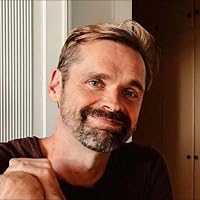
Nigel Biggar
30 books67 followersNigel Biggar CBE is Emeritus Regius Professor of Moral Theology at the University of Oxford and Distinguished Scholar in Residence at Pusey House, Oxford. He holds a B.A. in Modern History from Oxford and a Ph.D. in Christian Theology & Ethics from the University of Chicago. He was appointed C.B.E. “for services to Higher Education” in the 2021 Queen’s Birthday Honours list. His most recent books are Colonialism: A Moral Reckoning (2023), What’s Wrong with Rights? (2020), In Defence of War (2013), and Between Kin and Cosmopolis: An Ethic of the Nation (2014). In the press he has written articles for the Financial Times, the (London) Times, the Daily Telegraph, the Spectator, the (Glasgow} Herald, the Irish Times, Standpoint, The Critic, The Article, Unherd and Quillette. He served on the Committee on Ethical Issues in Medicine at the Royal College of Physicians (London) from 2000 to 2014, the Royal Society’s Working Group on People and the Planet from 2010 to 2012, and the Pontifical Academy for Life from 2017 to 2022. He now chairs the board of trustees of the Free Speech Union.
He has lectured at the Royal College of Defence Studies, London; the UK Defence Academy, Shrivenham; the Führungsakademie der Bundeswehr, Hamburg; the US Military Academy, West Point; and the National Defense University, Washington, DC. His hobbies include visiting battlefields. In 1973 he drove from Scotland via Iran and Afghanistan to India. And in 2015 and 2017 he trekked across the mountains of central Crete in the footsteps of Patrick Leigh-Fermor and his comrades, when they abducted General Kreipe in April-May 1944.
He has lectured at the Royal College of Defence Studies, London; the UK Defence Academy, Shrivenham; the Führungsakademie der Bundeswehr, Hamburg; the US Military Academy, West Point; and the National Defense University, Washington, DC. His hobbies include visiting battlefields. In 1973 he drove from Scotland via Iran and Afghanistan to India. And in 2015 and 2017 he trekked across the mountains of central Crete in the footsteps of Patrick Leigh-Fermor and his comrades, when they abducted General Kreipe in April-May 1944.
Ratings & Reviews
Friends & Following
Create a free account to discover what your friends think of this book!
Community Reviews
Displaying 1 - 4 of 4 reviews

Review of advance copy received from Publisher
The argument is something like:
>The biggest problem that censorship creates is self-censorship.
>One instance of censorship causes potentially thousands of people to hide their own true thoughts.
>Totalitarian regimes run not off censorship, but self-censorship.
>So then, preventing censorship isn't the only possible saviour to our liberal world. We can also build intellectual courage in the population.
Seems like a solid argument to me... I love it! I love every book that who argues for a progression of virtues. Our technological/industrial advancement has only made humanity's moral stagnation more apparent. Are we at all better than our past generations? Idk!! We might even be worse. So we have to dream of a more ethical human, better men and women. Accumulating more gadgets is getting us nowhere. True progression is moral progression, and Nigel Biggar argues for exactly that outcome
>The biggest problem that censorship creates is self-censorship.
>One instance of censorship causes potentially thousands of people to hide their own true thoughts.
>Totalitarian regimes run not off censorship, but self-censorship.
>So then, preventing censorship isn't the only possible saviour to our liberal world. We can also build intellectual courage in the population.
Seems like a solid argument to me... I love it! I love every book that who argues for a progression of virtues. Our technological/industrial advancement has only made humanity's moral stagnation more apparent. Are we at all better than our past generations? Idk!! We might even be worse. So we have to dream of a more ethical human, better men and women. Accumulating more gadgets is getting us nowhere. True progression is moral progression, and Nigel Biggar argues for exactly that outcome

September 29, 2026
I like to read books from people that are not in my bubble and this book delivered in that regard. Not a lot of it is new, but I appreciate the examples the author brings, some of which are sad/hilarious at the same time. And that are a valid criticism of the academic left and mob justice accompanying it.
What I did not like so much is the use of argumentum ad hitlerum, everything is 30's Germany, interestingly something the left is accused a lot of. And also a few stretches such as that you can respect someone and not use their pronouns if they identify as another gender, well I am yet to see one such case. While I am uncomfortable with people being punished for something they said, let's not pretend there is much respect in this situation. But anyway, I feel like the author would be down with debating and even being wrong, so there's that.
What I did not like so much is the use of argumentum ad hitlerum, everything is 30's Germany, interestingly something the left is accused a lot of. And also a few stretches such as that you can respect someone and not use their pronouns if they identify as another gender, well I am yet to see one such case. While I am uncomfortable with people being punished for something they said, let's not pretend there is much respect in this situation. But anyway, I feel like the author would be down with debating and even being wrong, so there's that.

September 19, 2026
As noted in the insert of the book it is a polemic. As such the author makes points backed up by citations by his own books, Mathew Goodwin and the Times newspaper and Spectator articles. These are often tertiary sources at best and what they refer to in those sources doesn't stand up to even a little scrutiny. Still, I recognise there is a market for such books.
It is a shame as the subject of the book, progressive assaults on liberalism, merits academic research and reasoned arguments backed up by primary sources.
Relying on myths to make arguments weakens one's case rather than supports it.
It is a shame as the subject of the book, progressive assaults on liberalism, merits academic research and reasoned arguments backed up by primary sources.
Relying on myths to make arguments weakens one's case rather than supports it.
Did Not Finish
August 5, 2026Insufferable audiobook narration.
Displaying 1 - 4 of 4 reviews