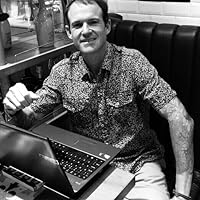
From the author of The Art of Living a Meaningless Existence comes a moving, accessible, and ultimately hopeful series of meditations on the gifts and burdens of self-awareness.
Whether we realize it or not, all of us experience the pain of self-awareness. In an age when we are aware of so much—about ourselves and the world—this pain can be overwhelming. But the same awareness that causes us pain also opens the door to beauty and wonder. This is the paradox of self-awareness.
In a series of poignant aphorisms and short essays, Robert Pantano offers nuanced approaches to confronting, understanding, and living within this paradox. Rather than pretending to provide certainty or easy answers, this thought-provoking collection offers ideas and space for reflection—for living well and finding comfort and peace without clear solutions.
Focusing on major issues of today such as personal alienation, nihilism, the futility of progress, and the malleability of truth, as well as on timeless struggles such as desire, anxiety, aging, and death, this work explores powerful philosophical and psychological ideas in an impressively succinct and memorable way.
This is a book of aphorisms. I wasn't aware of this going in, but it wasn't a problem.
Many topics are covered: nihilism, meaning, hope, etc. The author puts his points across in a very accessible manner, which is quite rare for philosophy.
I also like the way that the author acknowledges both sides of the coin. The dark sides are covered (consciousness is the root of all pain, etc), but he also acknowledges the fact that happiness is obtainable in life. For this reason, the book comes across as mature and well balanced.
I wasn't blown away by every single entry, but there are certainly a few pearls of wisdom here.
If you're into Ligotti, Becker, Harris, and Schopenhauer, you might enjoy this publication.
feel like i can’t really rate this. it wasn’t incredibly profound, but did have me thinking. Not much to say really. audiobooked it on the plane. perhaps will have to pick up the physical.
Robert Pantano’s The Terrible Paradox of Self-Awareness argues that the very thing that makes human life rich—our ability to see ourselves, our choices, and our mortality—is also what makes it painful. The book’s central claim is that self-awareness is both the source of suffering and the only way suffering can become meaningful.
Core idea
Pantano presents self-awareness as a paradox rather than a problem to solve. Awareness lets us understand love, beauty, purpose, anxiety, aging, and death, but it also makes us vulnerable to fear, regret, alienation, and overthinking. The book does not promise a cure; instead, it asks readers to learn how to live inside the contradiction. Main arguments •Self-awareness creates pain because it makes us conscious of limitation, uncertainty, and loss. We can imagine more than we can control, and that gap becomes a source of suffering. •Human beings are trapped in a kind of internal conflict: the mind can observe itself, but it cannot fully master itself. That makes life feel like a struggle against one’s own thoughts and instincts. •Progress in safety, health, and longevity does not necessarily produce deeper peace. Pantano suggests that modern life has expanded our awareness while also increasing feelings of meaninglessness, disconnection, and instability. •The same awareness that hurts us also opens the door to wonder. Without consciousness of fragility and loss, love, beauty, and purpose would not feel as powerful.
Key learning points
1.Self-awareness is not automatically a virtue. Too much inward analysis can become self-sabotage when it turns into rumination and paralysis. 2.Regret is presented as largely unhelpful because we only make choices from the knowledge and limits available to us at the time. The book pushes readers toward acceptance rather than endless self-blame. 3.Anxiety often comes from seeing reality clearly, especially the fact that nothing is fully secure or permanent. The book does not dismiss anxiety, but frames it as a natural cost of consciousness. 4.Adversity should not be wasted. Pain, if honestly confronted, can be transformed into perspective, resilience, and depth. 5.Truth is not always comforting, and security is not always truth. Pantano encourages readers to prefer honest awareness over illusions that merely feel safer. 6.Desire can trap us when we confuse wanting with fulfillment. The book treats desire as one of the forces that keeps people emotionally restless. 7.Love becomes more fragile when we fully realise how temporary and uncertain everything is, yet that fragility is also what makes love valuable.
Summary
The book’s philosophical center is that you cannot remove the human condition’s pain without also removing its meaning. Pantano’s answer is not to defeat self-awareness, but to use it well: to become more compassionate, more honest, and more willing to live with uncertainty.
The most important takeaway is that suffering is not proof that self-awareness has failed. In Pantano’s view, suffering is often the price of being conscious enough to recognise what matters, and that same consciousness can help turn pain into wisdom, love, and a fuller life.
Review
This is an important book, and I can see why it resonates with so many readers. It tackles big themes—self-awareness, suffering, truth, anxiety, and the human condition—with a sincerity that deserves respect. Even when I didn’t fully connect with it, I could appreciate what it was trying to do. That said, I think I may not have been in the right mindset for this one, because while it made me think, it often felt like it was only scratching the surface of its own ideas. At times, Pantano seemed to be reaching for profundity and ending up in a style that reminded me of a cheaper Khalil Gibran—lyrical, reflective, and quote-ready, but not always as earned or as emotionally weighty as it wanted to be. There are flashes of insight here, but they don’t always develop into something fully satisfying.
My biggest issue is that the book felt like it lacked something essential. It gestures toward depth constantly, but for me it didn’t quite deliver the richness, originality, or cumulative force needed to make the ideas truly land. I admired the ambition more than I loved the execution. Still, I’m glad I read it, because it did leave me with a few thoughts worth sitting with.
Based on the title alone, I was immediately drawn to Robert Pantano's book, "The Terrible Paradox of Self-Awareness." Early on he writes, "Self awareness causes suffering and offers the capacity to resolve it," which aligns with my thinking. I often have conversations with my husband about self-awareness, especially the idea that after a certain age, if we are too self-aware of our faults, we risk seeing our entire life as a failure. And yet, self-awareness is the starting point for growth and change.
I have mixed feelings about this book as a whole. Self-awareness is the darling of self-help books so I anticipated that direction whereas Pantano is far more philosophical than self-help, which was refreshing. While most of his observations convey aphorisms that invite contemplation, he at times dances at the edge of platitudes. Each chapter addresses a quality like creativity, nihilism, hope, or regret and explore how self-awareness impacts that quality. The opening anecdote refers to the quality in third-person masculine, which I found bothersome, as if the quality were a person. The explorations are a mix of one-liners and short essays. The ideas are at times thought-provoking, but at times read like a social media carousel.
Pantano writes, "Humanity is a paradox that cannot be escaped and so often the cure is in the ailment." The book could be summarized as everything in life is two sides of the same coin, seemingly opposite yet inseparable and completely codependent.
This is a book to be read slowly, perhaps in company. Pantano puts forth many ideas that merit consideration with regard to how you live your life and think about things. The first half is rather pessimistic while the second half is hopeful but—in line with the argument of the book—you wouldn’t need one without the other.
Thank you to NetGalley and Andrew McMeel Publishing for providing an ARC in exchange for an honest review. All opinions are my own.
This is a book I might write if I assembled all my 3am existential dread and distilled it into a book instead of writing it in my notes app as means of expelling it from my brain. It feels too cynical to be true. I have found it more to be pessimistic ramblings with no solution. I wouldn't recommend it to anyone who is attempting to become more self aware as a step towards contentment and peace. This book only leads to more hopeless confusion.
"Avoiding introspection is a form of paranoia" No I fully disagree with this point. You can avoid introspection to protect yourself from learning you don't measure up to your own standards or to avoid feeling something difficult but that's not paranoia. I would argue paranoia is the opposite of introspection. It is a hyper focus on the external as a means of protection from danger. Is avoiding paranoia the same as introspection? Again no. This point completely ignored apathy and dissociation.
Maybe real freedom is letting go but it feels like defeat
Do you enjoy books that challenge your comfort zone? If so, this book is should be added to the top of your TBR. Pantano dives deep into the unsettling truths of human existence, exploring how self-awareness is both a gift and a burden. His words paint a vivid picture of a collective suffering - touching on themes like personal alienation, nihilism, the futility or progress, and the malleability of truth- while offering a glimmer of hope.
One of my favorite lines appears on the very first page, and sets the tone for the entire reading experience. Though it is a relatively quick read, it's themes linger with you, prompting meaningful self-reflection in the best way possible. I found myself re-reading sections and working through feeling this book stirs up, something new for me in my journey of self-development.
If you are looking for something thought provoking that stays with you long after the last page, this is it.
This book has a strong philosophical vibe: short aphorisms and mini-essays about self-awareness, meaning, anxiety, aging, death, and modern stuff like alienation and “what even is truth anymore.” A lot of it makes sense and it definitely gives you things to think about while you read.
But fair warning: it feels more like an educational / reflective book than something comforting. It doesn’t try to give easy answers, more like it sits with the hard topics: our fragility, nihilism, anger (and the lack of it), the weight of decisions, and what we do with all that awareness.
Good if you want quiet, serious reflections about life and its meaning. Not the best pick if you’re already in a low mood.
This is the third book I have read by Robert Pantano. I preordered this book after watching some of his YouTube videos and I started reading it the day it came in (March 10th 2026). It is a good read, I could have finished it the day I started but I gave my brain breaks to process and ponder what I was reading. There are parts in this book that gave me “ah-ha” moments and parts that made me cry in self reflection or realization. I would suggest this book to anyone that has a brain full of questions and no one around them to talk about them with. Robert is living in the pages of this book and acts as a brutally truthful friend throughout it. I will be using this review on Amazon as well in case you see it there too.
I was honestly a bit scared to pick up this book, because I knew it would trigger my existential and death anxiety. And it did. But in a way I needed. It felt reassuring and grounding to read that it made sense to feel anxious about the end of life. I've told my therapist before that I am afraid of dying, because I am in love with life. This book met me right there. Rather than being scared of my death anxiety, this book made me look at it and sit with it to have a chat. This book made me more alive and more in love with life than I already was, and, if only briefly, made me feel at peace with the unknown. I hope I can remind myself of its quotes through this chaotic and beautiful life.
For fans of Matt Haig’s The Comfort Book, The Terrible Paradox of Self-Awareness could alternatively be titled The Discomfort Book. Pantano doesn’t shy from the discomforts of being human and self-aware of our humanity; yet, in his honesty and philosophical view of our common suffering, there does come a sense of hope.
My personal favorite sections were On Nihilism, On Goodness, On Regret, and On Hope.
This short collection of philosophical statements walks a fine line between brilliance and occasional teenage "This is deep" self-aggrandizement. The line is difficult as any writer that hasn't the respect of established thinkers and been dead for hundreds of years will struggle with this but Pantano gets far more right than not and its a book I will happily pick up and reread again.
I have never pondered self awareness- not as Pantano has in this book and that is what I guess made reading this book feel like spiralling. I was fascinated by sections on goodness, hope and lastly regret.
Robert Pantano is incredibly personal and intimate in The Terrible Paradox of Self-Awareness. This book will push you out of your comfort zone to consider the parts about yourself that are often well-hidden. I loved this work.
Great read! Easy and quick read yet very informative, thoughtful, and philosophical. I love all the content from Pursuit of Wonder on YouTube and am so glad to have found this creator/author and have read multiple books from him now. Highly recommend this book and his YouTube channel content.
Short poignant essays that remind me of philosophy that brings me peace. I especially appreciate the application of chaos theory to moments of recognizing or even spiraling over one’s seeming lack of impact or relevance.
Hopeful nihilism is just as ridiculous if not more than regular nihilism, however Pantano writes very well and clearly. I greatly enjoyed reading this and his other works.
A beautiful journey. Each turn of the page carrying me to the stars. Just like Mediations, each paragraph has its own lessons. Truly food for the soul.
I've been watching Robert's YouTube videos for a long time now. I've read his previous book and this one and I can say that they form part of my essential reading as much as the Upanishads, the Dhammapada and other books that turn the lens onto our consciousness.