

What do you think?

A View From the Ground
This book is a collection of narrative journalism focused on people living in the margins of society. The stories are based on years of field reporting all over the Philippines and in portions of Southeast Asia, and covers a range of themes including displacement, public health, education, armed conflict, and environmental degradation.
Each piece was reported on the ground and written with attention to detail, context, and the voices of those directly affected. It places the reader at the heart of the story and highlights the courage of ordinary people in the face of extraordinary hardship. The essays examine how broad issues affect people's daily lives -- on an individual level and as part of a larger national story.
The book also features documentary photographs taken by the author. The words and images work together to give readers a more visceral understanding of the realities that many people face. It also offers a nonfiction storytelling style that is not commonly found in today's media landscape.
As a compilation of diverse stories, this book attempts to present a snapshot of Philippine society for future generations. It also encourages present-day readers to engage more deeply with the realities that many Filipinos face.
Each piece was reported on the ground and written with attention to detail, context, and the voices of those directly affected. It places the reader at the heart of the story and highlights the courage of ordinary people in the face of extraordinary hardship. The essays examine how broad issues affect people's daily lives -- on an individual level and as part of a larger national story.
The book also features documentary photographs taken by the author. The words and images work together to give readers a more visceral understanding of the realities that many people face. It also offers a nonfiction storytelling style that is not commonly found in today's media landscape.
As a compilation of diverse stories, this book attempts to present a snapshot of Philippine society for future generations. It also encourages present-day readers to engage more deeply with the realities that many Filipinos face.
Paperback
Published September 14, 2025
Ratings & Reviews
Friends & Following
Create a free account to discover what your friends think of this book!
Community Reviews
Displaying 1 - 26 of 26 reviews
April 6, 2026
A security guard at a mall store that Atom occasionally visits would, whenever he saw him, tell him he wanted to get a copy of his book, and it was that anecdote shared by Atom on social media that made me aware this work exists.
𝐴 𝑉𝐼𝐸𝑊 𝐹𝑅𝑂𝑀 𝑇𝐻𝐸 𝐺𝑅𝑂𝑈𝑁𝐷 is in ways like that because Atom consistently makes it his life work to share a glimpse of the lives of those in the margins of the society.
If one is used to consuming documentary journalism from the screen, this invites for a more intent look into real lives that ‘don’t shout, but linger’—through print. The telling of struggles faced by the disadvantaged people in its selected stories is unsentimental yet imaginative,
The narrative is complemented by Atom’s piercing monochrome captures of portraits, of the milieu, radiating the mood not merely of his writing, but importantly, of the subject’s disposition: the inner tumult, the longing, a pause, the future’s promise.
Those pieces that appealed to me,
‣ Tiempo Muerto: Hope Springs in the Season of Death
A hard-pressed student who works as a seasonal farmer in an azucarera in Batangas dreads the annual halt of labor in the plantation.
‣ Anatomy of Gold
A look at what makes a national athlete and at the politics of sports financing, and how because of it the very athletes become the collateral damage.
‣ Letter from Tawi-Tawi
A devoted educator that goes from stilt house-to-stilt house to teach students at their homes. Parts of it reminded me of this personal favorite The Songs of Salanda .
‣ A Love Remains
The chapter opens with the only trigger warning found in this book. I can usually steel myself against such things in stories, but the revulsion of this truth, and because it is TRUTH, hounded me into sleep.
Lending the reader a patient, deeper look into lives far removed from their comfort prompts the question of what can be done about the social issues that ripple to all of us. To read is to act.
𝐴 𝑉𝐼𝐸𝑊 𝐹𝑅𝑂𝑀 𝑇𝐻𝐸 𝐺𝑅𝑂𝑈𝑁𝐷 is in ways like that because Atom consistently makes it his life work to share a glimpse of the lives of those in the margins of the society.
If one is used to consuming documentary journalism from the screen, this invites for a more intent look into real lives that ‘don’t shout, but linger’—through print. The telling of struggles faced by the disadvantaged people in its selected stories is unsentimental yet imaginative,
On a piece of insulation, she scribbled her appeal for loose change in big, bold letters. A little smiling face was drawn in one corner, a presentation of cheerfulness she couldn’t bear to make herself, not now, not even beneath the mask she was always wearing. Being here was a demoralizing experience.
The narrative is complemented by Atom’s piercing monochrome captures of portraits, of the milieu, radiating the mood not merely of his writing, but importantly, of the subject’s disposition: the inner tumult, the longing, a pause, the future’s promise.
Those pieces that appealed to me,
‣ Tiempo Muerto: Hope Springs in the Season of Death
A hard-pressed student who works as a seasonal farmer in an azucarera in Batangas dreads the annual halt of labor in the plantation.
‣ Anatomy of Gold
A look at what makes a national athlete and at the politics of sports financing, and how because of it the very athletes become the collateral damage.
‣ Letter from Tawi-Tawi
A devoted educator that goes from stilt house-to-stilt house to teach students at their homes. Parts of it reminded me of this personal favorite The Songs of Salanda .
‣ A Love Remains
The chapter opens with the only trigger warning found in this book. I can usually steel myself against such things in stories, but the revulsion of this truth, and because it is TRUTH, hounded me into sleep.
Lending the reader a patient, deeper look into lives far removed from their comfort prompts the question of what can be done about the social issues that ripple to all of us. To read is to act.

September 27, 2025
Narrative journalism at its finest. Atom Araullo's debut is compelling and captivating in the way it lays out the facts and lets them speak for themselves while still being emotionally grounded in the very human stories they tell. I wept, I learned a lot, and I was inspired to always stay informed on current events. More than that, my biggest takeaway from this book is just how important it is that whenever we come across news stories, we might get distracted by the statistics and the bigger picture of things that we just might forget that there are real human individuals who are affected by these injustices and we would do well to pay attention to their stories. In so doing, information doesn't just translate to inspiration but also to action. I hope to see more essay compilations by respected journalists in the country similar to this book. I for one would love to read a volume from Jessica Soho.

January 12, 2026
"Perhaps the dearth and deluge of information are just two sides of the same, worrisome coin. Because a world where truth seemed optional, subject to clicks and likes, competing for our limited attention spans, is also same world in which profound inequalities still exist, giving rise to venomous dissatisfaction."
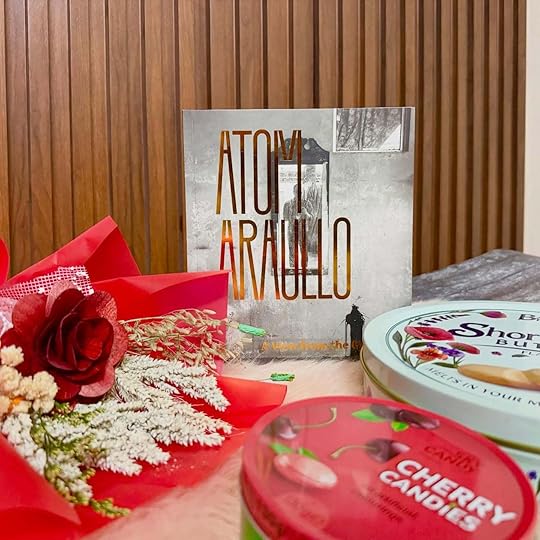
I went into this book thinking I was prepared, and I really wasn’t. I can’t even remember how many times it made me cry in one sitting. It pulls you through so many emotions so quickly that it almost feels unfair. One moment I was uncomfortable, the next I was heartbroken, and then somehow there were moments that felt quietly hopeful, like small reasons to keep going. Reading it reminded me of how A Little Life made me feel, not because the stories are the same, but because both demand that you sit with pain instead of looking away. This isn’t something you breeze through. It stays heavy, and that weight feels intentional.
I’ve always admired Atom Araullo, long before I picked this up. When I was younger, I’ll admit the first thing that caught my attention was his looks. He’s a handsome guy. But over time, watching him on TV and seeing how he reports, how he speaks, and the choices he makes, I started to really respect him. His compassion feels genuine, not performative. So when I was browsing books and saw A View From The Ground sitting right there on the checkout counter, it felt like a sign. I grabbed it without thinking twice.
What stayed with me most is how close everything feels. It doesn’t read like someone observing from a safe distance. It feels like being there, listening, witnessing, and sometimes feeling helpless alongside the people in the stories. There are no neat answers, no comforting wrap up, and I appreciated that honesty. It’s emotionally draining, yes, but also deeply human. I finished it feeling unsettled, sad, and strangely grateful that I read it at all.
Date Read: 2026.01.11
I went into this book thinking I was prepared, and I really wasn’t. I can’t even remember how many times it made me cry in one sitting. It pulls you through so many emotions so quickly that it almost feels unfair. One moment I was uncomfortable, the next I was heartbroken, and then somehow there were moments that felt quietly hopeful, like small reasons to keep going. Reading it reminded me of how A Little Life made me feel, not because the stories are the same, but because both demand that you sit with pain instead of looking away. This isn’t something you breeze through. It stays heavy, and that weight feels intentional.
I’ve always admired Atom Araullo, long before I picked this up. When I was younger, I’ll admit the first thing that caught my attention was his looks. He’s a handsome guy. But over time, watching him on TV and seeing how he reports, how he speaks, and the choices he makes, I started to really respect him. His compassion feels genuine, not performative. So when I was browsing books and saw A View From The Ground sitting right there on the checkout counter, it felt like a sign. I grabbed it without thinking twice.
What stayed with me most is how close everything feels. It doesn’t read like someone observing from a safe distance. It feels like being there, listening, witnessing, and sometimes feeling helpless alongside the people in the stories. There are no neat answers, no comforting wrap up, and I appreciated that honesty. It’s emotionally draining, yes, but also deeply human. I finished it feeling unsettled, sad, and strangely grateful that I read it at all.
Date Read: 2026.01.11

October 27, 2025
Fiction was where I thought I could find the deepest and darkest stories; occupying the minds of writers whose imagination transgress the worldly concepts of morality.
Reading A View from the Ground by Atom Araullo, I am shaken to my core registering that the real terror resides in faces staring at you from black and white pages with telling tired eyes, stories spoken by voices that have screamed through unimaginable horror, and words sprung from the minds of writers whose creativity amplifies the reality of others.
In the first story, Fleeing Terror, Atom sets the tone for what we can expect for the rest of the book. These are stories that will take you to states of discomfort, hope, anger, and disquiet. We are not strangers to these stories but we somehow got disconnected as we get carried through the currents of a fast modern life. Most of us forgot stories of the people left behind, who are unable to live day by day even meagerly, let alone catch up with the rest of the world around them. It’s not difficult to forget given how drowned we are by one devastating news after another in this digital age but, these chosen stories make us remember and force us to reconnect to the cornerstones of our country and our humanity.
Reading A View from the Ground by Atom Araullo, I am shaken to my core registering that the real terror resides in faces staring at you from black and white pages with telling tired eyes, stories spoken by voices that have screamed through unimaginable horror, and words sprung from the minds of writers whose creativity amplifies the reality of others.
In the first story, Fleeing Terror, Atom sets the tone for what we can expect for the rest of the book. These are stories that will take you to states of discomfort, hope, anger, and disquiet. We are not strangers to these stories but we somehow got disconnected as we get carried through the currents of a fast modern life. Most of us forgot stories of the people left behind, who are unable to live day by day even meagerly, let alone catch up with the rest of the world around them. It’s not difficult to forget given how drowned we are by one devastating news after another in this digital age but, these chosen stories make us remember and force us to reconnect to the cornerstones of our country and our humanity.
March 19, 2026
a collection of narrative journalism focused on bringing to light stories of people living in marginalized communities.
more than just the typical news headlines, this book dives into 8 harsh realities embedded deep in both the local and national level. bringing you up close and personal to these occurences through interviews, anecdotes, and photographs, they demand to be remembered, wake up your empathic nature, and drive you to take action.
took a long time for me to go through the entire collection - some stories hit harder and deeper making it necessary to pause in between reads.
more than just the typical news headlines, this book dives into 8 harsh realities embedded deep in both the local and national level. bringing you up close and personal to these occurences through interviews, anecdotes, and photographs, they demand to be remembered, wake up your empathic nature, and drive you to take action.
took a long time for me to go through the entire collection - some stories hit harder and deeper making it necessary to pause in between reads.
March 8, 2026
This is the book I finished the fastest this year so far. I need to say this as a self-proclaimed fiction girlie: for a non-fiction book to grip me the way this one did, that speaks volumes. The stories Atom Araullo featured here made national news, some even headlines. Reading them now, accompanied by his photographs, felt like watching a documentary. It reminded me why reportage matters and why some stories deserve to be unarchived and revisited.
October 20, 2025
I admire Atom Araullo for his dedication and commitment to reporting, most notably during Typhoon Yolanda. When news of his book came out, I knew I had to get myself a copy because of his compelling storytelling. The book compiles eight stories in the form of narrative journalism, immersing readers in each scene through photos taken by Atom himself.
It covers topics of national interest such as sports, tradition, agriculture, hunger, the healthcare system, and military abuse.
I felt sorry for the Rohingya people who are suffering due to military abuse; for the young women in Mindanao who undergo the tradition of female circumcision, which is illogical and has no medical basis; for the farmers who don’t own the land they work on because of the wealthy; for people in remote provinces who have poor access to quality healthcare; and for Filipino athletes who deserve proper training facilities but are left with ones in dire need of repair and maintenance.
These stories reminded me of the harsh realities faced by fellow Filipinos on the ground—and how we must continue to voice our frustrations and be vocal in demanding accountability and systemic change.
It covers topics of national interest such as sports, tradition, agriculture, hunger, the healthcare system, and military abuse.
I felt sorry for the Rohingya people who are suffering due to military abuse; for the young women in Mindanao who undergo the tradition of female circumcision, which is illogical and has no medical basis; for the farmers who don’t own the land they work on because of the wealthy; for people in remote provinces who have poor access to quality healthcare; and for Filipino athletes who deserve proper training facilities but are left with ones in dire need of repair and maintenance.
These stories reminded me of the harsh realities faced by fellow Filipinos on the ground—and how we must continue to voice our frustrations and be vocal in demanding accountability and systemic change.
December 21, 2025
A View from the Ground is a collection of stories from Atom’s news coverage. Each story is a real-life scenario depicting the journey of survival. It is like reading his documentary and actually feeling the interviewees’ emotions.
Personally, I liked three stories as they give me self-reflection on what is happening in the world. Fleeing Terror gives the reader a glimpse of the Rohingya people through their journey away from Myanmar. Atom wrote not only about the Rohingya’s experience but also about those who give assistance. It is the first short story in the book and serves as an introduction to the heavy themes of the entire book. As a reader, it gave me a lot of pause and reflection, especially as the story of women’s abuse was mentioned.
The one that stuck in my head was A Controversial Rite of Passage, as it tackles the topic of female genital manipulation. It is a story that allows a reader to reflect and be an observer of a practice that mainly focuses on cultural traditions and customs in a community in Mindanao. No matter what personal stance a reader may have, this is quite a thought-provoking story.
Letters from Tawi-Tawi, for me, is a very heartwarming story. Despite being about one person’s struggle to be a mobile teacher in Tawi-Tawi, it also tells a story of triumph through small wins. The main theme of the story is the struggles of literacy and how these teachers celebrate the children reading their first words. The importance of education is well described, not only by the teachers but also by the children’s parents, many of whom are illiterate.
Moreover, the other stories are just as good as my top picks. They convey the human experience, allowing readers to feel the pain, struggles, and survival in hopeless times. Resilience may not be the most accurate word, but courage has been the strong armor of the people that Atom encountered and interviewed.
However, no matter the issue, there is a negative ripple effect over the positive virtues shown by commoners. There is a desperate attempt to defend the government even when there is no evidence that the people were merely creating a positive impact in society through assistance and welfare.
It is indicated on the first page of each story that it has won certain awards. After reading Atom’s stories, I can say they are indeed award-winning.
Personally, I liked three stories as they give me self-reflection on what is happening in the world. Fleeing Terror gives the reader a glimpse of the Rohingya people through their journey away from Myanmar. Atom wrote not only about the Rohingya’s experience but also about those who give assistance. It is the first short story in the book and serves as an introduction to the heavy themes of the entire book. As a reader, it gave me a lot of pause and reflection, especially as the story of women’s abuse was mentioned.
The one that stuck in my head was A Controversial Rite of Passage, as it tackles the topic of female genital manipulation. It is a story that allows a reader to reflect and be an observer of a practice that mainly focuses on cultural traditions and customs in a community in Mindanao. No matter what personal stance a reader may have, this is quite a thought-provoking story.
Letters from Tawi-Tawi, for me, is a very heartwarming story. Despite being about one person’s struggle to be a mobile teacher in Tawi-Tawi, it also tells a story of triumph through small wins. The main theme of the story is the struggles of literacy and how these teachers celebrate the children reading their first words. The importance of education is well described, not only by the teachers but also by the children’s parents, many of whom are illiterate.
Moreover, the other stories are just as good as my top picks. They convey the human experience, allowing readers to feel the pain, struggles, and survival in hopeless times. Resilience may not be the most accurate word, but courage has been the strong armor of the people that Atom encountered and interviewed.
However, no matter the issue, there is a negative ripple effect over the positive virtues shown by commoners. There is a desperate attempt to defend the government even when there is no evidence that the people were merely creating a positive impact in society through assistance and welfare.
It is indicated on the first page of each story that it has won certain awards. After reading Atom’s stories, I can say they are indeed award-winning.
January 5, 2026
I think, I will recommend this book to others. Lalo na if gusto nila maging journalist, sasabihin ko sa kanila, basahin ninyo ’yung libro ni Atom, hindi lang sa mga salita niya kayo may matutuhan kundi pati na rin sa kung paano niya gamitin ang sariling mga mata para pumitik ng larawan. Ilang beses akong pinaluha ng mga entry sa aklat, personal favorite ko ang Tiempo Muerto, parang hawak-hawak ko ang puso ko habang binabasa ’yon. May bahagi lang sa pagbabasa ko na parang nahabaan ako, pero after naman e, marami akong natutuhan, ito 'yung tungkol sa mga atleta. Napagtanto ko, na dapat ata, bukod sa curiosity, pasok din ito sa sarili mong taste, ako lang ito bilang mambabasa. Pero pagkatapos nga no'n may natutuhan ako, tungkol sa grassroots sport at hirap ng mga atleta sa Pinas.
Still, it's a good book, kudos kay Atom, I will probably buy his next book!
Still, it's a good book, kudos kay Atom, I will probably buy his next book!
February 14, 2026
I truly admire documentarists and legitimate journalists. Beyond the science and art of storytelling, their priority isn’t to captivate or sway an audience, but to present the truth as it is.
This book offers a refreshing perspective. In an age of information overload brought on by social media, we often forget the people behind the headlines—the ones who suffered and who continue to suffer. They are not just news stories; the author gives them faces, names, and humanity. It reminds us that every report represents a real person with a real life.
Thank you for sharing this and for the reminder that there are still quiet heroes among us—volunteers, teachers, and those who work tirelessly to protect our peace.
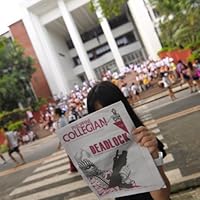
June 23, 2026
This is how narrative journalism should be and what narrative journalism is all about. All stories, even those that I have the slightest interest on and awareness of, are compelling. You can tell that Atom wrote about what was close to his heart.
It's a plus that the book had gorgeous photographs accompanying the stories. It could make for a great coffeetable book. I'm left wondering what else Atom cannot do.
I am lucky that I got to attend one of his bookclub sessions and got more insights on the stories and his thought process.
Actual Rating: 4.5 (the 0.5 is my forever bias for Atom, my childhood crush turned journalism/photography/advocacy idol!)
It's a plus that the book had gorgeous photographs accompanying the stories. It could make for a great coffeetable book. I'm left wondering what else Atom cannot do.
I am lucky that I got to attend one of his bookclub sessions and got more insights on the stories and his thought process.
Actual Rating: 4.5 (the 0.5 is my forever bias for Atom, my childhood crush turned journalism/photography/advocacy idol!)

September 30, 2025
"I had been reading the book while snacking, but at one point, I had to put down my coffee and merienda in shame when I read about my countrymen scavenging for food scraps or pagpag meant for animals. The performativity of book-and-coffee pairing in a nice coffee shop suddenly became an act of obscene privilege, forcing a reckoning with my own conscience.
And this is the first book that has made me do so. Because nothing in this book is nice, nor pretty. It is too raw, too important, for such first-world aesthetic concerns."
Read the rest of the review here :
https://exlibrisphilippines.com/2025/...
And this is the first book that has made me do so. Because nothing in this book is nice, nor pretty. It is too raw, too important, for such first-world aesthetic concerns."
Read the rest of the review here :
https://exlibrisphilippines.com/2025/...
January 5, 2026
Araullo's work features a variety of stories from the margins. His prose is fluid and sharp. The information and facts speak side-by-side with the featured accounts of the individuals. The images also help mirror reality and the temporal state alongside the text.
The book probes us to vindicate the effectiveness of government through the state of affairs of the country's peripheries, or even those whose plights are visible to the naked eye.
The book probes us to vindicate the effectiveness of government through the state of affairs of the country's peripheries, or even those whose plights are visible to the naked eye.
June 14, 2026
Helpful to read and to keep being reminded of the daily and constant difficulties of the lives of the Filipinos. We're so caught in our own little bubble sometimes that we forget how life is happening for other people - our people. This book helped me realize how we can't not hope for a better country, how we owe to our countrymen that we keep ourselves informed and that we continue to find ways get involved.

January 14, 2026
This collection of essays and stories are just smaller pieces of what was broken in our country. In looking at them as a whole, we can see the painted bigger picture.
Every section humbled me and their stories are needed. should be seen and taken action for.
Every section humbled me and their stories are needed. should be seen and taken action for.
October 8, 2025
Brought me back to my journalism roots.
October 10, 2025
Atom takes you to the lives of various people and seamlessly weaves in facts about the societal issues plaguing their lives.
December 24, 2025
Di na nakuntento si Atom sa pagiging pogi lang hayuf he's so articulate and attentive to detail too........ swoon
April 4, 2026
THAT'S NARRATIVE JOURNALISM!!!
May 4, 2026
a collection of journalist atom araullo's award-winning essays, compiled into a debut, featuring difficult stories and topics that have remained mostly unpublicized. eye-opening book!

July 12, 2026
Finished it in a day. It's easy to read, and I hope more people will read it, too.
September 18, 2026
Grabe ka tearjerker ang sugarcane farmer huhuhu, i love this book. This is my first documentary book and wala ko nag regret!!!!
December 16, 2025
Had the chance to pick up this book at MIBF and get it signed by the author himself, and I have some thoughts I wanted to share:
I’ve always admired Atom Araullo as a journalist, but was more knowledgeable about his work in broadcasting and photojournalism. Given, I have read a few articles of his here and there, and was knowledgeable of him being a Palanca Awardee, but I was nonetheless surprised by how taken I am with his way of going about narrative journalism. Apart from the vivid imagery (coupled with the equally excellent photos), Araullo’s words have a way of pulling you in.
Left with so much thinking and enjoyment after this read and hoping for another book from the author soon!
I’ve always admired Atom Araullo as a journalist, but was more knowledgeable about his work in broadcasting and photojournalism. Given, I have read a few articles of his here and there, and was knowledgeable of him being a Palanca Awardee, but I was nonetheless surprised by how taken I am with his way of going about narrative journalism. Apart from the vivid imagery (coupled with the equally excellent photos), Araullo’s words have a way of pulling you in.
Left with so much thinking and enjoyment after this read and hoping for another book from the author soon!
July 2, 2026
Anyone who is a fan of documentary shows would love this book. Besides, it’s written by Atom Araullo. If you watch his investigative reports, you probably already have an idea of the depth of his curiosity and knowledge about the subjects he tackles.
In this book, he writes stories about marginalized communities and minorities—stories that are often unexplored by Filipino journalists. These are stories that are extraordinary, difficult, and, at times, risky to pursue.
He begins by visiting the Rohingyas, described by the United Nations as one of the world’s most persecuted minorities. He joins a group of Bangladesh-based OFWs who distribute relief goods in Cox’s Bazar, home to one of the biggest refugee camps in the world. He also goes to Basilan to understand the controversial rite of passage involving Muslim female circumcision. And in case you’re wondering, no, we don’t practice genital mutilation.
The author also tackles the unfairness of the agrarian reform system in the country, as well as the problem of malnutrition among Filipino children. Atom Araullo also gives attention to the less-talked-about issue of online sexual exploitation of children (OSEC). As a mom, that was the most difficult chapter for me to read. I can’t imagine my own children being put in that situation.
The story that tugged at my heartstrings the most was the one about a Doctor to the Barrio assigned to far-flung Cuyo Island in Palawan—a tiny speck of land in the middle of the sea. The doctor’s feeling of helplessness was so relatable and brought back plenty of memories of my own experience as someone who was once assigned to a geographically isolated area, although nowhere near as isolated as Cuyo Island.
Needless to say, I truly enjoyed this book. It’s the kind of book that takes you beyond the stories we usually hear and introduces you to people and places that deserve to be seen and understood.
And to all the Marites out there who still have doubts about whether sila ba talaga ni Zen—yes, he mentioned her here. 😂
In this book, he writes stories about marginalized communities and minorities—stories that are often unexplored by Filipino journalists. These are stories that are extraordinary, difficult, and, at times, risky to pursue.
He begins by visiting the Rohingyas, described by the United Nations as one of the world’s most persecuted minorities. He joins a group of Bangladesh-based OFWs who distribute relief goods in Cox’s Bazar, home to one of the biggest refugee camps in the world. He also goes to Basilan to understand the controversial rite of passage involving Muslim female circumcision. And in case you’re wondering, no, we don’t practice genital mutilation.
The author also tackles the unfairness of the agrarian reform system in the country, as well as the problem of malnutrition among Filipino children. Atom Araullo also gives attention to the less-talked-about issue of online sexual exploitation of children (OSEC). As a mom, that was the most difficult chapter for me to read. I can’t imagine my own children being put in that situation.
The story that tugged at my heartstrings the most was the one about a Doctor to the Barrio assigned to far-flung Cuyo Island in Palawan—a tiny speck of land in the middle of the sea. The doctor’s feeling of helplessness was so relatable and brought back plenty of memories of my own experience as someone who was once assigned to a geographically isolated area, although nowhere near as isolated as Cuyo Island.
Needless to say, I truly enjoyed this book. It’s the kind of book that takes you beyond the stories we usually hear and introduces you to people and places that deserve to be seen and understood.
And to all the Marites out there who still have doubts about whether sila ba talaga ni Zen—yes, he mentioned her here. 😂
March 28, 2026
Oh, to be a journalist…
A quote from the book: “Maybe that’s all it takes. Or maybe that’s all they have: an unwavering belief that things will get better.”
Like his documentaries on GMA, Atom’s essays her, more so the realities he has seen and share, are heartbreaking but necessary. They spark something in you that makes you want to use every little privilege you have: those you’ve stopped recognizing as privileges, and even those that shouldn’t be privileges at all, but basic rights.
The last feature essay was the hardest to read, hay,, but what gives me hope are the heroes Atom features: people living lives of purpose and dedication. And Atom himself, like the other journalists I admire, dedicates his life to telling the stories that matter.
A quote from the book: “Maybe that’s all it takes. Or maybe that’s all they have: an unwavering belief that things will get better.”
Like his documentaries on GMA, Atom’s essays her, more so the realities he has seen and share, are heartbreaking but necessary. They spark something in you that makes you want to use every little privilege you have: those you’ve stopped recognizing as privileges, and even those that shouldn’t be privileges at all, but basic rights.
The last feature essay was the hardest to read, hay,, but what gives me hope are the heroes Atom features: people living lives of purpose and dedication. And Atom himself, like the other journalists I admire, dedicates his life to telling the stories that matter.
June 20, 2026
ikulong lahat ng kurakot sa gobyerno!
Displaying 1 - 26 of 26 reviews