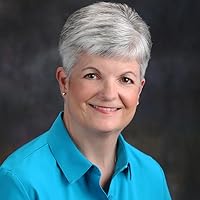
God in the House finally tells the untold story of the Rev. Anthony "Tony" Kosnik, the courageous Catholic priest and scholar who co-authored the groundbreaking 1977 report on human sexuality that challenged traditional teachings and sent shockwaves through Catholic institutions.
Written by his wife, Margaret Stack Kosnik, a clinical psychologist, this biography traces Tony's life from his Polish Catholic upbringing in Detroit, through his seminary training and priesthood, to his co-authorship of "Human New Directions in American Catholic Thought," the report that the challenged the legacy of Catholic teaching and set Vatican officials on a mission to discredit him and his work. The book explores the personal and professional fallout from that work, including Kosnik's eventual forced departure from seminary teaching, his continued advocacy for Church reform, and his later years as a teacher and ethics consultant. Throughout, Margaret weaves in reflections on psychological development, systems theory, and spiritual growth. To demonstrate the prophetic nature of Kosnik's early work, the author also summarizes the current social-science research on the issues of marriage and sexual orientation, which show social science and theology converging.
The story is a dual of a man striving for integrity and prophetic witness within a conservative institution, and of a couple's quest for compassion, truth, justice, and integrity in the face of ecclesial resistance. This blend of biography, memoir, and theological reflection is ideal for readers interested in spiritual memoirs, moral theology, the slowly changing nature of Catholic moral and social teaching, and the intersections of faith, psychology, and social justice. Margaret, herself a seasoned clinician, brings depth and insight to the narrative, exploring how Tony's conscience and courage intersected with the pressures of clerical life and theological debate. The result is a compelling book for individual reading and reflection or for group discussion about themes of reform and resistance in the post-Vatican II Catholic Church.
The Roman Catholic Church is the largest Christian communion worldwide. Thus, it has an outsized influence on the larger Christian community. Thus, Protestants pay attention to what happens with our separated siblings. One thing it is important to remember is that the Roman Catholic Church is not monolithic. There are very conservative elements and others who live on the left. Mainline Protestants, like me, tend to align ourselves with those on the left, while conservative evangelicals (as long as they don't view the Pope as the anti-Christ) align with those on the right. That leaves the larger middle where things get a bit trickier. Among the areas of Roman Catholic influence is sexual ethics. While the Roman Church is known for its opposition to abortion, birth control, and clergy celibacy (except for Eastern Rite Churches that are in communion with Rome but have married clergy).
God in the House is a biography of the late Roman Catholic theologian Anthony Kosnik, who gained notoriety in the late 1970s and early 1980s due to his participation in a study sponsored by the Catholic Theological Society of America, which was published in 1977 under the title Human Sexuality: New Directions in American Catholic Thought : A Study. The author of the biography is his widow, Margaret Stack, whom he married late in life after leaving the priesthood. The author is not only Tony Kosnic's widow but also a psychologist and professor in her own right.
Tony Kosnik, who was ordained in 1955 in the Archdiocese of Detroit, where he served for forty-seven years, was an educator and priest. For many years, he taught moral theology and served as the dean at a seminary in Orchard Lake, Michigan (a Detroit suburb). As readers will see, he was forced to resign from that position under pressure from the Vatican due to the positions taken in "Human Sexuality," including raising questions about Catholic teaching on birth control, homosexuality, and clerical celibacy. Along the way, we meet a number of his collaborators, including the late Bishop Thomas Gumbleton, a leader of more progressive Catholics during his ministry, as well as Charles Curran.
The biography introduces us to Tony Kosnik's rather conventional movement toward the priesthood, something that was considered in his Polish Catholic community. What is interesting is that his doctoral studies in Rome coincided with the election and installation of Pope John XXIII and the opening of Vatican II. One might say that he imbibed the spirit of that Council in ways rather differently from others, including the late Pope Benedict XVI.
While I did not know of Kosnik before reading this biography, it is clear that he was a leading Catholic social ethicist who pushed boundaries, not only on human sexuality but other social issues, including civil rights. I believe that others will find this biography very illuminating.
As a cradle Catholic I was surprised to learn about Anthony Kosnik and his work on human sexuality, specifically as it applied to young men and the priesthood and also birth control. As the youngest of three children, I probably have no younger siblings because of this work - which was done in Michigan and certainly would have been influential in my Catholic parent's decision to not have any more children.
Margaret, Anthony's wife, brings her own knowledge as a clinical psychologist, to the book and documents this important life of a Catholic theologian to light at a time when the Catholic Church could really use another look at this important work.