

What do you think?

Thirteen Years at the Russian Court
This work has been selected by scholars as being culturally important and is part of the knowledge base of civilization as we know it.
This work is in the public domain in the United States of America, and possibly other nations. Within the United States, you may freely copy and distribute this work, as no entity (individual or corporate) has a copyright on the body of the work.
Scholars believe, and we concur, that this work is important enough to be preserved, reproduced, and made generally available to the public. To ensure a quality reading experience, this work has been proofread and republished using a format that seamlessly blends the original graphical elements with text in an easy-to-read typeface.
We appreciate your support of the preservation process, and thank you for being an important part of keeping this knowledge alive and relevant.
This work is in the public domain in the United States of America, and possibly other nations. Within the United States, you may freely copy and distribute this work, as no entity (individual or corporate) has a copyright on the body of the work.
Scholars believe, and we concur, that this work is important enough to be preserved, reproduced, and made generally available to the public. To ensure a quality reading experience, this work has been proofread and republished using a format that seamlessly blends the original graphical elements with text in an easy-to-read typeface.
We appreciate your support of the preservation process, and thank you for being an important part of keeping this knowledge alive and relevant.
294 pages, Paperback
First published February 12, 2015
Ratings & Reviews
Friends & Following
Create a free account to discover what your friends think of this book!
Community Reviews
Displaying 1 - 30 of 36 reviews
September 6, 2018
A different view of the Romanov family from the tutor of Alexis primarily, I found the book interesting and his opinions compelling if somewhat biased as to the reasons the dynasty fell resulting in the murders of this family. I always thought the Czarina was controlling and very manipulating in her raising of her children,why did her two oldest daughters never marry? They were far older than the normal age for marriage at the time of their death,they had only been allowed to attend two social events, no life at all outside of the immediate family,so sad. The Czarina also isolated the family from the rest of the Romanov’s thus creating even more animosity among the upper classes and then there was Rasputin thrown into the mix. The Czarina was a neurotic woman at best with weak Czar who could /would not oppose her. The book is interesting and it also shows the investigation after the murders as well as the murders of the extended family including the Czarina’s sister. Very good informative book and with the DNA having been done now we know for sure that the entire family was killed in the “house of special purpose”.

July 15, 2025
The tragic fall of the Romanovs. What really bothers me is George VI of Britain, a cousin of Czar Nicholas, had the ability to save the entire family yet refused to do so. They were his blood relatives and he sat by and watched them needlessly slaughtered. This is part of the history of the current British Royal Family and it’s just brushed aside. How does anyone with a conscience and soul live with themselves knowing this? Totally disgusts me.

January 2, 2018
I love the last Romanovs so so much. I've read several books on them and wrote a paper on Empress Alexandra for a class last semester, so I've come to learn a great deal about them over time. I am always impressed by their family life and the love they clearly had for each other.
This book is the memoirs of the Romanov children's tutor, and reading about his time with the family, World War I, and the Russian revolution from his eyewitness perspective was fascinating but equally heartbreaking. This work in particular gave me a greater understanding of what Alexei and Nicholas were like on a personal level. Additionally, Gilliard's account is a testament to those employed by the royal family, especially those who were dedicated and brave enough to stay by the tsar's side until the very end.
Clearly, Gilliard's closeness to the family gives him a bias that does not, perhaps, lend to a particularly well-rounded view of the events he describes. But honestly, who can blame him??? He spent years around the family and weathered some of their greatest trials right alongside them.
His argument concerning why the Bolsheviks hurried to dispose of the bodies-- not in fear of the White army, but of the Russian people-- was an interesting perspective. When Nicholas and Alexandra traveled across Russia during World War I, they were met with worshipful subjects and cries of "God Save the Tsar." Gilliard argues that the vast peasant population was, for the most part, removed from much of the revolutionary action. However, one must consider that Gilliard's reasoning, however correct, may have been inspired by his devotion to the tsar and his family.
I am constantly and starkly reminded of the Romanov family's humanity as I learn about their individual personalities, how they interacted with each other, and how the responded to the chaos happening around them. Gilliard's memoir captures all of this well.
This book is the memoirs of the Romanov children's tutor, and reading about his time with the family, World War I, and the Russian revolution from his eyewitness perspective was fascinating but equally heartbreaking. This work in particular gave me a greater understanding of what Alexei and Nicholas were like on a personal level. Additionally, Gilliard's account is a testament to those employed by the royal family, especially those who were dedicated and brave enough to stay by the tsar's side until the very end.
Clearly, Gilliard's closeness to the family gives him a bias that does not, perhaps, lend to a particularly well-rounded view of the events he describes. But honestly, who can blame him??? He spent years around the family and weathered some of their greatest trials right alongside them.
His argument concerning why the Bolsheviks hurried to dispose of the bodies-- not in fear of the White army, but of the Russian people-- was an interesting perspective. When Nicholas and Alexandra traveled across Russia during World War I, they were met with worshipful subjects and cries of "God Save the Tsar." Gilliard argues that the vast peasant population was, for the most part, removed from much of the revolutionary action. However, one must consider that Gilliard's reasoning, however correct, may have been inspired by his devotion to the tsar and his family.
I am constantly and starkly reminded of the Romanov family's humanity as I learn about their individual personalities, how they interacted with each other, and how the responded to the chaos happening around them. Gilliard's memoir captures all of this well.
Read
October 5, 2026a super interesting primary source!! i loved hearing about the private life of the romanovs, and it was interesting to read something published so soon after they had died (published in 1921). that said, the edition that i bought was terrible! clearly whoever published this copy-pasted the text from an old scan of the memoir, and didn't bother reading through it even once to correct the errors made by the computer when it tried to read the scan. i bought it for $6.50 at a used bookstore and even that feels too expensive lol, but i'm glad to have read it
quotes:
“The Ekaterinburg drama was, in fact, nothing but the fulfillment of a remorseless destiny, the climax of one of the most moving tragedies humanity has known. In the following pages I shall try to show its nature and to trace its melancholy stages.” (5)
“In the weeks following the Tsarina was always present at the children’s lessons, in which she took visible interest. Quite frequently, when her daughters had left us, she would discuss with me the best means and methods of teaching modern languages, and I was always struck by the shrewd good sense of her views.” (9)
“Everything went well at first, and I was beginning to be easy in my mind, when the accident I had so much feared happened without a word of warning. [...] I was thunderstruck. Yet neither the Tsar nor Tsarina blamed me in the slightest. So far from it, they seemed to be intent on preventing me from despairing of a task my pupil’s malady made so perilous. As if they wished by their example to make me face the inevitable ordeal, and enlist me as an ally in the struggle they had carried on so long, they associated me in their anxieties with a truly touching kindness.” (20-1)
“From her childhood she had heard it spoken of as a dreadful and mysterious thing against which men were powerless. And now her only son, the child she loved more than anything else on earth, was affected! Death would watch him, follow him at every step and carry him off one day like so many boys in his family. She must fight! She must save him at any cost! It was impossible for science to be impotent. The means of saving must exist, and they must be found. [...]
When the mother realised that no human aid could save [him], her last hope was in God. He alone could perform the miracle, but she mist be worthy of His intervention. She was naturally of a pious nature, and she devoted herself wholly to the Orthodox religion with the ardour and determination she brought to everything.” (25)
“Under the form of prophecies [Rasputin] would announce that he was going to be the object of a new attack, taking good care not to indicate his adversaries too plainly. So when the bolt was shot, the hand that directed it held a crumbling missile. He often actually interceded in favour of those who had attacked him, affirming with mock humility that such trials were necessary for the good of his soul.” (31)
“When the idea of giving Aleksey Nicolaievich a donkey had been mooted, all the horse-dealers in St. Petersburg had been referred to in vain. Cinizelli’s Circus had then agreed to part with a thoroughbred animal which had grown too old to perform any longer. Thus had Vanka come to Court, and he seemed to be immensely attached to the young family. He certainly was most amusing, for his repertoire of tricks was quite inexhaustible. In the most expert manner imaginable he would turn out your pockets in the hope of discovering delicacies. He was particularly fond of old india rubber balls, which he would quietly chew, closing one eye like an old Yankee.” (34)
“It was lucky that, as I have said, his sisters liked playing with him. They brought into his life an element of youthful merriment which would otherwise have been sorely missed. During our afternoon walks, the Tsar, who was very fond of walking, usually went round the park with one of his daughters, but quite frequently he came and joined us. It was with his help that we made a huge tower of snow which became quite an imposing fortress before long and kept us busy for several weeks.” (34-5)
“As I had required [Aleksey’s] personal attendant to keep me informed of the smallest details of his life, Rasputin could not have seen him without my knowledge (It was thus that I learned that from January 1st, 1914, to the day of his death in December, 1916, Rasputin only saw Aleksey Nicolaievich three times).” (39)
“‘Do you know, I’ve just been talking to M. Poincare about you?’ [the Tsar] said in his usual affable manner. ‘He had spoken to Alexis and asked me who had taught him French. He is a remarkable man, with a splendid intellect, and a brilliant talker.That’s always useful; but what I like most is that there is nothing of the diplomat about him. He is not reticent, but plain-spoken and frank, and wins one’s confidence at once. If only we could do without diplomacy humanity would make immense strides.’” (49)
“The Tsar on the other hand, had full confidence in the loyalty of the Grand Duke Nicholas. He considered him incapable of any criminal action, but he was compelled to admit his complicity in the intrigue against the Tsarina. Yet he did not give way until the imperious instinct urging him to put himself at the head of his army had become an obligation of conscience. By intervening personally in the struggle he hoped to show the world that the war would be fought out to the bitter end and prove his own unshakable faith in ultimate victory. In this tragic hour he thought it was his duty to stake his own person, and as head of the state to assume the full burden of responsibility. By his presence among the troops he wished to restore their confidence, for their morale had been shaken by a long series of reverses…” (70)
“On our return the Tsar, having heard from General Ivanov that there was a casualty station quite near, decided to visit it at once. [...] The Tsar and Aleksey Nicolaievich entered the house, and the Tsar went up to all the wounded and questioned them in a kindly way. His unexpected arrival at so late an hour at a spot so close to the front was the cause of the general astonishment which could be read on every face. One private soldier, who had just been bandaged and put back in bed, gazed fixedly at the Tsar, and when the latter bent over him he raised his only sound hand to touch his sovereign’s clothes and satisfy himself that it really was the Tsar who stood before him and not a ghost.” (77)
“After the ceremony the Tsar, desiring to know for himself what losses the troops had suffered, asked their commanding officers to order all men who had been in the ranks since the beginning of the campaign to raise their hand. The order was given, and but a very few hands were lifted above those thousands of heads. There were whole companies in which not a man moved.” (78)
“The Grand Duchesses spent their spare time visiting the peasants of the neighborhood or the families of railway employees. Their simple ways and natural kindness soon won all hearts, and as they adored children you could see them always accompanied by a mob of ragamuffins collected on their walks and duly stuffed with sweets.” (84)
“With a candour which utterly amazed me she said that all his life the Tsar had suffered terribly from his natural timidity and from the fact that as he had been kept too much in the background he had found himself badly prepared for the duties of a ruler on the sudden death of Alexander III. The Tsar had vowed to avoid the same mistakes in the education of his son.” (85)
“When the General had told him the latest developments in Petrograd the Tsar instructed him to inform M. Rodzianko by telephone that he was ready to make every concession if the Duma thought that it would tranquillize the nation. The reply came: ‘It is too late.’
Was it really so? The revolutionary movement was confined to Petrograd and its suburbs; in spite of propaganda, the Tsar still enjoyed considerable prestige in the army, and his authority with the peasants was intact. Would not the grant of a Constitution and the help of the Duma have been enough to restore to Nicholas II the popularity he had enjoyed at the beginning of the war?” (101)
“Before leaving G.H.Q. Nicholas II insisted on taking leave of his troops by addressing to them the following Order of the Day: [...] ‘Do your duty, protect our dear and glorious country, submit to the Provisional Government, obey your leaders, and remember that any failure in duty can only profit the enemy.’ [...] In this sad and tragic hour the Tsar had only one desire – to make the task of the Government which had dethroned him easier. His only fear was that the events which had happened might have an evil effect on the army which the enemy could turn to his own advantage. On the orders of the Minister of War this Order of the Day was never brought to the knowledge of the troops!” (105-6)
“No one can have any idea of what the Tsarina suffered during these days when she was despairing at her son’s bedside and had no news of the Tsar. She reached the extreme limits of human resistance in this last trial, in which originated that wonderful and radiant serenity which was to sustain her and her family to the day of their death.” (110-11)
“Yet, despite the circumstances, the Tsar’s return was a day of rejoicing to his family. [...] It was a great comfort to be all together in such times of trial. It seemed as if it made their troubles less unbearable, and as if their boundless love for each other was a dynamic force which enabled them to face any degree of suffering.
In spite of the self-control which was habitual with the Tsar, he was unable to conceal his immense distress, though he soon recovered in the bosom of his family. He spent most of his day with them, and otherwise read or went for walks…” (113)
“A few days ago, as I was leaving Aleksey Nicolaievich’s room, I met ten soldiers wandering about in the passage. I went up and asked them what they wanted.
‘We want to see the Heir.’
‘He’s in bed and can’t be seen.’ [...]
‘And where is the Tsar?’ [...]
‘I don’t know; but come, don’t hang about here. There must be no noise because of the invalids!’
They went back, walking on their toes and talking in low voices. These are the soldiers depicted to us as wild revolutionaries hating their ex-Tsar.” (115)
“In the evening a long conversation with Their Majesties on the subject of Aleksey Nicolaievich’s lessons. We must find a way out since we have no longer any tutors. The Tsar is going to make himself responsible for History and Geography, the Tsarina will take charge of his religious instruction. [...] This morning the Tsar greeted me with ‘Good morning, dear colleague’ – he has just given Aleksey Nicolaievich his first lesson. Always the same serenity, the same anxiety to be agreeable to those who share his captivity.” (119)
“While going and returning I have often seen people cross themselves or fall on their knees as Their Majesties passed. On the whole, the inhabitants of Tobolsk were still very attached to the Imperial family, and our guards had repeatedly to intervene to prevent them from standing under the windows or removing their hats and crossing themselves as they passed the house.” (126)
“One section of the 4th Regiment, composed almost exclusively of the older classes, was particularly conspicuous in its attachment, and it was always a delight to the family to see these good fellows come back on duty. On these days the Tsar and the children used to go secretly to the guardhouse and converse or play draughts with the men, whose conduct was never in a single instance anything but strictly correct. Here they were once surprised by Commissary Pankratov, who stood astounded on the doorstep, looking through his spectacles at this unexpected sight. The Tsar, seeing his disconcerted appearance, motioned him to come and sit at the table.” (128)
“Thus we reached Christmas.
The Tsarina and Grand Duchesses had for many weeks been preparing with their own hands a present for each of us and each of the servants. Her Majesty distributed some woollen waistcoats which she had knitted herself. With such touching thoughtfulness as this she tried to show her gratitude to those who had remained faithful.” (129)
“We felt that for one of us to give way would cause all to break down. The Tsar and Tsarina were calm and collected. It is apparent that they are prepared for any sacrifices, even of their lives, if God in his inscrutable wisdom should require it for the country’s wellfare. They have never shown greater kindness or solicitude.” (137)
“The courage of the prisoners was, however, sustained in a remarkable way by religion. They had kept that wonderful faith which at Tobolsk had been the admiration of their entourage and which had given them such strength, such serenity in suffering. They were already almost entirely detached from this world. [...]
Gradually these guards were humanised by contact with their prisoners. They were astonished at their simplicity, attracted by their gentleness, subdued by their serene dignity [...] The early ferocity of these men was succeeded by profound pity.” (149)
“Hundreds of articles and fragments, for the most part trodden into the ground, were discovered, identified, and classified by the court of enquiry. Amongst other things, they found in this way:
The buckle of the Tsar’s belt, a fragment of his cap, the little portable frame containing the portrait of the Tsarina – the photograph had disappeared – which the Tsar always carried with him, etc.
The Tsarina’s favorite ear-rings (one broken), pieces of her dress, the glass of her spectacles, recognizable by its special shape, etc. [...]
A pathetic list of relics, leaving, alas! no hope, and showing up the truth in all its brutality and horror.” (155)
“And death came, but death refused to separate those whom life had so closely bound together, and it took them all seven, united in one faith and one love.” (160)
quotes:
“The Ekaterinburg drama was, in fact, nothing but the fulfillment of a remorseless destiny, the climax of one of the most moving tragedies humanity has known. In the following pages I shall try to show its nature and to trace its melancholy stages.” (5)
“In the weeks following the Tsarina was always present at the children’s lessons, in which she took visible interest. Quite frequently, when her daughters had left us, she would discuss with me the best means and methods of teaching modern languages, and I was always struck by the shrewd good sense of her views.” (9)
“Everything went well at first, and I was beginning to be easy in my mind, when the accident I had so much feared happened without a word of warning. [...] I was thunderstruck. Yet neither the Tsar nor Tsarina blamed me in the slightest. So far from it, they seemed to be intent on preventing me from despairing of a task my pupil’s malady made so perilous. As if they wished by their example to make me face the inevitable ordeal, and enlist me as an ally in the struggle they had carried on so long, they associated me in their anxieties with a truly touching kindness.” (20-1)
“From her childhood she had heard it spoken of as a dreadful and mysterious thing against which men were powerless. And now her only son, the child she loved more than anything else on earth, was affected! Death would watch him, follow him at every step and carry him off one day like so many boys in his family. She must fight! She must save him at any cost! It was impossible for science to be impotent. The means of saving must exist, and they must be found. [...]
When the mother realised that no human aid could save [him], her last hope was in God. He alone could perform the miracle, but she mist be worthy of His intervention. She was naturally of a pious nature, and she devoted herself wholly to the Orthodox religion with the ardour and determination she brought to everything.” (25)
“Under the form of prophecies [Rasputin] would announce that he was going to be the object of a new attack, taking good care not to indicate his adversaries too plainly. So when the bolt was shot, the hand that directed it held a crumbling missile. He often actually interceded in favour of those who had attacked him, affirming with mock humility that such trials were necessary for the good of his soul.” (31)
“When the idea of giving Aleksey Nicolaievich a donkey had been mooted, all the horse-dealers in St. Petersburg had been referred to in vain. Cinizelli’s Circus had then agreed to part with a thoroughbred animal which had grown too old to perform any longer. Thus had Vanka come to Court, and he seemed to be immensely attached to the young family. He certainly was most amusing, for his repertoire of tricks was quite inexhaustible. In the most expert manner imaginable he would turn out your pockets in the hope of discovering delicacies. He was particularly fond of old india rubber balls, which he would quietly chew, closing one eye like an old Yankee.” (34)
“It was lucky that, as I have said, his sisters liked playing with him. They brought into his life an element of youthful merriment which would otherwise have been sorely missed. During our afternoon walks, the Tsar, who was very fond of walking, usually went round the park with one of his daughters, but quite frequently he came and joined us. It was with his help that we made a huge tower of snow which became quite an imposing fortress before long and kept us busy for several weeks.” (34-5)
“As I had required [Aleksey’s] personal attendant to keep me informed of the smallest details of his life, Rasputin could not have seen him without my knowledge (It was thus that I learned that from January 1st, 1914, to the day of his death in December, 1916, Rasputin only saw Aleksey Nicolaievich three times).” (39)
“‘Do you know, I’ve just been talking to M. Poincare about you?’ [the Tsar] said in his usual affable manner. ‘He had spoken to Alexis and asked me who had taught him French. He is a remarkable man, with a splendid intellect, and a brilliant talker.That’s always useful; but what I like most is that there is nothing of the diplomat about him. He is not reticent, but plain-spoken and frank, and wins one’s confidence at once. If only we could do without diplomacy humanity would make immense strides.’” (49)
“The Tsar on the other hand, had full confidence in the loyalty of the Grand Duke Nicholas. He considered him incapable of any criminal action, but he was compelled to admit his complicity in the intrigue against the Tsarina. Yet he did not give way until the imperious instinct urging him to put himself at the head of his army had become an obligation of conscience. By intervening personally in the struggle he hoped to show the world that the war would be fought out to the bitter end and prove his own unshakable faith in ultimate victory. In this tragic hour he thought it was his duty to stake his own person, and as head of the state to assume the full burden of responsibility. By his presence among the troops he wished to restore their confidence, for their morale had been shaken by a long series of reverses…” (70)
“On our return the Tsar, having heard from General Ivanov that there was a casualty station quite near, decided to visit it at once. [...] The Tsar and Aleksey Nicolaievich entered the house, and the Tsar went up to all the wounded and questioned them in a kindly way. His unexpected arrival at so late an hour at a spot so close to the front was the cause of the general astonishment which could be read on every face. One private soldier, who had just been bandaged and put back in bed, gazed fixedly at the Tsar, and when the latter bent over him he raised his only sound hand to touch his sovereign’s clothes and satisfy himself that it really was the Tsar who stood before him and not a ghost.” (77)
“After the ceremony the Tsar, desiring to know for himself what losses the troops had suffered, asked their commanding officers to order all men who had been in the ranks since the beginning of the campaign to raise their hand. The order was given, and but a very few hands were lifted above those thousands of heads. There were whole companies in which not a man moved.” (78)
“The Grand Duchesses spent their spare time visiting the peasants of the neighborhood or the families of railway employees. Their simple ways and natural kindness soon won all hearts, and as they adored children you could see them always accompanied by a mob of ragamuffins collected on their walks and duly stuffed with sweets.” (84)
“With a candour which utterly amazed me she said that all his life the Tsar had suffered terribly from his natural timidity and from the fact that as he had been kept too much in the background he had found himself badly prepared for the duties of a ruler on the sudden death of Alexander III. The Tsar had vowed to avoid the same mistakes in the education of his son.” (85)
“When the General had told him the latest developments in Petrograd the Tsar instructed him to inform M. Rodzianko by telephone that he was ready to make every concession if the Duma thought that it would tranquillize the nation. The reply came: ‘It is too late.’
Was it really so? The revolutionary movement was confined to Petrograd and its suburbs; in spite of propaganda, the Tsar still enjoyed considerable prestige in the army, and his authority with the peasants was intact. Would not the grant of a Constitution and the help of the Duma have been enough to restore to Nicholas II the popularity he had enjoyed at the beginning of the war?” (101)
“Before leaving G.H.Q. Nicholas II insisted on taking leave of his troops by addressing to them the following Order of the Day: [...] ‘Do your duty, protect our dear and glorious country, submit to the Provisional Government, obey your leaders, and remember that any failure in duty can only profit the enemy.’ [...] In this sad and tragic hour the Tsar had only one desire – to make the task of the Government which had dethroned him easier. His only fear was that the events which had happened might have an evil effect on the army which the enemy could turn to his own advantage. On the orders of the Minister of War this Order of the Day was never brought to the knowledge of the troops!” (105-6)
“No one can have any idea of what the Tsarina suffered during these days when she was despairing at her son’s bedside and had no news of the Tsar. She reached the extreme limits of human resistance in this last trial, in which originated that wonderful and radiant serenity which was to sustain her and her family to the day of their death.” (110-11)
“Yet, despite the circumstances, the Tsar’s return was a day of rejoicing to his family. [...] It was a great comfort to be all together in such times of trial. It seemed as if it made their troubles less unbearable, and as if their boundless love for each other was a dynamic force which enabled them to face any degree of suffering.
In spite of the self-control which was habitual with the Tsar, he was unable to conceal his immense distress, though he soon recovered in the bosom of his family. He spent most of his day with them, and otherwise read or went for walks…” (113)
“A few days ago, as I was leaving Aleksey Nicolaievich’s room, I met ten soldiers wandering about in the passage. I went up and asked them what they wanted.
‘We want to see the Heir.’
‘He’s in bed and can’t be seen.’ [...]
‘And where is the Tsar?’ [...]
‘I don’t know; but come, don’t hang about here. There must be no noise because of the invalids!’
They went back, walking on their toes and talking in low voices. These are the soldiers depicted to us as wild revolutionaries hating their ex-Tsar.” (115)
“In the evening a long conversation with Their Majesties on the subject of Aleksey Nicolaievich’s lessons. We must find a way out since we have no longer any tutors. The Tsar is going to make himself responsible for History and Geography, the Tsarina will take charge of his religious instruction. [...] This morning the Tsar greeted me with ‘Good morning, dear colleague’ – he has just given Aleksey Nicolaievich his first lesson. Always the same serenity, the same anxiety to be agreeable to those who share his captivity.” (119)
“While going and returning I have often seen people cross themselves or fall on their knees as Their Majesties passed. On the whole, the inhabitants of Tobolsk were still very attached to the Imperial family, and our guards had repeatedly to intervene to prevent them from standing under the windows or removing their hats and crossing themselves as they passed the house.” (126)
“One section of the 4th Regiment, composed almost exclusively of the older classes, was particularly conspicuous in its attachment, and it was always a delight to the family to see these good fellows come back on duty. On these days the Tsar and the children used to go secretly to the guardhouse and converse or play draughts with the men, whose conduct was never in a single instance anything but strictly correct. Here they were once surprised by Commissary Pankratov, who stood astounded on the doorstep, looking through his spectacles at this unexpected sight. The Tsar, seeing his disconcerted appearance, motioned him to come and sit at the table.” (128)
“Thus we reached Christmas.
The Tsarina and Grand Duchesses had for many weeks been preparing with their own hands a present for each of us and each of the servants. Her Majesty distributed some woollen waistcoats which she had knitted herself. With such touching thoughtfulness as this she tried to show her gratitude to those who had remained faithful.” (129)
“We felt that for one of us to give way would cause all to break down. The Tsar and Tsarina were calm and collected. It is apparent that they are prepared for any sacrifices, even of their lives, if God in his inscrutable wisdom should require it for the country’s wellfare. They have never shown greater kindness or solicitude.” (137)
“The courage of the prisoners was, however, sustained in a remarkable way by religion. They had kept that wonderful faith which at Tobolsk had been the admiration of their entourage and which had given them such strength, such serenity in suffering. They were already almost entirely detached from this world. [...]
Gradually these guards were humanised by contact with their prisoners. They were astonished at their simplicity, attracted by their gentleness, subdued by their serene dignity [...] The early ferocity of these men was succeeded by profound pity.” (149)
“Hundreds of articles and fragments, for the most part trodden into the ground, were discovered, identified, and classified by the court of enquiry. Amongst other things, they found in this way:
The buckle of the Tsar’s belt, a fragment of his cap, the little portable frame containing the portrait of the Tsarina – the photograph had disappeared – which the Tsar always carried with him, etc.
The Tsarina’s favorite ear-rings (one broken), pieces of her dress, the glass of her spectacles, recognizable by its special shape, etc. [...]
A pathetic list of relics, leaving, alas! no hope, and showing up the truth in all its brutality and horror.” (155)
“And death came, but death refused to separate those whom life had so closely bound together, and it took them all seven, united in one faith and one love.” (160)

December 12, 2025
Heartbreaking. The collapse of the Russian Empire has been a much bigger tragedy to my family, than the collapse of the Soviet Union and this book definitely gave me the answers i was looking for. And although the contents of this book are everything but pleasent, it was still a pleasant read.

July 26, 2024
0,5 estrellas

November 30, 2018
These first hand accounts are so incredibly poignant, heart-breaking and fascinating. Whatever their faults may have been, the entire entourage did not deserve to die the way they did in that horrible basement - with loyal servants and young people totally innocent paying for the sins of the parents. It truly is appalling and the Bolsheviks knew that at the time or they would not have attempted to cover their tracks to the degree they did -in Russian-style which often means half-assed.
Reading these memoirs, I felt Mr. Gilliard’s shock and horror: not the children! Surely, not the children! He had to see the contents of the Tsarevich’s pockets and his belt buckle for himself before he would believe it to be true. Very moving and very haunting.
Reading these memoirs, I felt Mr. Gilliard’s shock and horror: not the children! Surely, not the children! He had to see the contents of the Tsarevich’s pockets and his belt buckle for himself before he would believe it to be true. Very moving and very haunting.

June 18, 2021
There is some fascinating, first-hand detail in this book regarding the lives and deaths of the Romanov family, written by someone who was close to them. However, the author did not seem to be very objective in his view of the political situation of the era and I sensed that he was anti-Semitic, which I wasn’t surprised by, considering that Czarist Russia (which he was very approving of) refused to allow Jews to even move freely around the country. So I was put off by his views, but at the same time understand the importance of this book as a historical document.

Read
January 14, 2023Informative first hand account that shows the events through a contemporary lens. It's unsettling to see how antisemitism was so normalized back then and see how that, along with run-of-the-mill xenophobia (😒🤢), impacted the way people viewed current events. Anyway, I think Gillard's assessment of the tsar and tsarina's failings which led to their downfall is pretty accurate when compared to other sources I've read. I was surprised by that, because it can be hard for anyone to look beyond nostalgia and personal feelings when concerning people with whom you were close.
May 14, 2007
Memoirs of the tutor hired for the Csar's young children--all the way up to the time of their murders, and beyond. We all know the story, but following his search for what happened is very compelling. His opinions of Rasputin and the influence of the Tsarevitch's hemophilia in the family is interesting. This is a difficult book to lay hands on, it must be out of print.

December 30, 2024
Çar ailesiyle yıllarca yaşamış eğitmen Pierre Gilliard her birinin karakterini müthiş analiz ediyor. Bolşevik devrimiyle ailenin feci sona gidişini an be an anlatıyor. Tarih sevenler kaçırmamalı bu kitabı.

March 10, 2016
Great and disturbing book by the Swiss tutor to the children of Tsar Nicholas II Romanov, Pierre Gilliard, which provides information about the Tsar and his family.

October 3, 2026
The last Romanovs are one of my favourite things in history to read about so when I found out one of the children’s teachers had written a book I was so excited to read it.
The book offers a glimpse into things that I haven’t really seen a lot of people discuss when it comes to the last Romanovs and one of those things is Tsarvich Alexei Nikolaevich, which is surprising because he was their only son and last heir of Russia so why does it seem that nobody talks about him? Pierre Gilliard notes some conversations he’s had with Alexei and documents some of Alexei’s illnesses and what he got up to in the day. He also talks about what the Tsar was doing during WWI, Nicholas’ thoughts on the war, how it was progressing and his thoughts on the war once he had abdicated.
Gilliard also gives you a first hand look into what captivity was like, how the family coped, their reactions, restrictions, and what they did from day to day.
I liked how the book involved updates on how the war was progressing in Russia, the stories from captivity as very few witnesses survivors the revolution, and also what happened after the murders and the investigation into discovering what had really happened. If you like Russian history or specifically the last Romanovs I highly recommend this book, it’s very informative but it doesn’t bore you with dates and timelines and it does offer you facts that you wouldn’t be able to get anywhere else.
The book offers a glimpse into things that I haven’t really seen a lot of people discuss when it comes to the last Romanovs and one of those things is Tsarvich Alexei Nikolaevich, which is surprising because he was their only son and last heir of Russia so why does it seem that nobody talks about him? Pierre Gilliard notes some conversations he’s had with Alexei and documents some of Alexei’s illnesses and what he got up to in the day. He also talks about what the Tsar was doing during WWI, Nicholas’ thoughts on the war, how it was progressing and his thoughts on the war once he had abdicated.
Gilliard also gives you a first hand look into what captivity was like, how the family coped, their reactions, restrictions, and what they did from day to day.
I liked how the book involved updates on how the war was progressing in Russia, the stories from captivity as very few witnesses survivors the revolution, and also what happened after the murders and the investigation into discovering what had really happened. If you like Russian history or specifically the last Romanovs I highly recommend this book, it’s very informative but it doesn’t bore you with dates and timelines and it does offer you facts that you wouldn’t be able to get anywhere else.

August 16, 2019
It's too bad such an important piece of work has so many grammatical errors and is impaired by atrocious editing. I purchased this edition through an independent source on Amazon, so I don't know if there are better editions of this piece of work. In addition, the book is riddled with awkward phrasing and translation. In my opinion, the content itself isn't bad. It recounts the "memoirs" of the royal family's french tutor from his beginnings at the Russian court to the end of their lives. It is historically invaluable. Unfortunately, the book's most interesting parts are probably toward the end. I'm not sure why he spent so many moments of the book writing about World War 1, especially when he wasn't literally present. This just seems like filler. Also, although I can't critizise this too much (as these were the views of the time), it makes me upset to hear such anti semitic comments and anti-German sentiment from the author. He's delusional saying that the revolution was caused by German spies and the jews. Overall, invaluable document based on the day-to-day lives of the royal family, plagued by horrible editing, and an unfortunate point of view from the author.

November 23, 2020
This book was very insightful into the lives of the Romanovs and also invaluable in approaching the personality of the author, Gilliard himself, which has often been omitted from other sources. A reasonably short read, the book spans over thirteen years with quite a quick pace, though the anecdotes and accounts from Gilliard fill this timespan quite well. Although I wish that there had been more focus on the characters of the Grand Duchesses and Tsarevich, Gilliard's recounting is among the best that I have read and one of the most authoritative accounts of life in captivity. However, do be warned that there are some elements of anti-Semitism within the book that heavily detract from it's enjoyability as a read, although this was sadly accurate to the views of the time. There are some misspellings and omitting of some names (for Gilliard's own private reasons) in this translation, this does not detract from the readability. Overall 4 stars for it's account and invaluable quality as a source to the lives of the Romanovs.

February 10, 2021
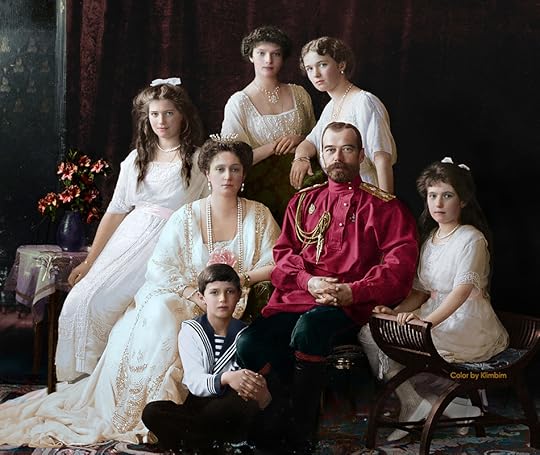
Memoirs of the Romanov children's French tutor from his beginnings at the Russian court to the end of their lives---I didn't find it too dry and it was compelling. It seems in some ways incredibly accurate and a real insight into their characters and their situation and in others biased because of his great love of the family.
Quite glad I read it and still fascinated by this period in time. I appreciated the level of detail he put into the state of WWI and Russian politics at the time. It is especially nice this is offered for free with the Gutenberg Project. Between this and the colorized photos we have now, I think it's a great way to help bring history to life.

Read
January 12, 2023Pierre Gilliard's account of his years with the last Romanovs is the source that many Russian historians turn to when writing about the Tsar and his family. While this account is dutifully recorded and filled with tender photos and keen observations (including criticisms of the royals), it's best when read in context or analysed by a professional researcher. On its own, the book is an intriguing glimpse into imperial court life in 1900s Russia.
The takeaway: if you think the people around you are going to make history, for better or worse, start keeping a diary.
The takeaway: if you think the people around you are going to make history, for better or worse, start keeping a diary.
September 29, 2017
This is a well written, heartrending, personal eyewitness account of the last Romanovs. Gilliard paints a picture of a family that is simple in taste (compared to the formal glitter of the Russian Court), devoted to each other and to their faith. A must read for anyone interested in Russian history or in how Tsar Nicholas II and his family lived and died.

January 31, 2019
Interesting prospective
Was an interesting read from someone who lived through the historic times. I do think the author was bias of his subjects but it is understandable since he spent so much time with the family. If only they could see the bigger picture of what was happening in the world around them, they might have saved themselves.
Was an interesting read from someone who lived through the historic times. I do think the author was bias of his subjects but it is understandable since he spent so much time with the family. If only they could see the bigger picture of what was happening in the world around them, they might have saved themselves.

April 15, 2020
I’ve always been fascinated about Russia, specially the last Czar family. This memoir got me very close to them as if I’ve crossed the 100 years back barrier and lived in their era sharing their love for each other and their country. Their tragic end always hits me with real sadness as if it just freshly happened yesterday.

November 10, 2020
A really good, honest and affectionate first hand view of Russia's last imperial family. Pierre shares his own experience in a simple way while also giving you insight into the personalities of the whole family and some of their servants.
Unfortunately most of what was shared was stuff I already knew from other books but it was still worth reading to get the perspective of someone who actually knew the family instead of just a historian's POV.
Unfortunately most of what was shared was stuff I already knew from other books but it was still worth reading to get the perspective of someone who actually knew the family instead of just a historian's POV.

October 12, 2019
Thought provoking and beautifully written book... but if only he had included more details of the personality of the children I would have given the fifth star.
March 26, 2020
' Hicbir siddet,hicbir ofke zarar veremez bu huzura, olunceye kadar bu huzurun olacaktir zafer.'
January 23, 2021
An amazing book that provides another view on these historical events and a more intimate side of the imperial family.

November 5, 2019
If you are a Romanov lover you will enjoy this book! I didn't really learn anything that I didn't already know but I enjoyed hearing it from the perspective of Pierre Gilliard.

September 13, 2020
This book had brought me to have a view from the other side of the fence.

December 7, 2020
Great book by the French tutor to the Russian royal family, specifically the daughters of the last Tsar. It details his time at the Russian court and what it was like being a tutor to the family and what it was the Tsar and Tsarina were like. Great book for anyone interested in royal history.

December 26, 2015
This was Pierre Gillard's autobiographical account of his years as tutor to the children of Tsar Nicholas and Tsaritsa Alexandra. Considering his 13 years of service to them, and his intense loyalty in staying with them until he forcibly separated from them after they were all arrested, I was a little disappointed with the lack of feeling of this book. At times he wrote as if he was a historian (about governmental workings that I'm pretty sure he would have had no personal knowledge of at the time as the family tutor) which went beyond the scope of this book. He was also surprisingly drawn in by some of the vicious gossip of the time. While he claims to write this book to support the family, he also is surprisingly derogatory to their close personal friend Anna Vryubova, succumbing to spreading malicious propaganda about her, that after having read quite a bit about her (through other sources), I am virtually certain wasn't true. Still, despite his shortcomings, Gillard, a Swiss, was to be admired for his deep devotion to the family and his willingness to be arrested and held in captivity with them in order to continue his service to a family he deeply admired (something Vyrubova did as well). Such devotion speaks volumes about their character. While I wanted to read this book to gain a clearer sense of this era in history (a time of great personal interest to me) but I was disappointed in that it wasn't as personal as other autobiographical accounts I've read of the same period.

October 27, 2018
The author is not a reliable source for anything he didn't see with his own eyes. Gossip is not history. There was a great deal of gossip circulating around the family of Nicholas II that was generated by the Russian elite for propaganda purposes. This was a deliberate attempt to undermine his public support and force him to abdicate during a time in which World War I was going badly for the Russians. The Russian aristocracy had come to the conclusion that to win the war, Nicholas needed to go, and they were trying to shove him out.
Nicholas was not a particularly good commander-in-chief, and making him abdicate wasn't necessarily a wrong decision. However, the Russian nobility, after installing the moderate Kerensky government, were overtaken by events and run out of the country by the insanely malignant Bolsheviks, which is karma for you. The propaganda, however, had taken on a life of its own.
To this day, everyone still believes all the wild stories with totally naive credulity, every single speck of them, with dropped jaw and goggling eyes, without verification. The historian Douglas Smith, who wrote a biography of Rasputin, says that almost every single story about him is based on heresay by people who had an ax to grind, not actual eyewitness testimony. I might add that after having read Anna Vyrubova's memoir, I am disgusted beyond belief with Gillard. However, you can read Gillard for the parts that he did witness.
Nicholas was not a particularly good commander-in-chief, and making him abdicate wasn't necessarily a wrong decision. However, the Russian nobility, after installing the moderate Kerensky government, were overtaken by events and run out of the country by the insanely malignant Bolsheviks, which is karma for you. The propaganda, however, had taken on a life of its own.
To this day, everyone still believes all the wild stories with totally naive credulity, every single speck of them, with dropped jaw and goggling eyes, without verification. The historian Douglas Smith, who wrote a biography of Rasputin, says that almost every single story about him is based on heresay by people who had an ax to grind, not actual eyewitness testimony. I might add that after having read Anna Vyrubova's memoir, I am disgusted beyond belief with Gillard. However, you can read Gillard for the parts that he did witness.

July 5, 2016
An incredibly interesting account based upon the authors proximity to the imperial household as a result of his 13 years as a tutor to Alexei Nikolaevich. His affection for the family is sincere he seems truthful in his impressions, and accurate in most of his political and military observations. But he may have underestimate the situation in Russia and overestimated the potential ability of Czar as he was within a circle that was being mislead.
That said he paints an exemplary portrait of the royal family and an accurate one of the vulgar, low Bolsheviks.
That said he paints an exemplary portrait of the royal family and an accurate one of the vulgar, low Bolsheviks.
Displaying 1 - 30 of 36 reviews