

What do you think?

الضفة الأخرى
في إحدى مراسلاته مع مؤلف رواية الضفّة الأخرى وصف أديب نوبل هيرمان هسه روايتنا بأنها «أروع عمل نثري قرأته في العقود الأخيرة.. رواية لا تُنسى»، بينما وصفتها إذاعة البرنامج الثقافي بألمانيا بأنها ملحمة القرن العشرين التي تصف صراع الخير والشرّ، ويشير مؤرّخو الأدب الألماني أن هذه الرواية مارست تأثيرًا قويًّا في أعمال فرانتس كافكا وجوستاف ميرنيك والكُتاب السورياليين وكُتاب الفاننازيا والأدب الغرائبي في عصره، بل وفي الأجيال التالية.
هذه هي الدرّة اليتيمة لمؤلّفها الرسَّام السوريالي والفنان التشكيلي النمساوي ألفريد كوبن (1959-1877)، وكان كوبن صديقًا مقربًا من فرانتس كافكا وبينهما مراسلات طويلة، ويذهب النُقّاد إلى أن كافكا استلهم ثيمة رواية (القلعة) من رواية ألفريد كوبن التي بين يدينا، ناهيك عن مشاهد أجواء البيروقراطية الصارخة في الرواية، والتي نستشعر آثارها الواضحة في رواية كافكا الأشهر (المحاكمة).
هل هي رواية غرائبية أم أمثولة أخلاقية أم حكاية سوريالية أم رواية دوستويبيا أم نص ميتافيزيقي يبحث في الماورائيات؟ أم أنها مزيج من كل ذلك؟ الإجابة هي كل ما سبق.
روح الرواية هي التراوح بين حالة الحُلم والواقع، وهو ما يشير إليه المؤلف بأنها حالة «حُلم داخل حُلم»، أو هي بالأحرى رحلة إلى عالم الأحلام.
هذه هي الدرّة اليتيمة لمؤلّفها الرسَّام السوريالي والفنان التشكيلي النمساوي ألفريد كوبن (1959-1877)، وكان كوبن صديقًا مقربًا من فرانتس كافكا وبينهما مراسلات طويلة، ويذهب النُقّاد إلى أن كافكا استلهم ثيمة رواية (القلعة) من رواية ألفريد كوبن التي بين يدينا، ناهيك عن مشاهد أجواء البيروقراطية الصارخة في الرواية، والتي نستشعر آثارها الواضحة في رواية كافكا الأشهر (المحاكمة).
هل هي رواية غرائبية أم أمثولة أخلاقية أم حكاية سوريالية أم رواية دوستويبيا أم نص ميتافيزيقي يبحث في الماورائيات؟ أم أنها مزيج من كل ذلك؟ الإجابة هي كل ما سبق.
روح الرواية هي التراوح بين حالة الحُلم والواقع، وهو ما يشير إليه المؤلف بأنها حالة «حُلم داخل حُلم»، أو هي بالأحرى رحلة إلى عالم الأحلام.
346 pages, Paperback
First published January 1, 1909
About the author
Alfred Kubin
81 books88 followersKubin was born in Bohemia in the town of Leitmeritz, Austro-Hungarian Empire (now Litoměřice). From 1892 to 1896, he was apprenticed to the landscape photographer Alois Beer, although he learned little. In 1896, he attempted suicide on his mother's grave, and his short stint in the Austrian army the following year ended with a nervous breakdown. In 1898, Kubin began a period of artistic study at a private academy run by the painter Ludwig Schmitt-Reutte, before enrolling at the Munich Academy in 1899, without finishing his studies there. In Munich, Kubin discovered the works of Odilon Redon, Edvard Munch, James Ensor, Henry de Groux, and Félicien Rops. He was profoundly affected by the prints of Max Klinger, and later recounted: "Here a new art was thrown open to me, which offered free play for the imaginative expression of every conceivable world of feeling. Before putting the engravings away I swore that I would dedicate my life to the creation of similar works". The aquatint technique used by Klinger and Goya influenced the style of his works of this period, which are mainly ink and wash drawings of fantastical, often macabre subjects. Kubin produced a small number of oil paintings in the years between 1902 and 1910, but thereafter his output consisted of pen and ink drawings, watercolors, and lithographs. In 1911, he became associated with the Blaue Reiter group, and exhibited with them in the Galerie Der Sturm in Berlin in 1913. After that time, he lost contact with the artistic avant-garde. (From Wikipedia)
Ratings & Reviews
Friends & Following
Create a free account to discover what your friends think of this book!
Community Reviews
Displaying 1 - 30 of 311 reviews

September 1, 2018
The Other Side is a gloomily satirical novel showing some fine rudiments of absurdism and it is also a sort of mystical dystopia.
E.T.A. Hoffmann
and
Gustav Meyrink
are obvious influences on Alfred Kubin’s juicy style and the book is written in the very picturesque and highly imaginative manner.
What worlds do we create in our dreams when we sleep? The Other Side is a gnostic tale – the Dream Realm of this dark parable is a creation of the insane demiurge who doesn’t even know the difference between good and evil.
I don’t know if Franz Kafka read The Other Side or not, but at times some motifs of Amerika , The Castle and even The Trial seem to echo this novel.
The pictures of the apocalypse in the Dream Realm are especially grotesque and tenebrously vivid.
Every man wishes to be a creator but some creations of mankind are hideously monstrous.
We are all wanderers, all of us without exception. It has been so as long as there have been people, and so it will remain. From the earliest nomads to the most modern tourist, from rape and pillage to recent journeys of exploration, however much the motives may change, the wandering remains. Foot, horseback, wheel, steam, electricity, petrol and anything else that will come – the means of locomotion is unimportant, the wandering remains. Whether I go down to the inn or all round the world, I am a wanderer, and with me all animals, here, there, everywhere. And the earth leads by example. It is in the blood, a law of nature. However tired you may be, you feel the compulsion to keep going, on and on… We only enjoy real peace when our wandering is at an end. And we are all secretly looking forward to that, only we refuse to admit it to ourselves. Many don’t even know it. There are some who have already travelled far and want to stop wandering, or they are ill and bed-ridden and cannot wander, yet they still journey on in their mind, in their imagination, often travelling far, far… but to stand still, no, that’s impossible.
What worlds do we create in our dreams when we sleep? The Other Side is a gnostic tale – the Dream Realm of this dark parable is a creation of the insane demiurge who doesn’t even know the difference between good and evil.
Here fantasies were simply reality. The incredible thing was the way the same illusion would appear in several minds at once. The people talked themselves into believing the things they imagined.
I don’t know if Franz Kafka read The Other Side or not, but at times some motifs of Amerika , The Castle and even The Trial seem to echo this novel.
‘Kant, that’s the big mistake! Ha! You can’t sail round the thing-in-itself just like that. The world is above all an ethical problem and no one’s going to persuade me otherwise. Space courts time, you see; and the point of union, the present, is death, or something else you could just as well posit in its place – the deity, if you like. And right in the middle, the great miracle of the incarnation: the object. Which is nothing but the exterior of the subject. Those, my dear sir, are fundamental propositions. There you have my whole theory.’
The pictures of the apocalypse in the Dream Realm are especially grotesque and tenebrously vivid.
Every man wishes to be a creator but some creations of mankind are hideously monstrous.

December 30, 2017
LA PORTA DELLA PERCEZIONE

Nel 1908 il boemo Alfred Kubin disegnò le illustrazioni di quello che sarebbe poi diventato “Il Golem” di Gustav Meyrink: la fantasia gli prese però la mano e le acqueforti finirono col risultare molto diverse dal romanzo di Meyrink ancora incompiuto.
Così, Kubin decise di servirsene per un suo romanzo, il suo primo e ultimo, questo, che nacque come illustrazione scritta delle sue illustrazioni.
Che fu definito dallo stesso autore un romanzo fantastico: nel senso che si occupa del mondo del fantastico, quindi della fantasia, non nel senso che Kubin ammirasse la sua opera al punto da qualificarla sensazionale, meravigliosa.

La morte del padre ha molto peso nella scrittura di quest’opera che fu un modo per elaborare il lutto, per accettare la perdita. Edipo invitato a nozze. Ma per non farsi mancare nulla, è giusto ricordare che a vent’anni Kubin tentò il suicidio sulla tomba della madre.
Kubin era già ben noto come disegnatore e illustratore: cimentarsi nella scrittura fu fatto nuovo. Che, come dicevo, rimase gesto irripetuto.
Anche Freud era noto, e la sua Interpretazione dei sogni già pubblicata da qualche anno (1903): Kubin sembra presentarsi come ‘traduttore’ dell’inconscio – non per niente è considerato un precursore di surrealismo ed espressionismo.

Un misterioso mago e ipnotizzatore, Patera, ricostruisce in un punto non precisato dell’Asia (India? Mongolia?) una piccola città tedesca di fine secolo, Perla, capitale del Regno del Sogno, e vi trasferisce i suoi veri abitanti. Tra questi invita a raggiungerlo un suo amico disegnatore descrivendogli Perla come una specie di paradiso in terra, un luogo nel quale il progresso tecnologico è totalmente assente (!!) e nel quale si può vivere in maniera semplice, senza conflitti o preoccupazioni. A raccontare in prima persona è proprio questo amico designatore che decide di accettare l’invito e si trasferisce a Perla.
Questa città, immersa in un'atmosfera crepuscolare, impregnata di odori sgradevoli, è stata fondata in base a principi bizzarri: ha l'aspetto di una vecchia città europea, tedesca appunto, vi è permesso portare solo oggetti usati e le regole che la governano sono alquanto strane. La dimensione della città è quella di un sogno e strani sogni si impadroniscono del protagonista.

Il Regno è separato dal mondo circostante per mezzo di un muro di cinta, e difeso contro qualsiasi attacco da poderose fortificazioni. Nel regno del sogno, rifugio per gli insoddisfatti della civiltà moderna, si provvede a tutti i bisogni materiali. Il sovrano di questo paese è ben lontano dal voler creare un’utopia, una sorta di stato del futuro. Tutto è impostato su una vita il più possibile spiritualizzata; i dolori e le gioie dei contemporanei sono estranee all’uomo del Sogno. L’abitante del Sogno non crede a null’altro che al sogno, al suo sogno. Questo, da noi, viene curato e sviluppato, il disturbarlo sarebbe un inconcepibile delitto. E anche da ciò dipende la severa selezione delle persone che vengono invitate a far parte di questa collettività.

Il protagonista narratore ha presto la sensazione che da Perla non riuscirà più ad andarsene, e quindi presto un senso di intrappolamento lo pervade.
La città è abitata da persone tetre, depresse, ambigue, anche crudeli e in qualche modo amorali, ipersensibili, soggette a sbalzi di umore.
Nella seconda metà del libro tutto comincia lentamente a dissolversi in un'apocalittica caduta del regno, descritta con minuzia: è la giungla che irrompe, un’inondazione, bestie selvagge, tutto viene distrutto.

Amico e maestro di Kafka, disegnava case-incubo: nelle stanzette squallide e grigie, solo in qualche aspetto particolare studiate con paziente realismo, ci sono armadi a muro, porte nascoste, porte finte che poi si aprono lo stesso, finestre murate con strane screpolature tra i mattoni, finestre che sono spalancate apposta perché i vicini vedano quello che succede nella stanza (dove, in verità, non succede proprio nulla).

Psicanalisi, simbolismo, alchimia, occultismo, paganesimo, metafisica, gnosticismo, visioni cosmiche, un “trattato di morfologia del sommerso”…
Il Regno del Sogno è un paese senza bambini, quindi non ha futuro.
Kubin anticipatore della Prima Guerra Mondiale? O addirittura del nazismo visto che gli abitanti del Regno del Sogno, un paese destinato a ripiegarsi su se stesso ed estinguersi, sono tutti tedeschi?
I piani di lettura si moltiplicano. Anche le arguzie.
Si capisce come sia diventato e rimasto romanzo di culto superando il tempo e le epoche.

In seguito ai bagordi e alle gozzoviglie, il logorio nervoso era diventato terribile nel Paese del Sogno. Le ben note malattie mentali e nervose, il ballo di San Vito, l’epilessia e l’isterismo, si manifestavano come fenomeni di massa. Quasi ogni persona aveva un tic nervoso o soffriva di un’idea fissa. L’agorafobia, le allucinazioni, le depressioni, gli attacchi di paralisi aumentavano in maniera preoccupante, ma ci si continuava a dare alla pazza gioia, e quanto più si moltiplicavano i suicidi più raccapriccianti, tanto più i sopravvissuti si scatenavano… Nelle osterie avvenivano sanguinose zuffe a coltellate. Non riuscivo più a passare una notte tranquilla, il chiasso saliva dal caffè fino alla mia camera. La sfrenatezza cresceva e non ci si arrestava più dinanzi a nulla.

Nel 1908 il boemo Alfred Kubin disegnò le illustrazioni di quello che sarebbe poi diventato “Il Golem” di Gustav Meyrink: la fantasia gli prese però la mano e le acqueforti finirono col risultare molto diverse dal romanzo di Meyrink ancora incompiuto.
Così, Kubin decise di servirsene per un suo romanzo, il suo primo e ultimo, questo, che nacque come illustrazione scritta delle sue illustrazioni.
Che fu definito dallo stesso autore un romanzo fantastico: nel senso che si occupa del mondo del fantastico, quindi della fantasia, non nel senso che Kubin ammirasse la sua opera al punto da qualificarla sensazionale, meravigliosa.
La morte del padre ha molto peso nella scrittura di quest’opera che fu un modo per elaborare il lutto, per accettare la perdita. Edipo invitato a nozze. Ma per non farsi mancare nulla, è giusto ricordare che a vent’anni Kubin tentò il suicidio sulla tomba della madre.
Kubin era già ben noto come disegnatore e illustratore: cimentarsi nella scrittura fu fatto nuovo. Che, come dicevo, rimase gesto irripetuto.
Anche Freud era noto, e la sua Interpretazione dei sogni già pubblicata da qualche anno (1903): Kubin sembra presentarsi come ‘traduttore’ dell’inconscio – non per niente è considerato un precursore di surrealismo ed espressionismo.
Un misterioso mago e ipnotizzatore, Patera, ricostruisce in un punto non precisato dell’Asia (India? Mongolia?) una piccola città tedesca di fine secolo, Perla, capitale del Regno del Sogno, e vi trasferisce i suoi veri abitanti. Tra questi invita a raggiungerlo un suo amico disegnatore descrivendogli Perla come una specie di paradiso in terra, un luogo nel quale il progresso tecnologico è totalmente assente (!!) e nel quale si può vivere in maniera semplice, senza conflitti o preoccupazioni. A raccontare in prima persona è proprio questo amico designatore che decide di accettare l’invito e si trasferisce a Perla.
Questa città, immersa in un'atmosfera crepuscolare, impregnata di odori sgradevoli, è stata fondata in base a principi bizzarri: ha l'aspetto di una vecchia città europea, tedesca appunto, vi è permesso portare solo oggetti usati e le regole che la governano sono alquanto strane. La dimensione della città è quella di un sogno e strani sogni si impadroniscono del protagonista.
Il Regno è separato dal mondo circostante per mezzo di un muro di cinta, e difeso contro qualsiasi attacco da poderose fortificazioni. Nel regno del sogno, rifugio per gli insoddisfatti della civiltà moderna, si provvede a tutti i bisogni materiali. Il sovrano di questo paese è ben lontano dal voler creare un’utopia, una sorta di stato del futuro. Tutto è impostato su una vita il più possibile spiritualizzata; i dolori e le gioie dei contemporanei sono estranee all’uomo del Sogno. L’abitante del Sogno non crede a null’altro che al sogno, al suo sogno. Questo, da noi, viene curato e sviluppato, il disturbarlo sarebbe un inconcepibile delitto. E anche da ciò dipende la severa selezione delle persone che vengono invitate a far parte di questa collettività.
Il protagonista narratore ha presto la sensazione che da Perla non riuscirà più ad andarsene, e quindi presto un senso di intrappolamento lo pervade.
La città è abitata da persone tetre, depresse, ambigue, anche crudeli e in qualche modo amorali, ipersensibili, soggette a sbalzi di umore.
Nella seconda metà del libro tutto comincia lentamente a dissolversi in un'apocalittica caduta del regno, descritta con minuzia: è la giungla che irrompe, un’inondazione, bestie selvagge, tutto viene distrutto.
Amico e maestro di Kafka, disegnava case-incubo: nelle stanzette squallide e grigie, solo in qualche aspetto particolare studiate con paziente realismo, ci sono armadi a muro, porte nascoste, porte finte che poi si aprono lo stesso, finestre murate con strane screpolature tra i mattoni, finestre che sono spalancate apposta perché i vicini vedano quello che succede nella stanza (dove, in verità, non succede proprio nulla).
Psicanalisi, simbolismo, alchimia, occultismo, paganesimo, metafisica, gnosticismo, visioni cosmiche, un “trattato di morfologia del sommerso”…
Il Regno del Sogno è un paese senza bambini, quindi non ha futuro.
Kubin anticipatore della Prima Guerra Mondiale? O addirittura del nazismo visto che gli abitanti del Regno del Sogno, un paese destinato a ripiegarsi su se stesso ed estinguersi, sono tutti tedeschi?
I piani di lettura si moltiplicano. Anche le arguzie.
Si capisce come sia diventato e rimasto romanzo di culto superando il tempo e le epoche.
In seguito ai bagordi e alle gozzoviglie, il logorio nervoso era diventato terribile nel Paese del Sogno. Le ben note malattie mentali e nervose, il ballo di San Vito, l’epilessia e l’isterismo, si manifestavano come fenomeni di massa. Quasi ogni persona aveva un tic nervoso o soffriva di un’idea fissa. L’agorafobia, le allucinazioni, le depressioni, gli attacchi di paralisi aumentavano in maniera preoccupante, ma ci si continuava a dare alla pazza gioia, e quanto più si moltiplicavano i suicidi più raccapriccianti, tanto più i sopravvissuti si scatenavano… Nelle osterie avvenivano sanguinose zuffe a coltellate. Non riuscivo più a passare una notte tranquilla, il chiasso saliva dal caffè fino alla mia camera. La sfrenatezza cresceva e non ci si arrestava più dinanzi a nulla.

April 1, 2018
"Aquí hay secretos por todas partes, pero son inexplicables. Los que se muestran demasiado curiosos son los primeros en quemarse los dedos."
No es casualidad que esta novela haya sido una de las preferidas del enorme Franz Kafka, quien era íntimo amigo de Alfred Kubin, uno de los ilustradores y dibujantes más alucinantes de fines del siglo XIX y principios del XX junto con Odilón Redon.
Kubin ha escrito un libro tan extraño como cautivante y sorprendente a la vez, y dota a “El otro lado” de una buena cantidad de ingredientes que logran atraer al lector para que éste le dedique una total atención a la historia.
Planteada como una extraña invitación de un también extraño personaje llamado Claus Patera al narrador del libro para que éste y su esposa viajen a radicarse a un remoto lugar que Patera denomina “El Reino Soñado” va a ir transformándose en una compleja y vertiginosa sucesión de hechos para terminar en una auténtica vorágine de peste, muerte, barbarie, caos y salvajismo que ni narrador ni lector sospechan con el correr de las primeras páginas.
La abundante imaginación de Kubin sorprende ya que esta es la única novela que escribió, pero que demuestra un total dominio de sus facultades narrativas.
“El otro lado” posee características netamente kafkianas, mezcladas con altas dosis del suspense y tintes macabros que Edgar Allan Poe le imprimía a sus cuentos.
Por otro lado, los elementos que se combinan para adornar a este Reino Soñado de Patera son verdaderamente acertados para convencer a los visitantes denominados “soñadores” que vivirán en esa enorme ciudad en algún lugar perdido en Asia Central.
Para completar el panorama, cada uno de los soñadores son personas que poseen o sufren alguna patología en particular, lo que hará que nos encontremos con los personajes más extraños que uno pueda imaginarse pero que tienen que ver con el transcurso de la trama al ira adentrándonos en los sucesos que allí ocurren.
Las primeras impresiones de El Reino Soñado nos dan la idea de una mezcla del encierro que sufren los atormentados personajes de la película “La aldea” de Night Shyamalan con las situaciones más oníricas que podemos recordar del libro “Alicia en el país de las maravillas” hasta las excentricidades más inverosímiles de la película “El imaginario del Dr. Parnassus”.
Ciertos pasajes poseen incluso reminiscencias a algunas de esas novelas de Verne cuyo anfitrión (El capitán Nemo, Robur el conquistador) son fuertemente cautivantes.
Todo lo que extraño que uno pueda esperarse de un lugar tan fuera de lo común como lo es el Reino Soñado puede suceder sin inconveniente alguno.
Es más, me atrevería a decir que el Reino Soñado con sus absurdos personajes y ambientes kafkianos tan similares a los de “El castillo” de Kafka, desborda realismo mágico por sus cuatro puntos cardinales y no tiene nada que envidiarle al Macondo de “Cien años de soledad” de García Márquez.
Pero además, es un realismo mágico cruzado por lo mejor del género fantástico puesto que sus situaciones exceden al límite las posibilidades de lo real incluso dentro de la ficción.
El Reino Soñado es onírico, es surrealista y es opresivo y el surrealismo que ofrece fue también fuente de inspiración para los auténticos exponentes de la vanguardia del Surrealismo.
Muchas de las situaciones sofocantes que allí se plantean son de un corte harto ominoso que por momento bordean al terror.
La segunda parte del libro es un derroche de caos y descontrol. Todo se desmadra hasta límites insospechables, desde una absurda epidemia de sueño hasta una descontrolada invasión de animales que arrasa con todo.
El capitulo llamado “El infierno” es realmente un homenaje a Dante Alighieri. Todo lo que uno experimenta leyendo este capítulo es puramente dantesco y no puede ser explicado de otra manera.
Un capítulo aparte es para el lector el tratar de dilucidar quién es realmente Claus Patera.
Es enigmático, inaccesible, nadie lo puede ver realmente y opera como amo y señor del Reino Soñado a punto tal que se transforma en una especie de dios omnisciente que todo lo sabe y todo lo ve. Nos queda a nosotros los lectores descubrir qué se esconde detrás de la efigie de Claus Patera, pero todo es desconcertante.
Y más desconcierto genera aun la frase final que Kubin eligió para culminar la historia:
“El demiurgo es hermafrodita”
Repito: Franz Kafka consideraba a “El otro lado” como una de sus novelas predilectas y Herman Hesse la definía como una obra maestra.
Tan errados no deberían estar ya que la misma impresión me causó a mí, que soy un humilde lector.
Hay que leer “El otro lado” para comprobarlo.
No es casualidad que esta novela haya sido una de las preferidas del enorme Franz Kafka, quien era íntimo amigo de Alfred Kubin, uno de los ilustradores y dibujantes más alucinantes de fines del siglo XIX y principios del XX junto con Odilón Redon.
Kubin ha escrito un libro tan extraño como cautivante y sorprendente a la vez, y dota a “El otro lado” de una buena cantidad de ingredientes que logran atraer al lector para que éste le dedique una total atención a la historia.
Planteada como una extraña invitación de un también extraño personaje llamado Claus Patera al narrador del libro para que éste y su esposa viajen a radicarse a un remoto lugar que Patera denomina “El Reino Soñado” va a ir transformándose en una compleja y vertiginosa sucesión de hechos para terminar en una auténtica vorágine de peste, muerte, barbarie, caos y salvajismo que ni narrador ni lector sospechan con el correr de las primeras páginas.
La abundante imaginación de Kubin sorprende ya que esta es la única novela que escribió, pero que demuestra un total dominio de sus facultades narrativas.
“El otro lado” posee características netamente kafkianas, mezcladas con altas dosis del suspense y tintes macabros que Edgar Allan Poe le imprimía a sus cuentos.
Por otro lado, los elementos que se combinan para adornar a este Reino Soñado de Patera son verdaderamente acertados para convencer a los visitantes denominados “soñadores” que vivirán en esa enorme ciudad en algún lugar perdido en Asia Central.
Para completar el panorama, cada uno de los soñadores son personas que poseen o sufren alguna patología en particular, lo que hará que nos encontremos con los personajes más extraños que uno pueda imaginarse pero que tienen que ver con el transcurso de la trama al ira adentrándonos en los sucesos que allí ocurren.
Las primeras impresiones de El Reino Soñado nos dan la idea de una mezcla del encierro que sufren los atormentados personajes de la película “La aldea” de Night Shyamalan con las situaciones más oníricas que podemos recordar del libro “Alicia en el país de las maravillas” hasta las excentricidades más inverosímiles de la película “El imaginario del Dr. Parnassus”.
Ciertos pasajes poseen incluso reminiscencias a algunas de esas novelas de Verne cuyo anfitrión (El capitán Nemo, Robur el conquistador) son fuertemente cautivantes.
Todo lo que extraño que uno pueda esperarse de un lugar tan fuera de lo común como lo es el Reino Soñado puede suceder sin inconveniente alguno.
Es más, me atrevería a decir que el Reino Soñado con sus absurdos personajes y ambientes kafkianos tan similares a los de “El castillo” de Kafka, desborda realismo mágico por sus cuatro puntos cardinales y no tiene nada que envidiarle al Macondo de “Cien años de soledad” de García Márquez.
Pero además, es un realismo mágico cruzado por lo mejor del género fantástico puesto que sus situaciones exceden al límite las posibilidades de lo real incluso dentro de la ficción.
El Reino Soñado es onírico, es surrealista y es opresivo y el surrealismo que ofrece fue también fuente de inspiración para los auténticos exponentes de la vanguardia del Surrealismo.
Muchas de las situaciones sofocantes que allí se plantean son de un corte harto ominoso que por momento bordean al terror.
La segunda parte del libro es un derroche de caos y descontrol. Todo se desmadra hasta límites insospechables, desde una absurda epidemia de sueño hasta una descontrolada invasión de animales que arrasa con todo.
El capitulo llamado “El infierno” es realmente un homenaje a Dante Alighieri. Todo lo que uno experimenta leyendo este capítulo es puramente dantesco y no puede ser explicado de otra manera.
Un capítulo aparte es para el lector el tratar de dilucidar quién es realmente Claus Patera.
Es enigmático, inaccesible, nadie lo puede ver realmente y opera como amo y señor del Reino Soñado a punto tal que se transforma en una especie de dios omnisciente que todo lo sabe y todo lo ve. Nos queda a nosotros los lectores descubrir qué se esconde detrás de la efigie de Claus Patera, pero todo es desconcertante.
Y más desconcierto genera aun la frase final que Kubin eligió para culminar la historia:
“El demiurgo es hermafrodita”
Repito: Franz Kafka consideraba a “El otro lado” como una de sus novelas predilectas y Herman Hesse la definía como una obra maestra.
Tan errados no deberían estar ya que la misma impresión me causó a mí, que soy un humilde lector.
Hay que leer “El otro lado” para comprobarlo.

February 18, 2018
A man in his thirties, married, an artist, receives a strange offer: an invitation from a former school friend who has become miraculously wealthy to emigrate to the far-off city he has purchased and now rules. A job is promised, interim funding provided.

I'm pretty sure this was an allegory about... something. Religion? Human weakness?
The editor suggests it is a satire of Utopianism.

The Dreamland is pretty nightmarish. Literally, not just hyperbolically.

The prose isn't brilliant but Kubin is excellent at imagery. If you're familiar with his art you'll be easily able to envision the scenes in this book.

I think it would have been better at a somewhat shorter length; the hideous events palled by repetition.
Here is a sample of the text (apologies for the photo quality):
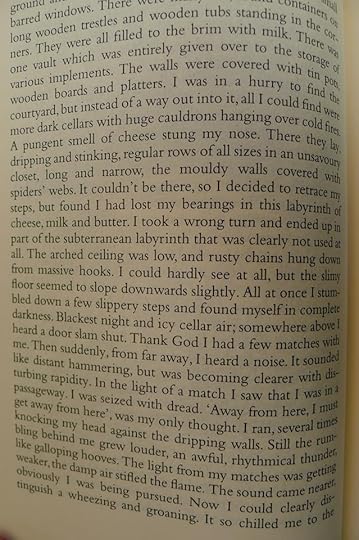
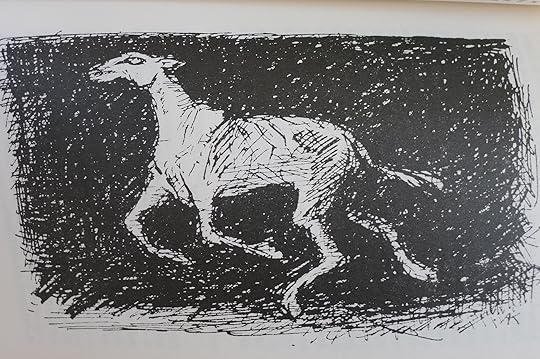
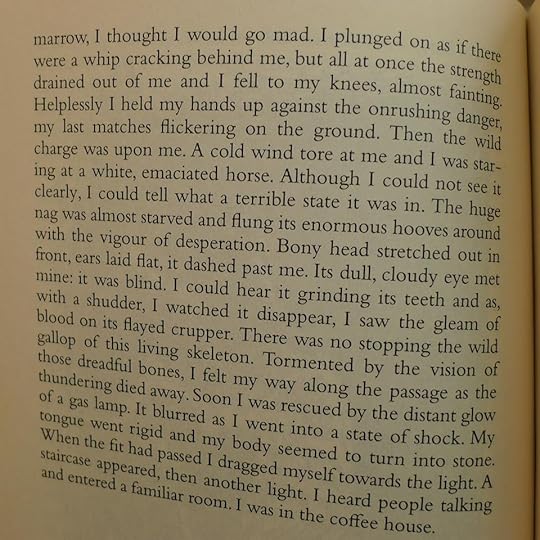
I'm pretty sure this was an allegory about... something. Religion? Human weakness?
The editor suggests it is a satire of Utopianism.
The Dreamland is pretty nightmarish. Literally, not just hyperbolically.
The prose isn't brilliant but Kubin is excellent at imagery. If you're familiar with his art you'll be easily able to envision the scenes in this book.
I think it would have been better at a somewhat shorter length; the hideous events palled by repetition.
Here is a sample of the text (apologies for the photo quality):

December 5, 2024
انسان فقط یک هیچِ خودآگاه است. (یولیوس بانسن)
خیلی دوست داشتم با اولین و آخرین کتاب آلفرد کوبین ارتباط زیادی برقرار کنم ولی هرچه کردم به در بسته خوردم. داستان کتاب شامل مضامین هولانگیز و دارک و مهیجیه ولی انگار از لحاظ فرمی مشکلات زیادی داره. در واقع به این صورته که شما دارین کتابی رو میخونید که یک نانویسنده سعی کرده ذهنیات و ایدههاش در هنرِ تصویرگری رو در قالب کلمات در ادبیات بیان کنه، از اونها داستان تخیلی بسازه و روایتش کنه. شاید ترسیم تصاویر ذهنیاش در قالب کلمات در حد قابلقبولی بوده باشه ولی در روایت یک داستان بهنظرم ناموفق بوده.
داستان دربارهی طراحیه که همشاگردیاش در مدرسه بعد از چندین سال بیخبری اون رو به سرزمین ناشناخته و اسرارآمیزی در دل قاره آسیا برای زندگی و امرار معاش دعوت میکنه. طراح موردنظر ما با پیشنهادهای مالی وسوسهکنندهای از طرف دوستش حاضر به رفتن به این سرزمین رویا میشه. بهتره بگم در مجموع توی رو دربایستی هم قرار میگیره. ولی ای دل غافل! سرزمین رویا تدریجا بهطرز مخوفی تبدیل به یه جهنم هولناک میشه.
آلفرد کوبین طراح و تصویرگر اتریشی بهخاطر طراحیهای فانتزی و کابوسوارش معروف بود که نمایندهی سبک اکسپرسیونیسم یا سوررئالیسمِ وحشته و در نوع خودش کمنظیره ولی ایدههاش از بوتهی آزمایش ادبیاش خوب بیرون نیومده.
خیلی دوست داشتم با اولین و آخرین کتاب آلفرد کوبین ارتباط زیادی برقرار کنم ولی هرچه کردم به در بسته خوردم. داستان کتاب شامل مضامین هولانگیز و دارک و مهیجیه ولی انگار از لحاظ فرمی مشکلات زیادی داره. در واقع به این صورته که شما دارین کتابی رو میخونید که یک نانویسنده سعی کرده ذهنیات و ایدههاش در هنرِ تصویرگری رو در قالب کلمات در ادبیات بیان کنه، از اونها داستان تخیلی بسازه و روایتش کنه. شاید ترسیم تصاویر ذهنیاش در قالب کلمات در حد قابلقبولی بوده باشه ولی در روایت یک داستان بهنظرم ناموفق بوده.
داستان دربارهی طراحیه که همشاگردیاش در مدرسه بعد از چندین سال بیخبری اون رو به سرزمین ناشناخته و اسرارآمیزی در دل قاره آسیا برای زندگی و امرار معاش دعوت میکنه. طراح موردنظر ما با پیشنهادهای مالی وسوسهکنندهای از طرف دوستش حاضر به رفتن به این سرزمین رویا میشه. بهتره بگم در مجموع توی رو دربایستی هم قرار میگیره. ولی ای دل غافل! سرزمین رویا تدریجا بهطرز مخوفی تبدیل به یه جهنم هولناک میشه.
آلفرد کوبین طراح و تصویرگر اتریشی بهخاطر طراحیهای فانتزی و کابوسوارش معروف بود که نمایندهی سبک اکسپرسیونیسم یا سوررئالیسمِ وحشته و در نوع خودش کمنظیره ولی ایدههاش از بوتهی آزمایش ادبیاش خوب بیرون نیومده.

May 14, 2012
I don't know if I really liked this or not. It pretty much bored me to the backs of my eyeballs and then showed me what those dangly nerves looked like in my pasty white hand. I started reading The Other Side weeks ago. Forcing myself to finish reading it today pretty much made me want to cry in a violent revolt. Mariel people rise up against their oppressors! We mental people come from all corners of this wide mental land in peace. Please, it shouldn't be this hard. That's what the spokesperson said but they killed the messenger. "They" was some big shadowy figure. You know how "They" always is in these suffocating scenarios. Pardon me, I haven't been sleeping much at all and I am coming from invisible germs on sweaty palms and stomach numbing nerves. The Other Side didn't fucking help one little bit. The doctor didn't say to read this so it's not really his fault. The nurse was a fucking bitch, though, and I'm sure she would have made some mouth noise I could have construed as an invader from the evil mental lands across the gray mass seas.
There's a letter delivered across bureaucratic lines of remember when we were lads in framed portraits destined to sit on some doily covered dresser to remind the housekeeper that someone once swaddled us in doily-like baby clothes? Remember when the administration head counted our just on time mustachioed and arpeggios? Come on, it's me! Patera! So I've got this "Dream land" that is pretty much my own country and shit. You can come live here. Mariel went into a lawyer coma over this reading of the will style part and didn't wake up until after the waaaaay more boring than the extensive train travel part of Christopher Priest's The Prestige (that was kind of interesting in the way of a guy who could make a home out of not being home, and falling love with moving tracks off the rails of those obstructed by Ben Franklin's kite sky writing). If I don't remember what the hell happened at any time in my life between this part of the book and today it isn't my fault. I lost it with the missing luggage.
If I was one of the kids who fucked up on the first hour of my visit to Willy Wonka's Chocolate Factory I might feel like this. The Dream Land is a paper cut kind of festering. Shit, if they want shitty neighbors I can give them shitty neighbors. So the old lady who would cross the street to avoid the pointing finger lady from The Princess Bride (y'know, the one who calls Princess Buttercup on her unfaithfulness) complains about noises at uncomfortable hours of the day. I used to live on a floor above the "hospice apartment". They are dying of cancer and you still don't have a whirring noise at three a.m. It still sucks when they try to come inside. Where's the community, other than some grumbling about coughs not other worldly people stuff? Patera hovers over with the promise of his invitation. Come on, I invited you, man! Money won't protect you. You know that other land place where missing socks go? That's where Clay Davis' empty pockets turn up. My money too. The artist with his burned out bulb of worldly and dreamy wonder is returned to sender. Did you forget to put on the address? The Dream Land was like that, to me. Like not going anywhere. The bitchy nurse says some shit now about how that was the point, Europe after WWI, blah blah blah. Haven't you done enough for today? Crush my soul with your regulation shoe later. Patera's head floats higher and higher. It is emptier than a kite from the dullest kid at the candy factory and the skies are black of currents. I don't understand making him the great and powerful Oz.
Wife, gone. People, never there. Artist, abandoned. Dreams... I don't even know if I'm asleep. I didn't care about Patera at all. Moving there at his behest made no kind of gut sense to me. The stethoscope has got nothing.
I took a look at what other reviews said. Blah blah blah Jung and the collective subconscious. I don't want to think too hard to come up with this means this or this means that. You'll make me cry, I swear.
I didn't care. That's what happened. Blah blah blah Kubin was a pessimist and tortured small animals in his youth (I thought that was a serial killer sign but what do I know?). Blah blah blah he was an artist and The Other Side was his only novel.
This is what I liked about The Other Side: (Oh yeah, i forgot to say I read this translated and not in the original German. The German may be perfect for all I know.)
I liked the written descriptions of what would have been drawings. There are illustrations in the book but I liked the descriptions better than the drawings. I could feel how the artist would sniff like a blood hound to run away from the blood rushing in the ears that don't pick up mutual cries. He could presmell what they might smell like in his paranoia. I didn't like being told that they all belonged together in spite of that. Okay, maybe I liked the drawings better because that was a total lie. Another voice from my peanut gallery: I liked how one man would give a look like a man who had fallen off a cliff. I could see that. I am thinking a lot these days about how one would write visuals that walk the tight rope of truth without ruining it by over defining it. Oh yeah, that's what The Other Side does too much with this Patera and Dream Land fixation. Better to throw shit at the wall and get your responses out of it. "Hey, bitchy neighbor chick. Come here often?" and discuss how the brown turd represents how much the world at large sucks. The wall says you can't leave. The shape of the turd is like one of those clouds that looks like a bunny rabbit if you look at it the right way.
I don't know. I got bored of trying too hard to look that hard. Other than the way the artist would describe things as if he could paint them it was too much like trying to slap some name on it. Or I just don't feel that good and don't really WANT to analyse this that much. I think I already feel too much that bad stuff that happens is a collective will, anyway. The artist might have seen the omens in the ABC spagettios but did they spell the same in the other most important meal of the day? That bad things that happen is a deliberate act to silence another voice, yeah. Communities suck. Villagers abuse their dinner forks. If I saw it in a dream that didn't mean I could have stopped it from happening. I'm too late to this gallery to predict karma. I don't want to hear tongues click. I have a lizard tongue, apparently. It was probably from when I made dead lizards dance as a four year old (my biographer says so). Kubin says he'll see me on the other side, then. Noooo, but you were soul boring! Click, click, click. That's the bright flash lights of hell diagnosing danger, danger, danger.
Am I just naive in that art and personal responses and shit? Intent is art and then there's where you run with it. Something about this collective unconscious in a burned to the ground village made me feel so tired.
There's a letter delivered across bureaucratic lines of remember when we were lads in framed portraits destined to sit on some doily covered dresser to remind the housekeeper that someone once swaddled us in doily-like baby clothes? Remember when the administration head counted our just on time mustachioed and arpeggios? Come on, it's me! Patera! So I've got this "Dream land" that is pretty much my own country and shit. You can come live here. Mariel went into a lawyer coma over this reading of the will style part and didn't wake up until after the waaaaay more boring than the extensive train travel part of Christopher Priest's The Prestige (that was kind of interesting in the way of a guy who could make a home out of not being home, and falling love with moving tracks off the rails of those obstructed by Ben Franklin's kite sky writing). If I don't remember what the hell happened at any time in my life between this part of the book and today it isn't my fault. I lost it with the missing luggage.
If I was one of the kids who fucked up on the first hour of my visit to Willy Wonka's Chocolate Factory I might feel like this. The Dream Land is a paper cut kind of festering. Shit, if they want shitty neighbors I can give them shitty neighbors. So the old lady who would cross the street to avoid the pointing finger lady from The Princess Bride (y'know, the one who calls Princess Buttercup on her unfaithfulness) complains about noises at uncomfortable hours of the day. I used to live on a floor above the "hospice apartment". They are dying of cancer and you still don't have a whirring noise at three a.m. It still sucks when they try to come inside. Where's the community, other than some grumbling about coughs not other worldly people stuff? Patera hovers over with the promise of his invitation. Come on, I invited you, man! Money won't protect you. You know that other land place where missing socks go? That's where Clay Davis' empty pockets turn up. My money too. The artist with his burned out bulb of worldly and dreamy wonder is returned to sender. Did you forget to put on the address? The Dream Land was like that, to me. Like not going anywhere. The bitchy nurse says some shit now about how that was the point, Europe after WWI, blah blah blah. Haven't you done enough for today? Crush my soul with your regulation shoe later. Patera's head floats higher and higher. It is emptier than a kite from the dullest kid at the candy factory and the skies are black of currents. I don't understand making him the great and powerful Oz.
Wife, gone. People, never there. Artist, abandoned. Dreams... I don't even know if I'm asleep. I didn't care about Patera at all. Moving there at his behest made no kind of gut sense to me. The stethoscope has got nothing.
I took a look at what other reviews said. Blah blah blah Jung and the collective subconscious. I don't want to think too hard to come up with this means this or this means that. You'll make me cry, I swear.
I didn't care. That's what happened. Blah blah blah Kubin was a pessimist and tortured small animals in his youth (I thought that was a serial killer sign but what do I know?). Blah blah blah he was an artist and The Other Side was his only novel.
This is what I liked about The Other Side: (Oh yeah, i forgot to say I read this translated and not in the original German. The German may be perfect for all I know.)
I liked the written descriptions of what would have been drawings. There are illustrations in the book but I liked the descriptions better than the drawings. I could feel how the artist would sniff like a blood hound to run away from the blood rushing in the ears that don't pick up mutual cries. He could presmell what they might smell like in his paranoia. I didn't like being told that they all belonged together in spite of that. Okay, maybe I liked the drawings better because that was a total lie. Another voice from my peanut gallery: I liked how one man would give a look like a man who had fallen off a cliff. I could see that. I am thinking a lot these days about how one would write visuals that walk the tight rope of truth without ruining it by over defining it. Oh yeah, that's what The Other Side does too much with this Patera and Dream Land fixation. Better to throw shit at the wall and get your responses out of it. "Hey, bitchy neighbor chick. Come here often?" and discuss how the brown turd represents how much the world at large sucks. The wall says you can't leave. The shape of the turd is like one of those clouds that looks like a bunny rabbit if you look at it the right way.
I don't know. I got bored of trying too hard to look that hard. Other than the way the artist would describe things as if he could paint them it was too much like trying to slap some name on it. Or I just don't feel that good and don't really WANT to analyse this that much. I think I already feel too much that bad stuff that happens is a collective will, anyway. The artist might have seen the omens in the ABC spagettios but did they spell the same in the other most important meal of the day? That bad things that happen is a deliberate act to silence another voice, yeah. Communities suck. Villagers abuse their dinner forks. If I saw it in a dream that didn't mean I could have stopped it from happening. I'm too late to this gallery to predict karma. I don't want to hear tongues click. I have a lizard tongue, apparently. It was probably from when I made dead lizards dance as a four year old (my biographer says so). Kubin says he'll see me on the other side, then. Noooo, but you were soul boring! Click, click, click. That's the bright flash lights of hell diagnosing danger, danger, danger.
Am I just naive in that art and personal responses and shit? Intent is art and then there's where you run with it. Something about this collective unconscious in a burned to the ground village made me feel so tired.

October 31, 2023
✔ فضای گوتیک، آخرالزمانی و سوررئال
✔ شخصیتهای ناملموس، روانی و غیرقابل توجیه
✔ مصور بودن اثر
✔ در بردارندهی مضامینی مانند فقر، شورش، بیماری، حیوانآزاری، وحشیگری، تجاوز، کشتار، خودکشی، آدمخواری، جنگ و جدال
✔ ایدههای ناب
لابد با این تفاسیر باید بهش امتیاز بیشتری میدادم و قدردان ذهن زیبای نویسنده میبودم اما یکی از اساسیترین مسائلی که به نظرم باعث شد که تمامی زحماتش به چشم نیاد، نداشتن قلم خوب بود.
فرض کنین که تو خونه نشستین، سن و سالی ازتون گذشته و در فکر این هستین که به تن رنجور و خستهتون استراحت بدین. ناگهان کسی در میزنه و شما به سرزمین رویا به واسطهی دعوتنامهی یک دوست قدیمی دعوت میشین. سرزمینی که رویایی به نظر میرسه اما کابوسی بیش نیست.
نویسنده، سوی دیگر رو به تصویر میکشه. سویی که تاریکترین و هولناکترین شرایط رو در بر میگیره و هیچ شباهتی به تعاریف وسوسهبرانگیزی که در ابتدای کتاب گفت نداره. حالا شخصیت اصلی که رکب خورده چطور میتونه از این مکان نفرینشده نجات پیدا کنه؟
فضای کتاب با اتفاقات سوررئال، مبهم و معماگونه عجین شده و ۹۰ درصد اثر با توصیفات مکرر از چگونگی سرزمین، شرایط و اتفاقات رقم خورده. با اینکه در جای جای کتاب با ایدههای عجیب و مریض و در عین حال ناب روبهرو میشیم اما نویسنده از نظر من نتونسته خوب بهشون بپردازه.
خلاصهنویسیها و یادداشتبرداریهایی که از کل کتاب کردم تکراری بودن. یعنی فرقی نداشت کدوم بخش رو بخونم، چون وضعیت فرقی نمیکرد و با یک جمله میشد گفت چه خبر هست و همون خبر هم در بیشتر کتاب صدق میکرد!
کل اثر به لطف سخن مترجم که در انتهای کتاب گنجونده شده به صورت خلاصه و مختصر اومده. یعنی اگر هم نمیخواین هزینهای کنین و صرفا از موضوعش به طور دقیقتری آگاه باشین، میتونین به صفحات پایانی رجوع کنید.
این تنها رمان بزرگوار بود اگرچه طراحیاش رو بیشتر میپسندم.
✔ شخصیتهای ناملموس، روانی و غیرقابل توجیه
✔ مصور بودن اثر
✔ در بردارندهی مضامینی مانند فقر، شورش، بیماری، حیوانآزاری، وحشیگری، تجاوز، کشتار، خودکشی، آدمخواری، جنگ و جدال
✔ ایدههای ناب
لابد با این تفاسیر باید بهش امتیاز بیشتری میدادم و قدردان ذهن زیبای نویسنده میبودم اما یکی از اساسیترین مسائلی که به نظرم باعث شد که تمامی زحماتش به چشم نیاد، نداشتن قلم خوب بود.
فرض کنین که تو خونه نشستین، سن و سالی ازتون گذشته و در فکر این هستین که به تن رنجور و خستهتون استراحت بدین. ناگهان کسی در میزنه و شما به سرزمین رویا به واسطهی دعوتنامهی یک دوست قدیمی دعوت میشین. سرزمینی که رویایی به نظر میرسه اما کابوسی بیش نیست.
نویسنده، سوی دیگر رو به تصویر میکشه. سویی که تاریکترین و هولناکترین شرایط رو در بر میگیره و هیچ شباهتی به تعاریف وسوسهبرانگیزی که در ابتدای کتاب گفت نداره. حالا شخصیت اصلی که رکب خورده چطور میتونه از این مکان نفرینشده نجات پیدا کنه؟
فضای کتاب با اتفاقات سوررئال، مبهم و معماگونه عجین شده و ۹۰ درصد اثر با توصیفات مکرر از چگونگی سرزمین، شرایط و اتفاقات رقم خورده. با اینکه در جای جای کتاب با ایدههای عجیب و مریض و در عین حال ناب روبهرو میشیم اما نویسنده از نظر من نتونسته خوب بهشون بپردازه.
خلاصهنویسیها و یادداشتبرداریهایی که از کل کتاب کردم تکراری بودن. یعنی فرقی نداشت کدوم بخش رو بخونم، چون وضعیت فرقی نمیکرد و با یک جمله میشد گفت چه خبر هست و همون خبر هم در بیشتر کتاب صدق میکرد!
کل اثر به لطف سخن مترجم که در انتهای کتاب گنجونده شده به صورت خلاصه و مختصر اومده. یعنی اگر هم نمیخواین هزینهای کنین و صرفا از موضوعش به طور دقیقتری آگاه باشین، میتونین به صفحات پایانی رجوع کنید.
این تنها رمان بزرگوار بود اگرچه طراحیاش رو بیشتر میپسندم.

January 21, 2024
Dem Strudel des Traumatischen entgegen geschrieben, um dann doch in ihm zu versinken. Kompositorisch eine Literatur aus einer anderen Welt. Phantastisch in jedem Sinne.
Alfred Kubin, Illustrator von Beruf, hat mit „Die andere Seite“ aus dem Jahr 1909 zeitlebens nur einen Roman geschrieben, der aber bei schreibenden Zeitgenossen (u.a. Franz Kafka, Hermann Hesse, Gustav Meyrink) auf große Resonanz traf und viele Techniken des späteren Surrealismus vorweggenommen hat. Er schrieb den Roman aus der Dringlichkeit heraus, um den ihn bedrängenden inneren Dämonen, die ihn zerwühlen, eine Form zu geben, und genau so liest sich der Text:
Verrenkte Arme und Beine, gespreizte Finger und geballte Fäuste, geblähte Tierbäuche, Pferdeschädel, zwischen den langen gelben Zähnen die wulstige blaue Zunge weit vorgestreckt, so schob sich die Phalanx des Untergangs unaufhaltsam vorwärts. Greller Lichtschein flackerte und belebte diese Apotheose Pateras.
Ein Zeichner, der in München mit seiner Frau lebt, erhält einen sonderbaren Besuch und durch diesen eine Nachricht von einem ehemaligen Schulkameraden, Patera, zugestellt, der zu unermesslichem Reichtum gekommen ist und ein Traumreich im fernen Asien nach seinem Gusto gegründet hat. Nur handverlesene Individuen dürfen einreisen. Der Ich-Erzähler gehört dazu und nimmt die Einladung, nachdem sich der 100,000 Mark-Scheck als gedeckt erwiesen hat, gerne an, trifft aber auf eine sehr seltsame Welt mit sehr seltsamen Einwohnern:
Die Massen waren ebenfalls nach dem Gesichtspunkt des Abnormen oder einseitig Entwickelten ausgewählt: Schöne Potatorentypen, mit sich und der Welt zerfallene Unglückliche, Hypochonder, Spiritisten, tollkühne Raufbolde, Blasierte, die Aufregungen, alte Abenteurer, die Ruhe suchten, Taschenspieler, Akrobaten, politische Flüchtlinge, ja selbst im Ausland verfolgte Mörder, Falschmünzer und Diebe u. a. m. fanden Gnade vor den Augen des Herrn. Unter Umständen befähigte sogar schon ein ins Auge fallendes Körpermerkmal, ins Traumland berufen zu werden. Daher die vielen Zentnerkröpfe, Traubennasen, Riesenhöcker.
Das friedliche Leben im Traumreich steht bei diesen Bewohnern offensichtlich auf Messers Schneide und gerät letztlich völlig aus den Fugen, als ein US-Amerikanischer Multimillionär namens Herkules Bell auftaucht und gegen Patera und seine Regierungsform wettert. Der Ich-Erzähler, der mehr und mehr unter den Bedingungen im Traumreich leidet, gerät in einen Strudel voller Gewalt, Phantasmagorien, Epidemien und Orgien, die über das Traumreich hinweg branden, bis kaum noch etwas übrig ist.
Es war ein Blutozean, der sich, soweit meine Blicke schweiften, da unten dehnte. Die purpurnen heißen Fluten stiegen immer höher, meine Füße wurden von dem rosenfarbenen Schaum der Brandung bespült. Ein ekelhafter Dunst stieg mir in die Nase. — Das rote Meer trat zurück und verfaulte vor meinen Augen; immer dicker und dunkler und schwärzer wurde das Blut, während es manchmal in allen Farben des Regenbogens schillerte. Oft teilte sich die zähe Flüssigkeit, es ward der Grund dieses Meeres sichtbar, der mit weichem Kot bedeckt war und entsetzliche Dämpfe verbreitete.
Alles, was George R.R. Martin in "Die Herren von Winterfell" u.a. nicht einlöst; alles das, was in Haruki Murakamis eng an Kubins Roman angelegte "Die Stadt und ihre ungewisse Mauer" einfach nur fehlt; wo Franz Kafka wie in "Der Proceß" lieber drüber schweigt und Hermann Hesse in "Der Steppenwolf" nur ansatzweise drauf eingeht, die unbewussten, verdrängten, phantasmagorischen Schichten, aber vor allem die sich unbändig selbst diktierende Écriture automatique der Surrealisten; all das kommt bei Kubin in "Die andere Seite" zum Vorschein und zum Tragen.
Sein Roman steht hiermit in der kurzen Reihe der Versuche, tief in die Psyche des Einzelnen hinabzusteigen, sich von nichts und niemandem bange machen zu lassen, tiefer und tiefer zu bohren, um der Literatur und mit ihr der symbolischen Form neue Horizonte zu erschließen. Ein Leseereignis.
Alfred Kubin, Illustrator von Beruf, hat mit „Die andere Seite“ aus dem Jahr 1909 zeitlebens nur einen Roman geschrieben, der aber bei schreibenden Zeitgenossen (u.a. Franz Kafka, Hermann Hesse, Gustav Meyrink) auf große Resonanz traf und viele Techniken des späteren Surrealismus vorweggenommen hat. Er schrieb den Roman aus der Dringlichkeit heraus, um den ihn bedrängenden inneren Dämonen, die ihn zerwühlen, eine Form zu geben, und genau so liest sich der Text:
Verrenkte Arme und Beine, gespreizte Finger und geballte Fäuste, geblähte Tierbäuche, Pferdeschädel, zwischen den langen gelben Zähnen die wulstige blaue Zunge weit vorgestreckt, so schob sich die Phalanx des Untergangs unaufhaltsam vorwärts. Greller Lichtschein flackerte und belebte diese Apotheose Pateras.
Ein Zeichner, der in München mit seiner Frau lebt, erhält einen sonderbaren Besuch und durch diesen eine Nachricht von einem ehemaligen Schulkameraden, Patera, zugestellt, der zu unermesslichem Reichtum gekommen ist und ein Traumreich im fernen Asien nach seinem Gusto gegründet hat. Nur handverlesene Individuen dürfen einreisen. Der Ich-Erzähler gehört dazu und nimmt die Einladung, nachdem sich der 100,000 Mark-Scheck als gedeckt erwiesen hat, gerne an, trifft aber auf eine sehr seltsame Welt mit sehr seltsamen Einwohnern:
Die Massen waren ebenfalls nach dem Gesichtspunkt des Abnormen oder einseitig Entwickelten ausgewählt: Schöne Potatorentypen, mit sich und der Welt zerfallene Unglückliche, Hypochonder, Spiritisten, tollkühne Raufbolde, Blasierte, die Aufregungen, alte Abenteurer, die Ruhe suchten, Taschenspieler, Akrobaten, politische Flüchtlinge, ja selbst im Ausland verfolgte Mörder, Falschmünzer und Diebe u. a. m. fanden Gnade vor den Augen des Herrn. Unter Umständen befähigte sogar schon ein ins Auge fallendes Körpermerkmal, ins Traumland berufen zu werden. Daher die vielen Zentnerkröpfe, Traubennasen, Riesenhöcker.
Das friedliche Leben im Traumreich steht bei diesen Bewohnern offensichtlich auf Messers Schneide und gerät letztlich völlig aus den Fugen, als ein US-Amerikanischer Multimillionär namens Herkules Bell auftaucht und gegen Patera und seine Regierungsform wettert. Der Ich-Erzähler, der mehr und mehr unter den Bedingungen im Traumreich leidet, gerät in einen Strudel voller Gewalt, Phantasmagorien, Epidemien und Orgien, die über das Traumreich hinweg branden, bis kaum noch etwas übrig ist.
Es war ein Blutozean, der sich, soweit meine Blicke schweiften, da unten dehnte. Die purpurnen heißen Fluten stiegen immer höher, meine Füße wurden von dem rosenfarbenen Schaum der Brandung bespült. Ein ekelhafter Dunst stieg mir in die Nase. — Das rote Meer trat zurück und verfaulte vor meinen Augen; immer dicker und dunkler und schwärzer wurde das Blut, während es manchmal in allen Farben des Regenbogens schillerte. Oft teilte sich die zähe Flüssigkeit, es ward der Grund dieses Meeres sichtbar, der mit weichem Kot bedeckt war und entsetzliche Dämpfe verbreitete.
Alles, was George R.R. Martin in "Die Herren von Winterfell" u.a. nicht einlöst; alles das, was in Haruki Murakamis eng an Kubins Roman angelegte "Die Stadt und ihre ungewisse Mauer" einfach nur fehlt; wo Franz Kafka wie in "Der Proceß" lieber drüber schweigt und Hermann Hesse in "Der Steppenwolf" nur ansatzweise drauf eingeht, die unbewussten, verdrängten, phantasmagorischen Schichten, aber vor allem die sich unbändig selbst diktierende Écriture automatique der Surrealisten; all das kommt bei Kubin in "Die andere Seite" zum Vorschein und zum Tragen.
Sein Roman steht hiermit in der kurzen Reihe der Versuche, tief in die Psyche des Einzelnen hinabzusteigen, sich von nichts und niemandem bange machen zu lassen, tiefer und tiefer zu bohren, um der Literatur und mit ihr der symbolischen Form neue Horizonte zu erschließen. Ein Leseereignis.

March 11, 2018
Ο ζωγράφος Άλφεντ Κούμπιν προσκαλείται από ένα παλιό του εκκεντρικό συμμαθητή, τον Πάτερα, να επισκεφτεί και να εγκατασταθεί στο Ονειρικό βασίλειο, ένα κρατίδιο που έχει εγκαθιδρύσει ο πολυεκατομμυριούχος φίλος του. Ο Κούμπιν θα ταξιδέψει με την γυναίκα του στην κεντρική Ασία και θα γίνει ο καινούργιος κάτοικος του βασιλείου.
Θα διαπιστώσει όμως ότι σε αυτό το μέρος συμβαίνουν πολύ περίεργα πράγματα κάποια από αυτά μάλιστα ξεπερνάν την φαντασία του ανθρώπου...
Ο Κάφκα αναφέρει στα ημερολόγια του τον Κούμπιν αρκετές φορές και φαίνεται πως είχαν αρκετά καλές σχέσεις. Δεν γίνεται αλλιώς να εξηγηθεί η μεγάλη ομοιότητα του βιβλίου με το συνολικό έργο του Κάφκα και ειδικά με τον Πύργο. Ο ζωγράφος κινείται μέσα στο Ονειρικό βασίλειο όπως ο Κ. στο χωριό του Πύργου.
Παντού επικρατεί μια μυστικοπάθεια σχετικά με τον ηγέτη Πάτερα, ο κόσμος συμπεριφέρεται αλλόκοτα και η κατάσταση γίνεται εφιαλτική όταν ξεκινάει η παρακμή του βασιλείου και η σήψη των θεμελίων του.
Συμβολισμοί, μη πραγματικές καταστάσεις, πνιγερή ατμόσφαιρα, αλλόκοτοι χαρακτήρες είναι μερικά από τα στοιχεία που δίνουν στο βιβλίο μια ιδιάζουσα ομορφιά. Φυσικά αυτό συμπληρώνεται και από την απόλυτα ταιριαστή εικονογράφηση του βιβλίου με σχέδια του ίδιου του Κούμπιν.
Οδοιπορικό λοιπόν σε ένα φανταστικό βασίλειο όπου ο ζωγράφος θα αναρωτηθεί πολλές φορές αν πραγματικά βρίσκεται σε ένα όνειρο ή σε έναν εφιάλτη...
5/5 γιατί το καφκικό στοιχείο είναι κάτι το οποίο προσωπικά με ενθουσιάζει σαν αναγνώστη!
ΥΓ: Το βιβλίο σε πολλά σημεία μου θύμισε το "Holy Mountain" του Χοδορόφσκι, μιας και η συμβατική πορεία ανατρέπεται αρκετές φορές με έναν σουρεαλιστικό τρόπο, κάτι το οποίο είναι από τα χαρακτηριστικά του μεγάλου σκηνοθέτη...
Θα διαπιστώσει όμως ότι σε αυτό το μέρος συμβαίνουν πολύ περίεργα πράγματα κάποια από αυτά μάλιστα ξεπερνάν την φαντασία του ανθρώπου...
Ο Κάφκα αναφέρει στα ημερολόγια του τον Κούμπιν αρκετές φορές και φαίνεται πως είχαν αρκετά καλές σχέσεις. Δεν γίνεται αλλιώς να εξηγηθεί η μεγάλη ομοιότητα του βιβλίου με το συνολικό έργο του Κάφκα και ειδικά με τον Πύργο. Ο ζωγράφος κινείται μέσα στο Ονειρικό βασίλειο όπως ο Κ. στο χωριό του Πύργου.
Παντού επικρατεί μια μυστικοπάθεια σχετικά με τον ηγέτη Πάτερα, ο κόσμος συμπεριφέρεται αλλόκοτα και η κατάσταση γίνεται εφιαλτική όταν ξεκινάει η παρακμή του βασιλείου και η σήψη των θεμελίων του.
Συμβολισμοί, μη πραγματικές καταστάσεις, πνιγερή ατμόσφαιρα, αλλόκοτοι χαρακτήρες είναι μερικά από τα στοιχεία που δίνουν στο βιβλίο μια ιδιάζουσα ομορφιά. Φυσικά αυτό συμπληρώνεται και από την απόλυτα ταιριαστή εικονογράφηση του βιβλίου με σχέδια του ίδιου του Κούμπιν.
Οδοιπορικό λοιπόν σε ένα φανταστικό βασίλειο όπου ο ζωγράφος θα αναρωτηθεί πολλές φορές αν πραγματικά βρίσκεται σε ένα όνειρο ή σε έναν εφιάλτη...
5/5 γιατί το καφκικό στοιχείο είναι κάτι το οποίο προσωπικά με ενθουσιάζει σαν αναγνώστη!
ΥΓ: Το βιβλίο σε πολλά σημεία μου θύμισε το "Holy Mountain" του Χοδορόφσκι, μιας και η συμβατική πορεία ανατρέπεται αρκετές φορές με έναν σουρεαλιστικό τρόπο, κάτι το οποίο είναι από τα χαρακτηριστικά του μεγάλου σκηνοθέτη...

December 9, 2019
Imagine sniffing a quart of milk, thinking it smells kind of funky, and then downing the whole thing anyway. That was me reading Alfred Kubin’s The Other Side.
This is not a well-told tale, but I was willing to overlook that because I thought it would be worth reading for the dream imagery alone. Boy was I wrong.
The first half of the book was not entirely without merit. Kubin does create a dream atmosphere. A place of perpetual twilight, drab colors, sudden turns of fortune at which no one bats an eye.
Dreamland is a place where people make up their minds without any real deliberation. Where people live in the present. Where a man’s wife can die in the morning and by afternoon he barely remembers that she existed.
There are nightmare scenes involving a subterranean labyrinth. Clocks with legs that crawl around like tortoises. Being naked in public. Being chased. Trying to run on slimy ground. Even a spectral horse, a literal nightmare.
Yet this novel is not really about the dream world because dreams aren’t only horrid. Dreams can also be pleasant. They can be neutral. Nightmares are just one type of dream.
Kubin’s Dreamland is actually a nightmare land that later becomes Hell. The disproportionately long chapter titled “Hell” has imagery so ugly that I will not befoul my review by describing it. It’s clear that Kubin wanted to shock rather than to truly explore the world we inhabit in our dreams.
I will now need to read something tonic to counteract the nausea.
This is not a well-told tale, but I was willing to overlook that because I thought it would be worth reading for the dream imagery alone. Boy was I wrong.
The first half of the book was not entirely without merit. Kubin does create a dream atmosphere. A place of perpetual twilight, drab colors, sudden turns of fortune at which no one bats an eye.
Dreamland is a place where people make up their minds without any real deliberation. Where people live in the present. Where a man’s wife can die in the morning and by afternoon he barely remembers that she existed.
There are nightmare scenes involving a subterranean labyrinth. Clocks with legs that crawl around like tortoises. Being naked in public. Being chased. Trying to run on slimy ground. Even a spectral horse, a literal nightmare.
Yet this novel is not really about the dream world because dreams aren’t only horrid. Dreams can also be pleasant. They can be neutral. Nightmares are just one type of dream.
Kubin’s Dreamland is actually a nightmare land that later becomes Hell. The disproportionately long chapter titled “Hell” has imagery so ugly that I will not befoul my review by describing it. It’s clear that Kubin wanted to shock rather than to truly explore the world we inhabit in our dreams.
I will now need to read something tonic to counteract the nausea.

October 8, 2022
در کتاب سوی دیگر نوشته آلفرد کویین ، نویسنده و نقاش اتریشی ، راوی داستان که خود یک طراح و هنرمند است روایت خلاقانه خود را از زندگی در مکانی ناشناخته و دوردست و البته فرضی در آسیا که آنرا سرزمین رویا و یا شهر مروارید می خواند با جزییات و به صورت مفصل بیان کرده است .
سرزمین مسخره ، مضحک و البته وحشتناکی که بیشتر به کابوس شبیه است تا رویا سه سال از عمر قهرمان داستان را تلف می کند ، در پایان هم جهان ساخته و پرداخته نویسنده را هرج و مرج و شورش فرا می گیرد . سرنوشت شهر مروارید به آسانی و سرعت اما دردناک رقم می خورد و آرمان شهری نویسنده وحشتناک تر از هر شهر دیگر ویران می شود .
با جست و جویی در اینترنت می توان فهمید که سوی دیگر را مانند سفری به اعماق ضمیر ناخودآگاه و یا با توجه به نقاش بودن نویسنده ، کتاب را بیان یک هنرمند از آفریدن اثر و یا دنیای خود و سپس نابود کردن آن دانسته اند .
به هر جهت خواندن کتاب آلفرد کوئین و درک بخشی از حس خاص او را می توان تجربه ای عجیب اما نه چندان دوست داشتنی دانست .
سرزمین مسخره ، مضحک و البته وحشتناکی که بیشتر به کابوس شبیه است تا رویا سه سال از عمر قهرمان داستان را تلف می کند ، در پایان هم جهان ساخته و پرداخته نویسنده را هرج و مرج و شورش فرا می گیرد . سرنوشت شهر مروارید به آسانی و سرعت اما دردناک رقم می خورد و آرمان شهری نویسنده وحشتناک تر از هر شهر دیگر ویران می شود .
با جست و جویی در اینترنت می توان فهمید که سوی دیگر را مانند سفری به اعماق ضمیر ناخودآگاه و یا با توجه به نقاش بودن نویسنده ، کتاب را بیان یک هنرمند از آفریدن اثر و یا دنیای خود و سپس نابود کردن آن دانسته اند .
به هر جهت خواندن کتاب آلفرد کوئین و درک بخشی از حس خاص او را می توان تجربه ای عجیب اما نه چندان دوست داشتنی دانست .
June 2, 2024
The English version can be found below.
-----------
German version:
Inhalt: Der Protagonist erhält eine merkwürdige Einladung eines alten Schulfreundes, von dem er schon viele Jahre nichts mehr gehört hat. Dieser lädt ihn ins sogenannte Traumreich ein. Er folgt dieser Einladung, aber die Dinge laufen ganz anders als geplant, mit apokalyptischen Ausmaßen.
Allgemein ist die Sprache und der Stil des Buches sehr eindrucksstark gestaltet, so dass die Erzählung von diesen Sinneseindrücken und Stimmungen lebt. Die durch Sprache erzeugte Atmosphäre des Buches schafft so ihr ganz eigenes Traumreich, in das der Leser eintauchen kann, um vom ‚realen‘ Traumreich zu erfahren! 😅
'Hört man von einer Sache erzählen, welche wunderbar ist und vom Alltäglichen weit abliegt, so bleibt immer ein ungelöster Zweifel in uns. Und das ist recht gut. Wäre man doch sonst ein Belustigungsobjekt für jeden guten Erzähler oder den nächsten Betrüger.' (S. 23, Die andere Seite)
Das Buch startet bereits in den ersten Seiten auf eine eigene und interessante Weise und spricht den Leser auch immer wieder direkt an, um eine stärkere Bindung zur Geschichte aufzubauen! Ich liebe diesen Erzählstil des Autors! Die Figur begründet auch amüsanter Weise immer, warum sie etwas erzählt oder weglässt und spricht dabei direkt zum Leser der Erzählung. In dieser Weise baut der Autor auch das Empfinden des Phantastischen auf. Von der ersten Seite an merkt man wirklich fast in jedem Satz, wie das Phantastische auf- und weiter ausgebaut wird! Es wird mit jeder Seite rätselhafter! Dadurch ist schon nach den ersten paar Seiten klar, auf was für eine Art Text man sich hier einstellen kann, da der Autor nicht lange an die Geschichte heranführt, sondern gleich voll einsteigt. Zudem finden sich vor allem am Anfang einige autobiografische Übereinstimmungen des Erzählers mit dem Autor selbst. Der Protagonist ist Künstler und reist auch.
Außerdem finde vor allem dem Humor genial, der auf so vielen Ebenen wirklich facettenreich umgesetzt ist! Er ist durch die trockene Darstellung subtil angelegt und zugleich werden die Stellen so deutlich ausgeschmückt (Länge der Ausführungen, Menge an Adjektiven und Details) und oftmals wird auf die Seltsamkeit der Situation direkt hingewiesen, so dass die Unternote dieser Stellen nicht zu übersehen ist. Hier finde ich bei der Kritik des Systems die Ausführungen zum ‚Archiv‘ auffallend amüsant, aber auch wie das Phantastische direkt andressiert wird und der Autor es in gewisser Weise dadurch schon wieder parodiert.
Diese humorvolle Komponente tritt aber kurz vor der Hälfte des Buches beim Aufkommen des Unheimlichen stark in den Hintergrund und taucht erst später wieder auf, als die düstersten Teile der Geschichte erzählt werden, und bildet dort eine zynische Unternote und unterstreit dadurch den vorherrschenden Irrsinn.
Dieses Umschwenken vom Beschreibenden mit leichter seltsamer Unternote zum wirklich düsteren Unheimlichen passiert sehr rasant und wird dann auch im Lauf der Geschichte immer düsterer und es kommen nur noch kurze beschreibende Teile vor. Diese düsteren Teile sind sprachlich so bildhaft und synästhetisch gestaltet, dass man diese höllischen Zustände wirklich mit allen Sinnen erfahren kann. Gerade im letzten Drittel sind die Szenen sehr makaber, verstörend und mit starken Horror-Vibes aufgeladen.
Das Buch hat mich sprachlich und inhaltlich wirklich beeindruckt und da ich daneben seit Kurzem die phantastische Literatur im Allgemeinen für mich entdeckt habe, ist dieses Buch definitiv eines meiner neuen Favoriten.
Daher gesamt: 5,0🌟
----------
English version:
Synopsis: The protagonist receives a strange invitation from an old school friend he hasn't heard from for many years. The friend invites him to the so-called “Traumreich/ dream realm”. He accepts the invitation, but things turn out very differently than planned, with apocalyptic dimensions.
In general, the language and style of the book is very impressive, so that the narrative lives from these sensory impressions and moods. The book's atmosphere created by language thus creates its very own dream realm into which the reader can immerse themselves in order to experience the ‚real‘ dream realm! 😅
'When we hear stories about something that is miraculous and far removed from the everyday, we are always left with an unresolved doubt. And that is a good thing. Otherwise we would be an object of amusement for every good storyteller or the next swindler. (p. 23, The Other Side; translated by myself)
The book starts in a unique and interesting way from the very first pages. He also speaks directly to the reader repeatedly to build a stronger connection to the story! I love the author's narrative style! The character also amusingly always justifies why he tells or drops something and speaks directly to the reader of the story. In this way, the author also builds up the sense of the fantastic. From the very first page, you can really feel how the fantastic is being built up and developed in almost every sentence! It becomes more mysterious with every page! This makes it clear after the first few pages what kind of text you're in for, as the author doesn't take long to introduce the story, but gets straight into it. There are also some autobiographical similarities between the narrator and the author himself, especially at the beginning. The protagonist is an artist and he also travels.
In addition, the humor in particular is brilliant, which is really multifaceted on so many levels! It is subtle due to the dry presentation and at the same time the passages are so clearly embellished (length of the explanations, amount of adjectives and details) and often the strangeness of the situation is pointed out directly, so that the undercurrent of these passages cannot be overlooked. In the criticism of the system, I find the comments on the 'archive' strikingly amusing, but also how the fantastic is directly addressed, so that the author also parodies it in this way.
However, this humorous component recedes into the background shortly before the halfway point of the book when the eeriness emerges and only reappears later when the darkest parts of the story are told. In this context, it then forms a cynical undertone, emphasizing the prevailing insanity.
This shift from the descriptive with a slightly strange undertone to the truly dark and sinister happens very quickly and then becomes increasingly darker as the story progresses, with only short descriptive sections appearing afterwards. These dark parts are so vividly and synaesthetically described that you can really experience these hellish conditions with all your senses. Especially in the last third, the scenes are very macabre, disturbing and charged with strong horror vibes.
The book really impressed me in terms of language and content. Since I have recently discovered fantastic literature in general as one of my new favorite genres, this book is definitely one of my new favorites.
Therefore overall: 5.0🌟
-----------
German version:
Inhalt: Der Protagonist erhält eine merkwürdige Einladung eines alten Schulfreundes, von dem er schon viele Jahre nichts mehr gehört hat. Dieser lädt ihn ins sogenannte Traumreich ein. Er folgt dieser Einladung, aber die Dinge laufen ganz anders als geplant, mit apokalyptischen Ausmaßen.
Allgemein ist die Sprache und der Stil des Buches sehr eindrucksstark gestaltet, so dass die Erzählung von diesen Sinneseindrücken und Stimmungen lebt. Die durch Sprache erzeugte Atmosphäre des Buches schafft so ihr ganz eigenes Traumreich, in das der Leser eintauchen kann, um vom ‚realen‘ Traumreich zu erfahren! 😅
'Hört man von einer Sache erzählen, welche wunderbar ist und vom Alltäglichen weit abliegt, so bleibt immer ein ungelöster Zweifel in uns. Und das ist recht gut. Wäre man doch sonst ein Belustigungsobjekt für jeden guten Erzähler oder den nächsten Betrüger.' (S. 23, Die andere Seite)
Das Buch startet bereits in den ersten Seiten auf eine eigene und interessante Weise und spricht den Leser auch immer wieder direkt an, um eine stärkere Bindung zur Geschichte aufzubauen! Ich liebe diesen Erzählstil des Autors! Die Figur begründet auch amüsanter Weise immer, warum sie etwas erzählt oder weglässt und spricht dabei direkt zum Leser der Erzählung. In dieser Weise baut der Autor auch das Empfinden des Phantastischen auf. Von der ersten Seite an merkt man wirklich fast in jedem Satz, wie das Phantastische auf- und weiter ausgebaut wird! Es wird mit jeder Seite rätselhafter! Dadurch ist schon nach den ersten paar Seiten klar, auf was für eine Art Text man sich hier einstellen kann, da der Autor nicht lange an die Geschichte heranführt, sondern gleich voll einsteigt. Zudem finden sich vor allem am Anfang einige autobiografische Übereinstimmungen des Erzählers mit dem Autor selbst. Der Protagonist ist Künstler und reist auch.
Außerdem finde vor allem dem Humor genial, der auf so vielen Ebenen wirklich facettenreich umgesetzt ist! Er ist durch die trockene Darstellung subtil angelegt und zugleich werden die Stellen so deutlich ausgeschmückt (Länge der Ausführungen, Menge an Adjektiven und Details) und oftmals wird auf die Seltsamkeit der Situation direkt hingewiesen, so dass die Unternote dieser Stellen nicht zu übersehen ist. Hier finde ich bei der Kritik des Systems die Ausführungen zum ‚Archiv‘ auffallend amüsant, aber auch wie das Phantastische direkt andressiert wird und der Autor es in gewisser Weise dadurch schon wieder parodiert.
Diese humorvolle Komponente tritt aber kurz vor der Hälfte des Buches beim Aufkommen des Unheimlichen stark in den Hintergrund und taucht erst später wieder auf, als die düstersten Teile der Geschichte erzählt werden, und bildet dort eine zynische Unternote und unterstreit dadurch den vorherrschenden Irrsinn.
Dieses Umschwenken vom Beschreibenden mit leichter seltsamer Unternote zum wirklich düsteren Unheimlichen passiert sehr rasant und wird dann auch im Lauf der Geschichte immer düsterer und es kommen nur noch kurze beschreibende Teile vor. Diese düsteren Teile sind sprachlich so bildhaft und synästhetisch gestaltet, dass man diese höllischen Zustände wirklich mit allen Sinnen erfahren kann. Gerade im letzten Drittel sind die Szenen sehr makaber, verstörend und mit starken Horror-Vibes aufgeladen.
Das Buch hat mich sprachlich und inhaltlich wirklich beeindruckt und da ich daneben seit Kurzem die phantastische Literatur im Allgemeinen für mich entdeckt habe, ist dieses Buch definitiv eines meiner neuen Favoriten.
Daher gesamt: 5,0🌟
----------
English version:
Synopsis: The protagonist receives a strange invitation from an old school friend he hasn't heard from for many years. The friend invites him to the so-called “Traumreich/ dream realm”. He accepts the invitation, but things turn out very differently than planned, with apocalyptic dimensions.
In general, the language and style of the book is very impressive, so that the narrative lives from these sensory impressions and moods. The book's atmosphere created by language thus creates its very own dream realm into which the reader can immerse themselves in order to experience the ‚real‘ dream realm! 😅
'When we hear stories about something that is miraculous and far removed from the everyday, we are always left with an unresolved doubt. And that is a good thing. Otherwise we would be an object of amusement for every good storyteller or the next swindler. (p. 23, The Other Side; translated by myself)
The book starts in a unique and interesting way from the very first pages. He also speaks directly to the reader repeatedly to build a stronger connection to the story! I love the author's narrative style! The character also amusingly always justifies why he tells or drops something and speaks directly to the reader of the story. In this way, the author also builds up the sense of the fantastic. From the very first page, you can really feel how the fantastic is being built up and developed in almost every sentence! It becomes more mysterious with every page! This makes it clear after the first few pages what kind of text you're in for, as the author doesn't take long to introduce the story, but gets straight into it. There are also some autobiographical similarities between the narrator and the author himself, especially at the beginning. The protagonist is an artist and he also travels.
In addition, the humor in particular is brilliant, which is really multifaceted on so many levels! It is subtle due to the dry presentation and at the same time the passages are so clearly embellished (length of the explanations, amount of adjectives and details) and often the strangeness of the situation is pointed out directly, so that the undercurrent of these passages cannot be overlooked. In the criticism of the system, I find the comments on the 'archive' strikingly amusing, but also how the fantastic is directly addressed, so that the author also parodies it in this way.
However, this humorous component recedes into the background shortly before the halfway point of the book when the eeriness emerges and only reappears later when the darkest parts of the story are told. In this context, it then forms a cynical undertone, emphasizing the prevailing insanity.
This shift from the descriptive with a slightly strange undertone to the truly dark and sinister happens very quickly and then becomes increasingly darker as the story progresses, with only short descriptive sections appearing afterwards. These dark parts are so vividly and synaesthetically described that you can really experience these hellish conditions with all your senses. Especially in the last third, the scenes are very macabre, disturbing and charged with strong horror vibes.
The book really impressed me in terms of language and content. Since I have recently discovered fantastic literature in general as one of my new favorite genres, this book is definitely one of my new favorites.
Therefore overall: 5.0🌟

April 30, 2017
Imagine this: one very ordinary day, you're sitting at home and suddenly a man appears at your door with a proposal that, should you accept, will change your life completely. That's exactly how this very disturbing novel begins. How it ends I won't say, but imagine any dream you've ever had that starts out being sort of quirky and then rapidly devolves into a nightmare from which you struggle to awaken, and that describes this novel in a nutshell. Sort of. I will tell you that this book disturbed me to my core, and that rarely happens.
I don't know if anyone's noticed (she says in a tongue-in-cheek sort of way), but I tend to be a reader of strange novels, and this one is out there. It is so very different, so far out of the realm of normal; it is the very stuff I crave and go out of my way to look for. When I find something out of the ordinary like The Other Side, I tend to get sucked in completely and have trouble getting out until the very last page. I wasn't too far in before the Moleskine notebook and the pens came out; two notebooks later it was over. The first time through this novel I was shaken, my nerves were working overtime, and I couldn't think straight for a while after having finished it. Being inside Kubin's head is a dangerous and very scary place to find oneself, even if it's only for the duration of the book.
much, much more at my reading journal:
http://www.oddlyweirdfiction.com/2017...
I don't know if anyone's noticed (she says in a tongue-in-cheek sort of way), but I tend to be a reader of strange novels, and this one is out there. It is so very different, so far out of the realm of normal; it is the very stuff I crave and go out of my way to look for. When I find something out of the ordinary like The Other Side, I tend to get sucked in completely and have trouble getting out until the very last page. I wasn't too far in before the Moleskine notebook and the pens came out; two notebooks later it was over. The first time through this novel I was shaken, my nerves were working overtime, and I couldn't think straight for a while after having finished it. Being inside Kubin's head is a dangerous and very scary place to find oneself, even if it's only for the duration of the book.
much, much more at my reading journal:
http://www.oddlyweirdfiction.com/2017...

October 13, 2019
Absurd, grotesque and macabre, funny and utterly surreal, nightmarish, Kafkaesque before Kafka. The Other Side is the neglected masterpiece of symbolism and decadent literature and Alfred Kubin was the epitome of the Artist. The themes of the book are many and universal but sometimes the symbolism is hard to pin down. Sometimes I thought that I was reading a satire on capitalism or a study on ethics. Other times I had this strange idea that I had before me a visionary text proclaiming WWI. I kept thinking that this book is a catalogue of Man's follies.
But most of the times Kubin seems to be absorbed in the duality of things. Life/death, God/Devil etc. And I think that this is the mainframe of the book. Also, the similarities with Kafka's work and particularly with The Tower are more than many. We know that Kafka knew Kubin (I understand that Kubin was a pretty successful artist in his time) but we don't know if he ever read his book. I am pretty sure that he did although he doesn't mention it anywhere. On the other hand Kafka mentions Kubin several times. So, if you like Kafka's work (one of my favorite writers) or symbolism or even fantasy (yes! this is also fantasy done right) then this book is a must read. It is a strange, scary, surreal, macabre masterpiece by a visionary true Artist.
But most of the times Kubin seems to be absorbed in the duality of things. Life/death, God/Devil etc. And I think that this is the mainframe of the book. Also, the similarities with Kafka's work and particularly with The Tower are more than many. We know that Kafka knew Kubin (I understand that Kubin was a pretty successful artist in his time) but we don't know if he ever read his book. I am pretty sure that he did although he doesn't mention it anywhere. On the other hand Kafka mentions Kubin several times. So, if you like Kafka's work (one of my favorite writers) or symbolism or even fantasy (yes! this is also fantasy done right) then this book is a must read. It is a strange, scary, surreal, macabre masterpiece by a visionary true Artist.

March 2, 2015
Surrealistic nightmare?
Satire on capitalism?
Study of the subconscious mind?
Damned if I know.
A man receives a "summons"
"Claus Patera, Absolute Lord of the Dream Kingdom, charges me as his agent to present you with an invitation to come and live in his country
Patera, a former classmate came into a vast sum of money while in Asia and has created a walled city/kingdom over which he exerts full control. He has even gone so far as to move buildings from throughout the world into his new kingdom,
They are all ancient structures; many, indeed, are in ruins and would be worthless in anyone else's eyes, but others are massive and well preserved. Formerly they were scattered all over Europe.
Our protagonist(?), and his wife travel by rail to the Dream Kingdom. The next few chapters are fairly mundane and Kubin briefly explores the class structure, economics and religion of this newly formed kingdom before we gradually slide down the slippery slope. Things in the kingdom seem just a bit off and in fact his wife is never comfortable or happy once they arrive. As discoveries are made and things start to deteriorate, a foil to Patera appears in the form of an American, Hercules Bell who begins to accelerate the collapse of the kingdom.
Some vivid passages;
A dream sequence,
An elderly fellow with an abnormally big torso and short legs approached me; he was naked except for a pair of greasy duck workman's trousers. He had two long vertical rows of nipples, I counted eighteen. With a snort, he inflated his lungs, filling first the right and then the left side of his chest, and then with his fingers on the eighteen nipples played the most beautiful harmonica pieces.
as the kingdom deteriorates;
the most valuable objects had clearly lost the will to live. A fine pattern of cracks appeared in the precious vases and porcelains. The splendid paintings developed black spots, which rapidly spread over the entire surface. Engravings became porous and fell to pieces. The speed with which so many well-preserved and carefully repaired household furnishings turned into piles of rubbish was hardly credible.
Now he grew boundlessly, he dug up a volcano from which still hung, snail-shaped and twisted, a granite intestine torn from the entrails of the earth. He put this gigantic instrument to his lips-it roared so that the universe shook. The city had long since disappeared beneath his feet. He stood there upright, his torso reaching the clouds; his flesh was as if made of hills.
This won't be for everyone but if you like weird fiction...Kafka....Peake, I would say give this a shot. It's definitely one of those books I will need to read again.
Satire on capitalism?
Study of the subconscious mind?
Damned if I know.
A man receives a "summons"
"Claus Patera, Absolute Lord of the Dream Kingdom, charges me as his agent to present you with an invitation to come and live in his country
Patera, a former classmate came into a vast sum of money while in Asia and has created a walled city/kingdom over which he exerts full control. He has even gone so far as to move buildings from throughout the world into his new kingdom,
They are all ancient structures; many, indeed, are in ruins and would be worthless in anyone else's eyes, but others are massive and well preserved. Formerly they were scattered all over Europe.
Our protagonist(?), and his wife travel by rail to the Dream Kingdom. The next few chapters are fairly mundane and Kubin briefly explores the class structure, economics and religion of this newly formed kingdom before we gradually slide down the slippery slope. Things in the kingdom seem just a bit off and in fact his wife is never comfortable or happy once they arrive. As discoveries are made and things start to deteriorate, a foil to Patera appears in the form of an American, Hercules Bell who begins to accelerate the collapse of the kingdom.
Some vivid passages;
A dream sequence,
An elderly fellow with an abnormally big torso and short legs approached me; he was naked except for a pair of greasy duck workman's trousers. He had two long vertical rows of nipples, I counted eighteen. With a snort, he inflated his lungs, filling first the right and then the left side of his chest, and then with his fingers on the eighteen nipples played the most beautiful harmonica pieces.
as the kingdom deteriorates;
the most valuable objects had clearly lost the will to live. A fine pattern of cracks appeared in the precious vases and porcelains. The splendid paintings developed black spots, which rapidly spread over the entire surface. Engravings became porous and fell to pieces. The speed with which so many well-preserved and carefully repaired household furnishings turned into piles of rubbish was hardly credible.
Now he grew boundlessly, he dug up a volcano from which still hung, snail-shaped and twisted, a granite intestine torn from the entrails of the earth. He put this gigantic instrument to his lips-it roared so that the universe shook. The city had long since disappeared beneath his feet. He stood there upright, his torso reaching the clouds; his flesh was as if made of hills.
This won't be for everyone but if you like weird fiction...Kafka....Peake, I would say give this a shot. It's definitely one of those books I will need to read again.

July 13, 2011
Paired with the piercing brilliance of another novel of the forces of dreams that I happened to read nearly at the same time, The Lathe of Heaven, this is all murk and decay and irrational forces, the dream-unleashed id of a century that would, just a few years later, reveal first the bloodiest war in world history, then another even more cataclysmic, almost immediately after. Not that Lathe doesn't have its sense of entropy too, but an impressively sustained portion of this one seems given over entirely to the horrors of entropy. There's a lot of uncertainty about what is going on here, and what to make of it, all of it submerged in kind of slow churning torpor (translation issues? I actually have the older 1969 Penguin Classics, not the new Dedalus), but nonetheless a horror and intensity comes through that's hard to put out of mind.
Interestingly, in contrast to possible interpretations of LeGuin, Kubin seems to suggest that collective thought tends only towards destruction, that the mass effect of humanity is only for ill. As I said, it seems like the 20th century was about to bear out this perspective quite readily.
Kubin, born in 1877, struggled with family and self without clear direction for some years before settling into art school in being gripped by grimly fantastic visions for a sustained period of productivity around the turn of the century. This eventually moderated itself into a 50-year career in painting and illustration, but those earliest, rougher works are his most urgent, some of the most bleakly memorable of the entire Symbolist milieu. The Other Side was written in 1907, when, at the age of 30, he found himself unable (the blurb says) to draw for three straight months. And so, this fitting literary companion (Kubin's only novel) to his early drawings came into being.


Interestingly, in contrast to possible interpretations of LeGuin, Kubin seems to suggest that collective thought tends only towards destruction, that the mass effect of humanity is only for ill. As I said, it seems like the 20th century was about to bear out this perspective quite readily.
Kubin, born in 1877, struggled with family and self without clear direction for some years before settling into art school in being gripped by grimly fantastic visions for a sustained period of productivity around the turn of the century. This eventually moderated itself into a 50-year career in painting and illustration, but those earliest, rougher works are his most urgent, some of the most bleakly memorable of the entire Symbolist milieu. The Other Side was written in 1907, when, at the age of 30, he found himself unable (the blurb says) to draw for three straight months. And so, this fitting literary companion (Kubin's only novel) to his early drawings came into being.

October 10, 2019
سوی دیگر یکی از شگرف ترین و عجیب ترین کتابهاییست که تا به حال خوانده ام. غرق شدن در رؤیا و وهم و خیال و خیر و شر.
طراحی از سوی یکی از همشاگردی های سابقش دعوت نامه ای دریافت می کند برای ورود به شهری به نام مروارید که به "سرزمین رؤیا" مشهور است. در آن جا نه خبر از بیکاری و فقر است و نه خبر از گرسنگی و فلاکت، البته این ها وعده هاییست که به او داده می شود ولی واقعیت! چیز دیگریست.
کتاب را می توان به دو نیمه تقسیم کرد، نیمه ابتدایی کاملا رئال و شرح رسیدن طراح و همسرش به آن شهر است، نیمه دوم کاملا سورئال و پر از وحشت و ترس، شهری که نامش مروارید است هیچ گونه نور و درخششی در آن دیده نمی سود، آسمانش را همیشه ابری سیاه در بر گرفته و ماه و خورشید و ستارگان را پشت خود پنهان کرده تا همگی در تاریکی مطلق به سر ببرند.
پاترا که خود خالق و فرمانروای شهر است را به سختی میتوان دید، حتی هنگامی که خود را نشان می دهد در چهره های دیگری نمایان می شود. فساد و تباهی و بی اخلاقی در این شهر بیداد می کند، فاصله خیال تا واقعیت مشخص نیست، حتی بدترین کابوس ها هم کاملا واقعی به نظر می رسند.
با ورود مردی به نام "آمریکایی" همه چیز عوض می شود او در می یابد که این سرزمین رؤیا و شهر مروارید آن چیزی نیست که وعده داده شده به همین سبب به مبارزه با پاترا می پردازد و سعی می کند مردم را بر علیه او بشوراند، در این میان جنگی سر میگیرد، جنگی بین خیر و شر، ولی سؤال اینجاست که خیر و شر چیست؟ چه کسی خیر و شر را می تواند از هم تمییز دهد؟ این دو واژه کاملا نسبی است یعنی بستگی به شرایط هر فرد و جامعه دارد. خیر و شر مطلق وجود ندارد، حتی در کتاب در مبارزه تن به تن مقابل پاترا و آمریکایی هر دو در هم میپیچند و با هم یکی می شوند و در نهایت نمی توان گفت این خیر است که پیروز شده یا شر.
کتاب پر از وحشت و اتفاقاتی از این قبیل است، با تصویرسازیهایی که نویسنده ی طراح که او را می توان همان شخصیت طراح کتاب دانست در لا به لای صفحات برای ما ترسیم می کند کاملا می توان آن لحظات و اتفاقات را به خوبی در ذهن تداعی کرد.
حال سؤالی که مطرح است این است که این سرزمین خیال که نامش هم بیانگر اصل وجودیش است همگی زاده ذهن متوهم طراح است یا خیر؟؟؟
این کتاب یکی از کتابهای کمتر دیده شده نشر ماهی است، نمی دانم چرا ولی این کتاب باید بیشتر از اینها خوانده و دیده می شد ولی حیف. اگر خواستار سفر در وهم وخیال و ترس و وحشت و دلهره هستید و یک سورئال ناب میخواهید، سوی دیگر را بخوانید.
طراحی از سوی یکی از همشاگردی های سابقش دعوت نامه ای دریافت می کند برای ورود به شهری به نام مروارید که به "سرزمین رؤیا" مشهور است. در آن جا نه خبر از بیکاری و فقر است و نه خبر از گرسنگی و فلاکت، البته این ها وعده هاییست که به او داده می شود ولی واقعیت! چیز دیگریست.
کتاب را می توان به دو نیمه تقسیم کرد، نیمه ابتدایی کاملا رئال و شرح رسیدن طراح و همسرش به آن شهر است، نیمه دوم کاملا سورئال و پر از وحشت و ترس، شهری که نامش مروارید است هیچ گونه نور و درخششی در آن دیده نمی سود، آسمانش را همیشه ابری سیاه در بر گرفته و ماه و خورشید و ستارگان را پشت خود پنهان کرده تا همگی در تاریکی مطلق به سر ببرند.
پاترا که خود خالق و فرمانروای شهر است را به سختی میتوان دید، حتی هنگامی که خود را نشان می دهد در چهره های دیگری نمایان می شود. فساد و تباهی و بی اخلاقی در این شهر بیداد می کند، فاصله خیال تا واقعیت مشخص نیست، حتی بدترین کابوس ها هم کاملا واقعی به نظر می رسند.
با ورود مردی به نام "آمریکایی" همه چیز عوض می شود او در می یابد که این سرزمین رؤیا و شهر مروارید آن چیزی نیست که وعده داده شده به همین سبب به مبارزه با پاترا می پردازد و سعی می کند مردم را بر علیه او بشوراند، در این میان جنگی سر میگیرد، جنگی بین خیر و شر، ولی سؤال اینجاست که خیر و شر چیست؟ چه کسی خیر و شر را می تواند از هم تمییز دهد؟ این دو واژه کاملا نسبی است یعنی بستگی به شرایط هر فرد و جامعه دارد. خیر و شر مطلق وجود ندارد، حتی در کتاب در مبارزه تن به تن مقابل پاترا و آمریکایی هر دو در هم میپیچند و با هم یکی می شوند و در نهایت نمی توان گفت این خیر است که پیروز شده یا شر.
کتاب پر از وحشت و اتفاقاتی از این قبیل است، با تصویرسازیهایی که نویسنده ی طراح که او را می توان همان شخصیت طراح کتاب دانست در لا به لای صفحات برای ما ترسیم می کند کاملا می توان آن لحظات و اتفاقات را به خوبی در ذهن تداعی کرد.
حال سؤالی که مطرح است این است که این سرزمین خیال که نامش هم بیانگر اصل وجودیش است همگی زاده ذهن متوهم طراح است یا خیر؟؟؟
این کتاب یکی از کتابهای کمتر دیده شده نشر ماهی است، نمی دانم چرا ولی این کتاب باید بیشتر از اینها خوانده و دیده می شد ولی حیف. اگر خواستار سفر در وهم وخیال و ترس و وحشت و دلهره هستید و یک سورئال ناب میخواهید، سوی دیگر را بخوانید.

July 24, 2022
Paa … zanimljivo. Kao projekat i artefakt. 😊
Posebno kad se posmatra sa književno-istorijskog stanovišta, i naravno, pitanja naknadnih uticaja (Kafka) koji je ova knjiga imala; ali i kao lep primer uspešnog rešavanja stvaralačke blokade.
Pročita se relativno lako.
Jest’ doduše ‘wtf’ i kresne povremeno dilema čemu ovu morbidno masiranje … ?
Al’ ide brzo, pa ajde.
Sudeći po predgovoru Jelene Kostić Tomović, Kubin je, u traganju za inspiracijom, inače pisao, naročito u trenucima likovnih potonuća, a ovaj fantastično-avanturistički roman je, za samo 12 nedelja, na kraju, i završio, u stanju “emotivne groznice” izazvane očevom smrću.
Do stapanja književnog i slikarskog (tekst romana i 50 ilustracija koje ga dopunjuju) je došlo kad je Kubin je prelomio da 11 ilustracija, koje su nastajale još od 1905, i inicijalno bile namenjene Gustav Mayrinkovom romanu “Golem” čije se štampanje oduglovačilo, spoji sa novonacrtanih 40 i sve zajedno ih premijerno objavi 1908. u sopstvenom spisateljskom aranžmanu.
Nije “Druga strana”, naravno, neka vrhunska literatura, ali je uradak, izvesno, bio čitalački provod za Kubinove savremenike, o čemu su nam ostala svedočenja.
Knjiga je čedo svog vremena, par excellence. Frojdijanska noćna mora. Satira. Fantazmagorična vizija budućnosti, čije su gnusne alegerije, vispreniji tadašnji čitaoci, kulturno, artisticki, duhovno i politički verovatno uspešnije i sa zadovoljstvom dešifrovali.
Uvodni i sporiji deo, gađa u centar banalne suštine autokratije, a kako storija odmiče, apokaliptični prizori koji se umnožavaju, sugestivno osvešćuju koliko je starom društveno-političkom konstruktu, konvencijama i načinu života - istekla minutaža, zaista unoseći čitaocu nemir i slutnju o nemimovnosti neke nadolazeće katastrofe, koja se u daljem toku XX veka, kao što znamo, tragično i odigrala.
Interesantan je i podatak da je Kubin, upravo pišući ovu knjigu, u ilustracijama njoj namenjenim, pronašao i učvrstio svoj konačni likovni izraz, i stilski ga se potom držao do kraja života.
Prevod je, onako, pomalo trapav, možda nedoteran; dok je koncept Lagunine edicije “Feniks” - 'dela “novootkrivenih” klasika svetske književnosti kao i manje poznata dela već priznatih pisaca', za svaku podršku i pohvalu.
Posebno kad se posmatra sa književno-istorijskog stanovišta, i naravno, pitanja naknadnih uticaja (Kafka) koji je ova knjiga imala; ali i kao lep primer uspešnog rešavanja stvaralačke blokade.
Pročita se relativno lako.
Jest’ doduše ‘wtf’ i kresne povremeno dilema čemu ovu morbidno masiranje … ?
Al’ ide brzo, pa ajde.
Sudeći po predgovoru Jelene Kostić Tomović, Kubin je, u traganju za inspiracijom, inače pisao, naročito u trenucima likovnih potonuća, a ovaj fantastično-avanturistički roman je, za samo 12 nedelja, na kraju, i završio, u stanju “emotivne groznice” izazvane očevom smrću.
Do stapanja književnog i slikarskog (tekst romana i 50 ilustracija koje ga dopunjuju) je došlo kad je Kubin je prelomio da 11 ilustracija, koje su nastajale još od 1905, i inicijalno bile namenjene Gustav Mayrinkovom romanu “Golem” čije se štampanje oduglovačilo, spoji sa novonacrtanih 40 i sve zajedno ih premijerno objavi 1908. u sopstvenom spisateljskom aranžmanu.
Nije “Druga strana”, naravno, neka vrhunska literatura, ali je uradak, izvesno, bio čitalački provod za Kubinove savremenike, o čemu su nam ostala svedočenja.
Knjiga je čedo svog vremena, par excellence. Frojdijanska noćna mora. Satira. Fantazmagorična vizija budućnosti, čije su gnusne alegerije, vispreniji tadašnji čitaoci, kulturno, artisticki, duhovno i politički verovatno uspešnije i sa zadovoljstvom dešifrovali.
Uvodni i sporiji deo, gađa u centar banalne suštine autokratije, a kako storija odmiče, apokaliptični prizori koji se umnožavaju, sugestivno osvešćuju koliko je starom društveno-političkom konstruktu, konvencijama i načinu života - istekla minutaža, zaista unoseći čitaocu nemir i slutnju o nemimovnosti neke nadolazeće katastrofe, koja se u daljem toku XX veka, kao što znamo, tragično i odigrala.
Interesantan je i podatak da je Kubin, upravo pišući ovu knjigu, u ilustracijama njoj namenjenim, pronašao i učvrstio svoj konačni likovni izraz, i stilski ga se potom držao do kraja života.
Prevod je, onako, pomalo trapav, možda nedoteran; dok je koncept Lagunine edicije “Feniks” - 'dela “novootkrivenih” klasika svetske književnosti kao i manje poznata dela već priznatih pisaca', za svaku podršku i pohvalu.
February 13, 2024
Klappentext: „Ein Jahrhundertroman über den Kampf zwischen Gut und Böse“.
Frankfurter Rundschau: „Eine große Satire auf den Kapitalismus“.
NEIN, nein, nein und nochmal NEIN!
Das Buch ist der Kampf mit dem Unverständlichen.
Kubin, als Künstler des Expressionismus, strebte danach, Gefühle und psychologische Zustände auszuloten. Seine düsteren, alptraumhaften Bilder beschäftigen sich mit Angst, dem Tod und dem Unbewussten.
Hier landen wir zwangsläufig bei der Psychoanalyse - dem Irrationalen, Halluzinatorischen, Verworrenen des psychischen Innenlebens, ein unzusammenhängender Fluss von Ideen, Leidenschaften, Affekten.
Nach Freud folgt das Unbewusste einer eigenen Grammatik und Logik - es spricht und denkt
Für Lacan bedeutet das: Ich soll mich trauen, mich dem Ort meiner Wahrheit zu nähern
Das Unbewusste enthält die Elemente der Signifikanten - ein Flickwerk aus improvisierten Verbindungen [Zizek aus der Gegenstoß]
Kubin greift natürlich den Umgang seiner Zeit mit dem Fortschritt und Kapitalismus auf. Er zeichnet aber die Gegenbewegung dazu. Das Unbehagen der Entfremdung, die Verweigerungshaltung dem Fortschritt gegenüber. Im Traumreich sind nur gebrauchte Kleidung und alte Kunst erlaubt. Nichts Neues darf den Weg hinein finden. Heilig sind dort Gegenstände und Produkte aus der Natur.
Kubin skizziert, dass Systeme immer auf ihre antagonistische Weise funktionieren. Wie die Gefahr des Verfalls die treibende Kraft des Fortschritts ist, hat abenso das Traumreich in seinem Widerstand der ideologischen Anrufung, in seiner Trägheit und Stagnation, den Antagonisten des in die Unendlichkeit strömenden Geistes.
Das Traumreich ist geprägt von Neurasthenie, die mit einer Reihe von Symptomen, wie Erschöpfung, Ängstlichkeit und Hysterie einher gehen. Ein Verlust des Antriebs, der individuellen Initiative und der Fähigkeit, sich geistig und emotional weiterzuentwickeln. Es ist alles grau in grau. Keine Sonne, keine Sterne, kein Mond. Monotonie.
Lacan sagt über das das hysterische weibliche Subjekt: " ich fordere dass Du meine Forderung ablehnst, denn das ist es nicht" - Sabotage gegen die eigene Absicht.
Hier schlägt das Reale, das Unbewusste zu.
Kubin kreist um diese Angst vor einem „leeren Zentrum“ des Subjektes. Unsicherheiten und die Komplexität des Begehrens durch Mangel werden ausgelotet.
Wer sabotiert sich denn eigentlich im Traumreich? Patera – der Herr und Gründer des Traumreiches – der eine göttliche Präsenz in seinem Reich eingenommen hat. Der mann mit den vielen Gesichtern. Kubin verhandelt „Gott im Kampf mit sich selbst“.
Eine Spaltung auf der Ebene des höchsten Gutes selbst. Gott begegnet sich als sein eigener größter Verbrecher. Er inszeniert die Hegelianische Aufhebung: Ein Kurzschluss zwischen der ideellen Selbstbestimmung- dem Höchsten und der natürlichen Unmittelbarkeit- dem Niedrigsten.
Patera holt den Amerikaner und Milliardär Bell ins Reich. Bell, als Sinnbild für die Unsicherheiten der Europäer vor dem Verlust ihrer kulturellen und politischen Dominanz.
Die Bewohner des Reiches der ständigen Angst ausgesetzt: Ich bin eine Figur im Traumraum eines inkonsistenten anderen.
Seltsam ist nur, die Bevölkerung scheint eine innere Bereitschaft der Lähmung zu bekunden. Niemand kommt auf die Idee sich aus der Misere zu befreien.
Kubin wütet in letzten Drittel des Buches wie ein Dämon. Raserei, sexuelle Enthemmungen, Mordlust, Ungeziefer, Schimmel, Verfall, Gestank….
Hier hilft Kierkegaard weiter. Das “Nichts“- thematisiert in Verbindung mit dem philosophischen Friseur des Reiches. Kierkegaard sagt: Das Nichts gebiert die Angst - die Angst ist die erotische Energie - die dämonische Lust ist unschuldig. Sie wird nicht von der Erkenntnis des Unterschieds zwischen Gut und Böse getragen, sondern nur als ein sich endlos wiederholendes Aufschieben des Absturzes in etwas formloses, angsteinflößendes anderes.
Was ist denn da los? Eigentlich sollten sich die Monaden des Reiches von Patera ganz lieblich in ihrer Einheit spiegeln. Harmonisch läuft hier nix im Reich. Da hat Gott/Patera irgendwas nicht im Griff gehabt.
Oder eigentlich können wir jetzt Schiller zu Wort kommen lassen:
»Freundlos war der große Weltenmeister, Fühlte Mangel - darum schuf er Geister, Sel'ge Spiegel seiner Seligkeit! - Fand das höchste Wesen schon kein gleiches, Aus dem Kelch des ganzen Seelenreiches Schäumt ihm - die Unendlichkeit. «
Deshalb sind auch nur die Spiegel auf Hochglanz getrimmt. Alles andere ist stumpf und fahl.
Die Monadologie von Leibniz wird von unserem philosophischen Friseur erwähnt. Sonst käm ich da gar nicht drauf. Ha, aber die „Spiegel sind doch NICHTS“.
Das Nichts?? Kant hantiert mit seinem „Ding an sich“ auch noch mit rum. Die Grenzen der Selbstreflexion und die Unmöglichkeit, das wahre Selbst durch äußere Bilder vollständig zu erfassen.
Patera erzeugt durch sein Reich eine Illusion der Tiefe, der Scheintätigkeiten, die letztendlich leer sind.
Und nun komme ich zum Kerngedanken, den ich als eigentlich Kritik Kubins sehe:
Die Bewohner verlassen sich alle auf äußere Führung und Strukturen. Man könnte es auch als Kritik an religiösen Symbolen/Strukturen/Autoritäten und der Institution Kirche auffassen, die auf Macht aus ist. Das individuelle Streben nach geistiger Freiheit und Selbstbestimmung wird vernachlässigt. Eine solche Gesellschaft, die den Fortschritt ablehnt und sich stattdessen in einer illusionären Sicherheit wiegt, gerät in noch dystopischere Zustände.
Kubins Thema ist der verkümmerte Geist, der den Fortschritt nicht als Möglichkeit des Wachstums begreift. Kubin schreit uns „Akzeptanz der Machtlosigkeit“ „Akzeptanz von Unkontrollierbarkeit“ „Ich will an die Wirklichkeit und komme nicht ran“ „Ihr haltet die wahre Freiheit überhaupt nicht aus“ „Setzt euch mit den Widersprüchen auseinander – sie sind Notwendig“ „ Wir sind verdammt- keine Gewissheit ohne Ungewissheit“ entgegen.
Eros oder Thanatos? Leben oder Tod? In dieser Verwirrung Energien frei setzen oder sich und andere aufzehren ?
Frankfurter Rundschau: „Eine große Satire auf den Kapitalismus“.
NEIN, nein, nein und nochmal NEIN!
Das Buch ist der Kampf mit dem Unverständlichen.
Kubin, als Künstler des Expressionismus, strebte danach, Gefühle und psychologische Zustände auszuloten. Seine düsteren, alptraumhaften Bilder beschäftigen sich mit Angst, dem Tod und dem Unbewussten.
Hier landen wir zwangsläufig bei der Psychoanalyse - dem Irrationalen, Halluzinatorischen, Verworrenen des psychischen Innenlebens, ein unzusammenhängender Fluss von Ideen, Leidenschaften, Affekten.
Nach Freud folgt das Unbewusste einer eigenen Grammatik und Logik - es spricht und denkt
Für Lacan bedeutet das: Ich soll mich trauen, mich dem Ort meiner Wahrheit zu nähern
Das Unbewusste enthält die Elemente der Signifikanten - ein Flickwerk aus improvisierten Verbindungen [Zizek aus der Gegenstoß]
Kubin greift natürlich den Umgang seiner Zeit mit dem Fortschritt und Kapitalismus auf. Er zeichnet aber die Gegenbewegung dazu. Das Unbehagen der Entfremdung, die Verweigerungshaltung dem Fortschritt gegenüber. Im Traumreich sind nur gebrauchte Kleidung und alte Kunst erlaubt. Nichts Neues darf den Weg hinein finden. Heilig sind dort Gegenstände und Produkte aus der Natur.
Kubin skizziert, dass Systeme immer auf ihre antagonistische Weise funktionieren. Wie die Gefahr des Verfalls die treibende Kraft des Fortschritts ist, hat abenso das Traumreich in seinem Widerstand der ideologischen Anrufung, in seiner Trägheit und Stagnation, den Antagonisten des in die Unendlichkeit strömenden Geistes.
Das Traumreich ist geprägt von Neurasthenie, die mit einer Reihe von Symptomen, wie Erschöpfung, Ängstlichkeit und Hysterie einher gehen. Ein Verlust des Antriebs, der individuellen Initiative und der Fähigkeit, sich geistig und emotional weiterzuentwickeln. Es ist alles grau in grau. Keine Sonne, keine Sterne, kein Mond. Monotonie.
Lacan sagt über das das hysterische weibliche Subjekt: " ich fordere dass Du meine Forderung ablehnst, denn das ist es nicht" - Sabotage gegen die eigene Absicht.
Hier schlägt das Reale, das Unbewusste zu.
Kubin kreist um diese Angst vor einem „leeren Zentrum“ des Subjektes. Unsicherheiten und die Komplexität des Begehrens durch Mangel werden ausgelotet.
Wer sabotiert sich denn eigentlich im Traumreich? Patera – der Herr und Gründer des Traumreiches – der eine göttliche Präsenz in seinem Reich eingenommen hat. Der mann mit den vielen Gesichtern. Kubin verhandelt „Gott im Kampf mit sich selbst“.
Eine Spaltung auf der Ebene des höchsten Gutes selbst. Gott begegnet sich als sein eigener größter Verbrecher. Er inszeniert die Hegelianische Aufhebung: Ein Kurzschluss zwischen der ideellen Selbstbestimmung- dem Höchsten und der natürlichen Unmittelbarkeit- dem Niedrigsten.
Patera holt den Amerikaner und Milliardär Bell ins Reich. Bell, als Sinnbild für die Unsicherheiten der Europäer vor dem Verlust ihrer kulturellen und politischen Dominanz.
Die Bewohner des Reiches der ständigen Angst ausgesetzt: Ich bin eine Figur im Traumraum eines inkonsistenten anderen.
Seltsam ist nur, die Bevölkerung scheint eine innere Bereitschaft der Lähmung zu bekunden. Niemand kommt auf die Idee sich aus der Misere zu befreien.
Kubin wütet in letzten Drittel des Buches wie ein Dämon. Raserei, sexuelle Enthemmungen, Mordlust, Ungeziefer, Schimmel, Verfall, Gestank….
Hier hilft Kierkegaard weiter. Das “Nichts“- thematisiert in Verbindung mit dem philosophischen Friseur des Reiches. Kierkegaard sagt: Das Nichts gebiert die Angst - die Angst ist die erotische Energie - die dämonische Lust ist unschuldig. Sie wird nicht von der Erkenntnis des Unterschieds zwischen Gut und Böse getragen, sondern nur als ein sich endlos wiederholendes Aufschieben des Absturzes in etwas formloses, angsteinflößendes anderes.
Was ist denn da los? Eigentlich sollten sich die Monaden des Reiches von Patera ganz lieblich in ihrer Einheit spiegeln. Harmonisch läuft hier nix im Reich. Da hat Gott/Patera irgendwas nicht im Griff gehabt.
Oder eigentlich können wir jetzt Schiller zu Wort kommen lassen:
»Freundlos war der große Weltenmeister, Fühlte Mangel - darum schuf er Geister, Sel'ge Spiegel seiner Seligkeit! - Fand das höchste Wesen schon kein gleiches, Aus dem Kelch des ganzen Seelenreiches Schäumt ihm - die Unendlichkeit. «
Deshalb sind auch nur die Spiegel auf Hochglanz getrimmt. Alles andere ist stumpf und fahl.
Die Monadologie von Leibniz wird von unserem philosophischen Friseur erwähnt. Sonst käm ich da gar nicht drauf. Ha, aber die „Spiegel sind doch NICHTS“.
Das Nichts?? Kant hantiert mit seinem „Ding an sich“ auch noch mit rum. Die Grenzen der Selbstreflexion und die Unmöglichkeit, das wahre Selbst durch äußere Bilder vollständig zu erfassen.
Patera erzeugt durch sein Reich eine Illusion der Tiefe, der Scheintätigkeiten, die letztendlich leer sind.
Und nun komme ich zum Kerngedanken, den ich als eigentlich Kritik Kubins sehe:
Die Bewohner verlassen sich alle auf äußere Führung und Strukturen. Man könnte es auch als Kritik an religiösen Symbolen/Strukturen/Autoritäten und der Institution Kirche auffassen, die auf Macht aus ist. Das individuelle Streben nach geistiger Freiheit und Selbstbestimmung wird vernachlässigt. Eine solche Gesellschaft, die den Fortschritt ablehnt und sich stattdessen in einer illusionären Sicherheit wiegt, gerät in noch dystopischere Zustände.
Kubins Thema ist der verkümmerte Geist, der den Fortschritt nicht als Möglichkeit des Wachstums begreift. Kubin schreit uns „Akzeptanz der Machtlosigkeit“ „Akzeptanz von Unkontrollierbarkeit“ „Ich will an die Wirklichkeit und komme nicht ran“ „Ihr haltet die wahre Freiheit überhaupt nicht aus“ „Setzt euch mit den Widersprüchen auseinander – sie sind Notwendig“ „ Wir sind verdammt- keine Gewissheit ohne Ungewissheit“ entgegen.
Eros oder Thanatos? Leben oder Tod? In dieser Verwirrung Energien frei setzen oder sich und andere aufzehren ?
January 22, 2023
داستان از جایی شروع میشه که راوی داستان که یک طراح هست راجع به همکلاسی سابقش و سال های دبیرستانش توضیح می ده و بعد از سال ها همکلاسی سابقش «پاترا» از راوی دعوت میکنه که برای زندگی راهی سرزمین رویا بشن،سرزمینی که ساخته پاترا هست، آفلرد کویین هم مثل مارکز برای خودش شهری رو می سازه و این شهر سرزمین رویا هست ،سرزمین رویا جایی هست که مردم به عمق و درونیات خودشون توجه دارند ،ارتباطشون با دنیای بیرون ،حوادث بیرون و حتی تکنولوژی قطع میشه و غرق در دنیای هنر و رویا پردازی میشن،ما داستان ورود راوی و همسرش به سرزمین رویا و اتفاقاتی که رخ می ده رو میخونیم ...
واقعا یکی از بهترین داستان هایی بود که خوندم فضای فانتزی و سورئالی که ترسیم میکنه ،اون عجیب و غریب بودن اتفاقات داستان ،رفتار آدم ها در سرزمین رویا و نوع واکنششون به حوادث زندگی،قوانینی که بر سرزمین رویا حاکم بود ،حوادث آخرالزمانی و مایه های وحشت توی داستان، همه و همه خیلی عالی بودند...چیزی که خیلی خوشم اومد اون در آمیختگی پاترا و آمریکایی و تغییر شکل دادن های پاترا و خداگونه بودنش بود...
پایان داستان رو هم خیلی دوست داشتم اون حس و حالی که نه راوی و نه خواننده می تونه مطمئن باشه که واقعا همچین حوادثی رخ داده یا نه زاده تخیل و اون بستری شدن راوی بوده...
قسمت های مورد علاقم از کتاب :
در اصل هیچ آدمی نمی تواند طبع خود را نادیده بگیرد و تعیین کننده ی رفتار هر کس در زندگی همواره طبع او خواهد بود.در مورد من که طبعی به شدت مالیخولیایی داشتم، میل و بی میلی بسیار به هم نزدیک بودند. من از قدیم اغلب بی هیچ مقدمه ای دستخوش نوسانات احساسی شدید می شدم.این خصوصیت عصبی که از مادرم به ارث برده ام برایم بزرگترین لذت ها و در عین حال تلخ ترین رنج ها را به بار آورده است.
دل آدمی چه کوچک و مشکوک است.
وقتی برایمان درباره ی چیزی حرف می زنند که از موضوعات عادی و روزمره بسیار فراتر می رود،همواره شک و تردیدی برطرف نشدنی در دلمان باقی می ماند، و این خیلی خوب است .چون در غیر این صورت اسباب خنده هر چرب زبان و شیادی خواهیم شد.اما شک و تردید موجب می شپد واقعیت بعدی ما را بیش از خبر اولیه تحت تاثیر قرار دهد.
اما در آخرین روزی که در آپارتمان به سر می بردین،غم و اندوه به سراغم آمد. نمی دانم آیا دیگران هم چنین حالی دارند یا نه؟ دل من در لحظه وداع با فضاهایی که به آن وابسته ام به درد می آید.حالا هم در این خانع مقطعی از زندگی از من می برید و به خاطره تبدیل می شد.به کنار پنجره رفتم،بیرون هوا تاریک شده بود،همه چیز پاییزه و سرذ .سرو صدلی شهر بزرگ با طنینی خفه به گوشم می رسید. دلم به راستی به درد آمد،به آسمان شبانه چشم دوختم.آسمان پر بود از ستاره های کوچک.
افزایش جمعیت از طریق زاد و ولد اهمیت در خور توجهی نداشت.بچه ها خیلی محبوب نبودند.معمولا گفته می شد ارزش آن ها با دردسرهایی که ایجاد می کنند،همخوانی ندارند. بنابر بر عقیده رایج ،بچه ها فقط خرج داشتند،اغلب حتی تا سن بزرگسالی.در ضمن به ندرت و با اکراه چیزی پس می دادند و تقریبا هیچوقت بابت هدیه زندگی سپاسگزار پدر و مادر خود نبودند که هیچ حتی در بیشتر مواقغ بر این عقیده بودند که نعمت زندگی به آن ها تحمیل شده است.
اما من حالا قرارداد کار دائم داشتم،طراح یک نشریه معتبر بودم و خلاصه کسی به حساب می آمدم ،در آن سرزمین همین مهم بود: کسی بودن،فرقی هم نمی کرد چه کسی: دزد یا ولگرد.
هنرمند جماعت به ندرت ممکن است آدم واقعا بدی باشد، این و یا آن بدجنسی کوچک بله ،ولی بیش از آن نه .احساسات ما به حقه بازی های ما فرصت خود نمایی نمی دهد .ما رو حمان را در کارهامان آشکار می کنیم،طوری که هرکس می توان به وضوح ببیند که هنرمند تحت شرایطی خاص به چه آدم بدی ممکن بود تبدیل شود.هنر یک جور سوپاپ اطمینان است!
همه چیز با درد و رنجی هولناک در امیخته بود .هرچه بیشتر رشد می کردی و بالاتر می رفتی ،ضرورتا عمیق تر ریشه می دواندی: اگر شادی را می خواهم رنج را هم می خواهم .یا هر دو،یا هیچ یک.بی شک علت العلل در نیروی تخیل و نیستی ریشه داشت،شاید هم آن دو یکی بودند. آن کس که ضرباهنگ گردش خود را دریافته است،می تواند حدودا محاسبه کند که درد یا زجرش چه مدت طول می کشد. نادانی و تناقض هم باید تجربه شود.حریق خانه من هم مصیت است هم آتش.آن کس که رنج می کشد از این دلخوشی برخوردار است که هردو خیالی اند.
آواز مرده ها را می شنوی،مرده های سبز روشن ؟ این ها در گورهای خود آسان و بی درد می پوسند.اگر پیکرشان را بگیری ،فقط خرده استخوان لمس کرده ای،دندان ها آسان حدا می شوند،کجاست آن زندگی که آن ها را به حرکت می آورد کجاست آن نیرو؟ آواز مرده ها را می شنوی،آواز مرده های سبز روشن را؟
چه خیر خواه است مرگ، و همه در گریز از او چه دست و پایی می زنند! به دنبال نشانه های او،کنجکاوانه در هر چهره دقیق می شدم ،بوسه هایش در هر چین و چروک ایام پیری کشف می کردم.هر بار با چهره ای نو بر من عیان می شد.چه خوشایند بود رنگ هایش ! نگاهش چنان فریبنده و در خشان بود که قوی ترین ها هم به ناچار تسلیمش می شدند .سپس نقاب از چهره می کشید و میرانده او را عریان می دید میان تلالو الماس ها ،میان هزاران تراشه نورانی.
واقعا یکی از بهترین داستان هایی بود که خوندم فضای فانتزی و سورئالی که ترسیم میکنه ،اون عجیب و غریب بودن اتفاقات داستان ،رفتار آدم ها در سرزمین رویا و نوع واکنششون به حوادث زندگی،قوانینی که بر سرزمین رویا حاکم بود ،حوادث آخرالزمانی و مایه های وحشت توی داستان، همه و همه خیلی عالی بودند...چیزی که خیلی خوشم اومد اون در آمیختگی پاترا و آمریکایی و تغییر شکل دادن های پاترا و خداگونه بودنش بود...
پایان داستان رو هم خیلی دوست داشتم اون حس و حالی که نه راوی و نه خواننده می تونه مطمئن باشه که واقعا همچین حوادثی رخ داده یا نه زاده تخیل و اون بستری شدن راوی بوده...
قسمت های مورد علاقم از کتاب :
در اصل هیچ آدمی نمی تواند طبع خود را نادیده بگیرد و تعیین کننده ی رفتار هر کس در زندگی همواره طبع او خواهد بود.در مورد من که طبعی به شدت مالیخولیایی داشتم، میل و بی میلی بسیار به هم نزدیک بودند. من از قدیم اغلب بی هیچ مقدمه ای دستخوش نوسانات احساسی شدید می شدم.این خصوصیت عصبی که از مادرم به ارث برده ام برایم بزرگترین لذت ها و در عین حال تلخ ترین رنج ها را به بار آورده است.
دل آدمی چه کوچک و مشکوک است.
وقتی برایمان درباره ی چیزی حرف می زنند که از موضوعات عادی و روزمره بسیار فراتر می رود،همواره شک و تردیدی برطرف نشدنی در دلمان باقی می ماند، و این خیلی خوب است .چون در غیر این صورت اسباب خنده هر چرب زبان و شیادی خواهیم شد.اما شک و تردید موجب می شپد واقعیت بعدی ما را بیش از خبر اولیه تحت تاثیر قرار دهد.
اما در آخرین روزی که در آپارتمان به سر می بردین،غم و اندوه به سراغم آمد. نمی دانم آیا دیگران هم چنین حالی دارند یا نه؟ دل من در لحظه وداع با فضاهایی که به آن وابسته ام به درد می آید.حالا هم در این خانع مقطعی از زندگی از من می برید و به خاطره تبدیل می شد.به کنار پنجره رفتم،بیرون هوا تاریک شده بود،همه چیز پاییزه و سرذ .سرو صدلی شهر بزرگ با طنینی خفه به گوشم می رسید. دلم به راستی به درد آمد،به آسمان شبانه چشم دوختم.آسمان پر بود از ستاره های کوچک.
افزایش جمعیت از طریق زاد و ولد اهمیت در خور توجهی نداشت.بچه ها خیلی محبوب نبودند.معمولا گفته می شد ارزش آن ها با دردسرهایی که ایجاد می کنند،همخوانی ندارند. بنابر بر عقیده رایج ،بچه ها فقط خرج داشتند،اغلب حتی تا سن بزرگسالی.در ضمن به ندرت و با اکراه چیزی پس می دادند و تقریبا هیچوقت بابت هدیه زندگی سپاسگزار پدر و مادر خود نبودند که هیچ حتی در بیشتر مواقغ بر این عقیده بودند که نعمت زندگی به آن ها تحمیل شده است.
اما من حالا قرارداد کار دائم داشتم،طراح یک نشریه معتبر بودم و خلاصه کسی به حساب می آمدم ،در آن سرزمین همین مهم بود: کسی بودن،فرقی هم نمی کرد چه کسی: دزد یا ولگرد.
هنرمند جماعت به ندرت ممکن است آدم واقعا بدی باشد، این و یا آن بدجنسی کوچک بله ،ولی بیش از آن نه .احساسات ما به حقه بازی های ما فرصت خود نمایی نمی دهد .ما رو حمان را در کارهامان آشکار می کنیم،طوری که هرکس می توان به وضوح ببیند که هنرمند تحت شرایطی خاص به چه آدم بدی ممکن بود تبدیل شود.هنر یک جور سوپاپ اطمینان است!
همه چیز با درد و رنجی هولناک در امیخته بود .هرچه بیشتر رشد می کردی و بالاتر می رفتی ،ضرورتا عمیق تر ریشه می دواندی: اگر شادی را می خواهم رنج را هم می خواهم .یا هر دو،یا هیچ یک.بی شک علت العلل در نیروی تخیل و نیستی ریشه داشت،شاید هم آن دو یکی بودند. آن کس که ضرباهنگ گردش خود را دریافته است،می تواند حدودا محاسبه کند که درد یا زجرش چه مدت طول می کشد. نادانی و تناقض هم باید تجربه شود.حریق خانه من هم مصیت است هم آتش.آن کس که رنج می کشد از این دلخوشی برخوردار است که هردو خیالی اند.
آواز مرده ها را می شنوی،مرده های سبز روشن ؟ این ها در گورهای خود آسان و بی درد می پوسند.اگر پیکرشان را بگیری ،فقط خرده استخوان لمس کرده ای،دندان ها آسان حدا می شوند،کجاست آن زندگی که آن ها را به حرکت می آورد کجاست آن نیرو؟ آواز مرده ها را می شنوی،آواز مرده های سبز روشن را؟
چه خیر خواه است مرگ، و همه در گریز از او چه دست و پایی می زنند! به دنبال نشانه های او،کنجکاوانه در هر چهره دقیق می شدم ،بوسه هایش در هر چین و چروک ایام پیری کشف می کردم.هر بار با چهره ای نو بر من عیان می شد.چه خوشایند بود رنگ هایش ! نگاهش چنان فریبنده و در خشان بود که قوی ترین ها هم به ناچار تسلیمش می شدند .سپس نقاب از چهره می کشید و میرانده او را عریان می دید میان تلالو الماس ها ،میان هزاران تراشه نورانی.

July 31, 2014
My 950th rating here
(Apparently Kafka read it and enjoyed it.)
Alfred Kubin's atmospheric book is precisely what I expected it to be just from looking at his works. It's his art morphed into words, it emanates the same atmosphere, the same grotesqueness. Don't expect much out of it, just read it for what it is and enjoy his descriptions of the bizarre Dream Realm.
If only more artists would use writing to express themselves, to convey their art through words, what I would give to read something written by Gustave Moraeu, Viktor Vasnetsov, Jean Delville, Franz von Stuck, Ilya Repin, Odilon Redon and others.
(Apparently Kafka read it and enjoyed it.)
Alfred Kubin's atmospheric book is precisely what I expected it to be just from looking at his works. It's his art morphed into words, it emanates the same atmosphere, the same grotesqueness. Don't expect much out of it, just read it for what it is and enjoy his descriptions of the bizarre Dream Realm.
If only more artists would use writing to express themselves, to convey their art through words, what I would give to read something written by Gustave Moraeu, Viktor Vasnetsov, Jean Delville, Franz von Stuck, Ilya Repin, Odilon Redon and others.

July 28, 2026
Il perturbante patatrac
Oscuro ed enigmatico, L'altra parte è l’unico romanzo scritto da Alfred Kubin, celebre artista espressionista boemo, e tale genesi anomala lo ha da subito ammantato di mistero: romanzo onirico, visionario, surrealista, simbolista, delirante, non incasellabile in nessuna precisa categoria ordinaria, se non nel più vasto calderone del fantastico, nella sua accezione più ampia possibile, ovvero quella dell'irrazionale. Non a caso Roberto Calasso lo scelse come numero uno della prestigiosa Biblioteca Adelphi, facendolo assurgere a manifesto programmatico della collana, la prima che seppe portare il fantastico letterario di alto livello, con titoli unici per concezione e ambizione artistica, nel paludato panorama del mercato editoriale italiano.
La trama è presto detta: un artista di Monaco riceve un bel giorno l'invito di un suo vecchio compagno di scuola scomparso da decenni, ora ricchissimo, che ha creato in una landa nascosta d'Oriente il Regno del Sogno. L'artista vi si trasferisce con la moglie, ma la città è ammantata da forze imperscrutabili, nulla è come sembra, e presto il caos prenderà il sopravvento sull'ordine stabilito dal demiurgo che aveva ideato quel reame.
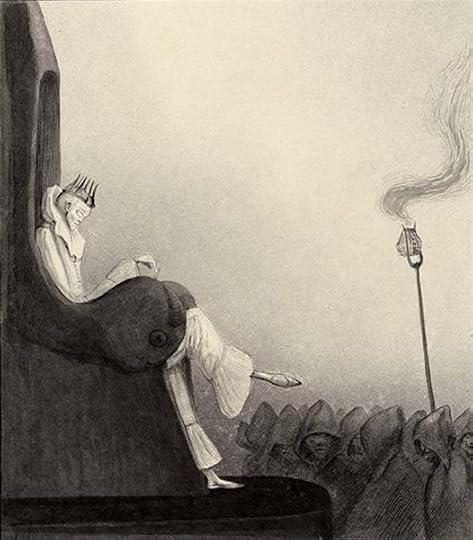
Alfred Kubin, L'ultimo re, 1902.
Ma di cosa parli davvero, questo romanzo, non saprei dirlo con certezza. È stata una lettura disturbante, più di Hoffmann, più di Kafka. La successione di incubi, sempre più febbrili e dai significati indecifrabili, potrebbe essere una riflessione sulle ossessioni che le storture del vivere in società provocano sulla nostra psiche, una nevrosi portata al parossismo; ma il libro potrebbe essere anche un severo monito per la direzione che stava intraprendendo nei primi del Novecento la civiltà occidentale e di cui noi, oggi, viviamo le estreme conseguenze (non dissimili, in alcune dinamiche, dalle diaboliche visioni descritte da Kubin).
Un romanzo unico nel suo genere e che di certo non lascia indifferenti, fascinoso ma al contempo per larghi tratti fortemente respingente, e che per precisa scelta del suo Autore non dà mai soluzione ai molti enigmi che si susseguono.
Dopotutto, un libro che parla della perdita di ogni certezza non può dirsi riuscito se non è in grado di trasmettere un senso di profonda inquietudine anche in chi lo legge; motivo per cui non saprei neanche dire se mi sia piaciuto oppure no, per il momento gli do quattro stelle, ma non escludo di rivedere la mia valutazione a distanza di mesi o anni, quando il testo si sarà sedimentato in me.
Oscuro ed enigmatico, L'altra parte è l’unico romanzo scritto da Alfred Kubin, celebre artista espressionista boemo, e tale genesi anomala lo ha da subito ammantato di mistero: romanzo onirico, visionario, surrealista, simbolista, delirante, non incasellabile in nessuna precisa categoria ordinaria, se non nel più vasto calderone del fantastico, nella sua accezione più ampia possibile, ovvero quella dell'irrazionale. Non a caso Roberto Calasso lo scelse come numero uno della prestigiosa Biblioteca Adelphi, facendolo assurgere a manifesto programmatico della collana, la prima che seppe portare il fantastico letterario di alto livello, con titoli unici per concezione e ambizione artistica, nel paludato panorama del mercato editoriale italiano.
La trama è presto detta: un artista di Monaco riceve un bel giorno l'invito di un suo vecchio compagno di scuola scomparso da decenni, ora ricchissimo, che ha creato in una landa nascosta d'Oriente il Regno del Sogno. L'artista vi si trasferisce con la moglie, ma la città è ammantata da forze imperscrutabili, nulla è come sembra, e presto il caos prenderà il sopravvento sull'ordine stabilito dal demiurgo che aveva ideato quel reame.
Alfred Kubin, L'ultimo re, 1902.
Ma di cosa parli davvero, questo romanzo, non saprei dirlo con certezza. È stata una lettura disturbante, più di Hoffmann, più di Kafka. La successione di incubi, sempre più febbrili e dai significati indecifrabili, potrebbe essere una riflessione sulle ossessioni che le storture del vivere in società provocano sulla nostra psiche, una nevrosi portata al parossismo; ma il libro potrebbe essere anche un severo monito per la direzione che stava intraprendendo nei primi del Novecento la civiltà occidentale e di cui noi, oggi, viviamo le estreme conseguenze (non dissimili, in alcune dinamiche, dalle diaboliche visioni descritte da Kubin).
Un romanzo unico nel suo genere e che di certo non lascia indifferenti, fascinoso ma al contempo per larghi tratti fortemente respingente, e che per precisa scelta del suo Autore non dà mai soluzione ai molti enigmi che si susseguono.
Dopotutto, un libro che parla della perdita di ogni certezza non può dirsi riuscito se non è in grado di trasmettere un senso di profonda inquietudine anche in chi lo legge; motivo per cui non saprei neanche dire se mi sia piaciuto oppure no, per il momento gli do quattro stelle, ma non escludo di rivedere la mia valutazione a distanza di mesi o anni, quando il testo si sarà sedimentato in me.

January 28, 2019
Whoa, that is some ending. Up until the phantasmagoric finale the tone of Kubin's prose (albeit translated) felt a bit flat to me, considering he was describing something called the Dream Realm. But this type of telling actually enhances the doomed atmosphere that characterizes the latter part of the book, allowing its horrific scenes to stand out in stark terms. As others have noted this can be read in a myriad of ways, and seems to rise above the milieu of its time, despite what could be deemed its obvious fin de siècle concerns.

March 18, 2026
تبدأ رواية "الضفة الأخرى" الرواية الوحيدة للكاتب النمساوي "ألفريد كوبين" بوعد للانتقال إلى مملكة الأحلام، وعد يبدو كصفقة مع الشيطان، ونحن نعلم بالطبع أن الراوي سيوافق على العرض، وسينتقل إلى تلك المملكة، فليس السبب الوحيد هو الإغراءات المادية التي كانت مغرية فعلاً، ولكن لأنه رسام، ود أن يُزيد حصيلته التعبيرية، أو على الأقل ما يراه هناك سيكون مُحفزاً لرسم العديد من اللوحات، فالمندوب الذي حمل العرض وعد بأشياء مختلفة في هذه المملكة، وكم كان صادقاً في وعوده، فوافق الراوي على الذهاب برفقة زوجته إلى تلك المملكة رغم مشقة الرحلة، ولكنه تطلع إلى ما سيراه هناك، وخصوصاً أن صاحب الدعوة هو أحد أصدقائه القدامى "باتيرا" الذي أكد المندوب أنه ورث أموالاً طائلة، لا تُحصى ولا يُمكن عدها، وذلك ما جعل تلك المملكة ملكه، وقام ببنائها باستخدام أمواله الطائلة التي برر المندوب حصوله عليها، في قصة وكأنها حلم، ولكن نتيجتها ملموسة، فتلك المملكة موجودة بالفعل.
ومن اللحظة الأولى التي يطأ فيها الراوي مملكة الأحلام، تأخذه العديد من المفاجآت غير السارة، فتلك الوعود برؤية أشياء مختلفة، حسناً هي أشياء مختلفة فعلاً، ووجد العكس تماماً مما تصور، حاول المقاومة في البداية، لكنه ظل معلقاً برؤية صاحبه، ربما يكون الحل لكل ذلك العبث معه، ولكن مجرد رؤيته يحمل العديد من الإجراءات المُرهقة، فتلك المملكة غارقة في البيروقراطية، أحياناً تطلب بعض الأوراق، ثم لا يكون لها أي أهمية، والعكس، وتفاصيل مرهقة حتى يكل المرء من الغرض الذي يُريده، حتى الخروج من المملكة أشبه بسراب، فتصبح عالقاً في هذه المملكة، الغارقة في الفساد والظلم، فأين المفر؟
بالطبع، هذه الرواية بمثابة رمزية قد تكون دينية في أغلب الأوقات، وسياسية أحياناً، الأحداث مُربكة فعلاً وكأنك تحلم، وكلما تظن أن الجنون قد انتهى، تكتشف أننا ما زلنا نكمل في هذا العبث، والجنون المغلف لكل شيء، مشاهد كابوسية ممتدة بلا توقف، أحداث لا تعلم أهي حقيقية أم خيال؟ ولكن كيف يمتد الخيال إلى جميع سكان المملكة؟ كيف يؤثر ذلك الخيال على سكان المملكة وتجد نتائجه ملموسة فعلاً، فيختلط الواقع بالخيال، بلا توقف حتى النهاية فتجد مشاهد سقوط المملكة، وهو أمر متوقع بالطبع، سلسلة طويلة من الجنون والعبث، طويلة إلى درجة أنك تتساءل كيف سينتهي كل ذلك؟ والأهم متى سينتهي؟ شعرت أن تلك الفصول امتدت أطول مما ينبغي بكثير.
ختاماً… رواية ذات أجواء ديستوبية مجنونة، تبدأ بوعد لجنة موعودة ما، ثم نكتشف أننا على موعد مع الجحيم، طالت أحداثها أكثر من اللازم، وربما تكون رمزياتها معقدة على مستويات متعددة، ولكنها تظل تجربة ممتعة، وتضيف إلى لقارئ، وخصوصاً عندما تعلم عن الكتاب الذين تأثروا بهذه الرواية في أعمال معروفة ولها وزن، وترجمتها جيدة جداً، ناهيك عن بعض الأخطاء الإملائية الملحوظة بشكل كبير، وجودة اللوحات المرفقة بالرواية لم تكن عظيمة مقارنة بطبعات أخرى تصفحتها كالإنجليزية والألمانية.
February 19, 2023
uykusuz geçen bir gece için ideal.

May 12, 2023
https://kansasbooks.blogspot.com/2023...
“Quizás la vida es justo eso: sueño y miedo.”
Esta cita no pertenece a la novela que me ocupa sino a los Diarios de Alfred Kubin y entiendo que es el resumen perfecto, no solo en lo que se refiere a esta novela, la única que escribió Kubin, sino a todo lo que encierra su obra como dibujante e ilustrador. La obra de Kubin ya la conocía y siempre me había llamado la atención la oscuridad que envolvía sus dibujos, esas figuras siniestras que parecen metamorfosearse en un ambiente de destrucción, de pandemias y desastres abismales, de violencia, de muerte y hay un mucho de figuras solitarias escapando de la manipulación de las masas o de algo monstruoso que los quiere devorar. Así que cuando me entero que Alfred Kubin había escrito una novela, "Die Andere Seite" (La otra parte, The Other Side) no lo dudé: tenía curiosidad por ver si esta novela tenía que ver con sus dibujos e ilustraciones.
"Pero cuando intenté hacer un dibujo, no me fue posible conseguirlo. Ese fenómeno nuevo me asustó, porque me sentía inspirado y con muchas ganas de trabajar. Tan solo por hacer algo y encontar así cierto alivio, me puse a escribir una historia extravagante. Desde entonces las ideas fluyeron a mi mente... de manera que en apenas doce semanas escribí la novela La Otra Parte." (Autobiografía)
Alfred Kubin cuenta en su Autobiografía (una especie de relato largo en la que comprime su vida y sus ideas) que escribió "La Otra Parte" en un momento en que tuvo un bloqueo mental que le impedía dibujar nada aunque realmente se sentía inspirado y con ganas. En un intento por canalizar su inspiración decidió escribir y de ahí surgió esta novela que escribió en doce semanas, su única novela. La novela lleva como subtitulo que es una novela fantástica, lo que puede llevar a engaño porque aunque empieza como una novela de aventuras, envuelta en misterio y con ese toque fantástico, también es cierto que a medida que va avanzando se va convirtiendo en una especie de hydra con varias cabezas que van devorando lo que encuentra a su paso, metamorfoseándose y pareciéndose poco a poco a esas ilustraciones de mundos perturbados e inquietantes de sus dibujos.
"Los mejores entre ellos poseían una sensibilidad sumamente fina y, casi diríamos, exagerada. Una serie de ideas fijas, aunque no del todo obsesivas, como la manía de coleccionar y de leer, el demonio del juego, cierta hiperreligiosidad y otras de las mil formas que suele revestir la neurastenia refinada, parecían haber sido creadas exprofeso para el Reino de los sueños."
"La Otra Parte" comienza cuando el protagonista de esta novela, también dibujante como Kubin, es invitado para trasladarse a vivir a una especie de Shangri-La, un reino secreto más allá de las montañas de Asia Central; un antiguo compañero de estudios, Patera, construyó este reino en un intento por dar forma a una utopía con habitantes seleccionados y de esta forma crear una especie de sociedad modelo, alejada de la presión de la modernidad y dando vida a un nuevo concepto de vida. Este país al que llaman Traumland, El reino de los sueños, aislado del resto del mundo, parece a priori para el protagonista un lugar ideal para buscar nueva inspiración para su trabajo y para que su mujer se recupere de una enfermedad, así que con algo de dinero en efectivo y la oferta de una nueva aventura, el extraño convence al narrador de desarraigar su vida y seguir la invitación de Patera para mudarse al reino de los sueños.
“El Reino de los Sueños se halla separado del mundo exterior por un muro de circunvalación y está protegido contra cualquier ataque por sólidos baluartes. Hay una sola puerta, que sirve de entrada y salida al mismo tiempo y permite un estricto control sobre el movimiento de personas y mercancias. En el Reino de los sueños, refugio para los descontentos con la cultura moderna, se ha previsto todo lo necesario para satisfacer cualquier tipo de necesidades corporales (…) Eso sí, a fin de conservar al máximo la pureza de nuestro modo de vida, es indispensable mantener aquel estricto aislamiento del mundo exterior. De hecho hasta la fecha se ha conseguido mantener alejados del país a quienes no convenían.”
El dibujante y su esposa emprenden el viaje y pronto se encuentran viviendo en Perla, la capital del Reino de los sueños, una ciudad totalmente antimoderna donde no se permite traer nada nuevo, ni siquiera la ropa y a medida que el dibujante comienza su vida allí, va percibiendo la extrañeza del lugar, algunos habitantes tienen "percepciones sensoriales anormalmente agudas", que les permiten experimentar relaciones en el mundo exterior que no existen para la persona normales, pero hay sobre todo una atmósfera de peligro soterrado que va acechando al protagonista aunque es totalmente invisible a la vista.
"Cuando ya había andado un buen trecho bajo aquel pasadizo abovedado, me invadió, casi de golpe, una sensación de terror totalmente desconocida. Partiendo de la nuca, recorrió toda la columna vertebral mientras me iba quedando sin pulso ni respiración.
- Nunca volveré a salir de aquí."
En esta primera mitad, La Otra Parte se asemeja a una novela de aventuras y misterio con muchos toques kafkianos en donde reconocemos una cierta mala leche en Alfed Kubin cuando se refiere a ciertas cuestiones, que reconocemos cómo más actuales que nunca, un cierto humor negro sazonado de ironía, convierten ciertos pasajes en auténticas delicias para el lector de ahora:
"Los niños en general no eran bien vistos; se decía que no compensaban en modo alguno todas las incomodidades que ocasionaban. La opinión general sostenía que costaban dinero, muchas veces hasta alcanzar la edad adulta, y que en muy raras ocasiones, cuando no de mala gana, estaban dispuestos a devolver lo que habían recibido."
(...)
"Para obtener una solicitud de audiencia necesita usted, además de sus partidas de nacimiento, bautismo y matrimonio, el certificado de escolaridad de su padre y el de vacunación de su madre. En el corredor de la izquierda, tendrá que efectuar su declaración de bienes, grado de instrucción y condecoraciones obtenidas. Un certificado de buena conducta de su suegro también sería deseable."
Sin embargo, aunque parezca que hay poca trama en la novela y comience como una historia de aventuras, a partir de la segunda mitad la novela se va convirtiendo en una especie de distopía onírica muy extraña en la cual el dibujante va cayendo en una especie de psicosis y aquí es donde Alfred Kubin está en su salsa. Esos dibujos e ilustraciones que le definían los convierte en un texto lleno de recovecos, de mundos infernales, de habitantes que viven en un perpetuo estado de ensueño, asemejándose cada vez más a zombies, pero realmente está vertiendo en el texto ese mundo onírico que es de donde Kubin sacaba todas sus ideas, tal como expresaba en su autobiografía: "Los sueños nocturnos igual que los llamados sueños diurnos o sueños despiertos eran para mí desde hacía tiempo una mina inagotable en la que los tesoros artísticos esperan al verdadero minero, que yo quería ser. Así, en épocas anteriores, aunque sin especial dedicación, conseguí arrancar buenas ideas de los sueños, como más de uno llegó a reconocer. […] Los jirones de recuerdos, seguramente no es más que eso, que suelen permanecer de los sueños, solo le resultarán ilógicos a un espiritú superficial; su grandiosa fuerza y la belleza de su imperio se le escapan."
" ¿Estaría dormido? ¿Estaría despierto? ¿No estaría acaso muerto?"
"La Otra Parte" podría verse con varias capas de lectura ya que se trata de una sátira en toda regla: desde una especie de satirización del imperio austro-húngaro con su emperador como figura paterna y autoritaria (no nos olvidemos que el creador del Reino de los sueños se llama Patera), pasando por una crítica a las utopías que estaban tan de moda a principios de siglo. Toda la novela está impregnada de una atmósfera claustrofóbica y casi irracional de personajes que viven bajo una especie de hechizo del que no pueden despertar. Hay una amenaza latente que anticipa una fatalidad siempre presente "Avanzaba a lo largo de los conocidos edificios con ese paso silencioso, vacilante e inseguro que uno termina por adoptar en Perla, esperando a cada momento una desagradable sorpresa." y Kubin lo expresa a través de muchos momentos concretos, que visualmente se podrían asemejar a visiones post-apocalípticas que quizás hubiera vivido en sus sueños. Y aunque en su breve autobiografía no lo refleje, esta novela advierte sobre el peligro de la psicosis que arrastra a la masa en determinados momentos, una masa violenta y hechizada controlada ¿por quién??, pues para Kubin está claro que hay una fina linea en la que el ser humano llegado un punto deja de ser consciente de sí mismo, y se deja arrastrar. La otra parte es una novela que se publicó en 1908, y ya anticipa acontecimientos que ocurrieron poco después como por ejemplo la sinrazón de los nacionalismos y la Primera Guerra Mundial a la vuelta de la esquina. Una novela que ha resultado reveladora también si la situamos en el conjunto de su obra como dibujante e ilustrador.
"-¿Que diría usted si, abusando de su confianza, le rogara que se soltase la cabellera?
-¿Hoy, el día del entierro de su esposa?
(Una falsa estocada)
-Además de la muerte, también existe la vida..."
“Quizás la vida es justo eso: sueño y miedo.”
Esta cita no pertenece a la novela que me ocupa sino a los Diarios de Alfred Kubin y entiendo que es el resumen perfecto, no solo en lo que se refiere a esta novela, la única que escribió Kubin, sino a todo lo que encierra su obra como dibujante e ilustrador. La obra de Kubin ya la conocía y siempre me había llamado la atención la oscuridad que envolvía sus dibujos, esas figuras siniestras que parecen metamorfosearse en un ambiente de destrucción, de pandemias y desastres abismales, de violencia, de muerte y hay un mucho de figuras solitarias escapando de la manipulación de las masas o de algo monstruoso que los quiere devorar. Así que cuando me entero que Alfred Kubin había escrito una novela, "Die Andere Seite" (La otra parte, The Other Side) no lo dudé: tenía curiosidad por ver si esta novela tenía que ver con sus dibujos e ilustraciones.
"Pero cuando intenté hacer un dibujo, no me fue posible conseguirlo. Ese fenómeno nuevo me asustó, porque me sentía inspirado y con muchas ganas de trabajar. Tan solo por hacer algo y encontar así cierto alivio, me puse a escribir una historia extravagante. Desde entonces las ideas fluyeron a mi mente... de manera que en apenas doce semanas escribí la novela La Otra Parte." (Autobiografía)
Alfred Kubin cuenta en su Autobiografía (una especie de relato largo en la que comprime su vida y sus ideas) que escribió "La Otra Parte" en un momento en que tuvo un bloqueo mental que le impedía dibujar nada aunque realmente se sentía inspirado y con ganas. En un intento por canalizar su inspiración decidió escribir y de ahí surgió esta novela que escribió en doce semanas, su única novela. La novela lleva como subtitulo que es una novela fantástica, lo que puede llevar a engaño porque aunque empieza como una novela de aventuras, envuelta en misterio y con ese toque fantástico, también es cierto que a medida que va avanzando se va convirtiendo en una especie de hydra con varias cabezas que van devorando lo que encuentra a su paso, metamorfoseándose y pareciéndose poco a poco a esas ilustraciones de mundos perturbados e inquietantes de sus dibujos.
"Los mejores entre ellos poseían una sensibilidad sumamente fina y, casi diríamos, exagerada. Una serie de ideas fijas, aunque no del todo obsesivas, como la manía de coleccionar y de leer, el demonio del juego, cierta hiperreligiosidad y otras de las mil formas que suele revestir la neurastenia refinada, parecían haber sido creadas exprofeso para el Reino de los sueños."
"La Otra Parte" comienza cuando el protagonista de esta novela, también dibujante como Kubin, es invitado para trasladarse a vivir a una especie de Shangri-La, un reino secreto más allá de las montañas de Asia Central; un antiguo compañero de estudios, Patera, construyó este reino en un intento por dar forma a una utopía con habitantes seleccionados y de esta forma crear una especie de sociedad modelo, alejada de la presión de la modernidad y dando vida a un nuevo concepto de vida. Este país al que llaman Traumland, El reino de los sueños, aislado del resto del mundo, parece a priori para el protagonista un lugar ideal para buscar nueva inspiración para su trabajo y para que su mujer se recupere de una enfermedad, así que con algo de dinero en efectivo y la oferta de una nueva aventura, el extraño convence al narrador de desarraigar su vida y seguir la invitación de Patera para mudarse al reino de los sueños.
“El Reino de los Sueños se halla separado del mundo exterior por un muro de circunvalación y está protegido contra cualquier ataque por sólidos baluartes. Hay una sola puerta, que sirve de entrada y salida al mismo tiempo y permite un estricto control sobre el movimiento de personas y mercancias. En el Reino de los sueños, refugio para los descontentos con la cultura moderna, se ha previsto todo lo necesario para satisfacer cualquier tipo de necesidades corporales (…) Eso sí, a fin de conservar al máximo la pureza de nuestro modo de vida, es indispensable mantener aquel estricto aislamiento del mundo exterior. De hecho hasta la fecha se ha conseguido mantener alejados del país a quienes no convenían.”
El dibujante y su esposa emprenden el viaje y pronto se encuentran viviendo en Perla, la capital del Reino de los sueños, una ciudad totalmente antimoderna donde no se permite traer nada nuevo, ni siquiera la ropa y a medida que el dibujante comienza su vida allí, va percibiendo la extrañeza del lugar, algunos habitantes tienen "percepciones sensoriales anormalmente agudas", que les permiten experimentar relaciones en el mundo exterior que no existen para la persona normales, pero hay sobre todo una atmósfera de peligro soterrado que va acechando al protagonista aunque es totalmente invisible a la vista.
"Cuando ya había andado un buen trecho bajo aquel pasadizo abovedado, me invadió, casi de golpe, una sensación de terror totalmente desconocida. Partiendo de la nuca, recorrió toda la columna vertebral mientras me iba quedando sin pulso ni respiración.
- Nunca volveré a salir de aquí."
En esta primera mitad, La Otra Parte se asemeja a una novela de aventuras y misterio con muchos toques kafkianos en donde reconocemos una cierta mala leche en Alfed Kubin cuando se refiere a ciertas cuestiones, que reconocemos cómo más actuales que nunca, un cierto humor negro sazonado de ironía, convierten ciertos pasajes en auténticas delicias para el lector de ahora:
"Los niños en general no eran bien vistos; se decía que no compensaban en modo alguno todas las incomodidades que ocasionaban. La opinión general sostenía que costaban dinero, muchas veces hasta alcanzar la edad adulta, y que en muy raras ocasiones, cuando no de mala gana, estaban dispuestos a devolver lo que habían recibido."
(...)
"Para obtener una solicitud de audiencia necesita usted, además de sus partidas de nacimiento, bautismo y matrimonio, el certificado de escolaridad de su padre y el de vacunación de su madre. En el corredor de la izquierda, tendrá que efectuar su declaración de bienes, grado de instrucción y condecoraciones obtenidas. Un certificado de buena conducta de su suegro también sería deseable."
Sin embargo, aunque parezca que hay poca trama en la novela y comience como una historia de aventuras, a partir de la segunda mitad la novela se va convirtiendo en una especie de distopía onírica muy extraña en la cual el dibujante va cayendo en una especie de psicosis y aquí es donde Alfred Kubin está en su salsa. Esos dibujos e ilustraciones que le definían los convierte en un texto lleno de recovecos, de mundos infernales, de habitantes que viven en un perpetuo estado de ensueño, asemejándose cada vez más a zombies, pero realmente está vertiendo en el texto ese mundo onírico que es de donde Kubin sacaba todas sus ideas, tal como expresaba en su autobiografía: "Los sueños nocturnos igual que los llamados sueños diurnos o sueños despiertos eran para mí desde hacía tiempo una mina inagotable en la que los tesoros artísticos esperan al verdadero minero, que yo quería ser. Así, en épocas anteriores, aunque sin especial dedicación, conseguí arrancar buenas ideas de los sueños, como más de uno llegó a reconocer. […] Los jirones de recuerdos, seguramente no es más que eso, que suelen permanecer de los sueños, solo le resultarán ilógicos a un espiritú superficial; su grandiosa fuerza y la belleza de su imperio se le escapan."
" ¿Estaría dormido? ¿Estaría despierto? ¿No estaría acaso muerto?"
"La Otra Parte" podría verse con varias capas de lectura ya que se trata de una sátira en toda regla: desde una especie de satirización del imperio austro-húngaro con su emperador como figura paterna y autoritaria (no nos olvidemos que el creador del Reino de los sueños se llama Patera), pasando por una crítica a las utopías que estaban tan de moda a principios de siglo. Toda la novela está impregnada de una atmósfera claustrofóbica y casi irracional de personajes que viven bajo una especie de hechizo del que no pueden despertar. Hay una amenaza latente que anticipa una fatalidad siempre presente "Avanzaba a lo largo de los conocidos edificios con ese paso silencioso, vacilante e inseguro que uno termina por adoptar en Perla, esperando a cada momento una desagradable sorpresa." y Kubin lo expresa a través de muchos momentos concretos, que visualmente se podrían asemejar a visiones post-apocalípticas que quizás hubiera vivido en sus sueños. Y aunque en su breve autobiografía no lo refleje, esta novela advierte sobre el peligro de la psicosis que arrastra a la masa en determinados momentos, una masa violenta y hechizada controlada ¿por quién??, pues para Kubin está claro que hay una fina linea en la que el ser humano llegado un punto deja de ser consciente de sí mismo, y se deja arrastrar. La otra parte es una novela que se publicó en 1908, y ya anticipa acontecimientos que ocurrieron poco después como por ejemplo la sinrazón de los nacionalismos y la Primera Guerra Mundial a la vuelta de la esquina. Una novela que ha resultado reveladora también si la situamos en el conjunto de su obra como dibujante e ilustrador.
"-¿Que diría usted si, abusando de su confianza, le rogara que se soltase la cabellera?
-¿Hoy, el día del entierro de su esposa?
(Una falsa estocada)
-Además de la muerte, también existe la vida..."

November 8, 2022
Son derece ilginç, groteskin sınırlarını zorlayan bir distopya. Hatta kitabı okumak başta çok kolay ama sonlara doğru midenizi havalandıracak tasvirlerle giderek zorlaşıyor. Hikaye anlatıcının bir ulak tarafından arkadaşının kurduğu Rüyalar Ülkesi’ne bolca para teklif edilerek davet edilmesiyle başlıyor. Karısıyla Rüyalar Ülkesi’ne yola çıkan anlatıcı başkent İnci’ye vardığında hiç de hayal ettiği gibi bir yerde olmadığını anlar. Arkadaşı Patera nerede bir hırsız, nerede bir haydut, nerede bir fahişe varsa onu ülkeye toplamıştır. Akıl sağlığını koruyabilmek neredeyse mümkün değildir. Bu noktadan sonra işler çığrından çıkacak, akla hayale gelmeyecek olaylar yaşanacaktır.
Pek çok distopik öykü okuduğum halde bu en zorlarından biriydi. Belki Margaret Atwood’un Year of the Flood’ı buna yaklaşabilir.
Pek çok distopik öykü okuduğum halde bu en zorlarından biriydi. Belki Margaret Atwood’un Year of the Flood’ı buna yaklaşabilir.

October 10, 2025
In the late 1800s and early 1900s, a lot of books like this seem to have become fashionable, stories about an eerie place somewhere else in the world (or on another planet or dimension altogether) where a madman has attempted to create a new kind of Utopia. This one starts like that, but quickly changes direction, after a man (the protagonist) is visited and told that an old school friend (Patera) has created a place called the Dream Realm and has invited him to come and see it. The language used (at least in this translation) makes it seem as though this place -- the dream realm -- will turn out to be some kind of other worldly place, a magical dimension inaccessible to others, perhaps reached only by some sort of magical vortex or hypnotism. But no, it's actually a real place located in central Asia. And so off they go, the narrator and his wife, across Europe and Asia to find this strange place. I quite enjoyed this part of the book, like Phileas Fogg or something, with trains and steam ships, man and wife crossing the Caspian and meeting exotic natives etc.
Once they arrive, however, heading for the capital Pearl, instead of finding some majestic land of curious mystery, what they actually encounter is a very banal environment with European style buildings, unpleasant people, and standard living arrangements. There's a population of around 65 thousand and, somewhat inexplicably, the narrator gets a job as a journalist essentially reporting on the Dream Realm and making life here permanent. This felt odd to me as I was given the impression they were just visiting but they basically make a new life here, in a place that is ostensibly strange but still a letdown. Meanwhile, the mysterious Patera is never to be seen, a symbol of uncertainty and myth, and you get the impression that the book will give us a big reveal at some point. But again, that doesn't really happen. As things go along, the Dream Realm begins to capitulate, turn into chaos, and the crumbling downfall is recorded by our narrator.
I'm not entirely sure what Fubin was trying to say here. At first I thought it was just your standard mystery land narrative popular at the time; then I thought it was a direct satire on those very types of books. But it never really goes anywhere and you're left wondering what it was all for. Having done the bare minimum amount of research, it turns out that Fubin (an illustrator) was actually commissioned to create artwork for Meyrink's The Golem but this was delayed. So instead he decided to write a story that could utilise these drawings and simply build a story around them (my copy did include these rather grotesque pencil images). But I just never felt that the story quite matched up to them.
Anyway, of this genre, I didn't think it was that interesting. Worth a look certainly but nothing that amazing. I liked some aspects of the book but mostly found it rather prosaic. I was hoping for some kind of twist ending, a big reveal, but all I got was Fubin reminding us that everything in life whether magical or mundane is ultimately banal:
Once they arrive, however, heading for the capital Pearl, instead of finding some majestic land of curious mystery, what they actually encounter is a very banal environment with European style buildings, unpleasant people, and standard living arrangements. There's a population of around 65 thousand and, somewhat inexplicably, the narrator gets a job as a journalist essentially reporting on the Dream Realm and making life here permanent. This felt odd to me as I was given the impression they were just visiting but they basically make a new life here, in a place that is ostensibly strange but still a letdown. Meanwhile, the mysterious Patera is never to be seen, a symbol of uncertainty and myth, and you get the impression that the book will give us a big reveal at some point. But again, that doesn't really happen. As things go along, the Dream Realm begins to capitulate, turn into chaos, and the crumbling downfall is recorded by our narrator.
I'm not entirely sure what Fubin was trying to say here. At first I thought it was just your standard mystery land narrative popular at the time; then I thought it was a direct satire on those very types of books. But it never really goes anywhere and you're left wondering what it was all for. Having done the bare minimum amount of research, it turns out that Fubin (an illustrator) was actually commissioned to create artwork for Meyrink's The Golem but this was delayed. So instead he decided to write a story that could utilise these drawings and simply build a story around them (my copy did include these rather grotesque pencil images). But I just never felt that the story quite matched up to them.
Anyway, of this genre, I didn't think it was that interesting. Worth a look certainly but nothing that amazing. I liked some aspects of the book but mostly found it rather prosaic. I was hoping for some kind of twist ending, a big reveal, but all I got was Fubin reminding us that everything in life whether magical or mundane is ultimately banal:
True hell lies in the fact that this discordant clash continues within us. Even love has its focus between faeces and urine.

December 22, 2019
سوی دیگر روایتی است از یک نا نویسنده که دست به قلم برده است. آلفرد کوبین طراح اتریشی به روایت شهری به نام سرزمین رویا پرداخته است. این سرزمین در نظر ما ویژگی های همان اتوپیا را تداعی میکند و به نظر من کوبین به استیضاح تفکر آرمانشهر پرداخته است؛ مکان دقیق این شهر مشخص نیست، فقط جایی در شرق است، اربابی مدبر دارد که بر تمام شهر مسلط است، شهر دیوار محافظی غیرقابل نفوذ و تنها یک دروازه دارد که عبور و مرورها را به شدت کنترل می کند، مردم شهر از پیشرفت کردن و در معرض دنیای بیرون قرار گرفتن فراری اند. این سرزمین رویایی زمین تسخیر شده ای است که پیش از آن بومیان چشم آبی و آرام در آنجا زندگی میکردند و پس از اینکه پاترا یا ارباب بزرگ اراضی آن هارا خرید به حاشیۀ شهر رانده شدند. نویسنده از ذوق طراح بودنش به خوبی استفاده کرده و کوشیده تصویرسازی زنده ای را پیش رویمان قرار دهد. این تصویر سازی جزییات زیادی دارد مثلا توصیف دقیق فضاهای عمومی شهر مثل آرشیو و قهوه خانه و برج ساعت یا توصیف نحوۀ لباس پوشیدن شهروندان یا فعالیت هایشان و حال و هوای شهر. هنگام خواندن کتاب وقتی از نیمۀ کتاب رد شدم و این حجم از توصیف جزییات با اتفاق های رعب انگیزی مانند فرا رسیدن رستاخیز شهر همراه شد مغزم دیگر دستور به ادامۀ خواندن کتاب نمی داد. شاید چون آن تصاویر انقدر زنده بودند که میترسیدم زنده شوند. کوبین روش ثابتی را برای توصیف آن چیزی که در سرزمین رویاها می گذشت انتخاب می کرد و دست ذهنش برای من دیگر رو شده بود، خواندن توصیفات انتهایی اش دیگر آن لذت و تاثیرگذاری اول را برایم نداشت. در آخر بهتر است بگویم این کتاب که ترجمۀ خوبی از علی اصغر حداد دارد شبیه هیچ کتابی نیست؛ اگر میخواهید هنگام خواندنش دیوانه نشوید بهتر است اعصاب پولادین داشته باشید.

November 20, 2018
عجیب این بود که هیچ کدام از دوستان گودریزی ام این کتاب را نخواندهبود. داستان یک طراح در سرزمین عجیب رویا.
"پاترا همه جا بود، او را در چشمهای دوست و دشمن میدیدن، در حیوانات ، گیاهان و سنگها. نیروی تخلیش در بطن هر چیزی که وجود داشت میتپید:ضربان قلب سرزمین رویا. ناگهان وحشتزده دیدم که "من" من از بی شمار "منها" تشکیل شده است، "منهایی" که هر لحظه یکی پشت دیگری کمین کرده بود."
"پاترا همه جا بود، او را در چشمهای دوست و دشمن میدیدن، در حیوانات ، گیاهان و سنگها. نیروی تخلیش در بطن هر چیزی که وجود داشت میتپید:ضربان قلب سرزمین رویا. ناگهان وحشتزده دیدم که "من" من از بی شمار "منها" تشکیل شده است، "منهایی" که هر لحظه یکی پشت دیگری کمین کرده بود."
Displaying 1 - 30 of 311 reviews