

What do you think?
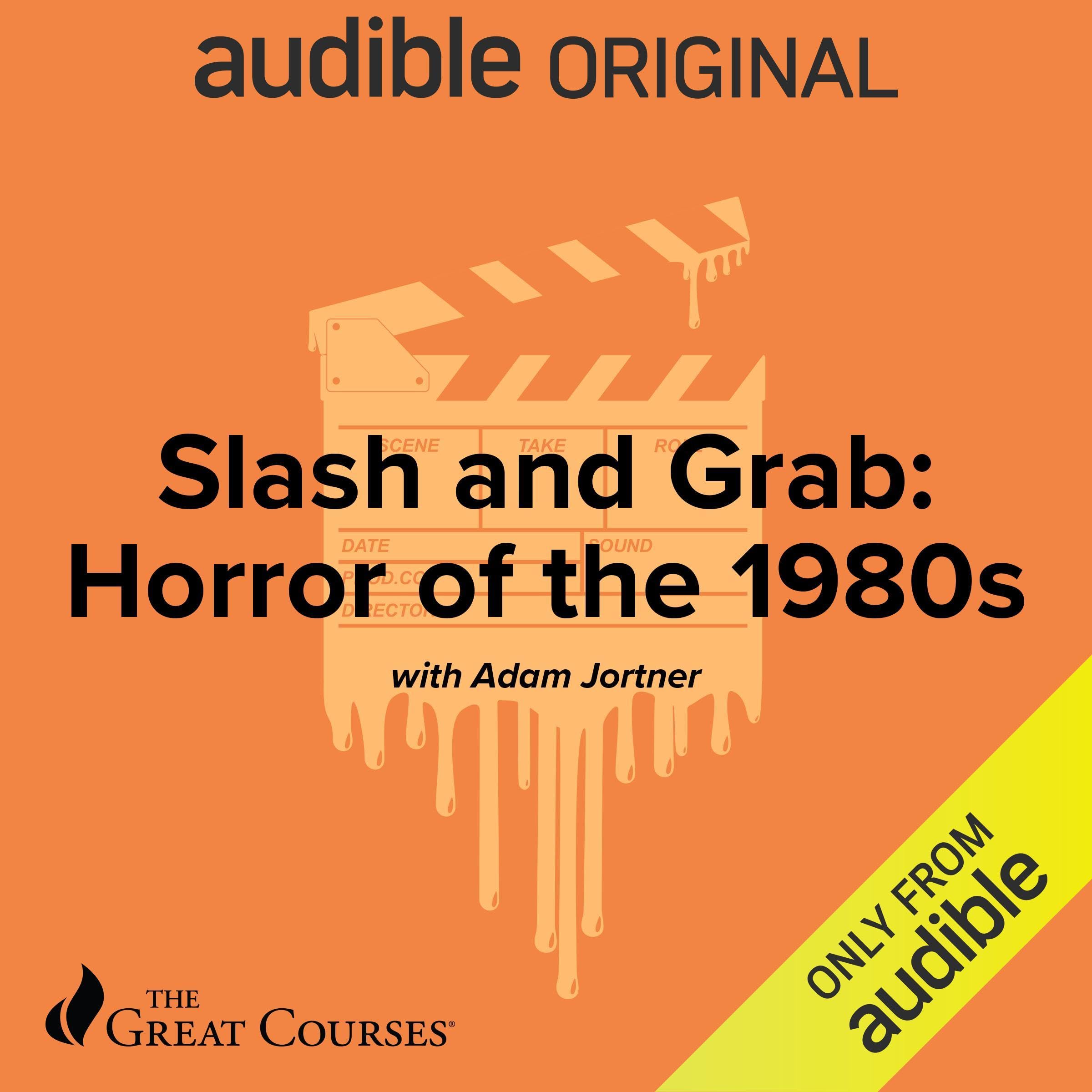
Slash and Grab: Horror of the 1980s
We can learn a lot about American history and culture by looking at the horror films of the 1980s. The horror boom that began in 1978 coincided with an era of global nuclear fears, urban decay, and recession as well as the collapse of the Hollywood studio system and the decline of censorship laws that had held sway for nearly 50 years. This volatile mix of circumstances gave rise to the gory, violent, over-the-top—and very successful—genre of horror that we now know as the “slasher” or “splatter” film.
In the 10 lectures of Slash and Horror of the 1980s, you’ll follow Professor Adam Jortner as he examines how these films were created, why they were made, and what kind of reaction they sparked in American audiences. You’ll explore movies that have become classics of the genre, including A Nightmare on Elm Street, Friday the 13th, and Halloween, as well as the lesser-known productions such as The House on Sorority Row and The Stuff. Along the way, you’ll consider how culture shaped the films, as well as how the films shaped the culture in everything from their subtle subversion of gender expectations to the role they played in stoking the era’s so-called “Satanic panic.”
While the slasher film may have been at its most popular in the 1980s, that doesn’t mean the genre has been laid to rest. Changes in American culture, technology, and filmmaking have transformed horror movies to reflect the anxieties of a different generation. However, much like the killers that made the splatter movies of the 1980s so distinctive, the power of horror to reveal our deepest fears never truly dies.
In the 10 lectures of Slash and Horror of the 1980s, you’ll follow Professor Adam Jortner as he examines how these films were created, why they were made, and what kind of reaction they sparked in American audiences. You’ll explore movies that have become classics of the genre, including A Nightmare on Elm Street, Friday the 13th, and Halloween, as well as the lesser-known productions such as The House on Sorority Row and The Stuff. Along the way, you’ll consider how culture shaped the films, as well as how the films shaped the culture in everything from their subtle subversion of gender expectations to the role they played in stoking the era’s so-called “Satanic panic.”
While the slasher film may have been at its most popular in the 1980s, that doesn’t mean the genre has been laid to rest. Changes in American culture, technology, and filmmaking have transformed horror movies to reflect the anxieties of a different generation. However, much like the killers that made the splatter movies of the 1980s so distinctive, the power of horror to reveal our deepest fears never truly dies.
Audible Audio
Published October 2, 2025
About the author
Adam Jortner
14 books17 followersAdam Jortner studies the transformation of religious and political life in the early United States. His book, The Gods of Prophetstown: The Battle of Tippecanoe and the Holy War for the American Frontier, examines the rise of the Shawnee Prophet Tenskwatawa and his new religion on the Indiana frontier in the 1800s. Jortner argues that Tenskwatawa’s religious vision created a new definition of community and power that ultimately coalesced into a viable political alternative for Native Americans in the Old Northwest. The book follows the creation of this movement and its fraught relationship with the new United States and Indiana’s ambitious territorial governor, William Henry Harrison. The relationship between the two men ultimately shaped the War of 1812 and the fate of the American frontier. Gods won the 2013 James Broussard Best First Book Prize from the Society of Historians of the Early American Republic (SHEAR).
His current research interests include new religions in the early republic, deism, witchcraft, the decline of magic, and Native American prophets; he currently teaches classes on American religion, politics, and the Age of Jefferson. He is working on a manuscript on the politics of miracles in the early republic.
Dr. Jortner has received fellowships from the Charlotte W. Newcombe Foundation, the McNeil Center for Early American Studies at the University of Pennsylvania, the Massachusetts Historical Society, the Kentucky Historical Society, and the Redd Center for Western Studies.
His current research interests include new religions in the early republic, deism, witchcraft, the decline of magic, and Native American prophets; he currently teaches classes on American religion, politics, and the Age of Jefferson. He is working on a manuscript on the politics of miracles in the early republic.
Dr. Jortner has received fellowships from the Charlotte W. Newcombe Foundation, the McNeil Center for Early American Studies at the University of Pennsylvania, the Massachusetts Historical Society, the Kentucky Historical Society, and the Redd Center for Western Studies.
Ratings & Reviews
Friends & Following
Create a free account to discover what your friends think of this book!
Community Reviews
Displaying 1 - 30 of 38 reviews

January 17, 2026
If you think 1980s horror is nothing more than cheap jump scares and masked killers in the woods, Adam Jortner is here to politely—and brilliantly—correct you. Slash and Grab is a masterclass in cultural history that treats the era of spandex and synthesizers with the academic rigor it deserves, without ever losing the fun of a midnight movie marathon.
Why It Earns 5 Stars
1. Context is King Jortner doesn’t just recap plots; he explains why these films happened when they did. He masterfully connects the rise of the "Final Girl" to the shifting gender politics of the era and links the suburban dread of A Nightmare on Elm Street to the anxieties of the Reagan years. You’ll never look at Michael Myers or Jason Voorhees the same way again.
2. Infectious Enthusiasm The hallmark of a great professor is making you care about a niche subject, and Jortner succeeds entirely. His delivery is engaging, witty, and deeply respectful of the genre. He treats Wes Craven and John Carpenter with the same intellectual weight that other courses might give to Shakespeare or Hitchcock.
3. Comprehensive Scope While the "Big Three" (Halloween, Friday the 13th, and Nightmare on Elm Street) get their due, the course also shines a light on:
The impact of the Home Video Revolution and the "Video Nasties" moral panic.
The practical effects wizardry of legends like Tom Savini and Rob Bottin.
The psychological subtext of body horror and the "deadite" era.
The Verdict
Whether you are a die-hard "Gore-hound" or a film student looking for a sharp cultural analysis, Slash and Grab is an essential listen. It’s a nostalgic, insightful, and often surprising journey through a decade that defined modern horror.
Pro Tip: This is the perfect companion for a spooky-season commute or a weekend spent revisiting the classics.
Why It Earns 5 Stars
1. Context is King Jortner doesn’t just recap plots; he explains why these films happened when they did. He masterfully connects the rise of the "Final Girl" to the shifting gender politics of the era and links the suburban dread of A Nightmare on Elm Street to the anxieties of the Reagan years. You’ll never look at Michael Myers or Jason Voorhees the same way again.
2. Infectious Enthusiasm The hallmark of a great professor is making you care about a niche subject, and Jortner succeeds entirely. His delivery is engaging, witty, and deeply respectful of the genre. He treats Wes Craven and John Carpenter with the same intellectual weight that other courses might give to Shakespeare or Hitchcock.
3. Comprehensive Scope While the "Big Three" (Halloween, Friday the 13th, and Nightmare on Elm Street) get their due, the course also shines a light on:
The impact of the Home Video Revolution and the "Video Nasties" moral panic.
The practical effects wizardry of legends like Tom Savini and Rob Bottin.
The psychological subtext of body horror and the "deadite" era.
The Verdict
Whether you are a die-hard "Gore-hound" or a film student looking for a sharp cultural analysis, Slash and Grab is an essential listen. It’s a nostalgic, insightful, and often surprising journey through a decade that defined modern horror.
Pro Tip: This is the perfect companion for a spooky-season commute or a weekend spent revisiting the classics.

November 16, 2025
I was familiar with some of the movies, but not others. I enjoyed this stroll through this uniquely 80's genre. It is interesting and honestly I listened to it sequentially at once. I was surprised when he said last lecture. So, holds your attention and very interesting take on these movies and the times they sprouted from. Not particularly academic but I don't suppose anyone looking for that would see this title and mistake it for one.

July 30, 2026
This was one of my favourite entries from The Great Courses, mainly because the subject matter is so dear to me. The lecturer Jortner has a firm grasp of the campness, silliness, gratuitousness, depravity and depth of 1980s horror, with wide-spanning knowledge of both the decade itself, and the early 1990s as the genre seemed (at the time) to slow down.
At over five hours this is one of the longer free TGC entries (free with Audible Plus at least), but the time flew by for me, and I really enjoyed my time with it. The chapters on Satanic Panic, and the rise of the video store/home video were of particular interest, as I know less about American sociology of the era than I do the horror genre itself.
An easy four stars, with one star added for heavy reviewer bias.
At over five hours this is one of the longer free TGC entries (free with Audible Plus at least), but the time flew by for me, and I really enjoyed my time with it. The chapters on Satanic Panic, and the rise of the video store/home video were of particular interest, as I know less about American sociology of the era than I do the horror genre itself.
An easy four stars, with one star added for heavy reviewer bias.
October 11, 2025
A fun and well narrated Great Course for October - talks about the trends and big movies of the 80's and gets into some side things like Siskel and Ebert. Free right on Audible Plus.

December 15, 2025
Probably give this lecture series 3.5 stars.
I am more of a fan of it today because I have been watching more horror movies over the past year so I am more into learning about the history of horror films. The lecturer was amazing. He was fun to listen to. I personally enjoyed the beginning and middle more the end. This tends to be a trend with Great Courses lectures that I have listened to in the past. The beginning is the best and after that, the lectures get way into the nitty gritty. However, because this lecture series was only around 5 hours long, I avoided that lecture fatigue that has happened with me with other Great Courses lecture series in the past.
I am more of a fan of it today because I have been watching more horror movies over the past year so I am more into learning about the history of horror films. The lecturer was amazing. He was fun to listen to. I personally enjoyed the beginning and middle more the end. This tends to be a trend with Great Courses lectures that I have listened to in the past. The beginning is the best and after that, the lectures get way into the nitty gritty. However, because this lecture series was only around 5 hours long, I avoided that lecture fatigue that has happened with me with other Great Courses lecture series in the past.

December 21, 2025
I like it, as I do with most nonfiction books about horror. I love learning about the genre’s history and influence. That said, because I’ve read so much horror nonfiction, there wasn’t a ton here that felt brand new to me. It didn’t really offer behind-the-scenes insight or a fresh spin compared to similar books.
I didn’t know horror had a hand in bringing about the PG-13 rating because of Gremlins And I always appreciate when a horror nonfiction book mentions movies I haven’t seen, and need to add to my watch immediately.
Overall nothing new if you read a book about horror history especially doing 80s. This one makes it more concise.

December 9, 2025
4.5
As someone with a film degree and an autistic special interest of horror films, this was basically mandatory reading. If you’re new to the history/the genre, some chapters do a great job at condensing the maggot theories/talking points/academic discussions/etc. but if you’re well versed on this subject matter (like me) there are still new and interesting things to learn. There were a few points I disagreed with as I don’t think they hold up in today horror climate (I was surprised to see that this was published in 2025) but other than that, this was a binge worthy read.
As someone with a film degree and an autistic special interest of horror films, this was basically mandatory reading. If you’re new to the history/the genre, some chapters do a great job at condensing the maggot theories/talking points/academic discussions/etc. but if you’re well versed on this subject matter (like me) there are still new and interesting things to learn. There were a few points I disagreed with as I don’t think they hold up in today horror climate (I was surprised to see that this was published in 2025) but other than that, this was a binge worthy read.

March 24, 2026
I’m not even a fan of horror films, but this lecture series really made me want to dig into some of these classics. I came away understanding why some fans hold themselves up as diehards to the genre at large. As someone with a film degree, I also appreciated how this genre is so embedded in the wider history of film; it’s so interesting to see how these films were often reacting to cultural beats at the time or skirting around regulations to explore an untouched area of creativity. The way the lecturer added in humor and his own love for the genre was just the cherry on top.

January 15, 2026
This book covers the rise and fall of 80s slasher films. Also dives into how real world politics and religion impacted the horror genre. Adam Jortner explains so much it was mind blowing at times. This was entertaining as much as it was informative about the horror boom that started in 1979 and faded out by 1992. Any slasher film that has followed suit since then, most famously 1996s Scream, are just parodys of a genre that once existed in pop culture.
I highly recommend 👌
I highly recommend 👌

October 24, 2025
Often fascinating history of the slasher film in American history. sometimes the lecturer will make attempts at humor in his lessons and they don't always work. It could have used some time devoted to the giallo films that were being made in Italy at the time too that did sex and horror just as graphically as their American counterparts.

December 19, 2025
Some good insights make this worth it. I am leaning toward slashers are probably not good for society, but they are a a good time capsule. The standouts are worth a watch. Unfortunately, this repeats the inaccuracy that Psycho shower scene does not show the knife stabbing. True except for that in one shot where it does, don't repeat the misinformation.

January 9, 2026
An interesting look at the Slasher genre by someone who isn't necessarily a fan of the gore one typically finds in those movies. Jortner looks at the films which lead up to the Slasher book of the 80s, as well as various political and economic factors which helped create the horror boom. I found his examination of the influence of the decline of the studio system especially intriguing.

August 17, 2026
Feels like somebody who doesn’t like horror as much as they think they do wrote this book, which happens a lot when somebody takes a “scholarly” look at the genre. But this is still an interesting look into the genre, though I would say very few of it is actually about the 80s he jumps to different decades a lot, it probably should have just been called horror of the 20th Century.

August 27, 2026
I've been watching horror since I was way too young for it. I remember watching these movies, going to the video club and devouring every single slasher. Kids today will never know how awesome that was. Beware: spoilers, so if there are any movies you haven't watched that you intend to, make sure you skip that part.

October 19, 2025
This was free on Audible, and I am a horror girl, so i wanted to give it a shot.
I liked it! Really interesting to learn how horror evolved throughout the years - and loved the throwback to movie stores (I basically lived at Family Video as a child).
3.5 rounding down.
I liked it! Really interesting to learn how horror evolved throughout the years - and loved the throwback to movie stores (I basically lived at Family Video as a child).
3.5 rounding down.

October 28, 2025
I'm never going to watch any of the movies mentioned (I think I've seen a grand total of one). Having grown up in the 80s, though, it's fascinating to hear what they say about that time without having to!
November 13, 2025
A solid and engaging survey of the field of 1980s horror movies. I think like a lot of these great courses there was some repetitiveness, but overall it held my interest and I learned some new and interesting things so I can't complain too much!

December 9, 2025
Fun mini-read, a lot of information about how movies were marketed and distributed in the 60s through the 80s and how those changes led to a window of opportunity for horror and Indy movies (of various quality).
June 10, 2026
This was a super fun listen! Learned some fun new things about movies I love and different movie related trivia pieces, plus a lot about movies I hadn't heard of or seen, and I'm excited to change that.

October 28, 2025
very insightful

November 2, 2025
Fun and educational on a genre that I am middling familiar with.
D
D


November 22, 2025
As a previous Hollywood Video employee, I particularly enjoyed the chapter on video rental/stores.

November 30, 2025
A fun survey of horror films of the 1980s.

November 30, 2025
Great overview of 80’s slasher history.
December 13, 2025
It was interesting to see how slasher films grew and changed the movie industry as a whole.

December 19, 2025
Interesting and nostalgic.

December 20, 2025
I don’t know if it’s the authors voice or narration but this was torture to listen to.

January 5, 2026
A fun and insightful look back at 80s horror.

February 14, 2026
80s + Horror= some of my favorite things. This book was so much fun and a trip down memory lane.
Displaying 1 - 30 of 38 reviews