Justin Marozzi onthult in 'Abd' het menselijke drama van degenen die verstrikt raakten in de schrijnende maar vaak over het hoofd geziene geschiedenis van de slavernij in de islamitische wereld, en geeft hen een stem. Marozzi geeft een historische analyse en hedendaagse reportage en raakt daarmee grote thema's als religie, macht, ethiek en de grenzen van traditie.
Slavernij in de islamitische wereld kent een lange, complexe en omstreden geschiedenis. Vanaf de zevende eeuw, wanneer de Profeet Mohammed een aantal slaven verheft tot Metgezel, tot de nog steeds bestaande slavernij in Mali en Mauritanië; gedurende deze vijftien eeuwen heeft slavernij en slavenhandel in uiteenlopende vormen bestaan binnen islamitische samenlevingen. Afrika moest het grootste deel van de vraag naar slavenarbeid opvangen, miljoenen mensen werden te voet door de Sahara naar gevangenschap gevoerd, maar ook Europeanen, moslims, christenen en joden werden tot slaaf gemaakt. En anders dan bij de trans-Atlantische slavenhandel – waarbij de meeste slaven op een Amerikaanse plantage terechtkwamen – vervulden slaven in de islamitische wereld verschillende ze waren concubines, slaafsoldaten, piraten, paleiswachters en soms zelfs militair bevelhebbers.
'Een gedurfde, briljante en actuele geschiedenis die een van de meest verwaarloosde en ongemakkelijke onderwerpen uit de wereldgeschiedenis aan de orde stelt. […] Een ongekend belangrijk boek.' – Peter Frankopan
'Justin Marozzi heeft met Abd de diepe wortels van deze misstand op voorbeeldige wijze opgegraven.' ***** in NRC
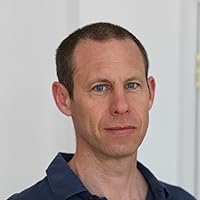
Justin is a travel writer, historian, journalist and political risk and security consultant. He has travelled extensively in the Middle East and Muslim world and in recent years has worked in conflict and post-conflict environments such as Iraq, Afghanistan and Darfur. He graduated from Cambridge with a Starred Double First in History in 1993, before studying Broadcast Journalism at Cardiff University and winning a scholarship to the University of Pennsylvania to read a Masters in International Relations. After working in the BBC World Service on ‘News Hour’ and BBC Westminster on ‘Today in Parliament’, he joined the Financial Times as a foreign correspondent in Manila, where he also wrote for The Economist. During his time in the Far East, he shared a Winnebago with Imelda Marcos, a helicopter with the Philippine president and his mistress, and a curry with Aung San Suu Kyi whilst under house arrest in Rangoon.
His first book, South from Barbary, was an account of a 1,200-mile expedition by camel along the slave routes of the Libyan Sahara, described by the desert explorer and SAS veteran Michael Asher as “the first significant journey across the Libyan interior for a generation”. His second, Tamerlane: Sword of Islam, Conqueror of the World, launched in Baghdad in 2004, was the best-selling biography of the world’s greatest Islamic conqueror and a Sunday Telegraph Book of the Year: “Outstanding… Justin Marozzi is the most brilliant of the new generation of travelwriter-historians.”
In 2006, he wrote Faces of Exploration, a collection of profiles of the world’s leading explorers. He has contributed to Meetings with Remarkable Muslims (an interview with the Afghan mujahid hero Ahmed Shah Massoud), The Seventy Greatest Journeys, and most recently The Art of War (essays on Genghis Khan, Kublai Khan and Tamerlane).
His latest book, published in October 2008, is The Man Who Invented History: Travels with Herodotus, based on extensive research in Turkey, Iraq, Egypt and Greece. Apart from a year working for a British security company in Iraq, an encounter with the Grand Mufti of Egypt and an investigation into outwardly religious girls performing oral sex in car-parks in Cairo, one of the many highlights of the Herodotean trail was a retsina-fuelled lunch with the nonagenarian war hero and writer Sir Patrick Leigh Fermor.
Justin is a regular contributor to a wide range of national and international publications, including the Financial Times, Spectator, Times, Sunday Telegraph, Guardian, Evening Standard, Standpoint and Prospect, where he writes on international affairs, the Muslim world and defence and security issues, and has broadcast for the BBC World Service and Radio Four.
Justin is a former member of the International Institute of Strategic Studies, a Fellow of the Royal Geographical Society, where he has also lectured, and an Honorary Travel Member of the Travellers Club.
It's the second book I picked up from the 2025 Baillie Gifford Prize's longlist. Justin Marozzi opens this book with a visit to Bamako, Mali, in November 2020. There, he listens to the story of Hamey, a former slave from a village near Kayes, where hereditary slavery is still observed in some rural communities. Hamey recounts how, in August 2018, he was attacked by a group of young men armed with wooden batons and leather whips. What is most disturbing is not only the violence itself, but the public reaction. Instead of intervening, bystanders reportedly cheered and filmed the assault in broad daylight. By beginning with this contemporary account, the author makes clear that slavery is not merely a historical phenomenon but a living issue in certain parts of the world.
The book then takes a broad historical approach to trace the development of slavery in the Islamic world and to explore why vestiges of it persist into the 21st century, despite formal abolition in most modern states. The author is careful to note that slavery long predated Islam and existed in nearly every ancient civilisation, from the Mediterranean world to Africa and Asia. Slavery was already deeply embedded in Arabian society before the rise of Islam in the 7th century. This context is important, as it frames Islam not as the origin of slavery, but as a religious system that emerged within an already slave-holding society.
Early in the book, the author focuses on Bilal ibn Rabah, a former slave of Ethiopian origin who became one of the closest companions of the Prophet Muhammad and is traditionally regarded as Islam’s first muezzin. Bilal was reportedly tortured and persecuted before being freed by Abu Bakr, who would later become the first caliph. His rise to prominence within the early Muslim community illustrates one of the complexities of slavery in Islamic history, namely the possibility, at least in certain cases, of social mobility and integration after emancipation. Bilal’s story is often cited as evidence that early Islamic teachings encouraged the humane treatment and manumission of slaves.
The author argues that Islamic scripture and law regulated slavery rather than abolishing it outright. The Qur’an repeatedly encourages the freeing of slaves as a virtuous act and provides legal frameworks governing their treatment. At the same time, slavery remained permissible under Islamic law. In a society where slavery was already economically and socially entrenched, immediate prohibition may have been unrealistic. However, over the centuries, successive caliphates, sultanates, and empires from the Umayyads and Abbasids to the Ottomans used these legal frameworks to justify and sustain large-scale slave systems. What may have begun as regulation within a particular historical context evolved into institutionalised practice across vast territories.
One of the more debated aspects of the book is its comparison between slavery in the Islamic world and slavery in the Americas, particularly in the 19th-century United States. The author discusses the argument that slavery under Islamic regimes sometimes allowed for manumission and social advancement, citing examples such as former slaves who rose to high office, including several Grand Viziers in the Ottoman Empire. However, he also acknowledges the limits of this comparison. Much of the historical record is derived from elite or slave-owning sources, meaning that the perspectives of enslaved people themselves are often missing. The relative “mildness” sometimes attributed to Islamic slavery must therefore be treated cautiously, especially given the existence of brutal practices such as military enslavement, concubinage, and large-scale slave trading across the Sahara and the Indian Ocean.
Ultimately, the book is well-researched and draws on both Islamic and Western scholarship. It does not shy away from uncomfortable debates about theology, law, empire, and memory. Most importantly, by beginning and ending with contemporary examples, the author reminds us that slavery has not entirely disappeared. Despite formal abolition across the Muslim world in the 19th and 20th centuries (mostly due to Western pressure), forms of hereditary servitude and exploitation persist in some regions.
Listened to it on Audible and was reminded why I cancelled my subscription. The people they hire to read these things are invariably foreign to the subject they are reading. This means atrocious pronunciations of names and places which makes it impossible to focus on the subject matter. I cringe again and again and again, but obviously Audible doesn’t give a damn that their books have such terrible pronunciation because the pronunciation in question is not of western stuff.
Captives and Companions, History of Slavery in the Islamic world by Justin Marozzi Marozzi’s book on slavery in the Islamic world takes a comprehensive look at how slavery has been a traditional, constant part of Muslim societies since the religion’s inception. Of course, the institution pre-existed Islam and has been widespread on all continents and many, if not most, societies since civilizations began. As the author points, most attention today goes to the Atlantic slave trade as if it were somehow unique or the beginning of something rather than, in fact, the ending. Nevertheless Marozzi is careful to hedge his account with the fact that many Muslim historians claim that their slavery was different, less terrible — often with similar arguments to what I heard in the American south in the 1950s. And in fact, there were differences, principally for slaves who were placed in royal or sultanic courts, and from there often graduated through complex political intrigues to positions of power. Particularly notable were enslaved concubines and the eunuchs who guarded the harem as well as the slave armies that wielded power as sorts of Praetorian guards. While there was no parallel route to power in the Atlantic plantation structure, there is little indication that the vast majority of slaves in the Arab empires were any better off than those sent to America. As for those who claim the Atlantic slave trade was unique for its racial basis, the book totally destroys that idea. Subsaharan Africa provided the largest source of slaves for a very long time, with Arab raiders and local potentates regularly grabbing thousands of black people and shipping them off to the Middle East or North Africa. To be sure the Arabs and Turks also enslaved many white Europeans, either raiding the northern Mediterranean coastline or slave trading with the Caucausus and Asian steppes, particularly for their preferred Circassian women. Abolition of slavery was pretty much totally a result of European morality movements. The main actor was Britain. As the hegemonic world power due to its naval superiority, Britain was the agent of freedom. One feels that Marozzi is nervous in stating this incontrovertible truth, no doubt as he worries about his place in the modern academy for whom anything positive about European colonialism is anathema. So he repeatedly brings up the idea that Britain’s motives for enforcing abolition were mostly just an excuse to expand its empire. Muslim historians particularly push this theory. However, it’s clearly mere obfuscation of the fact that Britain’s zealous anti-slavery stance was a result of overwhelming public opinion at home that politicians simply couldn’t ignore. It was a grass roots movement originating with evangelical Christian groups and spreading from there. Needless to say, Arabs, Ottomans, and other Muslim polities were mystified by the abolitionist movement and chalked it up to a European superiority complex that created false narratives about them. This attitude continues today among many Muslim historians and their allies in Western academia. Even in the face of the evidence that slavery still persist in African, in places like Mauretania and Mali, there is little recognition of how Islam has historically had a deep tolerance for slavery. Marozzi reveals all this and more. I was particularly fascinated by the roots of the current, brutal, wars in Sudan, and the total racial divide there that harkens back (not very far) to that country’s centrality in the slave trade. He mentions, but does not attempt to include other slaving societies such as those in China (past and present) or the Americas. But as a history of what was probably the biggest and longest-lived slave culture, his book is well worth a read.
An ingeniously conceived book that is as much a compendium of historical sultanates and interesting personalities in the Islamic world as it is a discussion of the slave trade. Very informative and well written.
Incredible read. The history of slavery that is never taught or talked about. Astonishing level of detail about slavery in the very DNA of Islam from day one with the slave owning founder of the religion. A must read.
Confession: I read only the prologue, introduction, and final chapter on modern slavery.
I read this amidst the abduction of Savannah Guthrie's 84-year old mother's abduction, which is certainly a captivity.
I applaud Marozzi's courage to catalogue and analyze the history of slavery in the Islamic World, departing from the already well-documented Atlantic slave trade (as well as others). It's frightening how convince some claim to be that Allah sanctions such torture, rape, demoralization, etc. of our fellow human beings, who are not perceived to be practicing and subscribing to the Islamic faith. Of course, this belief doesn't represent the vast majority of Moslems (and certainly none that I know); but it is another case of ab/using religion for economic and personal gain.
The book ends with 2 massive sections: notes & bibliography. One has to wonder how long it took Marozzi to research this history.
quotes and comments:
One person's legitimate historical inquiry is another's unpardonable offence to the Prophet. xxxii But what are the enslaved themselves? Where are their voices and why are they invariably crowded out by western, mostly European sources? The fact remains that, for all the strides made by historians in recent decades, the documentary evidence overwhelmingly privileges these external commentators. When they do appear, which is all too infrequently, the voices of enslaved men and women can merge with extraordinary force and clarity, whether it is a full-length captivity narrative published in the USA, A1 paragraph manumission statement delivered to a British official in the Gulf, or testimony given to police investigators in Cairo. Yet a fundamental caveat remains: even when they do appear, such voices tend to make themselves heard indirectly, mediated by mostly European and American travelers, explorers, diplomats, officials, abolitionists, journalists, editors, and publishers. Xxiii-xxxiv
" It is probably true to say that for every gallon of ink that has been spilt on the transatlantic slave trade and its consequences, only one very small drop has been spilt on the study of the forced migration of black Africans into the Mediterranean world of Islam and the broader question of slavery within Muslim societies.” ~ John Hunwick
It does not include the populous Muslim nations and communities of South Asia and Southeast Asia, whose long histories of slavery could easily fill another book in their own right. 2 It remains the case, however, that “relatively little” is known today about agricultural slavery and further research in this area is needed. In the absence of more information, it is inevitable that there has been far greater focus on “elite” forms of slavery, including royal concubines, eunuchs and slave soldiers. 5
Why Should any of this matter? Why is this apparently obscure history worthy of attention? These are questions a reasonable person might well ask period to which the answer must be that it is essential to understand this immense network of human trafficking for a number of reasons. First, it's sheer scale shows that this was no fringe affair. In terms of the numbers of people enslaved it was on a par with the slave trade to the Americas. Second comment it was not a short lived business that fizzled out after a brief flourish long ago. It lasted almost 1400 years, far longer than the Atlantic trade. And finally, it is necessary to examine it because it continues--and even flourishes--in parts of the Muslim world today, openly in some places, behind closed doors and through private messages on smartphone apps in others. This will be discussed in the final chapter in modern slavery. Islam did not conceive slavery in the Middle East, any more than Christianity advised it on the shores of the Atlantic. It is just as wrong to call this phenomenon the Muslim slave trade as it would be to call its Atlantic version the Christian slave trade. Muslim Arabs, surrounded by the ancient slaving civilizations of the Byzantines and Persians, inherited the traditions of slavery from their Pagan Arabian forebears and then adapted and refined the institution in the Islamic contacts. One of the defining features of slavery as it evolved in the Islamic world, which contributes greatly to its extraordinarily rich and compelling history, was the sheer fluidity of slave status. This dynamic environment, in which manumission and the prospect of freedom so often hung within reach, enabled some men and women to shrug off their servitude and rise to the commanding heights of society--as political leaders and military commanders, as singers, poets, and musicians, who could be the richest figures of their age. Unlike the plantation model of the American South, slavery here was also, in the words of one recent study, “indescribably various and differentiated.” It encapsulated the broadest, at times bewildering, range of occupations, from crippling agricultural work, highly skilled artisan labor and domestic drudgery to elite concubinage, guardianship of sacred spaces, political leadership and military command .8-9
Language Evolves continually. In recent years, the language of slavery studies, overwhelmingly focused on American slavery and the Atlantic slave trade has moved away from the ward “slave” to “enslaved person.” “Slave” normalizes and ratifies the condition of slavery as a state of being, rather than an active process of dehumanization and bondage imposed on a person or people,” says the National Catalog of the USA. “In contrast, “enslaved person” and it's variance emphasized the condition in which kidnapped Africans and their descendants were kept while reinstating their person hood, and often their gender, age, or profession. Mindful of readers tackling a book of this length, I use both terms throughout. 11
Daesh: Syria & Iraq—"This is not “modern slavery,” its’ the resurrection of chattel slavery the ownership of humans y others,” William Wiley, the executive director of CIJA, tells me. 395 Although she had previously worked in several violent conflicts, Bangura said she had never witnessed anything like this period the sadism and inhumanity were incomprehensible. We Struggled to understand the mentality of people who commit such crimes,” she said. Only when listening to the perpetrators in their own words, perhaps, does their mentality become easier to comprehend, if not to hear. In their own minds, perverted or not, they were merely following the practices allowed by their religion and sanctioned by holy law. 395
Source: Daesh (ISIS) terrorist group’s English language Dabiq magazine article: “One should remember that enslaving the families of the juffar [infidels] and taking their women as concubines is a firmly established aspect of the Sharia that if one were to deny or mock, he would be denying or mocking the verses of the Quran and the narrations of the Prophet…and thereby apostatizing from Islam.” 398
Irrespective of the published rules, the supposedly ordered system predictably degenerated into a vicious sexual and financial free for all in which many fighters raped and abused numerous women and then enriched themselves by extorting money from the girls and women's families who were desperate to buy back their children and relatives. It was a human tragedy and a tragedy on an incalculable scale. 399
Although it has been formally abolished in almost every country on earth, the systematic practice of slavery still lingers in some parts of the Muslim world and far beyond. For all the treaties and legislation defined internationally, slavery, like the most resilient weeds, has proved especially difficult to root out. In recent years the problem has gone deeper underground, much of it in the Middle East. There is no talk yet in the Arab world, or in Turkey, of reparations. 4/02 According to the same report, there were an estimated 1.7 million people living in modern slavery in the Arab world in 2023. … The Global Slavery Index records 1.1 million living in modern slavery in the USA and 122,000 in the UK. 403
This is due in part to the widespread kafala, or sponsorship system, in which workers have traditionally not been allowed to change jobs without their employer’s permission, leaving them vulnerable to abuse, exploitation and forced labour. 403
The BBC Team was offered Fatou, a 16 year old girl trafficked from the West African nation of Ghana. The seller boasted that during her six months as a domestic worker she had been given no time off, her phone and passport had been confiscated and she had not been allowed to leave the house alone--all of which were illegal in Kuwait. The UN's Bhoola described it as “the quintessential example of modern slavery. Here we see a child being sold and traded like channel, like a piece of property.” 404
… Saudi government clerk Sheikh Saleh al Fawzan had offered a trenchant and unequivocal defense of the institution in a secretly recorded lecture. “Slavery It's a part of Islam,” the religious leader declared. “Slavery Is part of jihad, and jihad will remain as long as there is Islam.” He dismissed those who argued that Islam had worked to abolish slavery. “They Are ignorant, not scholars. They are merely writers. Whoever says such things is an infidel.” 405
No would argue that pro slavery views are either widespread or mainstream in the Muslim world. They are not. Where they do tend to rise, however, is on the deeply conservative or extremist fringe--in lectures or sermons delivered by clerics, either secretly recorded or publicly proclaimed in mosque or via their online channels. 405
Super interessant boek! Ik wist niet dat slavernij in de islamitische wereld zo sterk verschilde van die van bv. de transatlantische slavernij. Ik zou persoonlijk het boek liever in het Nederlands lezen, omdat het niveau van het Engels samen met de dichtheid aan info soms wel wat veel is, maar omdat het zo interessant was, blijf je uiteindelijk toch doorlezen. Aanrader voor iedereen die wat meer wil leren over deze blinde vlek.
where to BEGIN? firstly, the rating is a 3.5, rounded down. I'll explain the good stuff first, then talk about why it got the reduced rating.
Firstly, the book's scope is about documenting the accounts of slaves that existed after the birth of Islam, right to the modern era. It is not about exploring the details of how the Quran and Hadith actually taught (and importantly, reformed) this institution which predates Islam, but rather what the reality on the ground looked like for so many people.
My intention coming into this, as a black Muslim woman, was to get a perspective on what slavery REALLY ended up looking like in the Muslim world. Let me explain: I first learned about 'right-hand possession' (aka slavery), in the Quran around 6 to 8 years ago. I had first asked my wonderful Sheikh what that actually meant, to which he gave me a gentle explanation on the ways that Islam was actually one of the first, religions to call for emancipation of the slaves. Islam had developed a culture of freeing slaves, both to attain a significant amount good deeds, and also to expiate sins. The reforms included treating the slave as a member of the family, feeding them from what you also ate, and clothing them from what you worse, ensuring you assist them in their work, and never overburdening them. His perspective, like many today, is that had slavery been practised 'properly' the way it was reformed by Islam, then it would have eventually fizzled out. This was a satisfactory take for around 1-2 years before new questions started to popup. I had learned about power dynamics and their real consequences between that time, and I couldn't help but feel that the 2nd class citizen status of a slave was going to be an incentive for certain Muslims to still violate the slave despite the rulings prohibiting so. In particular, I was really concerned about the concept of concubinage. The idea is that a man (a minority opinion may even say a woman too, but this is so rare it's not worth the scrutiny at the moment), would be able to have a sexual relationship with his wives, AND his slaves (of the opposite gender, though again, a minority of people say that the gender rule was not applied, but it's such a small group that it can be ignored for the crux of this discussion). And you see, it doesn't take a scholar to imagine that someone who is a slave in a household and is made sexually available to a master, probably wouldn't be able to consent to a sexual relationship. I asked my sheikh again, what's the deal here? He said that Islam has a strong emphasis on manners and not hurting others, so it follows that a master would not do this to a slave who clearly does not want to engage. I did not like that answer. Didnt feel realistic. Taking me forward to my university years, around 2-4 years ago (my days it's been that long already!!!), I couldn't help my frustration at the concept of slavery, especially knowing there was a strong racial element to it all (I felt this before even reading any literature on this topic, and was proven right), as well as the clear violation of a woman's body in such a setup. I asked a Sheikha 'why does Allah allow for slavery?' and was met with a tragic and infuriating moral policing of my faith, where the Sheikha has reprimanded me in front of my friends for asking 'why' questions in relation to what Allah has made licit. She then said that we cannot know these 'whys', but then emphasised our culture of enthusiastic emancipation. One good thing she did was recommend me the 'Slavery and Islam' book by Jonathan AC Brown. After reading it, I could understand a little more why it was difficult to provide a short and quick answer to this topic, but still found her initial response inappropriate. Both with the combination of the 'Slavery and Islam' book (which I reviewed, but need to reread again since it's been so long and I'm sure my mind has changed on a few things), and a couple of videos, I found that some of my questions were answered, but others not. In effect, I observed an apologist or revisionist tone to all explanations of slavery provided by the Muslim community. Jonathan's book wasn't so flowery, so I wouldn't say this was a critique of his book per se, but more on the wider YouTube scholarship who, when asked about the question of slavery, both limited the severity of the status of the slave, ignoring how power dynamics could have led to suffering despite religious regulation, and almost a blind eye to the real world suffering that many slaves endured within the Islamic world. I simply could not believe knowing how society is especially in the past, that Islam's version of slavery was hunky dory. Not necessarily because I believed Islam's version was particularly violent, but more so because I know patriarchy, and one thing patriarchy loves is the opportunity to take the piss. I was proven right in this book. I wanted to read this book by Justin Marozzi because I needed to understand if these wishy-washy ahistoric explanations were the general understanding, or if it was a result of the Muslim scholar having a stake in how well such a discussion would go, and therefore try to make light of this institution's reality so that people would be less Islamophobic. I didn't want to shy away from the reality of the practice.
My reason for reading this book is to take the reality of the practice into account, and explore what that means for my religiosity.
I started writing my responses and thoughts about the book and how I review this information in light of being Muslim, but the review went over the goodreads review wordcount LOL. Will share the article with peeps who are interested, let me know below!
The parts I didn't like of the book:
For all the good of the book, I was becoming increasingly frustrated with the author validating the idea of slavery using Quranic verses, and not making more clear the distinction between the slavery that was practiced by the Abbassids, Ottomans, etc, and the one that was in the Quran. Of course, he has mentioned this a few times, but the way it was written was almost made to make Daesh sound like they were the ones in the right when they wanted to practice slavery on the Yazidi women, which was wrong. It only empowers them the extremists to think this way. Of course, this book is not on Islam per se, but on the way slavery was practised in Muslim lands, so perhaps the author has less of an incentive there to make such a defence when it is 1) out of scope and 2) arguably has already been made by the few but important statements where we made clear slavery was ubiquitous and not only native to the Islamic tradition, but across world cultures and religions. Ofc, he shouldn't have to pander to his less reading base with less discernment and follow-up every horrific account in this book with 'BUT Muslims today don't think or practise this way!'. It's simply something I noted and which jarred me. Also, there were at times parts of the book which dragged, admittedly. Especially when it came to war stuff. Not my cup of tea, but still worth the read and completely in scope of the book so I don't fault it for being there, but perhaps for clinging so much to incredible details which no one will have the mindspace to remember. Though a pro of this is that the book ends up servings as its own encyclopaedia of sorts for slavery in the Islamic world, so this point only took 0.5 stars from the rating.
Good summary/review in NRC 13 nov 2025 'Een onthullend boek over hoe religie en racisme slavernij vormgaven in de islamitische wereld' by Bart Funnekotter
Author born 1970, educated Cambridge. Did lots of journalism. Several history books. 'Baghdad: City of Peace, City of Blood (2014)' seems the most mentioned.
Op 25 maart 2026 aanvaardde de algemene vergadering van de VN op vraag van Gana een resolutie die de trans-Atlantische slavenhandel veroordeelde als "ergste misdaad tegen de menselijkheid". Dit feit en het gegeven dat de slavenhandel in de islamitische wereld buiten schot bleef was voor mij de aanleiding om dit recente boek (vertaald uit het Engels) te lezen. Ik had er al eerder over gelezen: een boek van Bernard Lewis en een boek over de barbarijse zeerovers die christenen tot slaaf maakten. Er bestaan veel meer studies en boeken over de trans-Atlantische slavenhandel, maar de slavernij en handel in de islamitische wereld was minstens zo groot en gruwelijk. Om te beginnen heeft die veel langer geduurd, vanaf het ontstaan van de islam tot in de twintigste eeuw, en spreken we niet over de Arabische slavenhandel want in het Ottomaanse rijk was de slavernij even aanwezig.
Justin Marozzi is een historicus die in Cambridge studeerde. Hij woont en werkt al bijna zijn hele leven in de Arabische wereld en kent die dus goed. Met deze geschiedenis schreef hij een standaardwerk over deze slavernij en slavenhandel. In verschillende hoofdstukken heeft hij het over slaven in de vroege islam, over concubines (rijke mensen en sultans hadden slavinnen voor de seks), over eunuchen. In theorie mochten moslims hun slaven niet mishandelen, dus lieten ze de operatie waarbij de teelballen afgesneden werden (en soms ook de penis) uitvoeren in andere landen (zoals Ethiopië) en daarna importeerden ze de eunuchen. Het hoeft geen verdere uitleg dat bij zulke operaties velen stierven. Hij schrijft ook vele pagina's over de slavenkaravanen die door de sahara trokken, nadat ze in zwart Afrika slavenjachten hadden gehouden. De slaven werden geboeid en moesten honderden kilometers te voet afleggen gedurende vele dagen tot ze uiteindelijk Noord-Afrika bereikten waar ze op markten te koop aangeboden werden. Velen stierven tijdens deze helse tocht omdat die zwaar was en ze te weinig voedsel en water kregen. Justin Marozzi gaat ook in op de barbarijse zeerovers die vanuit havens zoals in Tripoli, Tunis of Algiers en andere de Middellandse zee onveilig maakten. Ze kaapten westerse schepen en maakten slaven die in Noord-Afrika te koop aangeboden werden. Ze moesten er hard werk verrichten of werden soms tegen betaling van veel losgeld vrijgelaten. De auteur besteedt ook veel aandacht aan de slavernij in het Ottomaanse rijk. Typerend was het devsirme-systeem : Ottomanen namen jonge jongens uit de Balkanlanden (die door het Ottomaanse rijk veroverd waren) met zich mee, weg van hun ouders. Ze moesten zich daarna tot de islam bekeren en werden aan het werk gezet. Sommigen werden janitsaren, het eliteleger van de Ottomanen. Het is juist dat sommige slaven zich konden opwerken tot hoge functies, maar dat is niet algemeen en verdoezelt dat velen hard moesten werken. De auteur besteedt veel aandacht aan de afschaffing van de slavenhandel en de slavernij en de rol die de Britten daarbij gespeeld hebben. In het Britse rijk kwam de beweging van het abolitionisme het eerst op gang in de negentiende eeuw. Britse ambtenaren zetten (lokale) machthebbers onder druk om de slavenhandel te beëindigen. Toch heeft het nog lang geduurd voor deze inspanningen resultaat hadden. In de meeste islamitische landen werd de slavernij pas in de twintigste eeuw afgeschaft. In landen als Mali en Mauritanië bestaat slavernij nog steeds. Justin Marozzi heeft het ook over de slavernij door IS in 2014 en nadien waarbij vooral Jezidi-meisjes werden gebruikt als seksslavinnen.
In zijn geheel is dit een boeiend boek over een onderwerp waar in islamitische wereld nog te veel over gezwegen wordt, in contrast met alle aandacht voor de plantageslavernij in het Zuiden van de VS en in het Caraïbisch gebied. De documentatie van Justin Marozzi is indrukwekkend. Geen facet blijft onbelicht. Voor mij is dit een onmisbaar boek dat een licht werpt op een te weinig gekend deel van de islamitische wereld.
If you are looking for some light summer reading, then look the other way: Justin Marozzi's history of slavery in the Islamic world is definitely not for the fainthearted. The book tackles a sore spot in the history of slavery, which is the long history of enslavement of people of all races in the Ottoman and other Muslim empires. As Marozzi points out, while the history of the transatlantic slave trade is well-researched and the subject of many academic and more accessible books, the history of the Arab slave trade is less well-known. This is not only the case for the English-speaking world but even within the Arab-speaking world, as Marozzi points out, scholarship is not as thorough or easily available. Some of this is down to lack of academic funding, relative to Western universities, but some of this is also due to the sensitivity of the topic as Arab societies preferred to turn a blind eye to this difficult history or minimize its harms.
As Marozzi points out, the harms of the Arab slave trade were immense, at least as great as the transatlantic slave trade. Marozzi is careful, however, to avoid what-about-ism and instead focuses on the numbers and reality of enslaved people's lived experiences in the Islamic world. At times, this focus on the data can be overwhelming. The book comes to life more vividly when Marozzi shares first-person accounts from enslaved people or describes their lives. As he notes, slavery in the Ottoman empire was complex and deeply interwoven with power structures. Enslaved people occupied the entire range of social positions from most abused, reviled groups who did the lowest work in society all the way up to the enslaved grand viziers who ran the Ottoman empire. The book is also revealing about the degree of racial prejudice that informed the status of enslaved people and the extent to which slavery lasted in many Muslim countries far beyond the time of its abolition elsewhere in the world.
Whenever I am involved in conversations or debates about slavery, I am always keen to contextualise the subject and to ensure that all participants are aware what slavery they are discussing - for as Justin Marozzi shows, it is a complex, nuanced and wide-ranging phenomenon.
Most people think of the Transatlantic slave trade and chattel slavery of the Americas. So much of Western mindset, when hearing the word "slavery", turns to the Americas, but, as heinous as this was, it sadly ignores the plight of millions who were enslaved elsewhere throughout history.
The author takes us from the times of the Prophet, moving forward in time primarily through the Mesopotamian, Arabian and Ottoman Empires, whilst touching on North Africa, Egypt, and the Gulf states. What he shows is that slavery was an institution so deeply imbued in these societies, and so arbitrary in the fate of slaves themselves, that it is worthy of sophisticated consideration.
It also intelligently considers the role of post-abolitionist Britain's role in trying to eliminate slavery in these parts, demonstrating the pragmatic cynicism in this approach, as well as the cultural insensitivity that remains an albatross around the neck of Europeans to this day.
The book is heavy-going. Some chapters, such as on the Barbary Wars, can be glided through easily. Others are much longer and require a slog.
Certainly of interest to any diehard history buffs, but I wouldn't recommend as a piece of popular history for the casual reader.
An extraordinary book, essential reading for the history of North African and Middle Eastern slavery mandated by Islam. Although racial enslavement of Black SubSaharan Africans goes back at least to the 6th century BCE, it was the rise and expansion of Islam that vastly accelerated Arabic enslavement of infidels, black Africans, and in time rival Islamic sects, Persians and central Asians. Then came a massive Ottoman increase of enslavement into East Europe and beyond, continually expanding well into the 20th century. Beginning from the 6th century of our era, the seizure and enslavement of primarily non-Muslims reached its peak in the 19th century but it continues to this day with hidden millions of slaves, often disguised as workers, employees, domestics, servants — persons owned outright, sold, and re-sold as human property, a practice sanctioned by the Qua-ran.
The author examines the different sorts of slaves throughout this complex history: ranging from empowered eunuch slaves, slave armies, sex slaves, to impoverished black Africans seized, chained, marched across the desert where those who survived would be sold in massive slave markets in Egypt and beyond. The cruelty of captors was of a piece with the worst of plantation racist enslavement in the western hemisphere.
How could human beings be so bigoted, hateful, and sadistic! One answer: the wealthier oligarchs get, the more luxuries they want, and the more they look down on those who serve their ever increasing desires. The enslavers would be burdened with guilt for their inhumanity if they did not necessarily despise the very slaves who serve their every need or whim .
This took me a month and a half to read. Do with that what you will. Really dragged but I also am not that interested in Arab history but the subject matter sparked my curiosity. Extremely thorough which wasn’t appropriate for the scope of time covered (ease stop writing overly detailed surveys people). I wish that the formatting had been linear. I do understand why it was thematic but it would have been easier for me personally to follow and string together patterns and themes had it been linear. I also thought it was very unfortunate that the subject of modern slavery was so short.
Zo nu en dan te pijnlijk om te lezen maar wel zeer boeiend over de slavernij in de islamitische wereld. Wel in de beargumentering iets teveel herhaling. En juist de werkelijkheid van de slaven zelf in de dagelijkse werkelijkheid van het leven als slaaf in de Arabische wereld onvoldoende doordacht.
This was a very detailed and well developed book about the history of slavery in the Islamic empire. At times, it was a bit too detailed covering every possible permutation. It especially shines as the author addresses the legacy of this for today.
Brave, fascinating, richly and beautifully told, incredible scholarship... I couldn't recommend it enough - both as a definitive (but entertainingly written) history of the topic, and as a great piece of history writing.
This was obviously a downer of a read, but also super informative. However at some point I didn't need to read/hear about another example of how slaves were mistreated in Islamic Empires. The connections to ISIS were also eye opening and horrifying in equal parts.
Despite some issues and limitations, this is a good attempt at telling the long and complicated and fascinating history of slavery in the Islamic world, with a focus on the human beings involved.
Written by someone who has followed these slave-trading routes. To understand the importance of this book you only have to understand this quote given at the very start of the book: - “It is probably true that for every gallon of ink that has been spent on the transatlantic slave trade and its consequences, only one very small drop has been spilt on the study of the forced migration of black Africans into the Mediterranean world of Islam” The numbers are astronomical, 15 million captured in the Ottoman period alone. Whilst the book is intended to be read by the general public, there is an a lot to be got through. If you just want to gain a very good understanding of this slavery, my recommendation is to read the last chapter Abolition 11 : Away from the centre. For what it’s worth my view is that Britain, for the most part, once again is the leading light fighting this evil endemic system. Here is a flavoursome quote underlining this from Lord Palmerston instructing the British Consul in Zanzibar “ to impress on these Arabs that the nations of Europe were destined to eliminate the African slave trade, and that Britain was the main instrument in the Hands of Providence for the accomplishment of this purpose.”