

What do you think?
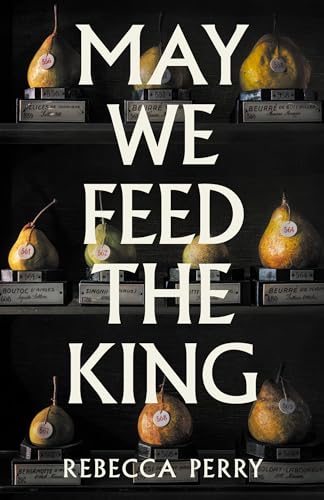
May We Feed the King
She is a curator, who spends her time dressing the rooms of historic buildings to bring them to life. But in the lush private quarters of a medieval palace, she finds herself so transfixed by the reign of an almost-forgotten King that the edges of her life begin to blur.
He is a reluctant ruler with no hunger for power, rushed to the throne after the untimely deaths of his older brothers. But it isn't long before whispers begin to fly around the court. And with the growing belief that the King is not fit for the throne comes the idea that another might rule in his stead.
May We Feed the King dances between the lives of a historical subject who risks the future of his kingdom and a woman who turns to the past to hide from her present. Laced with desire and longing, it is a playful, stirring meditation on history and storytelling: on what makes a King 'Great', and a life meaningful.
He is a reluctant ruler with no hunger for power, rushed to the throne after the untimely deaths of his older brothers. But it isn't long before whispers begin to fly around the court. And with the growing belief that the King is not fit for the throne comes the idea that another might rule in his stead.
May We Feed the King dances between the lives of a historical subject who risks the future of his kingdom and a woman who turns to the past to hide from her present. Laced with desire and longing, it is a playful, stirring meditation on history and storytelling: on what makes a King 'Great', and a life meaningful.
263 pages, Kindle Edition
First published January 29, 2026
About the author
Rebecca Perry
7 books85 followersRebecca Perry was born in 1986 in London. Her first book-length collection, ‘Beauty/Beauty’ (Bloodaxe Books, 2015), a Poetry Book Society Recommendation, won the Michael Murphy Memorial Prize 2017, and was also shortlisted for the T.S. Eliot Prize, the Fenton Aldeburgh First Collection Prize and the Seamus Heaney Centre for Poetry Prize for First Full Collection. Her second book-length collection, ‘Stone Fruit’, also a Poetry Book Society Recommendation, was published by Bloodaxe in 2021.
Ratings & Reviews
Friends & Following
Create a free account to discover what your friends think of this book!
Community Reviews
Displaying 1 - 30 of 954 reviews
June 6, 2026
this is just about two people, hundreds of years apart, who are very bad at their jobs. three people if you include the author.

September 7, 2026
You know, I just really don't think the Booker committee and I are on the same page about what makes a good book. I had hopes this year, because their longlist gave a nod to The Things We Never Say, but this was the most interesting-sounding of the other picks and I was bored to tears during the King sections.
And I know, I know, I see you— you there who is dying to say you didn't get it or you missed the point or, my favourite, you were supposed to be bored! But I did get it. Yes, it's clever. But if I wanted to read something clever that made me want to bang my head against a wall, I'd have resumed my attempt to read Principia Mathematica.
I'll give it some credit: I was sort of into it in the beginning. Short chapters make anything more readable, and I enjoy food as metaphor. I discovered how much I enjoy food as metaphor when reading Piglet— a, in my opinion, fiendishly underrated book where food is class, politics and emotion.
In the beginning of May We Feed the King, I enjoyed reading about the food details in the curator's scenes— the artistry of food choice, and the way it tells a story, delivered in short, bite-sized snippets (what are the chances I make it through this review with no more food metaphors?). She is dressing a scene to bring to life the palace of a medieval king in time for its 750-year anniversary event, and her dedication to her craft is somewhat engaging.
But, where Piglet blended food and its consumption into a character drama with familial discord and an ill-fated wedding, this one had substantially less plot, less meat, and less to sink your teeth into (oops). Indeed, a significant portion of the book is made up of just listing the items on display.
And still, that was the more interesting part. I could not get invested at all in the chapters in which we visit the medieval king. I simply did not care what happened, and this is the entire midsection of the book. It took me far longer to read than I would normally spend on a book less than 300 pages, all because of this section.
I think it was uninteresting anyway, but the icing on the cake (oh no) was that the entire point the book was making is that we can't know what is really true, that a lot of history is just what people recorded and, often, fabricated. So the scenes with the king are pure speculation.
I found out after I finished the book that Perry usually writes poetry, which makes a lot of sense. The capturing of physical details, the beautiful turns of phrase, and the way some chapters are a paragraph or two long... it reads like the work of a poet. I might have enjoyed it as a book of poetry more. But aside from the occasional food for thought (sorry, that's it, I swear) about historical record-keeping, I didn't get that much out of this.
And I know, I know, I see you— you there who is dying to say you didn't get it or you missed the point or, my favourite, you were supposed to be bored! But I did get it. Yes, it's clever. But if I wanted to read something clever that made me want to bang my head against a wall, I'd have resumed my attempt to read Principia Mathematica.
I'll give it some credit: I was sort of into it in the beginning. Short chapters make anything more readable, and I enjoy food as metaphor. I discovered how much I enjoy food as metaphor when reading Piglet— a, in my opinion, fiendishly underrated book where food is class, politics and emotion.
In the beginning of May We Feed the King, I enjoyed reading about the food details in the curator's scenes— the artistry of food choice, and the way it tells a story, delivered in short, bite-sized snippets (what are the chances I make it through this review with no more food metaphors?). She is dressing a scene to bring to life the palace of a medieval king in time for its 750-year anniversary event, and her dedication to her craft is somewhat engaging.
But, where Piglet blended food and its consumption into a character drama with familial discord and an ill-fated wedding, this one had substantially less plot, less meat, and less to sink your teeth into (oops). Indeed, a significant portion of the book is made up of just listing the items on display.
And still, that was the more interesting part. I could not get invested at all in the chapters in which we visit the medieval king. I simply did not care what happened, and this is the entire midsection of the book. It took me far longer to read than I would normally spend on a book less than 300 pages, all because of this section.
I think it was uninteresting anyway, but the icing on the cake (oh no) was that the entire point the book was making is that we can't know what is really true, that a lot of history is just what people recorded and, often, fabricated. So the scenes with the king are pure speculation.
I found out after I finished the book that Perry usually writes poetry, which makes a lot of sense. The capturing of physical details, the beautiful turns of phrase, and the way some chapters are a paragraph or two long... it reads like the work of a poet. I might have enjoyed it as a book of poetry more. But aside from the occasional food for thought (sorry, that's it, I swear) about historical record-keeping, I didn't get that much out of this.

Review of advance copy received from Netgalley
I have to be honest. Since I left the palace on that Sunday evening, leaving the public to their tour and their imaginings, I have felt unmoored. I have turned a few different words over in my mind, and unmoored is the best I can do. I am still somewhat tethered to the King, but as a parent who loses their child in the supermarket might feel for the first few seconds, before the real panic sets in. Otherwise, floating about in this life, in this place, finding myself again queasy to be at home in the quiet, in the dark – though certainly less than before. The dining table a glowering vacancy still, but in the middle a silver fork – permitted for use by the King alone – with a single pomegranate seed impaled on the left prong. It would have been too great a risk to take nothing before that final meeting.
Winner of the 2026 Waterstones Debut Fiction Prize
Shortlisted for the 2026 Booker Prize
As forseen at the end of my review
Rebecca Perry is a poet – whose debut collection “Beauty Beauty” was shortlisted for the prestigious TS Eliot Prize, and she has also written a “memoir/lyrical non-fiction” book “On Trampolining” and this is her debut novel, told in short chapters (with brilliantly evocative chapter names - “Not All Seeds Need Lights to Germinate”, “Made Manifest”, “ I Doth Loathe to Weep” some early examples) and in an elusively fragmentary prose which perfectly captured its themes of what it means to interpret history by piecing together elusive and fragmentary sources into a coherent, imagined story.
It begins in the first party voice of a curator – her specialist job is “deciphering archives and curating semi-permanent scenes (domestic, culinary and otherwise) in medieval buildings”, a calling she has taken to a high degree of precision (striving for details which may only be noticed by one in a thousand visitors) for over twenty years, with one self-imposed guiding rule: “it must appear as it the person or people have just left the room. The viewer must feel as it the air is alive with their energy”.
Now, after some unspecified but clearly difficult and loss-enduring incidents in her life, she takes on a new commission to make an installation for the 750th anniversary of a former palace now publicly open historical house.
Working closely with an archivist, immersing herself in the sensory impressions of the present day palace and researching its extensively documented history she decides that her subject matter will be a King whose reign is covered in just a single page “his story retrospectively evolved .. altered, embellished, struck through, left to rest as one great question mark by people who damned him”.
And left one night, at her request, alone in the palace she summons in her mind the world of the King.
And the bulk of the novel is then the story of the King – we assume as imagined by her.
Youngest of three brothers, their successive deaths (one quickly after becoming a feared King, the other after a long illness following a beloved and respected reign) force him to a throne he never wants, and a Kingship he wears loosely to the despair of his council and Chief Advisor and to rumours of incompetence, cuckolding and worse.
Before the novel returns to the curator giving an interactive lecture/discussion about what it means to know history – but as we also are in our own imagination trying to piece together the elusive fragments of the curator’s own life.
I would not be surprised this enigmatic yet thought provoking and distinctive novel (one which after my review featured in the 2026 version of the influential and frequently literary-prize-prescient annual Observer Best Debut Novelist feature) appearing on prize lists in 2026.
It would I think be a great if imaginative choice for the Walter Scott Prize. I will also briefly pause to note that no less than two of this year’s Booker Prize Judges - Patricia Lockwood and Raymond Antrobus – are poets and a third – Jarvis Cocker – a lyricist …. And of course the chair is a historian.
My thanks to Granta for an ARC via NetGalley

August 10, 2026
Update : Now shortlisted for the 2026 Booker Prize
It took me a while to understand that this is a book about monarchy and why historians and people love kings and queens so much more than presidents and first ladies. It is about their personal stories.
A politician must always follow the same steps to get into power, no matter where he came from. A king is there not because he convinced anyone or because he is good, but because it was his turn.
"Not feeding the King is worse than starving the people."
"She thinks the King must feel very alone. All Kings, but this one in particular."
The story in the middle of this novel is about a king who didn't want to be, or expect to be, king, and the loneliness and dehumanization that come with the role that others expect him to play. It is imagined by a curator employed to create an installation for the 750th anniversary of the palace in which this king lived.
Written in mostly short chapters, May We Feed the King is about how to communicate with the past, and I'm not surprised that the Booker Prize 2026 selected it for their longlist, considering that Mary Beard is Chair of the judges. There is a scene in this book about how the passion for history started for the archivist of the estate. It is very similar to the story Mary Beard tells in the opening chapter of her nonfiction book Talking Classics: the shock of the old when she visited the British Museum as a child. That being said, Rebecca Perry is too precise in her delivery. There is a sense that this is more a demonstration than a proper novel.
Thank you to the publisher and Edelweiss+ for the copy of the book.
It took me a while to understand that this is a book about monarchy and why historians and people love kings and queens so much more than presidents and first ladies. It is about their personal stories.
A politician must always follow the same steps to get into power, no matter where he came from. A king is there not because he convinced anyone or because he is good, but because it was his turn.
"Not feeding the King is worse than starving the people."
"She thinks the King must feel very alone. All Kings, but this one in particular."
The story in the middle of this novel is about a king who didn't want to be, or expect to be, king, and the loneliness and dehumanization that come with the role that others expect him to play. It is imagined by a curator employed to create an installation for the 750th anniversary of the palace in which this king lived.
Written in mostly short chapters, May We Feed the King is about how to communicate with the past, and I'm not surprised that the Booker Prize 2026 selected it for their longlist, considering that Mary Beard is Chair of the judges. There is a scene in this book about how the passion for history started for the archivist of the estate. It is very similar to the story Mary Beard tells in the opening chapter of her nonfiction book Talking Classics: the shock of the old when she visited the British Museum as a child. That being said, Rebecca Perry is too precise in her delivery. There is a sense that this is more a demonstration than a proper novel.
Thank you to the publisher and Edelweiss+ for the copy of the book.
Read
February 15, 2026This debut seems to get a lot of attention recently and wins awards. It has been long-listed and now short-listed for the Booker 2026. I’ve read it in February and liked it enough. It has provoked interesting discussion of what we collectively owe to the past. However, after 6 months I also remember that it was a little repetitive in terms of reading experience and seemed to have a bit of an Young Adults’ novel vibe for a such a wide recognition.
Initial review:
I imagine myself being a serious newspaper critic. I am getting geared up to write a catchy subheading for my future piece about this book. It has to contain a word ‘meditation'. Everything with a bit of a reflective thought in it ends up called ‘meditation’. Or ‘contemplation’? No: not mysterious enough. ‘Meditation’ then. A few catchy adjectives into a mix: ‘heart-rendering'? No: it is too much of a cliche. The author is doing something clever with the structure. So ‘virtuoso’ sounds fitting. Let’s add the collective pronoun “we” to convey ‘universality’ of the message… Ok. Here we go then, this novel is:
Maybe I should just leave it at that? At this point, my own imagination has run out. It was a good game when it lasted. I think I’ve learned that I do not want to step up into the shoes of a professional critic. One subheading was enough. I was only joking of course. But I’ve got a few ideas to discuss about the novel. So let’s just engage with the book. It is a new debut novel. I’ve decided to read it as it was blurbed by Claire-Louise Bennett, the one of a handful of the writers currently working in English i admire.
The novel is written from a perspective of a ‘Curator’ - a professional who is ‘deciphering archives and curating semi-permanent scenes (domestic, culinary and otherwise) in medieval buildings’. This person (a gender is never specified, but i would use she/her pronoun for now) is recovering from some sort of a psychological trauma. And it seems her work is very essential in this process. Generally the author does not use any proper names in a book. The characters are referred by the generic names based upon their profession or a place in the society. I guess it is intended to underscore the universality of the story being told.
The story of the Curator’s working on a new commission is the main narrative of the book. This is also a framing device for an impressionistic fable of sorts, focused on a short-lived reign of a medieval king known only as ‘The King’ and people around him. His story is nested within the main narrative but occupies by far the biggest chunk of the whole.
I’ve admired how the author has managed ‘to inhabit’ the character of the Curator. In particular, it seems the author was interested to represent someone who really loves their work and experiences it more as a calling rather then just a way of earning a salary. The depiction of such a peculiar profession was vivid and full of interesting details. I thought it was quite successful.
It seems that the main conceit of the novel is that the Curator finds her inspiration for new project in a personality of a king whose presence in the palace archive's records is very cursive and far from straightforward:
Handily, the Curator seems to possess a gift of a rich imagination. Occasionally, she would feel as if time border was melting and she could directly experience the presence of the people long gone. Feeling so indignant and emotional on behalf of this particular king, she decides to spend a night alone in the palace to ‘conjure’ the King and his world. In the process, she refuses to take this existing page of the records into consideration:
This seems to imply that in her view, the imagined life would be closer to the perceived truth than the records she disregarded. Respectively, this would be reflected in her installation.
The resulting reimagined story is what we get as the nested narrative. The text is sparse, fragmented, with a short vignettes and a lot of empty spaces in between on a page. Initially, i thought this technique was used to emulate the sparsity of the historical records. But then we are told the narrative is imagined in any case. So it might have been to show how the mind of the Curator experiences this realm: sketchy, in separate abrupt scenes.
Some of these vignettes are written from the King’s prospective, some from the others in the court. Some of them are gossips, some of them from are from of unreliable narrators. Another tool she uses is akin to a cinema technique: one moment we are privy to someone looking through the window or a hole in the wall; then it would be followed a wide-open scene in a garden. That was a good way to show how difficult to compile a historical vision out of multiple perspectives, often not very trust-worthy.
The short chapters are preceded with intriguing, cryptic, often declarative headings in capital letters such as:
CLEANSED WITH AGONY TINGED WITH JOY
REPLICATE REPLICATE REPLICATE
WITH BRONZE AS A MIRROR
A lot of such headings. Poetic? Maybe poetic. A lot of ‘show not to tell’ technique is used in this part. Some of passages are poignant paintings with words like this one:
It is the story of one king who never wanted to be a king. A gentle character who has been borne into this, but would prefer to look at the flowers and stroke the cats; listen to the birds and to contemplate ‘the shape of the conifer so pleasing’. But he has to authorise executions and send the soldiers to wars. At some stage, he has found the way to passively resist his role and at least to ‘do no harm’ so to speak.
The gist of such stories is quite well known and easy to imagine. That was actually a part of my problem with this nested text: the descriptive writing she uses is very good. I can also appreciate all empty spaces, etc. But i wish the narrative would be even more fractured, more sparse and even shorter, i dare say. Otherwise my imagination as a reader was totally idle. At some stage, my attention has started to wander from her stories to other unfortunate sovereigns I was familiar with both historic and the fictional ones. A tragic fate of Luise XVI and Marie Antoinette came to mind. The main character from Pale Fire with his proclivity to re-write history also has appeared. As a result, the gentle King in this story seemed somehow too ghosty compared to his colleagues facing a similar predicament.
I’ve been told that all of this has existed only in someone else’s mind (the Curator’s in this case). So maybe it is not surprising that he seemed more like a figment of imagination rather than a real person ever existed. It was fascinating effect, but this ambiguity might be even more striking if it would be fewer of these vignettes. The pace of this narrative has picked up towards the end. And the end was the best part of this fable.
Having read this king’s story as she presented it, i’ve developed the impression that through that night in the palace, the Curator has conjured a personality that might be more akin to herself than the bygone King. The process has had a cathartic impact on her helping her to process her trauma. If it was an intention by the author to create such impression, it worked very well.
The third and the last part of the novel brings us back to the opening event for the installation in the palace. It is proceeded with the talk. The Curator takes the scene to discuss with the attendees some big questions starting from How do we know anything about history?.
In this conversation, The Curator practices measured pauses to give the audience time to come up with the answer. Seven seconds is the amount of time you should wait for an answer before you can be quite sure no answer is coming.. it’s important to create a gap that people are compelled to fill.’ When ‘a woman with a baby’ makes a successful attempt to answer a question, the curator introduces another pause ’allowing my praise to rest on her’.
This approach came across as a bit patronising as if she is in charge of class the kids just starting with history subject, not the audience that has chosen to attend a museum. Also especially at the beginning, this debate seems a little too didactic to me as a reader.
Quite predictably for anyone with elementary knowledge of history, the discussion has lead to a conclusion that ‘We have no way of knowing who is right.’ Also that the records play a big role but they should be constantly revisited: ’no records should be final’. Later, more interestingly, the idea that we should learn from ‘gaps in the records’ was mentioned as well. However, it seems the crescendo of this discussion has been a little closing speech by the Curator:
This has made me finally ‘pause’ for more than seven seconds. It comes across like a passionate manifesto by the Curator (and possibly - by the author) on historiography and usefulness of history as a social science with its methods of looking for causality and patterns. Does it mean she wants to rescue the King’s dignity from the ‘cruelty of the page’ by presenting more favourable artistic impression of him to fill people’s memory?
In one of those amazing serendipitous reverberation between the books, a few days later I was come across the following observation in Alexander Nemerov’s essays ‘Summoning Pearl Harbour’. During his visit to the monument, he noticed the spillage of oil keeps going from the destroyed ship that is the part of it:
Like the imaginary king, these dead sailors seem unwilling to be remembered as framed by the present, more ‘kindhearted’ in their case.
Coming back to the Curator, I find this ‘fuck you’ is more controversial if it is declared by the people living in the present: ‘To the idea that we owe anyone the answers they seek - for they are theirs alone to find.’ Does she mean the future historians seeking those answers? Does it mean we do not owe anything to future generations so they can figure out what was before them; where they are coming from (or God forbid: attempt to learn from our mistakes?). Can this part of the view spelled out by the Curator be considered a broadly ethical one?
I appreciate i am reading a fictional novel and the view of a character, not a polemical essay. However, it is an interesting discussion point in any case. And surely there is not single answer to this. However personally I believe as a modern society we should thrive to be the custodians of a potential historical evidence. There should be reliable institutions in place dealing with this task. As far of an individual person is concerned it is more complicated. But if a person has a public role he has a duty of care to preserve such evidence.
This leads to the question why we study history. An Archivist, another character in the book has provided the version of the answer: ‘To make us confront with what we have lost.’ Also this book seems to convey that trying to learn about the past helps a person to learn about herself.
In the case of ambiguity and the gaps of the records, The Curator is evidently on the side of art, hopefully as a complement rather than an alternative to social science. By filling the gaps with help of her imagination and ‘empathising’ with the King, she has managed to achieve something akin a personal catharsis and get a relief from her trauma. Also she has created an object of art in her with a reference to certain historical context.
This situation has reminded me of a different story, the real life in this case. Lea Ypi, a political scientist and the author of best selling memoir Free: A Child and a Country at the End of History, was researching her second book Indignity: A Life Reimagined. In doing so she also was confronted with a serious gaps in archive records. When the records where available, they were filtered through the prisms of power structures of an authorisation regime (Albanian in this case). The book was intended to defend the dignity of her grandmother who was publicly misrepresented on the social media twenty years after her death. At the end, Lea came to conclusion that the best thing she could do for her grandmother and her memory is to reimagine these absences and write a version of her life as a ‘19th century novel’. In one of her interviews, Lea said that the experience of this reimagining was pretty ‘cathartic’ for herself as well.
In the last few decades there a lot of justified efforts were made to reinstate the roles of women and marginalised communities in the historical process. That has been done in parallel in a scientific way and through the art. I guess the King here is an example of this (in spite of being ‘a king’ so hardly marginalised as a group)? ‘A rhetorical question’ as the Curator would say.
I can certainly see the place of such re-imaginings and of the art more broadly in understanding the past. However, the care should be taken not to confuse this with more rigorous historical approach. Sometimes fiction risks uncritically replacing historical facts as it represents more palatable and easily digestible story. One could do the same to reinstate ‘a golden age’ that never existed and whitewash rather dubious historical figures.
The tide of virulent forms of nationalism that is in vague now is at least partly based on the myths or imagined past. It also feeds something we call a collective memory. Such narratives tend to weaponise history in service of the current politics. They also create a ‘narrative’ by reducing a very complex reality of the past agitate their audience. In this case being too nostalgic about the past often leads to shaping a bleak future.
Coming back to the book, the questions it touches upon are complex and relevant. The artistic treatment of these issues the author has created is quite original. However, in the last part i felt the Curator was dominating the audience a little too much: ‘Listen for everything and, above all, pay attention’. And the author’s voice behind the scene has been a little too pronounced for my liking. I’d prefer a bit more ambiguity, ‘gaps’ left to fill in. I would not mind a proverbial ‘fuck you’ from the author on certain questions rather than describing every single choice the Curator has made. It seemed too often i’ve been brought the answers on a plate even before asking the question, not unlike the King in the story when he has been ‘fed’ even if he wasn’t that hungry.
In general, the book seemed to have ‘a vibe’ of a young adult novel. Respectively, I hope it would provide a ground for fruitful conversations. It would be a brilliant material of discussions in schools, youth clubs or any other settings like this. That is not to say that the older readers cannot relate to the story and learn new ideas of thinking about history and art.
Initial review:
I imagine myself being a serious newspaper critic. I am getting geared up to write a catchy subheading for my future piece about this book. It has to contain a word ‘meditation'. Everything with a bit of a reflective thought in it ends up called ‘meditation’. Or ‘contemplation’? No: not mysterious enough. ‘Meditation’ then. A few catchy adjectives into a mix: ‘heart-rendering'? No: it is too much of a cliche. The author is doing something clever with the structure. So ‘virtuoso’ sounds fitting. Let’s add the collective pronoun “we” to convey ‘universality’ of the message… Ok. Here we go then, this novel is:
A virtuoso mediation on the nature of artistic calling, on what we might owe to the past, and on the cathartic power of imagination.
Maybe I should just leave it at that? At this point, my own imagination has run out. It was a good game when it lasted. I think I’ve learned that I do not want to step up into the shoes of a professional critic. One subheading was enough. I was only joking of course. But I’ve got a few ideas to discuss about the novel. So let’s just engage with the book. It is a new debut novel. I’ve decided to read it as it was blurbed by Claire-Louise Bennett, the one of a handful of the writers currently working in English i admire.
The novel is written from a perspective of a ‘Curator’ - a professional who is ‘deciphering archives and curating semi-permanent scenes (domestic, culinary and otherwise) in medieval buildings’. This person (a gender is never specified, but i would use she/her pronoun for now) is recovering from some sort of a psychological trauma. And it seems her work is very essential in this process. Generally the author does not use any proper names in a book. The characters are referred by the generic names based upon their profession or a place in the society. I guess it is intended to underscore the universality of the story being told.
The story of the Curator’s working on a new commission is the main narrative of the book. This is also a framing device for an impressionistic fable of sorts, focused on a short-lived reign of a medieval king known only as ‘The King’ and people around him. His story is nested within the main narrative but occupies by far the biggest chunk of the whole.
I’ve admired how the author has managed ‘to inhabit’ the character of the Curator. In particular, it seems the author was interested to represent someone who really loves their work and experiences it more as a calling rather then just a way of earning a salary. The depiction of such a peculiar profession was vivid and full of interesting details. I thought it was quite successful.
It seems that the main conceit of the novel is that the Curator finds her inspiration for new project in a personality of a king whose presence in the palace archive's records is very cursive and far from straightforward:
The single page dedicated to his reign was now a mess, with marginalia and footnotes added over time as his story retrospectively evolved - was altered, challenged, embellished, struck though, left to rest as one great question mark by people who damned him.
I cried, I wept, when I saw it.
What a reduction of life.
Handily, the Curator seems to possess a gift of a rich imagination. Occasionally, she would feel as if time border was melting and she could directly experience the presence of the people long gone. Feeling so indignant and emotional on behalf of this particular king, she decides to spend a night alone in the palace to ‘conjure’ the King and his world. In the process, she refuses to take this existing page of the records into consideration:
To relay the king’s ledger entry in fullness would be to undo everything i set out to achieve in my conjuring hid person. And so i refuse it.
This seems to imply that in her view, the imagined life would be closer to the perceived truth than the records she disregarded. Respectively, this would be reflected in her installation.
The resulting reimagined story is what we get as the nested narrative. The text is sparse, fragmented, with a short vignettes and a lot of empty spaces in between on a page. Initially, i thought this technique was used to emulate the sparsity of the historical records. But then we are told the narrative is imagined in any case. So it might have been to show how the mind of the Curator experiences this realm: sketchy, in separate abrupt scenes.
Some of these vignettes are written from the King’s prospective, some from the others in the court. Some of them are gossips, some of them from are from of unreliable narrators. Another tool she uses is akin to a cinema technique: one moment we are privy to someone looking through the window or a hole in the wall; then it would be followed a wide-open scene in a garden. That was a good way to show how difficult to compile a historical vision out of multiple perspectives, often not very trust-worthy.
The short chapters are preceded with intriguing, cryptic, often declarative headings in capital letters such as:
CLEANSED WITH AGONY TINGED WITH JOY
REPLICATE REPLICATE REPLICATE
WITH BRONZE AS A MIRROR
A lot of such headings. Poetic? Maybe poetic. A lot of ‘show not to tell’ technique is used in this part. Some of passages are poignant paintings with words like this one:
The paler colours are coming through in the garden now, the lawn is flushing into new growth - green as a tapestry. When the King takes a walk through his grounds the day after the dinner, he notes the buds tipped with apricot on the climbing rose, the perfection of the bleeding heart, its flowers dangling in an orderly line, juddering in the breeze.
It is the story of one king who never wanted to be a king. A gentle character who has been borne into this, but would prefer to look at the flowers and stroke the cats; listen to the birds and to contemplate ‘the shape of the conifer so pleasing’. But he has to authorise executions and send the soldiers to wars. At some stage, he has found the way to passively resist his role and at least to ‘do no harm’ so to speak.
The gist of such stories is quite well known and easy to imagine. That was actually a part of my problem with this nested text: the descriptive writing she uses is very good. I can also appreciate all empty spaces, etc. But i wish the narrative would be even more fractured, more sparse and even shorter, i dare say. Otherwise my imagination as a reader was totally idle. At some stage, my attention has started to wander from her stories to other unfortunate sovereigns I was familiar with both historic and the fictional ones. A tragic fate of Luise XVI and Marie Antoinette came to mind. The main character from Pale Fire with his proclivity to re-write history also has appeared. As a result, the gentle King in this story seemed somehow too ghosty compared to his colleagues facing a similar predicament.
I’ve been told that all of this has existed only in someone else’s mind (the Curator’s in this case). So maybe it is not surprising that he seemed more like a figment of imagination rather than a real person ever existed. It was fascinating effect, but this ambiguity might be even more striking if it would be fewer of these vignettes. The pace of this narrative has picked up towards the end. And the end was the best part of this fable.
Having read this king’s story as she presented it, i’ve developed the impression that through that night in the palace, the Curator has conjured a personality that might be more akin to herself than the bygone King. The process has had a cathartic impact on her helping her to process her trauma. If it was an intention by the author to create such impression, it worked very well.
The third and the last part of the novel brings us back to the opening event for the installation in the palace. It is proceeded with the talk. The Curator takes the scene to discuss with the attendees some big questions starting from How do we know anything about history?.
In this conversation, The Curator practices measured pauses to give the audience time to come up with the answer. Seven seconds is the amount of time you should wait for an answer before you can be quite sure no answer is coming.. it’s important to create a gap that people are compelled to fill.’ When ‘a woman with a baby’ makes a successful attempt to answer a question, the curator introduces another pause ’allowing my praise to rest on her’.
This approach came across as a bit patronising as if she is in charge of class the kids just starting with history subject, not the audience that has chosen to attend a museum. Also especially at the beginning, this debate seems a little too didactic to me as a reader.
Quite predictably for anyone with elementary knowledge of history, the discussion has lead to a conclusion that ‘We have no way of knowing who is right.’ Also that the records play a big role but they should be constantly revisited: ’no records should be final’. Later, more interestingly, the idea that we should learn from ‘gaps in the records’ was mentioned as well. However, it seems the crescendo of this discussion has been a little closing speech by the Curator:
His (the King’s) great gift to us - or at least it has been a gift to me - is the very lack of an ending, that could drive a historian mad. What a great - pardon my language - 'fuck you' to everyone who tries to manhandle ambiguity into order, to knock out the air. To the people that have since pinned him down so cruelly and unambiguously on this page. To the notion that one thing leads to another and then another and then done. To the idea that we owe anyone the answers they seek - for they are theirs alone to find.
This has made me finally ‘pause’ for more than seven seconds. It comes across like a passionate manifesto by the Curator (and possibly - by the author) on historiography and usefulness of history as a social science with its methods of looking for causality and patterns. Does it mean she wants to rescue the King’s dignity from the ‘cruelty of the page’ by presenting more favourable artistic impression of him to fill people’s memory?
In one of those amazing serendipitous reverberation between the books, a few days later I was come across the following observation in Alexander Nemerov’s essays ‘Summoning Pearl Harbour’. During his visit to the monument, he noticed the spillage of oil keeps going from the destroyed ship that is the part of it:
In those oil smears on the water, the dead began to take shape for me as a group difficult to please. They were rowdy, unruly, not only in their sailor patois gurgling up in halting, half-strangled offensive phrases. They were unruly in their unwillingness to be helped or honored or remembered. Et in Arcadia ego the tomb says to the shepherds, but it was the great fuck you of the past to the kindhearted present that I thought I heard in the oil.
Like the imaginary king, these dead sailors seem unwilling to be remembered as framed by the present, more ‘kindhearted’ in their case.
Coming back to the Curator, I find this ‘fuck you’ is more controversial if it is declared by the people living in the present: ‘To the idea that we owe anyone the answers they seek - for they are theirs alone to find.’ Does she mean the future historians seeking those answers? Does it mean we do not owe anything to future generations so they can figure out what was before them; where they are coming from (or God forbid: attempt to learn from our mistakes?). Can this part of the view spelled out by the Curator be considered a broadly ethical one?
I appreciate i am reading a fictional novel and the view of a character, not a polemical essay. However, it is an interesting discussion point in any case. And surely there is not single answer to this. However personally I believe as a modern society we should thrive to be the custodians of a potential historical evidence. There should be reliable institutions in place dealing with this task. As far of an individual person is concerned it is more complicated. But if a person has a public role he has a duty of care to preserve such evidence.
This leads to the question why we study history. An Archivist, another character in the book has provided the version of the answer: ‘To make us confront with what we have lost.’ Also this book seems to convey that trying to learn about the past helps a person to learn about herself.
In the case of ambiguity and the gaps of the records, The Curator is evidently on the side of art, hopefully as a complement rather than an alternative to social science. By filling the gaps with help of her imagination and ‘empathising’ with the King, she has managed to achieve something akin a personal catharsis and get a relief from her trauma. Also she has created an object of art in her with a reference to certain historical context.
This situation has reminded me of a different story, the real life in this case. Lea Ypi, a political scientist and the author of best selling memoir Free: A Child and a Country at the End of History, was researching her second book Indignity: A Life Reimagined. In doing so she also was confronted with a serious gaps in archive records. When the records where available, they were filtered through the prisms of power structures of an authorisation regime (Albanian in this case). The book was intended to defend the dignity of her grandmother who was publicly misrepresented on the social media twenty years after her death. At the end, Lea came to conclusion that the best thing she could do for her grandmother and her memory is to reimagine these absences and write a version of her life as a ‘19th century novel’. In one of her interviews, Lea said that the experience of this reimagining was pretty ‘cathartic’ for herself as well.
In the last few decades there a lot of justified efforts were made to reinstate the roles of women and marginalised communities in the historical process. That has been done in parallel in a scientific way and through the art. I guess the King here is an example of this (in spite of being ‘a king’ so hardly marginalised as a group)? ‘A rhetorical question’ as the Curator would say.
I can certainly see the place of such re-imaginings and of the art more broadly in understanding the past. However, the care should be taken not to confuse this with more rigorous historical approach. Sometimes fiction risks uncritically replacing historical facts as it represents more palatable and easily digestible story. One could do the same to reinstate ‘a golden age’ that never existed and whitewash rather dubious historical figures.
The tide of virulent forms of nationalism that is in vague now is at least partly based on the myths or imagined past. It also feeds something we call a collective memory. Such narratives tend to weaponise history in service of the current politics. They also create a ‘narrative’ by reducing a very complex reality of the past agitate their audience. In this case being too nostalgic about the past often leads to shaping a bleak future.
Coming back to the book, the questions it touches upon are complex and relevant. The artistic treatment of these issues the author has created is quite original. However, in the last part i felt the Curator was dominating the audience a little too much: ‘Listen for everything and, above all, pay attention’. And the author’s voice behind the scene has been a little too pronounced for my liking. I’d prefer a bit more ambiguity, ‘gaps’ left to fill in. I would not mind a proverbial ‘fuck you’ from the author on certain questions rather than describing every single choice the Curator has made. It seemed too often i’ve been brought the answers on a plate even before asking the question, not unlike the King in the story when he has been ‘fed’ even if he wasn’t that hungry.
In general, the book seemed to have ‘a vibe’ of a young adult novel. Respectively, I hope it would provide a ground for fruitful conversations. It would be a brilliant material of discussions in schools, youth clubs or any other settings like this. That is not to say that the older readers cannot relate to the story and learn new ideas of thinking about history and art.

September 15, 2026
To relay the king's ledger entry in its fullness would be to undo everything I set out to achieve in my conjuring of his person. And so I refused it.
Gosh, this book irritated me! I am not a historian but this trite engagement with big questions about how we know what we know, and what we don't, about the past runs counter to all that I think. While I am not a historian (though I work on literature which is always located within history: both the moment from which it is created to all the moments in which it is received), I know many people who are, including curators, archivists, and purveyors of exactly the sort of material history displays that the curator here is dealing with, and yet this book bears little reality to the thinking, intellectual frameworks and methodologies that most people are working with. The idea of finding an archival source and then saying 'I refused it' is, frankly, bad history - something quite dangerous in an age when, for example, Trump is telling historians and curators at the Smithsonian to tell a different, false story about America's past than their current one, and when far-right extreme nationalist groups everywhere are trading in mythic histories that bear little relation to reality.
Nevertheless, this curator makes up an imaginary story about an anonymous king that suits their (gender is withheld) own psychological problems, to help 'heal' them (from a bad breakup, grief, we don't know) and re-establish a psychic balance in their life: solipsistic history as counselling, then, and promoting their fiction as a historical reality in the historical home, former royal palace, that they are working at: a 'conjuring' as they call it in my head quotation, but one which contradicts and is at odds with the historical record of the archival ledger. And all this without discussing it with the managing board of the house which, quite rightly, queries the work at the end, something the narrator seems quite miffed by. In her head, she is the sole arbiter of what passes as 'history'.
Yes, yes, yes, I know that history is always complex and multidimensional, that the perspective of the teller matters and we need to think about qui bono, that history is written by the victors, that some views (often women's, or those of non-white people, or queer perspectives) of history have been written out, muted or simply don't survive in the historical record - but that's not what this book is about. This is about saying ''I refused it' to the archive, and that I prefer my own consoling and imaginary story' - and that's ok too, in a reader or any individual in a private capacity, but this curator is a professional, they are responsible for teaching and passing on historical knowledge to an audience, they have a responsibility to the historical record, and can certainly raise the issues, debates and problems inherent in that, but not just wipe it out altogether as this curator does.
I'm utterly bemused at how the Booker panel and so many readers rate this book. It's well enough written though in quite a breezy, simple style - but the intellectual dereliction that this presents is extraordinary to me.

August 6, 2026
Shortlisted for the Booker Prize 2026
A very accomplished first novel about the nature of history, centred on a medieval King who has no interest in playing the part after his two elder brothers die without producing heirs. This story occupies the middle two thirds of the book, and is framed by a modern story in which the narrator has been brought in by a historic stately house to curate an exhibition celebrating an anniversary of the house (I loved the statement that nobody knows exactly what the anniversary commemorates). This modern part of the story questions the cosy assumptions behind conventional history and the way in which historical material is presented or recreated, with quite a lot of dry humour. The whole thing is very readable. Definitely a candidate for the shortlist and maybe more.
A very accomplished first novel about the nature of history, centred on a medieval King who has no interest in playing the part after his two elder brothers die without producing heirs. This story occupies the middle two thirds of the book, and is framed by a modern story in which the narrator has been brought in by a historic stately house to curate an exhibition celebrating an anniversary of the house (I loved the statement that nobody knows exactly what the anniversary commemorates). This modern part of the story questions the cosy assumptions behind conventional history and the way in which historical material is presented or recreated, with quite a lot of dry humour. The whole thing is very readable. Definitely a candidate for the shortlist and maybe more.

August 10, 2026
First Impressions
May We Feed the King is a really intriguing new kind of historical novel that quite surprised me. Going in, I'd seen a reader response saying it was difficult to follow, but I don't actually think that's true. I wonder if what that reader meant is that the novel deliberately withholds specificity and refuses to offer definitive answers, which can feel unsettling in its own way, but it serves a definite artistic and theoretical purpose in this novel. That was exactly what made it so enchanting, and I found myself completely intrigued by the details we are given.
A King With No Name
The novel follows a reluctant king from history who is never named. We get no character names, no dates, no country, though the setting is presumably medieval. What we do learn is that he came to the throne only because his two older brothers, both kings before him, died prematurely, making him the default heir. There's something almost absurd built into the very phrase used when a monarch dies, "the king is dead, long live the king," and the playwright Eugène Ionesco played on exactly that absurdity in one of his own plays. What it actually means, of course, is that the moment one monarch dies, the next person in line simply becomes king, as though kingship were an interchangeable role handed down a line, almost like selecting one apple from an anonymous barrel.
We're given plenty about this king's actions, his refusal to follow his council's advice, his reluctance to order executions or lead the country into war, his constant friction with a hated chief advisor who has likewise simply inherited his own role, but almost nothing about his interior life. We know he's deeply unhappy, doesn’t mind that his wife the queen is having an affair, that he barely eats and that he's essentially trapped. There's even a story of a previous king who abdicated outright, fled the palace, and was eventually caught throwing apples at the men sent to drag him back, earning him the nickname "the apple king." Our king is acutely aware that there's no real way out of his own situation, only this legend of a failed escape.
History, Curated
Alongside the king's story, the novel is bookended by a contemporary curator tasked with dressing the rooms of this same palace for a special event. She takes the job far more seriously than anyone around her expects, working with an archivist to dig into the palace's history and becoming completely engrossed in the king's story. Like the king, she's never named, but she has a real, almost fetishistic precision about which objects she selects and how she arranges them, wax apples included, believing that the right arrangement can let a visitor sense the history embedded in a room rather than just being told a flat set of facts.
I think it's very clever how Rebecca Perry builds such a strong sense of this king's identity without ever giving us direct access to his thoughts or feelings. Instead we get him only through side glances: what servants and councillors observe of him, the stories people tell about him, some possibly fabricated, possibly gossip, possibly politically motivated. That mirrors exactly how we receive history in general: we have to ask who's telling us a given story and what their motivations might be, because that shapes how we understand the facts we're given.
Judgment, Then and Now
There's a real, quiet tragedy at the center of this book: a man thrust into a role he never wanted, with no way out. And yet, he's just a king and privileged individual, exactly the sort history tends to remember over the ordinary people who lived decently and acted in small, unrecorded ways. But I think the novel's point extends well beyond monarchy. All of us are scrutinized, judged, and assumptions are made about us in ways we can't fully control, especially once we become any kind of public figure, and our own narratives can be told by others without our consent. Oddly, this made me think of Patrick Radden Keefe's recent book “London Falling” and the mystery surrounding the death of Zac, the nineteen-year-old at the center of that book, and how sympathetically Keefe reconstructs a story his grieving family still doesn't have full answers to. It also brought to mind Hilary Mantel's Thomas Cromwell trilogy, beginning with “Wolf Hall”, and the way she imaginatively fills in the interior lives of Henry VIII, Anne Boleyn, and Cromwell himself, offering a new slant on history while still leaving room for readers to draw their own conclusions. Maggie O'Farrell's “The Marriage Portrait” does something similar with another real historical figure, Lucrezia de’ Medici, refusing to let the known facts limit the possibilities of her inner life. Rebecca Perry seems to be doing exactly that here, deliberately withholding names and dates so that history feels like an open field rather than a fixed timeline of accomplishments and failures.
A Puzzle Worth Solving
I found real pleasure in trying to piece together what was actually happening, in a way that felt almost like solving a puzzle where some interpretations land better than others. In the contemporary strand, there's a quietly building romance between the curator and the archivist, a growing attraction handled with real subtlety in the background. The novel also plays with different kinds of looking: tourists passing through the palace rooms today, courtiers and servants once watching the king, and, in one lovely touch, the king himself becoming a kind of tourist in his own home, wandering into the kitchens, asking how cinnamon cakes are made, and picking up an egg in its shell for what is the first time in his life, utterly struck by it. That layering of who's observing whom, and how the reader becomes another observer entering into all of it, kept the ambiguity alive without ever making the book feel murky or hard to follow.
There's a nice tension, too, in how the curator resists pressure from the palace's overseers, who just want the rooms dressed quickly and generically. She insists on arranging them as though a specific person from history had passed through only moments before, which raises exactly the questions the novel is interested in: what we can actually know about the past, what we can never know, and how much room there is to hold multiple honest possibilities about the same set of facts.
Verdict
I'm glad I got past my initial hesitation, which turned out to be based on nothing more than one secondhand reader reaction. This novel has been greatly well received this year: Rebecca Perry was named one of the year's best debut novelists, despite coming from a background in poetry rather than fiction, and while the prose itself isn't conspicuously lyrical, I think it could fairly be read as an extended prose poem. It won the Waterstones Debut Fiction Prize this year and has since been longlisted for the Booker, and I wouldn't be surprised if it goes further still. I found it a real pleasure, full of tantalizing details I'm still turning over. If you've read it, I'd love to know whether you agree with my read on it, or if there's more you'd want to raise about it.
Read more of my reviews on my book blog LonesomeReader or check out the videos on my BookTube channel or consider joining my Bookclub
May We Feed the King is a really intriguing new kind of historical novel that quite surprised me. Going in, I'd seen a reader response saying it was difficult to follow, but I don't actually think that's true. I wonder if what that reader meant is that the novel deliberately withholds specificity and refuses to offer definitive answers, which can feel unsettling in its own way, but it serves a definite artistic and theoretical purpose in this novel. That was exactly what made it so enchanting, and I found myself completely intrigued by the details we are given.
A King With No Name
The novel follows a reluctant king from history who is never named. We get no character names, no dates, no country, though the setting is presumably medieval. What we do learn is that he came to the throne only because his two older brothers, both kings before him, died prematurely, making him the default heir. There's something almost absurd built into the very phrase used when a monarch dies, "the king is dead, long live the king," and the playwright Eugène Ionesco played on exactly that absurdity in one of his own plays. What it actually means, of course, is that the moment one monarch dies, the next person in line simply becomes king, as though kingship were an interchangeable role handed down a line, almost like selecting one apple from an anonymous barrel.
We're given plenty about this king's actions, his refusal to follow his council's advice, his reluctance to order executions or lead the country into war, his constant friction with a hated chief advisor who has likewise simply inherited his own role, but almost nothing about his interior life. We know he's deeply unhappy, doesn’t mind that his wife the queen is having an affair, that he barely eats and that he's essentially trapped. There's even a story of a previous king who abdicated outright, fled the palace, and was eventually caught throwing apples at the men sent to drag him back, earning him the nickname "the apple king." Our king is acutely aware that there's no real way out of his own situation, only this legend of a failed escape.
History, Curated
Alongside the king's story, the novel is bookended by a contemporary curator tasked with dressing the rooms of this same palace for a special event. She takes the job far more seriously than anyone around her expects, working with an archivist to dig into the palace's history and becoming completely engrossed in the king's story. Like the king, she's never named, but she has a real, almost fetishistic precision about which objects she selects and how she arranges them, wax apples included, believing that the right arrangement can let a visitor sense the history embedded in a room rather than just being told a flat set of facts.
I think it's very clever how Rebecca Perry builds such a strong sense of this king's identity without ever giving us direct access to his thoughts or feelings. Instead we get him only through side glances: what servants and councillors observe of him, the stories people tell about him, some possibly fabricated, possibly gossip, possibly politically motivated. That mirrors exactly how we receive history in general: we have to ask who's telling us a given story and what their motivations might be, because that shapes how we understand the facts we're given.
Judgment, Then and Now
There's a real, quiet tragedy at the center of this book: a man thrust into a role he never wanted, with no way out. And yet, he's just a king and privileged individual, exactly the sort history tends to remember over the ordinary people who lived decently and acted in small, unrecorded ways. But I think the novel's point extends well beyond monarchy. All of us are scrutinized, judged, and assumptions are made about us in ways we can't fully control, especially once we become any kind of public figure, and our own narratives can be told by others without our consent. Oddly, this made me think of Patrick Radden Keefe's recent book “London Falling” and the mystery surrounding the death of Zac, the nineteen-year-old at the center of that book, and how sympathetically Keefe reconstructs a story his grieving family still doesn't have full answers to. It also brought to mind Hilary Mantel's Thomas Cromwell trilogy, beginning with “Wolf Hall”, and the way she imaginatively fills in the interior lives of Henry VIII, Anne Boleyn, and Cromwell himself, offering a new slant on history while still leaving room for readers to draw their own conclusions. Maggie O'Farrell's “The Marriage Portrait” does something similar with another real historical figure, Lucrezia de’ Medici, refusing to let the known facts limit the possibilities of her inner life. Rebecca Perry seems to be doing exactly that here, deliberately withholding names and dates so that history feels like an open field rather than a fixed timeline of accomplishments and failures.
A Puzzle Worth Solving
I found real pleasure in trying to piece together what was actually happening, in a way that felt almost like solving a puzzle where some interpretations land better than others. In the contemporary strand, there's a quietly building romance between the curator and the archivist, a growing attraction handled with real subtlety in the background. The novel also plays with different kinds of looking: tourists passing through the palace rooms today, courtiers and servants once watching the king, and, in one lovely touch, the king himself becoming a kind of tourist in his own home, wandering into the kitchens, asking how cinnamon cakes are made, and picking up an egg in its shell for what is the first time in his life, utterly struck by it. That layering of who's observing whom, and how the reader becomes another observer entering into all of it, kept the ambiguity alive without ever making the book feel murky or hard to follow.
There's a nice tension, too, in how the curator resists pressure from the palace's overseers, who just want the rooms dressed quickly and generically. She insists on arranging them as though a specific person from history had passed through only moments before, which raises exactly the questions the novel is interested in: what we can actually know about the past, what we can never know, and how much room there is to hold multiple honest possibilities about the same set of facts.
Verdict
I'm glad I got past my initial hesitation, which turned out to be based on nothing more than one secondhand reader reaction. This novel has been greatly well received this year: Rebecca Perry was named one of the year's best debut novelists, despite coming from a background in poetry rather than fiction, and while the prose itself isn't conspicuously lyrical, I think it could fairly be read as an extended prose poem. It won the Waterstones Debut Fiction Prize this year and has since been longlisted for the Booker, and I wouldn't be surprised if it goes further still. I found it a real pleasure, full of tantalizing details I'm still turning over. If you've read it, I'd love to know whether you agree with my read on it, or if there's more you'd want to raise about it.
Read more of my reviews on my book blog LonesomeReader or check out the videos on my BookTube channel or consider joining my Bookclub

April 10, 2026
one line review: i don't think this one executed the concept in a way that worked for me - if i'm meant to believe the edges of the curator's life started to blur with the king's at the very least the format should not be three distinct chunks curator-king-curator without any feeling of indistinguishability, no?
February 7, 2026
This is definitely a book that exists, that has words printed in it, but I struggle to form a single coherent opinion about it.
The writing itself is lovely, the descriptions of food and life at the court vivid in just a few short sentences, and picking up the author's future books will be an easy decision for me. I just, don't really have anything to say about the story of the museum curator and the King.
The writing itself is lovely, the descriptions of food and life at the court vivid in just a few short sentences, and picking up the author's future books will be an easy decision for me. I just, don't really have anything to say about the story of the museum curator and the King.

Currently Reading
August 20, 2026Longlisted for the Booker Prize 2026
...slowly progressing through the list...
...slowly progressing through the list...
Review of advance copy received from Netgalley
Nothing better than discovering a good debut novel!
I say often in my reviews how I like historical fiction to do something unexpected and original, and that is precisely what 'May We Feed The King' does - not by offering a different perspective on known historical facts, but by challenging the genre itself.
It takes a very original approach to historical fiction and essentially asks the same question Ian McEwan asks in 'What We Can Know': how much can we really know about the past?
The main character works for museums and old castles to create and recreate scenes from the past. For example, she uses fake fruit and meat to replicate a Medieval feast.
During the research for her latest assignment, she stumbles upon an unusual King in the archives. The novel then travels back centuries to the King's reign, only to return to the present in the third and final part.
Thanks to Netgalley for the ARC (and to Mohammed and Gumbles Yard for tipping this!)
4,5
I say often in my reviews how I like historical fiction to do something unexpected and original, and that is precisely what 'May We Feed The King' does - not by offering a different perspective on known historical facts, but by challenging the genre itself.
It takes a very original approach to historical fiction and essentially asks the same question Ian McEwan asks in 'What We Can Know': how much can we really know about the past?
The main character works for museums and old castles to create and recreate scenes from the past. For example, she uses fake fruit and meat to replicate a Medieval feast.
During the research for her latest assignment, she stumbles upon an unusual King in the archives. The novel then travels back centuries to the King's reign, only to return to the present in the third and final part.
Thanks to Netgalley for the ARC (and to Mohammed and Gumbles Yard for tipping this!)
4,5

Review of advance copy received from NetGalley
SHORTLISTED FOR THE 2026 BOOKER PRIZE Winner will be announced on 9 November.
Rating: 5* of five
The Publisher Says: She is a curator, who spends her time dressing the rooms of historic buildings to bring them to life. But in the lush private quarters of a medieval palace, she finds herself so transfixed by the reign of an almost-forgotten King that the edges of her life begin to blur.
He is a reluctant ruler with no hunger for power, rushed to the throne after the untimely deaths of his older brothers. But it isn't long before whispers begin to fly around the court. And with the growing belief that the King is not fit for the throne comes the idea that another might rule in his stead.
May We Feed the King dances between the lives of a historical subject who risks the future of his kingdom and a woman who turns to the past to hide from her present. Laced with desire and longing, it is a playful, stirring meditation on history and storytelling: on what makes a King 'Great', and a life meaningful.
I RECEIVED A DRC FROM THE PUBLISHER VIA EDELWEISS+. THANK YOU.
My Review: A poet penning a literary novel about an unnamed museum curator grieving an unstated loss while she is engaged in a project that reimagines the physical world of an unnamed surprise king in his unnamed palace on its 750th anniversary of foundation and use.
Sounds drearily precious, like a poem, like all the pit-sniffing Literary Novels we're subextually told us mouth-breathers are too dullwitted to Appreciate, no?
No. And no one is more surprised than me. I was interested in reading the story because, well, Booker snobbery is the honest way to say it. (I'm still salty that US Anglophone authors are now eligible for what was explicitly a Commonwealth storytelling prize...twelve years and not over it yet.) As the story unfolds in past and present, the real reason I kept going and going hit me...I'm a sucker for the hyperfixated, the deep-focusing narrow-vision-having wonks of History. It's endlessly interesting to me that someone could get this interested in creating an immersive experience for a modern audience of small size centering the medieval world of a minor, forgotten royal. Just to conceive of it is interesting abd then to sell the idea, to research the minutiae, to think through the problems inherent in the process...yep, I'm in!
Of course what's driving our curator to the bizarre lengths has to be very, very painful, very overwhelming to demand this depth of avoidance; it's a good decision for Author Perry to leave it imprecise, unfocused because specificity ruins relatability. I've been that deep in grief so I suppose there's more than a little fellow feeling driving my interest. I get in a visceral way the desire to lose one's hurting self in an all-absorbing, unrelated subject that can't trigger hurting memories or aching similarities that will fuel the downward spiral: "There’s something that can happen when I am embarking on a project on the scale of the work at the palace, and so heavily focused on food scenes: my appetite sours, and real food becomes some-thing of a threat. I can’t be sure if it is becoming more or less real, too much itself, too vivid, or something altogether different. Whatever, it makes me not want to eat."
Probably the short chapters Author Perry alternates between present and past are going to annoy some readers enough to cause comment from them. I'd like to offer an alternative to the annoyed noises by saying that mosaics are made of tesserae that look like nothing while the artist is assembling them to a pattern they alone see entire. But the pieces that look so unlikely, so unimportant, are integral to a whole we need patience to experience as intended: "One evening on the way home from the palace—after a full day in the shadow of the archives, where we had sat, the archivist and I, my left biceps pressed against their right, making a double-width human—I stopped in a local bar for a glass of wine.
These are things that I had forgotten how to do, that I had forgotten were possible."
It can enrich the experience of seeing the whole very much to recall the process of being present as it's made. This poetically rich story, a concentrated, allusive work of reckoning with a life's boundaries and endings is the reward a reader will remember and treasure long after the book itself retires to its shelf-bound afterlife.
Rating: 5* of five
The Publisher Says: She is a curator, who spends her time dressing the rooms of historic buildings to bring them to life. But in the lush private quarters of a medieval palace, she finds herself so transfixed by the reign of an almost-forgotten King that the edges of her life begin to blur.
He is a reluctant ruler with no hunger for power, rushed to the throne after the untimely deaths of his older brothers. But it isn't long before whispers begin to fly around the court. And with the growing belief that the King is not fit for the throne comes the idea that another might rule in his stead.
May We Feed the King dances between the lives of a historical subject who risks the future of his kingdom and a woman who turns to the past to hide from her present. Laced with desire and longing, it is a playful, stirring meditation on history and storytelling: on what makes a King 'Great', and a life meaningful.
I RECEIVED A DRC FROM THE PUBLISHER VIA EDELWEISS+. THANK YOU.
My Review: A poet penning a literary novel about an unnamed museum curator grieving an unstated loss while she is engaged in a project that reimagines the physical world of an unnamed surprise king in his unnamed palace on its 750th anniversary of foundation and use.
I have been deciphering archives and curating semi-permanent scenes (domestic, culinary and otherwise) in medieval buildings for the past twenty-two years. When you see a replica feast scene in the great hall of an old building, I am the person who placed the pomegranates beside the pie, and for a very good reason. When you come upon a room, cordoned off with red rope, beyond which you see an open book on a desk, a chunk of bread picked hollow, and a quill in an ink pot that is empty of ink, I am telling you something about the person who lives in that room. The ink may be purple, and even though no one can see it in the straightforward sense, one in a thousand people will sense it. Ultimately, I want my work to communicate with everyone, but it is those people I really hold in my mind.
Sounds drearily precious, like a poem, like all the pit-sniffing Literary Novels we're subextually told us mouth-breathers are too dullwitted to Appreciate, no?
No. And no one is more surprised than me. I was interested in reading the story because, well, Booker snobbery is the honest way to say it. (I'm still salty that US Anglophone authors are now eligible for what was explicitly a Commonwealth storytelling prize...twelve years and not over it yet.) As the story unfolds in past and present, the real reason I kept going and going hit me...I'm a sucker for the hyperfixated, the deep-focusing narrow-vision-having wonks of History. It's endlessly interesting to me that someone could get this interested in creating an immersive experience for a modern audience of small size centering the medieval world of a minor, forgotten royal. Just to conceive of it is interesting abd then to sell the idea, to research the minutiae, to think through the problems inherent in the process...yep, I'm in!
Of course what's driving our curator to the bizarre lengths has to be very, very painful, very overwhelming to demand this depth of avoidance; it's a good decision for Author Perry to leave it imprecise, unfocused because specificity ruins relatability. I've been that deep in grief so I suppose there's more than a little fellow feeling driving my interest. I get in a visceral way the desire to lose one's hurting self in an all-absorbing, unrelated subject that can't trigger hurting memories or aching similarities that will fuel the downward spiral: "There’s something that can happen when I am embarking on a project on the scale of the work at the palace, and so heavily focused on food scenes: my appetite sours, and real food becomes some-thing of a threat. I can’t be sure if it is becoming more or less real, too much itself, too vivid, or something altogether different. Whatever, it makes me not want to eat."
Probably the short chapters Author Perry alternates between present and past are going to annoy some readers enough to cause comment from them. I'd like to offer an alternative to the annoyed noises by saying that mosaics are made of tesserae that look like nothing while the artist is assembling them to a pattern they alone see entire. But the pieces that look so unlikely, so unimportant, are integral to a whole we need patience to experience as intended: "One evening on the way home from the palace—after a full day in the shadow of the archives, where we had sat, the archivist and I, my left biceps pressed against their right, making a double-width human—I stopped in a local bar for a glass of wine.
These are things that I had forgotten how to do, that I had forgotten were possible."
It can enrich the experience of seeing the whole very much to recall the process of being present as it's made. This poetically rich story, a concentrated, allusive work of reckoning with a life's boundaries and endings is the reward a reader will remember and treasure long after the book itself retires to its shelf-bound afterlife.

August 1, 2026
Shortlisted for the 2026 Booker Prize
The archivist said that the ledgers of the Kings and Queens read like a relentless catalogue of praise–sometimes insipid, rarely believable. More like reading about legends or saints than real people. But there are a couple of notable exceptions, they said.
May We Feed the King is an impressive debut novel by former poet Rebecca Perry.
It consists of two separate but semi-linked stories.
The first set in the approximate present day (although this is a novel where exact time and place are absent from the text) is narrated by a curator with a particular speciality.
I have been deciphering archives and curating semi-permanent scenes (domestic, culinary and otherwise) in medieval buildings for the past twenty-two years. When you see a replica feast scene in the great hall of an old building, I am the person who placed the pomegranates beside the pie, and for a very good reason. When you come upon a room, cordoned off with red rope, beyond which you see an open book on a desk, a chunk of bread picked hollow, and a quill in an ink pot that is empty of ink, I am telling you something about the person who lives in that room. The ink may be purple, and even though no one can see it in the straightforward sense, one in a thousand people will sense it. Ultimately, I want my work to communicate with everyone, but it is those people I really hold in my mind.
As the novel opens, they or perhaps she (I don’t think we learn their gender, although the author has referred to her as a woman in interviews) have been commissioned to create a tableau for the 750th anniversary (of what exactly is unclear) of a former palace, now open to the public. We also learn that they have suffered some disruptive trauma in their life, the details left to the reader’s imagination, but perhaps the loss of a loved one.
The curator has a particular and exacting style and we follow as they attempt to define the scenes they want to create, the issue, unusually, an abundance of source material in the extensive archives.
I work to one guiding rule when I create my scenes. Within this rule are contained all the others pertaining to colour and balance and space. It applies whether I am working on a table scene for two littered with small hints of intimacy–food and drinks and cutlery left askew–or on a bedroom scene, with its focus on linens and tucked coarse bedding, the careful placement of materials for ablutions. It’s the same for a huge feast scene with metres of spilling platters; the same for the cell of a monk who owns nothing but the clothes on his back, a holy book and the meagre stub of a candle. The rule is this: it must appear as if the person or people have just left the room. The viewer must feel as if the air is alive with their energy, that they only just missed them, that they will be back at any moment. If this isn’t the case, the scene is no more than an arrangement of objects. The scene is dead.
They form a close relationship with the archivist (gender again unspecified), while the staff of the home who commissioned them grow frustrated with the lack of any visible progress, before they alight on a particular King from the past.
We then moved into the past story - imagined by curator? attested in the historical record? - told in the third person, of that King, originally, like Prince Edward, the third of three brothers and so third in line to the throne, and content in that situation, but when his two brothers die hierless, suddenly thrust into a position of power he neither sought nor particularly wants.
What was he then, the third brother? How would anyone describe him? As a child, he had been the one permitted to roam the grounds, take lessons with a friend, pet the sheep in the fields. He was allowed to become odd. Naturally he was schooled in many subjects, became proficient in riding, knew the holy texts, and understood the customs and expectations that dictated a life such as his. But he was never in the direct line of sight; he was always two seats left of centre. He has often wondered whether his entire person has been shaped by what he was–and wasn’t–in relation to his brothers. He was not the wood or the worm, but the hole that spoke of its presence. Not the person or the chair, but the indent left behind on the seat.
We then follow the King’s story as he declines to exercise his power in the way that is expected, and the resulting despair of his courtiers.
The style of the novel is a series of brief vignettes, Perry approaching the book initially as a series of prose poems which she then stitched together, and it works well with the novel’s themes.
Food is one recurrent motif - the plastic, but as realistic-as-possible food which are key to the curator’s set piece displays; their own corresponding loss of personal appetite; the waning appetite of the former King, from his fatal illness; and the initial rejection of lavish feasts by the incoming monarch, symbolising his unwillingness to embrace his position. This the curator:
There’s something that can happen when I am embarking on a project on the scale of the work at the palace, and so heavily focused on food scenes: my appetite sours, and real food becomes some-thing of a threat. I can’t be sure if it is becoming more or less real, too much itself, too vivid, or something altogether different. Whatever, it makes me not want to eat.
A coda to the novel has the curator, alongside the archivist, giving a talk to visitors to the historic palace, discussing their tableau and also the way in which we form our view of history.
Very effectively done and a welcome inclusion on the Booker longlist.
And in 2026 it is interesting to see the Starmerite modesty of a King who inherits a position they never sought and which they refuse to exploit (but are consequently not terribly good at performing). And to contrast to the naked ambition and self-promoted personality cult of the “King of the North” following his political coup.
The judges' commendation
‘Perry combines the story of a reserved museum curator who recreates historical banquets, using a careful array of fake pies and pomegranates – with the story of a medieval king, reluctant to occupy the throne (and possibly unfit for it anyway). It’s a wonderfully enticing, and eye-opening, combination of themes, woven together with an extraordinary delicacy of touch. You can’t read May We Feed the King without reflecting on the fragile boundary between the present and the past. What’s the difference between historical fiction and historical fact? Can history ever be a safe place we can go to escape the present?’
The archivist said that the ledgers of the Kings and Queens read like a relentless catalogue of praise–sometimes insipid, rarely believable. More like reading about legends or saints than real people. But there are a couple of notable exceptions, they said.
May We Feed the King is an impressive debut novel by former poet Rebecca Perry.
It consists of two separate but semi-linked stories.
The first set in the approximate present day (although this is a novel where exact time and place are absent from the text) is narrated by a curator with a particular speciality.
I have been deciphering archives and curating semi-permanent scenes (domestic, culinary and otherwise) in medieval buildings for the past twenty-two years. When you see a replica feast scene in the great hall of an old building, I am the person who placed the pomegranates beside the pie, and for a very good reason. When you come upon a room, cordoned off with red rope, beyond which you see an open book on a desk, a chunk of bread picked hollow, and a quill in an ink pot that is empty of ink, I am telling you something about the person who lives in that room. The ink may be purple, and even though no one can see it in the straightforward sense, one in a thousand people will sense it. Ultimately, I want my work to communicate with everyone, but it is those people I really hold in my mind.
As the novel opens, they or perhaps she (I don’t think we learn their gender, although the author has referred to her as a woman in interviews) have been commissioned to create a tableau for the 750th anniversary (of what exactly is unclear) of a former palace, now open to the public. We also learn that they have suffered some disruptive trauma in their life, the details left to the reader’s imagination, but perhaps the loss of a loved one.
The curator has a particular and exacting style and we follow as they attempt to define the scenes they want to create, the issue, unusually, an abundance of source material in the extensive archives.
I work to one guiding rule when I create my scenes. Within this rule are contained all the others pertaining to colour and balance and space. It applies whether I am working on a table scene for two littered with small hints of intimacy–food and drinks and cutlery left askew–or on a bedroom scene, with its focus on linens and tucked coarse bedding, the careful placement of materials for ablutions. It’s the same for a huge feast scene with metres of spilling platters; the same for the cell of a monk who owns nothing but the clothes on his back, a holy book and the meagre stub of a candle. The rule is this: it must appear as if the person or people have just left the room. The viewer must feel as if the air is alive with their energy, that they only just missed them, that they will be back at any moment. If this isn’t the case, the scene is no more than an arrangement of objects. The scene is dead.
They form a close relationship with the archivist (gender again unspecified), while the staff of the home who commissioned them grow frustrated with the lack of any visible progress, before they alight on a particular King from the past.
We then moved into the past story - imagined by curator? attested in the historical record? - told in the third person, of that King, originally, like Prince Edward, the third of three brothers and so third in line to the throne, and content in that situation, but when his two brothers die hierless, suddenly thrust into a position of power he neither sought nor particularly wants.
What was he then, the third brother? How would anyone describe him? As a child, he had been the one permitted to roam the grounds, take lessons with a friend, pet the sheep in the fields. He was allowed to become odd. Naturally he was schooled in many subjects, became proficient in riding, knew the holy texts, and understood the customs and expectations that dictated a life such as his. But he was never in the direct line of sight; he was always two seats left of centre. He has often wondered whether his entire person has been shaped by what he was–and wasn’t–in relation to his brothers. He was not the wood or the worm, but the hole that spoke of its presence. Not the person or the chair, but the indent left behind on the seat.
We then follow the King’s story as he declines to exercise his power in the way that is expected, and the resulting despair of his courtiers.
The style of the novel is a series of brief vignettes, Perry approaching the book initially as a series of prose poems which she then stitched together, and it works well with the novel’s themes.
Food is one recurrent motif - the plastic, but as realistic-as-possible food which are key to the curator’s set piece displays; their own corresponding loss of personal appetite; the waning appetite of the former King, from his fatal illness; and the initial rejection of lavish feasts by the incoming monarch, symbolising his unwillingness to embrace his position. This the curator:
There’s something that can happen when I am embarking on a project on the scale of the work at the palace, and so heavily focused on food scenes: my appetite sours, and real food becomes some-thing of a threat. I can’t be sure if it is becoming more or less real, too much itself, too vivid, or something altogether different. Whatever, it makes me not want to eat.
A coda to the novel has the curator, alongside the archivist, giving a talk to visitors to the historic palace, discussing their tableau and also the way in which we form our view of history.
Very effectively done and a welcome inclusion on the Booker longlist.
And in 2026 it is interesting to see the Starmerite modesty of a King who inherits a position they never sought and which they refuse to exploit (but are consequently not terribly good at performing). And to contrast to the naked ambition and self-promoted personality cult of the “King of the North” following his political coup.
The judges' commendation
‘Perry combines the story of a reserved museum curator who recreates historical banquets, using a careful array of fake pies and pomegranates – with the story of a medieval king, reluctant to occupy the throne (and possibly unfit for it anyway). It’s a wonderfully enticing, and eye-opening, combination of themes, woven together with an extraordinary delicacy of touch. You can’t read May We Feed the King without reflecting on the fragile boundary between the present and the past. What’s the difference between historical fiction and historical fact? Can history ever be a safe place we can go to escape the present?’

August 1, 2026
I’ll come back with a coherent thought, but I found this to be nearly perfect

August 24, 2026
Booker Longlist #10
I really liked the bookending framing story about the nameless narrator who creates installations of rooms in historical buildings; that part was unusual and interesting. Unfortunately, that was only about 20% of the whole and I found the other 80% - a repetitious and somewhat dull reimagining of the life of the titular, apparently medieval, King - to be less to my taste. And the synopsis is REALLY stretching it to say the lines between the stories 'blur' - since the major problematic issue is that there is very little connecting the two threads.
And for a Booker nominee and Waterstone's Debut Novel Prize winner, I found the prose rather flat and unremarkable. Also, the coyness about the gender of the archivist who the protagonist takes an interest in I just found annoying. Don't really have much more to say about this - it was fine, just not amazing.
I really liked the bookending framing story about the nameless narrator who creates installations of rooms in historical buildings; that part was unusual and interesting. Unfortunately, that was only about 20% of the whole and I found the other 80% - a repetitious and somewhat dull reimagining of the life of the titular, apparently medieval, King - to be less to my taste. And the synopsis is REALLY stretching it to say the lines between the stories 'blur' - since the major problematic issue is that there is very little connecting the two threads.
And for a Booker nominee and Waterstone's Debut Novel Prize winner, I found the prose rather flat and unremarkable. Also, the coyness about the gender of the archivist who the protagonist takes an interest in I just found annoying. Don't really have much more to say about this - it was fine, just not amazing.

August 25, 2026
I liked this, how Perry chose to give us a curated history through a curator who prepares scenes for museums, showing curated lives and curated stories.
And through this careful curation, Perry chooses to show what's left out of the curation, what is left unsaid, what is disregarded, the offcuts that fall to the floor, and then swept away.
We always live curated lives. We choose what to tell and to whom to tell it. We arrange our faces and our stories as per our audience. And if we are not aware of this and are not able to embrace ourselves as we are and welcome our naked selves, we too will lose what falls to the floor.
An ARC kindly provided by author/publisher via Netgalley.
And through this careful curation, Perry chooses to show what's left out of the curation, what is left unsaid, what is disregarded, the offcuts that fall to the floor, and then swept away.
We always live curated lives. We choose what to tell and to whom to tell it. We arrange our faces and our stories as per our audience. And if we are not aware of this and are not able to embrace ourselves as we are and welcome our naked selves, we too will lose what falls to the floor.
An ARC kindly provided by author/publisher via Netgalley.

August 17, 2026
Hmm, sad to have not liked this more as I’d only heard good things before starting it. May We Feed the King is told in first person by a freelance curator of sorts; her specialism is creating authentic-looking tableaux depicting scenes from mediaeval life. The narrator’s account is specific in parts, yet largely stripped of personal detail. Nobody in the story has a name. A tragedy in the narrator’s life is referenced but never expounded upon. She develops feelings for an archivist whose gender isn’t specified (and in fact, neither is the narrator’s – I’m saying ‘she’ because the blurb labels her as such; the story does not).
Yet other elements, notably the descriptions of food, are almost overwhelmingly detailed. This is perhaps intended as a commentary in itself: the character puts enormous effort into her tableaux, while the lives of those who would have participated in them remain unknowable, accessible only through official records that tell us little about who they truly were. The long central section of the book takes this idea further, reconstructing the life of a reluctant king – the figure the narrator is planning this particular scene around.
Unfortunately I was much less interested in the king story, and felt the ‘we can’t know what history was really like’ message could have been conveyed without so much speculation. (The most interesting thing about this section of the book is the offbeat and sometimes jarringly modern chapter titles, which remind us of the narrator’s role in imagining this story.)
It reminded me of a combination of Jennifer Atkins’ The Cellist (which I liked) and Amy Sackville’s Painter to the King (which I did not). It’s a thoughtful novel that gave me a lot to chew on – though, as with so many books of this type, I found it effective more than I actually liked it (I don’t enjoy the tendency in so much current litfic for ambiguity as a way of creating distance, rather than adding intrigue). For this reason, I completely understand why May We Feed the King is on the Booker longlist, without being able to say I loved it myself.
Yet other elements, notably the descriptions of food, are almost overwhelmingly detailed. This is perhaps intended as a commentary in itself: the character puts enormous effort into her tableaux, while the lives of those who would have participated in them remain unknowable, accessible only through official records that tell us little about who they truly were. The long central section of the book takes this idea further, reconstructing the life of a reluctant king – the figure the narrator is planning this particular scene around.
Unfortunately I was much less interested in the king story, and felt the ‘we can’t know what history was really like’ message could have been conveyed without so much speculation. (The most interesting thing about this section of the book is the offbeat and sometimes jarringly modern chapter titles, which remind us of the narrator’s role in imagining this story.)
It reminded me of a combination of Jennifer Atkins’ The Cellist (which I liked) and Amy Sackville’s Painter to the King (which I did not). It’s a thoughtful novel that gave me a lot to chew on – though, as with so many books of this type, I found it effective more than I actually liked it (I don’t enjoy the tendency in so much current litfic for ambiguity as a way of creating distance, rather than adding intrigue). For this reason, I completely understand why May We Feed the King is on the Booker longlist, without being able to say I loved it myself.

July 30, 2026
I'm DNF'ing this at page 94. I was going to give it until page 100 but I don't think I can stomach anything further.
The whole novel feels lazy and vapid. If you're going to create a fictional king and court, surely your writing needs to be rich and exciting, to convince the reader against their better judgment that perhaps this king did once exist. However, Perry's sparse, empty approach seems to indicate a reluctance to research any aspect of medieval/early modern monarchy. I wonder if she did any research at all, as she has archivists wearing white cotton gloves when handling historic ledgers and parchment, and this is no longer standard practice in the UK (I work in an archive, just ask someone who does...). All this besides, Perry's style relies a little too heavily on italicised fragments of sentences that just don't pack the emotional gut punch that she believes they do.
I was really looking forward to this one, but unfortunately it fell woefully short of my expectations.
The whole novel feels lazy and vapid. If you're going to create a fictional king and court, surely your writing needs to be rich and exciting, to convince the reader against their better judgment that perhaps this king did once exist. However, Perry's sparse, empty approach seems to indicate a reluctance to research any aspect of medieval/early modern monarchy. I wonder if she did any research at all, as she has archivists wearing white cotton gloves when handling historic ledgers and parchment, and this is no longer standard practice in the UK (I work in an archive, just ask someone who does...). All this besides, Perry's style relies a little too heavily on italicised fragments of sentences that just don't pack the emotional gut punch that she believes they do.
I was really looking forward to this one, but unfortunately it fell woefully short of my expectations.

January 22, 2026
Rebecca Perry’s writing is simply beautiful. The short chapters and structure mirror the book’s central idea: that history is made of fragments, footnotes, and interpretation. I loved how the King and Queen are never named, but yet they feel so vividly alive on the page. Their court, their relationships, the atmosphere of the palace, and the slow accumulation of gossip are rendered with extraordinary sensitivity and depth.
Nothing “dramatic” happens in a conventional sense, but I was completely mesmerised. This is historical fiction doing something truly different. Not retelling history, but questioning how we construct it, how we interpret it, and how we use it to escape or understand our own lives.
A stunning debut novel and, for me, an early standout for 2026.
Thank you to NetGalley and the publisher for the ARC in exchange for an honest review.
Nothing “dramatic” happens in a conventional sense, but I was completely mesmerised. This is historical fiction doing something truly different. Not retelling history, but questioning how we construct it, how we interpret it, and how we use it to escape or understand our own lives.
A stunning debut novel and, for me, an early standout for 2026.
Thank you to NetGalley and the publisher for the ARC in exchange for an honest review.

July 24, 2026
You’ve heard of The Very Hungry Caterpillar, now get ready for The Not Very Hungry King.

July 23, 2026
4.5
A truly impressive debut. Perry is one to watch.
A truly impressive debut. Perry is one to watch.

Review of advance copy received from Edelweiss+
At first, this book seems destined to be the most interesting novel about the procurement and placement of fake fruit you’ll ever read. Soon after, though, we’re swept into an unnamed kingdom and placed at the feet of a nameless king, oh so burdened by the weight of his crown.
Both narratives are equally engrossing and could have carried novels on their own. Perry pairs them instead, inviting us to juxtapose two lives shaped by grief and the weight of expectation. The decorator possesses a freedom the king can only dream of: she tells the story, arranges the objects, and creates a scene of her own making. The king, meanwhile, is beset by the ceaseless gossipmongering of his court and has little control over the story being told about his reign. Only when he learns to harness those narratives and use them for his own ends can he begin to free himself from them.
I’m still mulling over exactly what these two stories achieve together. Individually, though, they’re both engrossing.
Through silky-smooth prose and an eye for exacting detail, Perry has stitched together two wholly entrancing tales. Each is worthy of your time. I enjoyed this greatly.
My thanks to Edelweiss and the publisher for an advanced reader copy in exchange for an honest review.
Blog | Twitter | Instagram | Bluesky
Both narratives are equally engrossing and could have carried novels on their own. Perry pairs them instead, inviting us to juxtapose two lives shaped by grief and the weight of expectation. The decorator possesses a freedom the king can only dream of: she tells the story, arranges the objects, and creates a scene of her own making. The king, meanwhile, is beset by the ceaseless gossipmongering of his court and has little control over the story being told about his reign. Only when he learns to harness those narratives and use them for his own ends can he begin to free himself from them.
I’m still mulling over exactly what these two stories achieve together. Individually, though, they’re both engrossing.
Through silky-smooth prose and an eye for exacting detail, Perry has stitched together two wholly entrancing tales. Each is worthy of your time. I enjoyed this greatly.
My thanks to Edelweiss and the publisher for an advanced reader copy in exchange for an honest review.
Blog | Twitter | Instagram | Bluesky

August 14, 2026
I can’t sum up my thoughts about this book any better than Melissa Harrison does in her review in The Guardian. She absolutely nails it. (I tried to provide a link to her review, but apparently Goodreads doesn’t allow links to outside reviews. You can Google it if you like.)
A very assured and exquisitely crafted debut novel - this so deserves to be on the 2026 Booker shortlist.
A very assured and exquisitely crafted debut novel - this so deserves to be on the 2026 Booker shortlist.

February 16, 2026
reallly loved, the writing was so whimsical and rich. that's my precious gay king!

July 17, 2026
initially i thought wow maybe it just feels bad because im reading it in a bus full of screaming children.
then i finished it in the quiet of my home and i can tell you it really just is a bad one
then i finished it in the quiet of my home and i can tell you it really just is a bad one

August 12, 2026
May We Feed the King follows an unnamed curator in the present day, commissioned to design historically accurate food and props for the 750th anniversary of a medieval palace. With the help of the palace's archivist, the curator reconstructs the world of a reluctant king. The narrative then shifts centuries backward into that world, presumably the scene the curator is building, telling the story of a king thrust into power by the unexpected deaths of his two older brothers. He refuses the role of conqueror the court expects of him.
The novel is in three parts, a curator-king-curator triptych. We reach the past through the present, immerse ourselves in it, then return seeing the present differently. Perry writes in a spare, lyrical style and avoids conventional dialogue entirely, delivering speech through gossip, notes, overheard conversations, and fragments. The modern sections reflect the curator's observant, emotionally restrained perspective, while the historical section offers an intimate, interior look at the king's life in the palace. The unconventional form never becomes an obstacle, and the book stays clear and inviting throughout.
It made me think about the work behind all those historical scenes I've walked past in touristy places and never really considered. I found myself picturing the detailed planning and imagining that must go into each one. My one reservation is the withholding of nearly all personal information about the curator. I built my own story around what was happening, but I would have liked a few more hints about what was intended. Even so, I enjoyed it immensely. It is remarkable to think how much of a historical narrative can be created from the smallest of artifacts, even a needle hanging at the end of a thread. I can see why this was longlisted for the Booker Prize, and it will appear on my personal shortlist.
The novel is in three parts, a curator-king-curator triptych. We reach the past through the present, immerse ourselves in it, then return seeing the present differently. Perry writes in a spare, lyrical style and avoids conventional dialogue entirely, delivering speech through gossip, notes, overheard conversations, and fragments. The modern sections reflect the curator's observant, emotionally restrained perspective, while the historical section offers an intimate, interior look at the king's life in the palace. The unconventional form never becomes an obstacle, and the book stays clear and inviting throughout.
It made me think about the work behind all those historical scenes I've walked past in touristy places and never really considered. I found myself picturing the detailed planning and imagining that must go into each one. My one reservation is the withholding of nearly all personal information about the curator. I built my own story around what was happening, but I would have liked a few more hints about what was intended. Even so, I enjoyed it immensely. It is remarkable to think how much of a historical narrative can be created from the smallest of artifacts, even a needle hanging at the end of a thread. I can see why this was longlisted for the Booker Prize, and it will appear on my personal shortlist.

August 18, 2026
May We Feed the King is a highly ‘meta’ novel, in dialogue with the past, the art of reconstruction, and the act of writing itself.
I loved Part I of the novel, which follows an unnamed narrator who curates semi-permanent scenes (replica feast scenes, domestic quarters, monastic rooms) for historical buildings and living museums. The narrator’s guiding principle is simple:
“It must appear as if the person or people have just left the room. The viewer must feel as if the air is alive with their energy, that they only just missed them, that they will be back at any moment. If this isn’t the case, the scene is no more than an arrangement of objects. The scene is dead.”
This profession, the careful arrangement of objects in a scene, becomes metaphor for the art of writing. Like a tour through a medieval estate, the novel is constructed like a series of rooms, or short, sharp vignettes. We step into a “room”, take in the carefully placed “objects”, then move into the next “room”.
For a while, this setup was hypnotic.
Part II of the novel takes is into history, into the emotional world of a reluctant King (which I read as loosely inspired by King Edward II).
Here is where the novel lost its way for me. The historical sections, stripped of dates and recognizable landmarks, felt weightless, half evaporated. Characters felt schematic, one-note and strangely modern in their sensibilities.
Instead of being immersed in the story, my attention was on the author. How she constructed a scene. What she decided to include, or omit. Specific symbolism placed in the corner of a paragraph, waiting to be noticed.
Perry is clearly fascinated by the imaginative residue of objects and symbols — the pot of purple ink placed in a scene that most people won’t see, but some will ‘sense’.
I loved the idea of the novel. I loved the attention to detail. However, the reading experience often felt like watching a novelist shifting furniture around.
I hope to read more from Perry, but this title won’t make my shortlist unfortunately.
Mood: Fragmented, impressionistic
Rating: 6/10
Also on Instagram.
I loved Part I of the novel, which follows an unnamed narrator who curates semi-permanent scenes (replica feast scenes, domestic quarters, monastic rooms) for historical buildings and living museums. The narrator’s guiding principle is simple:
“It must appear as if the person or people have just left the room. The viewer must feel as if the air is alive with their energy, that they only just missed them, that they will be back at any moment. If this isn’t the case, the scene is no more than an arrangement of objects. The scene is dead.”
This profession, the careful arrangement of objects in a scene, becomes metaphor for the art of writing. Like a tour through a medieval estate, the novel is constructed like a series of rooms, or short, sharp vignettes. We step into a “room”, take in the carefully placed “objects”, then move into the next “room”.
For a while, this setup was hypnotic.
Part II of the novel takes is into history, into the emotional world of a reluctant King (which I read as loosely inspired by King Edward II).
Here is where the novel lost its way for me. The historical sections, stripped of dates and recognizable landmarks, felt weightless, half evaporated. Characters felt schematic, one-note and strangely modern in their sensibilities.
Instead of being immersed in the story, my attention was on the author. How she constructed a scene. What she decided to include, or omit. Specific symbolism placed in the corner of a paragraph, waiting to be noticed.
Perry is clearly fascinated by the imaginative residue of objects and symbols — the pot of purple ink placed in a scene that most people won’t see, but some will ‘sense’.
I loved the idea of the novel. I loved the attention to detail. However, the reading experience often felt like watching a novelist shifting furniture around.
I hope to read more from Perry, but this title won’t make my shortlist unfortunately.
Mood: Fragmented, impressionistic
Rating: 6/10
Also on Instagram.
August 17, 2026
This is… definitely the style of book that gets long-listed for a literary prize. Stylish, minimalist structure with short snappy chapters juxtaposed with lush vividly descriptive prose that only a poet could cook up. Unfortunately, for me the concept never really came together in a meaningful way, and I felt bludgeoned over the head with the central notion that history is filled with conjecture and inference that renders much of what we long to know, incapable of being demystified. Kind of like reading a riff on Rashomon told through an academic, very British lens.

September 1, 2026
Last book on the Booker longlist completed. What a journey.
What is history? And how does history work? These are the big questions this book is pondering and trying to answer.
I gotta admit that I wasn’t sure I was feeling this book whilst reading Part 1, but then the remainder of the novel clicked into place. I could’ve read 700 pages of the King and his court if permitted. This novel is an unusual one (not a shocker for this year’s Booker).
It’s a book with lots of questions and very little answers. But that’s the point, It’s more about the discussion that can be had from those questions. A fascinating read, indeed.
What is history? And how does history work? These are the big questions this book is pondering and trying to answer.
I gotta admit that I wasn’t sure I was feeling this book whilst reading Part 1, but then the remainder of the novel clicked into place. I could’ve read 700 pages of the King and his court if permitted. This novel is an unusual one (not a shocker for this year’s Booker).
It’s a book with lots of questions and very little answers. But that’s the point, It’s more about the discussion that can be had from those questions. A fascinating read, indeed.
Displaying 1 - 30 of 954 reviews