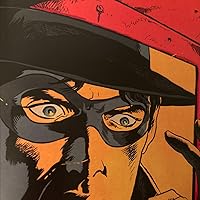
India is familiar ground for Granta, having devoted two classic issues to the country, though much has changed since the last dispatch, published on the cusp of the Modi era.
173 will feature exceptional contemporary fiction and poetry in translation, as well as articles dedicated to the Indian space program; the bloody twilight of the Naxalites in Jharkhand; archaeology wars, Bollywood, jingoism, and national myth-making; the murder of Sikh separatist leader Hardeep Singh Nijjar in British Columbia; the delicate and fraught care for an ailing parent; as well as a historical introduction by the editor that situates contemporary controversies and aesthetic fault lines in perspective. Plus, in-depth interviews with leading writers and historians, alongside work from emerging and established photographers. Contributors will be drawn from across the country, with a focus on vernacular authors as opposed to the elite enclaves of Delhi, Mumbai and Kolkata.
A really good edition overall and in this case I think it's pointless for me to pick out specific articles for praise as, for me, this issue works well as whole. Giving a holistic view of various aspects of India.
As usual with recent editions of Granta, some of the writing fails to live up to Thomas Meaney's fabulous and insightful introduction.
But some of it certainly does: the Vivek Shanbhag extract and Jeyamohan story were highlights, along with the article about Hardeep Singh Nijjar's murder.
Better than several recent Grantas, I thought. It has a genuine and meaningful organising theme (quite a varied and capacious sampling of Indian languages, cultures, histories), several high quality pieces of fiction, fascinating insights into contemporary India, and many interesting takes on the challenges and rewards of translation. Amongst the 30+ pieces, I really enjoyed Sujatha Gidla's account of her changing relationship with her mother, and Dayanita Singh's astonishing photos of the Pandals
The first short story by vivek shanbang reminds me a lot of other kannada literature (heart lamp) - it is short with words, overly descriptive and the real tension is between characters and in dialogue and it's often no more plot than a dinner party so i find extremely irritating the opening of this introduction by thomas meaney disparaged heart lamp as being stories of muslim men cruelties. It ignores the complexity of woman’s literature (as each story was modelled after folktale tradition to me) but also the inability to see the world as it as and be in congruence with it, this is a reality for rural woman in southern Indian, why deny them their voice for respectability politics?
There’s a few non fiction pieces on this government’s current obsession with India being number 1 and diving into how modi’s hinduvata is using literature for evil (mahabharata), and it makes me realize how doomed India feels, same with the “how much for a maoist?”, which is the history I know the most through doing my undergrad thesis on maoists in Nepal. Northern India through its huge forests, indigenous populations and proximity to Mao in china was the place for revolution and it did happen, there were liberated zones where the people controlled schools, healthcare and redistrbuted land by killing landlords, and some of those gains still exist, but now the maoist movement is just infighting and due to the fact there is no where that there the police can't get to so to read about one of the most prominent maoists surrendered to the police and now working as a carpenter wondering how to serve people (Jesus allegory) just feels bad. funny enough, one of the interviewees ends with india is in for a rough ride but so is the rest of the world.
enjoyed most of the stories and the short pieces on translations. i always forget how religious indian lit is, that it's based on a ceremony or another ancient story, it has to be understand through long histories and cultural context, feels expansive and communal
I was very disappointed in this edition of 'Granta', which I eagerly read, expecting it to be on a par with the earlier edition on China, in giving a good selection of contemporary writing in the country and an account of recent trends in indigenous literature. However, I found the quality of the selection offered of very indifferent quality, and was left with the impression that there is little of interest happening in contemporary Indian literature. I did find the many short articles on the translation of words in the various languages of India interesting, also the account of the longstanding Maoist insurgency in Jharkhand, and of the Sikh movement in Canada for an independent Punjabi state of Khalistan. But, the poor quality of the fiction left me with the impression that the decade-long dominance of Hindu nationalism under the BJP and Narendra Modi, has suppressed imaginative creativity in India. I found some of the words used in the English language compositions or translations from indigenous languages odd, though whether this is from the author's imperfect fluency in English or a divergent English idiom in India I couldn't tell. The inclusion of Indian words without explanation was irritating and obscured the meaning of the text - how can a reader unfamiliar with Indian culture be expected to understand these words? Quite apart from these criticisms of the content, I fail to see why the contents list on the back cover uses different titles for the articles than are used in the edition itself. Though this may simply be a feature of editorial style, it left the impression that the cover was finalised before the titles of the articles were decided. In sum I was very disappointed and was left with little positive knowledge of contemporary India.
Gefiel mir sehr gut, weil es zahlreiche Facetten des heutigen literarischen Indiens beleuchtet, das geprägt wird von einem immer deutlicheren Ein-Parteien-System unter Premierminister Narendra Modi und seiner Bharatiya Janata Party (BJP). Wieder legt Herausgeber Thomas Meaney einen Schwerpunkt auf den Aspekt Übersetzung, in diesem Fall vor dem Hintergrund der indischen Vielsprachigkeit: Kurze Zwischenkapitel beleuchten diese Sprachen jeweils aus der Sicht eines spezialisierten Übersetzers oder einer Übersetzerin, jeweils aufgehängt an einem Wort oder Ausdruck in ihrer Sprache, der sich nicht übersetzen lässt. Sehr erhellend.
I’ve never fancied visiting India or really been that curious about it. This has helped change that, though I still do not envisage visiting the country. It has brought home to me the vast range of the Indias and Indians. One aspect I have loved in this, is what Granta has called ‘Symposium’. One or two pages on an aspect, a word, or some other feature of a language of the country, Assamese, Bangladesh, Gujarati, Hindi, Kannada, Malayalam, Marathi, Punjabi, Sanskrit, Tamil, Telugu and Urdu. Memorable pieces include that which provides the cover, of Modi diving as part of discovering the settings of the Mahabharata, and another accompanying a photo essay on India and space.
Really enjoyable - Granta under Thomas Meaney seems to be making a conscious effort to do more country theme issues again. Unlike the last one, China, which had some great sardonic short stories, here the non-fiction is the standout. Snigdha Poonam on the life of a former Naxalite guerilla and Karan Mahajan on the killing of a Sikh community leader in Canada were both really fascinating, as was the symposium scattered throughout the issue with micro-essays on regional languages. Cool stuff all round
An interesting symposium on the languages of India and the challenges of translation. The poetry was good. The stories were okay, though the Jeyamohan story was brutal, and maybe memorable for that reason alone. Anyway, If you’re looking to learn more about India, this is a good volume.
An unexpectedly great read! I had gone in with a lot of trepidation and prejudice but was bowled over by the new age Indian writers. All fresh and individual voices, they no longer tell the stories their forefathers did. Dive right in. Read. Re-read.
Loved the issue with translations from a half-dozen Indian languages, lovely commentaries on the nuances of translation, all in all an excellent variety of material.