Apparsa sulla scena pubblica a soli quindici anni, dopo aver subito un violento attentato da parte di un gruppo di estremisti talebani, Malala è in breve tempo diventata un’icona internazionale di coraggio e resilienza. Eppure, al riparo dagli obiettivi delle telecamere e dallo sguardo delle folle, per anni ha faticato a trovare il proprio posto in un mondo che non sentiva suo. Ora, per la prima volta, Malala si svela in un memoir delicato e sorprendente, raccontandosi con sincerità, umorismo e tenerezza. Finding My Way parla di amicizia, di primi amori, di inquietudine e di scoperta di sé, ma anche dello sforzo che comporta rimanere fedeli a noi stessi quando gli altri ci dicono chi dovremmo essere. Rivivendo il suo percorso da liceale solitaria e universitaria spericolata a giovane donna finalmente in pace con il suo passato, e condividendo con candore momenti spesso tormentati della sua gioventù – il rischio di essere bocciata agli esami, l’esperienza di sentirsi invisibile e l’incontro con l’amore della sua vita –, Malala ci ricorda che i veri modelli di riferimento non sono perfetti, ma umani. In questo libro straordinario Malala si ripresenta al mondo, spiegando cosa ha significato, per lei, farsi strada nella vita senza lasciarsi definire dai suoi periodi più offrendo uno sguardo intimo sul percorso di crescita di una donna che ha preso in mano il proprio destino, Finding My Way è una testimonianza profondamente personale della forza necessaria per essere sé stessi, senza alibi.
Malala!!! The woman you are!!!! I could not love a memoir more. It was full of honesty and vulnerability. I may not have won a Nobel peace prize, but Malala was beyond relatable. Like sitting down for a cup of tea with your friend who unapologetically gets it and gets you. Cup is overflowing
4 stars for a pleasant autobiographical book chronicling Malala Yousafzai's life from age 20 to 23. At the start of the book, she is starting her first year at Oxford University, Oxford, England on a full scholarship. Malala became famous when she was shot point blank at age 15 in the head by a Taliban man in her native Pakistan. She had angered the Taliban by advocating for women to be educated. Pakistan is a very conservative country, where girls are married through an arranged marriage, frequently as young as 13. They are then expected to stop going to school and become a stay at home wife and mother. Malala relates hows she dealt with multiple issues: Adjusting to a new culture in a a strange land. Being allowed to have a social life outside of the home. Being able to dress how she wants, including wearing jeans, something forbidden in Pakistan. Having to juggle her social life and scholastic work at Oxford. Her first year she she spends too much time socializing and not enough time on her studies. She does finally learn to balance both. Dealing with panic attacks caused by memories of being shot. Juggling her notoriety and commitments to her various charities with her studies and family life. Finally, falling in love with with someone. Thank You Atria Books for sending me this eBook through Booktrovert.
Malala's second memoir is definitely less depressing than her first, I am Malala, but no less inspiring to me. It comes as a much more mellow and relatable experience.
Though I heartily recommend the first book to anyone who takes their freedom of education for granted, this one is in essence a heart-warming reassurance to every struggling student, especially the ones who are also adapting to different educational systems.
Click for full video
Malala Yousafzai had grown up in the kind of restrictive household where educational excellence was never optional. And her access to it was seen as enough of a privilege that it needed to be paid forward. To her credit, the girl never even dreamed of complaining, not even after literally getting shot in the face for her efforts.
At 20 years-old, she is older and ready to give independence a try at Oxford University. Yet even after successfully adapting to the British high-school education, it's a shock when university demands become even higher.
As her activism has turned into the family's only source of income, Malala struggles to balance her mental health with her campaigning for women's rights. How can she keep doing a job that demands perfection from her? Who would even listen to her, when her academic excellence is no longer a given? Would she have to settle for being less than perfect?
These were just a few of the questions that plague the young author through the book. They felt extremely relatable, as I was reminded of my own struggles in university, where just being clever enough was no longer enough to get by. And it also brought to mind my study-vlog obsession, where I somehow found myself following the study plans of Cambridge students on YouTube a decade after finishing uni myself.
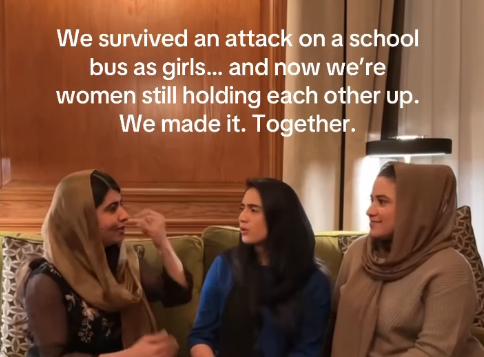
But more importantly, Malala’s little rebellious acts start to take more of a central role: illicit roof climbing, unrequited love stories, unexpected new friendships, and the painful rekindling of older relationships. One of the more heart-wrenching stories came from her friend Moniba, who had to live with the aftermath of seeing her bloodied friend slumping into her lap. Her account felt so much sadder, as she was forced to continue living in the same environment, eventually giving up her own career dreams.
Click for full video
The most satisfying story of all must be the love story with her husband, Asser. Not always a fairytale, their story started out as just friendship, but it eventually grows to rival even some of my favourite fictional romances. The way Asser understood and gave Malala space when she needed it, is definitely up there with ideal couple goals. Especially when you put it all in the context of Pashtun women not being allowed to date before marriage.
Given the latest social and political news, I will definitely be thinking long and hard before I put anyone on a pedestal, but I really, really hope that Asser Malik is in fact the knight in shining armour that Malala deserves.
Score: 4/5 stars
This was one of the few autobiographical books that I'd recommend experiencing in audio format. Not necessarily because Malala is an excellent public speaker, although she is very good. But rather because it makes it easier for the listener to put themselves inside the mind of a twenty-something foreigner trying to forge a life for themselves in a completely alien environment.
I'd recommend this reading to anyone who'd like a peek beneath the facade of all those perfect and self-sacrificing public speakers. We all deserve a pass to just be humans.
This is a wonderful memoir, an honest look at Malala Yousafzai's life. You may remember her as the 15 year old girl who suffered as the result of a Taliban attack. She's taken charge of her destiny since becoming the youngest winner of the Nobel Peace Prize and has stepped out of the spotlight to navigate life on her terms.
I think the most impactful thing about this story is that this 28 year old reveals that it is ok to make mistakes along the way and that the journey to finding oneself isn't always paved in perfection.
I was happy to find this book as I had followed Malala's story and was curious about what happened in the years following her escape. I hope she continues to share with those of us who wish her well.
I was gifted this copy and was under no obligation to provide a review.
I am honestly speechless. I devoured this book because I could not put it down. Malala’s writing style is so warm and personal it felt like I was reading a letter from a friend. This book is beautiful, emotional, and full of honesty. It made me cry on more than one occasion and it made me reflect on my own life and feel deeply grateful for the freedoms and opportunities I have as a woman. Malala shares her story with such strength and grace, and it reminded me how powerful it is when someone speaks their truth. It is easily my favorite read of 2025 so far. Everyone, not just women, should read this book. It is inspiring, moving, and one of those stories that stays with you long after you finish the last page.
I have so much respect for the writer that I really wanted to like this book. Did I? Ummm, not so much. There’s way too much time hearing about the utter trivia of being 19 — turning in assignments late, roommates with hangovers, joining too many clubs, and teenage crushes (Does he like me? Does he not?). It’s as if Malala is trying so hard to prove to us she is a “normal” person that she doesn’t realize she is beating us over the head with it.
Malala’s journey into the global spotlight is anything but conventional, yet she uses that influence with purpose and compassion. This book deepens the admiration I already had for her. I loved learning about her childhood, her evolving sense of mission, and especially her time at Oxford which felt both relatable and inspiring. Her commitment to expanding access to education for girls around the world shines through every chapter and it deserves to be celebrated. A powerful and uplifting read.
I’ve always wondered about the person behind the public figure so I’m glad I read this book. It gives us a glimpse of her live throughout college and later on, her marriage. While some parts could’ve been more brief, it was an interesting read. She sounds more human unlike how she is portrayed by the media.
So nice to catch up with Malala as she takes us through her university days and the early days of her marriage. She has not lost her focus for one second, despite the challenges she has met along the way, women must have the right to be educated.
Malala and I were both university students playing Among Us in the pandemic and I think that’s beautiful… This was a very beautiful memoir I would recommend
Her first book felt like a child trying to narrate a life far too big for her age. But this one felt completely different. The writing is warm, honest and sharp with a raw emotional depth that pulls you in. I loved her reflection on feeling like a kite held tightly by her father while he proclaimed her to be a bird free to soar high. I think it's a quiet ache that many of us can relate to.
As someone who spent years feeling self-conscious and constantly seeking approval, the pressure Malala carried in being expected to represent her roots perfectly, even while people back home waited for any reason to tear her down, felt monumental. It’s sad that she needed layers of security and official permission just to visit the place she called home. Yet she built a school for girls there, worked on making education accessible to the displaced and supported many relatives all while managing her academic and social commitments.
Her chapters set in Oxford where she wrote about her friendships, the pressure to keep up with the syllabus and the feeling of being young and free in an elite space offered a window beyond her activism. And I loved how effortlessly she shifted from her own confusion about love and marriage to her anxiety for her employees and the future of women and girls in Taliban occupied Afghanistan.
Her experience with drugs was written so vividly that the panic, the slowing down and memories crashing in felt painfully real. Her therapy sessions and the lessons she drew from them were unexpectedly grounding and honest.
Malala has clearly found her way. She has contributed so much to the cause she believes in and has uplifted many girls. She is a true feminist and she will no doubt continue to grow, accomplish more and hopefully write many more books.
⭐️⭐️⭐️⭐ I started Finding My Way a bit skeptical but ended up deeply moved. The parts about her time at Oxford and her evolving relationship with her parents are the most engaging, funny, grounded, and full of warmth. I loved the glimpses into the messy realities of her activism and what it took to build a network of schools in remote parts of Pakistan and beyond while proving herself academically and adjusting to living in a new country. I also connected with her reflections on marriage and mental health—the exhaustion, the pressure, and the slow work of finding peace with both. Malala writes with striking clarity about hypocrisy, describing how first world male leaders who once championed her ignored her pleas to help evacuate Malala Fund teachers after the US withdrawal from Afghanistan. She captures the tension of being both a product of global institutions and a critic of them, caught between gratitude and disillusionment. If there’s one thing I missed, it was a deeper engagement with the broader ideological criticism around her activism. She acknowledges the noise, but doesn’t really unpack it, and I wondered what her private reckoning with that might look like. Still, this is a thoughtful, layered, and often disarmingly funny portrait of a young woman defining herself under global scrutiny.
A beautiful and engaging memoir! Most of the world knows at least the basics of Malala's story: she was the girl who stood up to the Taliban and lived to tell her story after being shot, youngest ever Nobel laureate, and champion for girl's education. Now all grown up, Malala shares her true thoughts and feelings about her work, college experience, family, and friendships. I've always enjoyed hearing her speak but often wondered if she was able to have a "normal" life under her incredible circumstances. I loved reading her honest struggles with school, being torn between cultural tradition and finding her own way, her complicated relationship with her family, and the very non-traditional courtship with her husband, Asser.
I felt like I was catching up with a friend while I read Malala describe settling into life in Birmingham, then her college years at Oxford, including how she coped with what was later diagnosed as PTSD, and she met and married her husband Asser.
My impression is that Malala is at a place of acceptance and peace in her life. She comes across as friendly and gracious and just one of us really. That's not to downplay her truly challenging journey, but rather to say that I am truly happy for her as she seems genuinely happy with her life.
I loved how Malala describes her clothing for university – “Delicious floral patterns that could make you dizzy if you stared at them too long. Black, ivory and tan were out of the question because, according to her [mum], neutrals were a waste of good fabric.”
Malala writes, “My scarves reminded me of home and helped me connect to a world I had lost. No matter what the misogynists or Islamophobes said, I wanted girls in Pakistan to know that I had not forgotten them.”
I got a chuckle out of Malala's criteria for a possible suitor. She writes, “My knees went weak at the sight of a dark beard, wooly forearms and tufts of chest hair poking out of a shirt.”
When describing Asser’s attributes, “Most of all, I loved his kind and gentle heart.”
Her mum is aghast at the idea of her sharing her favourite wedding photo as “a photo showing any physical contact between a man and a woman, even a husband and wife, is prohibited.”
However, after much thought she decides to share the photo worldwide stating, “I wanted my community to see that men can show affection for their wives, that devotion and love are the highest forms of honour.” Wow! I love this.
“My life with Asser is one of freedom and joy.” She truly seems to have found a sense of peace and belonging in where she is today.
Malala war bisher für mich immer nur eine Figur die für Bildung und Emanzipation stand. Ihre Biographie hat mir den Menschen, die junge Frau Malala näher gebracht. Sie zeigt sich hier verletzlich und nahbar mit einer feinen Prise Humor. Zerrissen zwischen patriarchaler Tradition und feministischer Moderne, zwischen guter, ehrenvoller Tochter und eigenständiger Frau zeigt uns Malala wie sie ihren Weg zu sich selbst gefunden hat. Schonungslos ehrlich erzählt sie von ihren Selbstzweifeln, dem gesellschaftlichen und schulischen Druck, psychischen Problemen, vom Heimweh und dem fremd fühlen in einem neuen Land.
Finding My Way by Malala Yousafzai is a nonfiction memoir that takes place across Pakistan, the United Kingdom, and the United States, spanning the years after Malala’s attack and her resettlement in England (roughly the 2010s to present). This book focuses on Malala’s personal growth beyond what the world already knows — her education, activism, friendships, and figuring out who she is while carrying the weight of global expectations. It’s honest, hopeful, and deeply inspiring without feeling preachy. I loved seeing this side of her journey, and it left me feeling uplifted and grounded at the same time. 5 stars.
6/5 ⭐️ One of my favorite books I’ve read this year, by far! I couldn’t put it down & read it in one sitting (sorry Sunday evening plans). I love Malala and find her work in women’s education so inspirational, so it’s no surprise I loved this (I’ve been waiting for months for the release date). This book far exceeded any expectations I had, though — it almost reads like a novel, with the stories & experiences she tells, woven in with past recounts and insightful reflections, advice, and learnings. I loved the sections she wrote about her mother because you can see the changes in both her reflection and relationship from her first book. I also loved hearing her convictions about gender equity, independence, marriage, and love — this is one of the first books I’ve related almost completely to someone on these topics, which was so affirming to read.
Malala, your stories & insights brought me to tears throughout this read (I probably spent half the book crying) and I’m so grateful you put this story into words!
An incredibly genuine memoir that has humor and heart and does not shy away from the "messiness" of self-discovery. As a reader, you might come to the table with preconceived notions of who Malala is. This memoir serves as a reintroduction. Malala explores it all from first crushes to failing exams to seeking friendships to falling in love (all while also navigating the global stage!). I recommend the audiobook since it seems like you are sharing a cup of tea with her.
Malala is the coolest. I really enjoyed hearing her speak so honestly about the pressures of being in the spotlight (while trying to perform well academically at Oxford), managing anxiety and PTSD, and how awful (and exhilarating) dating can be. I’m so glad she used this book as an opportunity to remind us that she’s just another human, experiencing the ups and downs like we all do. PS - She’s funny as hell.
I wanted this book to look at Malala recovering from her trauma, adjusting to a new culture, leading her cause, and reflecting on the world along the way. There were pieces of that throughout the book, but there was much more silly college drama that couldn't quite hold my interest. I wish we'd seen more of her mission to push for education in the Middle East.
Boy, do I have thoughts! I mean we all read the excerpts published in Vogue, right? Those were honestly the only “juicy” parts of the story. But everything else written in the book or the running monologue of “I have to be on my best behavior so girls in Pakistan aren’t pulled out of my school” seems like a farce when you put things in context.
The first chapter made me feel sorry for her because she is genuinely confused about her identity and fails to separate it from this role that was forced on her. I use the word force because her father literally groomed her to be this influencer or advocate from a very young age. My friend recently told me her father was a failed journalist so naturally when the opportunity arose he had his daughter write blogs for BBC on resisting the Taliban’s ban on women’s education.
Obviously, he never meant for his daughter to get shot but in a way he was raising a pig for slaughter. She touches upon being the sole provider for her family when they moved to the UK. Her appearances paid the bills and indulged her brothers. The parents were merely chaperones for her international trips. Well, they also had a lot to say about her personal life and lifestyle choices, quoting the ever famous “what will people say?”.
Now coming to her trying to follow the rules and be a good Pakistani daughter so parents wouldn’t pull their girls out of her school. What does she think will happen now that she’s exposed herself for smoking weed, spending a weekend getaway with her now-husband then-boyfriend, and going clubbing? I’m not shaming her for her choices but when she poses herself to be this public figure and champion of girl’s education then she should continue to uphold it. Either she never cared or has stopped caring about her causes.
It was very cringey to read about the way she pursued her husband. And suddenly her parents were okay with her spending one-on-one time with a male “friend?”. Not to mention there is no mention of Islam or her Muslim identity except in passing. She even goes as far as to accidentally eat pork ribs several times lol. There were other moments that felt like they were mentioned in the book solely for sympathy but actually made her seem very self-obsessed. Like it took her many years to realize how her shooting had also traumatized her best friend.
I can go on and on and pick apart this narrative she is building to appease the white feminists but I’m done with her performative nonsense. Congratulations Malala for turning another fan into a hater!
I spent years using Malala as motivation to go to class just for her to be just like me! Skip class, have crushes on boys, have a complicated relationship with her mom, and say “in it’s flop era.” Love this girl so bad <3
Very easy book to listen to. She had a scary journey after being shot by the Taliban. She struggled growing up with the Pakistan traditions and wanted to be her own person. She went to Oxford and enjoyed college life and struggled to make the grades. Seeking therapy helped her handle her anxiety and juggle school, social life, speaking engagements, etc. Her parents also struggled with her independence, but they acknowledged she would be her own person. She fought for equal education for women, married and received the Nobel Peace Prize. A great auto biography ready by Malala.
A memoir filled with honesty, authenticity and vulnerability. It’s such an engaging read - like having a chat with a friend, despite everything Malala has been through and accomplished. She writes about her university experience and mental health challenges openly and candidly, in a way that is deeply relatable to so many people. Malala’s wisdom and humour shines through on every page, balanced beautifully with her passion for girls’ education and her reflections and contemplations about life, marriage, trauma, friendship, love and growth. This is an inspiring and heart-felt read.