Jump to ratings and reviews
Rate this book

Lasers, Death Rays, and the Long, Strange Quest for the Ultimate Weapon

Rate this book
The whole story of laser weapons with a focus on its many interesting characters and sometimes bizarre schemes The laser--a milestone invention of the mid-twentieth century--quickly captured the imagination of the Pentagon as the key to the ultimate weapon. Veteran science writer Jeff Hecht tells the inside story of the adventures and misadventures of scientists and military strategists as they exerted Herculean though often futile efforts to adapt the laser for military uses. From the 1950s' sci-fi vision of the "death ray," through the Reagan administration's "Star Wars" missile defense system, to more promising developments today, Hecht provides an entertaining history. As the author illustrates, there has always been a great deal of enthusiasm and false starts surrounding lasers. He describes a giant laser that filled a Boeing 747, lasers powered like rocket engines, plans for an orbiting fleet of robotic laser battle stations to destroy nuclear missiles, claims that nuclear bombs could produce intense X-ray laser beams, and a scheme to bounce laser beams off giant orbiting relay mirrors. Those far-out ideas remain science fiction. Meanwhile, in civilian sectors, the laser is already being successfully used in fiber optic cables, scanners, medical devices, and industrial cutting tools. Now those laser cutting tools are leading to a new generation of laser weapons that just might stop insurgent rockets. Replete with interesting characters, bizarre schemes, and wonderful inventions, this is a well-told tale about the evolution of technology and the reaches of human ambition.

306 pages, Kindle Edition

First published January 8, 2019

7 people are currently reading
193 people want to read

About the author

Jeff Hecht

49 books3 followers
Jeff Hecht has written extensively about lasers, light and optics for a wide range of publications, including New Scientist magazine, Laser Focus World, Optics & Photonics News, High Technology, Technology Review, and Bulletin of the American Scientists.

Ratings & Reviews

What do you think?
Rate this book

Friends & Following

Create a free account to discover what your friends think of this book!

Community Reviews

5 stars
5 (21%)
4 stars
9 (39%)
3 stars
6 (26%)
2 stars
2 (8%)
1 star
1 (4%)
Displaying 1 - 4 of 4 reviews
Profile Image for Cav.
907 reviews204 followers
January 18, 2023
Despite its exciting title and subject matter; Lasers, Death Rays, and the Long, Strange Quest for the Ultimate Weapon ultimately fell a bit short of my expectations...

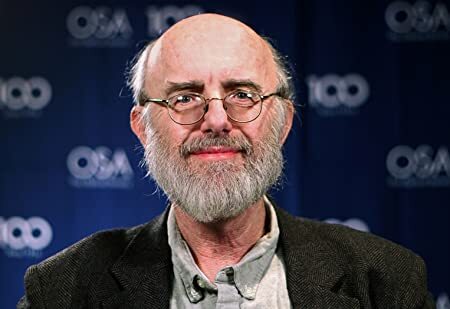
Author Jeff Hecht has written extensively about lasers, light and optics for a wide range of publications, including New Scientist magazine, Laser Focus World, Optics & Photonics News, High Technology, Technology Review, and Bulletin of the American Scientists.

Jeff Hecht:
kv5ifiik9nl5gfsr23u7jijrup-SX450

The book opens with no intro or preface. Instead, it hits the ground running in its first chapter with the story of Archimedes and the burning mirrors.
With such exciting material as this, a high-energy intro would have definitely been value added. A missed opportunity, IMHO.

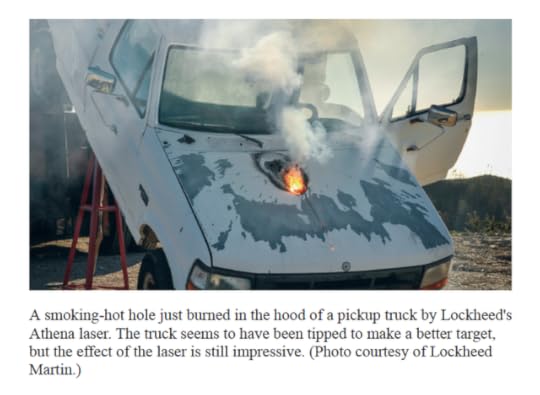
Unfortunately, I found much of the writing here to be overly dry and long-winded... A book about lasers and death rays could have had a more lively overall tone and flow. I will commend the book for the inclusion of many pictures throughout, however, as this is always a nice touch to any presentation, and helped bring some context to the broader story.

The book proceeds in a somewhat chronological fashion. Nikola Tesla's late 1800's efforts towards a "death ray" are briefly talked about, before moving on to death rays and WW2. The author also briefly mentions the Manhattan Project and Robert Oppenheimer, as well as the subsequent quest for a fusion-powered "super," led by Hungarian physicist Edward Teller, for which Oppenheimer famously strongly objected to.

Hecht says this of the WW2 period:
"When atomic bombs devastated Hiroshima and Nagasaki to end World War II, the scale of the killing and devastation made the atomic bomb the ultimate weapon of the nuclear age. Death rays were left to the realm of science fiction."
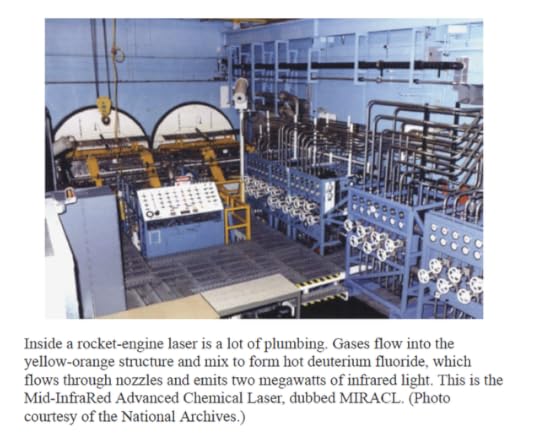
The writing continues on, with quite a fair bit of time describing the Cold War era; and related Russian and American efforts to find a suitable laser technology. Hecht talks more here about Edward Teller's continued influence on the American government and the US "Star Wars" program.

Screenshot-2023-01-13-142824

Some more of what is covered here by the author includes:
• Nuclear disarmament; Ronald Reagan and Michael Gorbachev.
• X-ray lasers.
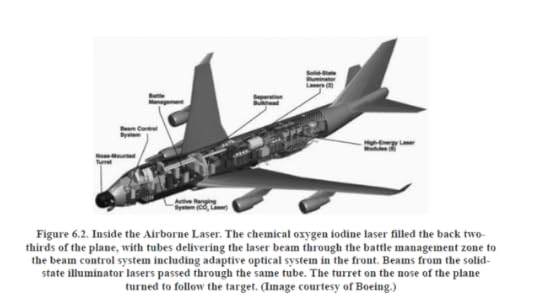
• An airborne Laser in the 747 aircraft.
• Solid-state lasers.
• The free-electron laser.
• Megawatt class lasers.
• The future of lasers.

Screenshot-2023-01-13-151839
Screenshot-2023-01-13-142643

***********************

As briefly mentioned at the start of this review - I didn't enjoy this one as much as I'd hoped... There was still some decent information presented here, however.
3 stars.
Profile Image for Joe.
219 reviews1 follower
April 26, 2019
An excellent overview of the search for ray/light/energy beam weapons throughout history and especially in the last one hundred years. Tantalizing close to being feasible of late, we will almost certainly see such weapons in the next 20 years.

In reading this book, I sometimes imagined a Sir Geoffrey of Hecht writing a similar tome in the year 1319 called "Cannon, Gun Powder, and the Long, Strange Quest for the Weapon Ultimate."
339 reviews3 followers
July 13, 2021
Ironically given the prominence of ray guns in science fiction stories, it turns out that making an effective weapon in the real world is one of the most difficult things you can do with laser technology. Jeff Hecht details all of the ups and downs (mostly downs) in laser weapons design over the past 50 years since the laser’s invention. Until reading this book, I didn’t realize just how much the reach of the “Star Wars” (SDI) initiative in the 1980s exceeded what was realistic or feasible at that time. This is an interesting read if you’re into the technology of the laser and the challenges that arise (e.g. beam focusing and adaptive optics, trying to make a laser both powerful enough to be an effective weapon and also small enough that it doesn’t occupy an entire 747…). Today, laser weaponry is finally perhaps poised to play a very minor niche role on the battlefield, although history suggests we should still take these claims with a grain of salt.
Displaying 1 - 4 of 4 reviews

Can't find what you're looking for?

Get help and learn more about the design.