It is a situation we all fear and none of us can a life-threatening diagnosis. But what if the person receiving the diagnosis--young, physically fit, poised for a bright future--is himself a doctor?
At thirty-one David biro has just completed his residency and joined his father's successful dermatology practice. Struck with a rare blood disease that eventually necessitates a bone marrow transplant, Biro relates with honesty and courage the story of his most transforming journey. He is forthright about the advantages that his status as a physician may have afforded him; and yet no such advantage can protect him from the anxiety and doubt brought on by his debilitating therapies. The pressures that Biro's wild "one hundred days" brings to bear on his heretofore well-established identity as a caregiver are enormous--as is the power of this riveting story of survival.
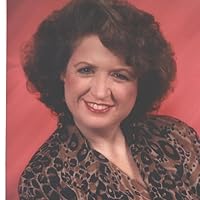
David Biro graduated from the University of Pennsylvania and Columbia Medical School. He earned his PhD in English Literature from Oxford University. He currently teaches at SUNY Downstate Medical Center and practices dermatology in Bay Ridge, Brooklyn.
David is the author of two non-fiction books: One Hundred Days: My Unexpected Journey from Doctor to Patient and The Language of Pain: Finding Words, Compassion, and Relief. His first novel, This Magnificent Dappled Sea, debuted in November, 2020. His new novel, And The Bridge is Love, was published in October 2021. He has also published pieces in The New York Times, Slate, the Philadelphia Inquirer, and various medical journals.
David lives in New York City with his wife, Daniella, and twin boys, Daniel and Luca.
It is always fascinating to read a doctor's perspective on situations where they find themselves on the receiving end of medical care. In this case, Biro is a dermatologist and therefore is as unfamiliar with his diagnosis as I suspect the average patient would be. However, he has the support of many collegues in the medical world, including his father, and finds 2 doctors who are among the tops in the world at treating his rare condition. In the end, he is faced with a difficult choice in treatment plans, as one doctor strongly recommends a bone marrow transplant and one prefers to try other methods of treatment first. About half the book deals with Biro's discovery of his illness, his lone presenting symptom being a brief flash of light in on of his eyes, and the resulting pursuit of answers as to what it is and how to treat it. The other half involves his treatment, having opted for the bone marrow transplant and its likelihood of a cure. Even as a physician, Biro finds himself unprepared for the harshness of the transplant and the treatments needed to prepare for it, and the feeling of helplessness after it. All in all, I found it to be an interesting book and definitely worth the read. I debated between 3 and 4 stars, because at times it got a bit dry and I had to put it down for a few days. Biro got the 4th star for emphasising the importance of HLA matching in transplants. It's absolutely crucial in bone marrow transplants, but for the kidney transplants I'm involved with, it's a pretty big deal too.
One Hundred Days is a raw and honest account of a physician's experience as a transplant patient. Mr. Biro, a well-connected physician, makes no secret of the special perks he receives because of his privileged status. But not even unlimited access to specialists or a "presidential suite" at the hospital can curb the physical and mental anguish he suffers in transforming from a person who's had more than his share of luck and good health, to a very sick patient dependent on those around him. At 31 years of age, he comes face to face with his own mortality for the first time:
"I've just received a lethal dose of chemotherapy and radiation. My white count is zero. If Michele's stem cells don't take, I'm dead."
Biro's prose is straight-forward, and he conveys medical information simply enough for any adult reader to understand. I learned and retained a lot more about stem cell transplantation from this book than from all of the training materials I was given when I first started working at the Center for International Blood & Marrow Transplant Research of the National Marrow Donor Program. The one thing I did crave more of from Biro was reflection. One Hundred Days is a very immediate book--one whose pages a reader will turn simply to see what happens next. But after finishing the book what I appreciate most are the moments when he was able to step back and reflect on his transformation. When thinking about all the good fortune he had up until finding out he had a rare blood disease, he writes:
"There is too much evil and tragedy in this world to pass through unscathed. It wouldn't be fair for only some to bear the brunt of suffering. Otherwise how would we communicate?"
When I picked up the book I knew that obviously Biro must have survived his transplant. What I didn't know was how agonizing a transplant--even a successful transplant--could be. Biro endures transplant with as much courage and stamina as could be expected of any human being. Despite his courage, after his transplant he realizes he is no longer the same confident person he was before becoming sick. He worries one day when his wife doesn't arrive home from the airport on time. He paces, he clenches his jaw:
"Strange how upset the delay has made me. I am usually not the worrying type. Evidently, that has changed. I guess I no longer trust in the goodwill and predictability of Fate."
I admire Biro's honesty. While he doesn't regret the transplant, he refuses to paint a cheery post-transplant picture that would put this book in the Triumph Over Medical Adversity category. His survival is miraculous, but his tone is far from triumphant. His ability to be forthright makes this book well worth reading.
Biro is a writer and a dermatologist (not sure which order he'd put those in himself), and he's written a gripping account of surviving a life threatening disease. From the earliest stages, through the difficult decision to proceed with a bone marrow transplant, and the agonizing months of treatment and recovery that follow, he takes the reader by the hand through an emotionally and physically harrowing ordeal. Through it all, his life hangs in the balance, and he's written his story so well that you have to keep reminding yourself that he's had to survive the experience to write the book you're reading.
This is not to say that you don't step back now and then and realize that you're not reading the story of a typical patient. Biro clearly has all sorts of advantages by being a doctor, with numerous personal connections in medicine, including a father who is a doctor. Biro gets privileged treatment all along the way, including the advice of two specialists whom he's actually able to get together in the same room to discuss his case from their differing points of view.
In retrospect, you also realize that Biro has glossed over a remarkable stroke of good fortune -- his younger sister's being a perfect match as a bone marrow donor. While he praises his family for their tireless support at his bedside throughout his time as a patient, you feel that he also takes a great deal of this attentiveness for granted, especially the very painful procedure that his sister undergoes to be his lifesaver.
But in spite of these misgivings, a reader is likely to feel thoroughly absorbed by Biro's story. He does, after all, have to endure weeks of physical pain and discomfort, all the while knowing that he might not survive at all. It's OK for him to be more self-centered than maybe we'd prefer.
This is an excellent book for anyone in the healthcare professions, as it depicts graphically the experience of being a patient and having to endure treatment that is as life threatening as the disease being treated. As a companion to this book, I'd recommend the play "Wit," about a dying cancer patient, by Margaret Edson, also made into an HBO film by Mike Nichols, starring Emma Thompson.
While I feel like this book is important for anyone experiencing someone going through a BMT, I found that little of it pertained to me, and possibly, very little will pertain to anyone else but this guy. This is not a bad thing. Though I was hopeful going into it, the thing that I brought away from this story is that everyone's experience is going to be pretty different. It's like death, or self-help books, or Cat Vs. Cat, not everything is going to pertain to a large generic audience, or be a fool-proof way of relating to your (you meaning me) isolated experience. This was a good read, and helpful in many ways, but I could only glean out the things that I could relate to. Next time when I'm looking to find my personal experiences in the lives and stories of others, it might be more suitable to just write my own because then I will be guaranteed to relate with it, even if no one else does.
I really did enjoy reading about a young doctor facing an illness that could very likely kill him. The problem I have with this is the constant whining about 2/3s of the way through the book. He went through a lot but I have as well and I never felt sorry for myself. I felt blessed to be healthy again. Oh well.
I read this for my Literature and Medicine course at school, the author being one of my professors. It was quite interesting to read a memoir written by someone that I have interacted with and know, at least in a professional setting.
Dr. Biro does a wonderful job of describing and detailing the emotional toll of a life-threatening illness. The internal monologue and tone that comes through the pages is relatable and brutally honest. I'm surprised at how much I can understand every emotion he feels throughout this illness experience that I know virtually nothing about.
Illness narratives can be a difficult thing for me to read. I find them incredibly important to read as a future physician, but oftentimes the representation of healthcare or the presentation of disease makes me doubt the author or feel defensive, so the descriptions and explanations are subject to my immense critique. Dr. Biro does a great job of both explaining everything that happens to him while also playing the student.
Some parts of this story make me angry, such as the special treatment he receives (and acknowledges) for being a doctor. Some parts make me roll my eyes, like how he acted after returning home from his transplant. But its brutal honesty makes all those things forgiven. I think few people are so in-tune with themselves as DB is in this memoir.
I appreciated this book- it was interesting to hear the voice of someone who is both doctor and patient. The powerlessness a person feels in the face of a life threatening medical condition with uncertain outcome was well conveyed. I would have loved a few more chapters exploring some unresolved emotional aspects- such as Biro’s father asks him to consider what his wife might still be feeling in response to being left out of critical decisions and Biro mostly dismisses this- like I’m sure she knows I appreciate all she’s done. He also describes very obstinate moments where he cannot tolerate what a doctor is telling him, but he doesn’t retrospectively revisit these instances, to explore what he might have learned about himself and his patients.
An interesting medical story but it got a little irritating listening to the author whine about what happened to him. I once spent the better part of six months in hospitals because of a serious car accident and I didn't whine nearly as much as this guy did about having to be in the hospital for 2 months. Yeah, he went through terrible stuff but he was pretty obnoxious about a lot of it when he felt good enough and I was pretty turned off by it by the end of the book.
I'm happy it all turned out pretty well for the author but his attitude was not a good luck.
Very well done memoir about Dr. Biro's fight against PNH and his resulting bone marrow transplant in 1997. Extremely different treatment than the common practices now bone marrow transplants, but nonetheless fascinating to read about.
Yes, yes it took me forever to read! Mostly because I would start it, read 5 chapters, then restart it to remind myself what was happening. I read over half the book in Italy this summer, then another 125+ pages this week after deciding I needed to finally finish it lol.
This book is a testimonial - rendering that oaths used to be sworn on testicles - in this case irradiated testicles. The ins and outs of transplant technology, the inevitable scythe of unintended consequences could all be anticipated by a reader. What is remarkable is the ongoing emotional vulnerability which David Biro shares, despite what I thought was a nearly universal rule that males do not share feelings. I am in awe.
This book passed through my hands when I was asked to pass it on to someone. When I found out it was about a young doctor’s experience of going through a bone marrow transplant, I knew I had to read it at that moment. Similarly, my brother may be a candidate for a bone marrow transplant due to Leukemia and MDS, where a time limit of life has been given. The book helped me to fully understand the process and risk. It was well worth reading in my case.
David Biro writes honestly but with beauty. Having already read one of his novels I found this story of his own illness interesting as although there were so many medical terms, he explains them in a way that is easy to absorb. As a lymphoma survivor i found it fascinating .
I purchased this book several months ago, and looking for distraction from personal issues, I picked it up two days ago. Certainly was the right "medicine", as I was immersed in the 100 days as described by the author and his parents. I would recommend this book to anyone with an interest in disease and the many questions that arise in the medical field.
Amazing book. Biro is a great author and leads through his journey as a patient without holding back. The book does get slightly medical but biro does a good job for a layman to enjoy this book without feeling too out of the water. 10/10 would recommend.
There has been a lot of changes in stem cell transplantation in the past 20 year, but this book really reinforces my decision to do my best to avoid that route. It may be in the cards someday for me, but not without a fight.
I actually would not recommend it for someone facing a SCT today, because there have been a lot of advances. I think it’s a bit too scary for that.
One Hundred Days is the story of a doctor who becomes a patient when he contracts a rare blood disease. It's a very interesting story. He gets a rare blood disease that causes his platelets and blood count to drop. He could take medication, but it wouldn't cure it. He decides to have a bone marrow transplant. His sister is a match and donates it to him. This is an instance of the treatment being as hard as the disease. The only symptom he had before deciding on the transplant was fatigue. The treatment before and after the transplant was gruelling and debilitating. The title is taken from the amount of time he was to be in isolation before the transplant and after. People could come in his room with gowns and masks on, but he could not leave. It's a very engaging story.
this is a great book for meical professionals caring for patients that receive bone marrow/stem cell transplants (no, this has nothing to do with cloning!!!!). as a caregiver you often wonder how things are seen through the eyes of the patient.
Everything you want to know about bone marrow transplants, from a recipient's point of view. It helps that the recipient is a physician, the son of a physician, and an aspiring author. If you want to know about the donor's end, I'll tell you.
I'd suggest everyone read this book. We hear so much about bone marrow transplants' that we have no clue what the receipients of the treatment encounter. This is an eye-opener, for sure.The author does tend to be a little self-pitying, but that's not surprising.
Interesting to learn about the reality of a stem cell transplant now that this treatment is touted for MS among other conditions. Not for the faint-hearted. Not necessarily a complete cure without side effects