

What do you think?

King of Kings: A Reformed Guide to Christian Government
What if our understanding of Christianity and politics is fundamentally flawed?
King of Kings is the result of needing to rethink political theology in recent years. In it, James Baird presents a bold and compelling case for a radical that government must promote Christianity as the only true religion.
Drawing from Scripture, the Reformed confessions, and the insights of the American Founders, this concise but powerful primer offers a clear and urgent call to Christians. Short enough to read in one sitting, it provides a gateway into a rich tradition that many have forgotten—and a vision for recovering it today.
King of Kings is the result of needing to rethink political theology in recent years. In it, James Baird presents a bold and compelling case for a radical that government must promote Christianity as the only true religion.
Drawing from Scripture, the Reformed confessions, and the insights of the American Founders, this concise but powerful primer offers a clear and urgent call to Christians. Short enough to read in one sitting, it provides a gateway into a rich tradition that many have forgotten—and a vision for recovering it today.
120 pages, Hardcover
Published October 3, 2025
Ratings & Reviews
Friends & Following
Create a free account to discover what your friends think of this book!
Community Reviews
Displaying 1 - 30 of 105 reviews

February 17, 2026
Well-argued, concise, and irenic. I had a couple of insignificant quibbles, but all considered, I think this will be my go-to recommendation for the basic case for Christian government.

October 4, 2025
I had an opportunity to read the manuscript before it was published. This is an excellent introduction to classical Protestant political theory. Recommended.

December 17, 2025
Very good. With a quibble here and there hardly worth mentioning, this was the best primer class work on political theology that I have found. I greatly prefer it to Torba and Isker's work on the topic, and I plan to re-read this soon.

July 27, 2026
The topic of Christian nationalism has been all the rage lately, and while that is probably the topic of this book, I don't think the phrase is used even once. But James Baird's thesis is pretty clear -- "government must promote Christianity as the only true religion." That's what he sets out to prove in this book.
And, in my estimation, he does a good job of making his case. His basic argument is this: government must promote the public good; as the only true religion, Christianity is part of the public good; therefore, government must promote Christianity as the only true religion (p.22). Pretty much all Christians would agree with the first premise, I think. It is the second premise that might cause debate.
So, Baird makes his case by showing that in the Bible, civil rulers promote true religion; that in American history, there is precedent for promoting Christianity; that freedom has historically been understood as the liberty to choose good, not to do whatever you want; and that promoting Christianity is actually the best way to love your neighbor as yourself.
Important distinctions are made along the way: Old Testament civil laws for Israel did not bind the civil leaders of other nations, and they should not bind us today (p.42); and that while government must promote Christianity, that does not mean the church must promote America (p.8). Baird also seems to acknowledge that the actual implementation of Christian principles in any nation is a huge challenge, and must be handled with great wisdom (chapter 9). "Not everything that should be done must be done at this very moment or in this particular circumstance." (p.78).
I can't say that my convictions on this question are yet fully formed, but I can say that any Christian alarmed by the phrase "Christian nationalism" should take the short time required to read these mere 85 pages to understand the topic better.
And, in my estimation, he does a good job of making his case. His basic argument is this: government must promote the public good; as the only true religion, Christianity is part of the public good; therefore, government must promote Christianity as the only true religion (p.22). Pretty much all Christians would agree with the first premise, I think. It is the second premise that might cause debate.
So, Baird makes his case by showing that in the Bible, civil rulers promote true religion; that in American history, there is precedent for promoting Christianity; that freedom has historically been understood as the liberty to choose good, not to do whatever you want; and that promoting Christianity is actually the best way to love your neighbor as yourself.
Important distinctions are made along the way: Old Testament civil laws for Israel did not bind the civil leaders of other nations, and they should not bind us today (p.42); and that while government must promote Christianity, that does not mean the church must promote America (p.8). Baird also seems to acknowledge that the actual implementation of Christian principles in any nation is a huge challenge, and must be handled with great wisdom (chapter 9). "Not everything that should be done must be done at this very moment or in this particular circumstance." (p.78).
I can't say that my convictions on this question are yet fully formed, but I can say that any Christian alarmed by the phrase "Christian nationalism" should take the short time required to read these mere 85 pages to understand the topic better.

July 31, 2026
James Baird's "King of Kings" is a brief (only 85 pages) introduction to his vision of Christian government. While I appreciate his desire to see Christ honored in every sphere of life, I ultimately found the book unconvincing.
A few introductory observations stood out to me. First, Baird openly admits that only two years before writing this book he held the opposite position, describing his change as a "complete 180-degree turn." I appreciate his honesty, but I question whether such a significant theological shift had enough time to mature before being published. Second, although he presents the book as a retrieval of the historic Protestant view, the historical interaction is surprisingly thin. Aside from frequent appeals to Calvin's commentaries, most of his sources come from the eighteenth and nineteenth centuries. At only eighty-five pages, the book simply does not provide enough historical evidence to support its broad claims. Third, I also found it interesting that Founders Press—a Reformed Baptist publisher—released a book on political theology by a PCA minister and included an endorsement from Joe Rigney (Moscow). That is a noteworthy alliance.
The book's central thesis is that governments should "promote Christianity as the only true religion." Yet Baird never clearly explains what this would look like in practice. He defines "promote" broadly but remains vague about how civil rulers should actually carry out this responsibility. For such a significant claim, much greater precision is needed. Likewise, although he defines Christianity in broad terms, the discussion appears to assume Protestant Christianity, leaving the place of Roman Catholicism and Eastern Orthodoxy unclear.
Baird also works hard to distinguish the church from the state, and I appreciate that emphasis. However, I believe he often blurs those distinctions by applying teachings given to the church—particularly from the Sermon on the Mount—to the civil magistrate. In this respect, David VanDrunen's critique of confusing the distinct callings of church and state came to mind repeatedly.
Another surprising feature is Baird's claim that he will avoid the debates surrounding Theonomy, Kuyperianism, and Reformed Two Kingdoms theology. In reality, those discussions appear throughout the book. He rejects Theonomy while adopting a general equity framework, and his language that "grace restores and perfects nature" reflects familiar Neo-Calvinist categories.
One section I genuinely appreciated was his discussion of the character of civil rulers. Drawing from William Blackstone, Baird argues that magistrates should govern with wisdom, goodness, and strength, while warning Christians against adopting worldly methods in politics. That is a needed reminder.
Finally, Baird argues that many of the original American states established Protestant Christianity while leaving the federal government neutral. Even if his historical observations are correct, however, they do not establish the biblical case. Demonstrating what early America practiced is not the same as demonstrating what Scripture requires.
Overall, I found "King of Kings" to be more assertive than persuasive. Its historical claims are underdeveloped, its central thesis lacks sufficient precision, and many of its conclusions are left largely unsubstantiated. While I appreciate Baird's desire to see Christ's lordship recognized in public life, I would not recommend this book as a careful treatment of Christian political theology.
A few introductory observations stood out to me. First, Baird openly admits that only two years before writing this book he held the opposite position, describing his change as a "complete 180-degree turn." I appreciate his honesty, but I question whether such a significant theological shift had enough time to mature before being published. Second, although he presents the book as a retrieval of the historic Protestant view, the historical interaction is surprisingly thin. Aside from frequent appeals to Calvin's commentaries, most of his sources come from the eighteenth and nineteenth centuries. At only eighty-five pages, the book simply does not provide enough historical evidence to support its broad claims. Third, I also found it interesting that Founders Press—a Reformed Baptist publisher—released a book on political theology by a PCA minister and included an endorsement from Joe Rigney (Moscow). That is a noteworthy alliance.
The book's central thesis is that governments should "promote Christianity as the only true religion." Yet Baird never clearly explains what this would look like in practice. He defines "promote" broadly but remains vague about how civil rulers should actually carry out this responsibility. For such a significant claim, much greater precision is needed. Likewise, although he defines Christianity in broad terms, the discussion appears to assume Protestant Christianity, leaving the place of Roman Catholicism and Eastern Orthodoxy unclear.
Baird also works hard to distinguish the church from the state, and I appreciate that emphasis. However, I believe he often blurs those distinctions by applying teachings given to the church—particularly from the Sermon on the Mount—to the civil magistrate. In this respect, David VanDrunen's critique of confusing the distinct callings of church and state came to mind repeatedly.
Another surprising feature is Baird's claim that he will avoid the debates surrounding Theonomy, Kuyperianism, and Reformed Two Kingdoms theology. In reality, those discussions appear throughout the book. He rejects Theonomy while adopting a general equity framework, and his language that "grace restores and perfects nature" reflects familiar Neo-Calvinist categories.
One section I genuinely appreciated was his discussion of the character of civil rulers. Drawing from William Blackstone, Baird argues that magistrates should govern with wisdom, goodness, and strength, while warning Christians against adopting worldly methods in politics. That is a needed reminder.
Finally, Baird argues that many of the original American states established Protestant Christianity while leaving the federal government neutral. Even if his historical observations are correct, however, they do not establish the biblical case. Demonstrating what early America practiced is not the same as demonstrating what Scripture requires.
Overall, I found "King of Kings" to be more assertive than persuasive. Its historical claims are underdeveloped, its central thesis lacks sufficient precision, and many of its conclusions are left largely unsubstantiated. While I appreciate Baird's desire to see Christ's lordship recognized in public life, I would not recommend this book as a careful treatment of Christian political theology.

February 7, 2026
Clear, reasonable, and brief. A great resource to hand to a friend.

October 24, 2025
This book has the virtue of brevity and clarity. It is cogent. And it is an excellent on-ramp to the questions many Christians feel quite deeply today. The simple fact of the matter is this: much of evangelical political theology is shallow and entirely ignorant of Christian tradition, be that medieval or Reformed. Baird’s work represents the very opposite of that. It is a work of great scholarship, patience, and sincerity. The chapters on prudence and love were particularly insightful. The whole book is worth reading. It is very good.
More work needs to be done in explaining how Christian political theology, especially in the last 300 years, cashes out “common good” as a category. The minor premise of Baird’s syllogism is the hinge, as he acknowledges. Does the common good include promoting true religion? Or it is about creating and protecting moral order? Baird says it’s the former, but his reading of Scripture is, in my view, inconclusive and, perhaps, a bit selective. It is inconclusive in this way: to cite Nebuchadnezzar as promoting true religion simply proves too much. Nothing in the text indicates, requires, or proves that all governments everywhere must institute true religion. Rulers are accountable God, but the text doesn’t require civil worship. This is true for the other Old Testament examples, too.
Similarly, Baird doesn’t acknowledge that - to my knowledge - no nation in the Old Testament is rebuked for failing to institute true worship as civil policy. Israel, of course, is. The nations are rebuked for idol worship and pride. Not civil policy. Israel is held in particular (covenantal!) accountability as a nation responsible to God for the promises given to her. This doesn’t necessarily prove that nations aren’t required to promote true religion, but it is curious that no nation, all of which are God’s servants, is rebuked for failing to do so.
My criticisms are likely revealing my, admittedly, Baptist hand, covered as it is with the leftovers of the most recent potluck. I think Baptist political theological, in particular, suffers from a paucity that will prayerfully be rectified in the coming years. Baird’s book will almost certainly be a very helpful and useful refining tool to that end.
More work needs to be done in explaining how Christian political theology, especially in the last 300 years, cashes out “common good” as a category. The minor premise of Baird’s syllogism is the hinge, as he acknowledges. Does the common good include promoting true religion? Or it is about creating and protecting moral order? Baird says it’s the former, but his reading of Scripture is, in my view, inconclusive and, perhaps, a bit selective. It is inconclusive in this way: to cite Nebuchadnezzar as promoting true religion simply proves too much. Nothing in the text indicates, requires, or proves that all governments everywhere must institute true religion. Rulers are accountable God, but the text doesn’t require civil worship. This is true for the other Old Testament examples, too.
Similarly, Baird doesn’t acknowledge that - to my knowledge - no nation in the Old Testament is rebuked for failing to institute true worship as civil policy. Israel, of course, is. The nations are rebuked for idol worship and pride. Not civil policy. Israel is held in particular (covenantal!) accountability as a nation responsible to God for the promises given to her. This doesn’t necessarily prove that nations aren’t required to promote true religion, but it is curious that no nation, all of which are God’s servants, is rebuked for failing to do so.
My criticisms are likely revealing my, admittedly, Baptist hand, covered as it is with the leftovers of the most recent potluck. I think Baptist political theological, in particular, suffers from a paucity that will prayerfully be rectified in the coming years. Baird’s book will almost certainly be a very helpful and useful refining tool to that end.
October 12, 2025
“Government must promote Christianity as the only true religion.”
This thesis is provocative for sure, however, Baird offers a clear and concise (~80 pages) argument for his position. This is an excellent read for anyone trying to discern how a Christian should think about the government’s relationship to religion and God.
Baird packs in a useful amount of evidence from the Bible and American History. He briefly explains the modern day misunderstanding of the first amendment’s “freedom of religion” resulting from Everson v. Board of Education, a United States Supreme Court ruling in 1947 that outlawed public school teachers from leading students in prayer. This was a seismic shift in American history. It would have been neat to see Baird do a little more engagement on the importance of a ruling like this, and how it shapes future generations in thinking about “freedom of religion”.
He does dive a little deeper in explaining how the modern man sees freedom as “freedom of choice”, whereas historically freedom was viewed as “freedom to do right, or good”. This is an important distinction I would have liked to see more of.
Baird cites many of the original State constitutions which required adherence to Christianity for public officials, and the promotion of Christianity by the State. This was helpful to see and crucial to understanding foundation and “vision” for America.
This book is great for its length. I hope any future edition would contain:
1) more time in the exegesis of Scripture
2) more engagement with the original State constitutions, as well as the individual development over time
3) more engagement with critics of Baird’s position
Every chapter has the ability to be expanded and defended much more thoroughly but again, it is an excellent place to start if you are trying to make sense of governments place and function as a Christian.
Five stars because I think everyone should read it.
This thesis is provocative for sure, however, Baird offers a clear and concise (~80 pages) argument for his position. This is an excellent read for anyone trying to discern how a Christian should think about the government’s relationship to religion and God.
Baird packs in a useful amount of evidence from the Bible and American History. He briefly explains the modern day misunderstanding of the first amendment’s “freedom of religion” resulting from Everson v. Board of Education, a United States Supreme Court ruling in 1947 that outlawed public school teachers from leading students in prayer. This was a seismic shift in American history. It would have been neat to see Baird do a little more engagement on the importance of a ruling like this, and how it shapes future generations in thinking about “freedom of religion”.
He does dive a little deeper in explaining how the modern man sees freedom as “freedom of choice”, whereas historically freedom was viewed as “freedom to do right, or good”. This is an important distinction I would have liked to see more of.
Baird cites many of the original State constitutions which required adherence to Christianity for public officials, and the promotion of Christianity by the State. This was helpful to see and crucial to understanding foundation and “vision” for America.
This book is great for its length. I hope any future edition would contain:
1) more time in the exegesis of Scripture
2) more engagement with the original State constitutions, as well as the individual development over time
3) more engagement with critics of Baird’s position
Every chapter has the ability to be expanded and defended much more thoroughly but again, it is an excellent place to start if you are trying to make sense of governments place and function as a Christian.
Five stars because I think everyone should read it.

October 31, 2025
It was an okay read. Though I would agree with the author on many principles, the history is flat and bland, as if the founders of the nation overwhelmingly all meant the same thing. A monolithic view of the founders. There's no thoughtful reflection on how the founders had absorbed John Locke's view of 'religion' as a utilitarian good (use religion to promote the national wellbeing, not because one religion or the other is right). Much like the atheists who now call themselves 'cultural Christians.' Such as Benjamin Rush's letter of Education where he wants to promote Christianity, but many religions will work just fine, "Such is my veneration for every religion that reveals the attributes of the Deity, or a future state of rewards and punishments, that I had rather see the opinions of Confucius or Mohammed inculcated upon our youth than see them grow up wholly devoid of a system of religious principles. But the religion I mean to recommend in this place is the religion of JESUS CHRIST."
The author also seems to embrace an over realized eschatology that we can vote and legislate and politic the kingdom into supremacy, now, by our actions and works and steam and energy. It seems to me that this is a similar position as the social justice crowd, but he leans hard right instead of left (flip side of the same coin). This is clearest when he encourages readers to grasp for power, get power, reach for power. Hmmmm. That seems to fly in the face of Mark chapters 8 through 10, where Jesus disciples are constantly grabbing for power, and can't embrace that the way of the Messiah is the way of the cross. Peter wants to rebuke Jesus for talking about a cross, and Jesus says, "Get behind me, Satan! For you are not setting your mind on the things of God, but on the things of man” (8:33). Or in chapter 9, while our Lord is talking about the cross again, his disciples are bickering over who is the greatest in the kingdom. And our Lord must challenge them with, "If anyone would be first, he must be last of all and servant of all” (9:35). And then again, while talking about the cross once more, James and John come up wanting power, 'put me on your right hand in the kingdom and put him on your left hand!' And our Lord corrects them once more (10:42-44) pointing our power-grabbing is not the kingdom way, and ending with some gospel good news, "For even the Son of Man came not to be served but to serve, and to give his life as a ransom for many” (10:45).
It's an okay read but misses the mark in substantial ways and places.
The author also seems to embrace an over realized eschatology that we can vote and legislate and politic the kingdom into supremacy, now, by our actions and works and steam and energy. It seems to me that this is a similar position as the social justice crowd, but he leans hard right instead of left (flip side of the same coin). This is clearest when he encourages readers to grasp for power, get power, reach for power. Hmmmm. That seems to fly in the face of Mark chapters 8 through 10, where Jesus disciples are constantly grabbing for power, and can't embrace that the way of the Messiah is the way of the cross. Peter wants to rebuke Jesus for talking about a cross, and Jesus says, "Get behind me, Satan! For you are not setting your mind on the things of God, but on the things of man” (8:33). Or in chapter 9, while our Lord is talking about the cross again, his disciples are bickering over who is the greatest in the kingdom. And our Lord must challenge them with, "If anyone would be first, he must be last of all and servant of all” (9:35). And then again, while talking about the cross once more, James and John come up wanting power, 'put me on your right hand in the kingdom and put him on your left hand!' And our Lord corrects them once more (10:42-44) pointing our power-grabbing is not the kingdom way, and ending with some gospel good news, "For even the Son of Man came not to be served but to serve, and to give his life as a ransom for many” (10:45).
It's an okay read but misses the mark in substantial ways and places.

October 19, 2025
Clear, concise, compelling. Pick up a copy for yourself and read it!
You can just do things—like promote the true religion.
You can just do things—like promote the true religion.
October 5, 2025
Incredible. Concise, clear, compelling. The weaving together of the Bible’s teaching with American history was especially helpful. The book is so concise and well written it could easily be read by middle schoolers for their studies in civics.
December 29, 2025
Too many false dichotomies. Reminded me of reading a high school paper.
You either agree with him or you’re agnostic or an atheist. Lol. Yes. The logic is that bad. I’m sure it’s persuasive to those with less convictions or not as well trained. But unfortunately it spoils what he has to say because the argument is more manipulative than helpful.
Make your case. Let the reader decide. And you can be a solid understanding believer and disagree with Mr Baird.
You either agree with him or you’re agnostic or an atheist. Lol. Yes. The logic is that bad. I’m sure it’s persuasive to those with less convictions or not as well trained. But unfortunately it spoils what he has to say because the argument is more manipulative than helpful.
Make your case. Let the reader decide. And you can be a solid understanding believer and disagree with Mr Baird.

November 14, 2025
Short. Sweet, and compelling.

November 25, 2025
This is a good book on the topic of whether the civil government should promote true religion, namely, Christianity. The book argues that it should, and makes its point well and succinctly, in a clear manner, with many good points and answers to objections along the way. This book will go on my list of books to recommend concerning civil government.
I only have a couple minor critiques, and they do not undermine its argument for its thesis - (1) there was a paragraph and footnote on WCF 19.4 concerning the judicial laws could have been worded better and I think understate the degree to which they are binding on nations, although his basic point there is good, and (2) I think his argument and his focus on Jesus as ruler of the nations would be supported even more by a discussion of Christ’s mediatorial kingship, but I realize that this was a strategic choice on the author’s part to keep the argument focused, and what he does say is good. (While Christ’s mediatorial kingship is universal, it is not the origin of civil government, and so a focus on God as Creator and sovereign over all is important).
I only have a couple minor critiques, and they do not undermine its argument for its thesis - (1) there was a paragraph and footnote on WCF 19.4 concerning the judicial laws could have been worded better and I think understate the degree to which they are binding on nations, although his basic point there is good, and (2) I think his argument and his focus on Jesus as ruler of the nations would be supported even more by a discussion of Christ’s mediatorial kingship, but I realize that this was a strategic choice on the author’s part to keep the argument focused, and what he does say is good. (While Christ’s mediatorial kingship is universal, it is not the origin of civil government, and so a focus on God as Creator and sovereign over all is important).

May 4, 2026
Brevity and simplicity are key strengths of Baird's argument. Refusing to be distracted by what ifs and wherefores, he makes the case that the standard Reformed position on government expects rulers to protect and advance the true religion. He augments this with a brief word on the American reception of this position, observing modification in application, but not rejection of the principle. While not attempting to apply the principle towards a positive treatment of how a Christian in government ought to rule today, Baird has clearly stated and defended a baseline from which such a treatment should be measured.

November 10, 2025
Critical and timely read for every Christian in the United States.
This has overwhelming implications for how we think about our country's government and it's need to not only uphold religion, but to promote it. At this point in our history, it feels like a well needed overhaul, or even reformation, of how our country needs to run. I quickly get inspired thinking about what this could look like, but am equally discouraged by how equally daunting the road is to get there.
On one hand, I'm frustrated by how short it is, because there is so much more I want to explore with these ideas. However, I'm grateful for how short it was, as it made it easy to knock out, easy to suggest to others, and makes me hungry for his reading list at the end of the book. I will definitely be taking bites out of that list!
This has overwhelming implications for how we think about our country's government and it's need to not only uphold religion, but to promote it. At this point in our history, it feels like a well needed overhaul, or even reformation, of how our country needs to run. I quickly get inspired thinking about what this could look like, but am equally discouraged by how equally daunting the road is to get there.
On one hand, I'm frustrated by how short it is, because there is so much more I want to explore with these ideas. However, I'm grateful for how short it was, as it made it easy to knock out, easy to suggest to others, and makes me hungry for his reading list at the end of the book. I will definitely be taking bites out of that list!

May 1, 2026
This book literally assembles The Avengers of Protestant political theology:
- John Calvin and the Reformers (16th century)
- Samuel Rutherford and the Westminster Divines (17th century)
- John Witherspoon and the Founding Fathers (18th century)
Postmodern secularism doesn't stand a chance against Earth's Mightiest Theologians
- John Calvin and the Reformers (16th century)
- Samuel Rutherford and the Westminster Divines (17th century)
- John Witherspoon and the Founding Fathers (18th century)
Postmodern secularism doesn't stand a chance against Earth's Mightiest Theologians

October 13, 2025
The primer that was needed for our day. An accessible, concise and compelling argument for the promotion of the true religion at the civil level, weaving in Scripture, historical theology, and reason. This is the CN lite book that I’ll be recommending to the normies.
December 16, 2025
This is an unhelpful and mildly dangerous book. It consists of an argument that the government has the moral obligation to promote Christianity as the only true religion. It insists on this argument every few chapters, but doesn't make consistent accurate arguments for it, while also overlooking important historical and theological points. Then it does not provide specifics on what government-promoted Christianity looks like.
This book alienates people who disagree with a theocracy and gives people inclined to Christian Nationalism carte blanche to raise the banner without guardrails.
This book alienates people who disagree with a theocracy and gives people inclined to Christian Nationalism carte blanche to raise the banner without guardrails.
December 8, 2025
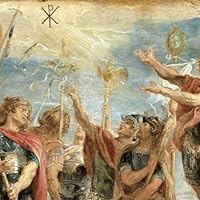
“It ought to be observed that something remarkable is here demanded from princes, besides an ordinary profession of faith; for the Lord has bestowed on them authority and power to defend the Church and to promote the glory of God.”
- Calvin on Isa. 49:23
- Calvin on Isa. 49:23

January 28, 2026
Good. A few small nitpicks but a great primer for how Christians should view the government

November 4, 2025
Baird makes a valiant effort here, but falls woefully short of his goal. The writing comes across as a high school essay rather than a serious, academic treatment of the subject. His primary proofs are a combination of the Old Testament and writings from 1700s America. America is not Israel, and we are no longer living under the dictates of the 1700s. The American Constitution does not support his primary arguments, and his calls for the government to exclusively promote Christianity are naive and overly simplistic. America was founded on the principles of plurality, individual freedom, and the separation of church and state. Most importantly, he spends no time discussing the Biblical view of the Kingdom of God, as he seems to imply it is synonymous with earthly kingdoms. I am sure this book will promote discussions, but it unfortunately falls short of providing the deep theological and political firepower that a real conversation on the subject demands.

January 19, 2026
I genuinely wanted to understand brothers who are Christian Nationalists.
I read it all, came into it with an open mind. And in the end, I found this rhetoric to be deeply disturbing. Filled with oversimplifications, logical fallacies and cherry-picking scripture and the Westminster confessions to assert the bizarre and disturbing view that the US government’s leadership should strictly support and further Christianity.
Jesus good… government should go good = therefore “Jesus Government”
I must respectfully and unapologetically disagree. This ideology poses an enormous threat to the modern church.
I gave it one star for brevity. Second star for the author’s introductory concessions that his own central theme is alarming… he sought to substantiate his wild claims with the book, and he did not succeed.
I read it all, came into it with an open mind. And in the end, I found this rhetoric to be deeply disturbing. Filled with oversimplifications, logical fallacies and cherry-picking scripture and the Westminster confessions to assert the bizarre and disturbing view that the US government’s leadership should strictly support and further Christianity.
Jesus good… government should go good = therefore “Jesus Government”
I must respectfully and unapologetically disagree. This ideology poses an enormous threat to the modern church.
I gave it one star for brevity. Second star for the author’s introductory concessions that his own central theme is alarming… he sought to substantiate his wild claims with the book, and he did not succeed.
October 14, 2025
Baird’s argument hinges on the assumption that the “public good” includes positive advancement of Christianity. Baird failed to reckon with arguments confining the concept of public good to only that which maintains and upholds that which is shared between the believer and the unbeliever, namely, the civil order.

December 22, 2025
Great introduction to the topic and tight argumentation. Will likely buy copies to give away

August 10, 2026
3.5 stars, rounded up for the logical flow of the book and the fact that I agree with the general premise. Andrew Walker (link) and Miles Smith (link) each wrote really good reviews of this book. Baird roots the argument in Scripture, provides a good roadmap, and has a great section on the government promoting Christianity in different political/societal contexts. Bonus points for conciseness and length. Weaknesses: difficult to see how this might play out in our context at times; needs more hermeneutics on applying Old Testament passages in the new covenant context; and fails to show how the government will promote Christianity/Protestantism without adjudicating certain beliefs (e.g., how does a government avoid promoting unitarian or Arian theology?). A quick book worth engaging.
February 11, 2026
A low level approach to Reformed political theology and philosophy. The book is logically structured, scripturally sound, and balanced with prudence.
While not an academic tome, it carries a significant force of argument that seems difficult to belie. His syllogism and logical deductions are sound.
Ultimately, I’m not really sure why so many people are against Christian Nationalism. Looking around, what we have is far less appealing than what is offered in this book.
The most common arguments in contradiction to the approach laid out in this book are:
1) Christianity is a way of love, not politics.
2) Christianity deals with the spiritual, not physical (the spirituality of the church argument).
Both these ideas are deftly dealt with in this short book.
While not an academic tome, it carries a significant force of argument that seems difficult to belie. His syllogism and logical deductions are sound.
Ultimately, I’m not really sure why so many people are against Christian Nationalism. Looking around, what we have is far less appealing than what is offered in this book.
The most common arguments in contradiction to the approach laid out in this book are:
1) Christianity is a way of love, not politics.
2) Christianity deals with the spiritual, not physical (the spirituality of the church argument).
Both these ideas are deftly dealt with in this short book.
Read
December 11, 20255 star presentation of the Reformed view.
2 star argument for it being the correct view.
Baird's syllogism assumes the government has the capacity to promote the true religion in its true form. But this cannot be assumed. This, combined with some exegetical reaches, leaves me unconvinced of his main thesis.
That said, he did make me think. What should we do with an example of a Nebuchadnezzar or a Darius? And are there appropriate ways for the government to suppress false religion? I will also have to think more about the argument that being an exile should make me MORE concerned about desiring a godly government.
These, alongside some helpful virtue definitions and refutations of pitetistic errors, make Baird's work the place to start for people who want to wrestle with the traditional Reformed (and American?!) view of church-state relations.
2 star argument for it being the correct view.
Baird's syllogism assumes the government has the capacity to promote the true religion in its true form. But this cannot be assumed. This, combined with some exegetical reaches, leaves me unconvinced of his main thesis.
That said, he did make me think. What should we do with an example of a Nebuchadnezzar or a Darius? And are there appropriate ways for the government to suppress false religion? I will also have to think more about the argument that being an exile should make me MORE concerned about desiring a godly government.
These, alongside some helpful virtue definitions and refutations of pitetistic errors, make Baird's work the place to start for people who want to wrestle with the traditional Reformed (and American?!) view of church-state relations.

December 31, 2025
Baird’s primer on Reformed political praxis is pithy, but excellent. When reading, I found there were many occasions where I wished the author would expound. Having completed the book now, I am grateful for Baird’s brevity. He did not waste a word.
Readers may not agree with Baird’s conclusions but they will bear the burden to reckon with his sound argument. Using a plethora of primary sources biblical, historical, and theological, Baird convincingly argues that Christians bear a responsibility to love their neighbor through legislature and that government must promote true religion for the public good.
Do read the book. You’ll be challenged, and better for it!
Readers may not agree with Baird’s conclusions but they will bear the burden to reckon with his sound argument. Using a plethora of primary sources biblical, historical, and theological, Baird convincingly argues that Christians bear a responsibility to love their neighbor through legislature and that government must promote true religion for the public good.
Do read the book. You’ll be challenged, and better for it!

Displaying 1 - 30 of 105 reviews