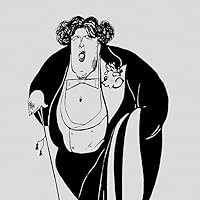
Daring, devastating, and dazzlingly smart, “Enough Rope” is Dorothy Parker at her most unforgettable. In these celebrated poems, Parker wields her wit like a rapier, unmasking the follies of love, glamour, and modern society with equal parts mischief and melancholy. From cutting quips to quiet confessions, the collection explores heartbreak and hope with honesty so sharp it makes you laugh even as it stings—sometimes in the very same breath. Parker’s voice lingers long after the poem beguiling, world-weary, yet always brimming with life.
But there’s a pulse of rebellion in every line—a knowledge that survival means retaining your bite, your humor, and your ability to see past the masks. Whether you come for the famous punchlines or the unexpected ache found in Parker’s most intimate verse, “Enough Rope” is poetry for anyone who’s ever wished they could say exactly what they’re thinking. Will you dare to look—truly look—at the world the way Parker does? Open these pages and you may never see love, pain, or yourself quite the same way again.
Librarian Note: There is more than one author by this name in the Goodreads data base.
Dorothy Parker was an American writer, poet and critic best known for her caustic wit, wisecracks, and sharp eye for 20th century urban foibles. From a conflicted and unhappy childhood, Parker rose to acclaim, both for her literary output in such venues as The New Yorker and as a founding member of the Algonquin Round Table. Following the breakup of the circle, Parker traveled to Hollywood to pursue screenwriting. Her successes there, including two Academy Award nominations, were curtailed as her involvement in left-wing politics led to a place on the Hollywood blacklist. Dismissive of her own talents, she deplored her reputation as a "wisecracker." Nevertheless, her literary output and reputation for her sharp wit have endured.
I read this from her collected works, but I want to offer thoughts on the collections as published. Hence, here.
This suffered under the weight of its (rather short) length. Parker is often charming and witty. But, after many poems together her crackle dulls. She often plays into a woe-is-me affectation about being a woman in the 20s. Understandable. But poetry is about using language to point in a unique and intriguing way at a subject. When there is no irony, and no metaphor, it just sounds literal. And to be literal is to be in-artistic. Emily Dickinson was easily more cloistered. But the scope and subtlety of how she discusses it is infinitely more satisfying. I suppose it’s unfair to compare a tree nymph to Gaea. Oh well.