Jatgeir è partito dal villaggio di Vaim a bordo della sua barca, Eline, che porta il nome di un amore perduto di gioventù. Deve fare acquisti in città, ma l’accoglienza che gli riservano i suoi abitanti è tutt’altro che cordiale. La notte, mentre dorme sulla barca ormeggiata al molo di Sund, sente una voce femminile chiamarlo, un suono familiare che lo riporta a un lontano passato. A pochi passi da sé vede Eline, la donna che non aveva mai dimenticato: ha deciso di lasciare il marito, ha una valigia in mano ed è determinata a tornare a Vaim con Jatgeir, sulla barca che porta il suo nome. Questo incontro inatteso è l’inizio di un viaggio sospeso in un triangolo amoroso, che esplora le sfumature della perdita e del desiderio, in un intreccio di vita e morte, realtà e sogno. Il ritorno al romanzo di Jon Fosse dopo il premio Nobel per la Letteratura 2023 prosegue la sua indagine sulla condizione umana, sugli incontri che definiscono le nostre vite, sulla lotta quotidiana tra quello che accade e ciò che desideriamo.
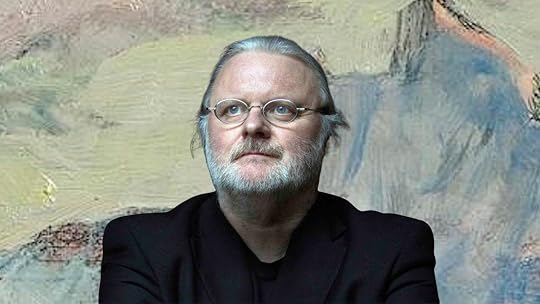
Jon Olav Fosse was born in Haugesund, Norway and currently lives in Bergen. He debuted in 1983 with the novel Raudt, svart (Red, black). His first play, Og aldri skal vi skiljast, was performed and published in 1994. Jon Fosse has written novels, short stories, poetry, children's books, essays and plays. His works have been translated into more than forty languages. He is widely considered as one of the world's greatest contemporary playwrights. Fosse was made a chevalier of the Ordre national du Mérite of France in 2007. Fosse also has been ranked number 83 on the list of the Top 100 living geniuses by The Daily Telegraph.
He was awarded The Nobel Prize in Literature 2023 "for his innovative plays and prose which give voice to the unsayable".
Since 2011, Fosse has been granted the Grotten, an honorary residence owned by the Norwegian state and located on the premises of the Royal Palace in the city centre of Oslo. The Grotten is given as a permanent residence to a person specifically bestowed this honour by the King of Norway for their contributions to Norwegian arts and culture.
* Update: I read Vaim for the second time, yes, I am crazy, yes, I have so many unread books waiting to be read, and I chose to read Vaim again because, well, because I want to read the second book 'Vaim Hotel', yes, I want to read it, I must read it, yes, so I read Vaim first, again, yes, to remind myself how hypnotic and excellent it was, yes. The five stars remain.
First time reading review: I don't know what I read but I love what I read, I mean I know what I read, but am a bit confused about what I read, yes, and does that make sense, probably not, not to someone who isn't familiar with Fosse's writing style, yes, but someone who knows his works inside out, would surly understand me, yes, they would, and yes, I loved Vaim a bit less than his 'Melancholy', 'Aliss at the Fire', 'Trilogy' and 'Morning and Evening', yes, a tiny bit less, because it was less poetic I suppose, and I just found out that Vaim is the first book in a trilogy, which is good news, yes, it is good news and now you ask me what the book is about and I can tell you it's about a village called Vaim and three characters who tell their story, yes, it's a story told from three perspectives, a story revolving around the themes of solitude, desire, the past, love and death
Jon Fosse's Vaim opens on a single errand. Jatgeir sails into the city for a needle and thread, gets cheated twice, and lies down to sleep on his boat until a voice calls his name from the quay. It is Eline, his secret love from youth and the namesake of the boat, standing with a packed suitcase and asking to come home with him. Three narrators, three deaths and a whole village's worth of feeling grow out of that one small meeting.
The engine of the book is drift meeting will. Jatgeir and the men around him float through their lives on habit and current, and Eline arrives with a purpose that gives the story its heading. Fosse writes in long sentences that swell and recede, one breath after another, and the reader is carried along at the same easy pace. Ordinary things glow: meatballs, rice pudding, a suitcase, a button that needs sewing. Humor and tenderness run through every page, and the strange arrives as naturally as weather. Each narrator reaches for a word, tries another, and settles on the one that will do, and that reaching is where the feeling lives. What can't quite be said comes through all the more clearly, held with warmth and a light touch. It is a slim, luminous, quietly funny novel, and as the first in a trilogy it makes the village of Vaim a place you want to return to.
Ever since my acquaintance with Fosse’s Septology, I have held a special in my heart for his words. The feeling of the sublime is real. It’s not popcorn entertainment. It taps into a latent process that is deeper. I yearn for the realization of this process at least once a year for some weeks. Not surprisingly, it comes with the changing of the Canadian seasons and it comes when the cold is setting in. I don’t partake in any other repetition-based meditative practices. Some have Namu Myōhō Renge Kyō, others the Sufi whirling, and many Tai Chi or Qigong. I have Fosse.
Vaim is the single time I have seen a recent Nobel winner not falter at the first time of asking after winning the prize. It is sufficiently different from Fosse’s body of work, exploring the same themes in a novel manner. I think about the power of the “yes” and “no”. In no way do I think about them as being peppered into the text randomly. Your emotional state changes when you read a character’s inner monologue that relies predominantly on one or the other. I mean, think about it. Fundamentally open vs. fundamentally closed. Inviting vs. rejecting, seeking vs. denying. And don’t get me started on the tangibility of death in Fosse’s text. How does he do it? I see the literal shape of God and death in a corporeal sense, fading to memory and formed by emotions. The empty shape of death glimpsed by Fosse characters invite you to pour into them your own story. That should be patented. Why else am I finding myself shedding real tears as I read about the back of a character walking away or a boat calmly progressing into the night?
Drei Kapitel, drei Perspektiven auf die gleichen Vorkommnisse, im Zentrum eine ungewöhnliche Frau.
Über den Inhalt, den Verlauf sollte man im Vorfeld am besten gar nichts wissen, einfach drauf los lesen und treiben lassen, am besten man verzichtet sogar auf den Klappentext, so bleibt die Story am spannendsten.
Ich hatte zuletzt bei Fosse immer das Gefühl, gerade seinen besten Roman gelesen zu haben und diesmal ist es genau so. Anders als bei einigen anderen Romanen hat Vaim einen ziemlich starken Plot. Für Fosse-Süchtige allerfeinstes Dope.
and I say, I'll do that and I think that this is totally incomprehensible, but it's like I have no choice of my own, because once Eline has decided something, yes, then it's just going to happen like she says, yes,
Vaim translated by Damion Searls is Jon Fosse's first novel since his richly-deserved Nobel Prize.
This is the first in an intended trilogy with Vaim Hotell, due on 1 september 2026, and Vaim Vekeblad (likely Vaim Weekly in English) on 1 September 2027, with I suspect Searls' English translations to follow very soon after.
The novel takes its title from the ficticious village / small town on the West Norwegian coast where one of the key characters, Jatgeir lives, Fosse having taken the name from a local nickname for the real-life Vadheim, as Fosse has said (ChatGPT translation) 'with a shop, a hotel, a small newspaper office, a quay, and a café'.
The novel is narrated by three different men and over a period of some years (or 'a year and a day' apart as the characters are fond of saying, meaning a longer period).
- Jatgeir lives alone in Vaim, his sole friend Elias who he seldom sees. Jatgeir owns a motorboat which years ago he named Eline, after a local girl on whom he had an unconfessed crush, Eline moving to Bjørgvin (Fosse's preferred term for the city of Bergen) some time later, and later apparently getting married to a fisherman. Jatgeir takes his boat to Bjorgvin, ostensibly on a shopping trip to buy a needle and thread to sew on a button, but when he is swindled takes his boat to another nearby fishing village, Sund on Sartor, where is he again swindled trying to buy needle and thread, this time at the The Grocery Store.
Moored at the quay, where he expects to stay overnight, he unexpectedly is approached by Eline, who turns out to live there (as he recalls he may remember, although he's not seen her since she left Vaim) who rather abruptly announces she is leaving her husband, Frank, a fisherman, and is returning to Vaim to live with him.
it was like Vaim didn’t exist for him, like there wasn’t anywhere in the world called Vaim, like Vaim was just a dreamworld, but both of them, yes, both she and Jatgeir knew that Vaim was a very real place, they had both grown up in Vaim, so for both of them the town of Vaim was one of the realest places in the world, even if you had to wonder just then at the moment what was real and what wasn’t, unreal as she was, yes, I couldn’t understand a thing, no, it was simply unbelievable actually that she, Eline, was now standing in the door to the cabin talking to me,
- Elias narrates the middle section, something of a short bridge in the novel, explaining some of the aftermath of Eline's return to Vaim, and his tale take us into ghost story territory.
- Frank, Eline's previously estranged husband, then takes up the tale, which if anything becomes even stranger, he eventually ending up, rather bewildered, living in Vaim in Jatgeir's house.
Although the novel is narrated by the three men, the key figures at its centre is the powerful Eline, who imposes her will on each of them, ending up with two boats named after her (Jatgeir's motorboat and Frank's sjark ), both of which Frank inherits before selling one:
I sold the motorboat cheap to someone who just called himself The Sailor, who lived on a little island, he said he’d been looking at that motorboat for a long time and thought it was a very fine boat, so if I wanted to sell it he would be happy to buy it and what was I going to do with two boats anyway, to tell the truth it had been more of an obligation to take care of the motorboat, so I accepted his offer and it was a great day when I got rid of that motorboat, yes, the same way it had been a great day when I got the sjark,
We also learn that very few of the characters - Elias the exception - go by their real name: Jatgeir a nickname for Geir since childhood, reflecting his rather laconic assent to anything; Eline actually short for Josephine, which she reveals only as she is dying; and Frank, actually called Olaf by everyone else, simply a name Eline somewhat randomly imposed on him when she first approached him in a bar in the city, and which she has stubbornly used ever since:
... she had decided my name was Frank and so that was my name, nothing to discuss, I was Frank, and in all the years we eventually lived together she never once called me Olaf, only Frank, and I have to admit that it took me a long time to get used to also being called Frank, as well as Olaf, to tell the truth I never really got used to it, and that wasn't so strange since she was the only person who called me Frank, everyone else used my real name, Olaf, no more, no less, Olaf pure and simple, but actually it was fine to be called Frank too, I got used to it, so it was no wonder that people in Sund started calling me Frank-Olaf, or Olaf-Frank, and calling her, Eline, Franka, or sometimes Frenka, or Frenke-Franka or Franke-Frenke, almost no one ever used her actual name, Eline, neither in Sund nor in Vaim, she mostly went by Frenka, or Franke-Frenka, probably no one, yes, except me, ever called her Eline, and actually it was pretty rude that they never called her Eline, her real name, although actually her birth name was Josephine, she told me that once, privately, and that's the name on her tombstone, so there aren't many people, aside from the few so to speak initiates, yes, actually maybe just the few people who came to her funeral, where the pastor used her real name, Josephine, who know what Eline's, or Frenka's, or Franke-Frenka's real name was...
This is, as Fosse has acknowledged, a rather lighter and less ambitious work than Septology, a form of reaction to both that work and the subsequent Nobel Prize (which had clearly been on Fosse's mind for two decades) - but then Septology is for me comfortably the 21st century's greatest novel. Still highly worthwhile and I eagerly await the rest of the Vaim trilogy - which unlike the Septology are designed to be read alone, linked primarily by the Vaim setting.
By almost any other novelist's standards a 5 star read but as it's Fosse, and I could only award Septology five rather than the seven stars it deserved, 4.5 stars.
What do you write when you have just won the Nobel prize for Literature? Well for Jon Fosse it was this. It is set in a couple of Norwegian fishing villages and a town, all on the coast. You can get a sense of the novel by a few of the summations:
“The first in a trilogy of novels, it continues his investigation into the human the subtle encounters that come to define our lives and our deaths, and what lies in the threshold between what is and what is longed for.”
Or try this:
“Critics have highlighted the novel’s ability to weave complex themes of love, identity and the human condition in his narrative.” Are you getting a sense of the general direction? It is a stream of consciousness novel, although it is only about 115 pages. However, there are plenty of commas, but no full stops. Some have called this mystic realism. There is a sense of calm about the whole, although it is the calm of a flat sea and the knowledge that much more goes on beneath the surface. Initially the reader might think this could be a simple romance between Jatgeir and Eline, but of course, it isn’t. Death and even a ghost intervenes. It draws the reader in. Unfortunately it didn’t draw me in and it bored me senseless, even though it was clearly written by a master storyteller.
Pensiero dopo 20 pagine: bene, ma sono le “solite” cose ed è molto simile all’inizio della Settologia. Pensiero dopo l’ultima pagina: ok, è un’altra mina, un vortice da cui non si riesce ad uscire. La seconda e la terza parte ampliano e migliorano la situazione di partenza. Quando escono i prossimi capitoli? Pensieri generali: basta trilogie in volumi separati di 100 pagine; copertina italiana tremenda.
Fosse's first novel since winning the Nobel. The first in a three-part series. Interesting to see where the thread on all of this leads. Yes. Interested. Fosse's ability to tell a simple story with all the complexities of the inner world, the indecision, the second-guessing, is amazing for its penetration. It reminds me, in a literary sense, of those ecological surveys (line transects) done in universities where they will explore all life along one foot, one meter of string: describing every insect, plant, and fungi that comes into contact with the thread. Fosse does this with thoughts, with people, with towns and relationships.
Does Fosse repeat himself? Does he? Repeat himself? Yes, oh yes, but only sometimes, sometimes Fosse repeats himself, yes, sometimes but only sometimes, yes, he might repeat himself, but that's just ol' Fosse, sometimes out repeating himself, yes, good ol' repetitive Fosse repeating himself
Vaim رمان عجیبی بود. اولین نوشتهی یون فوسه بعد از برنده شدن نوبل ادبیات سال 2023
داستان با شخصیت jatgeir شروع میشه که برای خریدن نخ و سوزن سوار قایقش میشه و به شهر نزدیکش میره. تمام داستان در یک جمله نوشته شده. رمان کوتاهی که به سه بخش تقسیم شده. هر بخش، زاویه دیدی از شخصیت ها است و ما به سه داستان ناقص از زندگیهای راوی ها و مشکلاتشون گوش میدیم که هنوز در یک روایت کامل بهم نپیوسته اند. و چون رمان از نگاه اول شخص شخصیت ها نوشته شده و مکالمات در ذهنشون رخ میده، تکرار جملات و تراوشات ذهنی رو توی داستان زیاد میبینیم، شخصیتها در مورد خودشان تردید میکنند. وقتی که توی یک روایت تمام تپق ها و هرج و مرج های ذهنی شخصیت ها رو میشنوی باعث میشه که رمان به کثیف ترین شکل ممکن جلو بره! اما شاید همین رمان رو منحصر به فرد کرده. جوری که شاید حتی رو اعصاب بره ولی این مدل نوشتار انگار امضای نویسندست و توی کارهای دیگش هم تکرار شده.
This is the formula for Fosse in his current style over the last decade or so. After the underwhelming 'A Shining', which I thought was put out directly after winning the Nobel Prize for Literature as purely an opportunistic cash-grab, I thought I was done with his newer works, yet I found myself gravitating towards this new, short hardcover in my local bookstore.
Books like 'Aliss in the Fire', 'Morning and Evening', 'Trilogy' and the behemoth 'Septology' are where Fosse shines, but I found myself totally enveloped with 'Vaim' since it seemed like something different, yet more of the same. Told from three different perspectives about focusing on one of the main characters, you find yourself getting a little bit of the story here and there, each repeating each other, but in different ways with different bits that you didn't know before.
Do I believe it's as good as his earlier work? Not entirely, but I will admit that even when he does put something else out, I will buy it once again.
Vaim constrói-se em três partes narradas por vozes diferentes, mas escritas num registo quase indistinguível. Nesta obra, as personagens não se afirmam pela forma como falam, mas pelo modo como cedem, esperam ou se apagam.
É uma obra que não tem tantas repetições como as anteriores que li do autor, por isso um pouco diferente neste estilo apesar de se reconhecer Fosse.
Na primeira parte, o narrador é Jatgeir — um homem solitário e idoso, marcado por uma vida de aceitação silenciosa. Conhecido por dizer sempre que sim, carrega até no nome essa submissão, reduzido a um diminutivo que os outros lhe colaram uma vez que o seu verdadeiro nome é Geir (Ja=sim).
O gesto aparentemente banal que o move — ir à cidade comprar agulha e linha para coser um botão — torna-se um dos símbolos centrais do livro. Jatgeir não procura mudar nada de essencial na sua vida; procura apenas remendar. O botão representa o mínimo necessário para manter tudo junto, para evitar que o rasgão se torne visível. É assim que ele vive: a segurar o que já está a desfazer-se. A humilhação atinge o ponto máximo quando paga caro por uma linha velha, retirada da roupa de um morto. Jatgeir tenta coser a sua vida com restos de outras vidas acabadas. Aceita, como sempre aceitou apesar de se revoltar contra si.
Tem um barco que se chama Eline, o amor secreto da sua juventude. É Eline quem o leva.Mesmo tantos anos depois. É terno… e triste também. Fosse é impecável a mostrar como uma vida se pode construir mais através dos silêncios do que dos acontecimentos.
Na segunda parte, o narrador é Elias, o único amigo de Jatgeir. Também solitário, mas diferente. Elias não é permissivo da mesma forma. Observa, percebe, guarda distância. É através dele que sentimos o vazio deixado pela ausência e a estranheza do tempo: Fosse introduz a espiritualidade sem a explicar, apenas deixando-a existir num determinado episódio entre Elias e Jatgeir.
A terceira parte é narrada por Olaf , marido de Josefine — chamado Frank pela mesma, a mulher que atravessa todas as histórias. Josefine (chamada Eline na obra) muda nomes, invade casas, redefine identidades. Nunca suporta a solidão. Vive com Jatgeir quando ainda é casada uma vez que este cede a tudo.
"agora não era a questão do que eu queria ou não queria, agora era o querer de outrem que se impunha, era como se tudo tivesse mudado de uma só vez, agora era a vontade de Eline"
Regressa depois a Olaf, e mesmo na morte escolhe companhia. Quer ser sepultada junto de Jatgeir. Até na sepultura, Josefine organiza os lugares.
Josefine substitui pessoas. Não remenda: troca. Olaf é o único que abdica — solta o que tem, não tenta segurar nada.
Eline não tem nenhum capítulo onde é a narradora mas o leitor pode conhecer a personagem através dos relatos dos três homens, do que está escrito e o que está nas entrelinhas.
Em Vaim, Jon Fosse escreve sobre pessoas que não sabem impor limites, sobre vidas que se desfazem lentamente, não por grandes tragédias, mas por pequenas cedências sucessivas. A metáfora do botão atravessa o livro como aviso silencioso: há existências gastas, quando o essencial já se perdeu.
Foi uma leitura que me fez lembrar, em parte, o livro "Casa de Barcos" do mesmo autor onde Fosse escreve sobre: homens socialmente apagados, sem poder, afectivamente analfabetos, profundamente leais, mas invisíveis.
Fosse mostra que na cidade de Vaim: a sociedade condena facilmente, mas, ignora décadas de solidão e ignora o custo de dizer sempre “sim”.
É um romance sobre como se vive quando nunca se diz não e o que acontece quando se diz sempre "sim".
O que Vaim é, afinal:
Não é um livro sobre amor. Nem sobre velhice. É um livro sobre: o perigo de viver sem se afirmar e o custo tardio de dizer sempre “sim”
Mijn enige 'probleem' met Jon Fosse is dat ik begonnen ben met zijn zevendelige Septology. Dat werd zo'n intense (en winterse) onderdompeling in zijn wereld en taalidioom, dat alles wat ik daarna nog van hem las net iets bleker uitviel. Maar ik blijf van tijd tot tijd nood voelen aan zo'n onderdompeling.
En kijk, dit recentere werk leest zowaar frisser en lichtvoetiger dan ik van Fosse gewend ben. 'Vaim' is opgedeeld in drie 'getuigenissen' van introverte, stille mannen wiens leven met elkaar verbonden is geraakt en door elkaar geschud door Eline, een eigenzinnige, vastberaden en ongrijpbare vrouw.
De bezwerende, meanderende schrijfstijl blijft dan wel dezelfde, met herhalingen, geestesverschijningen en de symboliek van dubbel(zinnige namen, toch doorbreekt Fosse hier naar mijn mening de op zich heerlijke, maar altijd beladen duisternis van zijn vroeger werk. Alsof er zonnestralen doorpriemen in de sneeuwlucht van zijn verteltrant.
Wat niet wil zeggen dat dit een vrolijk en kleurrijk boek is geworden. Melancholie (niet toevallig ook de titel van een van zijn boeken) blijft het bindmiddel, maar bovenop de trustesse van het medeleven dat je als lezer voelt bij zijn personages, toverde hij hier toch wat vaker een ongegeneerde glimlach op mijn lippen. En ja, er straalt nog altijd veel schoonheid uit zijn zinnen.
Ik kijk al uit naar Vaim Hotel dat hier inmiddels klaarligt. Maar Fosse moet je, zelfs in zijn meerdelige werk, mondjesmaat lezen volgens mij.
Two men in this book name a boat after the same woman, without knowing the other one did it first. For years, both boats sit moored in the same harbor, wearing the same name, Eline, painted in the same black letters, and every person on the quay lets it pass without comment.
Three men, spread across decades, share one woman, one drowning, and one name that keeps turning up on hulls instead of people. Jatgeir names his motorboat Eline for a girl he admired without a word to her, years before she ever comes back into his life. She returns to him one summer night on the very same boat, calling his name from the dock in Sund. Elias, the last friend Jatgeir has left, hears knocking at an empty door on a winter afternoon, then learns from the men at the quay that Jatgeir drowned hours earlier beside that same motorboat. [image error] Somewhere earlier again, a fisherman on the island of Sartor gets rechristened Frank by a woman convinced she has always known him. She vanishes overnight onto a stranger's motorboat, and he buys a fishing boat of his own the very next day and gives it, by pure accident, the exact same name. Years later she returns, with two shopping bags and a painting under her arm, and orders him north to Vaim, into Jatgeir's house and onto Jatgeir's old motorboat, a boat that already carried her name before he ever set foot on it. Fosse keeps the whole book moving the way a boat drifts across still water, one long unbroken pull, with the word yes doing the work of a keel. Ten pages in, the commas disappear from your own head, and by the end every voice in Vaim sounds like water moving under a hull.
Eline decides what a person's name is and what a person's life will be, then leaves again before the door finishes closing. Each man left behind ends up with a boat instead of her. Jatgeir keeps his motorboat until the sea keeps him instead. Elias keeps a knock on an empty door and a friend who visits once more after burial. Olaf keeps two boats that share one name by accident, then keeps a small white house in Vaim and a headstone request. Fosse won the Nobel Prize in Literature two years before this book appeared, mostly on the strength of a much longer set of novels called Septology. Vaim runs a fraction of that length and asks for a fraction of the effort, though it keeps the run-on sentences, the doubled names, and the ghosts that show up for a last visit before anyone notices they are dead.
Fans of Septology get a compact rehearsal of the same obsessions. Everybody else gets a shorter door into a strange, insistent voice, one that keeps returning to the same two boats and the same three names until they blur into a single wake. I think that the short novella genre suits this style better. I really liked this book. It stopped right before the “yes” got annoying. Yes. And, yes, there was a thread that looked like a plot.
Re-read: Even better the second time. The first part is hilarious I was sat here cackling to myself in my flat it’s so funny. The narrative voice is so cold it’s genius. The middle part is still the best and is so ghostly and atmospheric - slightly let down by the ending but Eline is such a creepy character I just adore this book. I feel even closer to Vaim as a place now I really want to reread the Hotel!!!
—
Quite a seasonal book which feels wintery and spooky, Vaim is about a woman that touches the life of three men and the short novel is split into three parts, each told by one of the men. The second part was the best and had and very eerie and horror feel to it which I really loved. I would like to see Fosse write more stories with a creepy edge to them but he does seem to feel comfortable writing about snippets of the lives of every day people. I did enjoy Vaim but the first and last parts really paled in comparison to the middle one. His settings always really come to life though and it makes me miss Norway.
Jon Fosse schreibt wie Jon Fosse. Dieses Buch war eher kurz, aber wunderbar zu lesen. Tiefsinnig und humorvoll, in einer klaren Sprache. Ein Lesevergnügen.
Sicuramente Fosse non è una lettura molto facile . Questo che ho terminato è il terzo dei suoi romanzi brevi, o meglio racconti lunghi, letti e mi è piaciuto molto. Come ho apprezzato tantissimo Mattino e sera e Un bagliore Ho letto solo un il primo di Settologia ma vorrei tanto proseguire. Leggere Fosse, se si riesce a concentrarsi, è per me come fare meditazione, vuotare il cervello e lasciarsi andare. Probabilmente frasi irriverenti per un Nobel ma questa è la mia sensazione. E nello stesso tempo anche una sfida con me stessa , mi dico ( e scusate un altro paragone irrispettoso) “ perché La Recherche due volte e ora non potrei farcela con Fosse? “
I had never previously read anything by Jon Fosse, who won the Nobel Prize for Literature in 2023, so I figured I’d start with his latest novel, Vaim. I do not know what I expected, but this was not it. The book is written in one long sentence separated into three parts, each with a different perspective. We have Jatgeir in Part One, taking his small boat to Bjørgvin (Bergen) to buy a needle and a spool of black thread. He meets his old flame on the quay, and she asks to join him. We have Elias in Part Two wondering if the person knocking at his door could be his friend Jatgier, whom he has not seen in over a year. We have Frank (aka Olaf) in Part Three, who tells of his initial meeting and relationship with Eline (she had also appeared in Jatgeir’s tale). These interconnected characters live or have lived in the small Norwegian village of Vaim.
This is an unconventional novel. It is exceptionally (and intentionally I’m sure) repetitive. The prose creates a “dreamlike” quality. Part One is setting the stage for connections with Parts Two and Three. Jatgeir has trouble saying “no” to anyone. Elias is wishy-washy about everything. Franck is conflict avoidant. I took from it that these three traits can cause difficulties in our lives. Fosse is also asking the reader to solve a mental puzzle, which is the part that worked best for me. Part One can get a little tedious, but I am glad I stayed with it. It is short, and in the end, I found it worthwhile. I am not sure this was the best place to start with Fosse, but I will certainly be reading more of his works.
Fosse's first book since the Nobel Prize win. I bought this on the day of its release and only realised I hadn't read it when my copy of Vaim Hotel arrived the other day. I've always wondered about the pressure that falls on a writer once they win an award as major as the Nobel. Everything is marked pre & post. There are some writers whose work post-Nobel have failed to impress me, like Kazuo Ishiguro, but for Fosse, he knows what works and he's sticking with it. Picking up Vaim is not dissimilar to picking up any other Fosse in his body of work: looping, run-on sentences in stream of consciousness here as anywhere else; the same lonely characters living in rural Norway (in this case fictional Vaim), struggling to connect with those around them, as well as with their own pasts, their minds and their relation to God; and you sink into it all very slowly, like a stone falling deeper and deeper into a dark pool. Once you tap into that rhythm, there's no taking your eyes from the page. It's getting harder and harder to say what my favourite Fosse novels are (aside from Septology, which clearly wins); his work is like some great homogeneous contour of thought, being explored over and over again. I'm sure I've used this analogy somewhere before, most probably when talking about Fosse, but one of my old lecturers once told me that when you are reading lots of books by a very good writer, you will realise that all doors lead into the same room. I thought a writer writing about the same thing, near enough, over and over again was the sign of someone who had little to say, but she thought the opposite. Those are the true artists. So, by that definition, Fosse is as good as they get.
Not really sure what I was thinking in my previous review where I was a little down on this one - on a second reread (which seems to be a bit of a theme with Fosse - don't always get it the first time) I found myself completely engrossed with the vaguely spooky, slightly "wrong" atmosphere of the novel. Strange apparitions, strange deaths, "all is strange" as one of the characters so eloquently puts it.
I anxiously await my copy of Vaim Hotel to arrive in the mail....
Zapanjujuća slojevitost za 120 strana krajnje jednostavne proze. Isprva mi je utisak bio da se ništa tu specijalno nije desilo, ali sa mrvom kritičkog razmišljanja ove suve nedelje postaje jasno da je ovo naslagana torta. Veoma samostalan roman za početak trilogije. Dok je Septologija bila o multiplicitetu života, religiji i anksioznosti, Vaim za sada sluti da je o emotivnoj povezanosti ljudi, priča, i predmeta. A Fose? Fose je uvek o ljudima i njihovim imenima.
With Jon Fosse you know what you're going to get and yet it never disappoints.
This was quite similar to Morning and Evening, thematically and in style.
There is a boat trip, a single man, an old friend who appears out of nowhere, a woman from the past shows up. You wonder what is real and what is imagined and before you know it you are swept along as the story zooms out in the second and third parts.
I will hype this writer for the rest of my life because of SEPTOLOGY. (!!!!) That book took over my entire soul. Since that spiritual experience a few years ago, I’ve dived into some of his other works: A SHINING and TRILOGY; both did it for me. My love for Fosse grew.
Now it’s time for VAIM. He’s done it again, perhaps not as successfully, but it still managed to get me hyped.
We follow three narrators, who are personally connected to one another. The book is broken down into three parts (a different narrator for each). As much as the first part (first narrator) was intriguing, it’s not until the second part (second narrator) that this story starts to come alive. It begins with a knocking at the door and slowly builds into something otherworldly, and it isn’t until then that we see the thematic presence start to formulate. I won’t tell you what those themes are, but just know that it’s something that feels both unnerving and universal.
You could read this short book and not know that it is the first part of a trilogy. But rest assured, it is. And I’m curious to see where it leads. This story has a simplistic nature to it with the potential to morph into something much more complex and magnificent as we get further into the series. Please Jonny, don’t make me wait too long.