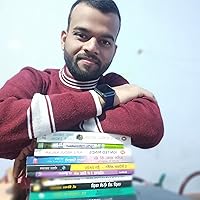
The book is a collection of philosophical narratives that challenge the reader to question their initial, proud judgments by revealing the unseen context behind every situation. Structured around seven core human concepts (Kindness, Happiness, Greatness, Strength, Love, Madness, and Meaningfulness), the book argues that human perception is fundamentally partial and prone to error, and that true wisdom lies in humility and accepting ambiguity
Looking Again was a short yet fascinating book that gave us life lessons/author's insights through small fiction stories! It's profound, thoughtful, short yet has depth. In the author's words: "this book asks for pause, for humility, and for the courage to embrace the unknown that lies beyond our first glance."
I read it fast in 30 min. I was prepared to skim it, yet it actually made me stay & reflect! The stories are cool but their twists, hidden depths & easy yet profound lessons were given well! Coupled with author's simple yet to-the-point effective writing style, I was hooked.
As this is a short book with even shorter stories, I'm not gonna give a summary of them. But I would say what I learned. The 1st one had a twist that makes me push to analyse everyday deeds. The 2nd one told a truth we all know: time goes on & we use it for "temporary milestones on an infinite road."
Multiple stories tell the importance of love, & we get a cool equation for it: L = I × t [hence] Love equals Intention multiplied by Time." How "Happiness lies everywhere". The last few ones were profound, we can be heroes of our own stories & villains in another's. How it's societal norms that make rules of religion or mental illness & it's divide. This one hit hard!
"Meaning is not found; it is created."
"If there is no final meaning to uncover, then there is no obligation to hunt for it. We are free to witness, free to act, free to create not because the universe demands it, but because the dance is happening now and we are invited to join."
This book was bold in its ideas conveyed, many of which I'd already known, yet few thought of in this way. I rarely read non-romance fiction but I'm happy I got to read its review copy. These quotes I shared were my fav from this book.
🍂 𝘑𝘦𝘳𝘢𝘭𝘥 𝘉𝘢𝘭𝘢𝘴𝘪𝘯𝘨𝘩's "𝘓𝘖𝘖𝘒𝘐𝘕𝘎 𝘈𝘎𝘈𝘐𝘕" comes with a quiet, meditative counterweight. This age is dominated by instant reactions, hot takes and rapid fire judgements but this book sets out to address a fundamental flaw in human perception. OUR TENDENCY TO CONFUSE FIRST IMPRESSIONS WITH ABSOLUTE TRUTH.
🍂 The central premise is straightforward - what we see at first glance is rarely the whole story, and truth empathy or wisdom requires us to pause, step back and "𝘭𝘰𝘰𝘬 𝘢𝘨𝘢𝘪𝘯". I found those seven keys that are re examined in a process -
• 𝘒𝘪𝘯𝘥𝘯𝘦𝘴𝘴: Moves beyond surface level politeness to explore deeper, often invisible acts of empathy that don't seek validation.
• 𝘏𝘢𝘱𝘱𝘪𝘯𝘦𝘴𝘴: Challenges the modern obsession with constant positivity, framing happiness instead as a state of internal peace rather than external achievement.
• 𝘎𝘳𝘦𝘢𝘵𝘯𝘦𝘴𝘴: Redefines "greatness" away from fame, status or societal recognition, pointing toward quiet integrity and personal mastery.
• 𝘚𝘵𝘳𝘦𝘯𝘨𝘵𝘩: Unpacks vulnerability, arguing that right invulnerability is brittle, while real strength lies in resilience and accepting emotional weight.
• 𝘓𝘰𝘷𝘦: Distinguishes between conditional affection and deep, understanding love that tolerates imperfection.
• 𝘔𝘢𝘥𝘯𝘦𝘴𝘴: Explores how society quickly labels nonconformity or deep grief as madness simply because it falls to understand another person's unseen trauma or perspective.
• 𝘔𝘦𝘢𝘯𝘪𝘯𝘨𝘯𝘦𝘴𝘴𝘧𝘶𝘭𝘯𝘦𝘴𝘴: Concludes that meaning isn't something discovered in a grand revelation, but something constructed through how carefully we observe and engage with life daily.
🍂 Rather than giving a rigid lecture, 𝘑𝘦𝘳𝘢𝘭𝘥 𝘉𝘢𝘭𝘢𝘴𝘪𝘯𝘨𝘩 uses accessible prose, brief anecdotes and reflective prompts to challenge how quickly we category people, events and ourselves.
🍂 𝘓𝘖𝘖𝘒𝘐𝘕𝘎 𝘈𝘎𝘈𝘐𝘕 is less of a traditional self help guide and more of a mental restart button. The author successfully repackages timeless wisdom - suspending judgment, practicing empathy and observing with humility - into a quick, bite sized read. Readers who enjoy meditative essay collections, short philosophical reads or books on mindfulness and emotional intelligence.
“Looking Again” by Jerald Balasingh is a short book, but it leaves a surprisingly lasting impact. Through seven interconnected stories, the author encourages readers to pause before jumping to conclusions and to question the assumptions they make about people, situations, and even themselves. The central idea of looking beyond the obvious is woven beautifully throughout the book, making it both engaging and thought-provoking.
What I enjoyed most was the way the book takes everyday concepts such as love, happiness, success, weakness, and meaning, and examines them from fresh angles. Each story presents a simple situation that gradually unfolds into something deeper, often revealing truths that are easy to overlook in our busy lives. More than once, I found myself pausing to think about my own beliefs and the way I perceive the world around me.
The author’s writing style is simple, and accessible, yet packed with insight. I particularly appreciated the book’s observations on time, relationships, judgment, and the idea that meaning is something we create rather than discover. The stories remind us that we can be heroes in our own narratives while appearing very different in someone else’s, a perspective that feels especially relevant today.
“Looking Again” is the kind of book that can be read in a single sitting but stays in your mind long after you’ve finished it. For anyone who enjoys books that challenge perspectives, encourage self-reflection, and offer meaningful life lessons through simple storytelling, this is a rewarding and memorable read.
I picked up Looking Again during a time when I was mentally exhausted from overthinking everything.
What struck me most was how gently this book asks you to slow down. It doesn’t lecture or try to “fix” you it simply nudges you to reconsider your perspectives.
I found myself reflecting on my own judgments about people and situations.
It felt less like reading a book and more like having a quiet conversation with myself.
Looking Again is a quiet, thoughtful book. It is not about giving you tips or rules. It is about how we look at the world and at people.
We all judge things very fast. We see something, we decide if it is good or bad, and then we move on. Jerald Balasingh says this is a problem. Life and people are not that simple. Things like love, sadness, kindness, and even madness have many sides. We often miss those sides because we look too quickly.
The main idea is: you don’t need to change the world. You need to change the way you look at it. The book teaches you to pause, slow down, and look again. Maybe your first thought was wrong. Maybe there is more to the story.
The book is divided into seven parts: kindness, madness, weakness, greatness, happiness, love, and meaningfulness. Each part has short stories that look simple on the surface but have deep meaning.
The stories are from everyday life. One story is a quiet talk between a great grandfather and his grandson. Another is about a lonely traveler named Blessy who is stuck at an airport. None of the stories shout. They ask you to sit with them, think, and find the hidden layers.
The writing is very simple and calm. Short lines. Clear words. It feels like quiet notes, not a big lecture. But it is not always easy. Looking again takes courage. Sometimes the second look shows you things you don’t want to see, like your own bias or someone’s hidden pain.
This book is for people who feel tired of quick opinions and fast news. If you want to slow down and think more deeply, you will like it. Good for teachers, leaders, or anyone who feels life is moving too fast.
If you want action steps or hard facts, this book may feel too slow. The author wants you to find your own answers inside the stories. That only works if you are ready to think.
Looking Again does not try to fix your life. It tries to fix your eyes. Through seven themes and simple stories, it asks you to be patient and look twice. It is gentle, but it can change how you see everything.
It stays with you because it never shouts. It just quietly asks you to look again.
"nothing humans create not empires, not art, not science is safe from this inevitable devaluation. Since all external human achievement is temporary, fleeting, and dependent on the era in which it is judged, the only appropriate response is humility." . Life is but the moments that we live, experience, and share. We all have our fair-unfair share of contributions toward each other, and that's what makes us social beings. What we see through our eyes or feel might just be the surface or tip of the iceberg. A lot goes on beyond and beneath the surface that we are not aware of. It's important that we judge less and understand more. Looking Down by Jerald Balasingh is an attempt to feel, understand, and contemplate those little moments that pass by. Loaded with 7 diverse yet short chapters, the author takes us on a journey through kindness, greatness, happiness via weakness, love, madness, and thereby meaningfulness. Each one has a different tale to tell. That one quote by Grandpa to his grandson about time still sticks with me: 'Time erases everything. That's how it works.' What we think is important or great might not be the same in 10, 50, or even 100 years. No one is going to remember you or your deeds in the next timeline. Greatness lies simply in doing it and not taking pride in it. Another story of the eagle and sloth had me reflect on or rephrase my own thought process, and somehow it completely changed my perspective. Yes, the eagle isn't a symbol of power, nor is the sloth weak. How? You need to grab the book. Don't worry, it's not going to give you pages-long life lessons. The short yet precise chapters make this book a worthwhile read. The author has chosen the right phrases and metaphors to aptly deliver the messages he intended. I loved how everything concluded in the best possible direction. Since everything is relative: be it time, power, love, or even faith, if we look again, we might get a different and newer perspective, and who knows, a better one! Hence, Keep looking again!!
When I began Looking Again by Jerald Balasingh, my first instinct was hesitation. Would this be philosophical? Preachy? Would it tell me what to feel instead of letting me feel?
That quiet doubt stayed for a few pages until the book surprised me. It did not lecture. It waited. And in that waiting, it gently asked me to look again.
The structure itself felt symbolic. Seven feelings laid out simply, Kindness, Greatness, Happiness, Weakness, Love, Madness, Meaningfulness.
Words we think we know. But the book is not interested in defining them. It strips them bare. Reading it felt like holding a magnifying glass to ordinary moments and realizing how layered they truly are.
The chapter on Madness stayed with me the longest. The tragedy, the book suggests, is not delusion but isolation. A world that prays instead of listening, that labels instead of connecting. It was uncomfortable, because the book quietly asks where we have chosen silence over empathy.
Meaningfulness softened something in me. The idea that events are neutral and meaning is something we paint onto them felt deeply personal. It felt like permission to stop searching for a grand purpose and start witnessing life as it unfolds.
The phrase look again slowly becomes a way of seeing.
Happiness is found in presence, not excess. Weakness holds growth where strength hardens into rigidity. Love survives through intention and time, not perfection. Each chapter felt like revisiting moments I thought I understood, only to realize I never fully did.
By the end, I noticed how reading itself slowed me down. This is not a book you rush through. It sits with you. It watches you read it.
Looking Again did not change my beliefs overnight. It did something quieter and more powerful. It changed how gently I now question them. It reminded me that meaning is not a destination, humility is not weakness, and sometimes the most radical act is to pause and look again.
Looking Again by Jerald Balasingh is a deeply reflective and thought provoking book that encourages readers to question their immediate judgments and look at life from a broader perspective. The book revolves around a simple yet powerful idea that most of us tend to form opinions too quickly without fully understanding situations or people. Through a series of short reflections and conceptual explorations, the author discusses themes like kindness, happiness, love, madness, and meaning, showing how these ideas are often misunderstood when seen from a single viewpoint. Instead of presenting direct definitions or rigid conclusions, the book gently invites readers to pause, think, and reconsider their beliefs, making the reading experience personal and introspective. Despite the books simplicity, the ideas presented are deep and layered, often leaving a lasting impression even after a short reading session. The structure of the book is not plot driven, rather it is built on ideas and perspectives, making it different from traditional storytelling books. Another important strength of the book is how relatable it is. The author uses everyday situations and common human emotions to explain complex ideas, which helps readers connect the content with their own lives. The message of “looking again” becomes more than just a concept, it turns into a habit of thinking more carefully, being less judgmental, and understanding others with empathy. Overall, Looking Again is not just a book to read but a book to reflect upon. It quietly encourages a shift in mindset, helping readers develop patience, awareness, and a deeper understanding of the world around them. Its impact lies not in dramatic storytelling but in the subtle way it changes how you perceive things. For anyone interested in self growth, psychology, or philosophical thinking, this book offers a gentle yet powerful reading experience that stays with you long after you finish.
Look Again succeeds as a lantern illuminating the vital part of every story we encounter and the part we too often miss. In its pages, the author doesn't just tell stories; they capture incidents, normal chats, and our way of living. The stories are written with such intensity that they'll make you pause and look again at the aspects of life we're giving too much importance to.
What I liked about this book is how it refuses to provide answers. It simply invites you to reconsider the moments, people, and truths that shape our world. The stories unfold like mirrors, reflecting our blind spots without shattering them.
All the stories are deep and reflective, but "Greatness" is the one I liked the most. It starts with a boy and his great-grandpa walking and talking in a park. This short story is profound. The boy's question breaks your heart. It reminds us that external legacies crumble, but presence endures in fleeting connections like a grandfather's hand or a child's memory. It's worth considering for anyone running after huge dreams.
With plain words and park walks, it proves time makes even heroes like Alexander just dusty old names in books. The mom's math and dad's photos seem huge today, but they'll fade like old train rides. The real pain hits in the boy's whisper: he wants his parents here now, not as ghosts in memories. This story teaches us to drop the pride, hug our loved ones tight, and live humbly in the moment.
It's the kind of book where you find no big lessons or fights with beliefs, just stories that show every tale has another side. We think we know it all, but our view is small. It encourages you to be humble, rethink the people, moments, and truths around you. It will make you pause, look twice into your own life, and choose what truly matters most.
Looking Again by Jerald Balasingh is a thoughtful and simple book about how we see the world. The main idea is clear: we judge too fast. We see something, we form an opinion, and we move on. But the author reminds us that life is never that simple. There is always more behind people, emotions, and situations than what appears on the surface.
The book is divided into chapters based on feelings like Kindness, Greatness, Happiness, Weakness, Love, Madness, and Meaningfulness. These are words we use every day, but the author asks us to rethink what they truly mean. For example, weakness is not always something negative. Sometimes it helps us grow. Madness is not just about being different; sometimes it is about feeling alone and unheard. These ideas made me stop and think about my own behavior and how quickly I label things.
One thing I really liked is that the book does not preach. It does not say, This is right and this is wrong.Instead, it gives small situations and reflections that allow the reader to think deeply. The language is simple and easy to understand. It feels like a calm conversation rather than a lecture. While reading, I often paused to reflect on my own life and past experiences.
On a personal level, this book made me more aware of how I react to people. It helped me understand that happiness is found in small moments, love needs effort and time, and meaning is something we give to events. The message of the book is simple but powerful: nothing changes more than the way we choose to look at things.
This book is best for readers who are open to self-reflection and personal growth. It may not give direct answers, but it will help you ask better questions. In a world where everyone is quick to judge, Looking Again is a reminder to pause, think, and look again.
Jerald Balasingh’s Looking Again begins with a simple but disarming premise: we live by first impressions. In a world that prizes speed, certainty, and decisive judgment, that statement feels both obvious and quietly indicting.
This book is less a collection of arguments and more an invitation—an invitation to loosen our grip on what we think we know and to approach life with renewed attentiveness.
Looking Again challenges the reflex to categorize people and experiences too quickly. Balasingh suggests that weakness, kindness, greatness, happiness, love, madness, and meaningfulness are not fixed qualities but layered realities.
Balasingh does not lecture. He does not present himself as a moral authority dispensing definitive truths. Instead, he writes with humility, allowing space for ambiguity. The central claim—that the way we look at the world shapes the world we inhabit—is neither radical nor novel, yet it is handled with sincerity.
The language is straightforward, almost meditative, encouraging readers to pause between lines. The structure feels contemplative rather than argumentative. Rather than overwhelming the reader with theory or anecdote, the book offers moments of stillness—short reflections that linger.
Looking Again is less about changing the world than about changing perception. It reminds us that transformation often begins with attention—with the simple, radical act of pausing.
The book leaves you not with a list of conclusions, but with a subtle shift in awareness. And in that shift, something meaningful unfolds.
For readers who value introspection and who are willing to sit with uncertainty, Looking Again offers a thoughtful, calming companion. It does not shout. It whispers. And sometimes, that is exactly what we need.
'Looking Again' by Jerald Balasingh invites readers to pause, rethink and reflect on their lives. Through an insightful selection of 7 sections under the themes of kindness, madness, weakness, greatness, happiness, love, and meaningfulness — the author seamlessly weaves a life transforming account. It reminds us that we often judge people easily, and that simply involves only our personal opinion; such opinions inculcate negativity and drive away hope and meaning from our life. In contrast, this text details the significance of introspection and reflection, it envelopes the core values of humility and gratitude, and cherishes the art of patience and peace in life.
This book masterfully empowers us to be at peace, discover purpose and value introspection in life. The author narrates short stories, and their deeper connotation with life to allow us a space for self-discovery. There is a story of a grandfather with a grandchild, who reminds him that greatness is ever evolving. It mirrors the deeper truth about life — things don't hold the same importance as they used to once. What lasts for long is humility and kindness in life. There are instances of nature, and so the human beings — the core themes of reflection and simplicity are universal.
In conclusion, this book is exactly where individuals get an opportunity to pause and reflect. It reminds us to be at peace, be quiet for a while, encourage brotherhood, and believe in life. It encapsulates the idea that hope combined with calmness and curiosity for discovery in life can still help us to survive. Such processes are gradual, but rewarding. The writing is promising, and the theme of this book equally contributes in offering an enriching experience — be it to learn something anew, or to simply uplift the spirits.
This book gently challenges the way we form quick judgments about people and situations. I found it deeply thought-provoking without ever feeling overwhelming or difficult to follow. It encourages readers to slow down, reflect carefully, and question what initially feels obvious or unquestionable in everyday life. The writing style is simple yet meaningful, allowing even complex philosophical ideas to feel approachable and accessible. I especially appreciated how the author avoids forcing direct answers onto the reader, instead creating space for personal interpretation and self-reflection. That openness makes the experience feel more personal and lasting.
What stood out to me most was how naturally the book blends introspection with real-life observations. Many of the ideas linger long after finishing a chapter, quietly making you reconsider your own assumptions, reactions, and perceptions. Rather than presenting philosophy in a heavy or academic way, the book delivers its insights through thoughtful storytelling and subtle reflections. It constantly reminds you that people, situations, and truths are often far more layered than they first appear. The calm and reflective tone also makes it an enjoyable read, especially for anyone who likes books that encourage deeper thinking without becoming emotionally exhausting.
It’s a great read for those who enjoy introspective and philosophical themes that invite contemplation rather than certainty. The book doesn’t aim to dramatically change your worldview overnight, but it gently shifts the way you notice and interpret the world around you. By the end, it leaves you reconsidering how perspective shapes everything — from relationships and emotions to the way we understand ourselves and others. It’s the kind of book that quietly stays with you, encouraging reflection even after you’ve turned the final page.
Looking Again is a very short book of around 40 odd pages containing seven interconnected stories written by author, Jerald Balasingh. In this world, we live in a misconception wherein our very first impressions often become our final judgements and we often tend to see people and circumstances from our very own perspective and start judging things by our own point of view. But alas, life isn't really that simple and the author has made a beautiful attempt to change this habit of ours by making the readers pause for a moment and rethink about what they tend to perceive and know! Coming to the content of the book, all the seven stories are very much relatable to our day to day life and are so simple that I am sure that every reader will be able to connect with them. Each of the stories contain thoughtful message which literally made me pause and think a little bit to reflect on the thoughts of the author. The book is divided into seven sections namely Kindness, Greatness, Happiness, Weakness, Love, Madness, and Meaningfulness. The author has definitely done a wonderful yet commendable job by weaving all the seven emotions in short impactful stories! Each of the story will make you pause and will definitely push the reader to explore and deep dive their day to day emotions. In all honesty, what I loved the most about this book was it's simplicity and the author has used really simple language which is very easy to connect and relate. I am sure that this book will stay with me for some time and has definitely bought some changes to how I react to things! I would not recommend this book to anyone who wants a sudden transformation but to someone who is looking to explore themselves and their emotions and want a positive change in their perspective! I am pretty much sure that this book won't let you down!
You see a small child running from a big man, and your first instinct is to save the child from someone who seems cruel. But what if that man is the father, and the child is not running out of fear but avoiding discipline after doing something wrong? Looking Again by Jerald Balasingh makes you question both sides of every situation. It pushes you to think, reflect, and even rethink actions you once believed were kind, as well as moments you may have overlooked. This is not just another random read from the internet. It is thoughtful and intellectual, encouraging you to see perspectives you may have never considered before. The book explores a series of short stories, each centered around different emotions such as kindness, weakness, happiness, love, madness, and meaning. Every story presents two sides and challenges your understanding of what is right and what is not. It also makes you realize how temporary our actions and judgments can be. Something that feels right today may not hold the same meaning years later, and that thought alone makes you question your choices and intentions. There was this line in the book, “Meaning like power and greatness, is a temporary, subjective relationship that we use to process a world we cannot fully see. We will always only see one side of the hunt, one face of the mirror.”, and it really stayed with me. Reading this book was truly an eye opening experience for me. It taught me that every situation has multiple perspectives, and while that can feel confusing, it is important to accept that our sense of righteousness is not always absolute. There is no shame in acknowledging that. If you enjoy short books that make you think deeply, this is a perfect read for you.
Jerald Balasingh's 'Looking Again' is far more than another philosophic read. This book is a short stories collection that would put you in deep thoughts even after you have finished the book.
Out of the collection, my favourite has to be the story titled 'weakness'. Firstly the title itself got me very intrigued. I was anticipating a melancholic and vulnerable outlook but it takes a rare book to it gently reshapes my understanding of strength without forcing the message. This story has a beautiful realization that vulnerability is not emptiness but richness. Rather it sustains an entire hidden ecosystem, turning what appears weak into something deeply life-giving.
'Looking Again' questions you to clear your point of view and see the world and it's human through different lens. This book discusses upon topics like kindness, love, happiness- the topics that are rather described in poetry. And that's the magic of this book. Just like poems, it speaks to you gently. The language is simple and conversational, but the ideas stays with you longer than you expect.
I felt some reflections ended too quickly and left me wanting more depth. Still, I think that simplicity adds to its charm. Overall, it is a calm and thoughtful read that is best enjoyed slowly. I would recommend it to readers who prefer quiet, reflective writing over dramatic storytelling. 'Looking Again' is a beautiful therapeutic book, that makes you look into things without forcing it. 'Looking Again' successfully makes a reader lens see the flawed yet hyped emotions in a very creative way. A must read for reader who are always in look out book deeply relatable yet introspective books.
"This is the terrifying challenge of our lives: we act quickly upon the fragment of reality immediately before our eyes. Yet, in truth, we never see the whole canvas." I loved this quote from the book.
I started this book thinking it may talk about some general philosophical narratives but it turned out to be something more, something more relatable, thought-provoking, that pushes you to question yourself. This book is short but in just a few pages it shares a lot more than you'd actually learn from a 300-page-long book.
I was hooked from the first story about kindness itself. I even felt that I was just like the passengers in the story feeling happiness that they saved the boy, stood on the right side, but after looking at the overall story I realised I was quick to judge the whole scenario based on just one moment. And that made me stop and realise that sometimes we should pause and look at the whole picture and then we should make a judgement. It was my favourite story of the book out of all seven stories.
In the book, there are total of seven such stories revolving around Kindness, Greatness, Happiness, Weakness, Love, Madness, and Meaningfulness. These are everyday-life-stories which are familiar and relatable to me. Each story looks simple, but deep down, it makes you think carefully and ponder over what you just read. The writing was simple, easy to flow through, and carries depth.
Overall, it's a book that will not leave your mind even after finishing because it will keep reminding you of what you learnt. I really liked this book and I would definitely recommend it to all readers.
Looking Again by Jerald Balasingh is an anthology of interconnected philosophical short stories that explores how fast people can judge others based on first impressions alone. The book revolves around seven themes, mainly kindness, happiness, greatness, weakness, love, madness and meaningfulness.
Even though these stories are simple and feel like everyday conversations that we encounter in our life, they encourage us to pause for a moment, reconsider our assumptions about others and recognize what their lives might be like. The basic message behind these stories is that we need to be careful about how we judge others and how it can affect our lives as well as theirs. It also reminds us to take time to understand that everyone's lives are complex and complicated as such and that no one has the right to judge anyone. The author uses a unique approach of asking the reader to be introspective and invites us to view the world with more humility, empathy and patience.
The author's writing style is simple, making it the perfect book for both beginners and anyone who is looking for a quick read in between some big books. The storytelling style is very minimalistic; as if the author wants us to reflect on the message behind the story rather than simply reading it. The author has used ordinary everyday conversations and scenarios to connect with the readers and to make sure that the key message shared is easily accessible to us as readers.
Overall, the book was a quick and enjoyable read. It is also a story that can be read many times as time goes by and each time, we might be able to get a new takeaway.
Looking Again by Jerald Balasingh is a thoughtful and quietly powerful collection of seven short stories, with six of them gently connected in subtle ways. Each story can be read on its own, but together they create a deeper picture about human relationships, understanding, and the way we see the world. The connections between the stories are not loud or dramatic, but they slowly come together in a meaningful way. ✨
The writing feels calm and sincere. It does not rush the reader or try to impress with heavy language. Instead, it invites you to slow down and pay attention. Through simple moments and everyday situations, the book shows how easily we misunderstand people when we rely only on first impressions. It encourages us to pause, reflect, and truly look again at what is happening around us. 🌿
What makes this collection special is its focus on compassion and perspective. The stories remind us that people carry unseen struggles and silent emotions. Insight does not always come from big events; sometimes it comes from small conversations, quiet realizations, and honest reflection. While reading, I found myself thinking about my own reactions and how often I move on without fully understanding others.
Overall, Looking Again is a meaningful and accessible read. It is simple yet deep, gentle yet impactful. I would recommend it to anyone who enjoys reflective stories about life and human connection. This book reminds us that sometimes the most important change begins with something very small choosing to look again. 🌟
✨ Altogether a feel good book that I have read in 2026 ✨
This book comprises of short tales and it can be completed in one- sitting. But the best part is that these stories stays with you longer than you intend. Yes, the impact was stronger. This collection is cleverly divided into 7 chapters and these chapters are titled - Kindness, Greatness, Happiness and so on. Well I had a first impression that these are going to be moralistic stories but I was wrong!!! The tone is realistic and the author has presented the incidents and events in a raw manner. He has presented his thoughts and feels and has left the remaining to us. I love this part because it gives the readers to play a role instead of being a passive observer. Most importantly, I love the way the author describes the happenings and so on, as this creates a sense of being present in that scene. This gives a 360 degree experience. Coming to the stories, these are not just incidents which are reported but stories that makes us think twice before we judge or take stand. I could truly understand the detachment and the attachment vibes the stories give and kudos for the writer. I wish the book was long enough so I could stay inside the world of the characters portrayed a little longer ! The writing style is absolutely catchy and I would love to read a novel written by this writer (undoubtedly). The tone is personal and friendly and it is decent enough to leave an impact. So go ahead and get this as your next read ❤️
In a world where first impressions often become our final judgments, we tend to view people and situations from a single perspective, usually our own. But life is rarely that simple. Looking Again by Jerald Balasingh gently challenges this habit, urging readers to pause and reconsider what they think they know.
Divided into seven thematic sections: kindness, madness, weakness, greatness, happiness, love, and meaningfulness. The book presents a collection of short stories that carry meanings far deeper than what appears on the surface. Each story, whether it is a quiet conversation between a great-grandfather and his grandson or the experience of a lonely traveler like Blessy stranded at an airport, invites reflection. They encourage you to slow down, sit with the narrative, and uncover the layers beneath.
What I appreciated most is how effortlessly the author weaves simple yet profound philosophies into these stories. The writing is never preachy; instead, it opens a space for readers to interpret and question their own perspectives. The intent is not to persuade, but to encourage a shift in how we observe the world.
With its simple prose and steady, engaging pacing, this book is a quick yet meaningful read... one that you won’t want to put down. More importantly, its stories linger with you, gently reminding you to look beyond the obvious and embrace the many sides of life we often overlook.
If you are looking for something fresh, light-hearted, and quietly profound, Looking Again is definitely a book worth adding to your TBR.
Looking Again by Jerald Balasingh is a short, philosophical book about the one habit most of us don't realise we have — seeing only the side of things that suits us, and moving on.
It is a slim book, barely 40 pages, but it asks a lot of you. Each chapter takes a familiar idea — kindness, greatness, happiness, weakness, love, madness, meaningfulness — and turns it slowly, until you notice a side you had walked past a hundred times before.
What I loved. The central idea, gently repeated: the biggest lessons in life are not hidden inside grand, life-shaking moments. They are hidden inside the small ones you almost missed. That reframe stayed with me. The other thing I loved — and only noticed on a second read — was that the characters across the chapters are connected. It is the kind of quiet detail the book is asking you to catch. When I did, I felt like I had been given a small proof of the whole thesis: we do miss things the first time.
What took some patience. The writing is not the easiest to slip into. I lost the thread in a couple of places and had to slow down, re-read, and let the sentences settle. In a book about looking again, that felt strangely fitting — though if you are not in the mood for a reflective read, it may feel heavy.
What stayed with me. The idea that most of my certainties are just first impressions I never went back to. That every situation I have been in has a second side I didn't ask about — because the first side already served me. Uncomfortable, and probably true.
Recommended for: anyone who wants a short book that makes you pause. Readers who like reflection over plot. Anyone willing to re-read.
Skip if: you are looking for light, plot-driven, fun reading. This book is quiet, philosophical, and asks something of you.
A short book that asks you to look again — and rewards you if you do.
Reading this book was like talking to a therapist who boosted my mindset in under 20 minutes !!
Looking again is a work of contemporary fiction/self help that attempts to broaden your mindset by enabling you to see the other side of the coin. Written by Jerald Balasingh, this book is divided into 7 parts, each dedicated to a character going through common life events. The striking part of the chapters, is how after narrating each event, the author smartly shifts your perspective from negative to positive about the exact same event!
My favourite chapter was "Love"! It was so intense and embedded! I don't think I have read a more beautiful (or should I say, mathematical) portrayal of love. I also quite liked reading the chapter- Madness for drawing the contrast and similarities between Schizophrenia and Religion, without any irreverence.
However, I differ from the author's thoughts in the "Happiness" chapter because what if the reason Arjun didn't pick the £20 note because of privilege but because of his principles?
Overall, this book is a beautiful short journey exploring life and the various perspectives humans assign or should ideally assign to it. If you're looking for something that will help you find bliss in the everyday chaos of life, pick this on a weekend and find yourself significantly reinvigorated!
This book gets a solid 4 stars for its beautiful writing, remarkable intent and spectacular thought.
When I started reading this one, I thought it would be a straightforward book about first impressions. But as I went on, it made me pause more than I expected. It made me realize how quickly I judge people and situations without even noticing it.
What I liked most is that the book didn’t try to “teach” me anything in a forceful way. It just gently made me rethink things. It kept reminding me that qualities like strength, kindness, or even happiness aren’t fixed, they change depending on how we look at them. That idea stayed with me. My favorite one is the chapter titled 'Madness'. This one touched me the most.
The writing is very simple, which made it easy to read, but also made me slow down. At times, I felt like nothing much was happening, but then I realized that was kind of the point, it gives you space to think. It’s not the kind of book you rush through.
I also appreciated how the author didn’t act like he had all the answers. It felt honest, like he was just sharing thoughts rather than trying to prove something. That made it feel more real to me.
By the end, I didn’t walk away with clear lessons or big takeaways. But I did feel a small shift in how I think, like I might pause a little more before forming opinions. It’s a quiet book, but in a good way.
For me, this read felt like a calm, reflective read. It’s something I’d pick up when I want to slow down and just think a little deeper about things.
We humans are quick to make a judgement, we think we know everything about someone or the situation and the moment we get a chance, we pass our unsolicited opinion like it was desperately required. We don't have the patience to "look again" and think clearly about the situation before reaching a conclusion.
"Looking Again" by Jerald Balasingh is a short yet impactful read that is a collection of seven stories that are subtly interconnected. Each story presents itself with a situation that makes you look at it once again, with a different lens, a different perspective.
I found the concept to be very interesting and unique. In this chaotic world, each one of us is running after something without truly understanding what it is that we are chasing. We all feel often deprived of love but how much do we pause and spend time with our loved ones? We think that we have no one to share our pain with but how often do we actually listen to someone without passing a judgement?
What stood out the most for me in this book is its simplicity. The author has done an impeccable job by writing a simple yet moving book that encourages all of us to pause and re-adjust our perspective slightly. To reflect back on the situation with more sincerity rather than our pre-conceived notions.
The book is under 60 pages but I can say this with surety that you will be amazed in these pages. Each story will feel like a surprise to you. You will probably sit with it and wait for the surprise to unfold so that you can "look again" with a different perspective now.
I love books that are mentally stimulating like this. It pushes you to think deeper and question your own beliefs. Most of our lives are gone in ignorance but whatever is left, we can make an effort to consciously focus on what we want and aim for shifting our perception and modifying our beliefs.
The writing style is simple and smooth. It's engaging through and through.
This book made me rethink everything. The stories shook my ideologies and changed my basic understanding of this world. Many lines made an impact on me but one stayed with me the most.
"We act quickly upon the fragment of knowing reality immediately before our eyes, yet, in truth, we never see the whole canvas"- a line that changed how I see things It is so true. We tend to stick to our own perspective and fail to see the whole picture. We act on what is right in front of us and call it reality. This book asks you to stop and look again.
The last two chapters made me think deeply and question a lot about myself. They were the ones that hit closest to home.
The chapter on Love resonated the most with me. The concept of people expecting love to fall into their hands without any effort from their side, that is being too greedy. Love is not something that just arrives. You have to meet it.
The last chapter on Madness made me question a lot. It shows that the true definition of madness does not lie in a person's mind. It lies in the way society perceives them. Society chooses who is heard and who is not. That idea stayed with me long after I finished reading.
The ultimate lesson this book teaches is simple. It is all in the perspective. We should never restrict ourselves to one point of view. We owe it to ourselves to see the world through other eyes too.
A book that does not just make you think. It makes you look again.
This is the shortest short story book that I have ever read. This book came to me at the right time, as I restarted my reading journey after a long hiatus.
This book has a collection of short stories that speak about main human emotions such as Happiness, Weakness, Love etc from everyday day to day incidents. Though the stories were about human emotions, I could find a hidden moral or sort of lesson and teaching at the end of each and every story. These morals do not look like a standard lesson, instead they just add a little final touch to those stories.
The stories were speaking about the slow paced gentle emotions that we often neglect in this modern technology world. The story titled as "Weakness" was my favorite and this story says some hard truths to the reader via the character Jay. This is a short read with just fifty plus pages and for sure within a day everybody can complete this book.
I have to speak about the language used in this book. It is absolutely beginner friendly with small lines and easy vocabulary. As I mentioned earlier, this book kind of kick started my reading after a prolonged break and I myself can assure that a person who is in a reading slump can try this book.
If you are a beginner to reading or wanted to start a reading habit then I would suggest this book as it is short and crisp and will give you a good start. I like this book and a good 4.5 stars from my end.
Looking Again is a short but thoughtful book that explores how quickly we form judgments about people, situations, and emotions. Rather than offering direct life advice, Jerald Balasingh invites readers to slow down and reconsider their assumptions. The book is built around themes such as kindness, happiness, greatness, weakness, love, madness, and meaningfulness. Through a series of observations and reflections, Jerald Balasingh encourages readers to move beyond surface appearances and develop a deeper understanding of people, experiences, and themselves.
A significant portion of the book focuses on introspection. Readers are invited to examine their own beliefs, motivations, and reactions. The author does not preach or provide rigid formulas for living; instead, he asks readers to engage in personal reflection.
The writing style is straightforward and accessible. Balasingh avoids complicated academic language and instead communicates ideas in a conversational manner. This simplicity is one of the book’s strengths because it allows readers from various backgrounds to engage with philosophical concepts.
Overall, Looking Again is a thoughtful and accessible meditation on perception, judgment, and understanding. Its strength lies not in presenting revolutionary ideas but in presenting important ideas clearly and sincerely. The book succeeds in encouraging readers to slow down, think more carefully, and remain open to new perspectives.
Looking Again by Jerald Balasingh is a thoughtful collection of short stories that focuses on everyday human emotions and experiences. Even though the book is short, it leaves a strong impression on the reader. What I liked most about this book is how it takes simple situations and presents them from a different perspective. The stories explore emotions like love, happiness, weakness, kindness, and self-reflection. Each story carries a meaningful message, but it never feels forced. Instead, the lessons blend naturally into the narrative and encourage readers to think more deeply about life. The writing style is simple, clear, and easy to understand, making it a great choice for beginners or anyone looking for a quick and meaningful read. Despite its easy language, the book manages to deliver powerful thoughts and emotional depth. Some stories made me pause and reflect, while others reminded me not to judge situations too quickly. One of the strongest aspects of the book is its calm and reflective tone. Rather than giving direct answers, it encourages readers to look beyond first impressions and see things from a wider perspective. The title Looking Again perfectly captures the essence of the book. Overall, this is a short yet impactful read that can be finished in a day. If you enjoy thought-provoking stories with simple language and meaningful messages, I would definitely recommend giving this book a try. 📖✨
I read Looking Again by Jerald Balasingh, and I found it really thought-provoking and different from usual books. It talks about how we judge people and situations too quickly, based only on what we see first. The writing feels simple but carries a deep message.
One part that really stayed with me was the story on the bus. At first, it looks like a group of people helping a scared boy escape from a dangerous man. Naturally, I also felt they were doing the right thing. But as the story unfolds, everything changes. The “villain” turns out to be the boy’s father, trying to guide his son, and the boy is not as innocent as he seemed.
I found this twist very powerful because it made me question how often we assume things in real life. The book doesn’t try to give clear answers. Instead, it encourages us to pause, think, and look deeper before forming opinions.
What I liked most is how relatable it is. We all make quick judgments without knowing the full story. The book gently reminds us to be more careful and humble in how we see others.
The language is easy to understand, but the ideas stay in your mind even after reading. It feels less like a storybook and more like a reflection on everyday life.
Theme: The main theme is perspective and the danger of judging too quickly. It shows that truth is often complex and not visible at first glance.