

What do you think?
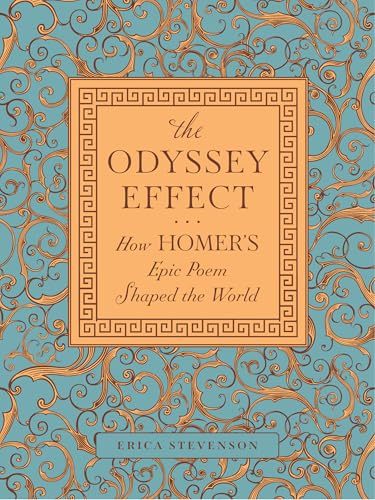
The Odyssey Effect: How Homer's Epic Poem Shaped the World
Embark on a cultural odyssey to explore the impact of Homer’s iconic poem, from its conception to the present day.
Since it originated in the eighth century, The Odyssey has influenced literature, film, art, and much more, with its themes including homecoming, loyalty, and temptation. While The Odyssey’s archaic language makes it inaccessible to many people, author Erica Stevenson endeavors to unpack its wisdom and beauty in an approachable, engaging, and artful way. Packed with vibrant photography and unique insights, The Odyssey Effect examines how Homer’s epic has evolved through the centuries through a pop-culture lens and illuminates how audiences throughout history have responded to this enduring story—and what those responses say about the societies and eras that sparked them. Explore the cultural journey of this iconic work,
Film and theatrical adaptationsLiterary retellingsCultural and artistic influencesAnd more!
Perfect for classical literature fans and pop culture fanatics, The Odyssey Effect showcases the incredible lasting power of Homer’s epic poem in an educational yet fun and concise way. Join Odysseus on his journey after the Trojan War and embark on your own Odyssey to discover the reasons behind the world's persistent fascination with this literary masterpiece.
Since it originated in the eighth century, The Odyssey has influenced literature, film, art, and much more, with its themes including homecoming, loyalty, and temptation. While The Odyssey’s archaic language makes it inaccessible to many people, author Erica Stevenson endeavors to unpack its wisdom and beauty in an approachable, engaging, and artful way. Packed with vibrant photography and unique insights, The Odyssey Effect examines how Homer’s epic has evolved through the centuries through a pop-culture lens and illuminates how audiences throughout history have responded to this enduring story—and what those responses say about the societies and eras that sparked them. Explore the cultural journey of this iconic work,
Film and theatrical adaptationsLiterary retellingsCultural and artistic influencesAnd more!
Perfect for classical literature fans and pop culture fanatics, The Odyssey Effect showcases the incredible lasting power of Homer’s epic poem in an educational yet fun and concise way. Join Odysseus on his journey after the Trojan War and embark on your own Odyssey to discover the reasons behind the world's persistent fascination with this literary masterpiece.
232 pages, Hardcover
First published June 9, 2026
Ratings & Reviews
Friends & Following
Create a free account to discover what your friends think of this book!
Community Reviews
Displaying 1 - 24 of 24 reviews

March 8, 2026
Easily 5 stars! You could tell the author loves this subject and knows a lot about it. The research and story telling was weaved perfectly together. I read an eARC but already pre-ordered a copy! Highly recommend if you’re already a huge fan/knowledgable of The Odyssey and antiquity or just starting out because you’re obsessed with Epic: The Musical. As someone who is knowledgeable and obsessed with the musical, I can say with confidence that this book will be perfect for you!!
August 8, 2026
Out: reading nonfiction means reading self help books
IN: reading nonfiction mean deep diving into whatever rabdom topic you're interested in
IN: reading nonfiction mean deep diving into whatever rabdom topic you're interested in

July 17, 2026
I loved this! Not only is it a gorgeous presentation, but it was a fascinating read as well! It carried the reader through the different eras and how they related, or were influenced, by Homer's epics. So now that I've read Homer's works, and now this, all that is left is to watch Nolan's version next week! I'm so excited!

August 6, 2026
"So what is there to say about the societal and cultural impact of Homer's story across the ages? That it's monumental? Timeless? Groundbreaking? Influential beyond belief? Yes, all of those words accurately describe Homeric poetry, and yet equally fall flat in describing its true grandeur. In my personal opinion, the best wort to describe the epic poem is simple: immortal."
In The Odyssey Effect, Erica Stevenson (the host of the channel MoAn Inc. on YouTube) explores how Homer's legendary epic poem, The Odyssey, has been interpreted, depicted and retold throughout history, from ancient plays to modern blockbuster films.
Having been a fan of Stevenson's work on YouTube for years, when I heard that she'd been asked to write a book about the historical reception of the Odyssey, I knew I needed it in my collection. The Odyssey Effect is a is perfect for both dedicated antiquity nerds and newbie nerds alike. Stevenson guides you through complex academic debates (Homer's identity or the Homeric Question, for example) and never assumes you know something. She tells you everything you need to know to understand what she is talking about at any given moment, which makes this book really accessible and easy to read even if you haven't read the Odyssey yet or seen/read any of the adaptations she explores. Stevenson's love for Homer and mythology shines through in her text, as does her personality. I was moved by her writing about her own first encounter with The Odyssey as a teenager in a mental health hospital – she writes about how, in this time when she wasn't in control of pretty much any aspect in her life and she was struggling mentally, The Odyssey was, to her, an "escape and my nostos (a word that we'll come back to shortly): not to the world of Ancient Greece, but to free will and freedom". This personal testimony is a brilliant example of just how meaningful Homer's poem still is today, thousands of years after it was first written down.
Stevenson's book doesn't dive super deep into any given topic; It's more a general overview on this topic. It was cool learning about all kinds of different interpretations throughout history and to see how the way this story is used in a reimagining reflects the society in which the version was written or created in. The modern, still strong trend of Greek myth retellings from a feminist POV is a brilliant example of this – in today's world, women are more liberated than ever and patriarchal structures are challenged, so obviously authors are tackling long-forgotten or ignored female characters and giving them a voice. During and after the world wars of the 20th century, many authors, like Primo Levi, use Odysseus's story of homecoming after living through trauma to explore their own experiences during the war, and, in Levi's case, during his time in Auschwitz. Medieval people, whose worldview largely revolved around Christianity, began to interpret ancient epics, most notably The Aeneid, through a Christian lens, which led them to shun The Odyssey, which didn't fit a Christian moral worldview as well as Aeneas's tale. Shakespeare used Homer and Greek myths to criticise his own time period in his plays, such as his take on the Trojan war, Troilus and Cressida. Stevenson states many times how it is much more fruitful to focus on why these stories were changed and what those changes say about the culture and the people rather than focus on a version being a bad adaptation, which I appreciate. You can have your own favorite adaptations and you can disagree with choices made in adaptations, but you can still appreciate them for what they tell you about their context and moment in history.
It was also cool to see how, though adaptations of The Odyssey vary a lot from time period to time period (I don't think the Victorians could've ever imagine anything like the SpongeBob Squarepants movie), there are still certain recurring themes within them. Stevenson shows, through many examples from different eras, how some sections of The Odyssey have always been fan favourites. The Polyphemus the Cyclops episode, alongside the Sirens and Odysseus meeting Circe have always been popular subjects in all forms of art, from ancient pottery depicting Odysseus hearing the Sirens' song to J. W. Waterhouse's painting Circe Invidious (1892) to the inclusion of the Cyclops storyline in Percy Jackson and the Sea of Monsters. It's heartwarming to realise that even though people today live such different lives than people in Ancient Rome or Renaissance Italy, these same stories have captured our imaginations throughout time. It speaks to what a banger Homer's Odyssey is. One of the most intriguing recurring themes is the shifting depiction of the Sirens. Originally, they were birds with heads of female humans, but overtime, starting with the Medieval period, they became more humanlike, first mermaids and then pretty much sexy naked women. You so often see them, still today, depicted as mermaids or nude ladies hanging out on some rocks. It's bizarre, considering they were once strange bird women.
One theme I really appreciate Stevenson covering was the transformation of the Classics from art, stories and mythology that was known by all into something elitist, something that only upper class people were given proper access to. She writes about how, in the 18th century, there was a boom in private collecting of ancient artefacts and creating public museums. Though these museums did allow all kinds of people to enter and see the artefacts, the study of classics was only something rich white men and boys could do. As Stevenson put it: "Instead, the Classics comes to be seen as something the wealthy learned about, and then simply shown to those who are less privileged. I think we can all agree that this is a horrible look for the industry. Unfortunately, it is the look that this field is still trying to change all these centuries later." Stevenson has made a career for herself of making ancient history and mythology accessible to everyone through her YouTube videos and now this book. It is so important that people do this kind of work and show readers that though this subject has an elitist vibe to it, these stories can be enjoyed by everyone. In the chapter regarding modern literary and visual adaptations of the epic, Stevenson highlights the works of people like Natalie Haynes, Madeline Miller, Bettany Hughes and Emily Wilson who have all, in their own ways, made Classics more accessible.
The Odyssey Effect is a wonderful, beautifully illustrated introduction to Homeric reception and the cultural impact and legacy of The Odyssey. I would've loved to have read an even more in-depth study on these themes and topics, but I understand that this book was meant to be brief, short and accessible. I would recommend this book happily to anyone interested in Homer's Odyssey and its significance. I'd also advice all of you to check out Stevenson's YouTube channel for more antiquity content like this in this kind of easy-to-follow, accessible, conversational style.
Interesting facts I learned:
- The word used to describe Odysseus in the opening line of the poem is "andra" which means a regular, normal man. Not a special or divine man, just a guy.
- It would take a bard about 30 hours to sing all of Homeric epic poetry.
- Lucien's A True History is considered the only piece of scifi lit from antiquity – in it, a ship is seized by a storm and it lands on the moon, where a war is waged between the sun and the moon.
- George Chapman was the first person to translate Homer's poems into English. His Iliad came out in 1598.
- Medieval people didn't always like Odysseus as much, which is apparent in perhaps the most famous Medieval epic poem, Dante's Inferno, where Odysseus resides in the Eigth Circle of Hell.
-A great example of just how ingrained The Odyssey is in our culture: the Coen Brothers have said, many times, that neither of them had read The Odyssey when they made their modern reimagining of it O Brother, Where Art Thou?
- Many European countries and royals claimed, in the Medieval period, Homeric heritage. For example, it was claimed that Hector's son Franco and Troilus's son Turcus founded France and Turkey respectively, and Snorri Sturluson, the Icelandic poet, claimed warriors of Troy migrated to the north after the war and transformed into Nordic deities.
- The first film adaptation of The Odyssey was the 1911 silent film (44 min long) called L'Odissea.
- Milman Parry and Albert Lord, in the 1930s, studied Yugoslavian oral poetry and published their theories, based on their research, that Homer's poems too were originally passed down orally. This had been suggested earlier too, but this time the academic community widely accepted the theory.
- The Victorian era saw the debates surrounding Homer's identity intensify. Friedrich August Wolf suggested the poems were originally orally transmitted, while Samuel Butler argued that the author of The Odyssey must have been a young woman considering the vibe and subjects of the poem.
In The Odyssey Effect, Erica Stevenson (the host of the channel MoAn Inc. on YouTube) explores how Homer's legendary epic poem, The Odyssey, has been interpreted, depicted and retold throughout history, from ancient plays to modern blockbuster films.
Having been a fan of Stevenson's work on YouTube for years, when I heard that she'd been asked to write a book about the historical reception of the Odyssey, I knew I needed it in my collection. The Odyssey Effect is a is perfect for both dedicated antiquity nerds and newbie nerds alike. Stevenson guides you through complex academic debates (Homer's identity or the Homeric Question, for example) and never assumes you know something. She tells you everything you need to know to understand what she is talking about at any given moment, which makes this book really accessible and easy to read even if you haven't read the Odyssey yet or seen/read any of the adaptations she explores. Stevenson's love for Homer and mythology shines through in her text, as does her personality. I was moved by her writing about her own first encounter with The Odyssey as a teenager in a mental health hospital – she writes about how, in this time when she wasn't in control of pretty much any aspect in her life and she was struggling mentally, The Odyssey was, to her, an "escape and my nostos (a word that we'll come back to shortly): not to the world of Ancient Greece, but to free will and freedom". This personal testimony is a brilliant example of just how meaningful Homer's poem still is today, thousands of years after it was first written down.
Stevenson's book doesn't dive super deep into any given topic; It's more a general overview on this topic. It was cool learning about all kinds of different interpretations throughout history and to see how the way this story is used in a reimagining reflects the society in which the version was written or created in. The modern, still strong trend of Greek myth retellings from a feminist POV is a brilliant example of this – in today's world, women are more liberated than ever and patriarchal structures are challenged, so obviously authors are tackling long-forgotten or ignored female characters and giving them a voice. During and after the world wars of the 20th century, many authors, like Primo Levi, use Odysseus's story of homecoming after living through trauma to explore their own experiences during the war, and, in Levi's case, during his time in Auschwitz. Medieval people, whose worldview largely revolved around Christianity, began to interpret ancient epics, most notably The Aeneid, through a Christian lens, which led them to shun The Odyssey, which didn't fit a Christian moral worldview as well as Aeneas's tale. Shakespeare used Homer and Greek myths to criticise his own time period in his plays, such as his take on the Trojan war, Troilus and Cressida. Stevenson states many times how it is much more fruitful to focus on why these stories were changed and what those changes say about the culture and the people rather than focus on a version being a bad adaptation, which I appreciate. You can have your own favorite adaptations and you can disagree with choices made in adaptations, but you can still appreciate them for what they tell you about their context and moment in history.
It was also cool to see how, though adaptations of The Odyssey vary a lot from time period to time period (I don't think the Victorians could've ever imagine anything like the SpongeBob Squarepants movie), there are still certain recurring themes within them. Stevenson shows, through many examples from different eras, how some sections of The Odyssey have always been fan favourites. The Polyphemus the Cyclops episode, alongside the Sirens and Odysseus meeting Circe have always been popular subjects in all forms of art, from ancient pottery depicting Odysseus hearing the Sirens' song to J. W. Waterhouse's painting Circe Invidious (1892) to the inclusion of the Cyclops storyline in Percy Jackson and the Sea of Monsters. It's heartwarming to realise that even though people today live such different lives than people in Ancient Rome or Renaissance Italy, these same stories have captured our imaginations throughout time. It speaks to what a banger Homer's Odyssey is. One of the most intriguing recurring themes is the shifting depiction of the Sirens. Originally, they were birds with heads of female humans, but overtime, starting with the Medieval period, they became more humanlike, first mermaids and then pretty much sexy naked women. You so often see them, still today, depicted as mermaids or nude ladies hanging out on some rocks. It's bizarre, considering they were once strange bird women.
One theme I really appreciate Stevenson covering was the transformation of the Classics from art, stories and mythology that was known by all into something elitist, something that only upper class people were given proper access to. She writes about how, in the 18th century, there was a boom in private collecting of ancient artefacts and creating public museums. Though these museums did allow all kinds of people to enter and see the artefacts, the study of classics was only something rich white men and boys could do. As Stevenson put it: "Instead, the Classics comes to be seen as something the wealthy learned about, and then simply shown to those who are less privileged. I think we can all agree that this is a horrible look for the industry. Unfortunately, it is the look that this field is still trying to change all these centuries later." Stevenson has made a career for herself of making ancient history and mythology accessible to everyone through her YouTube videos and now this book. It is so important that people do this kind of work and show readers that though this subject has an elitist vibe to it, these stories can be enjoyed by everyone. In the chapter regarding modern literary and visual adaptations of the epic, Stevenson highlights the works of people like Natalie Haynes, Madeline Miller, Bettany Hughes and Emily Wilson who have all, in their own ways, made Classics more accessible.
The Odyssey Effect is a wonderful, beautifully illustrated introduction to Homeric reception and the cultural impact and legacy of The Odyssey. I would've loved to have read an even more in-depth study on these themes and topics, but I understand that this book was meant to be brief, short and accessible. I would recommend this book happily to anyone interested in Homer's Odyssey and its significance. I'd also advice all of you to check out Stevenson's YouTube channel for more antiquity content like this in this kind of easy-to-follow, accessible, conversational style.
Interesting facts I learned:
- The word used to describe Odysseus in the opening line of the poem is "andra" which means a regular, normal man. Not a special or divine man, just a guy.
- It would take a bard about 30 hours to sing all of Homeric epic poetry.
- Lucien's A True History is considered the only piece of scifi lit from antiquity – in it, a ship is seized by a storm and it lands on the moon, where a war is waged between the sun and the moon.
- George Chapman was the first person to translate Homer's poems into English. His Iliad came out in 1598.
- Medieval people didn't always like Odysseus as much, which is apparent in perhaps the most famous Medieval epic poem, Dante's Inferno, where Odysseus resides in the Eigth Circle of Hell.
-A great example of just how ingrained The Odyssey is in our culture: the Coen Brothers have said, many times, that neither of them had read The Odyssey when they made their modern reimagining of it O Brother, Where Art Thou?
- Many European countries and royals claimed, in the Medieval period, Homeric heritage. For example, it was claimed that Hector's son Franco and Troilus's son Turcus founded France and Turkey respectively, and Snorri Sturluson, the Icelandic poet, claimed warriors of Troy migrated to the north after the war and transformed into Nordic deities.
- The first film adaptation of The Odyssey was the 1911 silent film (44 min long) called L'Odissea.
- Milman Parry and Albert Lord, in the 1930s, studied Yugoslavian oral poetry and published their theories, based on their research, that Homer's poems too were originally passed down orally. This had been suggested earlier too, but this time the academic community widely accepted the theory.
- The Victorian era saw the debates surrounding Homer's identity intensify. Friedrich August Wolf suggested the poems were originally orally transmitted, while Samuel Butler argued that the author of The Odyssey must have been a young woman considering the vibe and subjects of the poem.
September 7, 2026
Reading this beautiful book feels like chatting with a wholesome classicist professor over lunch--which, incidentally, is how I acquired such a book. Stevenson offers a highly readable and accessible keystone to the broad strokes of the Odyssey's history and impact, an excellent starting point for anyone interested in this immortal epic. I'm usually skeptical of books like this, but the sections which covered familiar ground did not feel shallow or reduced, and the sections which covered unfamiliar ground did not feel intimidating or elitist. In other words, I believe that an expert or a total novice to this topic can read this book and get something out of it. Stevenson's neutral yet precise style manages to diplomatically acknowledge a plethora of Odyssey-inspired media in a non-judging way while still giving the reader the impression that she is purposefully focusing on more worthwhile anecdotes and interpretations while avoiding the swaths of rubbish out there. Importantly, she stresses that access to this legend has historically been mired in elitism to a degree, and she encourages readers to embrace a more modern openness to reimagining. There are only so many nerds like us who not only read Homer but have a desire to engage with it on a deeper level, and many newcomers arrive through adaptations, games, and retellings. I came away from this book with a greater respect for adaptations that I may not personally like or agree with, because, for someone, that's a gateway to the tradition of this epic. This book creates a feeling that the fandom of Homer is a shared tradition over thousands of years, one that has evolved and adapted endlessly yet retained the core narrative components of the epic.

June 16, 2026
Fantastic read!!!

July 14, 2026
4.5
I first encountered Erica on YouTube 3-4 years ago and I am so glad that I did. This was a blast. 100% recommended.
I first encountered Erica on YouTube 3-4 years ago and I am so glad that I did. This was a blast. 100% recommended.

June 23, 2026
loved it so much!!! such an engaging read with fascinating information; my reading list has now grown much longer 🧍♂️
June 10, 2026
I don't even know where to begin with this review because I cannot separate Erica's Youtube channel, Moan Inc., from the publication of this book. For me the two media go hand in hand and this is a long awaited extension of her Youtube channel. If you have not watched her channel you will not be able to understand the author, her fantastic sense of humor, passion for the subject, deep knowledge in the subject matter or vigor during her discussions. I have been a fan and follower of her work for several years and, as I am sure many others have done, I have quietly waited on her to publish a book, (I do remember her off handedly mentioning, "Maybe I should publish a book" as a knee jerk reaction to miss speaking during one of her famous Iliad videos), and now that it has finally arrived it is a must read for anyone that is a fan of her videos, a fan of the classics, or any student that has ever asked the question, "Why do we have to read or study this?" when given the task to tackle Homer. Erica's Youtube channel is a breath of fresh air for both the "Classics Community" and "Historical Community". She has managed to keep an important part of Western Culture alive by introducing a new generation to Homer in a way that is refreshing, insightful, honest, and truthful. I use honest and truthful separately because it is the best way to describe Erica's method of explanation in her videos. I dare not call her videos lectures as they are way more than any lecture could ever hope to be because no Professor giving a lecture on Homer will honestly say, "No one should have to read the catalog of ships. It's boring and honestly you will never be tested on it anyway.", but Erica does. However, it is that deep seated integrity and blunt honesty that makes her videos so important to the community because that honesty is the backbone that gives life to these stories. It is her honest story telling that makes Homer's tells so interesting, whimsical, terrifying, passionate and epic. If it was not for the story teller the story would not have life, character, meaning, or importance, and Erica naturally provides all of that in her videos and now in her book.
I don't know how to recommend this book enough. It is a long awaited work and now that it has finally arrived I can honestly say it was everything I had hoped it would be. I hope the readers will see this books as a tool to understand why studying ancient historical events and ancient literature is so important to modern society. I believe the academic community has failed society by not emphasizing how ancient events effect our modern culture, how those events helped to build nations, language, empires, society, or how those events still inspire our modern art, media, news, wars, travel, trade markets, and almost ever aspect of our daily lives. I can only hope that one day academia will remove the "PhD." requirement for historical publication and allow more passionate authors to publish within the academic world. I believe there are people in the world who have a passion for study, a passion for learning and a passion to help teach or inspire others to learn; and sadly academia has pushed to the way side those passionate and knowledgeable people because they don't meet the degree requirements. However, as a professional historian who teaches at a local university, I would happily name Erica as a colleague and one of the most passionate "Classicist" or "Historian", (I will let her choose the title since I think she deserves both), and most certainly one of the foremost experts on Homer in the academic community and by far the number One Expert on Youtube.
I would like to say congratulations to Erica for doing what all of use hope to do one day. Congratulations for a successful Youtube channel. Congratulations on the book. However, and most importantly, congratulations on being a inspiration.
I don't know how to recommend this book enough. It is a long awaited work and now that it has finally arrived I can honestly say it was everything I had hoped it would be. I hope the readers will see this books as a tool to understand why studying ancient historical events and ancient literature is so important to modern society. I believe the academic community has failed society by not emphasizing how ancient events effect our modern culture, how those events helped to build nations, language, empires, society, or how those events still inspire our modern art, media, news, wars, travel, trade markets, and almost ever aspect of our daily lives. I can only hope that one day academia will remove the "PhD." requirement for historical publication and allow more passionate authors to publish within the academic world. I believe there are people in the world who have a passion for study, a passion for learning and a passion to help teach or inspire others to learn; and sadly academia has pushed to the way side those passionate and knowledgeable people because they don't meet the degree requirements. However, as a professional historian who teaches at a local university, I would happily name Erica as a colleague and one of the most passionate "Classicist" or "Historian", (I will let her choose the title since I think she deserves both), and most certainly one of the foremost experts on Homer in the academic community and by far the number One Expert on Youtube.
I would like to say congratulations to Erica for doing what all of use hope to do one day. Congratulations for a successful Youtube channel. Congratulations on the book. However, and most importantly, congratulations on being a inspiration.

July 20, 2026
I could not finish this. It felt like reading high school students' writing but not getting paid to do it. I am ALL for making academic work more accessible, but accessibility doesn't need to come at the expense of clear writing. I could not turn off my grading/editing brain as I wanted to point out places where sweeping statements would be better serviced by specificity and redundancy was distracting from valid points. (Quickest example, in the introduction she says, "Here, I will be guiding you through the history of Homeric reception to explore why and how the people of all periods have returned to The Odyssey again and again." My brain is automatically asking, "which people are the people?" "ALL periods? ALL of them haha? Of which geographical region?" I muttered "this sentence just told me nothing" many times before I had to abandon ship (get it--wamp wamp).
I saw this as a free ebook to read through my library and jumped on it because I love reading literary criticism. I should have done my research beforehand, though, and realized this is a text that was born from the author's youtube channel. I am sure her work translates better in that format, but here it was obvious that the creator has a lot less experience with writing. Writing is freaking hard, and anybody who writes a book should be insanely proud of that immense accomplishment. If one of my students turned this in, I would tell them to just practice, practice, practice, and the writing will keep getting stronger.
I saw this as a free ebook to read through my library and jumped on it because I love reading literary criticism. I should have done my research beforehand, though, and realized this is a text that was born from the author's youtube channel. I am sure her work translates better in that format, but here it was obvious that the creator has a lot less experience with writing. Writing is freaking hard, and anybody who writes a book should be insanely proud of that immense accomplishment. If one of my students turned this in, I would tell them to just practice, practice, practice, and the writing will keep getting stronger.
June 12, 2026
The Odyssey Effect by Erica Stevenson book review
Covers: The human approach to The Odyssey, from before Homer and Euripidies to after Spongebob and Epic.
Review: This was a thoroughly solid read. My biggest issue wasn't actually with the contents of the words, but the formatting of the book itself- the text wasn't justified, as most books I read are, but were left-aligned. When my biggest quarrel with a book is with its formatting, thats typically a good thing. I got this work because I'm a subscriber of Stevenson's YouTube channel- MOAN Inc- *and* because I wanted to do a little bit of reading into Odyssey reimaginings before the upcoming Nolan movie. I was right to do so. While this book isn't the deepest- that is, while it doesn't go into an immense amount of scholarly detail- over specific periods, it still manages to civer a lit of grounds. It would likely be a good choice for someone's first foray into extra-textual analysis of The Odyssey, as it provides you with the broad strokes and context of previous reimaginings. A very fine work. 4.5/5
Verdict: Worth a read before (or after) the Nolan movie.
Covers: The human approach to The Odyssey, from before Homer and Euripidies to after Spongebob and Epic.
Review: This was a thoroughly solid read. My biggest issue wasn't actually with the contents of the words, but the formatting of the book itself- the text wasn't justified, as most books I read are, but were left-aligned. When my biggest quarrel with a book is with its formatting, thats typically a good thing. I got this work because I'm a subscriber of Stevenson's YouTube channel- MOAN Inc- *and* because I wanted to do a little bit of reading into Odyssey reimaginings before the upcoming Nolan movie. I was right to do so. While this book isn't the deepest- that is, while it doesn't go into an immense amount of scholarly detail- over specific periods, it still manages to civer a lit of grounds. It would likely be a good choice for someone's first foray into extra-textual analysis of The Odyssey, as it provides you with the broad strokes and context of previous reimaginings. A very fine work. 4.5/5
Verdict: Worth a read before (or after) the Nolan movie.
This entire review has been hidden because of spoilers.

August 12, 2026
This author functions like a tour guide, not an expert.
No substantial attempt is made to explain how or why Odyssey has had such an enduring impact on the world, save for in the final paragraphs of the book. It reads more like a laundry list of things connected to the Odyssey, from classical antiquity to the contemporary era, no matter how tenuous or inconsequential. The best praise I can give this book is that it gave me other things to add to my reading list. It is not bad per se, it's just completely trite and uninteresting.
I don't doubt that this book took an immense amount of research, but it reads like a less professional Wikipedia article. The quirky Millennial interjections completely take me out of the content, and despite containing class/gender/socially conscious language, it makes no effort to say anything new about the Odyssey (and its subsequent adaptations) within a contemporary lens.
This book, unfortunately, just has no authentic thoughts of its own.
No substantial attempt is made to explain how or why Odyssey has had such an enduring impact on the world, save for in the final paragraphs of the book. It reads more like a laundry list of things connected to the Odyssey, from classical antiquity to the contemporary era, no matter how tenuous or inconsequential. The best praise I can give this book is that it gave me other things to add to my reading list. It is not bad per se, it's just completely trite and uninteresting.
I don't doubt that this book took an immense amount of research, but it reads like a less professional Wikipedia article. The quirky Millennial interjections completely take me out of the content, and despite containing class/gender/socially conscious language, it makes no effort to say anything new about the Odyssey (and its subsequent adaptations) within a contemporary lens.
This book, unfortunately, just has no authentic thoughts of its own.
June 13, 2026
As Greek Mythology has always been my so called Roman Empire, this was a very interesting book to read. Short and sweet, it brought together really a history of art being impacted by art, and that has always held a special interest in my mind. The Odyssey, which when I read it first i found very boring, and then realized that it in fact impacts so many facets of life, art, cinema, even cartoons, as well as ways of speaking and of addressing certain histories and ways of telling stories, it makes for a very interesting piece that historically places so much of the history of the world as we know it on its shoulders. I loved also that in its way of being told, this story of the Odyssey also brought to the attention of the reader the way that something is translated and how, as humans, we leave something in our wake in the way we interact with media.

July 20, 2026
I loved this look at the history our relation to the Odyssey and the different works it has inspired over time, as well as how different aspects of the tale surged in and out of popularity in different times depending on what people were looking for. I love Erica’s tone in this book, it’s not a dry study of the text, if you’ve seen any of her videos this is the tone you’ve come to love.
Happy to have picked this one up
Happy to have picked this one up
August 10, 2026
This is a fantastic read! Full of fascinating insights, yet still incredibly fun and approachable, Erica Stevenson's knowledge and enthusiasm for this topic shines through every page! Not to mention the beautiful illustrations! I had the pleasure of reading a proof copy last year and am so excited to watch as everyone else falls in love with it too!

August 10, 2026
I loved this book so much!!! I was looking for something to introduce me to The Odyssey, and this was perfect. It was so nice to read and see the classic through her eyes, it honestly felt like getting told a great story plus some great insights. I can’t recommend it enough if you want an easy, fun way in before reading The Odyssey itself!

July 29, 2026
okay lowkey this was awesome bc it had a lot of pictures and the hoopla version was only 95 pages but i still feel like i learned but it also read the same as essays i wrote for history 250. which i mean. really suits the 95 pages with many pictures vibe
August 2, 2026
I bought this after seeing Christopher Nolan's new film and can't recommend it enough. The way it's written makes it feel like a friend is excitedly telling you all of their knowledge about how the Odyssey has adapted and changed over the centuries. The easiest 5 star rating of the year so far!
August 10, 2026
I wanted to read something that helped me understand the Nolan film and this was perfect for me! Reading things about history and classics is quite intimidating and I get bored easily but this book was so easy to follow (funny also!) and was really interesting clearly well-researched.
August 10, 2026
Such a fascinating read on how pervasive Odysseus’ homecoming is pervasive throughout society even today. Also a very easy to read, well-written book through and through. Not to mention the artwork and formatting is absolutely stunning.

August 22, 2026
A great summary of homers work and how it has continued to be adapted and captured to this day in many different forms.
Key takeaway Percy Jackson and SpongeBob the movie are valid adaptations of the odyssey
Key takeaway Percy Jackson and SpongeBob the movie are valid adaptations of the odyssey
September 13, 2026
Did not enjoy the basic prose. The content was more superficial than I was hoping for.
September 18, 2026
A really fun journey (Odyssey?) into how this epic poem was perceived and enjoyed through the ages.
August 2, 2026
Easy to read & very enjoyable
Displaying 1 - 24 of 24 reviews