

What do you think?
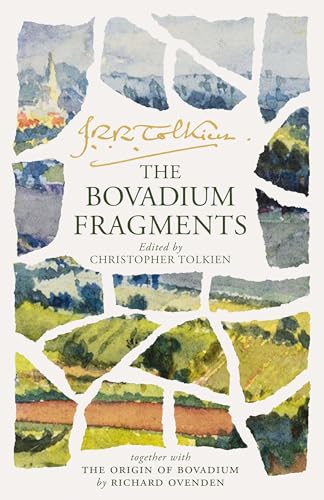
The Bovadium Fragments: Together with ‘the Origin of Bovadium’ by Richard Ovenden
The first-ever publication of a previously unknown short satirical fantasy by J.R.R. Tolkien, edited by his son, Christopher Tolkien, and accompanied by illustrations from the author together with an essay, The Origin of Bovadium, by Richard Ovenden OBE.
144 pages, Hardcover
First published October 9, 2025
About the author
J.R.R. Tolkien
791 books80k followersJohn Ronald Reuel Tolkien: writer, artist, scholar, linguist. Known to millions around the world as the author of The Lord of the Rings, Tolkien spent most of his life teaching at the University of Oxford where he was a distinguished academic in the fields of Old and Middle English and Old Norse. His creativity, confined to his spare time, found its outlet in fantasy works, stories for children, poetry, illustration and invented languages and alphabets.
Tolkien’s most popular works, The Hobbit and The Lord of the Rings are set in Middle-earth, an imagined world with strangely familiar settings inhabited by ancient and extraordinary peoples. Through this secondary world Tolkien writes perceptively of universal human concerns – love and loss, courage and betrayal, humility and pride – giving his books a wide and enduring appeal.
Tolkien was an accomplished amateur artist who painted for pleasure and relaxation. He excelled at landscapes and often drew inspiration from his own stories. He illustrated many scenes from The Silmarillion, The Hobbit and The Lord of the Rings, sometimes drawing or painting as he was writing in order to visualize the imagined scene more clearly.
Tolkien was a professor at the Universities of Leeds and Oxford for almost forty years, teaching Old and Middle English, as well as Old Norse and Gothic. His illuminating lectures on works such as the Old English epic poem, Beowulf, illustrate his deep knowledge of ancient languages and at the same time provide new insights into peoples and legends from a remote past.
Tolkien was born in Bloemfontein, South Africa, in 1892 to English parents. He came to England aged three and was brought up in and around Birmingham. He graduated from the University of Oxford in 1915 and saw active service in France during the First World War before being invalided home. After the war he pursued an academic career teaching Old and Middle English. Alongside his professional work, he invented his own languages and began to create what he called a mythology for England; it was this ‘legendarium’ that he would work on throughout his life. But his literary work did not start and end with Middle-earth, he also wrote poetry, children’s stories and fairy tales for adults. He died in 1973 and is buried in Oxford where he spent most of his adult life.
Tolkien’s most popular works, The Hobbit and The Lord of the Rings are set in Middle-earth, an imagined world with strangely familiar settings inhabited by ancient and extraordinary peoples. Through this secondary world Tolkien writes perceptively of universal human concerns – love and loss, courage and betrayal, humility and pride – giving his books a wide and enduring appeal.
Tolkien was an accomplished amateur artist who painted for pleasure and relaxation. He excelled at landscapes and often drew inspiration from his own stories. He illustrated many scenes from The Silmarillion, The Hobbit and The Lord of the Rings, sometimes drawing or painting as he was writing in order to visualize the imagined scene more clearly.
Tolkien was a professor at the Universities of Leeds and Oxford for almost forty years, teaching Old and Middle English, as well as Old Norse and Gothic. His illuminating lectures on works such as the Old English epic poem, Beowulf, illustrate his deep knowledge of ancient languages and at the same time provide new insights into peoples and legends from a remote past.
Tolkien was born in Bloemfontein, South Africa, in 1892 to English parents. He came to England aged three and was brought up in and around Birmingham. He graduated from the University of Oxford in 1915 and saw active service in France during the First World War before being invalided home. After the war he pursued an academic career teaching Old and Middle English. Alongside his professional work, he invented his own languages and began to create what he called a mythology for England; it was this ‘legendarium’ that he would work on throughout his life. But his literary work did not start and end with Middle-earth, he also wrote poetry, children’s stories and fairy tales for adults. He died in 1973 and is buried in Oxford where he spent most of his adult life.
Ratings & Reviews
Friends & Following
Create a free account to discover what your friends think of this book!
Community Reviews
Displaying 1 - 30 of 61 reviews

December 19, 2025
Part story and part history of a controversy of how to eliminate congestion caused by motorcars. I can appreciate Tolkien's dislike of motors, the noise, the smell and the effects they have on nature. He does make his point in this somewhat satire.

December 8, 2025
Tolkien readers cling to the dinner table for every morsel and even after Christopher’s death, morsels continue to be swept from the tabletop and into our greedy mouths. The Bovadium Fragments (together with an essay entitled “The Origin of Bovadium”, for any reader of Middle-earth's extra material will know that the scholarly insights into Tolkien’s additional works often outweighs the work itself in wordcount) is a very strange, non-Middle-earth piece of writing. Its strangeness is mostly derived from its silliness, both intentional and not. Christopher refers to it as a ‘satirical fantasy’, and dates it somewhere around the end of the 1950s. The text itself amounts to about thirty or forty pages. It concerns Bovadium, Tolkien’s fantasy version of Oxford, and a Daemon, who created machines called ‘Motores’. Quite evidently: motor-cars. Tolkien’s dislike for the car is no secret (an opinion he, at least, shared with C. S. Lewis). He had his own, named ‘Jo’, which he infamously drove very badly. He later replaced it with ‘Jo 2’ but ultimately, by the end of the Second World War, gave up driving and returned to the trusty bicycle. The Bovadium Fragments, though wrapped up neatly as a linguistic heady short story (there are forewords to the main text by invented writers, and allusions to two separate languages, for at the time of their writing, Bovadium was an archaeological site), is a bad disguise for Tolkien’s disgust for the motorcar. Take this passage from the text,
If his viewpoint isn’t clear enough to see here, he put it more plainly still in a letter, in Middle-earth terms: ‘‘the spirit of Isengard, if not of Mordor, is of course always cropping up, the present design of destroying Oxford in order to accommodate motor-cars is a case.’’
The subsequent essay then becomes something of a 20th century town council meeting. Through work I have attended several of these and like “The Origin of Bovadium”, most of the discourse surrounds traffic. (I once attended a council meeting in the small town I work in weekly, in which a good forty minutes was given to the agenda item concerning the town’s speed limit being dropped from 30mph to 20mph (it was eventually passed — something I forget when I am driving through even now! — and the following meeting instead spent forty minutes discussing dog poo — these are the discussions when the town’s population is hardly more than 3,000.)) Richard Ovenden, the writer of the essay, explores the Oxford Tolkien would have known when he first arrived in 1911 and the history of Oxford and the dawn of the dreaded motorcar. You would need to be a dedicated Tolkien reader to seek this out. I do not quite put myself in this category, though here I am, but my excuse is my avoiding HoME. Either way, excusing Ovenden’s reflections on early 20th century Oxford and the plans and laws for its roads, there is not much to be garnered from Tolkien’s own words here. Many would place it even lower down the list of priorities as it does not relate to Middle-earth; but I think there is something to be said for the works that do not: it is a different flavour. I might say I am lucky to live in a predominantly small and pedestrianised city!
He [the Daemon] had promised speed; and he had promised ease and the saving of time. But as for speed: before long the Via Maxima [Bovadium’s main street] was packed with an unceasing stream of Motores crawling so slowly from halt to halt that a man on foot could (like an animal) walk its whole length and back to find a ‘mounted’ friend only ten yards further on his way, while the horn of his Motor trumpeted in vexation. And as for ease: the ‘owners’ now had a multitude of cares (tending the ailments of the monsters, and seeking places where to leave them) which consumed most of their time to no purpose.
It is true that there were not a few who had ceased to govern their Motores, but had become their servants, finding chief pleasure in waiting on them. Such men cared very little what their Motores did, so long as their skins shone and they purred. Indeed on the days formerly set aside for prayers and rites in the temples many would now wheel their Motores out upon a platform before their houses and there tend them and worship them, prostrate upon the ground. On these days the Motores looked indeed as if prepared for a great ceremony, but their ‘owenrs’ were content with the dirty garments of slaves […] For those who had purchased ‘speed’ now often sat for hours looking at the unsavoury hinder-end of a Motor in front, and so great a fury was engendered in them that, when released, they rushed headlong like madmen, slaying any fools on foot that they met, or crashing recklessly into rival Motores. In this way thousands were dismembered or burned to death.
If his viewpoint isn’t clear enough to see here, he put it more plainly still in a letter, in Middle-earth terms: ‘‘the spirit of Isengard, if not of Mordor, is of course always cropping up, the present design of destroying Oxford in order to accommodate motor-cars is a case.’’
The subsequent essay then becomes something of a 20th century town council meeting. Through work I have attended several of these and like “The Origin of Bovadium”, most of the discourse surrounds traffic. (I once attended a council meeting in the small town I work in weekly, in which a good forty minutes was given to the agenda item concerning the town’s speed limit being dropped from 30mph to 20mph (it was eventually passed — something I forget when I am driving through even now! — and the following meeting instead spent forty minutes discussing dog poo — these are the discussions when the town’s population is hardly more than 3,000.)) Richard Ovenden, the writer of the essay, explores the Oxford Tolkien would have known when he first arrived in 1911 and the history of Oxford and the dawn of the dreaded motorcar. You would need to be a dedicated Tolkien reader to seek this out. I do not quite put myself in this category, though here I am, but my excuse is my avoiding HoME. Either way, excusing Ovenden’s reflections on early 20th century Oxford and the plans and laws for its roads, there is not much to be garnered from Tolkien’s own words here. Many would place it even lower down the list of priorities as it does not relate to Middle-earth; but I think there is something to be said for the works that do not: it is a different flavour. I might say I am lucky to live in a predominantly small and pedestrianised city!

April 27, 2026
probably the most desperate attempt to milk the last 3 original pages from Tolkien, but i do love how much he hates cars

August 12, 2026
This was much shorter than I was hoping for, but still a really interesting addition to Tolkien's life's work. Any Tolkien superfan like myself has to add this to their collection.
January 5, 2026
"Then the Northerners were filled with hate and envy, holding the opinion that misery should be equal, or if unequal that other men should bear the heavier burden."
For someone who supposedly disliked allegory of all kinds, Tolkien writes some pretty burning satire. Unlike his other allegories, Bovadium gets pretty dark in the end, though this is appropriate for the story itself.
The Fragments themselves are actually complete, being fragmentary only in their fictional in-world universe. They are good but short, and I'm not convinced that an entire book was necessary to tell them. The origins of Bovadium, as told by Ovenden, are interesting, but it seemed like filler to get the page count up to a sufficient number. I wish these short works were simply gathered together in a collection, though it seems there is an audience for these stand-alone volumes (I bought it, after all...)
For someone who supposedly disliked allegory of all kinds, Tolkien writes some pretty burning satire. Unlike his other allegories, Bovadium gets pretty dark in the end, though this is appropriate for the story itself.
The Fragments themselves are actually complete, being fragmentary only in their fictional in-world universe. They are good but short, and I'm not convinced that an entire book was necessary to tell them. The origins of Bovadium, as told by Ovenden, are interesting, but it seemed like filler to get the page count up to a sufficient number. I wish these short works were simply gathered together in a collection, though it seems there is an audience for these stand-alone volumes (I bought it, after all...)

October 12, 2025
As the drip of original content from Tolkien and his son Christopher truly dries up, I was delighted to find this latest publication to be such a gem. Definitely one for the hardcore lovers of Tolkien, but I really enjoyed this one. The book itself, too, is beautifully designed and printed.

Want to Read
June 27, 2025Published on 9 October, the book is a satire on industrialisation, and the impact of the motor car on Bovadium (Oxford). Something very different from Middle-earth!

January 13, 2026
It’s such fun whenever a new Tolkien book comes out! I enjoyed The Bovadium Fragments immensely. Tolkien’s satire is top-notch, and the companion paper by Richard Ovenden is very insightful and adds a lot of background information on the situation that Tolkien was critiquing.
Apart from its contents, the physical book itself is very well made. The illustrations and photographs are great, and the very slight green shade of the paper goes great with the dark green page accents.
Apart from its contents, the physical book itself is very well made. The illustrations and photographs are great, and the very slight green shade of the paper goes great with the dark green page accents.

November 29, 2025
An interesting satirical fantasy story about archaeologists looking at fragments of a story about an abandoned city called Bovadium, which turns out to be Oxford, and how it fell due to the devilish motorcars that gradually enslave the inhabitants of the city, eventually causing its downfall.
J. R. R. Tolkien initially intended to publish the story but put it aside when comments by friends indicated that the language used and satire might go over the head of readers. It was finally published by his son, along with notes and background information that lead to the writing of the story.
It was written at a time when Tolkien was at Oxford, and Oxford itself became a centre of car manufacturing for Morris cars. As the car population at Oxford grew, congestion became a fact of life. One solution was to build a road across a green area in Oxford, a controversial solution which became a battle between those advocating and opposed to the idea, which Tolkien was aware of.
The story itself has the feel of a fable, one that people who own and drive cars in congested areas will be familiar with. Whether we will all end up as Bovadium in the end is up to the reader to decide.
J. R. R. Tolkien initially intended to publish the story but put it aside when comments by friends indicated that the language used and satire might go over the head of readers. It was finally published by his son, along with notes and background information that lead to the writing of the story.
It was written at a time when Tolkien was at Oxford, and Oxford itself became a centre of car manufacturing for Morris cars. As the car population at Oxford grew, congestion became a fact of life. One solution was to build a road across a green area in Oxford, a controversial solution which became a battle between those advocating and opposed to the idea, which Tolkien was aware of.
The story itself has the feel of a fable, one that people who own and drive cars in congested areas will be familiar with. Whether we will all end up as Bovadium in the end is up to the reader to decide.

December 1, 2025
I adore essentially everything about The Bovadium Fragments. It was all the fun and whimsy with a comic and satirical flare that I’ve come to love in Tolkien’s non-Middle-earth works. The essay that makes up around half the book is also really interesting and gives a lot of contextual information around why the Fragments were written in the first place. It is really sad to see that this is the last of Christopher Tolkien’s edited works after more than 5 years after his death. To finally see this is the end of his legacy is really sad to see, but I found this work to be incredibly fun and interesting!

October 20, 2025
4.5⭐️ ❝All Motores stopped dead. Silence fell. The silence of a tomb. For when at length men came to the city, walking over the tips of the inert Motores, they found that all the inhabitants were dead. Slain by the poisonous fumes, their shades had fled to seek a cleaner air in Hell.❞
Half of the book are the supposedly found fragments entailing the downfall of Bovadium, almost like an English Iliad. Where the professors of course assume not everything is true cause man is so knowledgeable and great - nor would they themselves ever make such mistakes, of course!
The other half is basically an explanation of the time in which Tolkien wrote and why he’d write about Motores, which was fine. I did really like the drawings and pictures in the book.
In short: a solid satire, the other half of also enjoyable for people who are either history nerds or Tolkien nerds.
Half of the book are the supposedly found fragments entailing the downfall of Bovadium, almost like an English Iliad. Where the professors of course assume not everything is true cause man is so knowledgeable and great - nor would they themselves ever make such mistakes, of course!
The other half is basically an explanation of the time in which Tolkien wrote and why he’d write about Motores, which was fine. I did really like the drawings and pictures in the book.
In short: a solid satire, the other half of also enjoyable for people who are either history nerds or Tolkien nerds.

February 28, 2026
The book is divided into two parts: the fragments themselves and the story behind them. The second part was the most interesting to me - a slice of Oxford history pertaining to the explosion of the automobile industry between the two wars and the very heated debate between Town and Gown on how to deal with the traffic problems. At the center of the controversy was the plan to build a road through Christ Church Meadow, which only Oxford University had access to.
The physical book is handsome with a few illustrations by Tolkien, including the beautiful endpapers which I believe are a watercolor of Oxford and surrounding countryside. I also have a minor obsession with the green color of the sewn-in ribbon.
I would say this book is for Tolkien completists and those who enjoy of a slice of Oxford history.
The physical book is handsome with a few illustrations by Tolkien, including the beautiful endpapers which I believe are a watercolor of Oxford and surrounding countryside. I also have a minor obsession with the green color of the sewn-in ribbon.
I would say this book is for Tolkien completists and those who enjoy of a slice of Oxford history.

April 4, 2026
Os Fragmentos de Bovadium revela uma faceta pouco conhecida de J. R. R. Tolkien, apresentando um autor mais ácido, irônico e profundamente marcado por sua experiência na Universidade de Oxford, onde viveu desde 1911. Diferente do tom épico de O Senhor dos Anéis, a obra aqui traz uma crítica à modernidade, especialmente ao avanço dos automóveis, vistos como símbolo de um progresso desordenado, além de ironizar o próprio ambiente acadêmico em suas inúmeras e deliciosas brincadeiras com o latim. Com uma escrita fragmentada e reflexiva, o livro desafia o leitor e rompe com narrativas tradicionais, destacando-se mais pelo seu caráter crítico do que pela fluidez, o que o torna uma leitura muito necessária, ainda que menos acessível.

June 2, 2026
Seems like Tolkien's perception of progress still stands, now maybe more than ever before. This satire about the downfall of society because of motorised vehicles depicts how the confusion of commodity as quality of life can be read as an analogy of how we invent and use new technology under the pretense of convenience when in reality it's worsening our long- and short-term problems, e.g. climatechange, water shortage, welfare etc.
This being said, fuck AI, Tolkien dreht sich im Grab um.
This being said, fuck AI, Tolkien dreht sich im Grab um.


June 22, 2026
...I don't think Tolkien liked Motor cars or traffic. But it is a amusing read, and especially relevant today.

July 20, 2026
I was expecting more of Tolkien’s writing or at least how he was inspired to write, while the effects around Oxford affected his storytelling. There is little of Tolkien and more of a historical context to the progress of and around Oxford as such. An easy read but somewhat tiresome.

January 6, 2026
Five stars for one last glimpse into Tolkien’s humor, but also for the beautifully printed book with Tolkien’s inks and watercolors (7 in all), plus photos and maps. Lovers of Oxford will like this.

Review of advance copy received from Publisher
Im Vorwort erfährt man, dass die satirische Fabel von Tolkien ihren Hintergrund in Diskussionen um das Stadtbild von Oxfort hat. Der Verkehr in den 40er und 50er Jahren hat wohl so sehr zugenommen, dass die Planungen für mehr Straßen von vielen als negativ aufgefasst wurden - vor allem der vermehrte Lärm und Gestank war für Tolkien nahezu unerträglich geworden. Christopher Tolkiens Anmerkungen sind in dieser Fabel beigefügt, um den Sinn dahinter besser erfassen zu können. Die Illustrationen sollen die Atmosphäre unterstreichen.
Den Wunsch zur Veröffentlichung hat Tolkien damals revidiert durch einen Kommentar, dass die Menschen nicht verstehen würden, was hinter dieser Komödie tatsächlich steckt. Die Autos und motorisierten Gefährt waren wohl so im Vormarsch, dass die Leute keine Kritik daran hören wollten.
Das zusätzlich Essay von Richard Ovenden Obe zeigt ein lebendiges Bild dieser Epoche und enthält auch authentische Pläne der Stadt, die die Kontroversen ausgelöst haben.
In der Einleitung erfahren wir schließlich von der Grundlage der Fabel: der Entdeckung einer prähistorischen Stätte: Vasti. Und einigen Fragmente mit Sprachen, über die sehr gerätselt wurde und deren Entschlüsselung einiges an Zeit und Arbeit gekostet haben. Dadurch ergaben sich dann auch die Verbindungen zu Oxford und zur Universität. Bei den Ausführungen merkt man wieder, wie sehr Tolkien es geliebt hat, mit Sprachen zu experimentieren.
Jetzt kommen wir endlich zum ersten Fragment, das recht kurz ist - und komplett in Latein. Die Übersetzung davon scheint im Fragment II fast vollständig enthalten zu sein, so der Hinweis, aber der Vollständigkeit halber wurde es hier wohl mit eingefügt. (Diese lat. Passage war damals übrigens auch ein erwähnter Grund, mit dem Tolkien zur Veröffentlichung abgeraten wurde)
Im zweiten Fragment jedenfalls kommen wir zur eigentlichen "Geschichte", dem Auferstehen des sogenannten Dämons, der die Idee der Maschinen zu den Menschen brachte und, wie Dämonen eben so sind, große Versprechungen machen, die sich dann unbemerkt - oder einfach ignoriert - ins Gegenteil verwenden.
"Tatsächlich fuhren die Menschen zu dieser Zeit (...) ständig hierhin und dorthin, auf der Suche nach Frieden, den ihre Motores jedoch zerstörten, sobald sie ihn gefunden hatten.
Zitat Seite 48
Aber auch Schnelligkeit und Leichtigkeit war ein Trugschluss, denn während die Staus für die Besitzer der fahrbaren Maschinen das Vorankommen erheblich störten, konnten die Fußgänger in der gleichen Zeit viel weitere Strecken zurücklegen. Zudem hatten sie keine Sorgen um die Pflege, Wartung und einen Platz zur sicheren Aufbewahrung. Man spürt natürlich sehr deutlich, wie sehr es Tolkien auf die Nerven ging, dass das ganze Stadtbild, die Ruhe- und Grünflächen durch die Autos, Busse und deren Straßen zerstört wurden - und sein Unverständnis darüber wie sehr die Menschen diese neue technische Errungenschaft in Ehren hielten und ihre Zeit damit verbrachten. Ebenso das Machtgefälle und die damit verbundene Ungerechtigkeit, die manche Stadtteile zu spüren bekamen. Das macht er auch mit einer guten Portion Humor, in dem man die Ernsthaftigkeit dahinter definitiv spürt, wie man es auch in einer Satire erwartet.
Im dritten Fragment schließlich endet die missliche Lage in einem Stillstand und der Verheerung der Stadt durch die vielen Motores, die alles verstopfen und ein Überleben unmöglich gemacht haben.
Im Essay über den Ursprung von Bovadium erfahren wir interessante Hintergründe. Wie klein Oxford noch war, als Tolkien 1911 dort ankam, um in der Universität sein Studium zu beginnen. Dennoch ein geschäftige Stadt, im Wachsen begriffen, aber mit vielen Grünanlagen und Parks, die das Stadtbild geprägt haben. Während Tolkien, wie auch alle anderen, die schönen Wege und Natur genießen konnte, gründete bald darauf der junge Morris im Jahr 1913 seine eigene Autofabrik in Cowley bei Oxford. Sein Geschäft blühte so auf, dass sich immer mehr Fabriken in dieser Gegend sammelten um die Herstellung der Bauteile zu gewährleisten. Das hatte tiefgreifende Änderungen für Oxford auf unterschiedlichen Ebenen zur Folge.
Übrigens eine der ältesten Universitäten, die schon im 13. Jahrhundert gegründet wurde.
Auf die Aussage eines Oxford-Don (Dozent o. ä. mit Führungsaufgaben), die Massenproduktionen usw würden die Universität näher an das "wirkliche Leben" bringen, beantwortet Tolkien in seiner Feststellung:
"Die Vorstellung, dass Autos "lebendiger" sind als, sagen wir, Zentauren oder Drachen, ist merkwürdig; dass sie realer sind als, sagen wir, Pferde, ist erbärmlich absurd. Wie real, wie verblüffend lebendig ist ein Fabrikschornstein im Vergleich zu einer Ulme: armes veraltetes Ding, substanzloser Traum eines Eskapisten."
Zitat Seite 106
Es geht noch viel über Sharp´s Pläne und Konzepte, die viel Unstimmigkeiten hervorgerufen haben, wie auch zukünftige Vorschläge und Entscheidungen in der immer schneller wachsenden Stadt. Diese Diskussionen zogen sich bis in die 60er Jahre... wir wissen, es war und ist nicht aufzuhalten und so viel Natur weicht unserem Beton in Häusern und Straßen. Wir bemerken es ja kaum noch, weil wir von Häuserfronten umgeben sind, aber zur damaligen Zeit muss selbst dieser (für uns) langsame Umbruch von ländlicher Stille in täglichem Verkehr mit Lärm und Gestank sehr einschneidend gewesen sein.
Tolkiens Liebe und Verbundenheit zur Natur ist in seinen Büchern spürbar und die Einblicke in seine Gedanken zu der industriellen Ausbreitung haben mich sehr berührt.
Einige Passagen waren etwas trocken mit viel theoretischem Inhalt, aber es ist ein wirklich schön gestaltetes Büchlein: Das Cover liebe ich sehr mit dieser wunderschönen gemalten grünen Landschaft, die sozusagen zerrissen wird und damit die Fragmente im Titel optisch darstellt. Auch Tolkiens Bilder unterstreichen sehr schön die jeweilige Stimmung, wie auch die Fotos oder Stadtplan-Ausschnitte zum Verständnis beitragen.
Sehr liebevoll zusammengestellt und im gesamten ein informatives Werk über Tolkiens Liebe zur Natur und den vielen Streitfragen beim Aufkommen von mehr Auto-Mobilität in den Städten, die sich ihren Charme und ihre Ruhe behalten wollten.
"Machen Sie Ihre Parks nicht kaputt, weil sie scheinbar wertvollen Platz für mehr Autos bieten. Wenn man mitten in einer Stadt mehrspurige Autostraßen anlegt und die Parks dafür zurechtstutzt, dann zieht man nur immer mehr Verkehr ins Zentrum der Stadt."
Zitat Seite 137
Weltenwanderer
Den Wunsch zur Veröffentlichung hat Tolkien damals revidiert durch einen Kommentar, dass die Menschen nicht verstehen würden, was hinter dieser Komödie tatsächlich steckt. Die Autos und motorisierten Gefährt waren wohl so im Vormarsch, dass die Leute keine Kritik daran hören wollten.
Das zusätzlich Essay von Richard Ovenden Obe zeigt ein lebendiges Bild dieser Epoche und enthält auch authentische Pläne der Stadt, die die Kontroversen ausgelöst haben.
In der Einleitung erfahren wir schließlich von der Grundlage der Fabel: der Entdeckung einer prähistorischen Stätte: Vasti. Und einigen Fragmente mit Sprachen, über die sehr gerätselt wurde und deren Entschlüsselung einiges an Zeit und Arbeit gekostet haben. Dadurch ergaben sich dann auch die Verbindungen zu Oxford und zur Universität. Bei den Ausführungen merkt man wieder, wie sehr Tolkien es geliebt hat, mit Sprachen zu experimentieren.
Jetzt kommen wir endlich zum ersten Fragment, das recht kurz ist - und komplett in Latein. Die Übersetzung davon scheint im Fragment II fast vollständig enthalten zu sein, so der Hinweis, aber der Vollständigkeit halber wurde es hier wohl mit eingefügt. (Diese lat. Passage war damals übrigens auch ein erwähnter Grund, mit dem Tolkien zur Veröffentlichung abgeraten wurde)
Im zweiten Fragment jedenfalls kommen wir zur eigentlichen "Geschichte", dem Auferstehen des sogenannten Dämons, der die Idee der Maschinen zu den Menschen brachte und, wie Dämonen eben so sind, große Versprechungen machen, die sich dann unbemerkt - oder einfach ignoriert - ins Gegenteil verwenden.
"Tatsächlich fuhren die Menschen zu dieser Zeit (...) ständig hierhin und dorthin, auf der Suche nach Frieden, den ihre Motores jedoch zerstörten, sobald sie ihn gefunden hatten.
Zitat Seite 48
Aber auch Schnelligkeit und Leichtigkeit war ein Trugschluss, denn während die Staus für die Besitzer der fahrbaren Maschinen das Vorankommen erheblich störten, konnten die Fußgänger in der gleichen Zeit viel weitere Strecken zurücklegen. Zudem hatten sie keine Sorgen um die Pflege, Wartung und einen Platz zur sicheren Aufbewahrung. Man spürt natürlich sehr deutlich, wie sehr es Tolkien auf die Nerven ging, dass das ganze Stadtbild, die Ruhe- und Grünflächen durch die Autos, Busse und deren Straßen zerstört wurden - und sein Unverständnis darüber wie sehr die Menschen diese neue technische Errungenschaft in Ehren hielten und ihre Zeit damit verbrachten. Ebenso das Machtgefälle und die damit verbundene Ungerechtigkeit, die manche Stadtteile zu spüren bekamen. Das macht er auch mit einer guten Portion Humor, in dem man die Ernsthaftigkeit dahinter definitiv spürt, wie man es auch in einer Satire erwartet.
Im dritten Fragment schließlich endet die missliche Lage in einem Stillstand und der Verheerung der Stadt durch die vielen Motores, die alles verstopfen und ein Überleben unmöglich gemacht haben.
Im Essay über den Ursprung von Bovadium erfahren wir interessante Hintergründe. Wie klein Oxford noch war, als Tolkien 1911 dort ankam, um in der Universität sein Studium zu beginnen. Dennoch ein geschäftige Stadt, im Wachsen begriffen, aber mit vielen Grünanlagen und Parks, die das Stadtbild geprägt haben. Während Tolkien, wie auch alle anderen, die schönen Wege und Natur genießen konnte, gründete bald darauf der junge Morris im Jahr 1913 seine eigene Autofabrik in Cowley bei Oxford. Sein Geschäft blühte so auf, dass sich immer mehr Fabriken in dieser Gegend sammelten um die Herstellung der Bauteile zu gewährleisten. Das hatte tiefgreifende Änderungen für Oxford auf unterschiedlichen Ebenen zur Folge.
Übrigens eine der ältesten Universitäten, die schon im 13. Jahrhundert gegründet wurde.
Auf die Aussage eines Oxford-Don (Dozent o. ä. mit Führungsaufgaben), die Massenproduktionen usw würden die Universität näher an das "wirkliche Leben" bringen, beantwortet Tolkien in seiner Feststellung:
"Die Vorstellung, dass Autos "lebendiger" sind als, sagen wir, Zentauren oder Drachen, ist merkwürdig; dass sie realer sind als, sagen wir, Pferde, ist erbärmlich absurd. Wie real, wie verblüffend lebendig ist ein Fabrikschornstein im Vergleich zu einer Ulme: armes veraltetes Ding, substanzloser Traum eines Eskapisten."
Zitat Seite 106
Es geht noch viel über Sharp´s Pläne und Konzepte, die viel Unstimmigkeiten hervorgerufen haben, wie auch zukünftige Vorschläge und Entscheidungen in der immer schneller wachsenden Stadt. Diese Diskussionen zogen sich bis in die 60er Jahre... wir wissen, es war und ist nicht aufzuhalten und so viel Natur weicht unserem Beton in Häusern und Straßen. Wir bemerken es ja kaum noch, weil wir von Häuserfronten umgeben sind, aber zur damaligen Zeit muss selbst dieser (für uns) langsame Umbruch von ländlicher Stille in täglichem Verkehr mit Lärm und Gestank sehr einschneidend gewesen sein.
Tolkiens Liebe und Verbundenheit zur Natur ist in seinen Büchern spürbar und die Einblicke in seine Gedanken zu der industriellen Ausbreitung haben mich sehr berührt.
Einige Passagen waren etwas trocken mit viel theoretischem Inhalt, aber es ist ein wirklich schön gestaltetes Büchlein: Das Cover liebe ich sehr mit dieser wunderschönen gemalten grünen Landschaft, die sozusagen zerrissen wird und damit die Fragmente im Titel optisch darstellt. Auch Tolkiens Bilder unterstreichen sehr schön die jeweilige Stimmung, wie auch die Fotos oder Stadtplan-Ausschnitte zum Verständnis beitragen.
Sehr liebevoll zusammengestellt und im gesamten ein informatives Werk über Tolkiens Liebe zur Natur und den vielen Streitfragen beim Aufkommen von mehr Auto-Mobilität in den Städten, die sich ihren Charme und ihre Ruhe behalten wollten.
"Machen Sie Ihre Parks nicht kaputt, weil sie scheinbar wertvollen Platz für mehr Autos bieten. Wenn man mitten in einer Stadt mehrspurige Autostraßen anlegt und die Parks dafür zurechtstutzt, dann zieht man nur immer mehr Verkehr ins Zentrum der Stadt."
Zitat Seite 137
Weltenwanderer

October 19, 2025
“The Bovadium Fragments” have, until now, never been published in any edition. Albeit Tolkien endeavoured to have this satire printed in “Time and Tide” magazine in 1960, and his publisher Rayner Unwin, along with his son Christopher, later supported the idea, he abandoned the design after a lukewarm response from his associate Clyde Kilby, who at that time was assisting him in organising The Silmarillion. Kilby presented Tolkien two principal concerns (from his own point of view): he feared that the tragic undertone permeating the satire might go unnoticed, and that the abundant use of Latin might alienate modern readers. Astonishingly, Tolkien received a very similar remark from an editor when he tried to publish The Silmarillion.
Up to this edition, information about “The Bovadium Fragments” could only be found in one or two of Tolkien’s letters or in the encyclopaedia The J.R.R. Tolkien Companion and Guide, Volume 1: Chronology, which mentions that these fragments comprised a story about an imaginary Oxford, seen through the prism of a future (and not entirely reliable) academic study.
Therefore, I feared I might be disappointed, as I was with The Notion Club Papers – Tolkien’s attempt to write a science-fiction novel, which did not quite come to fruition in the most successful way. Yet “The Bovadium Fragments” left a far more positive impression on me.
Tolkien’s arrival in Oxford in 1911, when he entered Exeter College, coincided with the rise of the motor industry led by magnate William R. Morris, which would swiftly alter the pulse of the ancient university town. The new, eastern industrial district would soon “drown out” the old university Oxford. This would later inspire Tolkien to write a satirical story depicting the imagined future of the city bearing the Latin name Vadum Bovinum (that is, Bovadium, in Old English Oxenaford – “ford for oxen”, i.e. Oxford), which had suffocated in its own dependence on motor vehicles.
He also drew inspiration from the humorous poem “The Motor Bus” by Professor Alfred Denis Godley, published in “The Oxford Magazine” in 1914, which mocked the intrusion of motorised transport into the academic setting. Tolkien, who harboured a deep disdain for modernity and mechanisation – as we learn both from his letters and from Carpenter’s biography – repeatedly expressed regret that noise, smog, and urban chaos had violated the beauty and spirit of old Oxford.
He voiced a similar critique of the automobile’s expansion in Mr. Bliss, though that novel is far more benign and intended for children, unlike “The Bovadium Fragments”, which are considerably darker and inspired by the classical world. Tolkien attributes the beginnings of industrialisation to a rebellious Daemon (not a demon in the Christian sense of a fallen angel, but the Greek daimon δαίμων – either a lesser deity or a spirit often serving as the protector of a household or a person’s fate) who multiplies in the dark labyrinths of the earth creatures he calls Motores, which one day, through carelessness, will burst into the outer world and “seduce” mortals to “adopt” and “nurture” them – to make them serve as slaves at first, until the situation is reversed. The entire satire has an atmosphere reminiscent of Aristophanes’ The Frogs, and its ending most closely parallels that ancient comedy – Charon is dethroned from his place as psychopomp, and motorised boats take over the task of ferrying souls across the Styx.
This edition is among the last to bear Christopher Tolkien’s editorial imprint, and his role dominates the first two-thirds. In the final third, another editor – Richard Ovenden – contributes an extensive essay on Oxford during the period when Tolkien dwelled thither. Much of this essay is not directly related to Tolkien’s story itself, but it provides a broader picture of the people and events that inspired him to compose this satire, which, until now, had remained hidden from readers’ eyes.
Up to this edition, information about “The Bovadium Fragments” could only be found in one or two of Tolkien’s letters or in the encyclopaedia The J.R.R. Tolkien Companion and Guide, Volume 1: Chronology, which mentions that these fragments comprised a story about an imaginary Oxford, seen through the prism of a future (and not entirely reliable) academic study.
Therefore, I feared I might be disappointed, as I was with The Notion Club Papers – Tolkien’s attempt to write a science-fiction novel, which did not quite come to fruition in the most successful way. Yet “The Bovadium Fragments” left a far more positive impression on me.
Tolkien’s arrival in Oxford in 1911, when he entered Exeter College, coincided with the rise of the motor industry led by magnate William R. Morris, which would swiftly alter the pulse of the ancient university town. The new, eastern industrial district would soon “drown out” the old university Oxford. This would later inspire Tolkien to write a satirical story depicting the imagined future of the city bearing the Latin name Vadum Bovinum (that is, Bovadium, in Old English Oxenaford – “ford for oxen”, i.e. Oxford), which had suffocated in its own dependence on motor vehicles.
He also drew inspiration from the humorous poem “The Motor Bus” by Professor Alfred Denis Godley, published in “The Oxford Magazine” in 1914, which mocked the intrusion of motorised transport into the academic setting. Tolkien, who harboured a deep disdain for modernity and mechanisation – as we learn both from his letters and from Carpenter’s biography – repeatedly expressed regret that noise, smog, and urban chaos had violated the beauty and spirit of old Oxford.
He voiced a similar critique of the automobile’s expansion in Mr. Bliss, though that novel is far more benign and intended for children, unlike “The Bovadium Fragments”, which are considerably darker and inspired by the classical world. Tolkien attributes the beginnings of industrialisation to a rebellious Daemon (not a demon in the Christian sense of a fallen angel, but the Greek daimon δαίμων – either a lesser deity or a spirit often serving as the protector of a household or a person’s fate) who multiplies in the dark labyrinths of the earth creatures he calls Motores, which one day, through carelessness, will burst into the outer world and “seduce” mortals to “adopt” and “nurture” them – to make them serve as slaves at first, until the situation is reversed. The entire satire has an atmosphere reminiscent of Aristophanes’ The Frogs, and its ending most closely parallels that ancient comedy – Charon is dethroned from his place as psychopomp, and motorised boats take over the task of ferrying souls across the Styx.
This edition is among the last to bear Christopher Tolkien’s editorial imprint, and his role dominates the first two-thirds. In the final third, another editor – Richard Ovenden – contributes an extensive essay on Oxford during the period when Tolkien dwelled thither. Much of this essay is not directly related to Tolkien’s story itself, but it provides a broader picture of the people and events that inspired him to compose this satire, which, until now, had remained hidden from readers’ eyes.

December 7, 2025
I have commented, in another forum, that one of the basic questions to ask of the various posthumous books "by JRR Tolkien" is, to what extent is it actually by JRRT. In the particular case of
The Bovadium Fragments
, this is an unusually easy question to ask.
The book is 124 + xx pages long, which is to say 144. Of these pages, there are 44 which could, with complete legitimacy, have been published as a chapbook by JRRT, with minimal notes by Christopher Tolkien (CJRT). Another ten pages could well have been added to that chapbook as an appendix.
The remaining ninety pages are apparatus. The xx include the usual vi of title page, copyright notices, table of contents, that sort of thing; another v of a Publisher's Note by one Chris Smith; and an Introduction by CJRT. With the possible exception of the Publisher's Note, this material could also have fit legitimtely into such a chapbook, amking it 74 pages long -- so, slightly over half the length of this admittedly slim volume.
The remainder is taken up by an essay, "The Origin of Bovadium," by Richard Ovenden, "Bodley's Librarian," meaning the head of Oxford University's most important library. It is, basically, a history of the incursion of the motor-car into the geography and culture of England in general and Oxford in particular, with special discussion of the decades of debate that went into attempting to find a solution to the destruction of Oxford's traditionally tranquil nature by said incursion taking over Oxford's High Street, or "the High."
Occasionally, and especially towards the end of the essay, Overton discusses how this bears on JRRT and his composition of the Fragments.
Which brings me to the Fragments themselves.
The Bovadium Fragments are, I think, the closest JRRT could ever have come to writing actual science fiction. The conceit is that, in some distant(ish) future, archaeologists excavating "Bovadium" (which is a Latinish sort of name for Oxford itself, meaning, more or less, the Way of the Ox) find these fragments and decipher them into their tongue.
Aside from the actual historical facts about motor-cars in Oxford, the springboard for the Fragments is a 1914 poem by A.D. Godley, an Oxford scholar himself, called "Motor Bus," a very early satire on motor culture whose primary point of amusement is its careful utilization of, and rhyming with, the various declensions of a Latin backformation of the word "bus" (which in fact comes from the Latin word omnibus).
JRRT takes this conceit to a much higher level of satire. "Bovadium," it seems, was a place of two languages, which equate, roughly, to demotic English and scholarly Latin. The Fragments, then, are translated from the scholarly language, and so motor-cars are, in them, referred to as motores. They are introduced into Bovadium by a "Daemon," for the purpose of destroying peace among the people thereof: a purpose which succeeds fully.
An important part of the satire is the introduction of a factory for the creation of these motores, taking its cue from the actual creation and growth of the company which came to be known as Morris Motors in the greater Oxford, which not only brought more cars to Oxford, but caused a massive population explosion as workers (not all English) came to build the cars, tend the factory, and run the business.
In the end, the civilization of Bovadium is destroyed in what may be the first appearance in fiction of the Terminal Traffic Jam.
There are three Fragments. The first is a short piece in Latin; the second, a longer piece which -- beginning with a rough translation of the first -- tells the entire sad story of Bovadium and the Daemon; and the third, a sort of postscript. There is also a bit of scholarly apparatus by the people studying the Fragments.
Is this a book by JRR Tolkien? Well, about half of it is; the other half ought, perhaps, to have been published in a scholarly journal. Overton's essay is not overly scholarly -- certainly easy enough for a lay reader like me to follow -- but I can't help feeling that it was largely added to provide the semblance of a full-sized book.
Eight out of ten stalled vehicles.
The book is 124 + xx pages long, which is to say 144. Of these pages, there are 44 which could, with complete legitimacy, have been published as a chapbook by JRRT, with minimal notes by Christopher Tolkien (CJRT). Another ten pages could well have been added to that chapbook as an appendix.
The remaining ninety pages are apparatus. The xx include the usual vi of title page, copyright notices, table of contents, that sort of thing; another v of a Publisher's Note by one Chris Smith; and an Introduction by CJRT. With the possible exception of the Publisher's Note, this material could also have fit legitimtely into such a chapbook, amking it 74 pages long -- so, slightly over half the length of this admittedly slim volume.
The remainder is taken up by an essay, "The Origin of Bovadium," by Richard Ovenden, "Bodley's Librarian," meaning the head of Oxford University's most important library. It is, basically, a history of the incursion of the motor-car into the geography and culture of England in general and Oxford in particular, with special discussion of the decades of debate that went into attempting to find a solution to the destruction of Oxford's traditionally tranquil nature by said incursion taking over Oxford's High Street, or "the High."
Occasionally, and especially towards the end of the essay, Overton discusses how this bears on JRRT and his composition of the Fragments.
Which brings me to the Fragments themselves.
The Bovadium Fragments are, I think, the closest JRRT could ever have come to writing actual science fiction. The conceit is that, in some distant(ish) future, archaeologists excavating "Bovadium" (which is a Latinish sort of name for Oxford itself, meaning, more or less, the Way of the Ox) find these fragments and decipher them into their tongue.
Aside from the actual historical facts about motor-cars in Oxford, the springboard for the Fragments is a 1914 poem by A.D. Godley, an Oxford scholar himself, called "Motor Bus," a very early satire on motor culture whose primary point of amusement is its careful utilization of, and rhyming with, the various declensions of a Latin backformation of the word "bus" (which in fact comes from the Latin word omnibus).
JRRT takes this conceit to a much higher level of satire. "Bovadium," it seems, was a place of two languages, which equate, roughly, to demotic English and scholarly Latin. The Fragments, then, are translated from the scholarly language, and so motor-cars are, in them, referred to as motores. They are introduced into Bovadium by a "Daemon," for the purpose of destroying peace among the people thereof: a purpose which succeeds fully.
An important part of the satire is the introduction of a factory for the creation of these motores, taking its cue from the actual creation and growth of the company which came to be known as Morris Motors in the greater Oxford, which not only brought more cars to Oxford, but caused a massive population explosion as workers (not all English) came to build the cars, tend the factory, and run the business.
In the end, the civilization of Bovadium is destroyed in what may be the first appearance in fiction of the Terminal Traffic Jam.
There are three Fragments. The first is a short piece in Latin; the second, a longer piece which -- beginning with a rough translation of the first -- tells the entire sad story of Bovadium and the Daemon; and the third, a sort of postscript. There is also a bit of scholarly apparatus by the people studying the Fragments.
Is this a book by JRR Tolkien? Well, about half of it is; the other half ought, perhaps, to have been published in a scholarly journal. Overton's essay is not overly scholarly -- certainly easy enough for a lay reader like me to follow -- but I can't help feeling that it was largely added to provide the semblance of a full-sized book.
Eight out of ten stalled vehicles.

February 17, 2026
Like so many others, I was greedily eager to read previously unpublished writing from Tolkien. But as the publisher's note contextualizing Tolkien's decision not to publish The Bovadium Fragments in the 1960s, "the liberal use of Latin within the text might prove off-putting to modern readers" (ix). Indeed, even more so today so far as fewer people learn Latin, yet I have no doubt that won't deter avid fans. In typical Tolkien fashion, playing with language and world-building, he creates a satirical reflection of Oxford through three versions of a text that are discovered by an academic and pieces them together. The tragicomedy story itself, brief though it is even compiling the three versions (the first being entirely in Latin), describes the introduction of cars to a bucolic town and how the noise, congestion, fumes, and the politics of infrastructural development ultimately kill the people in and around the town. Mirroring Tolkien's disdain for industry depicted as Isengard in the Two Towers and the Scouring of the Shire in Return of the King, the Bovadium Fragments compactly testifies to Tolkien's affinity for naturalism and preservationism. This is all well and good except the legible part of the primary text (including pictures) is about 20 pages and the book is 124. The roughly 70-page essay about the Origins of Bovadium following the primary text might be interesting to someone keen on the politics of urban planning or the modern history of Oxford, but it reads to me as a very long footnote. I'll stick to his classics.

June 16, 2026
A really enjoyable read for any Tolkien fan who has ventured beyond Middle-earth or who is familiar with Tolkien’s displeasure at the growth of the motor car, its accompanying roads and the Morris Motor works at Cowley.
The book is in two halves. The first by JRRT are The Bovadium Fragments themselves, an extremely humorous description from the future of the destruction of Oxford caused by 100% gridlock of its roads and of the battle between different factions as to how and where the road network should be expanded. Academics Gums, Sarevelk and Sugob should be interpreted using the knowledge that the ancient language of Nital was, of course, written backwards.
The second half is a fairly detailed description of the decades long arguments over how to ease the extreme traffic congestion and associated noise, vibration and pollution that had ruined the previously quiet thoroughfares through the centre of Oxford. This may seem like a rather dry and tedious subject but it is very well written and after reading the Fragments it’s interesting to understand how the real life arguments played out.
Probably not one for the more casual Tolkien fan but a worthy addition to any serious fan’s collection. It should also be noted that this is a very quick read indeed, so if money is tight £20 for a single afternoon and evening’s read may feel a tad expensive.
The book is in two halves. The first by JRRT are The Bovadium Fragments themselves, an extremely humorous description from the future of the destruction of Oxford caused by 100% gridlock of its roads and of the battle between different factions as to how and where the road network should be expanded. Academics Gums, Sarevelk and Sugob should be interpreted using the knowledge that the ancient language of Nital was, of course, written backwards.
The second half is a fairly detailed description of the decades long arguments over how to ease the extreme traffic congestion and associated noise, vibration and pollution that had ruined the previously quiet thoroughfares through the centre of Oxford. This may seem like a rather dry and tedious subject but it is very well written and after reading the Fragments it’s interesting to understand how the real life arguments played out.
Probably not one for the more casual Tolkien fan but a worthy addition to any serious fan’s collection. It should also be noted that this is a very quick read indeed, so if money is tight £20 for a single afternoon and evening’s read may feel a tad expensive.

October 12, 2025
It is unreasonable of me to rate this 5⭐, and yet this is where we find ourselves! 🧐
Of the 144 pages, about 35 contain Tolkien's words, but they are interesting in being post-apocalyptic science fiction! Set hundreds of years in the future following an environmental catastrophe, archeologists/philologists draw comically inaccurate conclusions about mid-20th century Oxford based on fragmentary documents relating to the consumerist worship of motor vehicles, with consequent traffic congestion and its fatal ecological impact. The satire that starts out whimsically enough, rather like LotR, proceeds to a very dark place.
Given the story is written as a mock academic piece with fictitious footnotes, the editorial contributions of Tolkien Jr are not always easily distinguishable from the story, which actually nicely added to the meta-ness of it.
The bulk of the book, then, is Ovenden's social history of Oxford's mid 20th century industrial and urban development, and the town planning battles (with maps) that raged around motor infrastructure, as this forms the context for Tolkien's story.
It's unlikely I'd otherwise give a 5⭐ review to a local history essay about urban development, and yet as it relates to Prof. T., here, as I said, do we find ourselves 🤨
Of the 144 pages, about 35 contain Tolkien's words, but they are interesting in being post-apocalyptic science fiction! Set hundreds of years in the future following an environmental catastrophe, archeologists/philologists draw comically inaccurate conclusions about mid-20th century Oxford based on fragmentary documents relating to the consumerist worship of motor vehicles, with consequent traffic congestion and its fatal ecological impact. The satire that starts out whimsically enough, rather like LotR, proceeds to a very dark place.
Given the story is written as a mock academic piece with fictitious footnotes, the editorial contributions of Tolkien Jr are not always easily distinguishable from the story, which actually nicely added to the meta-ness of it.
The bulk of the book, then, is Ovenden's social history of Oxford's mid 20th century industrial and urban development, and the town planning battles (with maps) that raged around motor infrastructure, as this forms the context for Tolkien's story.
It's unlikely I'd otherwise give a 5⭐ review to a local history essay about urban development, and yet as it relates to Prof. T., here, as I said, do we find ourselves 🤨

January 16, 2026
Unfortunately I can’t recommend this one. The only actual storytelling part of this (in JRR Tolkien’s familiar author voice) is Fragment II, which is only 16 pages long. Everything before that is quite confusing and disjointed (there’s multiple pages in Latin, and multiple authors) setup for Fragment II, and everything after Fragment II is basically other versions and analysis of said fragment. Then (because the publisher didn’t want the book to end at 56 pages long, I can think of no other reason), there’s tacked on a 60+ page essay about Tolkien’s life around the time of writing this story, and the traffic in the city of Oxford. Some of the essay is full of guesses of what May have been JRR’s influences to write Fragment II.
Sure, Tolkien’s actual writing here is worth reading. He has the same endearing style we all love. But outside of those core 16-30 pages the rest of this book can really be skipped. It’s too bad he didn’t write an extended version of this story himself. For the actual content by JRR I’d give this 3.5 stars.
However, this should have been published as part of a compilation of short stories, not as a standalone book. And the copious amounts of less enjoyable filler content is the reason I’m giving this 2 stars.
Sure, Tolkien’s actual writing here is worth reading. He has the same endearing style we all love. But outside of those core 16-30 pages the rest of this book can really be skipped. It’s too bad he didn’t write an extended version of this story himself. For the actual content by JRR I’d give this 3.5 stars.
However, this should have been published as part of a compilation of short stories, not as a standalone book. And the copious amounts of less enjoyable filler content is the reason I’m giving this 2 stars.

October 26, 2025
This is one that's more filler than meaningful content, although prettily presented.
The actual Tolkien writing takes up about 30 pages in a book less than 150 pages. The rest is context and academic analysis.
Some may love it, especially Tolkien fans who will lovingly pore over every word, syllable and sentence Tolkien wrote. It is a story that has been a source of rumour for decades. The story itself is a silly tale, meant to be so, and decrying the increasing use of motor vehicles on Oxford's roads. It's fair enough, though hardly essential Tolkien. (The clue is in the word 'fragments'.)
An essay by Richard Ovenden, The Origin of Bovadium, gives us context.
For Tolkien purists, although I suspect even some of those may balk at this. Some will say that it is another facet to Tolkien's work; others will decry a blatant cash-in.
Can there really be anything else to be dredged up from the Tolkien Archives? Tolkien's favourite bus tickets? His school exercise books? For completists only - others will be less impressed.
The actual Tolkien writing takes up about 30 pages in a book less than 150 pages. The rest is context and academic analysis.
Some may love it, especially Tolkien fans who will lovingly pore over every word, syllable and sentence Tolkien wrote. It is a story that has been a source of rumour for decades. The story itself is a silly tale, meant to be so, and decrying the increasing use of motor vehicles on Oxford's roads. It's fair enough, though hardly essential Tolkien. (The clue is in the word 'fragments'.)
An essay by Richard Ovenden, The Origin of Bovadium, gives us context.
For Tolkien purists, although I suspect even some of those may balk at this. Some will say that it is another facet to Tolkien's work; others will decry a blatant cash-in.
Can there really be anything else to be dredged up from the Tolkien Archives? Tolkien's favourite bus tickets? His school exercise books? For completists only - others will be less impressed.

December 22, 2025
It's interesting if you're a huge Tolkien fan, but it is a very short work. Half the book is the essay on traffic on Oxford, which is interesting, but perhaps more interesting if one has actually been to Oxford. (I haven't. So I wasn't going to pore over maps of proposed roads in a city I've never seen.) The general idea that people are against too much traffic in their town is certainly not new and will be relatable to many people. The depiction of people obsessed with their cars and giving them all their time and space is on the nose, and something that will resonate even as, for instance, Americans seem to ask to no avail for more public transportation. You need a car if you want to go most places here.
Otherwise, the story itself is a little Too Much in a very Tolkien way, with different fragments and different versions and a fake introduction by fake scholars and parts written in Latin. I was on board with cars=annoying, but following all that for the sake of such a small joke was a bit exhausting honestly.
Otherwise, the story itself is a little Too Much in a very Tolkien way, with different fragments and different versions and a fake introduction by fake scholars and parts written in Latin. I was on board with cars=annoying, but following all that for the sake of such a small joke was a bit exhausting honestly.
February 15, 2026
This is not a book that has anything to do with Middle-Earth or other Tolkien works. The "fragments" are J.R.R. Tolkien's humerous response to the proliferation of automobiles in proximity to the colleges at Oxford in the middle of the 20th century. The organization of the book with the "fragments" written in Latin alongside English translations (with editorial comments by Christopher Tolkien) taking up just under half of the book, and the rest a separate essay by Richard Ovenden is interesting. Ovenden's essay provides context for Tolkien's work and also serves to illustrate the difficulties in urban planning for older cities. All in all, the book is a fairly quick and light read, but with limited appeal to Middle-Earth fans.
April 21, 2026
You may think you've never heard of a place called Bovadium.
You would be wrong.
In this piece, Bovadium is an imaginary Oxford. Bova (bovine) equals Ox (of Oxford). Ancient Bovadium has met its end in a curious way, and archaeologists in the distant future are trying to piece together the reasons for this demise.
The Bovadium Fragments is a quirky departure from wizards and hobbits, as Tolkien explores more modern environmental concerns. The sections written by Tolkien are brief, but I also found myself enjoying the additional essays by scholars that are included in the book.
This book is ideal for serious Tolkien fans who appreciate the manifold workings of the mind of a literary genius.
You would be wrong.
In this piece, Bovadium is an imaginary Oxford. Bova (bovine) equals Ox (of Oxford). Ancient Bovadium has met its end in a curious way, and archaeologists in the distant future are trying to piece together the reasons for this demise.
The Bovadium Fragments is a quirky departure from wizards and hobbits, as Tolkien explores more modern environmental concerns. The sections written by Tolkien are brief, but I also found myself enjoying the additional essays by scholars that are included in the book.
This book is ideal for serious Tolkien fans who appreciate the manifold workings of the mind of a literary genius.

May 14, 2026
I don’t know what to take away from this except that Tolkien was a professional hater and would have absolutely thrown down in the Oxford Mail Facebook comment section over the LTN scheme had he lived to see it. Grass is green, water is wet, and no matter the decade the population of Oxford is losing its mind over traffic controls.
This was genuinely funny in places and as always, Tolkien’s skill and passion for languages is unmatched. I really enjoyed the asides about how he’d adapted place names in real Oxford to make the weird satirised version, and the archaeological framing was very entertaining for me. However, I do think the mate that proof read this for him was very correct to point out that the entire pages of Latin provided are very dense and not particularly relatable.
This was genuinely funny in places and as always, Tolkien’s skill and passion for languages is unmatched. I really enjoyed the asides about how he’d adapted place names in real Oxford to make the weird satirised version, and the archaeological framing was very entertaining for me. However, I do think the mate that proof read this for him was very correct to point out that the entire pages of Latin provided are very dense and not particularly relatable.
Displaying 1 - 30 of 61 reviews