

What do you think?
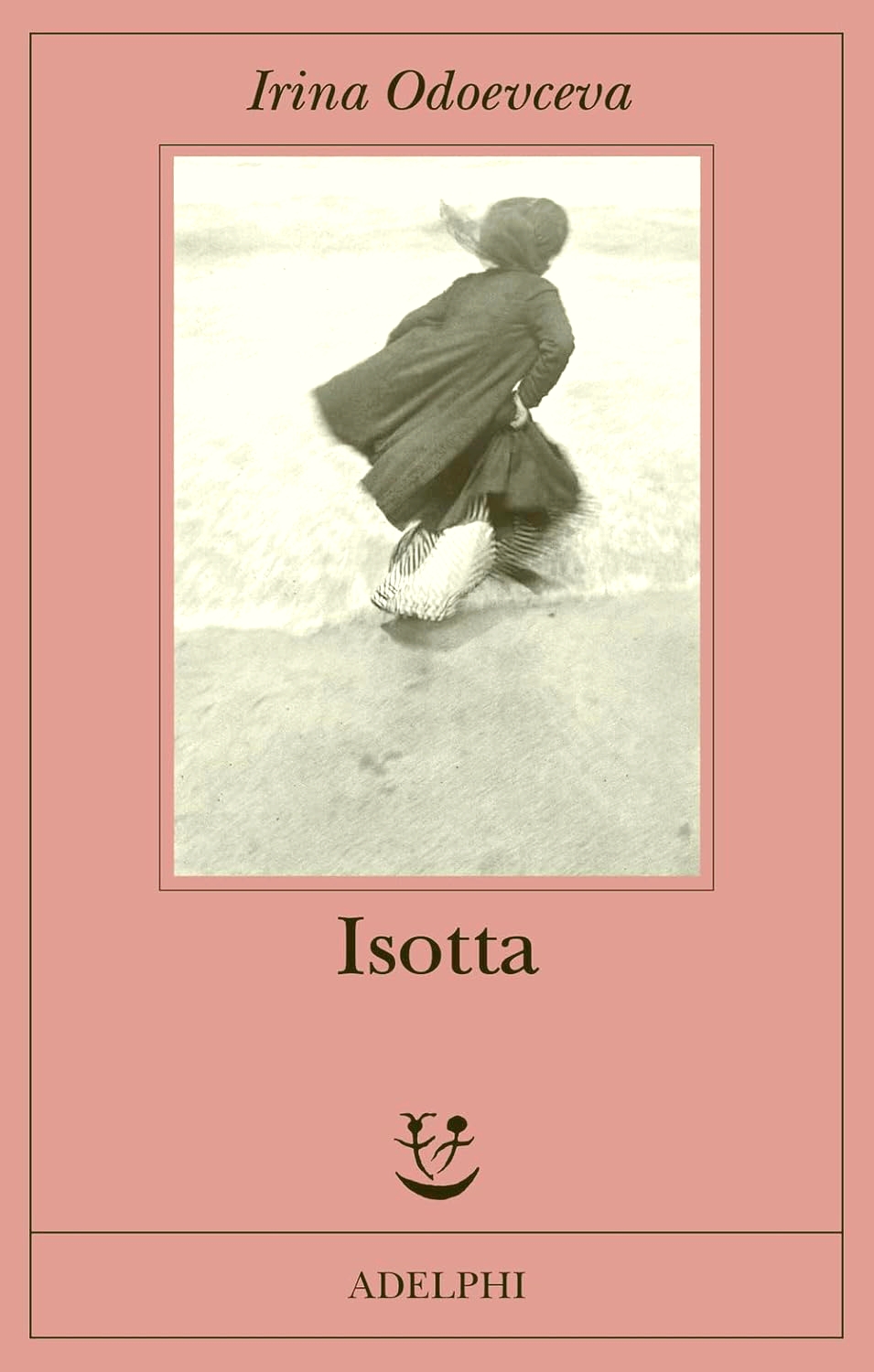
Isotta
Quando apparve a Parigi nel 1929, "Isotta" suscitò critiche e indignazione negli ambienti dell’emigrazione russa: troppo moderna, troppo «europea» la scrittura, tersa e senza fronzoli; troppo esplicite le allusioni alla sessualità degli adolescenti – da una prospettiva femminile, per di più; troppo fosca l’atmosfera che si respirava, e che gettava pesanti ombre su tutta la gioventù émigrée. Irina Odoevceva narra la storia di una quattordicenne, Liza, e della sua piccola cerchia: Nikolaj, il mefistofelico fratello che ne tiene le redini; Andrej, legato alla ragazza da un amore inquieto e autodistruttivo; e l’inglese Cromwell, rampollo di buona famiglia a sua volta perdutamente innamorato di Liza. Assediata da una profonda disgregazione sociale e familiare, la jeunesse dorée ritratta da Odoevceva oscilla tra una noia asfissiante e l’illusorio richiamo di una vita «folle, divertente e spudorata», fatta di alcol e notti senza fine nell’incanto avvelenato di Biarritz. Finché «il presagio di qualcosa di inevitabile e tremendo» che grava su queste burrascose esistenze non si materializza, quasi fosse già inscritto nel nome fittizio della protagonista. Rivisitazione modernista del mito arturiano, "Isotta" ci rivela una figura dimenticata della diaspora russa e quasi estranea alla sua letteratura, capace di raccontare con ineguagliabile acutezza, in queste pagine a un tempo morbose e delicate, il trauma lacerante dell’esilio, di ogni esilio.
224 pages, Paperback
First published January 1, 1929
About the author
Irina Odoevtseva
20 books6 followersIrina Vladimirovna Odoyevtseva (real name Iraida Heinike) was a Russian poet, novelist and author of memoirs.
Ирина Одоевцева
Born in 1895 in Riga, then part of the Russian Empire, she moved to St Petersburg in 1914 and there enrolled in the literary faculty of the Institute of the Living Word and established herself as a poet. In 1922, Odoevtseva fled Russia with her husband, the poet Georgy Ivanov. After a brief period in Berlin the couple settled in Paris, where Odoevtseva wrote short fiction and several successful novels, including Angel of Death (1927) and Isolde (1929). Later, she had great success with her memoirs On the Banks of the Neva (1967) and On the Banks of the Seine (1983). She returned to Russia in 1987 at the age of ninety-one to a rapturous reception.
According to Yevgeny Yevtushenko, she «enchanted everybody, her teacher included, with her brilliant, masterful poetry» and had tremendous success with her debut book Dvor Tcude′s (The Yard of Wonders, 1922), «skint bohemia learning her Cabman and Pressed-down Glass poems by heart». Formally an acmeist, Odoevtseva developed her own distinctive style and was in many ways ahead of her times, preceding the latter experiments of oberiuts and even 1960s Soviet conceptualists.
Ирина Одоевцева
Born in 1895 in Riga, then part of the Russian Empire, she moved to St Petersburg in 1914 and there enrolled in the literary faculty of the Institute of the Living Word and established herself as a poet. In 1922, Odoevtseva fled Russia with her husband, the poet Georgy Ivanov. After a brief period in Berlin the couple settled in Paris, where Odoevtseva wrote short fiction and several successful novels, including Angel of Death (1927) and Isolde (1929). Later, she had great success with her memoirs On the Banks of the Neva (1967) and On the Banks of the Seine (1983). She returned to Russia in 1987 at the age of ninety-one to a rapturous reception.
According to Yevgeny Yevtushenko, she «enchanted everybody, her teacher included, with her brilliant, masterful poetry» and had tremendous success with her debut book Dvor Tcude′s (The Yard of Wonders, 1922), «skint bohemia learning her Cabman and Pressed-down Glass poems by heart». Formally an acmeist, Odoevtseva developed her own distinctive style and was in many ways ahead of her times, preceding the latter experiments of oberiuts and even 1960s Soviet conceptualists.
Ratings & Reviews
Friends & Following
Create a free account to discover what your friends think of this book!
Community Reviews
Displaying 1 - 30 of 52 reviews

August 29, 2019
Isolde was my introduction to Irina Odoevtseva - a fascinating woman whose life and work is contextualized brilliantly in the introduction to this Pushkin Press edition, the first ever translation of Isolde into English, almost a century after its 1929 publication. Isolde is a delightful, sparse, and sad book set in early twentieth century France, where fourteen-year-old Liza and her brother Nikolai are essentially left to their own devices by an extremely neglectful mother who insists on pretending in public (and often even in private) that she is their older cousin. On holiday in Biarritz, Liza meets a slightly older boy, Cromwell, who becomes enchanted by her and declares that her new name will be Isolde. The story then follows this trio - Liza, Cromwell, and Nikolai - back to Paris, where they're abandoned altogether by their mother, with disastrous results.
As explained in the introduction, Odoevtseva herself was Russian and living in exile at the time of writing Isolde, and these circumstances are reflected in her narrative. The absence of Liza and Nikolai's home country plays heavily on their imaginations - a naive, idealistic image of Russia only grows when abandoned by their mother in Paris. After some head hopping, the focus of the novel ultimately zeroes in on Liza, whose burgeoning sexuality, parental neglect, and nebulous national identity all shape the story which is driven less by a coherent plot and more by snapshots of Liza's adolescence.
I found this thoroughly enjoyable, at times quite dark, and altogether unexpectedly modern. Not overly modern in language - the translation by Brian Karetnyk and Irina Steinberg was excellent - but in terms of content; there's a focus on Liza's autonomy over her sexuality, and it rather subverts expectations in more ways than one. (There's also a rather inconsequential scene where a character is talking about how she's kissed other girls but she can't imagine kissing a man.) It's a really solid gem of a book and I'm looking forward to checking out more by Irina Odoevtseva, as well as more from Pushkin's modern classics series.
Thank you to Netgalley and Pushkin for the advanced copy provided in exchange for an honest review.
As explained in the introduction, Odoevtseva herself was Russian and living in exile at the time of writing Isolde, and these circumstances are reflected in her narrative. The absence of Liza and Nikolai's home country plays heavily on their imaginations - a naive, idealistic image of Russia only grows when abandoned by their mother in Paris. After some head hopping, the focus of the novel ultimately zeroes in on Liza, whose burgeoning sexuality, parental neglect, and nebulous national identity all shape the story which is driven less by a coherent plot and more by snapshots of Liza's adolescence.
I found this thoroughly enjoyable, at times quite dark, and altogether unexpectedly modern. Not overly modern in language - the translation by Brian Karetnyk and Irina Steinberg was excellent - but in terms of content; there's a focus on Liza's autonomy over her sexuality, and it rather subverts expectations in more ways than one. (There's also a rather inconsequential scene where a character is talking about how she's kissed other girls but she can't imagine kissing a man.) It's a really solid gem of a book and I'm looking forward to checking out more by Irina Odoevtseva, as well as more from Pushkin's modern classics series.
Thank you to Netgalley and Pushkin for the advanced copy provided in exchange for an honest review.
May 31, 2021
3.5 stars
Better than I was expecting, which was a lightly-disguised autofiction from the ’20s. It isn’t autofiction (at least I hope not) although there are facets of the main character that are clearly drawn from life. It is a creative and interesting work with a surprisingly criminal plot and a well-done semi-stream of consciousness descent into madness.
It was a little uneven; sometimes gripping, sometimes a little aimless, sometimes a touch brusque. It’s not a masterpiece or anything. But it does tackle the lifestyles of Russian emigrés who are too young to really remember the pre-revolutionary Russia they long for, and at the same time mounts a respectable plot with some fairly despicable characters (though our heroine is appealing enough), and is well written and seems well translated.
Better than I was expecting, which was a lightly-disguised autofiction from the ’20s. It isn’t autofiction (at least I hope not) although there are facets of the main character that are clearly drawn from life. It is a creative and interesting work with a surprisingly criminal plot and a well-done semi-stream of consciousness descent into madness.
It was a little uneven; sometimes gripping, sometimes a little aimless, sometimes a touch brusque. It’s not a masterpiece or anything. But it does tackle the lifestyles of Russian emigrés who are too young to really remember the pre-revolutionary Russia they long for, and at the same time mounts a respectable plot with some fairly despicable characters (though our heroine is appealing enough), and is well written and seems well translated.

September 6, 2019
This 1929 Russian novel is newly translated into English by Bryan Karetnyk and Irina Steinberg. A grim portrayal of the waywardness, excess, and decadence of the Russian white émigrés in Europe. Parental neglect, sexuality, and rootlessness make for an interesting book, but while I typically love gloom and doom and misery (especially among the rich and miserable), I found the writing (or translation, or both) wanting. It lacked psychological depth and acuity. The writing seemed both melodramatic and abrupt.
I could sympathise with poor Liza (the "Isolde" of this story), used and misused and young and confused, and definitely could relate to her having raptures while reading Dostoyevsky, but beyond that the characters were cardboard thin. The use of the Tristan and Iseult myth seemed pretty superficial and tacked on, as it were, to elevate the story into something symbolic instead of allowing the symbolism to arise organically from the story.
I could sympathise with poor Liza (the "Isolde" of this story), used and misused and young and confused, and definitely could relate to her having raptures while reading Dostoyevsky, but beyond that the characters were cardboard thin. The use of the Tristan and Iseult myth seemed pretty superficial and tacked on, as it were, to elevate the story into something symbolic instead of allowing the symbolism to arise organically from the story.

October 14, 2019
Disappointing despite being described as an iconic Russian author and poet. Set between the wars, this fictionalization of her early life is bland and cliched. Then again, some fault may lie in the translation. Still, weak.

August 29, 2019
This is awful forgive me, but I wholly requested this book because of its gorgeous cover and name. Isolde is just beautiful and flows simply from the lips. I’m glad my childish love of everything pretty paid off because this was a fantastic read. Admittedly, I am in a mood right now where I will cry at the drop of a hat but this book absolutely will pull every emotion out of you with its atmospheric writing and complex characters.
Isolde is not the main characters real name. It’s Liza and she is an emigrant from Russia who yearns for home and by chance meets a wealthy man who dubs her Isolde. From then on a whirlwind forms and never let’s up.
This book is bleak and real so if you’re expecting a light, fluffy read than this is not for you. What you will get is a weaving of characters going through the rough choppy motions of life. You know you’re in for a good read when even the prologue about the author is able to pull you in. This is a sign of a great writer and translator.
Thanks very much to the publisher and Netgalley for this copy of my ARC. All opinions are my own.
Isolde is not the main characters real name. It’s Liza and she is an emigrant from Russia who yearns for home and by chance meets a wealthy man who dubs her Isolde. From then on a whirlwind forms and never let’s up.
This book is bleak and real so if you’re expecting a light, fluffy read than this is not for you. What you will get is a weaving of characters going through the rough choppy motions of life. You know you’re in for a good read when even the prologue about the author is able to pull you in. This is a sign of a great writer and translator.
Thanks very much to the publisher and Netgalley for this copy of my ARC. All opinions are my own.

August 20, 2020
F. Scott Fitzgerald would have eaten his hat to write a book like this.

October 18, 2025
3-3.5/5
Scritto con stile lirico, attento, poetico. Questo è l’aspetto che ho preferito.
La storia offre un resoconto intimo e altamente soggettivo del circolo letterario russo nella Parigi degli anni ’20. Pur mancando della rigorosa analisi storica di un memoir, il libro riesce a catturare l’atmosfera unica e le emozioni della comunità di emigrati. La prosa vivida è troppo spesso melodrammatica.
Negligenza sentimentale, mancanza di radici rendono il libro interessante, ma manca di profondità psicologica e acutezza.
Scritto con stile lirico, attento, poetico. Questo è l’aspetto che ho preferito.
La storia offre un resoconto intimo e altamente soggettivo del circolo letterario russo nella Parigi degli anni ’20. Pur mancando della rigorosa analisi storica di un memoir, il libro riesce a catturare l’atmosfera unica e le emozioni della comunità di emigrati. La prosa vivida è troppo spesso melodrammatica.
Negligenza sentimentale, mancanza di radici rendono il libro interessante, ma manca di profondità psicologica e acutezza.

February 22, 2026
Quando ho scoperto questo libro ne sono stata subito attratta. Una scrittrice che non conoscevo e un libro uscito nel 1929, durante un periodo storico che mi ha sempre affascinata.
.
La storia è quella di Liza, una quattordicenne di origine russa molto bella ed eterea, di suo fratello, Nikolaj, della madre, una donna che per sopravvivere fa la cantante e non si fa chiamare mamma dai suoi figli. E poi Andrej, il ragazzo che Liza ama, e Cromwell, un giovane ricco che rimane abbagliato dalla bellezza di Liza, che chiama Isotta, evocando il mito di un amore assoluto e passionale.
.
In questa storia non c’è scampo. Nessuno si salva dalla tristezza, dalla povertà, dall’assenza d’amore. Su tutto incombe un senso di destino ineluttabile, come se il futuro fosse già scritto e non lasciasse spazio alla speranza.
.
La storia è quella di Liza, una quattordicenne di origine russa molto bella ed eterea, di suo fratello, Nikolaj, della madre, una donna che per sopravvivere fa la cantante e non si fa chiamare mamma dai suoi figli. E poi Andrej, il ragazzo che Liza ama, e Cromwell, un giovane ricco che rimane abbagliato dalla bellezza di Liza, che chiama Isotta, evocando il mito di un amore assoluto e passionale.
.
In questa storia non c’è scampo. Nessuno si salva dalla tristezza, dalla povertà, dall’assenza d’amore. Su tutto incombe un senso di destino ineluttabile, come se il futuro fosse già scritto e non lasciasse spazio alla speranza.

October 26, 2025
Malinconico e triste, come la vita degli esuli


October 4, 2019
At times a little jumbled in its telling, but an interesting and evocative look into a young girl’s life in 1930s Paris, as a Russian exile.
Liza, or as one young man calls her, Isolde, is a mystifying, naïve, lively, and passionate young girl of 14. On a beach vacation with her family, she meets a young British man, Cromwell, and what begins is just barely a love affair, and mostly a jumble of feelings felt and left behind by two young teenagers trying to figure out how to live in the world.
Liza knows how she should act as a girl, but desires to be more. To be a young woman, an adult, who can occupy space, show desire and love, and be worthy of knowledge and respect. As the book goes on, and we follow an at-times wandering plot, made slightly more confusing by the telling, where setting and time period can jump rather quickly and without much notice. Odoevtseva's writing style is simple—she writes what Liza feels, and plops us in the center of her mind, which flits from topic to topic. I've not read any other Russian literature from the period, so I don't know if this is a common characteristic. Regardless, while Odoevtseva's writing could have created a better sense of place (for my tastes) she is expert at characterizing Liza, our heroine, and helping us understand the psyche of a young girl, left to her own devices.
While Liza masquerades as an adult, it is clear to see that she is still in the midst of growing up, no matter how mature she might think she is. As she witnesses this absurd turn of events, we witness her own attempt at growing up and inhabiting the adult world. And in the end, we see her almost settle into her youth, almost coming to an understanding of where she is in life, and embracing her situation.
This is a very interesting read, in part for the very bizarre plot twist, which you kind of see coming, but in the best way possible, where you don't want to believe it's true until it's over. Also to see a glimpse into what life was like for some of the Russian exiles after the Revolution, and to relive the flimsy and flitting aspects of girlhood in both the simple and the extravagant. While this novel wasn't my favorite, I still value the time I spent with it, and if you're at all curious, I'd give it a try!
Liza, or as one young man calls her, Isolde, is a mystifying, naïve, lively, and passionate young girl of 14. On a beach vacation with her family, she meets a young British man, Cromwell, and what begins is just barely a love affair, and mostly a jumble of feelings felt and left behind by two young teenagers trying to figure out how to live in the world.
Liza knows how she should act as a girl, but desires to be more. To be a young woman, an adult, who can occupy space, show desire and love, and be worthy of knowledge and respect. As the book goes on, and we follow an at-times wandering plot, made slightly more confusing by the telling, where setting and time period can jump rather quickly and without much notice. Odoevtseva's writing style is simple—she writes what Liza feels, and plops us in the center of her mind, which flits from topic to topic. I've not read any other Russian literature from the period, so I don't know if this is a common characteristic. Regardless, while Odoevtseva's writing could have created a better sense of place (for my tastes) she is expert at characterizing Liza, our heroine, and helping us understand the psyche of a young girl, left to her own devices.
While Liza masquerades as an adult, it is clear to see that she is still in the midst of growing up, no matter how mature she might think she is. As she witnesses this absurd turn of events, we witness her own attempt at growing up and inhabiting the adult world. And in the end, we see her almost settle into her youth, almost coming to an understanding of where she is in life, and embracing her situation.
This is a very interesting read, in part for the very bizarre plot twist, which you kind of see coming, but in the best way possible, where you don't want to believe it's true until it's over. Also to see a glimpse into what life was like for some of the Russian exiles after the Revolution, and to relive the flimsy and flitting aspects of girlhood in both the simple and the extravagant. While this novel wasn't my favorite, I still value the time I spent with it, and if you're at all curious, I'd give it a try!

May 1, 2023
In many ways this was brilliant, but please don’t ask me to explain it. I feel quite bewildered. But I guess that’s a little how you were meant to feel. What an emotional and chaotic book. Definitely an experience. Glad I read it.

October 19, 2025
La correlazione con Isotta dura un paragrafo se va bene (sì capisco che l'autrice poi ha giocato un po' sul parallelismo tra le due storie, ma è piuttosto sottile).
Purtroppo non credo di essere il pubblico adatto a questi romanzi. Non ho apprezzato un singolo personaggio della storia e l'ho trovata estremamente inverosimile. Ma ripeto, in questo caso è una questione del tutto soggettiva.
Purtroppo non credo di essere il pubblico adatto a questi romanzi. Non ho apprezzato un singolo personaggio della storia e l'ho trovata estremamente inverosimile. Ma ripeto, in questo caso è una questione del tutto soggettiva.
March 3, 2026
Un viaggio

September 22, 2019
I wanted to enjoy this more than I did. I think I expected it to feel more Russian than it did. But perhaps that is the point. Liza, her mother and brother have a financially precarious existence in exile in France. At fourteen, Liza has been moved from one place to another for years and has only a hazy, idealised notion of her home country and what it would be like to live there, to be properly Russian. Her home life is so awful with a monstrous, self-absorbed, neglectful mother and a manipulative, cruel older brother, she yearns for the warmth and stability she imagines a return to Russia might offer her. She is naive and emotionally vulnerable to a dangerous degree.
Her coming-of-age could be set anywhere really and the events that take place seem very familiar in modern fiction. The fact that this was published in 1929 is by far the most interesting thing about it. The author was ahead of her time for sure in terms of content. I’m pleased to have been introduced to an author new to me, but I’m not sure I’d particularly recommend this to a modern audience.
With thanks to Pushkin Press via NetGalley for the opportunity to read an ARC.
Her coming-of-age could be set anywhere really and the events that take place seem very familiar in modern fiction. The fact that this was published in 1929 is by far the most interesting thing about it. The author was ahead of her time for sure in terms of content. I’m pleased to have been introduced to an author new to me, but I’m not sure I’d particularly recommend this to a modern audience.
With thanks to Pushkin Press via NetGalley for the opportunity to read an ARC.

November 16, 2019
This is the first English translation of this 1929 Russian novel. And though it definitely has a bit of an "old" feel to it--no cell phones, trains not planes, etc--it really doesn't feel that old. In many ways this book felt very much like Bonjour tristesse. A teen in France in the first half of the 20th century--but the main characters are very different. While Sagan's Cecile is self-absorbed and selfish 17-year-old, Odoevstseva's Liza is a lost and lonely 14-year-old who really just wants and needs her mother's attention. She floats through these pages, a lost and lonely waif of a girl.
Liza and her 16-year-old brother Nikolai are in Biarritz with their mother and Kolya's friend Andrei. After their father's death they came to France from Russia, and they are no longer permitted to call their mother Mama--she is Natasha. It seems that Natasha is trying to find either a second husband or a sugar daddy. She leaves the kids to their own devices, often with little money (which she is always trying to get from various men) or food. Liza thinks she is falling for Andrei, but then she meets Cromwell, and English teen with a car, visiting with his widowed mother. They all meet again when they all head to Paris. Natasha then leaves the kids in their rented place in Paris, and does not return. They make plans to return to Russia, but need funds. Kolya and Andrei make plans without Liza, leaving her more lost and vulnerable than ever before.
———
Thanks to Pushkin Press and NetGalley for providing me with an e-galley of this novel.
Liza and her 16-year-old brother Nikolai are in Biarritz with their mother and Kolya's friend Andrei. After their father's death they came to France from Russia, and they are no longer permitted to call their mother Mama--she is Natasha. It seems that Natasha is trying to find either a second husband or a sugar daddy. She leaves the kids to their own devices, often with little money (which she is always trying to get from various men) or food. Liza thinks she is falling for Andrei, but then she meets Cromwell, and English teen with a car, visiting with his widowed mother. They all meet again when they all head to Paris. Natasha then leaves the kids in their rented place in Paris, and does not return. They make plans to return to Russia, but need funds. Kolya and Andrei make plans without Liza, leaving her more lost and vulnerable than ever before.
———
Thanks to Pushkin Press and NetGalley for providing me with an e-galley of this novel.

August 14, 2020
Lyrical, strange, and heartbreaking. The story of Russian emigres in France in the 1920, focuses around the lovely 14-year-old Liza, who a besotted English boy, Cromwell, renames Isolde. Everyone is just such a sad mess and deserves better. The writing is sparse, and sometimes it took me a minute to follow a leap, but it fits the story perfectly and was worth the effort.

July 27, 2019
"I keep thinking how difficult and dreary life must be if childhood is as good as it gets. And if it’s all downhill from here, I don’t want to grow up.” She shook her head. “And, you know, I don’t think I ever will."
“Nonsense, Liza. It’s only because you’re fourteen." [loc. 1501]
Liza and Kolya's father, a naval officer, was drowned by his own men during the Russian Revolution. Their mother, who fled with Liza and Kolya to Paris, refuses to admit that she has children at all: they age her terribly. She insists that they call her 'Natasha' and 'cousin' when they're all together, which is not often, as Natasha has a lifestyle to maintain and a pair of lovers (well, one doesn't love her, the other she doesn't love) to beguile.
Liza is fourteen and has a boyfriend, Andrei, who's also a close friend of her brother's. On holiday at Biarritz, however, she meets and captivates English teenager Cromwell, who obligingly treats Liza and her brother to various luxuries, and introduces Liza to the story of Tristan and Isolde -- Cromwell himself, of course, in the role of Tristan. When Liza returns to Paris, she tells Andrei, the third point of the love triangle, that the fling is over. Andrei is unimpressed, but quickly warms towards Cromwell when the English youth arrives in Paris and showers largesse on all three of the Russians.
But Liza and Kolya are almost out of money, and Mama -- Natasha -- is on holiday again, and has no funds to spare. Can Cromwell save them? Can Liza rely upon any of the men she knows?
This novel, by a Russian emigre living in Paris, was written in 1929, the same year as Cocteau's Les Enfants Terrible: the two works explore some of the same territory, of absent parents and children who are too spoilt, or too naive, to respond to abandonment by assuming adult roles. In Odoevtseva's Isolde, however, the story takes place over a shorter timeframe, and the female protagonist is less manipulative. I felt compassion for Liza, though I did also find her selfishness and disdain offputting. The Paris she inhabits is a wintry, rainy spectre of the city I know: it could have been any big European city. Liza's memories -- half fantasy -- of Moscow are more vivid: no wonder she wants to return, to find somewhere to belong.
Isolde is really a very bleak novel: nobody comes out of it (or ... doesn't come out of it) especially well. Natasha is especially monstrous, but none of the adults are much use. The men are all determined to shape Liza -- one suggests that she pretend to be his daughter; another rechristens her Betsy and tells her she'll lose her Russian accent when they go to England -- and the women pay no attention to her.
I can't say this was an enjoyable read, but it was powerful, and the author's refusal to spell out exactly what's happening -- though she was still criticised for writing about teenage sexuality -- bestowed a lingering gloom, an air of shuttered rooms lit by firelight, of an empty facade behind the frenetic glitter of casinos, jazz and cocktails that Liza and Kolya so desperately crave.
I read this for the 'novel in translation, written before 1945' rubric of the Reading Women Challenge 2019 on Goodreads.

October 28, 2019
This translated story of young and beguiling Liza who wraps a series of boys and men around her fingers and whose true allegiance is misplaced and murky at best, was considered taboo and out there when it was first published in 1931; still today, the teenaged main characters are shocking for their unchaperoned intoxication and debauchery. I gather this is a variation of the 12th century adultery tale of Tristan and Isolde, but since nobody's married I'm just guessing Liza's cheating on her crush Andrei with British Cromwell whom she meets at the beach? Her mother, who she and her brother are instructed to refer to as Natalia Vladimirovna and never "Mama," is the world's worst role model ever, conniving and stealing and shirking responsibility and treating people like garbage. Cromwell's mother also parents strangely, and there is a running theme of loving children, loving babies, babying ones lover, etc. The whole Russia initiative was very confusing for me, why would Cromwell want to leave his rich and happy life for Russia? It's interesting how the Russian emphasis on exterior beauty hasn't dimmed any in all these many years.
The more I read about the author Irina Odoevtseva, the less absurd I find Isolde. Celebrated late in life as a legend of Russian émigré literature, born to a German-speaking Ukrainian father, having lived all over Europe and pined for Mother Russia, Odoevtseva's real life was pretty out there too. Wikipedia includes this quote by a French writer who invited her to a dinner party in December 1937, "Just as we had planned, the dinner proved no less wild than the wind blowing that day. Odoevtseva, naked, began to vomit."
I laughed out loud at her description of Christmas Eve "exhausted shoppers demanding things from exhausted shop assistants, like one great cheerful hell." My Kindle version had a strange glitch that capitalized random letters in the first word of each chapter.
The more I read about the author Irina Odoevtseva, the less absurd I find Isolde. Celebrated late in life as a legend of Russian émigré literature, born to a German-speaking Ukrainian father, having lived all over Europe and pined for Mother Russia, Odoevtseva's real life was pretty out there too. Wikipedia includes this quote by a French writer who invited her to a dinner party in December 1937, "Just as we had planned, the dinner proved no less wild than the wind blowing that day. Odoevtseva, naked, began to vomit."
I laughed out loud at her description of Christmas Eve "exhausted shoppers demanding things from exhausted shop assistants, like one great cheerful hell." My Kindle version had a strange glitch that capitalized random letters in the first word of each chapter.

February 13, 2021
When I started reading this book I was unsure of what to expect as it's my first Russian text. Maybe because it was originally published in 1930, but it was easy to read and was quite simple.
The book focuses on fourteen year old Liza who is a teenager at that time between childhood and adulthood. She is at times childish and selfish with her affection switching to those that can provide and give her attention. While at times she is pretending to be deep and mature using flowery imagery and language to dramatise her life. It's sadly due to her neglectful mother that Liza lives such a carefree life that causes the conflict in the novel.
The action of the story take place on in Part 3, and before reaching this part I felt conflicted about how little was happening in the story. But when it did, I really liked how Odoevtseva chose to portray this. We as the audience can infer what has actually happened, but Liza is kept in the dark and her innocence keeps her there until she is numb and forced to accept what she chose to ignore.
I don't know how I feel about the ending, I needed at least one more chapter to get a bit more resolution or information about what would happen next. But also, I understand the decision to end on a bitter sweet ending.
3.7 ⭐️
The book focuses on fourteen year old Liza who is a teenager at that time between childhood and adulthood. She is at times childish and selfish with her affection switching to those that can provide and give her attention. While at times she is pretending to be deep and mature using flowery imagery and language to dramatise her life. It's sadly due to her neglectful mother that Liza lives such a carefree life that causes the conflict in the novel.
The action of the story take place on in Part 3, and before reaching this part I felt conflicted about how little was happening in the story. But when it did, I really liked how Odoevtseva chose to portray this. We as the audience can infer what has actually happened, but Liza is kept in the dark and her innocence keeps her there until she is numb and forced to accept what she chose to ignore.
I don't know how I feel about the ending, I needed at least one more chapter to get a bit more resolution or information about what would happen next. But also, I understand the decision to end on a bitter sweet ending.
3.7 ⭐️

August 21, 2019
Isolde was an enjoyable read. She was a fascinating character who was, in many ways, hard to pin down, perhaps because she was still too young to really know herself. However, she reminded me of Lolita in some ways, as she clearly was aware of the effect she had on men and how to use that to best advantage. Once or twice, I did wonder why the men in the tale were so obsessed with her. She could be annoying, so I guess it must have come down solely to looks. I don't want to risk spoilers, but the story did take a direction I hadn't expected at the outset, and that helped hold my interest from start to finish. This is not so much a book with a clear beginning, middle, and end. Rather it's a snapshot of a formative period in a young girl's life. Where she goes once the final page is turned is left to the reader's imagination.
I received this book as a free eBook ARC via NetGalley in exchange for an honest review.
I received this book as a free eBook ARC via NetGalley in exchange for an honest review.

August 21, 2019
I enjoyed Isolde or as much as you can enjoy a very dark modern re-telling of Isolde.
The writing is very suggestive and atmospheric.
Liza/Betsy/Isolde is quite Lolita-esque and naïve. She's aware of her impression to men, but otherwise it seems she has no clue what's going on or surpresses the truth ("I don't want to grow up.")
I loved her statement that nobody knows anything about each other, which in this novel is true. Lots of drama and suffering until the end.
I also enjoyed the prologue about the author at the beginning, very interesting and a nice touch.
Thank you Pushkin and Netgalley for providing me with an eARC.
The writing is very suggestive and atmospheric.
Liza/Betsy/Isolde is quite Lolita-esque and naïve. She's aware of her impression to men, but otherwise it seems she has no clue what's going on or surpresses the truth ("I don't want to grow up.")
I loved her statement that nobody knows anything about each other, which in this novel is true. Lots of drama and suffering until the end.
I also enjoyed the prologue about the author at the beginning, very interesting and a nice touch.
Thank you Pushkin and Netgalley for providing me with an eARC.

July 29, 2025
The medieval tale of Isolde is one of sadness, betrayal, and death. From its very title then, Irena Odoevtseva makes clear her tale is one of tragedy. She then infuses this darkness, however, with a childlike sense of wonder and a sensuality that borders on the inappropriate. (In a good way, I think!) Thanks to Pushkin Collection and NetGalley for providing me with a copy of this book in exchange for an honest review.
Youth, especially one utterly detached from any kind of parental control and a sense of place and time, is madness. Especially childhood that has just crossed the threshold into puberty and a sense of maturity is full of contrasting impulses and desires, some of which need to be curbed and others which need to be encouraged. The novel's depiction of a sensual and sexual teenagehood, especially where more mature characters come in, might feel very off to some readers. It also did to some readers in Odoevtseva's own time. And it makes sense, that "yikes" feeling, because Odoevtseva is writing about decline and decay, about how the children of a generation torn from its home ends up lost and wandering, getting lost. Teenagehood, the natural time when we begin to discover certain feelings and ideas, is a time where the neglect of parents and society at general can have its most lasting impact. I think in that sense, Isolde might be quite current in its thematics, echoing a present disconnect between generations, where some linger in dreams of what once was, and others know they will never experience those dreams.
Cromwell, an English boy of roughly sixteen, meets the fourteen year-old Liza on the beach at Biarritz. He had been thinking of the legendary Isolde, and there she is: blond, beautiful, and utterly alive. Investing her with all the mystical charm his brain can conjure, he takes her and her brother out on plenty of adventures, as long as the money last. When it doesn't, he is forgotten. Liza, young and alive, enjoys Cromwell's interest, but her heart belongs to Andrei back in Paris. Her brother, Nikolai, meanwhile, has given his heart to money and the fast life. With their mother, who insists they don't tell anyone she's their mother, being utterly absent from their lives in any way that matters, the two siblings are left to their own devices, careening from nights on the town with champagne to dark and lonely nights without money for heating. As these four teens find themselves and each other in Paris, a darkness takes over which leads to tragically predictable results. I struggled a little with knowing hwere to place Isolde, because its subject matter initially pushes a reader towards considering it too risque to be a classic. The introduction, however, odes a lot of work to place Odoevtseva among the great Russian writers. I'm still not entirely sure, but I do think that Odoevtseva took care to create characters that are both despicable and yet raise your pity as well, especially when she reminds us of how young they are. As I mentioned above, there is something about youth which is tense and complicated and the circumstances here don't help these kids in any way. I think the biggest artistry of the novel is probably how it's written, how its ease probably belies its careful crafting.
I've never read anything by Irena Odoevtseva before, probably because she is in a large part forgotten, something this edition is attempting to correct. While the subject matter of the novel is one thing, I do think there is a lot of craft in the writing itself. Comparing it to the more classical, detailed, determined writing of authors like Dostoyevsky or Tolstoy, you can see where Odoevtseva strays from her literary ancestors. There is a looseness to the writing and to the characterisation which ensures that much of Isolde does feel like a summer's dream. Perspectives switch within a paragraph, time flies by and then moves slow like molasses, characters come to realisations and then laugh them away, only to end up back where they started. It feels impressionistic, if that makes sense. The flightiness and impreciseness of the lives of these characters is matched in how they are written and so it is no surprise that it is in the steady work of Dostoyevskian prose that Liza finds a foothold. As a medievalist, I admittedly did not fully buy in to the Tristan and Isolde parallels, except that there is a general sense of doom cast across the entire novel. We all know this cannot end well and the only real question is just how bad it will be. That atmosphere is created pretty well by Odoevtseva through these impressions of colour, wealth, love, passion, decay, decline, and death which she interweaves into her narrative.
Isolde is an intriguing novel which might not be for all readers. Those interested in the experiences of Russian émigrés and conversations around youth and its danger, however, will definitely find something here!
URL: https://universeinwords.blogspot.com/...
Youth, especially one utterly detached from any kind of parental control and a sense of place and time, is madness. Especially childhood that has just crossed the threshold into puberty and a sense of maturity is full of contrasting impulses and desires, some of which need to be curbed and others which need to be encouraged. The novel's depiction of a sensual and sexual teenagehood, especially where more mature characters come in, might feel very off to some readers. It also did to some readers in Odoevtseva's own time. And it makes sense, that "yikes" feeling, because Odoevtseva is writing about decline and decay, about how the children of a generation torn from its home ends up lost and wandering, getting lost. Teenagehood, the natural time when we begin to discover certain feelings and ideas, is a time where the neglect of parents and society at general can have its most lasting impact. I think in that sense, Isolde might be quite current in its thematics, echoing a present disconnect between generations, where some linger in dreams of what once was, and others know they will never experience those dreams.
Cromwell, an English boy of roughly sixteen, meets the fourteen year-old Liza on the beach at Biarritz. He had been thinking of the legendary Isolde, and there she is: blond, beautiful, and utterly alive. Investing her with all the mystical charm his brain can conjure, he takes her and her brother out on plenty of adventures, as long as the money last. When it doesn't, he is forgotten. Liza, young and alive, enjoys Cromwell's interest, but her heart belongs to Andrei back in Paris. Her brother, Nikolai, meanwhile, has given his heart to money and the fast life. With their mother, who insists they don't tell anyone she's their mother, being utterly absent from their lives in any way that matters, the two siblings are left to their own devices, careening from nights on the town with champagne to dark and lonely nights without money for heating. As these four teens find themselves and each other in Paris, a darkness takes over which leads to tragically predictable results. I struggled a little with knowing hwere to place Isolde, because its subject matter initially pushes a reader towards considering it too risque to be a classic. The introduction, however, odes a lot of work to place Odoevtseva among the great Russian writers. I'm still not entirely sure, but I do think that Odoevtseva took care to create characters that are both despicable and yet raise your pity as well, especially when she reminds us of how young they are. As I mentioned above, there is something about youth which is tense and complicated and the circumstances here don't help these kids in any way. I think the biggest artistry of the novel is probably how it's written, how its ease probably belies its careful crafting.
I've never read anything by Irena Odoevtseva before, probably because she is in a large part forgotten, something this edition is attempting to correct. While the subject matter of the novel is one thing, I do think there is a lot of craft in the writing itself. Comparing it to the more classical, detailed, determined writing of authors like Dostoyevsky or Tolstoy, you can see where Odoevtseva strays from her literary ancestors. There is a looseness to the writing and to the characterisation which ensures that much of Isolde does feel like a summer's dream. Perspectives switch within a paragraph, time flies by and then moves slow like molasses, characters come to realisations and then laugh them away, only to end up back where they started. It feels impressionistic, if that makes sense. The flightiness and impreciseness of the lives of these characters is matched in how they are written and so it is no surprise that it is in the steady work of Dostoyevskian prose that Liza finds a foothold. As a medievalist, I admittedly did not fully buy in to the Tristan and Isolde parallels, except that there is a general sense of doom cast across the entire novel. We all know this cannot end well and the only real question is just how bad it will be. That atmosphere is created pretty well by Odoevtseva through these impressions of colour, wealth, love, passion, decay, decline, and death which she interweaves into her narrative.
Isolde is an intriguing novel which might not be for all readers. Those interested in the experiences of Russian émigrés and conversations around youth and its danger, however, will definitely find something here!
URL: https://universeinwords.blogspot.com/...

May 28, 2020
Those who think today's youth is messed up should read this 1929 novel for comparison. It is the story of a group of disaffected (young! 14-18 yr old) teens in the south of France and Paris. I wanted to like this book because of fond memories of the epic classic tale of Tristan and Iseult, but this is not that. Liza and Nikolai are brother and sister who escape the Russian Revolution with their mother Natasha by moving to France. However, their father was executed and they now have no money, though Natasha does her best to exploit her beauty and exploit those who are enticed by it to get some. She refuses to be a mother to her children, fearing that reveals her true age, so she calls them her cousins and leaves them very much unsupervised. Natasha's love triangle consists of Bunny who sells his soul and his wife's jewelry to get Natasha cash, and Boris whom she loves, but is a brute and wants money from her. Messy stuff. Meanwhile her "cousins" are in their own scheme to get money: Cromwell, a romantic English boy vacationing in France sees Liza on the beach and having just read Tristan and Isolde falls in love with her and her lovely golden hair. The siblings exploit him for cash and dinners out and good times until Cromwell is in trouble with his mother and true cousin for his spendthrift ways. The siblings return to Paris where they re-connect with Andrei, Kolya's friend and Liza's boyfriend. This nefarious trio plots to get Cromwell to visit and to get more of his money. Caught up in their own 'fairy tale' they want to return to Russia and be heroes. Or at least have a good time on the way. Because he is so enamored of Liza Cromwell falls for it, much to his own detriment. At some point, Liza takes up with his cousin too after Andrei and Kolya sell her out. Depravity all around. The story is told with the detachment of translation, and also the Gatsby-esque view that rules don't apply to the rich. (or those trying to become so) A lot of emotion (gushing about food, wine, good times, dancing) is expressed, but none is felt, especially remorse or empathy or anything that would improve human relationships. The ending rings true to the inspiration - what else can one do? There is definitely some writerly craft here, but nothing I could invest in emotionally with the characters or the plot.

October 15, 2019
(thank you to the publisher for my copy of this book!)
First of all, this book is adorable and makes me want to start collecting all the books is in the Pushkin Collection. It's smaller and more compact than the average book and with a gorgeous color and design. Second of all, you'll see from the start how ahead of her time Irina Odoevtseva was in writing Isolde.
Isolde was written in 1929 and it's easy to see why it was a bit of a shock to the general public when first published. I went into it blindly, not knowing a thing about what it was about. At first, I thought Liza and her brother Nikolai must be in their 20s. Until I saw their childish interactions with their mother. Then it quickly becomes clear why Liza, who is 14 in the beginning of the story, acts the way she does. Her mother is so vain she won't even let her children call her "mom" and instead wishes to pretend she is their cousin.
Liza and Nikolai are essentially left on their own for much of their days and Liza indeed uses her beauty to her advantage as it seems like boys fall in love with her incredibly quickly. A boy named Cromwell falls in love the instant he sees her (and calls her his "Isolde") and Liza is only too happy to take advantage of Cromwell's wealth and status. As obnoxious as she seems, I couldn't help but feel a bit of a soft spot for Liza who clearly doesn't have any great role models or direction. When Liza and her brother return to Paris (and are essentially abandoned by their mother), Cromwell follows them and, along with Liza's Paris boyfriend, they get involved in some not-so-great situations.
The book has obviously been translated from Russian and it seems as though the translation was incredibly well done. Isolde is easy to read; so easy that I finished it in just a few hours. Despite the lightness and flighty ways of Liza, there's also a lot of darkness to the story. It was unlike anything I've read before and definitely more "scandalous" than anything I've read from that time period. Isolde is the first book of Odoevtseva's to be translated into English, but I'd certainly read more from her!
First of all, this book is adorable and makes me want to start collecting all the books is in the Pushkin Collection. It's smaller and more compact than the average book and with a gorgeous color and design. Second of all, you'll see from the start how ahead of her time Irina Odoevtseva was in writing Isolde.
Isolde was written in 1929 and it's easy to see why it was a bit of a shock to the general public when first published. I went into it blindly, not knowing a thing about what it was about. At first, I thought Liza and her brother Nikolai must be in their 20s. Until I saw their childish interactions with their mother. Then it quickly becomes clear why Liza, who is 14 in the beginning of the story, acts the way she does. Her mother is so vain she won't even let her children call her "mom" and instead wishes to pretend she is their cousin.
Liza and Nikolai are essentially left on their own for much of their days and Liza indeed uses her beauty to her advantage as it seems like boys fall in love with her incredibly quickly. A boy named Cromwell falls in love the instant he sees her (and calls her his "Isolde") and Liza is only too happy to take advantage of Cromwell's wealth and status. As obnoxious as she seems, I couldn't help but feel a bit of a soft spot for Liza who clearly doesn't have any great role models or direction. When Liza and her brother return to Paris (and are essentially abandoned by their mother), Cromwell follows them and, along with Liza's Paris boyfriend, they get involved in some not-so-great situations.
The book has obviously been translated from Russian and it seems as though the translation was incredibly well done. Isolde is easy to read; so easy that I finished it in just a few hours. Despite the lightness and flighty ways of Liza, there's also a lot of darkness to the story. It was unlike anything I've read before and definitely more "scandalous" than anything I've read from that time period. Isolde is the first book of Odoevtseva's to be translated into English, but I'd certainly read more from her!
November 2, 2019
This starts very much as more of a Flat Gatesby than a Great Gatsby, with this early 1930s Russian novel showing what happens when a flippant, airy-fairy thing of a fiction involves flippant, airy-fairy things of characters. On holiday in Biarritz, Liza takes for a holiday romance a young English man called 'Crom' Cromwell, who likens her to the Isolde character so beloved of Tristan. This is kind of ignoring the fact she has a more long-standing boyfriend back home in Paris, but when all the children – Liza and Crom and the brother and the boyfriend – are together it is soon revealed that finances aren't exactly brilliant. Nor are they for one of Liza's mother's lovers, either, for he's ruining himself to impress her, who in turn is just passing it on to the other lover. Like I say, privileged, flippant and possibly very unlikeable people – the mother chooses to call her daughter a young cousin out of vanity. But still – this reads very pleasantly, and very speedily, making this still worth a consideration. And that's before you equate all the nihilistic and naive talk of sacrificing your life, and of love, with a cast list all in their mid-teens at most – and before you sort of drag a political aspect into the plot…
The key line for me here was "That's what life was like. Nobody knew anything." These characters are idiots through and through, but they're also young and semi-innocent idiots, and that raises many more questions than this book at first appears to offer. Ultimately it boils down very much to being its own entity, and no off the cuff reference to something from America really applies to the whole thing. And the characters make for a plot that has a lot more darkness than the initial banality could ever suggest.
Finely presented, with a great introduction (even if I found the book to be more 'the gaze is male' slanted than its writers – not for nothing is the first chapter from Crom's point of view) – this ended as a book that will last in the memory for me disliking so much about it, yet admiring even more. Oh, and it features more yellow-coloured footwear than any other in printing history.
The key line for me here was "That's what life was like. Nobody knew anything." These characters are idiots through and through, but they're also young and semi-innocent idiots, and that raises many more questions than this book at first appears to offer. Ultimately it boils down very much to being its own entity, and no off the cuff reference to something from America really applies to the whole thing. And the characters make for a plot that has a lot more darkness than the initial banality could ever suggest.
Finely presented, with a great introduction (even if I found the book to be more 'the gaze is male' slanted than its writers – not for nothing is the first chapter from Crom's point of view) – this ended as a book that will last in the memory for me disliking so much about it, yet admiring even more. Oh, and it features more yellow-coloured footwear than any other in printing history.

January 18, 2020
Apart from a (very good) short story in Bryan Karetnyk’s excellent anthology “Russian Emigré Short Stories from Bunin to Yanovsky”, I’d never come across Irina Odoevtseva before, in spite of her being considered by some to be a “major” Russian writer. Isolde is her first novel to be translated into English and I was delighted to discover the book and the writer herself. Kudos to Pushkin Press for continually bringing out these previously undiscovered gems. Although in this case I’m not so sure it is all that much of a gem – more perhaps a literary curiosity. First published in Paris, where Odoevtseva was in exile, in 1929, it’s a semi-autobiographical tale about a family coming to terms with a new life in France having fled Bolshevik Russia. Liza and her brother Nikolai, with their friends Andrei and the English Cromwell are pretty much left to their own devices whilst on holiday in Biarritz. The story is told from the perspective of 14-year-old Liza who finds herself in a web of intrigue that she is ill-prepared to either handle or indeed fully understand. She’s intelligent, even precocious, but at the same time curiously naïve. Inevitably comparisons will be made between Isolde and Cocteau's Les Enfants Terribles which happened to come out in the same year, and it also looks forward to Sagan’s Bonjour Tristesse, but I didn’t feel it had the coherence of either of these two novels. It’s a book of heightened emotions, of melodrama, of teenage angst leading to disastrous consequences, but at the same time it felt strangely unemotional with the characters displaying little depth or nuance. It’s an atmospheric portrayal of displacement and the émigré life, but I failed to truly engage with Liza and the whole story seemed rather pointless to me, especially with the unsatisfying ending. So well worth reading, but not a novel I warmed to or particularly enjoyed.

December 29, 2025
Isotta è senza dubbio un libro che, al momento della sua pubblicazione, doveva apparire scandaloso. Oggi, però, quella carica trasgressiva sembra essersi in parte affievolita. La protagonista è sospesa in una zona grigia: troppo giovane per essere considerata una donna, ma già costretta a confrontarsi con dinamiche adulte che finiscono per segnare irrimediabilmente la sua esistenza. Questa ambiguità diventa il vero filo conduttore del romanzo.
Letto con lo sguardo contemporaneo, il libro racconta una storia che potrebbe essere ricondotta a drammi adolescenziali: genitori problematici, un fratello instabile, un ambiente familiare disfunzionale. A tutto questo si aggiungono un rapporto distorto con il denaro e un uso strumentale delle persone, elementi che restituiscono un quadro morale volutamente disturbante.
La narrazione è scorrevole e il romanzo si legge con facilità, ma ciò che un tempo colpiva per la sua audacia oggi appare meno dirompente. I tormenti interiori di Liza, pur restando centrali, risultano meno scandalosi se confrontati con la sensibilità attuale, più abituata a tematiche simili.
Nel complesso, Isotta resta una testimonianza interessante del suo tempo, più significativa per il contesto storico e culturale in cui è nata che per la sua capacità di sorprendere il lettore di oggi.
Letto con lo sguardo contemporaneo, il libro racconta una storia che potrebbe essere ricondotta a drammi adolescenziali: genitori problematici, un fratello instabile, un ambiente familiare disfunzionale. A tutto questo si aggiungono un rapporto distorto con il denaro e un uso strumentale delle persone, elementi che restituiscono un quadro morale volutamente disturbante.
La narrazione è scorrevole e il romanzo si legge con facilità, ma ciò che un tempo colpiva per la sua audacia oggi appare meno dirompente. I tormenti interiori di Liza, pur restando centrali, risultano meno scandalosi se confrontati con la sensibilità attuale, più abituata a tematiche simili.
Nel complesso, Isotta resta una testimonianza interessante del suo tempo, più significativa per il contesto storico e culturale in cui è nata che per la sua capacità di sorprendere il lettore di oggi.
August 14, 2019
Isolde is an atmospheric novel, it centres around a young Russian emigrant Liza, who is called Isolde (after the romance Tristan & Isolde) by Cromwell, an English boy she meets on the beach in France. The entry of the wealthy Cromwell into the lives of Liza, her brother Nikolai and his friend Andrei (with whom Liza is in love) opens a world of opportunity that Nikolai is quick to exploit.
Although there are some other perspectives, we mostly see the world through Liza's eyes, and she is the only character that really stands out. The parts of the book that most attracted me were the descriptions of her childhood, her memories of Russia and her parents - her father is dead, and her mother now absent and distant, wrapped up in her own affairs. It is when she is reflecting on this past life that Liza seems most alive and herself, and the draw of returning to Russia remains with her throughout the novel.
The story is quite dark and has tones of sadness and impending doom throughout. Although I would have liked more depth into the motives of the characters, it was an interesting read overall. Thank you to the publisher and Netgalley for allowing me to read it in exchange for an honest review.
Although there are some other perspectives, we mostly see the world through Liza's eyes, and she is the only character that really stands out. The parts of the book that most attracted me were the descriptions of her childhood, her memories of Russia and her parents - her father is dead, and her mother now absent and distant, wrapped up in her own affairs. It is when she is reflecting on this past life that Liza seems most alive and herself, and the draw of returning to Russia remains with her throughout the novel.
The story is quite dark and has tones of sadness and impending doom throughout. Although I would have liked more depth into the motives of the characters, it was an interesting read overall. Thank you to the publisher and Netgalley for allowing me to read it in exchange for an honest review.
Displaying 1 - 30 of 52 reviews